
Review · USA
Atlanta: Fall In Love With Atlanta Bicycle Tour
Atlanta is easiest to understand when you see how its neighborhoods connect, and this 8-mile bicycle tour gives you that view at street level. You pedal through old residential districts, public art corridors, Civil War and Civil Rights sites, and the changing BeltLine, with time to stop for photos and stories.
I like the small-group feel and careful riding pace, which lets a guide pay attention to safety instead of simply leading a pack. I also like that the route mixes major sights with local streets you might skip in a car. The main consideration is physical: you ride for about 2.5 hours, and Atlanta’s heat, hills, and urban traffic can make the outing more demanding than the relaxed description suggests.
Key things to know before you ride
- The route covers 8 miles: You see a broad slice of central Atlanta without spending the day on a bicycle.
- The BeltLine links the neighborhoods: This is a useful way to understand how Atlanta is changing.
- Historic and creative sights share the route: Expect Victorian homes, murals, community gardens, cemeteries, and Civil Rights landmarks.
- Guides make a strong difference: Lisa, Tanner, and Walt have each received praise for clear stories, friendly direction, and careful attention to safety.
- Everything for the ride is supplied: Bikes, helmets, water, and trail mix are included.
- Plan for up to three hours: The ride itself takes 2.5 hours after everyone is fitted and ready.
Starting at Studioplex Lofts in Old Fourth Ward
The tour begins at Bicycle Tours of Atlanta inside Studioplex Lofts, a repurposed industrial building in Old Fourth Ward. The property has two buildings. Look for the larger two-story structure with an open courtyard and a Studioplex sign along the roofline. Signs point you toward the bicycle shop from the courtyard entrance.
This location puts you in a useful part of the city from the start. Old Fourth Ward has places to eat and drink nearby, so you can make the ride part of a longer neighborhood visit. Free street parking is available in the area, while onsite parking costs $24 for the tour period. The operator recommends Uber or Lyft, which may be simpler if you do not want to hunt for a space.
Allow extra time before departure. The published riding time is 150 minutes, but the full experience can take up to three hours once everyone arrives, gets set up, and receives instructions. That buffer matters if you have a dinner reservation or a timed attraction afterward.
The shop can hold luggage or personal items securely during the ride. That is helpful if you are between hotel check-out and another activity, though you should still bring only what you need. Closed-toed shoes are required, and comfortable shoes are the sensible choice for steady pedaling.
More Cycling Trips in the USA:
- Guided Bike Tour of Old Town Key West
★ 5.0 · 2,611 reviews - NYC: Central Park Bike Rentals
★ 4.2 · 2,528 reviews - Red Rock Canyon eBike Half-Day Tour
★ 5.0 · 1,870 reviews
Why two wheels work so well in Atlanta
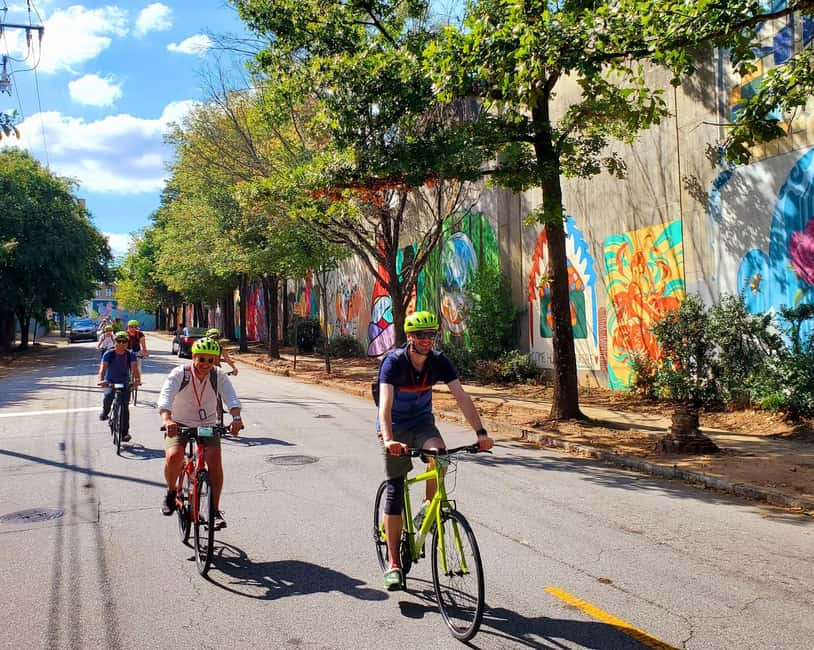
Atlanta is spread across a large area, and a car can move you quickly between neighborhoods without showing you much in between. A bicycle gives you a better sense of distance and transition. One minute you are passing Victorian houses, then you are alongside a public trail or facing a wall covered in art.
That change of pace is the real value here. You cover enough ground to see several parts of central Atlanta, but you move slowly enough to notice porches, gardens, murals, and old industrial details. You also avoid the stop-and-go rhythm of a bus tour.
The route is described as relaxed, but you should not confuse that with effortless. Eight miles is manageable for a confident rider, yet the ride lasts long enough that poor shoes, heavy clothing, or a hot afternoon could affect your enjoyment. Water is supplied, as are trail mix snacks, but bring clothing suited to the weather.
The age guidance is also clear. Children under 10 are not accepted, and people over 95 are not considered suitable for this activity. The experience is intended for confident young riders and older adults who are comfortable on a bicycle.
The Atlanta BeltLine and the city in motion
The Atlanta BeltLine is one of the most important stops for understanding the city today. The project uses former rail corridors to connect neighborhoods with paths, public art, housing, businesses, and community spaces. On this ride, you get to see how an old transportation idea is being adapted for walking, cycling, and daily city life.
That context helps explain why the tour feels different from a standard downtown sightseeing loop. You are not only looking at finished landmarks. You are also seeing a city working out how to connect its districts and make more room for people outside cars.
The BeltLine portion is especially useful early in a stay because it can help you decide where to return later. The guide points out areas worth exploring after the tour, and the shop’s Old Fourth Ward location gives you a convenient base for continuing on foot or by car.
Do not expect the BeltLine alone to define the experience. It is one thread in a much broader ride. The appeal comes from seeing it beside older neighborhoods, cemeteries, art spaces, and historic sites.
Inman Park and the city’s Victorian side
Inman Park brings a different mood. Its tree-covered streets and Victorian homes show Atlanta’s residential past in a way that feels personal rather than institutional. You see how the city’s older housing stock fits into a neighborhood that is still active and connected to the rest of central Atlanta.
The route is well suited to photography here. The homes, leafy streets, and changing views give you reasons to pause, and the guide adds context that you would miss from a quick drive. The tour includes photo stops, so you are not expected to pedal continuously without a chance to look around.
I would keep your camera or phone easy to reach, but not in your hand while riding. A bicycle tour is safest when you stop fully before taking pictures. Guides have been praised for putting safety first, and that matters on a route that moves between quiet residential streets and busier urban sections.
Inman Park is also a good example of the tour’s balance. You get attractive scenery, but the point is not only pretty houses. The guide helps place the neighborhood within Atlanta’s wider story of growth, preservation, and change.
Same roads, a different ride:
- NYC: Central Park Bike Rental
★ 4.1 · 1,651 reviews - Central Park Bike Rental
★ 4.7 · 1,509 reviews - Austin Biker Gang E-Bike Tour
★ 5.0 · 1,399 reviews - Asheville Historic Downtown Guided Electric Bike Tour with Scenic Views
★ 5.0 · 1,234 reviews
Little Five Points and the city’s creative edge
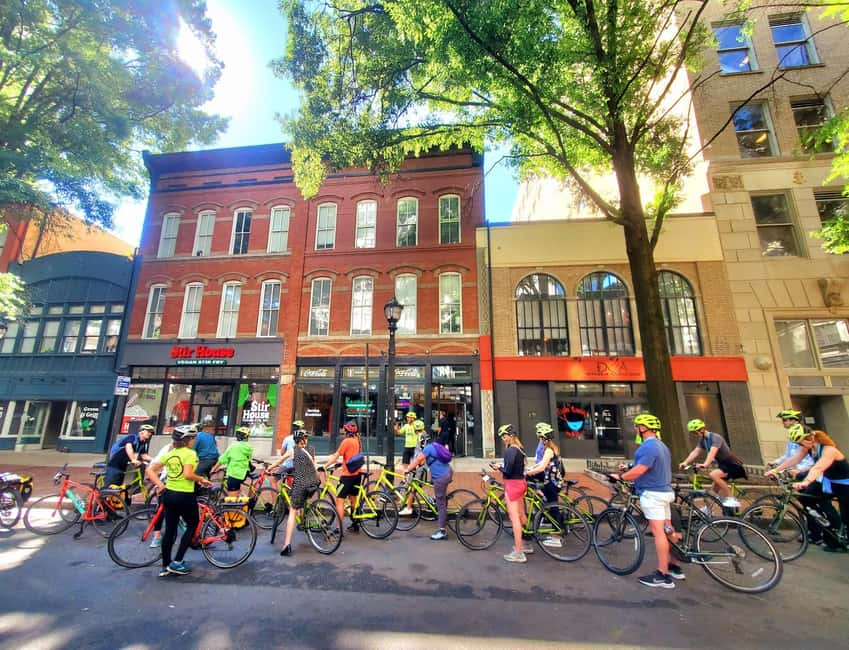
Little Five Points adds a more offbeat side of Atlanta. The area is associated with independent businesses, street art, and an alternative local character. It gives the ride a welcome change from formal landmarks and historic homes.
This is the kind of stop where a bicycle has an advantage. You can reach the district as part of a larger neighborhood route without treating it as an isolated attraction. The transition from Inman Park to Little Five Points also shows how close together Atlanta’s different identities can be.
You will want to listen to the guide here rather than simply race through. The tour’s appeal comes from the stories and local orientation, not from checking off a single landmark. A guide who knows the area can help you understand which places are worth returning to after the ride.
The tradeoff is that creative districts can feel less predictable than a formal museum visit. The tour does not promise a long stop at every location, so expect a moving overview with selected pauses, not extended shopping or dining time.
Krog Tunnel and Atlanta’s public art
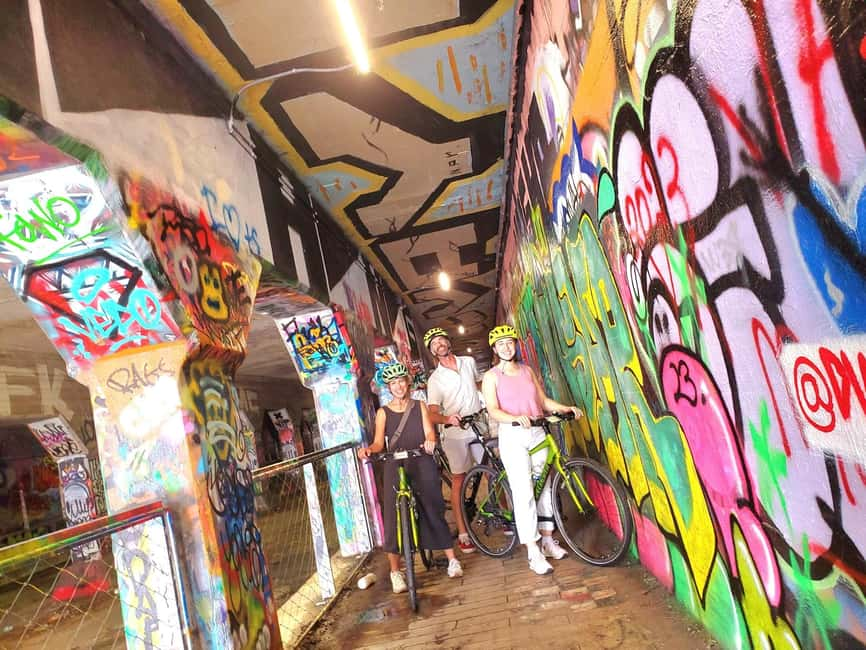
Krog Tunnel is one of the route’s most photogenic points. Its walls carry layers of murals and graffiti, making it a sharp contrast with the nearby historic neighborhoods. The tunnel captures Atlanta’s artistic energy in a direct, unpolished way.
For me, this is one of the strongest reasons to choose the bicycle outing over a conventional sightseeing tour. You are not only seeing a famous building from the outside. You are moving through the city’s everyday spaces, where art appears on infrastructure and local identity is written onto the walls.
Photo stops are built into the experience, but remember that the group has a schedule. You will have time to take pictures, not unlimited time to study every painted section. If you are serious about photography, ask the guide when you can safely stop and where you can stand without blocking other riders.
Krog Tunnel also reinforces the tour’s range. Within one ride, you move from carefully preserved homes to large-scale public art and then toward historic sites tied to Atlanta’s national story.
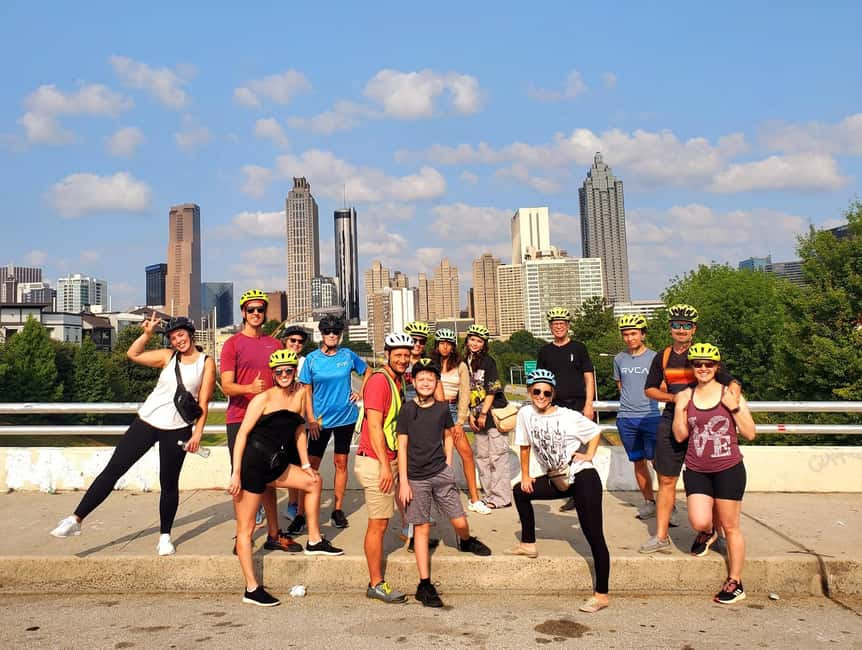
Jackson Street Bridge and the city view
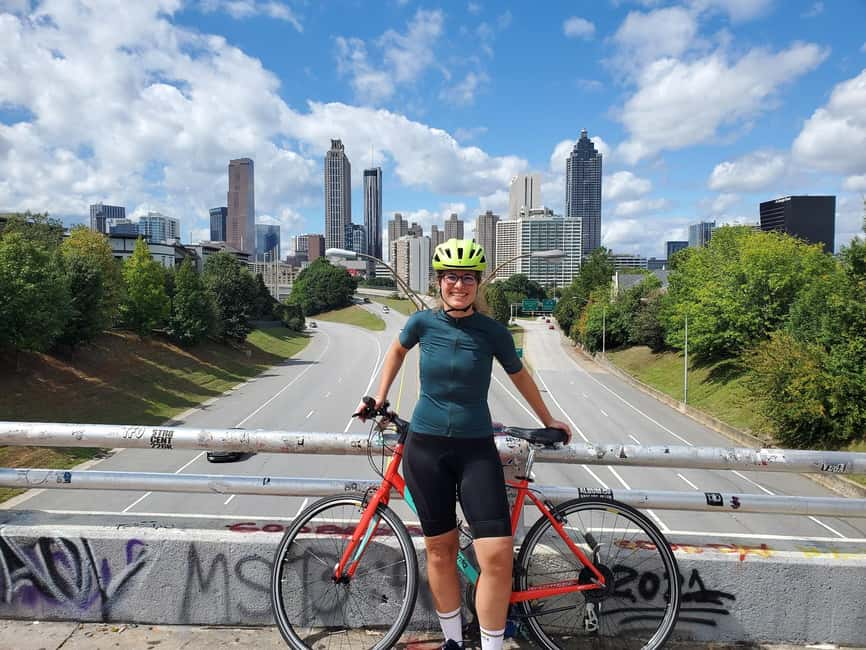
Jackson Street Bridge provides a memorable outlook across Atlanta. It is the kind of place where you can pause and see the city as a whole rather than as a series of separate streets. The stop is especially useful for photos and for understanding how the central neighborhoods relate to the larger city.
The view is a reminder that Atlanta is not a compact old-world city where every major sight sits within a few blocks. The bicycle solves part of that problem. You can connect districts at a human pace while still covering meaningful ground.
The bridge can also be a practical test of your comfort level. If you are not used to riding in an urban setting, stay alert, follow the guide’s instructions, and keep a safe distance from other riders. The strong safety feedback attached to guides such as Lisa, Tanner, and Walt is reassuring, but your own attention remains important.
Cabbagetown, Oakland Cemetery, and Old Fourth Ward
Cabbagetown adds another neighborhood layer, with its older homes and strong sense of place. It helps you see Atlanta as a collection of communities rather than one uniform downtown area. The ride is not just about famous addresses. It is about how streets, homes, gardens, and public spaces fit together.
Oakland Cemetery brings the history into sharper focus. It is connected to Atlanta’s past, including the Civil War era, and offers a quieter setting than the art districts. The cemetery is valuable because it gives the guide room to explain people and events rather than rushing from one crowded attraction to the next.
You should expect an outside visit and a guided look at the site, not a long cemetery tour with time to explore every section. The overall route has many stops, so the guide must keep the group moving.
Old Fourth Ward then returns you to the city’s current rhythm. The area combines older buildings, new businesses, public paths, and the shop where the ride begins and ends. It is a fitting place to finish because the neighborhood captures the tour’s main idea: Atlanta is continually adapting while holding onto visible pieces of its past.
The King Historic District and Atlanta’s national story
The King Historic District connects the ride to the Civil Rights Movement. This part of the route gives the tour more weight than a simple neighborhood spin. You are seeing places tied to people and events that shaped Atlanta, the South, and the country.
The bicycle format is useful here because the guide can connect several sites rather than limiting the discussion to one building. You get a sense of the surrounding streets and the physical relationship between historic places. That helps turn a list of names into a clearer picture of how a district functions.
The route also links this history with the Civil War era. That pairing is important. Atlanta’s story is not one single chapter, and the tour places different periods side by side without making the ride feel like a classroom lecture.
The depth will depend partly on the guide and the questions you ask. Lisa has been praised for being informative and entertaining, while Walt has been singled out for his local knowledge and engaging manner. Tanner has also led a small-group ride noted for friendly guidance and well-chosen photo stops. Guides can change, so treat those names as examples rather than a guarantee of who will lead your departure.
Bikes, guides, and the group experience
The tour supplies high-quality bicycles, helmets, bottled water, and trail mix snacks. That keeps the cost and preparation simple. You do not need to transport a bike across Atlanta or bring your own helmet.
Bike condition matters on a 2.5-hour ride, and the feedback has been especially strong in this area. Riders have found the bikes to be in excellent condition, which removes one of the common worries about organized cycling tours.
The guide is just as important as the equipment. A good guide controls the pace, points out safe places to stop, and tells the story without burying you in facts. The strongest guide comments focus on three traits: safety, warmth, and entertaining local stories.
The tour is in English. It is not presented as a private ride, and the supplied information does not promise a fixed group size. Still, the experience has been described as having a small-group, almost family-style atmosphere. If you want the most personal interaction, ask about the group size before booking.
Is $70 a fair price?
At $70 per person, I see this as a reasonable value if you want an active introduction to several central Atlanta neighborhoods. The price includes the bicycle, helmet, water, and snack, so you are paying for equipment as well as a live guide and a route that covers a lot of ground.
A self-guided ride would cost less if you already have a bicycle and know Atlanta’s streets. It would also give you more time at each stop. But you would need to plan the route, handle navigation, learn the local context, and decide how to ride safely between neighborhoods.
A standard walking tour might offer more detail at a smaller number of historic sites. This bicycle tour gives you breadth instead. You see the BeltLine, Inman Park, Little Five Points, Krog Tunnel, Jackson Street Bridge, Cabbagetown, Oakland Cemetery, Old Fourth Ward, and the King Historic District in one outing.
For a first visit, that range is the main value. You can use the guide’s suggestions to choose where to eat, walk, or return later. For a repeat visit, the tour can fill in neighborhoods you would not otherwise reach.
Free cancellation is available up to 24 hours before departure, and you can reserve now and pay later. Those terms are useful if your Atlanta schedule is still shifting.
Who should book this Atlanta bicycle tour?
I would choose this ride if you like seeing a city through neighborhoods rather than only through major attractions. It suits confident riders, active families with children 10 and older, couples, and older adults who are comfortable cycling for several hours.
It is also a good match for anyone who wants local orientation at the start of a stay. The guide can point you toward places worth exploring after the ride, and the route gives you a practical sense of where Atlanta’s districts sit relative to one another.
I would think twice if you dislike riding near urban traffic, tire easily, or want long, quiet visits at museums and historic buildings. The tour moves across a wide route, so each stop is part of a larger story rather than a full site visit.
Wear closed-toed shoes, bring a working cellphone, and provide accurate contact details when booking. Pets and smoking are not allowed. The operator can store luggage or personal items at the shop, but you should still dress for the weather and arrive ready to ride.
Should you book it?
Book this tour if you want an active, story-filled introduction to Atlanta and like the idea of connecting historic streets, murals, cemeteries, public trails, and Civil Rights landmarks in one outing. The excellent bike condition, included equipment, and careful guides make the $70 price easier to justify.
Skip it if you need a slow, highly detailed visit at each attraction or are not comfortable cycling for 8 miles. For the right rider, though, this is one of the more useful ways to understand how Atlanta’s old neighborhoods and new city projects fit together.
FAQ
How long is the Atlanta bicycle tour?
The riding portion lasts 2.5 hours, or 150 minutes. You should allow up to three hours for the full experience, including getting everyone ready.
How far do you ride?
The route covers about 8 miles through Atlanta neighborhoods and attractions.
What is included in the price?
The $70 price includes a high-quality bicycle, helmet, bottled water, and trail mix snacks.
Where does the tour begin?
The meeting point is Bicycle Tours of Atlanta inside Studioplex Lofts in Old Fourth Ward. The shop is in the larger two-story building with an open courtyard and Studioplex sign.
What age range is allowed?
Children under 10 are not accepted, and the experience is not suitable for people over 95. Riders should be confident on a bicycle.
Is parking available at the starting point?
Free street parking is available throughout the neighborhood. Onsite parking is also available for $24 for the duration of the tour.
Can I cancel or pay later?
You can cancel up to 24 hours in advance for a full refund. You can also reserve your place and pay later.
New cycling reviews around the USA
- Portland, Maine: Coastal Lighthouses Guided Bicycle Tour★ 4.8 · 23 reviews
- Portland: Food Carts of the Eastside Bike Tour★ 4.9 · 16 reviews
- Essential Portland: 2-Hour Guided Bike Tour★ 4.8 · 43 reviews
- Portland: E-Bike Tour at Multnomah Falls★ 4.8 · 20 reviews
- Pittsburgh: Beauty of the Burgh Bike Tour★ 4.9 · 37 reviews
- NYC: Central Park Guided Electric Bike Tour★ 4.9 · 25 reviews
- Oahu: Kualoa Electric Bike Tour★ 4.6 · 14 reviews
- Oahu: Waikiki E-Bike Ride and Manoa Falls Hike★ 4.9 · 28 reviews
USA Cycling Tours, compared.




Asheville Historic Downtown Guided Electric Bike Tour with Scenic Views
Read our review →
Browse the lists this ride appears in