
Review · NORWAY
Geiranger Fjord: Downhill Self-Guided Bike Tour
The great trick here is the 1,030-meter downhill start at Djupvatnet Lake. You are driven up from Geiranger, then roll back toward the fjord on one of Norway’s most dramatic roads, with Flydalsjuvet and high views over Geiranger Fjord along the way.
I like the freedom to stop whenever the scenery demands it, and I like that the bike, helmet, gloves, vest, and transport uphill are included. The catch is important: this is a self-guided road ride, not a protected mountain-bike trail. Traffic can be heavy in summer, so you need confidence and care.
Key points to know before booking
- The ride begins at Djupvatnet Lake: You start high above Geiranger and cycle downhill for most of the outing.
- Flydalsjuvet is the headline viewpoint: Plan to stop for photographs and wide views over the fjord.
- You ride without a guide: English instruction is provided, but nobody accompanies you on the road.
- Traffic affects the experience: Tour buses, camping vans, and other vehicles can make busy summer stretches demanding.
- The small group is limited to eight people: That keeps the equipment handover and transport fairly manageable.
- Weather matters: Bring warm layers and a windbreaker, since rain and cold can change the ride quickly.
Starting in Geiranger with the right expectations
You meet at the Excursions.no office at Geirangervegen 10, directly before Cafe Ole. This is not a guided cycling departure with a leader setting the pace. You receive a safety talk, collect your equipment, and then board transport to the starting point.
The included kit is practical rather than elaborate: a bicycle, helmet, bicycle gloves, and visibility vest. You also get transportation up to Djupvatnet Lake, which is a major part of the value. Without that ride, you would spend your energy climbing instead of enjoying the long descent.
The activity lasts three hours in total, while the cycling itself takes about two and a half hours. That leaves time for the equipment handover, the drive uphill, and the return into Geiranger. Check the available starting time carefully if you are fitting this around a cruise call or another fjord activity.
The group limit is eight. That does not turn the ride into a guided small-group tour, but it should make the start less crowded and the transport easier to manage.
More Self-Guided Bike Tours in the world:
- Red Rock Canyon Self-Guided Electric Bike Tour
★ 5.0 · 783 reviews - Private Self-Guided E-Bike Ride in Tuscany with Vineyard Visit
★ 5.0 · 775 reviews - Haleakala Sunrise Best Self-Guided Bike Tour
★ 4.5 · 745 reviews
Djupvatnet Lake, the high starting point
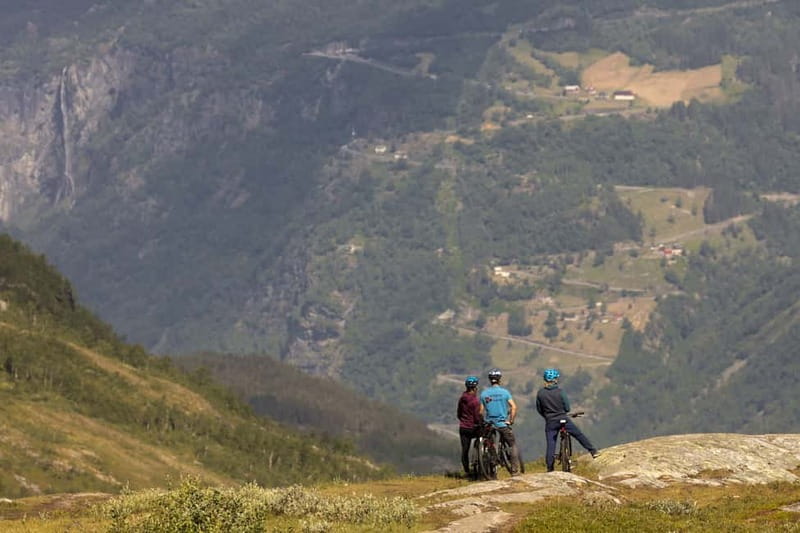
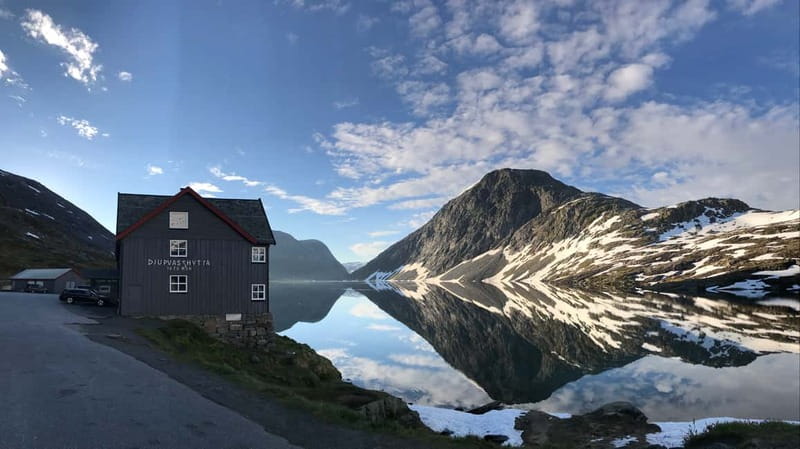
The drive takes you to Djupvatnet Lake, 1,030 meters above sea level. The high start gives the ride its main appeal: you begin among open mountain scenery, then gradually work down toward Geiranger and the fjord.
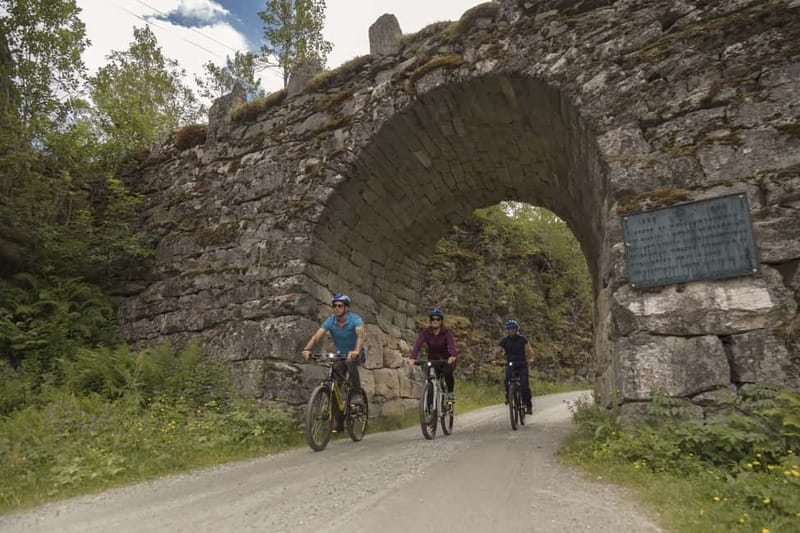
You should expect a road ride, not technical cycling. The downhill route is described as one of the world’s most spectacular roads, but the bicycle stays on the public road. There is no dedicated mountain-bike trail, and the ride is not designed around jumps, rough tracks, or off-road riding.
That distinction matters. If you picture a quiet trail through the mountains, adjust your expectations. You are sharing the road with traffic, including large tour buses and camping vehicles during the busy season. The descent may feel thrilling, but you must watch the road, manage your speed, and stay alert.
The downhill profile helps riders conserve effort, but it does not remove the need for bike control. You need to be able to ride confidently, steer properly, and respond to traffic and weather.
The descent toward Geiranger
The route follows sinuous roads toward the village. Since the ride is self-guided, you can set your own pace within the practical limits of the route and the group schedule. That flexibility is one of the best features here.
I like the chance to stop for photographs instead of being pushed past every viewpoint. The scenery is the main reason to book this outing, and stopping often lets you enjoy it properly. One United States rider completed the route safely despite making many photo stops, which gives you a useful sense of the timing.
Still, go at your own pace does not mean you can treat the road like a private cycle path. You need to pull over safely when stopping and remain aware of vehicles behind you. One account described the road as difficult for a self-guided ride because of the amount of traffic, especially in peak season.
That is the central tradeoff. The road gives you access to memorable scenery and a long downhill run, but the same public-road setting creates responsibility. Confident cyclists should find this manageable. Nervous riders may find the traffic more stressful than expected.
Flydalsjuvet and the fjord views
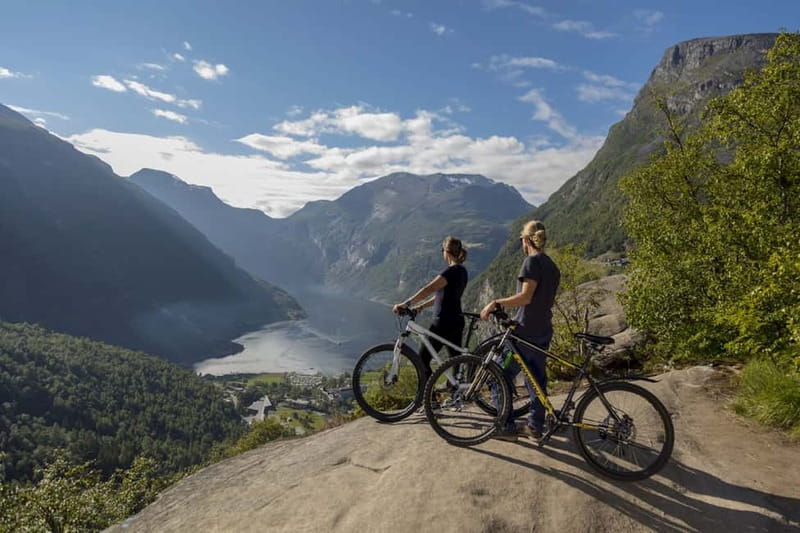
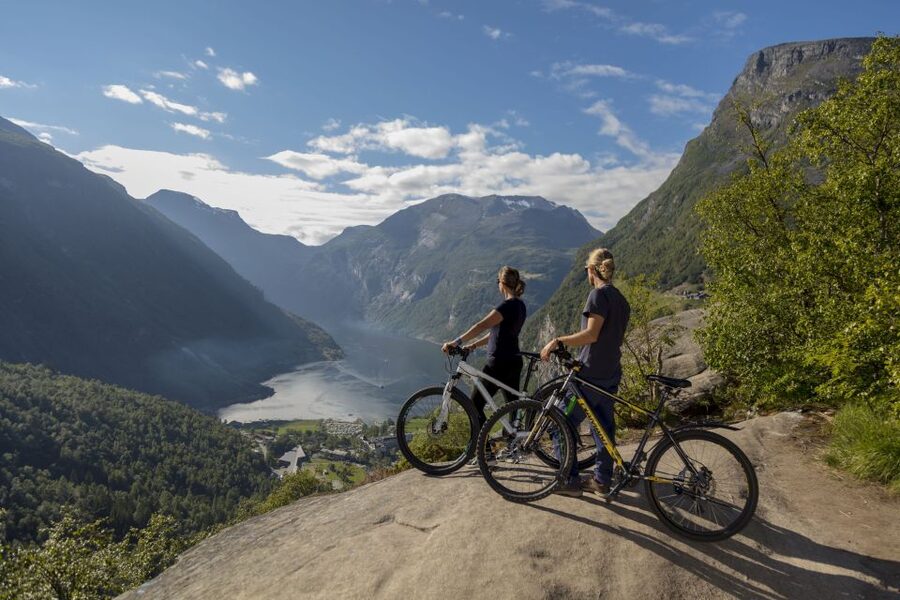
Flydalsjuvet is the key stop on the route. The viewpoint gives you one of the best-known views in the Geiranger area, with the fjord far below and steep Norwegian scenery around it.
This is where the tour shifts from simple downhill transport to a proper sightseeing outing. Stop, take photographs, and give yourself a moment to look beyond the road. The attraction is not only the cycling. It is the changing view as you move from the high mountain area toward the fjord.
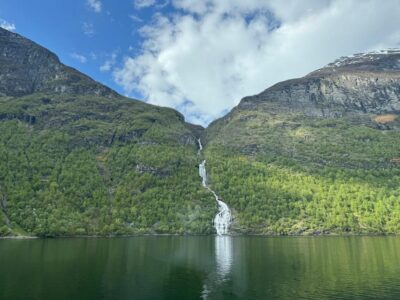
You also get to see Geiranger Fjord from above. That angle matters because the village and waterway look very different from the road than they do at sea level. The descent gives you a gradual change in perspective rather than one quick viewpoint visit.
Allow time for photographs, but keep an eye on the schedule. The ride takes about two and a half hours, and the route still requires careful cycling between stops.
More Guided Rides in the world:
- 3-Hour Porto Highlights on a Electric Bike Guided Tour
★ 5.0 · 4,392 reviews - Small Group Guided Bike Tour of Amsterdam’s Hidden Gems
★ 5.0 · 3,936 reviews - Porto: City Highlights 3-Hour Guided Electric Bike Tour
★ 4.8 · 3,092 reviews - Highlights & Hidden Spots of Barcelona Bike Tour w/ Local Guide
★ 4.5 · 3,009 reviews
Weather can change the ride quickly
This activity depends on good weather. That is not a minor note in Geiranger, where mountain conditions can affect comfort and visibility. Pack warm clothing, a windbreaker, sportswear, water, and snacks.
Rain does not automatically ruin the outing. One rider described a very enjoyable descent in heavy rain and found the views still impressive. But that same account made the practical point clearly: you need to be confident on a bike, especially in poor weather.
A wet road can make braking and cornering feel more demanding. Cold wind can also make the high starting point much less comfortable than the village below. Wear layers you can manage easily, and do not assume that a mild temperature in Geiranger means warm conditions at Djupvatnet Lake.
The supplier can offer an alternative start from the Eagle Bend viewpoint if the road to Djupvatnet Lake is closed. That keeps the activity possible in some situations, but the route and the high-mountain character may differ.
What the $156 price includes
At $156 per person, this is not a cheap way to rent a bicycle for a few hours. The price includes transportation to the starting point, the bicycle, helmet, gloves, and visibility vest. It also packages the equipment pickup and downhill route into a three-hour activity.
I see the value mainly in the logistics. Getting yourself and a bike to a high starting point above Geiranger would be awkward, and the included transport solves that problem. The price also saves you from arranging safety equipment separately.
The price is harder to justify if you want a guided cycling lesson or a leader pointing out the scenery. There is no guide riding with you. English is listed as the activity language, but that refers to the instruction and setup, not an escorted commentary ride.
You are paying for access, transport, equipment, and the freedom to ride independently. If that combination suits you, the cost is reasonable for a specialized fjord outing. If you need close supervision or expect a purpose-built mountain-bike route, the value drops.
Who should book this ride?
This tour suits adults and young people aged 12 and over who already ride a bicycle comfortably. Children under 12 cannot participate, and minors must be accompanied by an adult. Unaccompanied minors are not allowed.
You should be comfortable sharing a road with traffic and riding in changing weather. The activity is not suitable for people with back problems or heart problems, according to the stated restrictions.
I would recommend it most strongly to:
- Cyclists who enjoy a long downhill route more than a hard climb
- Independent riders who like stopping for photographs
- People who want to see Geiranger from above
- Visitors who can stay alert around buses and other road traffic
- Active families with children aged 12 or older, provided the adults are confident riders
I would hesitate if you are a beginner, dislike public-road cycling, or want a guide beside you. The downhill profile sounds easy, but road awareness still matters.
A practical plan for your three hours
Arrive at the Geiranger office ready to move. You will need time for the safety briefing, equipment fitting, and transport uphill. Wear sports clothing rather than restrictive everyday clothes, and keep water and snacks with you.
At Djupvatnet Lake, take in the high scenery before setting off. The road descent is the main cycling portion, but it is also the time to manage your speed and watch for traffic.
Plan a substantial stop at Flydalsjuvet. This is the most important photo opportunity named for the route, and the view over Geiranger Fjord is the reason many people will find the ride memorable.
Continue downhill toward Geiranger, stopping only where it is safe. You should not assume that every attractive roadside spot is suitable for pulling over. The activity is self-guided, so you are responsible for making sensible choices along the way.
The tour ends back in the Geiranger area after the descent. Food and drinks are not included, so bring your own snacks and water rather than counting on a refreshment stop.
Booking flexibility and seasonal concerns
You can cancel up to 24 hours in advance for a full refund. The reserve-now, pay-later option also lets you hold a place without paying immediately, which is useful when your plans depend on weather or transport timing.
The weather condition deserves more attention than the flexible booking terms. A clear forecast can make the ride far more pleasant, while rain and wind demand stronger cycling skills and warmer clothing. If the road to Djupvatnet Lake closes, the Eagle Bend viewpoint may be used as an alternative starting point.
The activity has an overall rating of 4.5 from 30 ratings, with especially strong praise for the scenery, easy-to-operate bicycles, and freedom to choose your pace. The less favorable comments focus on road traffic and the absence of a dedicated bike trail. Those two sides fit together: the tour delivers excellent views, but the setting is a public mountain road rather than a controlled cycling route.
Should you book the Geiranger downhill bike tour?
Book it if you want a scenic, active way to see Geiranger from high above, and you are happy to ride independently around traffic. The included uphill transfer removes the hardest logistical problem, while the downhill route leaves plenty of room for photographs and fjord views.
Skip it if you expect a guided ride, a quiet cycle path, or true off-road mountain biking. The best match is a confident cyclist who understands that the spectacular setting comes with public-road conditions.
For the right rider, the combination of Djupvatnet Lake, Flydalsjuvet, and the descent into Geiranger makes this a memorable use of three hours. Just bring warm layers, keep your eyes on the road, and treat the views as the reward for careful riding.
FAQ
Where does the Geiranger downhill bike tour meet?
Meet at the local supplier’s office at Geirangervegen 10, directly before Cafe Ole in Geiranger.
How long does the activity last?
The full activity lasts about three hours. The cycling portion takes approximately two and a half hours.
Where does the cycling begin?
The usual starting point is Djupvatnet Lake, located 1,030 meters above sea level.
Is transportation to the starting point included?
Yes. Transportation from the meeting point to the cycling start is included.
Is a guide included during the ride?
No. You receive a safety talk and instruction before departure, but no guide accompanies you during the cycle.
What equipment is provided?
The tour provides a bicycle, helmet, bicycle gloves, and a visibility vest.
What should I bring?
Bring warm clothing, a windbreaker, sportswear, water, and snacks.
What happens if the road to Djupvatnet Lake is closed?
An alternative starting point from the Eagle Bend viewpoint may be offered.
What is the minimum age?
You must be at least 12 years old and accompanied by an adult. Children under 12 cannot participate.
Can I cancel the booking?
Yes. You can cancel up to 24 hours in advance for a full refund. The activity also offers reserve now and pay later booking.
New cycling reviews around the world
- Riga: Beer or Cider Bike Tour★ 4.7 · 121 reviews
- Ria Formosa: Guided Bike Tour (3h), Início na Quinta do Lago★ 4.8 · 14 reviews
- Riga Explorer Bike Tour★ 4.8 · 127 reviews
- Rio de Janeiro: Guided Bike Tours in Small Groups★ 4.5 · 133 reviews
- Rethymno: Guided e-Bike Tour on Mili Gorge and Soft Drinks★ 4.9 · 36 reviews
- Rhodes: Anthony Quinn Bay E-Bike Tour with Snorkeling★ 4.9 · 15 reviews
- Rhodes: eBike Highlights Tour w/ Personal Photographer★ 4.9 · 99 reviews
- Dresden: Bike Rental – City Bike with Option Children Seat★ 4.5 · 13 reviews
Norway Cycling Tours, compared.
Guided E-Bike Tour in Haugesund: city, vikings, Rising Tides
Read our review →
From Tromsø: Tromsø Highlights & History Tour With E-Bike
Read our review →Browse the lists this ride appears in