
Review · MOUNTAIN BIKE TOURS
La Paz: Mountain Bike Down the World’s Most Dangerous Road
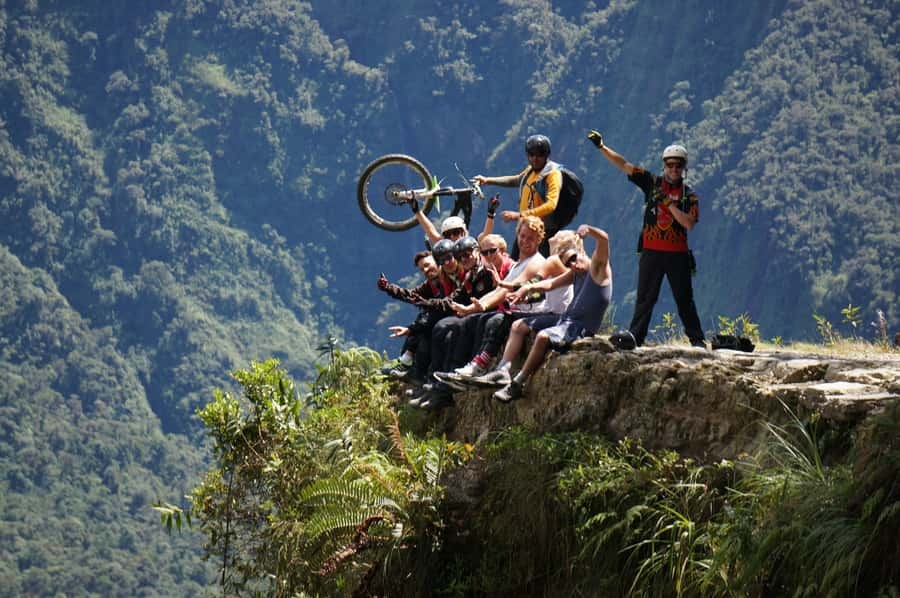
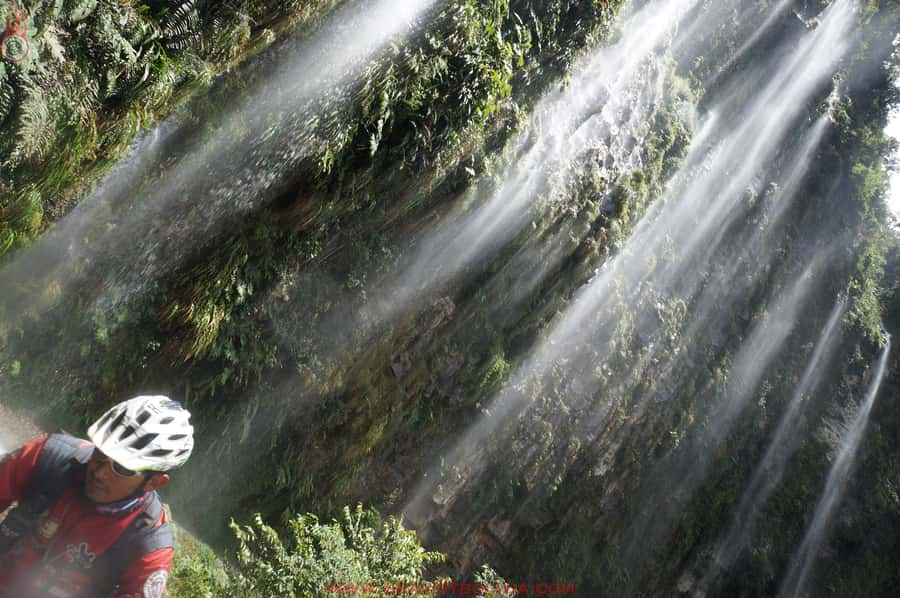
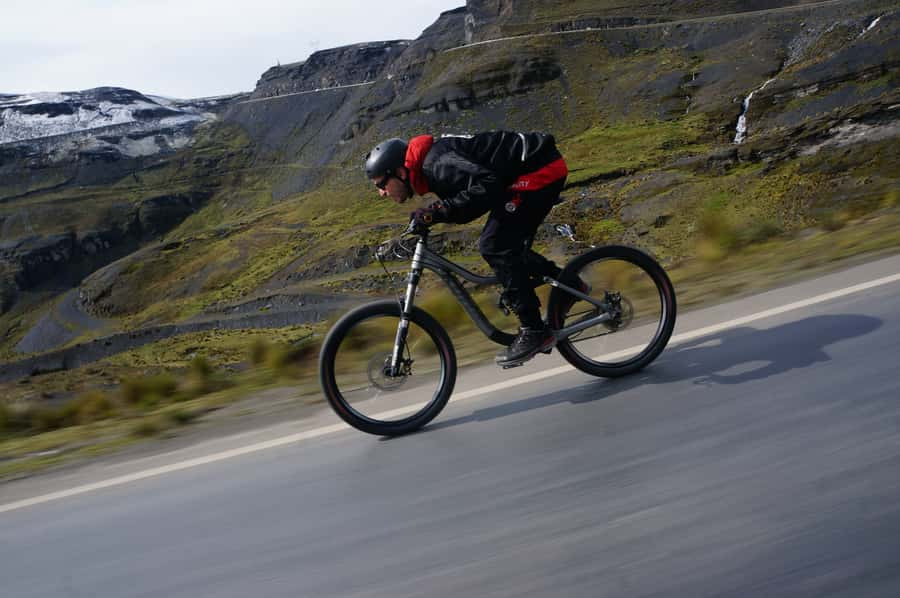
Bolivia’s Death Road is not just a downhill ride. It is a full day of changing scenery, from icy mountain air at 4,700 meters to hot, dusty jungle near Yolosa. You begin above the clouds, then follow a twisting route past cliffs, villages, llamas, and waterfalls before reaching the infamous dirt road cut into the mountainside.
I like the excellent equipment and constant bike checks, and I like the way the support van stays with the group. Guides such as Damian, Kenny, Noel, and Ruben are repeatedly praised for clear instructions, humor, and calm safety work. The main drawback is the price, $145, plus a 50-boliviano road tax, and the return to La Paz can make this a very long day.
Key points to know before riding Death Road
- Start at 4,700 meters: Begin at La Cumbre in cold, thin air with views of snow-covered Andean peaks.
- Ride 64 kilometers downhill: The route changes from smooth asphalt to a rough, narrow dirt road in the Yungas.
- Bring a conservative attitude: You set your pace, but the road has real drops, loose surfaces, mist, and traffic concerns.
- Professional support is built in: Each group has a guide, bike mechanic, private vehicle, and access to the bus if needed.
- End at an animal refuge: La Senda Verde includes lunch, rescued animals, and, according to recent feedback, showers and a beer.
- Allow a long day: The ride, refuge visit, and drive back to La Paz may keep you out until evening.
Why Death Road is worth your time
The name does much of the marketing, but the ride earns its reputation through variety. You do not spend the whole day inching along one terrifying cliff edge. The first part is a fast, open descent on asphalt, where you can get used to the bike and the altitude. Later, the road narrows, the surface becomes rougher, and the setting shifts from bare high mountains to thick Yungas vegetation.
I especially like that this is treated as a guided adventure rather than a race. You can ride at a speed that feels right for you. The group stops for photos, snacks, water, road briefings, and bike checks. That rhythm matters. It gives your hands a break, lets you take in the views, and helps you understand what is coming next.
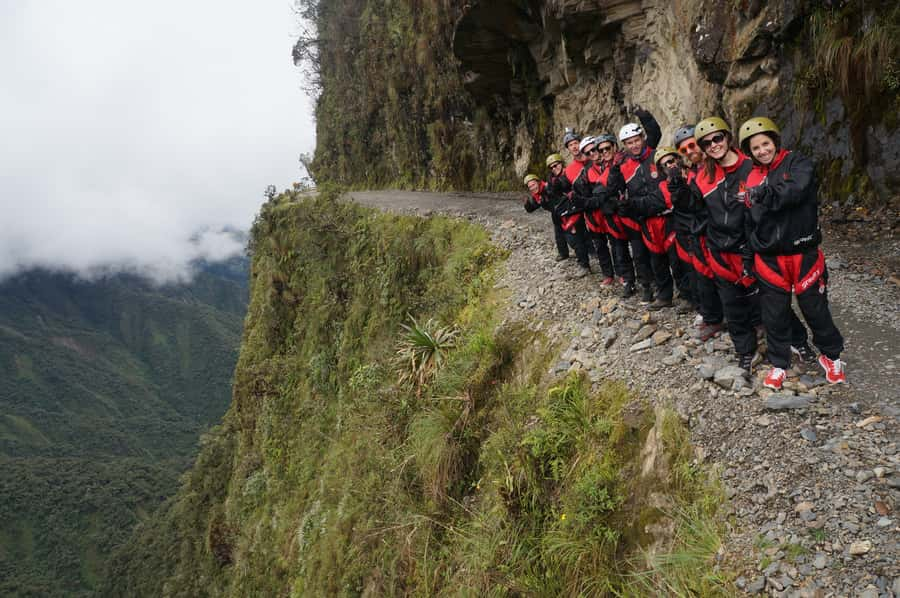
You should still take the danger seriously. Death Road is a mountain route with steep drops, loose dirt, low cloud, dust, and changing weather. The company provides safety gear and a support vehicle, but no guide can remove the basic risks of mountain biking. If you feel tired, nervous, or out of control, use the bus. It follows the group and you can board it at any point.
More Mountain Bike Tours in the world:
- From Ubud: Downhill Bike Tour with Rice Terraces and Meal
★ 4.9 · 664 reviews - Waimea Canyon Downhill Bike Ride
★ 5.0 · 650 reviews - Chiang mai Hike & Downhill Bike Adventure –Suthep National Park
★ 4.5 · 204 reviews
From La Paz to La Cumbre at 4,700 meters
The day starts outside Café del Mundo in La Paz. Breakfast is included, with meat, eggs, ham and cheese, vegetarian, and vegan choices. This is more useful than it sounds. You are heading into a demanding day, and eating before the climb gives you a better start than trying to find food on your own at dawn.
The ride up to La Cumbre takes you from La Paz into high Andean country. At 4,700 meters, expect cold air and a quick change in conditions. Bring warm clothes even if La Paz feels mild. Sunglasses and sunscreen matter too, since the high-altitude light can be strong.
Here the guides fit helmets, jackets, pants, gloves, and protective pads. You can use a normal or full-face helmet, and the clothing helps with cold or wet weather. The bikes are full-suspension downhill models with hydraulic disk brakes, a useful pairing for a route that moves from clean pavement to rocks and rough dirt.
This is also where the guide explains how to handle the bike, brake, position yourself, and approach the road. The English and Spanish-speaking guides are accustomed to groups with mixed experience. Several riders with very little mountain-bike experience found the coaching and steady encouragement helpful, but you still need to be able to ride a bicycle confidently.
The first descent: smooth asphalt and wide Andean views
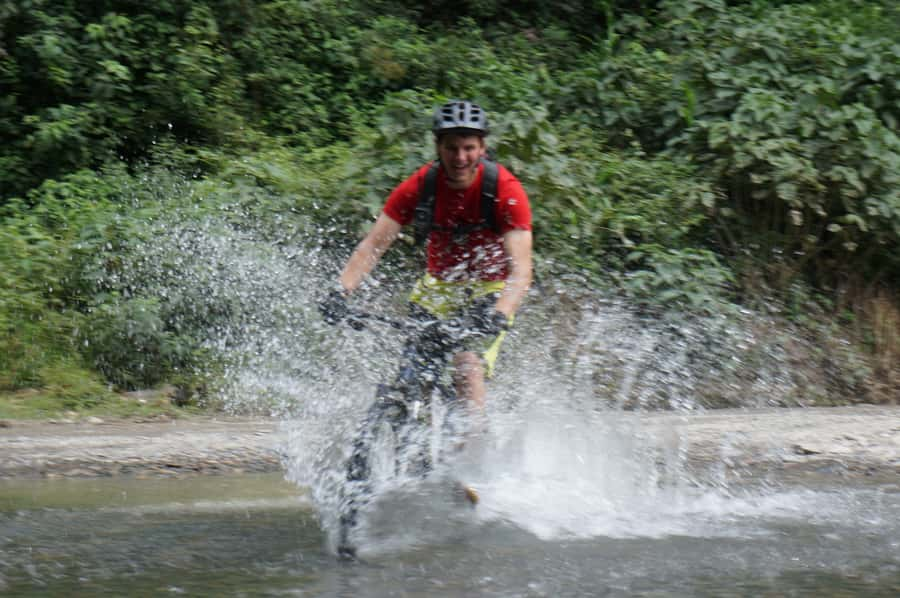
The first section runs down asphalt from the high pass. This is the calmer way to learn the bike. You can feel how the suspension works, practice braking, and settle into the downhill position before reaching the rougher road.
The scenery is broad and exposed. Look for snow-covered peaks, high grass, llamas, alpacas, and small settlements. The air is cold at first, but the descent gradually brings warmer temperatures and thicker vegetation.
The guides stop for water, snacks, photos, and short talks about the next section. They also check tires and brakes. That regular attention is one of the strongest reasons to choose a higher-priced operator here. You are not simply handed a bike and sent down the mountain.
The route covers about 64 kilometers in total, but do not picture 64 kilometers of hard pedaling. Much of the day is downhill, with some undulating sections. You will still use your hands, arms, and core, and the repeated braking can tire you out. Go easy early. There is no prize for reaching the bottom first.
Entering the famous dirt road
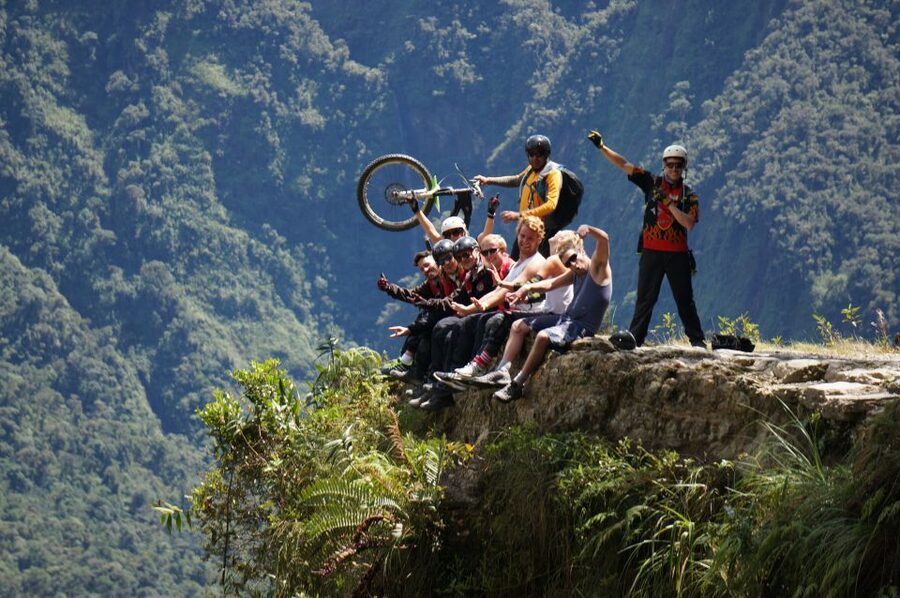
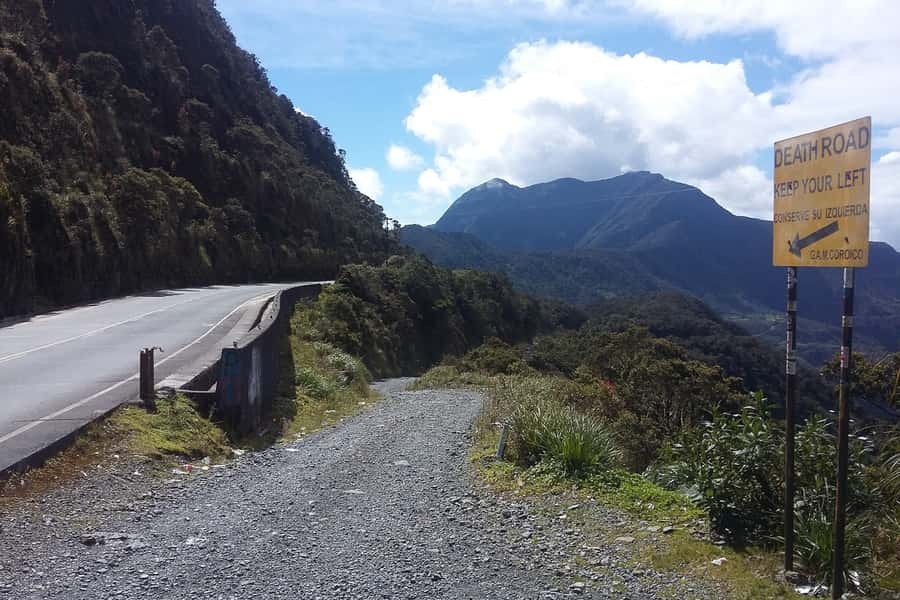
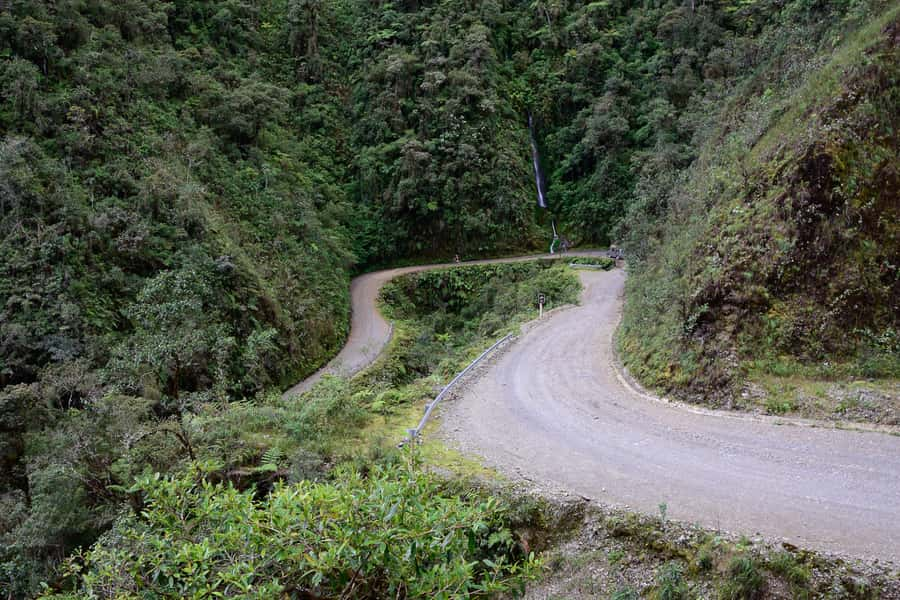
The defining section begins after the smoother road, when you enter the narrow dirt track cut into the mountainside. This part drops about 2,000 meters through the Yungas. Mist and low cloud can hang over the road, and the surface may be dusty, wet, rocky, or slippery depending on the weather.
This is where the guides earn their keep. Before each important stretch, they explain the road conditions and point out what to watch for. You are free to ride at your own pace, and the group pauses at set points so nobody has to push on blindly.
The setting changes quickly. Bare slopes give way to greener vegetation, cliff walls, and jungle growth. The road feels more enclosed, and the heat builds as you lose altitude. By the final part, you may be dusty, sweaty, and very pleased to see Yolosa.
Do not let the dramatic name pressure you into riding beyond your ability. Some people enjoy a faster downhill pace, while others prefer a slower, careful ride. Both are valid. The best experience is one where you finish excited rather than shaken.
More Cycling Trips in the world:
- Lion City Bike Tour of Singapore
★ 5.0 · 6,211 reviews - Big Bike tour Amsterdam – See all in 3 unforgettable hours
★ 4.7 · 4,929 reviews - 3-Hour Porto Highlights on a Electric Bike Guided Tour
★ 5.0 · 4,392 reviews - Ninh Binh Full-Day Tour from Hanoi to Hoa Lu, Tam Coc & Mua Cave Via Boat & Bike
★ 5.0 · 4,384 reviews
Safety, equipment, and the support vehicle
Gravity Bolivia includes a bike mechanic on every tour. The mechanic checks the bikes during stops, while the guide watches the group and gives road advice. You also have a private safety vehicle following the riders.
The bus is an important part of the setup. You can get on at any point if you need a rest, feel unwell, or decide that a particular section is not for you. The guide can also place you on the bus for your safety or for the safety of the group.
The supplied equipment includes a full-suspension downhill mountain bike, hydraulic disk brakes, helmet, gloves, elbow pads, knee pads, and weather clothing. You receive unlimited water, two snacks, and a buff to keep. The company also uploads hundreds of photos from the day, so you can concentrate on riding instead of trying to photograph yourself near a cliff.
The safety record is presented as the best in Bolivia, using international safety standards. You should treat that as the provider’s claim, not a guarantee that the route is risk-free. Still, the practical system is reassuring: a small group capped at 14, trained guides, a mechanic, protective equipment, regular stops, and a vehicle close by.
The Yungas finish at La Senda Verde
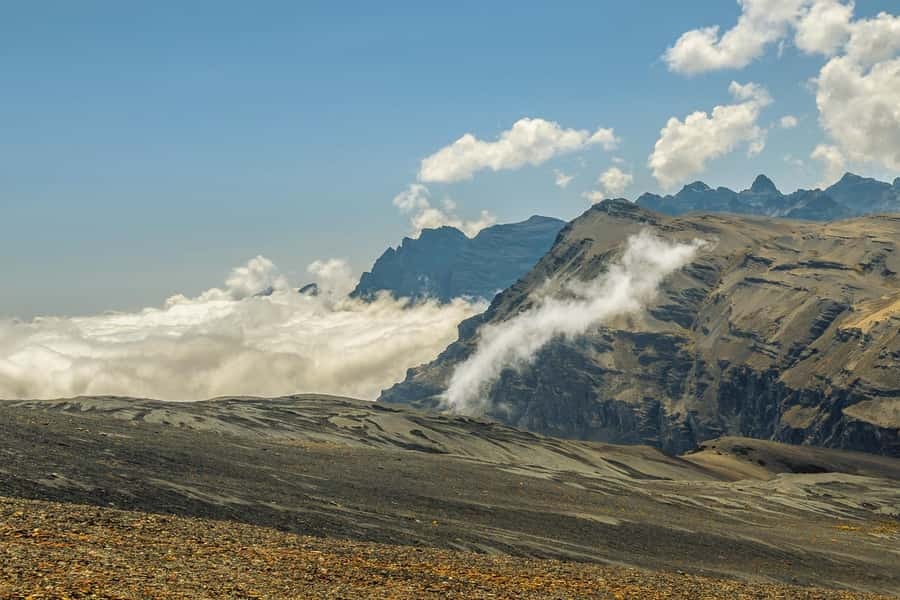
The ride ends near Yolosa, about 3,500 meters below the starting point. The temperature is warmer, the air thicker, and your clothes may be covered in dust. After a day of cold mountain air and rough road, the change feels dramatic.
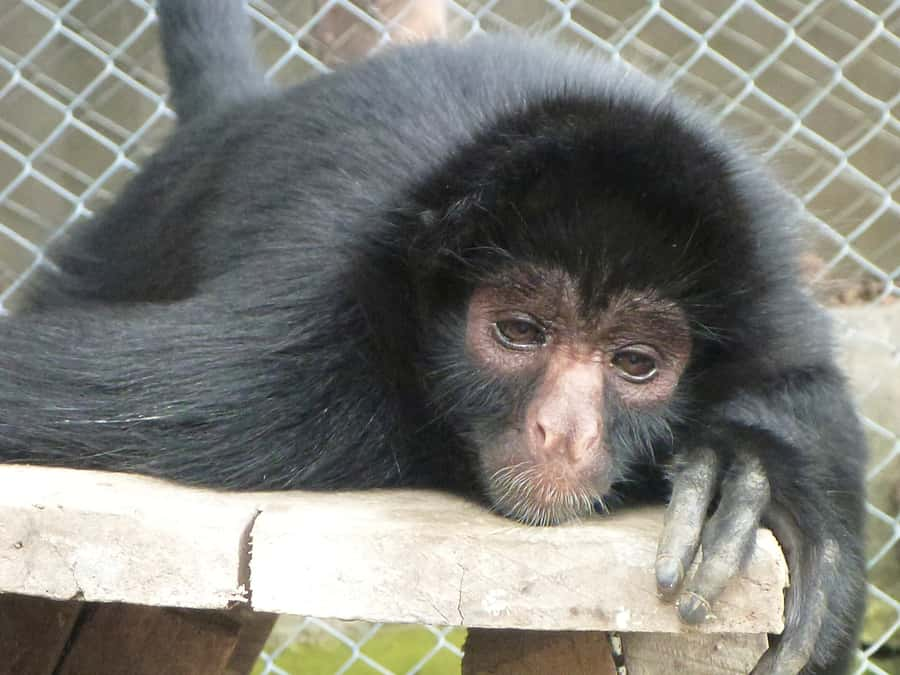
The finish at La Senda Verde Animal Refuge gives the day more purpose than a simple ride to a parking area. You have a buffet lunch and access to the refuge, which rescues animals from the black market. The setting also gives you time to slow down and enjoy the Yungas after the physical effort.
Animals at the refuge can include monkeys, an Andean spectacled bear, capybaras, birds, and other native species. Some riders have also paid extra for an extended visit, including a closer look at big cats and bears. Check the current availability and cost of that add-on on the day.
Recent feedback also points to hot showers, towels, shampoo, and a beer at the finish. These details can make a big difference after a dusty ride, though you should confirm what is operating when you book. Lunch has been well received, with hot food rather than a basic packed snack.
The refuge stop is both pleasant and useful. Your visit supports its animal rescue work, and it gives you a proper end to the adventure. The only catch is timing. After lunch and the refuge visit, the drive back to La Paz can take several hours. One account put arrival back in La Paz at about 8:30 p.m., so do not plan an evening flight, long-distance bus, or fixed dinner reservation afterward.
Is the $145 price fair?
At $145, this is not the cheapest Death Road trip in La Paz. The extra cost buys more than a name. You get breakfast, lunch, snacks, unlimited water, clothing, protective gear, a high-quality bike, a mechanic, a private support vehicle, guides, refuge admission, and a large set of photos.
The bike and safety setup are the two areas where paying more has the clearest value. A poorly maintained bike is a serious problem on rough downhill terrain. Here, the bikes are checked during the day, and the hydraulic brakes and full suspension are designed for the type of road you are riding.
The price also covers the animal refuge visit, which adds a worthwhile local cause to the day. If you only care about reaching the bottom as fast as possible, a cheaper operator might seem attractive. If you want patient instruction, food, support, photos, and a more controlled pace, the higher price makes sense.
Remember to add the 50-boliviano road tax. Ziplining is available for an extra charge, but it is not part of the listed price.
Who should book this ride?
You should consider it if you can ride a bicycle, want a strong dose of adventure, and are comfortable with a long day. You do not need years of mountain-bike experience, but you must be willing to listen, brake carefully, and accept that you may ride some sections slowly or take the bus.
This is a good fit for people who value scenery as much as speed. The stops let you enjoy the high Andes, photograph the road, and learn about the next section instead of treating the ride as a timed challenge.
It is not suitable for pregnant women, wheelchair users, people with mobility impairments, people who cannot ride a bike, or anyone under 120 centimeters tall. Bring a passport or ID, warm and weather-ready clothing, hiking shoes, sunglasses, sunscreen, insect repellent, a change of clothes, cash, and a small daypack.
The weather can change sharply. Snow and rain have affected recent rides, so do not assume clear skies. Your clothing needs to cover both the cold start and the hot, dusty finish.
Should you book Gravity Bolivia’s Death Road ride?
Yes, if you want the most supported version of this famous Bolivian adventure and can accept the price and long return trip. The strongest reasons are the maintained bikes, careful guides, mechanic, support vehicle, flexible pace, and excellent finish at La Senda Verde.
I would not book it if you dislike rough roads, heights, dust, or a full day of physical effort. Death Road is not a harmless photo stop. But if you approach it with respect, listen to the guides, and use the bus when needed, this is a thrilling way to see the Andes and Yungas in one day.
FAQ
Where does the Death Road tour begin?
Meet outside Café del Mundo in La Paz. Breakfast is included before transportation takes you up to La Cumbre.
How high is the starting point?
The ride begins at La Cumbre, at about 4,700 meters above sea level.
How long is the cycling route?
The descent covers about 64 kilometers, moving from asphalt roads into the rough dirt section of Death Road.
What kind of bike is provided?
You receive a full-suspension downhill mountain bike with hydraulic disk brakes. A bike mechanic accompanies each group and checks the bikes during the day.
Is the tour suitable for beginners?
You do not need extensive mountain-bike experience, but you must be able to ride a bicycle. Guides provide instruction and support, and you can ride at your own pace or use the support bus.
What safety support is included?
Each group has one guide, one mechanic, and a private safety vehicle. The bus follows the group and you can board it during the tour if necessary.
What food and drinks are included?
Breakfast, two snacks, unlimited water, and a box lunch are included. Lunch is served at La Senda Verde Animal Refuge.
Is the animal refuge visit included?
Yes. Entrance to La Senda Verde Animal Refuge is included, along with the lunch stop. The refuge cares for animals rescued from the black market.
What extra costs should I expect?
The road tax is 50 bolivianos. Ziplining is optional and costs extra. The tour price is $145 per person.
New cycling reviews around the world
- Riga: Beer or Cider Bike Tour★ 4.7 · 121 reviews
- Ria Formosa: Guided Bike Tour (3h), Início na Quinta do Lago★ 4.8 · 14 reviews
- Riga Explorer Bike Tour★ 4.8 · 127 reviews
- Rio de Janeiro: Guided Bike Tours in Small Groups★ 4.5 · 133 reviews
- Rethymno: Guided e-Bike Tour on Mili Gorge and Soft Drinks★ 4.9 · 36 reviews
- Rhodes: Anthony Quinn Bay E-Bike Tour with Snorkeling★ 4.9 · 15 reviews
- Rhodes: eBike Highlights Tour w/ Personal Photographer★ 4.9 · 99 reviews
- Rent a bike in Amsterdam | 1, 2, 3+ hours★ 4.5 · 68 reviews
Mountain Bike Tours, compared.
From Ubud: Downhill Bike Tour with Rice Terraces and Meal
Read our review →
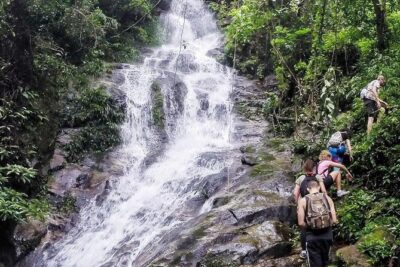
Chiang mai Hike & Downhill Bike Adventure –Suthep National Park
Read our review →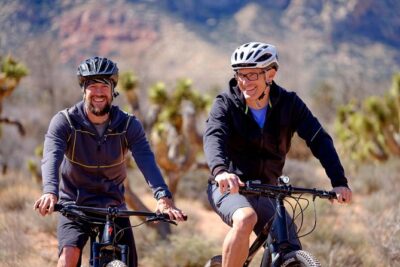
Guided Mountain Bike Tour of Mustang Trail in Red Rock Canyon
Read our review →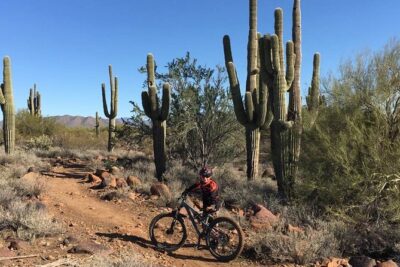
3 Hour Sonoran Desert Private Guided Mountain Bike Tour
Read our review →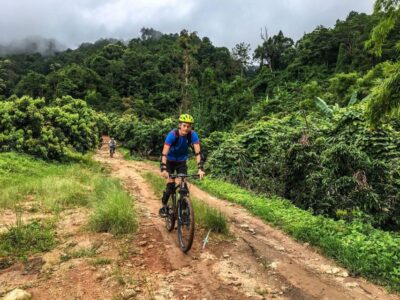
Chiang Mai: Suthep National Park Hiking & DH Mountain Biking
Read our review →
From Marseille: Calanques National Park E-Mountain Bike Tour
Read our review →Browse the lists this ride appears in