
Review · MADRID
Madrid: Street Art Bike Tour
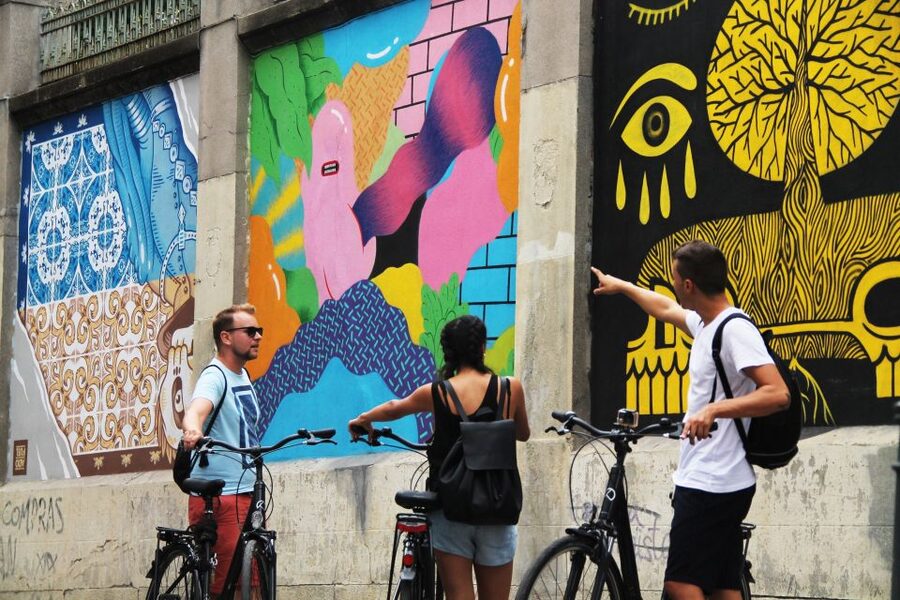
Madrid’s street art is best understood at street level, and this tour puts you right beside it. You’ll pedal through Malasaña and Lavapiés with a local graffiti artist, stopping for work by Madrid crews, international artists, and community groups. The preserved 1989 tag by Muelle gives the tour a useful starting point: this is not only about colorful walls, but about how a local movement took shape.
I especially like the mix of festival pieces and community projects, including Pinta Malasaña, Solar Antonio Grilo, and Esto es una Plaza. I also like that the tour reaches places you could easily miss while walking between major sights. The main caution is cycling confidence: Madrid traffic, narrow city streets, and one uphill stretch can challenge anyone who is not comfortable on a bike.
Key points
- Muelle’s 1989 tag connects today’s murals with Madrid’s early graffiti movement.
- Malasaña and Lavapiés offer two different views of the city’s street-art culture.
- A local graffiti artist leads the tour, explaining methods, artists, and the meaning behind the work.
- Pinta Malasaña pieces turn ordinary street furniture and walls into temporary or lasting public art.
- Solar Antonio Grilo and Esto es una Plaza show how abandoned urban spaces can become community-run places.
- City cycling matters: the route is medium level, with traffic and one uphill section.
Why This Bike Tour Works for Madrid Street Art
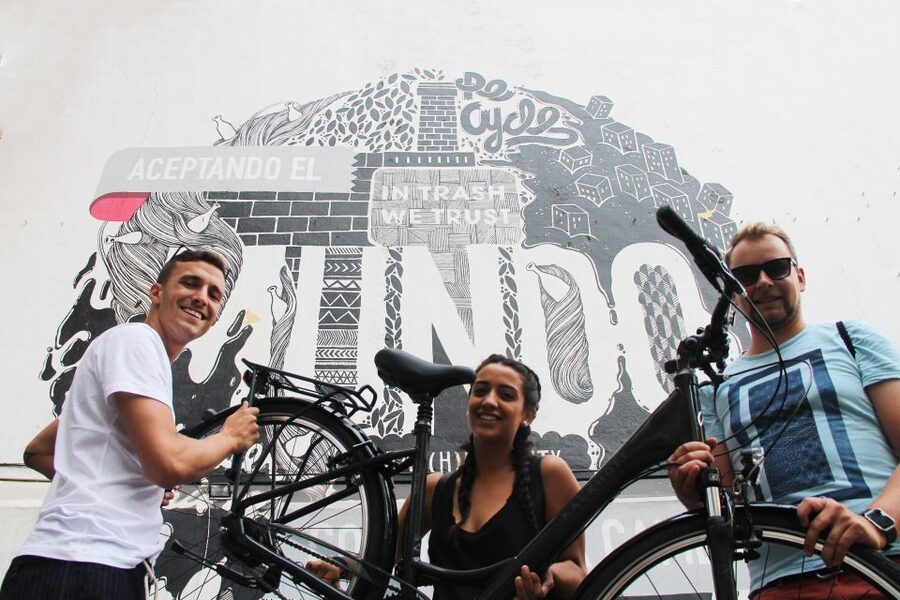
Madrid has plenty of painted shutters, tagged walls, decorated utility boxes, and large murals. The difficulty is knowing which pieces matter and how they fit together. A guide who works as a graffiti artist can give you that missing context.
You are not simply riding from one photo stop to another. Along the way, you learn how artists work on walls, metal shutters, and other everyday city surfaces. You also get a basic history of graffiti in Madrid, from early tagging to organized festivals and neighborhood art projects.
The bicycle adds range. Malasaña and Lavapiés are close enough to link in one outing, but far enough apart that walking between selected works would take more time and energy. On two wheels, you can cover more ground while still stopping often.
The tour costs about $46 per person. That is fair if you value a guide’s explanation and want to see several districts in one morning or afternoon. You also get the bicycle, helmet, lock, city map, and a restroom break. If you only want to look at murals without much interpretation, you could explore parts of Malasaña on foot for less. The value here comes from the route, the local perspective, and the stories behind the art.
More Street Art Bike Tours in Madrid:
- London Bike Tour: Landmarks, Secret Gems, Pub Stop & Street Art
★ 5.0 · 943 reviews - Barcelona Street Art and Graffitti Bicycle Tour
★ 5.0 · 361 reviews - London: Landmarks & Secrets Bike Tour with Pub & Street Art
★ 4.9 · 314 reviews
Meeting at Montera 32 and Getting Ready
The tour begins outside the small Carrefour Express at C/Montera 32, near Gran Vía and Sol. This is a central meeting point, but C/Montera can be busy, so give yourself enough time to find the entrance and locate the guide.
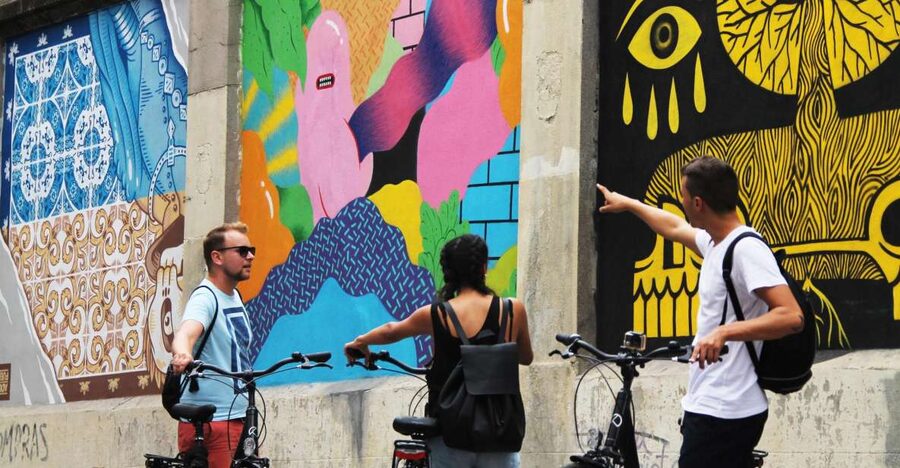
You receive a bicycle, helmet, lock, and Madrid city map. The guide also explains bicycle safety before the route begins. That briefing matters because this is a real city ride, not a closed bike path or a slow-moving museum visit.
The information describes the activity as lasting 2.5 hours, while the practical notes also call it a 3-hour medium-level activity. Check the current starting time and duration when booking. Either way, plan several hours around it rather than scheduling a museum appointment immediately afterward.
Wear comfortable shoes and bring a passport or identity card. Beverages are not included, so carry water if you like to drink during a ride.
Muelle’s 1989 Tag and Madrid’s Early Graffiti
One of the most useful stops comes early, with a preserved tag by Muelle from 1989. Muelle, whose real name was Juan Carlos Argüello, is widely regarded as a pioneer of Madrid’s graffiti movement. The tour uses his work to show that the city’s street art did not begin with the recent mural festivals.
A tag can look simple beside a giant painted wall, but it represents a different stage of the movement. Muelle’s signature helped bring graffiti into Madrid’s public view at a time when the scene was young and still finding its voice.
This stop gives you a way to read the rest of the tour. You can compare an early personal mark with later murals made by crews, agencies, and festival participants. You also see how the city’s walls preserve layers of changing taste and technique.
The guide explains how artists decorate different surfaces. A wall allows broad painting and large compositions. A metal shutter has a different texture and often changes the way a piece is seen, since the shop may be closed at one hour and open at another.
Alonso Martínez and Boa Mistura’s First Madrid Work
After the safety briefing, the route heads toward Alonso Martínez. Here you see and photograph an early piece by Boa Mistura, a Madrid crew that grew up on the city’s outskirts and later worked on projects around the world.
Boa Mistura is also regarded as a major design agency in Spain. Their work gives the tour a useful link between neighborhood graffiti and more formal public-art or design projects. You can consider how an artist’s role changes when the work moves from an unsanctioned wall to an organized commission.
The stop is also a reminder that Madrid’s street art is not made by one kind of artist. The route includes individual taggers, local crews, festival contributors, and artists who work internationally. That range keeps the tour from becoming a single-style art lesson.
More Cycling Trips in Madrid:
- Madrid Highlights Bike Tour
★ 5.0 · 1,731 reviews - Best of Madrid: 3-Hour Guided Bike Tour in Small Groups
★ 4.8 · 1,417 reviews - Madrid: City Highlights Guided Vintage Bike Tour
★ 4.9 · 1,159 reviews - Madrid: 3 hour Guided Highlights Bike Tour with Optional Tapas
★ 5.0 · 443 reviews
Malasaña and the Pinta Malasaña Festival
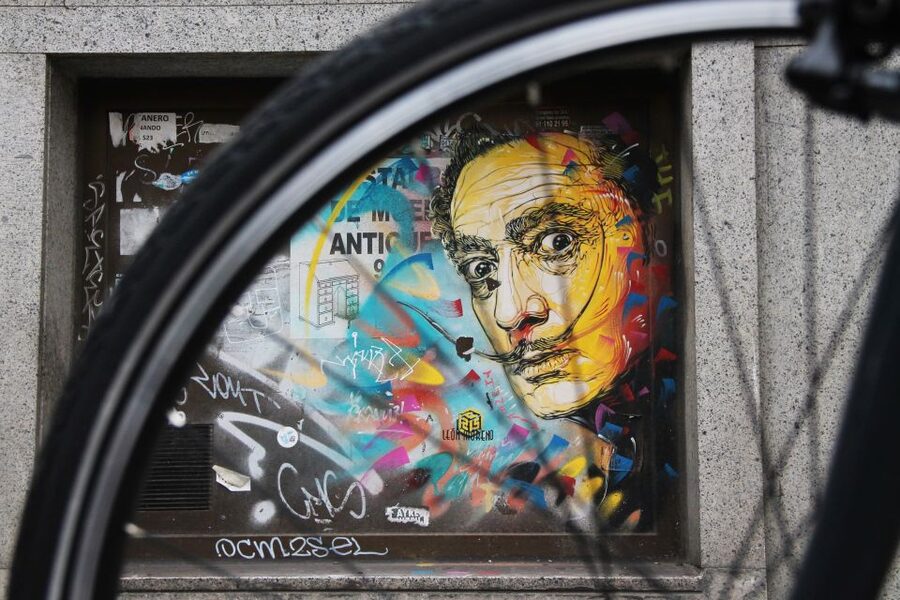
Malasaña is one of Madrid’s most fashionable and alternative districts, and it is the center of the tour’s festival-focused section. You ride toward Plaza Dos de Mayo, a key point in the neighborhood and the heart of the Pinta Malasaña festival.
Pinta Malasaña fills the district with art during April. The tour highlights work by national artists who took part in the 2017 edition. Because festival art can change, you should understand that not every piece will remain exactly as it appeared when it was created. The area itself is still worthwhile, since the tour uses it to explain how a neighborhood festival brings artists into direct contact with public space.
One memorable work is Bolardo Voy, Bolardo Vengo, a colorful treatment of traffic bollards. It is a small but telling example of street art. Instead of requiring a blank wall, the artists use ordinary street equipment as their canvas.
That detail matters. You begin to notice how public art can change your view of a familiar street. A barrier, shutter, or utility feature is no longer just an obstacle or bit of hardware. It becomes part of the neighborhood’s visual character.
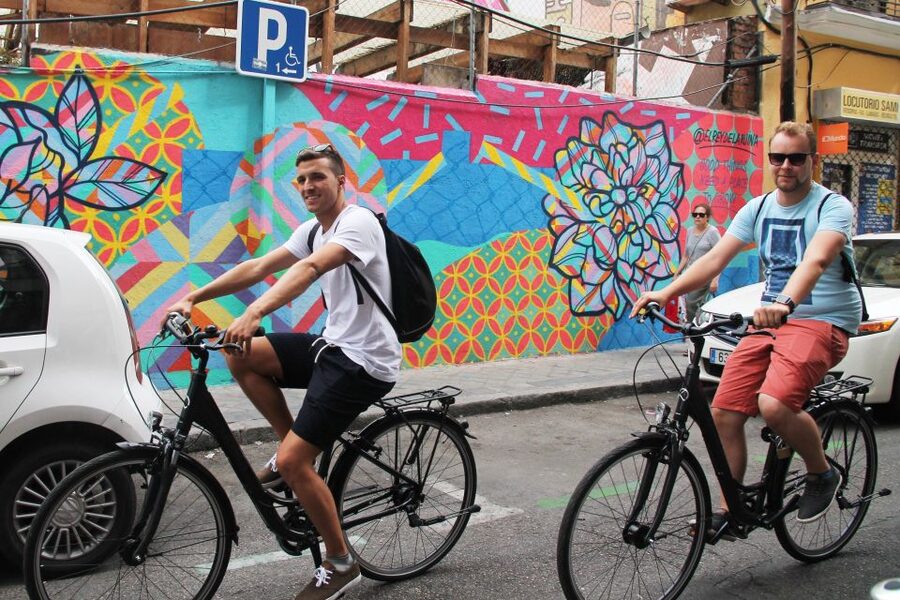
Malasaña is also a practical place for photography. You get bright colors, layered surfaces, and the contrast between older streets and newer creative work. Still, the district is not a gallery with clear paths and quiet rooms. You are cycling through active city streets, so your attention must stay on traffic as well as murals.
Lavapiés, Solar Antonio Grilo, and Community Art
The route then reaches Solar Antonio Grilo and Esto es una Plaza, two community hubs connected with the Lavapiés and Noviciado areas. Both began as abandoned or neglected spaces and became urban gardens and meeting places shaped by local residents.
These stops broaden the tour beyond graffiti. You see how art can work alongside gardening, shared space, and neighborhood activity. The projects are presented as examples of hybrid local economies, where an unused place gains a new purpose through community action.
Solar Antonio Grilo and Esto es una Plaza are especially useful stops if you want to understand Madrid beyond its grand avenues and historic monuments. They show a city being shaped from the ground up, with residents making practical use of leftover urban space.
The bicycle is helpful here because you can connect these projects with the surrounding streets without spending the whole outing on foot. The drawback is that the route is not a relaxed garden tour. You are visiting by bike, within a timed itinerary, so you should expect a look at each place rather than a long pause.
The art connected with this section includes work by El Rey de la Ruina, Cassassola, Ze Carrión, Por Favor, and other artists. The mix of names reflects the range of Madrid’s street-art scene, from established figures to local contributors.
The Biggest Mural in Madrid’s Center District
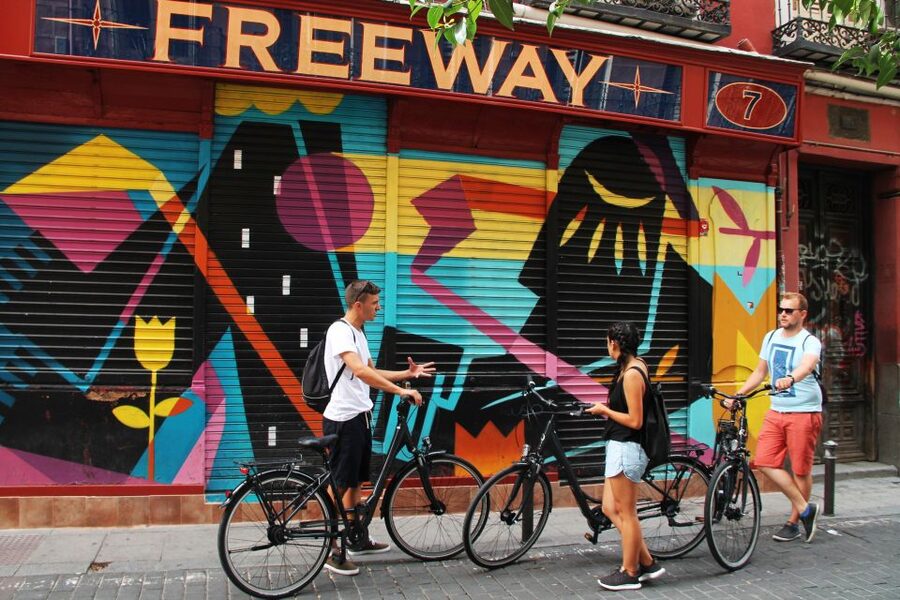
One highlight is the chance to see the largest mural in Madrid’s Center District. The supplied information does not identify the exact wall or give its dimensions, so do not book this tour expecting a specific landmark-sized mural with a fixed viewing platform.
What you can expect is a large-scale piece that helps you understand the physical ambition of the city’s street art. After seeing tags, bollards, shutters, and garden walls, a major mural gives the route a broad visual finish.
Large murals also work differently from small pieces. They can alter the feel of an entire building or street, while a tag may reward a closer look. A good guide helps you move between those scales and notice the choices involved.
What the Guide Adds
The guide is a local graffiti artist, and that is the most important feature of the experience. You get more than dates and neighborhood labels. The guide explains techniques and the practical challenges of painting on city surfaces.
The tour is offered in English or Spanish. One guide named Javier has led a particularly well-received family outing, combining street art with lesser-seen parts of Madrid. That does not mean Javier will lead every departure, but it gives you an idea of the personal, informal approach the tour can take.
A good guide also adjusts the pace when needed. One past outing included cyclists with below-average city-riding skills, and the guide adapted as much as possible. You should still arrive with reasonable bike confidence. Adjusting the pace cannot remove traffic, uneven streets, or the uphill part of the route.
The strongest praise for this experience centers on the guide’s ability to make the ride both informative and fun. That combination matters. A street-art tour can become a list of artist names, while a bike tour can become a simple exercise ride. Here, the best version does both jobs at once.
Cycling Level, Traffic, and Family Suitability
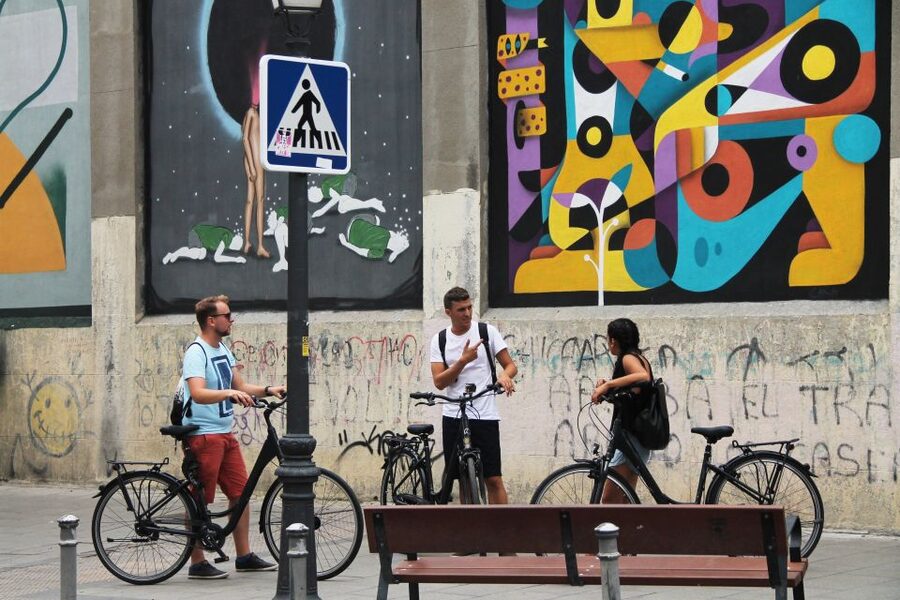
The activity is described as medium level, with one uphill section. The tour has also worked for families, including a seven-year-old riding their own bike. That makes it possible for children to join, but it does not make the route effortless for every child.
You should be comfortable starting, stopping, steering, and riding near city traffic. If you rarely cycle in urban areas, the route may feel demanding even if the distance itself is manageable. The guide can accommodate the group, but each rider remains responsible for handling the bicycle safely.
Comfortable shoes are a must. A helmet and lock are provided, and the city map is useful for getting your bearings after the tour. The ride ends back at the original meeting point, which makes it easy to continue sightseeing in central Madrid.
This is not the right choice if you want a quiet, traffic-free ride. It is a better fit if you enjoy city cycling and like the idea of seeing neighborhoods through their walls, shutters, public fixtures, and shared spaces.
Is $46 a Fair Price?
At $46, the tour sits in a reasonable range for a guided city activity lasting roughly 2.5 to 3 hours. The price includes bike rental, helmet, lock, map, and a live guide in English or Spanish.
The real value is the selection of stops. You see Malasaña and Lavapiés, connect the old graffiti movement with newer festivals, and visit community spaces that are not usually part of a first-time Madrid sightseeing route.
I would consider the price worthwhile if you want interpretation and a structured route. You are paying to avoid spending time searching for individual pieces and trying to understand their background on your own.
The value is weaker if you already know Madrid’s street-art districts or prefer to move at your own pace. In that case, you may want to explore Malasaña independently and spend your money on a different guided activity.
Booking Details That Matter
You can cancel up to 24 hours before the activity for a full refund. The reserve-now, pay-later option also helps if your Madrid schedule is still changing.
The meeting point is the Carrefour Express at C/Montera 32, close to Gran Vía and Sol. The tour returns there. Bring identification, wear comfortable shoes, and remember that drinks are not included.
Check availability for the exact departure time. Also confirm the current duration, since the information describes it both as 2.5 hours and as a 3-hour activity. That small difference matters if you are arranging a museum visit, meal, or train connection afterward.
Should You Book the Madrid Street Art Bike Tour?
Book it if you want a lively introduction to Madrid’s graffiti and public art, especially if you enjoy cycling and prefer neighborhoods to formal galleries. The combination of Muelle’s early tag, Boa Mistura’s work, Pinta Malasaña, and community gardens gives the route real variety.
I would also recommend it to families with older children who already ride confidently in cities. The guide can make the history accessible, and the bike keeps the outing active without requiring a full day.
Skip it if you are uneasy around traffic, want a fully relaxed walking tour, or need a tightly fixed duration. For everyone else, $46 buys a useful mix of local art, neighborhood context, and practical sightseeing. You finish with a better sense of how Madrid’s streets became part canvas, part workshop, and part community space.
FAQ
Where does the Madrid Street Art Bike Tour start?
It starts at the entrance of the small Carrefour Express at C/Montera 32. The nearest metro stations are Gran Vía and Sol.
Where does the tour end?
The activity ends back at the original meeting point on C/Montera 32.
How long does the bike tour last?
The tour is listed as 2.5 hours, while the additional information describes it as a 3-hour medium-level activity. Check the current details when selecting a departure.
What languages are available?
A live guide is available in English or Spanish.
Is bicycle rental included?
Yes. The tour includes bicycle rental, a helmet, and a lock.
What neighborhoods does the route visit?
The route includes Malasaña and Lavapiés, with stops in the Noviciado area and around Alonso Martínez.
What should I bring?
Bring a passport or identity card and wear comfortable shoes. Beverages are not included.
Can I cancel for a full refund?
Yes. You can cancel up to 24 hours in advance for a full refund.
New cycling reviews around Madrid
- Madrid: Magic Retiro Park Bike Tour★ 4.8 · 58 reviews
- Madrid: Literary Quarter & Retiro Park Electric Bike Tour★ 4.8 · 31 reviews
- Madrid: Sunset and Night Lights eBike Tour★ 4.9 · 16 reviews
- Madrid: Retiro Park and Literary Quarter by Bike★ 4.9 · 22 reviews
- Madrid: Guided Electric Bike Tour. City center & Retiro Park★ 4.7 · 40 reviews
- Private Madrid Bike Tour | Exclusive Guided Tour | From 30€★ 5.0 · 22 reviews
- Madrid: City Highlights Private Bike Tour★ 4.7 · 27 reviews
- Madrid at Night: Vintage Bike Tour of City Highlights★ 4.9 · 95 reviews
Madrid Cycling Tours, compared.

Best of Madrid: 3-Hour Guided Bike Tour in Small Groups
Read our review →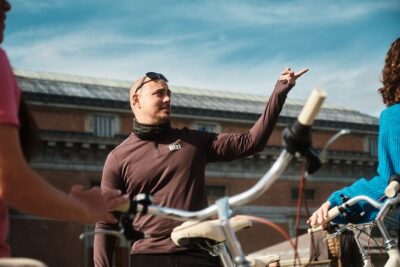
Madrid: City Highlights Guided Vintage Bike Tour
Read our review →
Madrid: 3 hour Guided Highlights Bike Tour with Optional Tapas
Read our review →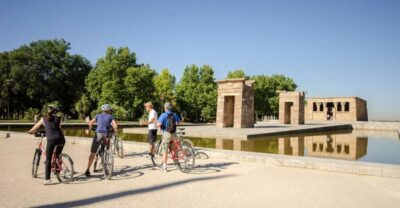
Madrid City Guided Bike/E-Bike Tour for Small Groups
Read our review →
Madrid: 3-Hour Sightseeing Tour by Electric Bike
Read our review →Madrid: Guided Bike or E-Bike Tour with Local Guide
Read our review →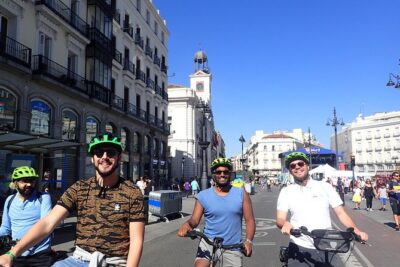
Browse the lists this ride appears in