
Review · MARRAKECH
Marrakech: Cultural Bicycle Tour with Pastry and Tea
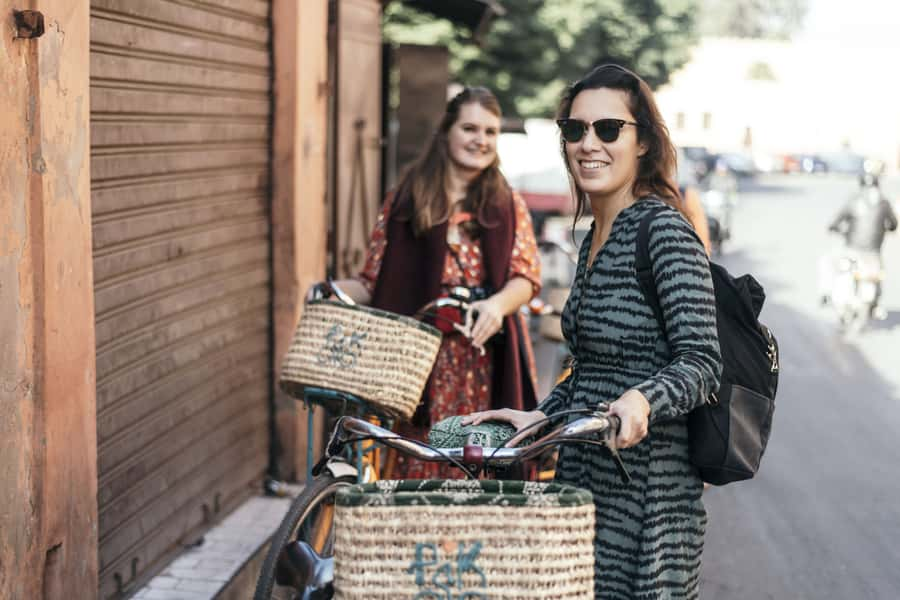
The best thing about this three-hour bicycle tour is the way it gets you out of the usual tourist circuit. You pedal through narrow medina lanes, pause at a working bakery and tile workshop, then cross into modern Marrakech. I like the mix of daily life and big landmarks, especially the look at bread-making and the social role of the hammam.
I also like that Pikala Bikes trains Moroccan young people as guides. Guides such as Ayoub, Rabab, Hamid, Yassir, Kenza, Sayid, and Yasmin have been praised for their warmth and clear explanations. The drawback is the traffic: mopeds, donkeys, carts, pedestrians, and bikes share tight spaces, so you need to be a confident cyclist.
Key points to know
- Bread is a cultural lesson: You visit a local bakery, watch loaves go into a clay oven, and taste fresh Moroccan bread.
- The ride goes beyond the souks: The route includes the medina, Royal Palace gardens, Koutoubia Mosque, Gueliz, and Hivernage.
- Zellige tiles come to life: An artisan workshop shows how Morocco’s famous geometric tiles are made.
- Traffic is part of the experience: The first part can feel tense, but the pace is gentle and guides keep the group together.
- The finish is sociable: Moroccan pastries, tea, juice, fruit, and local snacks are served at Pikala Cafe.
- The price is fair: At $34 per person, you get bikes, guide service, water, fruit, refreshments, suncream, and entry to the local stops.
Why a bicycle is a smart way to see Marrakech
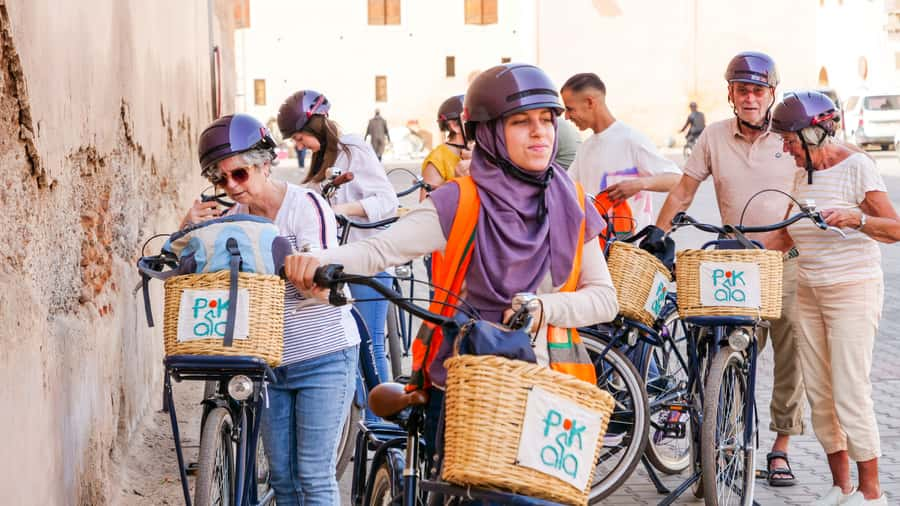
Marrakech can be hard to read on foot. The medina has narrow lanes, sudden turns, crowded souks, and a constant stream of people and vehicles. A taxi shows you only the main roads. A walking tour gives you detail, but not much range.
A bicycle lets you cover more ground while staying close to street life. You can pass from a quiet side lane to a market square, then reach the newer districts without spending time in a car. The route is generally flat, and the pace is not a race. There are regular stops for explanations, photos, water, and food.
I would not call this a relaxed ride from start to finish. The traffic requires attention, especially during the first hour in the medina and souks. You may need to slow quickly, steer around a moped, or wait while pedestrians cross. The guides are used to this setting and are described as checking behind them, keeping the group together, and making crossings as a unit.
That makes the tour a good choice for an adult who rides regularly in cities. It is less suitable if you are nervous on a bike or have not ridden for years. One older participant used a tandem and managed well, but that option should be confirmed with Pikala Bikes before booking.
More Cycling Trips in the world:
- Lion City Bike Tour of Singapore
★ 5.0 · 6,211 reviews - Big Bike tour Amsterdam – See all in 3 unforgettable hours
★ 4.7 · 4,929 reviews - 3-Hour Porto Highlights on a Electric Bike Guided Tour
★ 5.0 · 4,392 reviews
Starting at Pikala Bikes
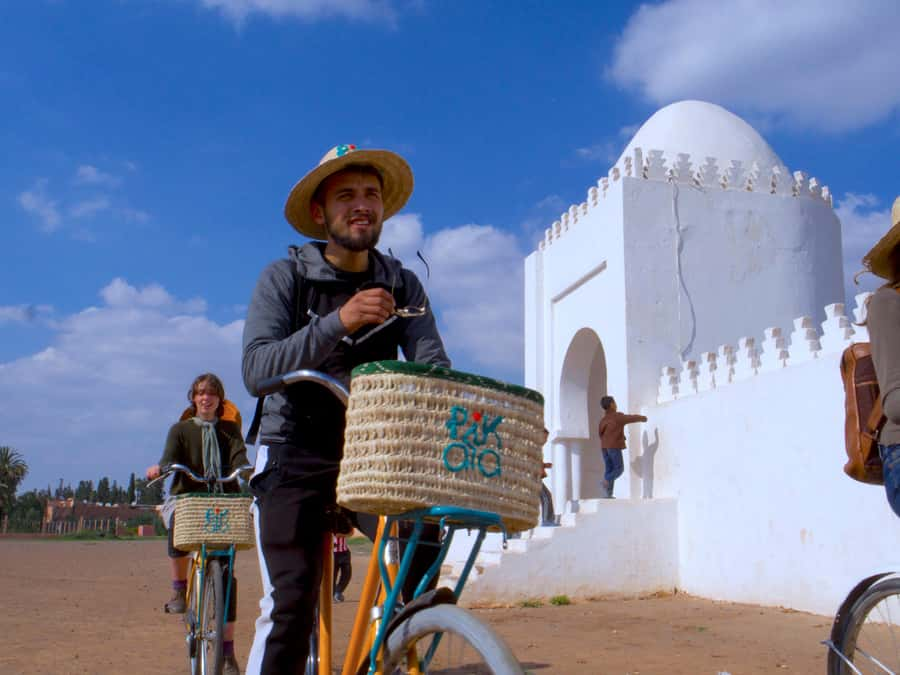
The tour begins at Pikala Bikes headquarters. This is both a meeting point and the base of a social enterprise that trains Moroccan youth to work as cycling guides. That mission adds value to the outing, because your guide is not simply pointing out monuments. You are also meeting a young local who can explain how the city works today.
The bikes are described as solid Dutch-style bicycles with comfortable saddles. Some riders found them a little heavy, but most considered them dependable for the route. Wear ordinary clothes that allow easy movement. Long skirts and dresses can catch on the bike, and a light jumper is useful if the morning is cool or clouds move across the sun.
Water and fruit are included, and suncream is provided. You do not need to arrange hotel pickup, so allow time to reach the headquarters on your own.
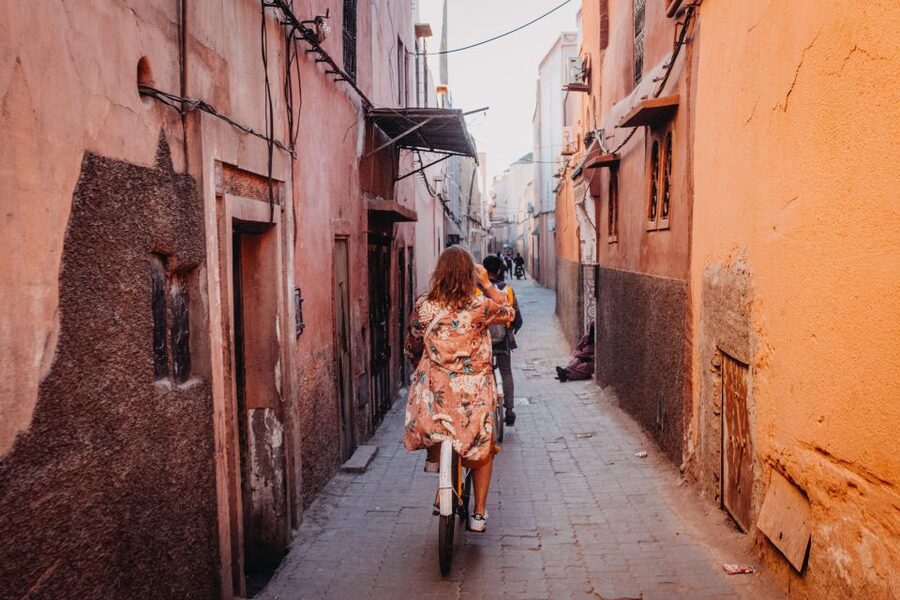
Through the medina and the world of Sidi Bel Abbas
The ride heads first toward the Zawiya of Sidi Bel Abbas. This religious site gives you an early lesson in the medina’s spiritual life, not just its shopping streets. You stop for photographs and an explanation before continuing through the old city.
The narrow lanes are where the tour feels most different from a standard sightseeing outing. You see people going about ordinary business, hear bells or engines approaching from behind, and watch your guide pick a careful line through the traffic. The route includes several lesser-known corners, but the stops are not rushed into a checklist.
Your guide may pause to explain how streets, shrines, shops, and homes fit together. The real value here is orientation. After an hour on the bike, you will have a better sense of how the old city connects, and you will be less likely to take a wrong turn later in your stay.
A clay oven and the daily importance of bread
The local bakery is one of the strongest stops. You step inside, watch bread being baked in a clay oven, and taste it while learning why bread matters in Moroccan daily life.
This is a small experience, but it says a lot. A bakery is not a grand monument. It is a working place tied to ordinary meals and neighborhood routines. The stop helps you see food as part of local culture rather than as something served only in a restaurant.
Allow around ten minutes here. That sounds brief, but it is enough to see the oven, hear the explanation, and sample the bread before the group moves on. If you enjoy food-focused experiences, this stop may be more memorable than a formal museum.
Same roads, a different ride:
- Ninh Binh Full-Day Tour from Hanoi to Hoa Lu, Tam Coc & Mua Cave Via Boat & Bike
★ 5.0 · 4,384 reviews - Small Group Guided Bike Tour of Amsterdam’s Hidden Gems
★ 5.0 · 3,936 reviews - 3-hour Complete Prague Bike Tour
★ 5.0 · 3,674 reviews - Bangkok: Temples, Canals & Local Life Bike Tour
★ 4.9 · 3,511 reviews
Place des Ferblantiers and the route’s small discoveries
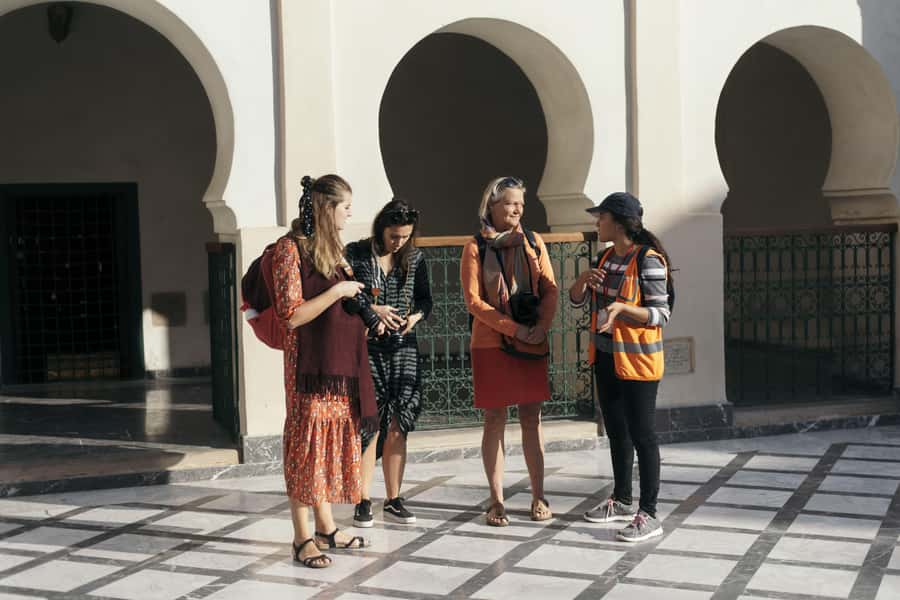
The ride continues through several side streets and lesser-known points before reaching Place des Ferblantiers. This is a useful pause in the schedule, with time for photographs, views, and a short break.
The square is also a reminder that Marrakech is not one single scene. The souks are full of commerce and movement, but the city opens up in stages. Your guide uses the ride between stops to connect what you are seeing with local customs, buildings, and daily routines.
The route includes more brief photo stops after the square. These are not long visits, and the exact appeal depends on the guide and the day. That is part of the charm, but it also means you should not expect a fixed museum-style program at every point. The experience is built around conversation and local access.
The Royal Palace gardens and Moroccan monarchy
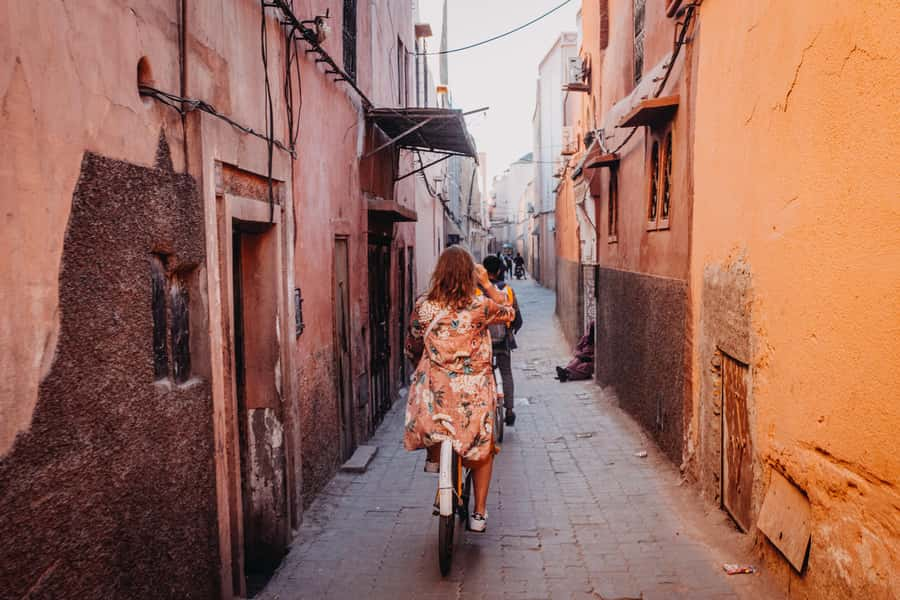
The route passes the public gardens around the Royal Palace, Dar El-Makhzen. You view the palace from outside and hear about its role in Morocco’s monarchy and political story.
You do not enter the palace. That is important to understand before booking. The stop is about the setting, the architecture, and the meaning of the royal compound within Marrakech. It is a short look rather than an extended palace visit.
From the bicycle, the gardens provide a welcome change from the enclosed lanes of the medina. You can take in a larger view, pause without the pressure of a market crowd, and listen to the guide place the building within the country’s traditions.
Learning how zellige tiles are made
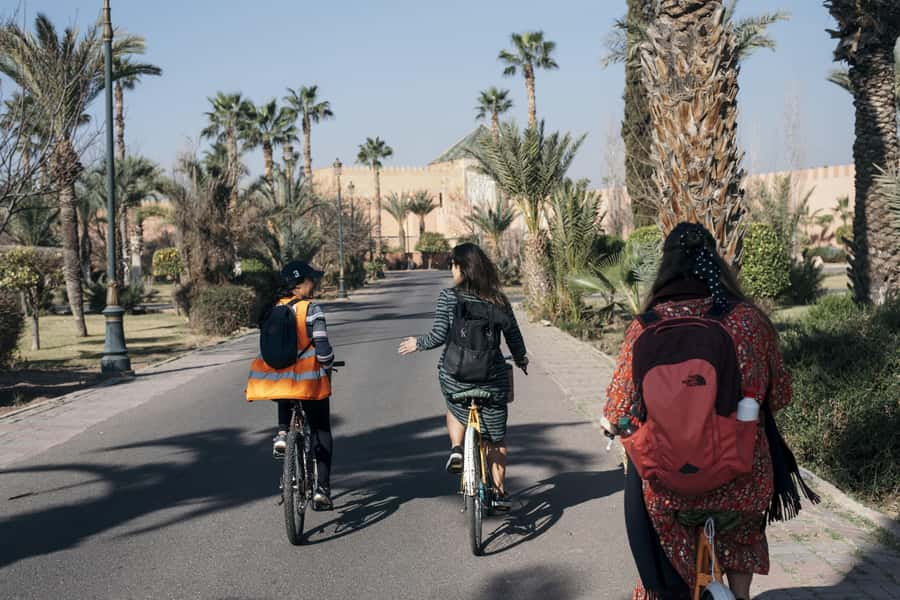
The tile workshop is one of the tour’s most distinctive visits. Moroccan zellige tiles are known for their small geometric pieces and complex patterns. At the workshop, you meet artisans and see how the tiles are made by hand.
This is much better than simply photographing a decorated wall. You get to connect the finished patterns in palaces, mosques, and homes with the work behind them. The process also helps explain why Moroccan architecture has such strong surface decoration. A tiled courtyard is not just pretty; it reflects skilled labor and a long craft tradition.
The visit is free as part of the tour. Since workshop conditions can vary, you should think of it as a working craft stop rather than a polished showroom. That is exactly why it has value. You are seeing a local business at work and learning from the people connected to the craft.
A practical look at the Moroccan hammam
The hammam stop explains the tradition of the Moroccan public bathhouse. You learn about its rituals, its place in weekly routines, and its role as a social space.
This is an important distinction: the tour teaches you about the hammam rather than promising a bathing treatment. You should not arrive expecting spa services. Instead, you get context that can help you understand references to hammams during the rest of your time in Morocco.
For many visitors, this is one of the most useful cultural stops because it covers a part of daily life that is easy to miss. The guide can explain how the bathhouse fits into family and community routines, giving you a better sense of Moroccan customs beyond architecture and food.
Koutoubia Mosque and the Church of the Holy Martyrs
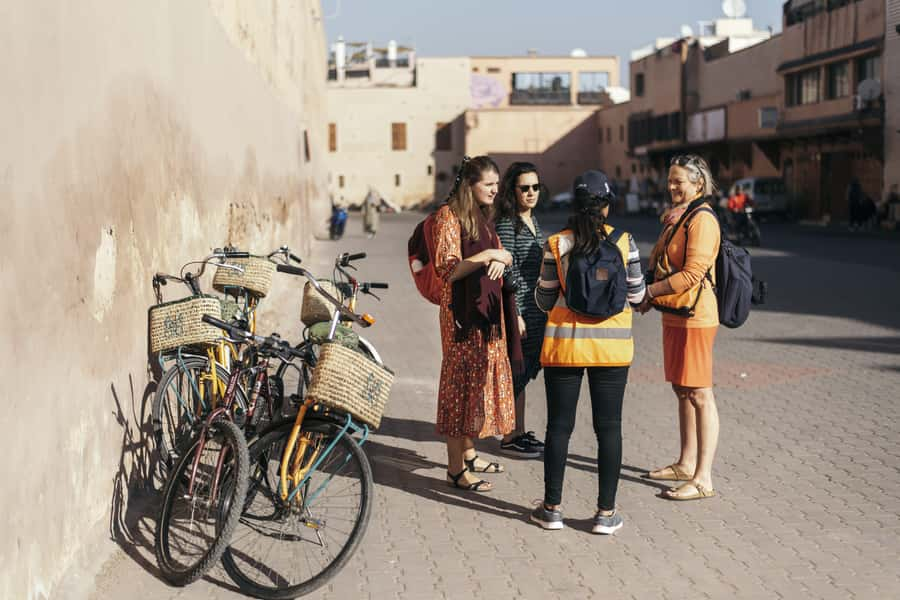
The route passes Koutoubia Mosque, one of Marrakech’s most recognizable landmarks. You see it from the outside while cycling through the city, rather than joining a long formal visit.
The mosque helps anchor the route. After the small lanes and working businesses, you reach a major city symbol that many people associate with Marrakech. Your guide can place it within the surrounding streets and explain the religious setting in a way that connects the building to everyday life.
The tour also stops near the Church of the Holy Martyrs for photographs and a scenic view. This adds another layer to the city’s religious and political story. The stop is brief, but it shows that Marrakech contains more than one tradition and that its modern identity cannot be reduced to the medina alone.
Gueliz and Hivernage: modern Marrakech
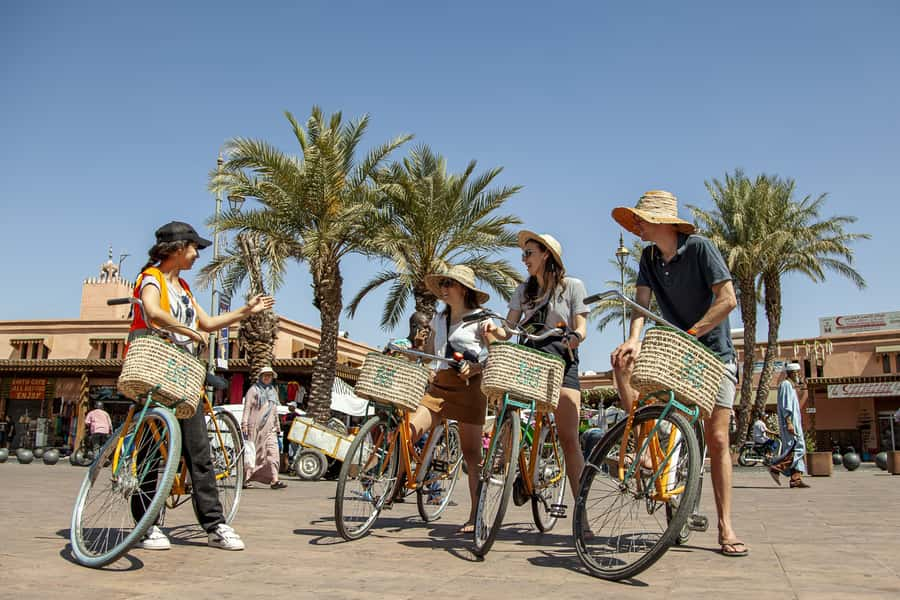
One of the tour’s best ideas is the move into modern Marrakech. In Gueliz and Hivernage, wide boulevards replace the tight lanes. You pass cafes, luxury hotels, and newer city streets.
The contrast is clear. In the medina, you watch for pedestrians, mopeds, and donkey carts. In the newer districts, the roads are wider and the city feels more open, though traffic still demands care. This section helps you understand how Marrakech balances its old center with newer neighborhoods built around modern commerce and tourism.
Some riders find the first move into the new town intimidating, but many settle into it quickly. The route is not fast, and guides keep an eye on the group. A morning departure around 9:30 may offer quieter roads, based on the experience of one group, but starting times can vary, so check availability when you book.
Tea, pastries, and Pikala Cafe
The ride ends back at Pikala, followed by refreshments at Pikala Cafe. You can expect Moroccan pastries, tea, juice, and local snacks. Water and fruit are also included during the outing, and mint lemonade or spiced cookies may appear as part of the refreshment stop.
This finish works well because it gives you time to talk with the guide after the ride. Some people have skipped the snack because they were busy chatting, which says something about the relaxed social side of the cafe stop.
You may also want to return to the cafe later in your visit. It is a practical place to note if you enjoy supporting local projects and businesses tied to the cycling program.
What $34 gets you
At $34 per person, this is good value if you want both transportation and cultural explanation. The price includes the bicycle, a live guide in English or French, water, fruit, suncream, access to the local stops, and refreshments at the cafe.
You are not paying only for three hours of riding. You are paying for a route that would be difficult to reproduce alone, especially the bakery, craft workshop, and hammam explanation. You also save the cost and effort of working out how to connect the medina with Gueliz and Hivernage.
The price does not include hotel pickup or drop-off. There are no stated extra entrance fees for the listed stops, but personal purchases at the cafe or elsewhere are not included. Free cancellation is available up to 24 hours before the tour, and you can reserve now and pay later, which helps if your Marrakech plans are still changing.
Who should book this ride?
I would choose this tour early in a Marrakech stay. It gives you a broad first look at the city, introduces local customs, and helps you recognize places when you return on foot.
It suits confident cyclists, curious first-time visitors, couples, families with older children, and anyone who prefers daily life to a string of famous buildings. It can also work well for solo bookers. One person who booked alone received a private tour with a guide who focused on city life rather than only dates and monuments.
I would think twice if you dislike city cycling, have poor balance, or want a quiet sightseeing morning. The traffic is not a minor detail. You will share the road with mopeds, carts, donkeys, pedestrians, and other bikes. The ride is gentle and mostly flat, but alertness matters more than fitness.
Should you book the Pikala Bikes tour?
Book it if you want Marrakech explained from street level. The bakery, zellige workshop, hammam lesson, Royal Palace gardens, and modern districts create a useful picture of the city’s past and present. The local youth guide program gives the experience a purpose beyond sightseeing, and the $34 price is reasonable for what is included.
Skip it if you want a fully calm ride or feel uneasy on a bicycle in crowded streets. For everyone else, this is one of the more practical ways to get your bearings, learn how local life works, and see parts of Marrakech that are easy to miss from a taxi or a main square.
FAQ
Where does the bicycle tour begin?
The tour begins at the Pikala Bikes headquarters.
How long does the tour last?
The scheduled duration is three hours, though one participant described a tour lasting about three and a half hours.
What languages are available?
Live guides lead the tour in English or French.
What is included in the price?
The tour includes water, fruit, suncream, access to the local stops, and juices and Moroccan pastries at a cultural cafe.
Is hotel pickup included?
No. Hotel pickup and drop-off are not included.
Will I enter the Royal Palace?
No. You pass through the public gardens around Dar El-Makhzen and view the palace from outside.
Do I visit a real bakery?
Yes. You visit a local bakery, see bread baked in a clay oven, and taste fresh Moroccan bread.
Do I use a hammam during the tour?
The tour provides a cultural introduction to the hammam tradition and its social role. A bathing treatment is not listed as part of the experience.
Do I need to be an experienced cyclist?
You should be a confident cyclist because the route includes narrow lanes and traffic involving mopeds, donkeys, carts, pedestrians, and other cyclists. The ride is generally gentle and flat, but careful road awareness is important.
New cycling reviews around the world
- Riga: Beer or Cider Bike Tour★ 4.7 · 121 reviews
- Ria Formosa: Guided Bike Tour (3h), Início na Quinta do Lago★ 4.8 · 14 reviews
- Riga Explorer Bike Tour★ 4.8 · 127 reviews
- Rio de Janeiro: Guided Bike Tours in Small Groups★ 4.5 · 133 reviews
- Rethymno: Guided e-Bike Tour on Mili Gorge and Soft Drinks★ 4.9 · 36 reviews
- Rhodes: Anthony Quinn Bay E-Bike Tour with Snorkeling★ 4.9 · 15 reviews
- Rhodes: eBike Highlights Tour w/ Personal Photographer★ 4.9 · 99 reviews
- Rent a bike in Amsterdam | 1, 2, 3+ hours★ 4.5 · 68 reviews
Marrakech Cycling Tours, compared.
Marrakech:Guided City Cycling Tour – Culture, Colors & Charm
Read our review →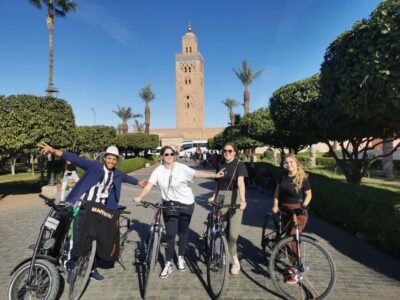
Marrakesh: Toubkal National Park Mountain Bike Trip w/Lunch
Read our review →
Browse the lists this ride appears in