
Review · NEW YORK CITY
NYC: Radical and Weird History Bike Tour of Manhattan
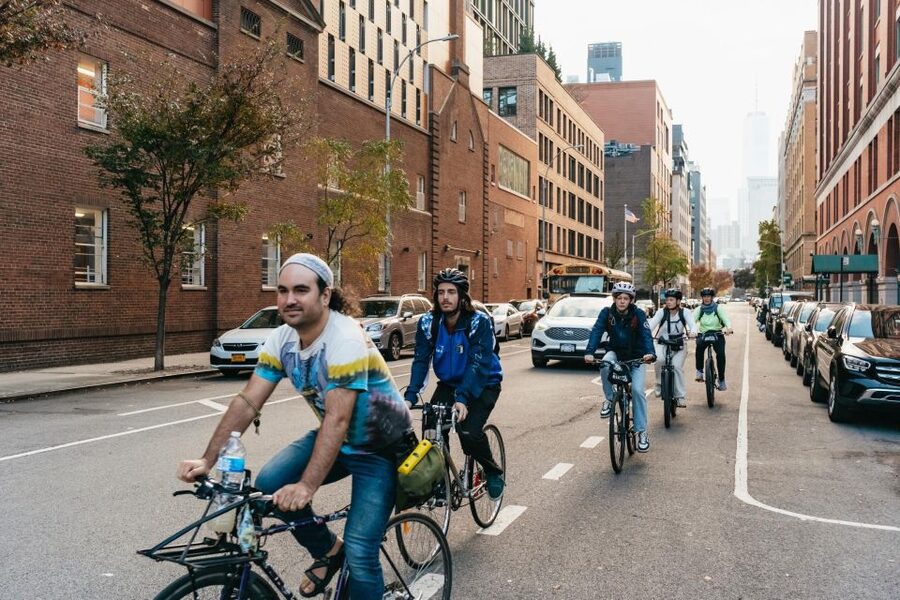
Lower Manhattan’s strangest stories are often found away from the famous sights. This four-hour ride moves from TriBeCa through the Lower East Side, East Village, Greenwich Village, West Village, and the Meatpacking District, using overlooked places to explain New York’s radical past.
I like the street-smart route planning, shaped by a working bike messenger, and the guides’ ability to adjust the talk to your interests. I also like the focus on counter-culture, including Beatnik Greenwich Village and Yiddish anarchist history, rather than another parade of standard landmarks.
The main thing to watch is the unusual pricing. The advertised $46 covers the bike rental, while a $40 guide payment per person is recommended at the end. Also confirm the snack arrangement before you ride, since the tour description says it is included but one booking noted having to pay separately.
Key points to know before you ride
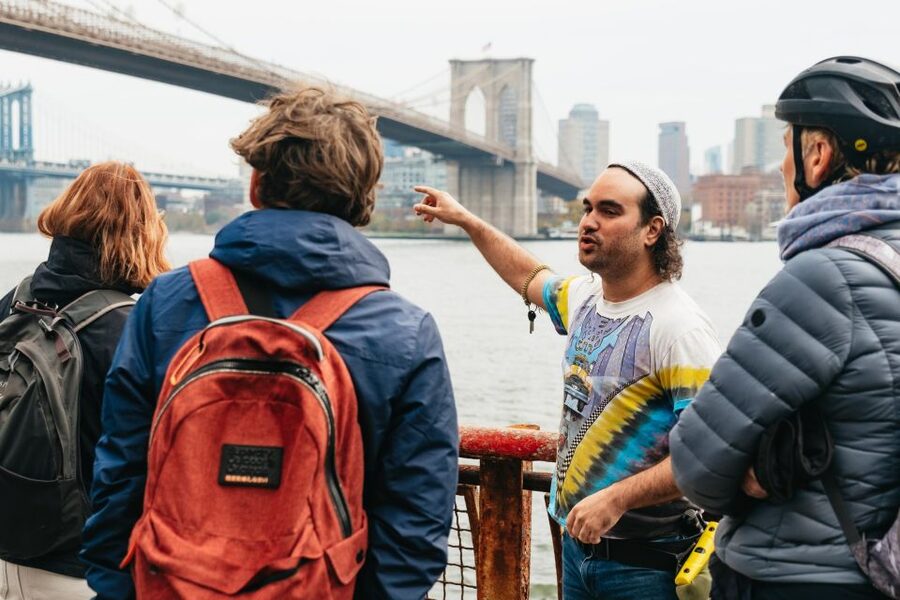
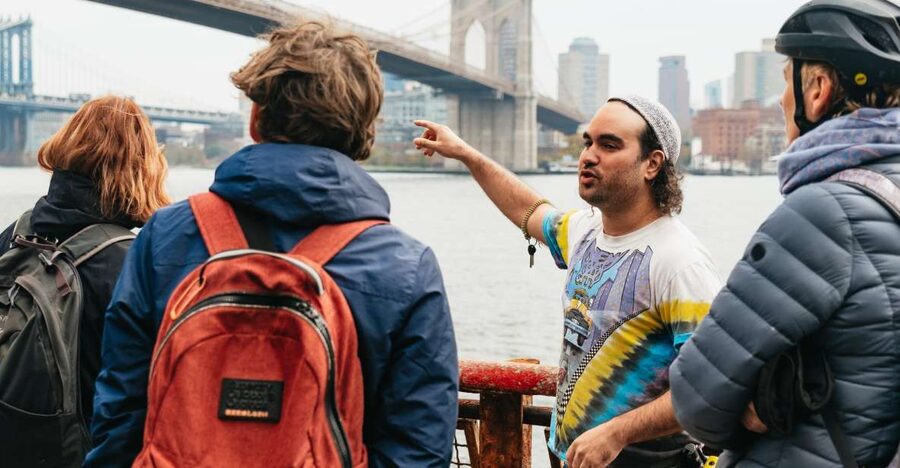
- The route begins and ends at 79 Chambers St in TriBeCa, making it easy to plan around Lower Manhattan.
- The stories focus on radical and unusual New York, including Beatnik culture, Yiddish anarchism, and a Lenin statue on a building.
- Guides are active city cyclists, with Robert, Kevin, Robby, and Holden all identified in recent feedback.
- The ride includes major neighborhoods and quieter stops, with time in the Lower East Side, East Village, Greenwich Village, West Village, and Meatpacking District.
- The listed price needs careful reading: $46 pays for the rental, and $40 per person is recommended directly to the guide.
- You get a mid-tour snack, but ask how it is handled before setting out.
Why this ride sees New York differently
Many Manhattan bike tours use the bicycle as a fast way to connect famous sights. This one uses it as a way to reach the city’s less obvious stories.
You still pass through well-known neighborhoods, but the subject is not simply architecture or celebrity homes. The route looks at political movements, artists, outsiders, and people who challenged the city’s normal order. That gives the ride a sharper point of view than a standard sightseeing loop.
The Lower East Side and East Village are especially useful for this approach. Their streets hold the story of immigration, labor politics, artistic rebellion, and social change. Greenwich Village adds the Beatnik era and a different kind of cultural revolt. By the time you reach the West Village and Meatpacking District, you have a better sense of how Manhattan changed from one neighborhood to the next.
I would choose this tour if you have already seen the main sights, or if you simply prefer stories about people and movements over a checklist of buildings. The guide’s personal interests also matter. This is not presented as a fixed script with the same routine for every group. Robby, for example, adjusted the ride to suit the interests of the people with him, and the route can shift its emphasis accordingly.
More Cycling Trips in New York City:
- NYC: Central Park Bike Rentals
★ 4.2 · 2,528 reviews - NYC: Central Park Bike Rental
★ 4.1 · 1,651 reviews - Central Park Bike Rental
★ 4.7 · 1,509 reviews
Starting in TriBeCa at 79 Chambers Street
The meeting point is Unlimited Biking Brooklyn Bridge at 79 Chambers St. The tour both starts and finishes here, so you do not need to arrange a separate ride back from another part of Manhattan.
The first section takes about 20 minutes in TriBeCa. This is a useful opening because the neighborhood gives you a clear sense of old and new Manhattan in a compact area. You can expect an introduction to local history before the route moves toward the Lower East Side.
A four-hour bicycle tour needs a steady beginning. You are not thrown straight into a long ride, and the return to the same address simplifies the day. Still, arrive ready to ride rather than treating this like a walking talk with a few bicycle stops. The exact starting time varies, so check availability when you book.
The Lower East Side and the politics of ordinary streets
The Lower East Side receives about 45 minutes of guided attention, followed by two shorter visits of roughly 15 minutes each. The area is central to the tour’s purpose because its story reaches beyond food, nightlife, and tenement imagery.
Here you hear about the Yiddish anarchist movement, one of the less familiar parts of New York’s political past. That subject gives the neighborhood more depth than a quick look at old facades. It also shows how immigrant communities shaped political ideas, labor struggles, and public life in Manhattan.
The two shorter stops are described as less conspicuous places with stories that are easy to miss. Their exact names are not supplied, which is part of the tour’s surprise, but you should expect brief visits rather than major museum-style stops. The guide uses these places as prompts for storytelling, so listen closely and ask questions.
This portion may be most rewarding if you like social history. If you want long stretches of free riding or time inside formal attractions, it may feel talk-heavy. The benefit is that you are not merely looking at a neighborhood. You are given a reason to notice it.
East Village: one hour of unusual New York
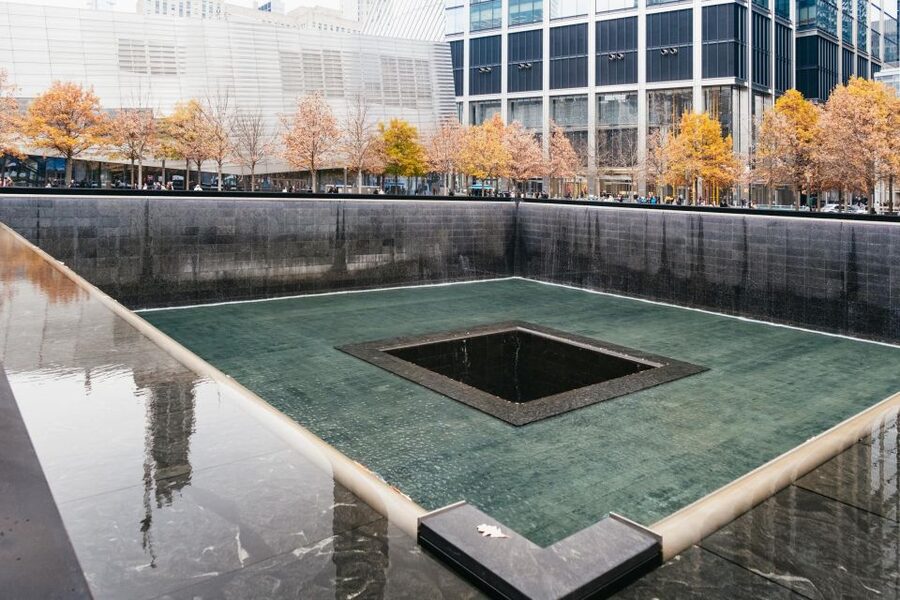
The East Village gets the longest single guided section, about one hour. That timing tells you something about the tour’s priorities. This is not a quick pass through a popular nightlife district. It is one of the main places where the guide develops the city’s alternative story.
Expect more attention to people and movements that sit outside the usual New York narrative. The tour description points to personal stories and local details that many residents may not know, while the feedback highlights unusual stops such as a Lenin statue on a building and the history connected with it.
That kind of stop explains the appeal of the ride. You may pass a place many times without understanding why it matters. A guide who knows the backstory can turn an ordinary block into a sharp lesson in politics, art, or local eccentricity.
Robby received especially strong praise for safe riding, interesting stops, humor, and his ability to adjust the route. Another guide, Holden, was described as funny, charming, and very familiar with the city. Guide assignments can change, so you should not assume one particular person will lead every departure. Robert was ill on one date and arranged for Kevin to take over, and Kevin was praised for listening carefully and showing the less obvious side of New York.
Same roads, a different ride:
- New York City: Highlights of Central Park Bike or eBike Tour
★ 4.6 · 800 reviews - Central Park Bike Rental New York City
★ 4.0 · 560 reviews - Guided Bike Tour of Central Park New York City
★ 4.5 · 537 reviews - Central Park NYC Highlights Small-Group Bike Tour
★ 4.5 · 425 reviews
A snack break that needs one quick question
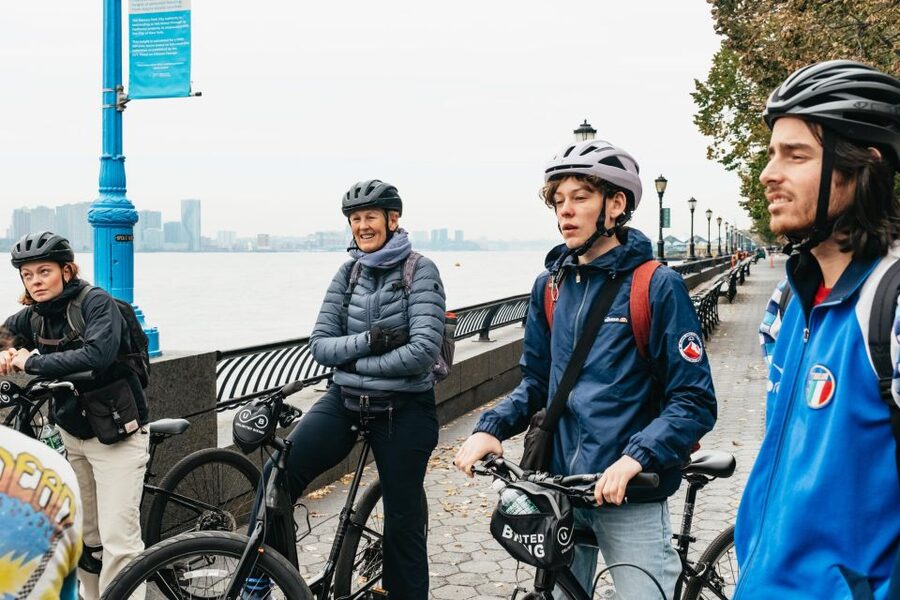
After the East Village, the tour includes about 20 minutes for a break and local snacks. A pause at this point is practical. Four hours on a bicycle, with frequent stops and conversation, can feel much longer without a chance to rest.
The snack is also part of the tour’s local character, though the payment details are not fully consistent. The activity information says a mid-tour snack is included, while one booking reported that food and drink had to be paid for separately. I would ask the provider before departure whether the snack itself is covered or whether you should bring a little cash.
Do not expect this stop to replace a meal. It is a short break built into the ride. Have breakfast first, especially if you are used to eating on a regular schedule.
Greenwich Village and the Beatnik story
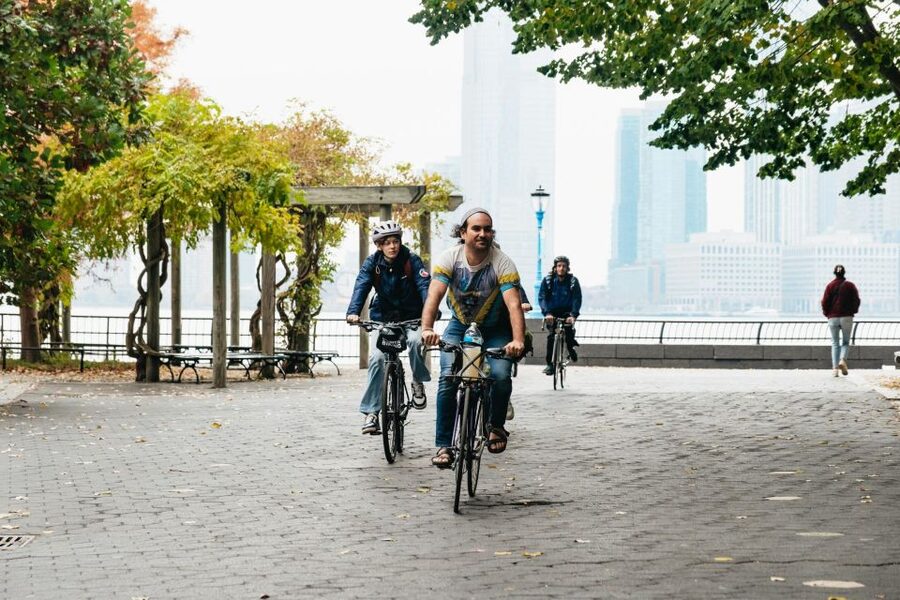
Greenwich Village receives about 20 minutes of guided time. The neighborhood is famous enough that many tours reduce it to cafés, musicians, and picturesque streets. This ride gives it a more specific angle by discussing the Beatnik era and the people who made the Village a center of nonconformist culture.
Twenty minutes is enough for a focused introduction, but not enough for a full neighborhood history. You will probably get a few strong stories and a better sense of why the Village attracted writers, artists, and people who wanted to live outside conventional rules.
The shorter stop also helps keep the day moving. Manhattan is easier to understand when you see several districts in one ride, but the tradeoff is that no single neighborhood receives a museum-level treatment. If Greenwich Village is your main interest, you may want to return on foot later.
West Village and the final run through Meatpacking
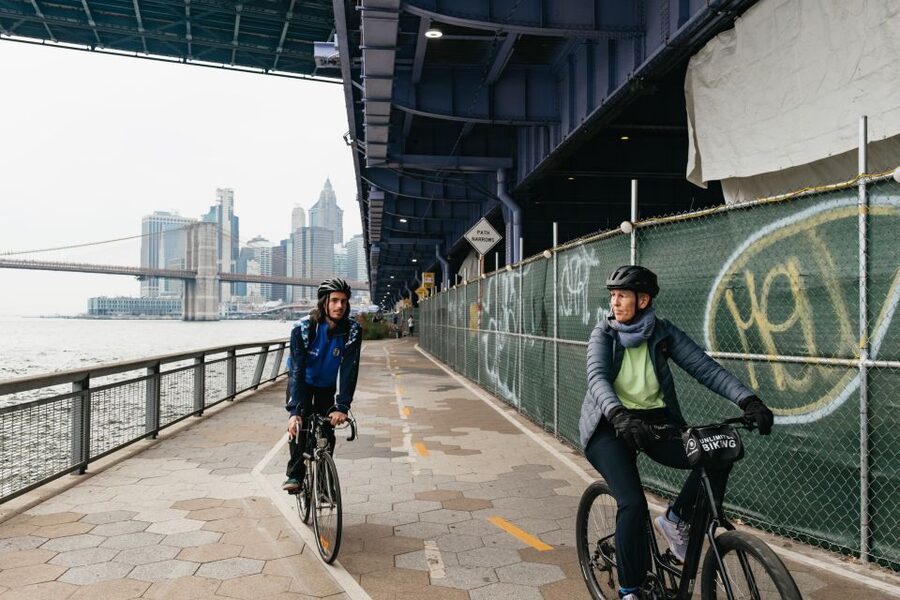
The West Village receives around 25 minutes, followed by 10 minutes in the Meatpacking District. These final sections show how quickly Manhattan’s identity can change from one set of streets to the next.
The West Village portion allows more time than Greenwich Village, though the supplied schedule does not specify each individual stop. You can expect the guide to connect local places with the broader social and cultural story of downtown Manhattan.
The Meatpacking District is brief. Think of it as a final chapter rather than a full tour of the area. Ten minutes gives the guide room to point out a few details before the route turns back toward TriBeCa.
Finishing at 79 Chambers St is convenient, especially if you have evening plans. The route covers a lot of ground, but the bike makes the distance manageable and gives you a street-level view that a bus cannot match.
What the bike adds to the experience
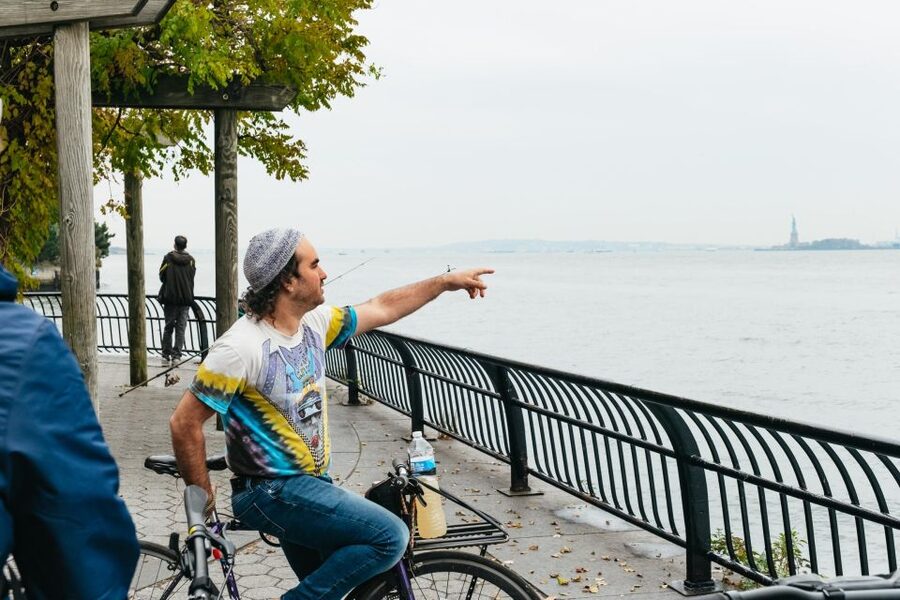
The strongest practical feature is the route design. The experience was planned with input from a real bike messenger, and the feedback repeatedly points to confident movement through Manhattan traffic and good use of calmer streets.
That does not mean you can ignore city riding. Manhattan remains Manhattan. You should be comfortable following a guide, stopping when asked, and staying alert around cars, pedestrians, and intersections. The tour is described as suitable for riders of different skill levels, but it is still an active four-hour outing.
Robby was specifically praised for moving safely through traffic and choosing good cycling routes. That matters more than flashy equipment or a long list of landmarks. A poor route can make a city ride stressful. A well-planned route lets you pay attention to the stories.
The bicycle also changes your sense of scale. You move quickly enough to connect several districts, but slowly enough to notice street signs, building fronts, and small details. You are not sealed behind glass, and you are not walking so slowly that the full route becomes exhausting.
Guide style, group expectations, and the human side
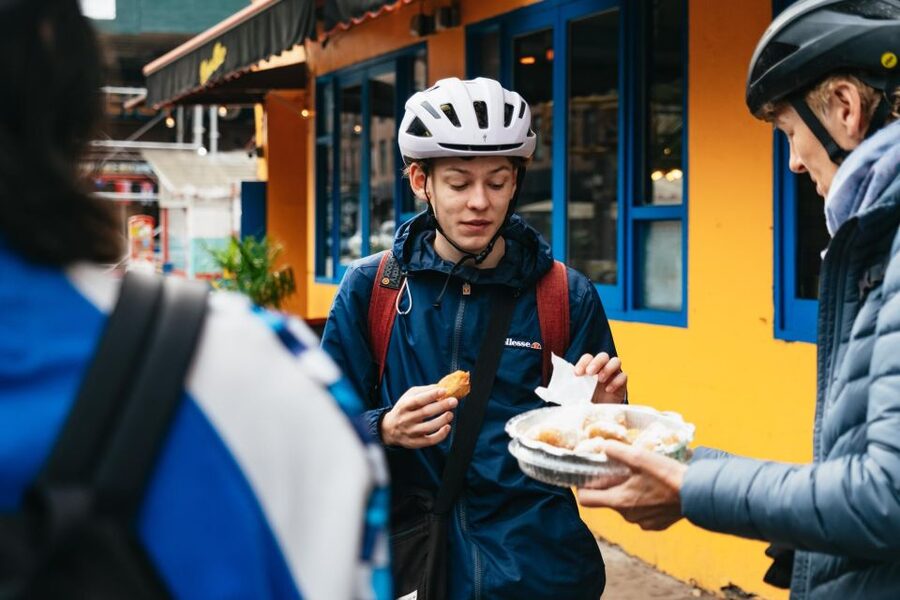
The guides are central to the experience. This is a story-led ride, not an audio tour with a bicycle attached.
Robert, Kevin, Robby, and Holden are the names connected with recent departures. The descriptions of them point to a relaxed, funny, flexible style. Kevin listened to the group’s expectations and adjusted the experience toward the less familiar side of New York. Robby was praised for combining safe cycling with lively information, and Holden for his anecdotes, charm, and strong riding skills.
Because the guide may vary, your experience will depend partly on who leads the group. That is not necessarily a problem. The design of the tour leaves room for the guide’s own interests, which helps explain why the stories feel personal rather than mechanical. It also means the exact emphasis may differ from one date to another.
The tour is conducted in English. If you enjoy asking questions, do so. The format appears to reward curiosity, especially when a strange statue, overlooked building, or political story catches your attention.
The real cost and what you receive for it
The advertised price is $46 per person, but read the pricing note carefully. That initial fee covers the bike rental. A guide payment of $40 per person is recommended directly after the tour, bringing the suggested total to about $86 per person before any separate snack cost.
That total is not automatically poor value for a four-hour guided ride in Manhattan. You are paying for a bicycle, a local guide, route planning, neighborhood interpretation, and a snack break. The value is strongest if you want a personal, unusual look at downtown history rather than a basic bicycle rental.
The concern is clarity, not simply cost. Some people prefer an all-in price at checkout. The direct guide payment avoids service fees and gives more of the money to the local expert, but you need to budget for it from the start. I would also confirm the snack arrangement so the final cost does not surprise you.
The reserve-now-and-pay-later option gives you some flexibility, and cancellation is free up to 24 hours before the tour for a full refund. Starting times depend on availability.
Who should book this ride
I would recommend it to you if you enjoy:
- Political and social history rather than only famous landmarks
- Small local stories and unusual city details
- A guide who can respond to your interests
- Four hours of active sightseeing by bicycle
- Seeing several downtown neighborhoods in one outing
It suits curious first-time visitors who want a less standard introduction to Manhattan, as well as repeat visitors who have already covered the Empire State Building, Times Square, and the major museums.
I would be more cautious if you dislike cycling in city traffic, want a slow walking tour, or need a fully fixed price with no direct payment at the end. The ride is described as accessible to different skill levels, but four hours still requires energy and attention.
Should you book the Radical and Weird History Bike Tour?
Book it if you want New York told through outsiders, rebels, immigrants, artists, and odd local landmarks. The strongest parts are the safe route planning, the East Village and Lower East Side stories, and the guides’ personal approach. The ride gives you a useful sense of how downtown neighborhoods connect, while still leaving room for surprising details.
Before paying, confirm two things: the $40 guide payment and whether the mid-tour snack is covered. If those terms suit your budget, this is a lively choice for anyone who prefers the city’s strange side to its standard postcard view.
FAQ
Where does the bike tour start and finish?
It starts and ends at Unlimited Biking Brooklyn Bridge, 79 Chambers St in TriBeCa.
How long does the tour last?
The tour lasts four hours.
Which neighborhoods does the route visit?
The route includes TriBeCa, the Lower East Side, the East Village, Greenwich Village, the West Village, and the Meatpacking District.
What language is the tour conducted in?
The live tour is conducted in English.
Is a guide included?
A local guide leads the bicycle tour. The advertised $46 initial fee covers the bike rental, and a guide payment of $40 per person is recommended directly to the guide after the tour.
Is food included?
A mid-tour snack is listed as included, but one booking reported paying separately for food and drink. Confirm the arrangement with the provider before the ride.
Can I cancel the booking?
You can cancel up to 24 hours in advance for a full refund. The reserve-now-and-pay-later option lets you book without paying immediately.
New cycling reviews around New York City
- NYC: Central Park Guided Bike Tour★ 4.8 · 11 reviews
- NYC: English or German Central Park Bike Tour & eBike Option★ 4.6 · 70 reviews
- New York City: Central Park Bike Rental★ 4.3 · 288 reviews
- NYC: Guided Central Park Bike Tour or Electric Bike Tour★ 4.8 · 18 reviews
- New York City: Bike Rentals★ 4.5 · 22 reviews
- From Manhattan: 2-Hour Brooklyn Bridge Sightseeing Bike Tour★ 4.4 · 125 reviews
- New York City: A Day in Manhattan Cycling Tour★ 4.6 · 28 reviews
- Electric Bike Tour: Classic Manhattan And More!★ 3.4 · 15 reviews
New York City Cycling Tours, compared.

New York City: Highlights of Central Park Bike or eBike Tour
Read our review →
Central Park NYC Highlights Small-Group Bike Tour
Read our review →
New York City: City Highlights Guided Bike or eBike Tour
Read our review →Browse the lists this ride appears in