
Review · MEXICO
Mérida: Montejo Boulevard and Historic Center bike tour
Mérida is easier to understand from a bicycle seat. This 2.5-hour ride links the grand homes of Paseo de Montejo with the colonial center, then finishes near La Plancha and a local market drink. Guide Ivan is especially good at explaining how Maya, colonial, and Yucatecan stories fit together.
I like the gentle pace and the useful route. You cover roughly 4 miles without spending the whole day on foot, and most of the first half uses bicycle lanes. I also like the small-group feel, which gives you room to ask about restaurants, bars, neighborhoods, and local customs.
The main caution is the bicycles. Two guests found theirs shabby, so this is not a polished cycling tour built around premium equipment. You also need to ride confidently, handle Mérida’s heat, and stay close enough to hear the guide’s speaker.
What makes this Mérida bike tour worth considering
- Paseo de Montejo by bike: Ride beneath trees and palms along Mérida’s best-known avenue instead of walking its full length in the sun.
- Ivan’s historical storytelling: He explains the mansions, colonial buildings, Maya connections, and modern city with patience and clear English.
- A flat, relaxed route: The 4-mile, 7-kilometer course has no significant hills and moves at an easy pace.
- A market refreshment: Your included non-alcoholic drink gives you a practical break from Mérida’s heat.
- Family-friendly bike choices: Children’s bikes, child seats, adult tricycles, and tandem bicycles are available.
- A useful first look at Mérida: The route gives you enough city context to choose where to return for meals, museums, and evening walks.
Riding from Palacio Cantón to Paseo de Montejo
The meeting point is the corner of Calle 43 and Paseo de Montejo, outside the Museo Regional de Antropología, Palacio Cantón. Wait at the museum corner rather than searching for a row of bicycles there. The bikes are collected on a nearby side street with the guide.
The bicycle fitting is straightforward. You can choose among different sizes and colors, and the seat can be adjusted to your height. Helmets are provided, and the operator has bicycles for children, seats for small children aged two and five, tandem bicycles, and an adult tricycle that can carry two passengers in back while one person pedals and steers in front.
That variety makes the tour more practical for families and mixed groups. Still, check the bike before setting off. Most of the praise for this outing concerns the guide and route, while two four-star ratings specifically mention bikes that could use better maintenance. If you are used to high-quality urban rental bikes, keep your expectations modest.
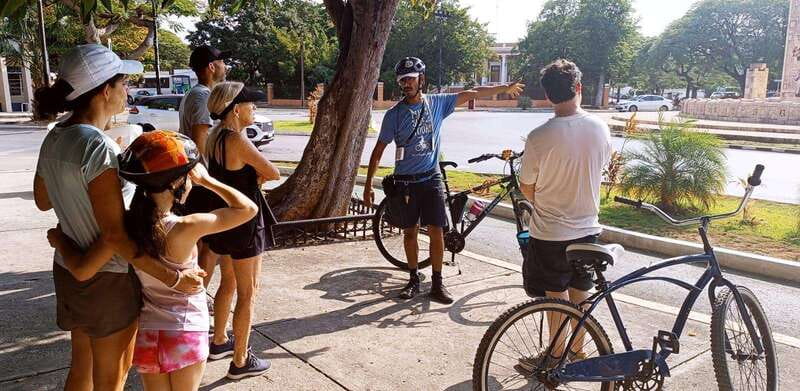
Once everyone is fitted, you head onto the bicycle lanes of Paseo de Montejo. The avenue’s trees and palms offer some protection from the sun, though you should still bring water and a hat. Mérida can be hot, and shade is helpful rather than magical.
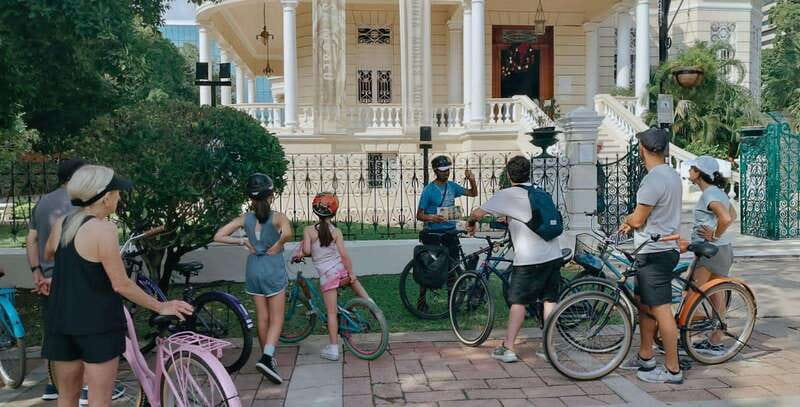
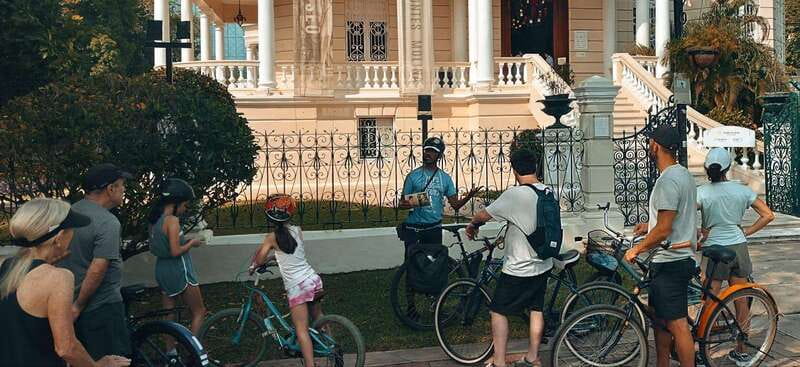
Guide Ivan uses a speaker while riding at the front, so you can hear the commentary without stopping at every building. A handheld laser pointer has also been useful for indicating details higher up on monuments and facades. The system works best when the group stays together. One practical point: if you drift too far behind, you may miss part of the explanation.
More Cycling Trips in Mexico:
- Electric Bike Beach Adventure with Tequila Tasting and Lunch
★ 5.0 · 1,162 reviews - Frida Kahlo VIP [Museum Tickets Included] Bike, Markets & Churros
★ 5.0 · 1,072 reviews - Mexico City: 19 City Highlights Bicycle Tour
★ 5.0 · 425 reviews
The Monument to the Homeland and Mérida’s grand avenue
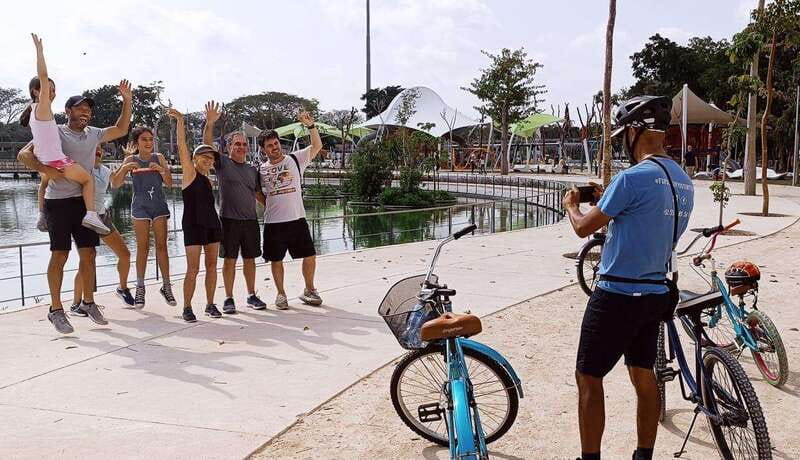
The first major stop is the Monument to the Homeland, where the group pauses for about 15 minutes. You get time for photographs and a short explanation of the monument’s unusual place in Mexican public art.
This is more than a quick photo stop. The monument gives the guide a natural opening to discuss Mexico and Yucatán, and its carved scenes reward a closer look. You are not simply pedaling past a landmark while trying to take in a long speech. You stop, listen, and have time to look around.
You then continue along Paseo de Montejo, pausing at four attractive mansions. The guide explains who lived in them and how their owners connected to the period when Yucatán’s wealth grew through henequen, a plant used for fiber. The houses make more sense once you understand the money behind their European-influenced design.
The tour does not treat the avenue as a string of pretty facades. It connects architecture to people and economics. That is one of the strongest reasons to choose a guide-led ride instead of simply renting a bicycle and following the road yourself.
There is also a scheduled 20-minute break on Paseo de Montejo. Depending on the exact route and conditions, some explanations happen in the shade, and you may walk a short distance to inspect an attraction more carefully. The stop helps keep the ride comfortable, especially around midday.
Entering Plaza Grande by bicycle
The second half follows a safe street toward Mérida’s historic center. Here the character of the ride changes. You leave the broad avenue and move through the streets around Plaza Grande, where the city’s colonial landmarks are packed much closer together.
The route is flat throughout, but the historic center requires more attention than the bicycle lanes. Cars share some roads with cyclists, so listen closely to the guide’s directions and keep the group together. Past participants have praised Ivan’s safety habits and the calm pace, with one noting that drivers were patient around the bikes.
At Plaza Grande, the guide gives about 15 minutes of explanation. This is the city’s main gathering place and a useful point for understanding Mérida’s layout. You see major buildings around the square, including the cathedral and Casa Montejo, while hearing how the colonial center developed.
The tour also points out parks created in the 19th century and the main theater from the outside. This is a good orientation stop if you are new to Mérida. It gives you a map in your head: the main square, the cathedral, the former colonial residences, nearby parks, and the streets that lead toward markets and other neighborhoods.
Casa Montejo and Mérida Cathedral
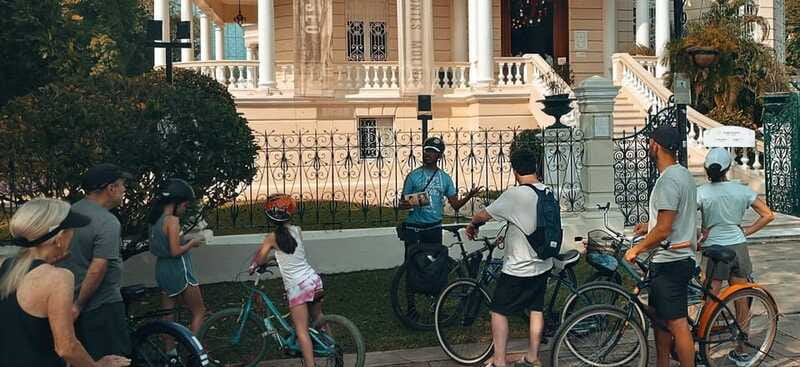
Casa Montejo receives roughly 10 minutes of guided attention. The building is tied to the conquistador family who helped establish Spanish control in the region. Its facade is one of the clearest places to discuss conquest, status, and the visual language of colonial power.
The short stop works best as part of the larger route. You do not spend enough time here for a full museum visit, and the tour does not present it that way. Instead, you get the building’s role in the city and can return later if you want more time.
The cathedral stop is briefer, around five minutes. That may sound short, but it keeps the bicycle tour moving and prevents the route from turning into a series of long standing lectures. You get a concise explanation before continuing through the center.
If your priority is detailed interior visits, this outing will feel like an introduction rather than a substitute for independent sightseeing. If your priority is seeing several key places in one morning or afternoon, the short stops are a sensible trade.
Same roads, a different ride:
- Mexico City: 19 City Highlights Bicycle Tour
★ 5.0 · 302 reviews - Mexico City; ART NACO : Murals & Street Art Bike Tour
★ 5.0 · 284 reviews - Mexico City Highlights E-Bike Tour With Foodie Stops
★ 5.0 · 226 reviews - Beach UTV and Sky Bike Combo in Cabo
★ 4.5 · 200 reviews
La Plancha and the final stretch
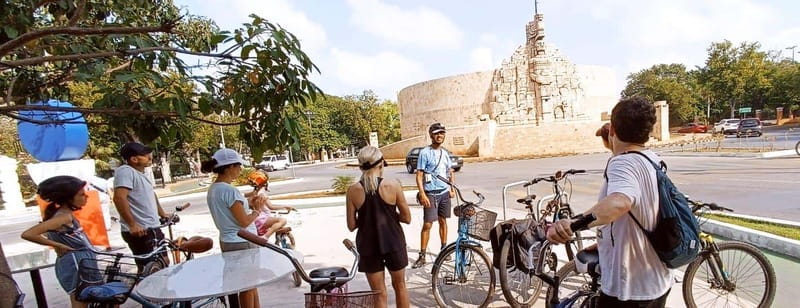
La Plancha is scheduled for about 25 minutes and includes a photo stop, a visit, and more explanation. The itinerary places this near the end, giving you time to see a different part of Mérida after the formal colonial center.
The stop is useful because the tour does not limit itself to the most photographed buildings. You get another point of reference for the city and a chance to pause after riding. Some of the attractions here are best viewed on foot, and the guide may walk with you briefly so you can look more carefully.
The route then returns to the Palacio Cantón meeting area. The bicycle portion covers about 4 miles, or 7 kilometers, over 2.5 hours. That works out to a relaxed pace, with much of the time spent listening, stopping, and taking photos rather than constantly pedaling.
The market drink is a small but smart inclusion
A non-alcoholic drink is included either halfway through the ride or at the end, depending on the route. The stop takes place at a market in a historic, colorful neighborhood, and the drink may be a fruit beverage or fresh coconut.
This is not a full food tour, so do not book it expecting several tastings. The value is practical. A cold drink breaks up the heat, and a market gives you a glimpse of everyday city life beyond the polished avenue and major monuments.
The drink also creates an easy moment to ask for local advice. Several people have found Ivan generous with suggestions for restaurants, bars, places to stay, and future stops in Mexico. Those recommendations can be more useful than a long list printed on a website because you can explain what you like and ask follow-up questions.
How the guide shapes the experience
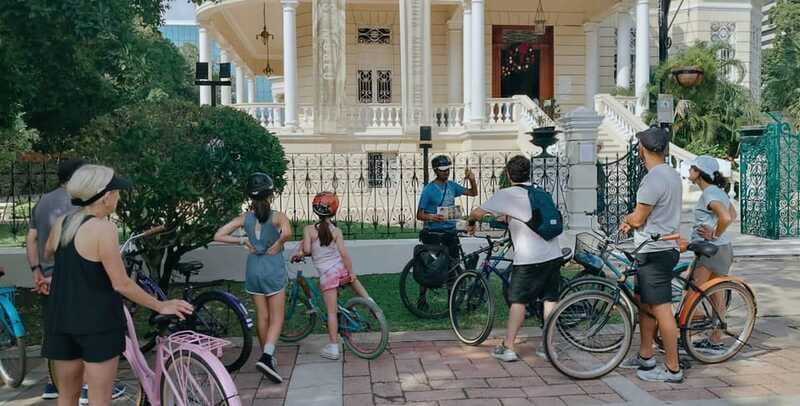
Ivan is the guide most often associated with this experience, and his role is a major part of its appeal. He speaks English and Spanish, asks questions, answers them in detail, and connects city history with Maya and Mexican culture.
His style is not just a recitation of dates. He explains buildings, people, and the city’s past in a way that helps you see why Mérida looks the way it does. His patience is especially useful for first-time visitors who want context but do not want a formal classroom lecture.
The small-group format helps. You can ask about a mansion, a church, or a restaurant without losing the whole group’s attention. The guide also takes breaks when needed, which matters in hot weather.
There is one thing to manage: stay close. One otherwise very positive account noted that the group sometimes spread out, making it harder to hear and regroup. The speaker helps, but it cannot solve a large gap between you and the guide.
Heat, rain, fitness, and bike safety
You need to be able to ride a bicycle for 2.5 hours at an easy pace. The tour is not suitable for people who cannot ride, wheelchair users, people with epilepsy, people with a low fitness level, or people above the stated weight limits. The supplied information lists several overlapping limits of 309, 331, and 350 pounds, so anyone near that range should confirm the applicable restriction before booking.
Wear comfortable clothes, bring water, and use a hat. Shade is available at stops, and trees line much of Paseo de Montejo, but Mérida’s heat remains part of the experience.
Rain or high temperatures can change the route. The tour keeps the same duration while choosing a safer or more comfortable path. That flexibility is sensible, though it means the exact sequence may shift from the advertised plan.
The first section uses bike lanes. The second uses streets in the historic center. Ivan’s safety focus has been praised, but this is still an urban ride, not a closed cycling path. Pay attention, keep your hands ready on the brakes, and do not fall behind.
Is $40 a fair price?
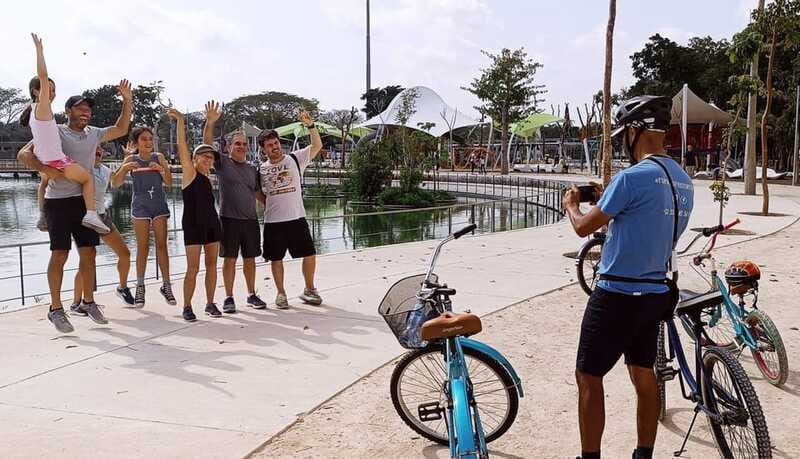
At $40 per person, the tour offers solid value if you want a guided introduction to Mérida rather than a simple bike rental. The price includes the bicycle, helmet, guide, historical commentary, route planning, and a non-alcoholic drink.
You also save time. Covering Paseo de Montejo, several mansions, Plaza Grande, Casa Montejo, the cathedral, La Plancha, and a market on foot would take more effort and could leave you worn out in the heat. The bicycle lets you connect these places without spending the entire outing walking between them.
The value is lower if you already know Mérida well, dislike group pacing, or expect a premium bicycle. The bikes are functional but may not meet the standards of serious cycling enthusiasts. You are paying mainly for local interpretation, safety support, and an efficient route.
Free cancellation up to 24 hours before the start and reserve-now, pay-later booking make it easier to fit the ride into a changing itinerary. The tour lasts 2.5 hours, and starting times depend on availability.
Who should book this ride?
I would choose this tour early in a Mérida stay. It gives you a city overview, points out places worth revisiting, and supplies restaurant and bar suggestions while you still have time to use them.
It suits couples, families with suitable bike arrangements, and first-time visitors who want history with light exercise. The flat route and slow pace are friendly to casual cyclists, but you still need basic control and enough stamina for the full outing.
I would skip it if you cannot ride, need step-free access, want a private museum tour, or care more about equipment than guiding. You should also consider the weather before booking. On a very hot day, a shaded route and regular pauses help, but no bicycle tour can remove the heat entirely.
Should you book it?
Book this Mérida bike tour if you want a relaxed, useful introduction to the city with plenty of context and personal advice. The strongest reasons are Ivan’s careful explanations, the route linking Paseo de Montejo to the historic center, and the chance to see more city than you could comfortably cover on foot.
Go in knowing that the bikes may be ordinary, the group needs to stay together, and the route can change with heat or rain. For most visitors who value local history, easy cycling, and practical recommendations, $40 is a fair price for a well-paced first look at Mérida.
FAQ
Where does the Mérida bike tour meet?
Meet at the corner of Calle 43 and Paseo de Montejo, outside the Museo Regional de Antropología, Palacio Cantón. Wait at the museum corner, since the bicycles are collected on a nearby side street.
How long is the tour?
The tour lasts 2.5 hours and covers about 4 miles, or 7 kilometers.
Is the route difficult?
The entire route is flat and follows a relaxed pace. You still need to know how to ride a bicycle and have enough fitness for a 2.5-hour outing.
Are bicycles and helmets included?
Yes. Bicycles and helmets are included. The operator has different bike sizes, children’s bikes, seats for small children, tandem bicycles, and an adult tricycle.
What languages are available?
The live tour is offered in English and Spanish.
What happens if it is very hot or rains?
The tour keeps the same duration, but the route may change to protect the group’s safety and comfort. Bring comfortable clothes, water, and a hat.
New cycling reviews around Mexico
- Oaxaca: Guided Bike Tour to the Largest Tree in the World★ 5.0 · 16 reviews
- Oaxaca City: Bike Tour with Professional Guide+Art workshop★ 4.8 · 23 reviews
- Mexico City: Private Chapultepec Park Bike Tour★ 4.8 · 16 reviews
- 🟢Street Food Bike Tour Mexico City🟢★ 5.0 · 15 reviews
- Mexico City: Guided Bike Tour of Culture and Local Taste★ 5.0 · 14 reviews
- Mexico City: Chapultepec & Reforma Historic Bike Experience★ 4.5 · 30 reviews
- Mexico City: Art Naco, murals & street art bike tour★ 4.7 · 166 reviews
- Electric Bike City Tour with a taco stop.★ 4.9 · 58 reviews
Mexico Cycling Tours, compared.

Electric Bike Beach Adventure with Tequila Tasting and Lunch
Read our review →
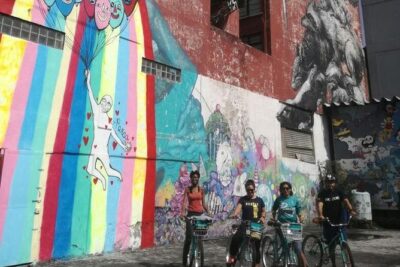
Mexico City; ART NACO : Murals & Street Art Bike Tour
Read our review →
Mexico City Highlights E-Bike Tour With Foodie Stops
Read our review →
E-Bike City Tour though Cozumel & Taco Tasting Tour
Read our review →
Browse the lists this ride appears in