
Review · ROME
Appia Antica & Aqueducts e-Bike Tour – Official Provider
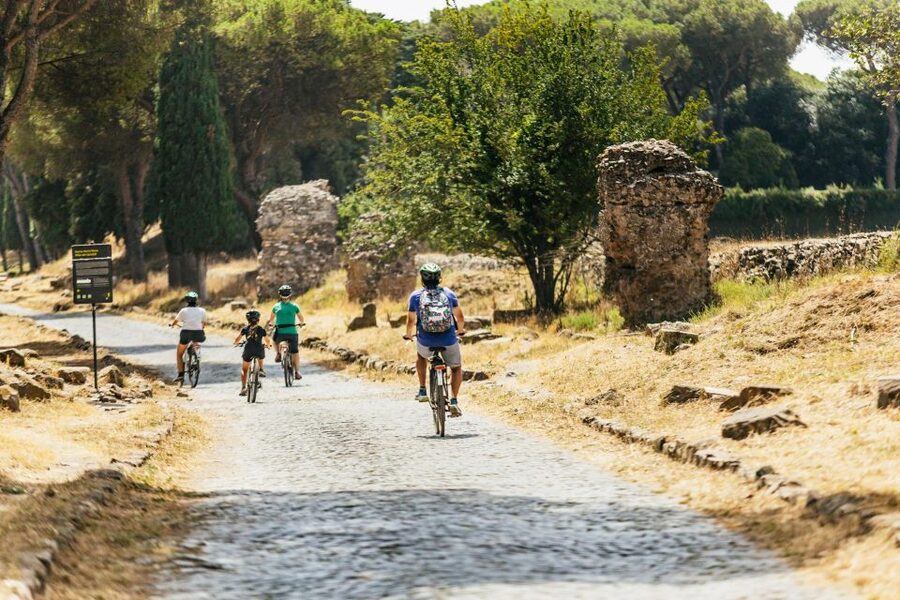
The best part of this tour is that Rome quickly gives way to open fields, ancient ruins, and the rough stone of the Appian Way. You ride the same road once used by soldiers, merchants, pilgrims, and emperors, then continue to the towering arches of the Aqueducts Park. I like the mix of famous monuments and quieter stretches, and I like that the e-bike makes the long route practical without turning it into a workout. The main drawback is that the ride includes traffic and uneven, mostly off-road sections, so it is not ideal if you are nervous on a bicycle.
I also like the guide-led storytelling at places such as Maxentius’ Circus and the Tomb of Cecilia Metella. Guides including Federico, Sara, and Alex have been singled out for clear explanations, care at road crossings, and entertaining stories. Less experienced cyclists may slow the group, though, so confident riders should be prepared for a relaxed pace rather than a fast ride.
Key points to know before you book
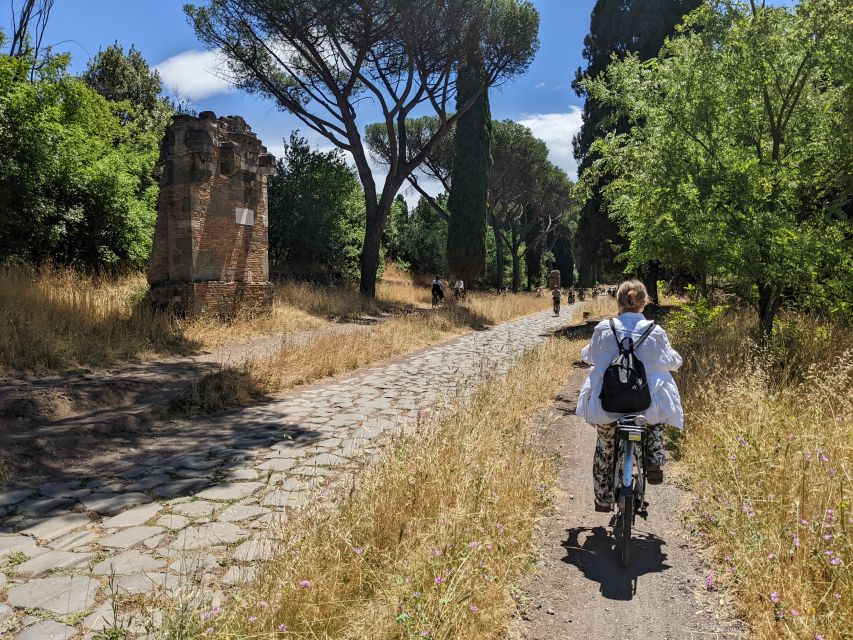
- Ride ancient Roman road stones: The Appian Way still carries wheel marks from carts and wagons used long ago.
- Cover a large Roman area: The route links the Appian Way, Caffarella Valley, and Aqueducts Park in 3.5 hours.
- Use an e-bike for the full route: This tour includes traffic and off-road stretches and is offered only with electric bikes.
- See Maxentius’ Circus for free: The complex includes the circus, villa, and mausoleum of Valerius Romulus.
- Add the catacombs separately: Saint Sebastian or Saint Callixtus can be visited for €10 per person, paid on site.
- Expect a rain-or-shine outing: Bring suitable clothing, water, and identification.
Why the Appian Way is worth leaving central Rome
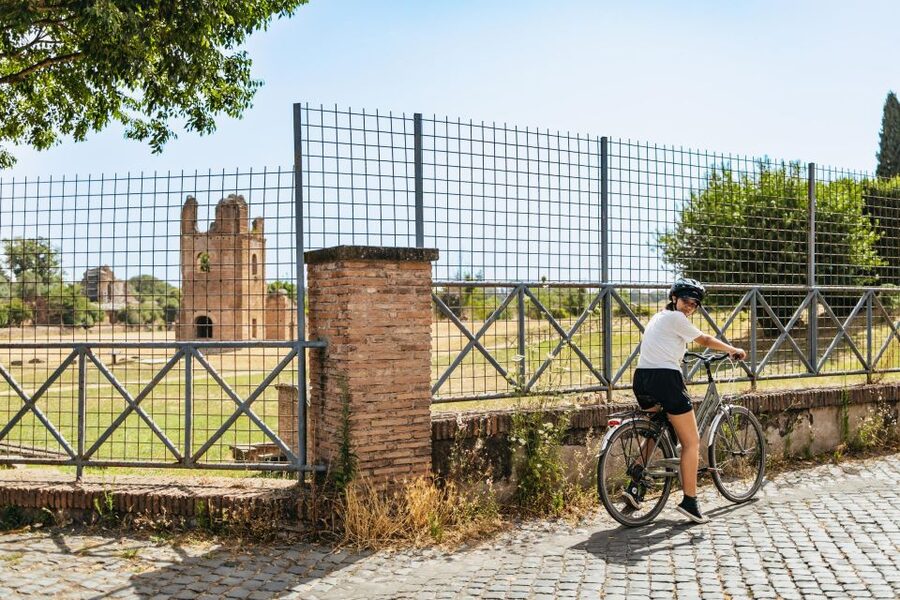
Rome’s central sights can fill several days, but the Appian Way shows you a different city. About 2 kilometers from Circus Maximus, the protected Appian Way Regional Park opens into a vast archaeological area covering 4,500 hectares.
You are not simply cycling between isolated ruins. The road itself is the attraction. Large basalt paving stones form an uneven route beneath your tires, and the surface still carries marks made by wagon wheels. That physical connection gives the outing more weight than another stop where you only look at a monument behind a barrier.
The old road once served military needs before carrying traders, pilgrims, writers, and other travelers. As you move beyond the dense streets of Rome, tombs, churches, villas, and broken Roman structures appear beside the route. I like this setting because the ruins are not presented as a tidy museum display. They are spread across a working park, with space between them and time to notice the countryside.
The ride begins at Centro Servizi Appia Antica, also known as EcoBike, at Via Appia Antica 60. Before setting off, your English-speaking guide explains the area and shows you how to handle the e-bike. That introduction matters if you have not used an electric bicycle before.
More E-Bike Tours in Italy
- Rome EBike Tour: Appian Way, Catacombs & Roman Aqueducts
★ 5.0 · 1,766 reviews - Rome: Top Highlights & Hidden Gems Tour by Cannondale E-Bike
★ 4.9 · 1,760 reviews - Rome: Appian Way & Aqueducts E-Bike Tour (Catacombs & Food)
★ 4.9 · 1,498 reviews
From Domine Quo Vadis to the old Roman road
The first meaningful stop is the Church of Domine Quo Vadis. Its name refers to the Latin phrase associated with Saint Peter, who, according to tradition, met Jesus here while fleeing Nero’s persecution of Christians.
The story says that Jesus disappeared after the encounter, leaving footprints in the pavement. The church gives the route an early Christian layer before the ride moves deeper into Roman roads, tombs, and imperial remains.
From here, you follow the Appian Way toward the archaeological sites. The route is not presented as a quick transfer. Your guide points out the remains along the road and explains why the Appian Way mattered to Rome’s expansion and movement.
This first portion also shows why the e-bike is useful. The route is long enough to connect several separate sites, and the old paving can be bumpy. The electric assistance helps you keep moving without treating every rough patch or incline as a test of fitness.
The ride is roughly 70 percent off-road and 30 percent on streets, based on the practical experience of one rider. That is a useful way to picture the outing. You get plenty of park riding, but you do not avoid traffic entirely. At road crossings, guides such as Federico have been praised for keeping an eye on the group and helping riders move safely.
Maxentius’ Circus and an emperor’s private complex
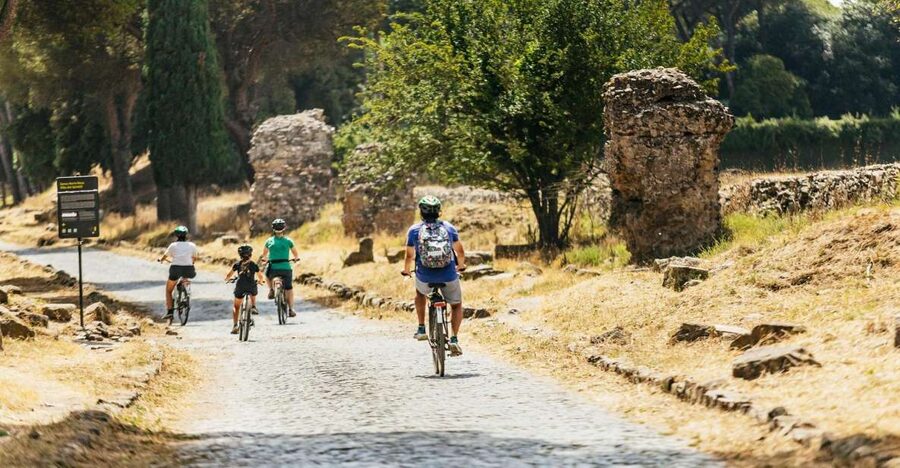
The Circus of Maxentius is one of the strongest stops on the route. It was the private circus of Emperor Maxentius and is described as the best-preserved Roman circus of its kind.
The free complex includes the circus, Maxentius’ villa, and the mausoleum of his son, Valerius Romulus. Your guide explains how the buildings relate to one another, helping you picture this as a working imperial property rather than just a long ruin beside the road.
The circus also has a film connection. The chariot-race scenes in Ben-Hur, directed by William Wyler and starring Charlton Heston, were filmed here. That detail adds a bit of fun to the stop, but the site is worth your time even if you have never seen the movie.
You should expect a guided visit rather than a long, independent exploration. The tour has to keep moving to reach the Aqueducts Park, so listen closely while you are at each stop. The benefit is that you see several major sites in one outing instead of spending a full day finding them on your own.
Cecilia Metella and the Appian Way’s most famous tomb
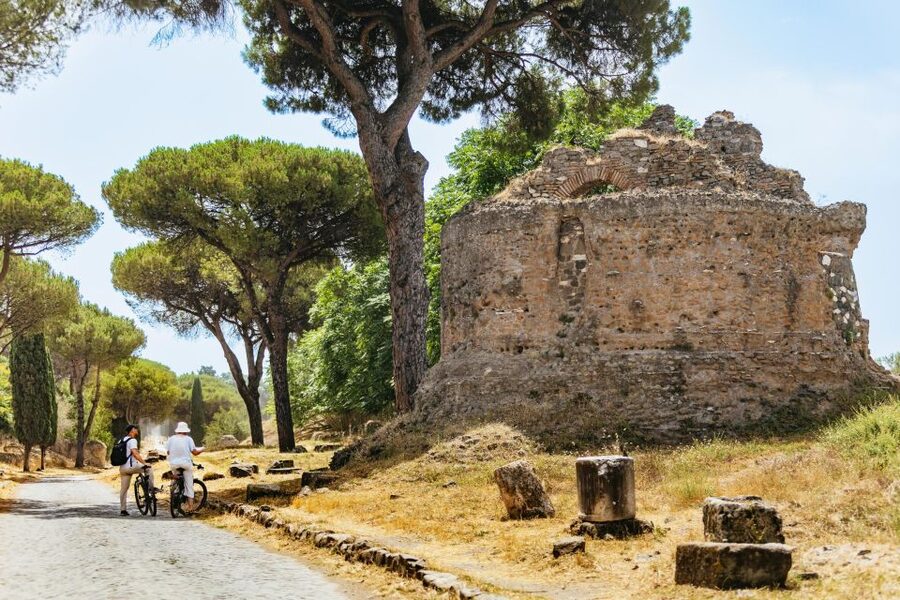
The Tomb of Cecilia Metella appears on higher ground above the road. You pass by rather than making it a full interior visit, but its large round form is hard to miss.
Very little is known about Cecilia Metella beyond her family background, yet her tomb became important again during the Middle Ages. The Caetani family used its position as part of a fortified settlement and controlled passage through the area. People moving along the road had to pay a duty, and the settlement developed into a self-contained village with its own enclosure.
That later use is part of what makes the Appian Way so interesting. The road was not frozen in ancient times. Roman structures were reused, fortified, and folded into medieval power networks. I find that kind of layering more useful than a simple list of dates because it shows how the same route continued to matter long after the empire changed.
Since this is a pass-by point, you should not book the tour expecting a detailed indoor visit to every monument. The outing is about the full route and its connections. You see more sites than you would on foot, but some stops receive a guide’s explanation from outside rather than a long entry.
More E-Bike Tours in Rome
- Rome: Appian Way, Catacombs, & Roman Aqueducts E-bike Tour
★ 4.9 · 1,421 reviews - Rome City Small Group Bike Tour with quality Cannondale EBike
★ 5.0 · 1,380 reviews - Rome by Night – Ebike Small Group Tour – Food and Wine (Option)
★ 5.0 · 1,275 reviews - Rome by Night: E-bike Small Group Tour -Food & Wine (Option)
★ 4.9 · 1,233 reviews
The optional catacombs of Saint Sebastian or Saint Callixtus
You can add a catacomb visit at Saint Sebastian or Saint Callixtus. The entrance is not included in the tour price, and each option costs €10 per person, paid on site.
The catacombs offer a different experience from the open-air route. Instead of riding past tombs and villas, you go underground into an early Christian cemetery beneath the Appian Way. The visit is optional, so you can decide during the outing if you want to add this extra layer.
I would consider the catacombs if underground religious sites are a priority for you. If you mainly want the bicycle ride, ruins, and aqueducts, you can skip the added cost and continue with the main group. The tour information suggests the catacomb visit can be arranged on the way back, so ask the guide about timing before you commit.
Remember that lunch is not included. The listed inclusions cover half a liter of mineral water, but you should plan your food around the 3.5-hour schedule rather than expecting a meal stop.
Villa dei Quintili and the route toward the aqueducts
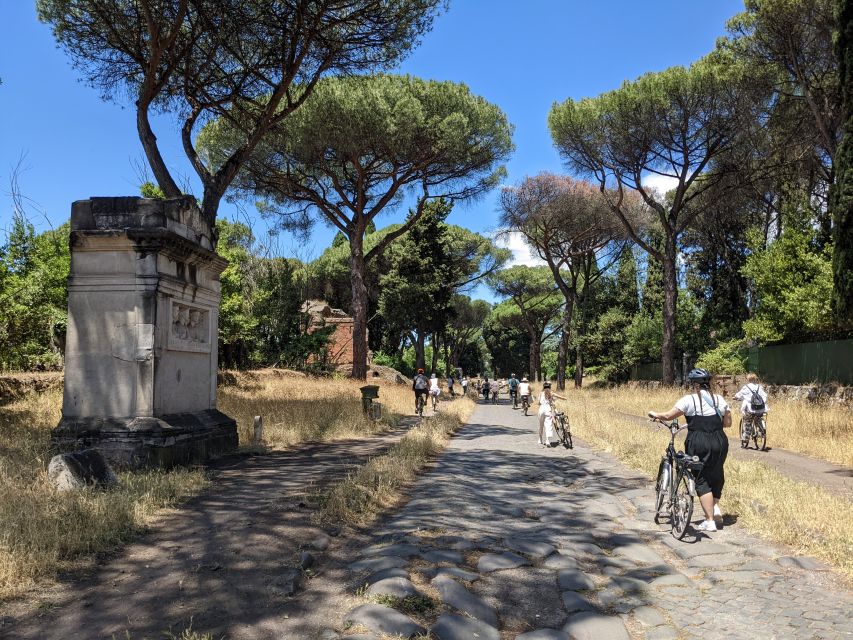
The Villa dei Quintili is another major Roman site along the route. You pass by it rather than making a full guided entry, and the route continues toward the Quintili Nymphaeum before reaching the Aqueducts Park.
The villa belongs to the same pattern that makes the Appian Way so rewarding: aristocratic residences, tombs, baths, and public engineering all sit within the same broad corridor. Even when you do not enter every building, you get a sense of how much Roman life once gathered along this road.
The guide-led format helps tie the scattered remains together. Without context, a tomb, bath complex, and villa can feel like separate photo stops. With an explanation of how the road worked, they become parts of one Roman system.
This section also makes the tour’s timing important. In 3.5 hours, you are covering a substantial distance and several archaeological areas. You get breadth rather than a slow, highly detailed visit to one site. That is a good trade for someone who wants to see the wider park in one morning or afternoon.
Aqueducts Park and Roman engineering on a giant scale
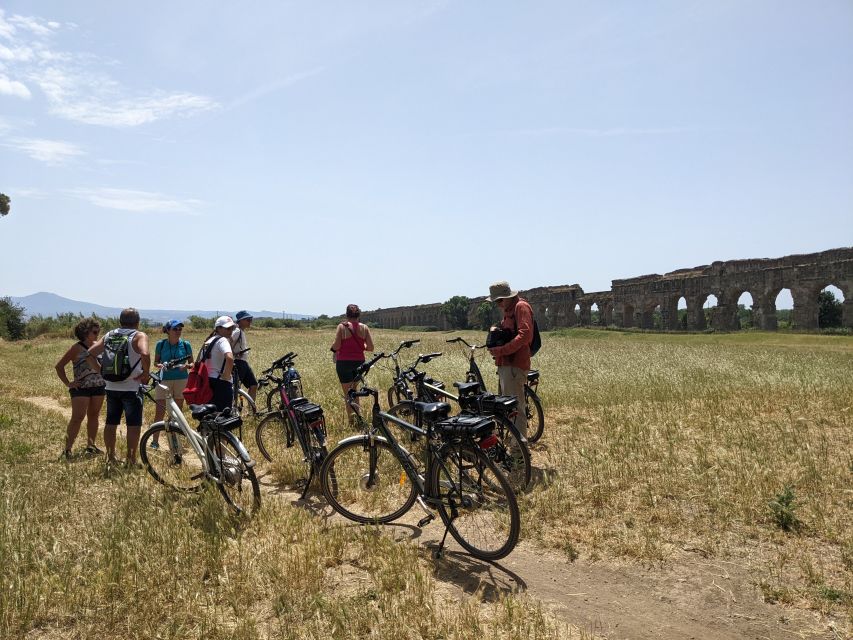
The Aqueducts Park supplies the visual payoff. Here, long rows of ancient arches cross the open park, showing how Roman engineers carried water toward the city.
The aqueducts are impressive because their purpose remains easy to understand. You can see the height, scale, and repeated arches without needing to imagine them from a small foundation. Your guide explains the engineering and the role these structures played in supplying Rome.
The park also changes the rhythm of the day. After the narrower Appian Way and its tombs, the aqueducts open the view and give you room to appreciate the structures from a distance. I like this contrast. The tour moves from road-level archaeology to a broad view of one of Rome’s biggest public works.
This is also where the e-bike helps most in practical terms. The route links the Appian Way with Caffarella Valley and the aqueducts, and the electric assistance lets you cover that distance without arriving exhausted. You still need to pedal and steer, but you are less likely to spend the final hour thinking only about your legs.
Caffarella Valley and the quieter side of Rome
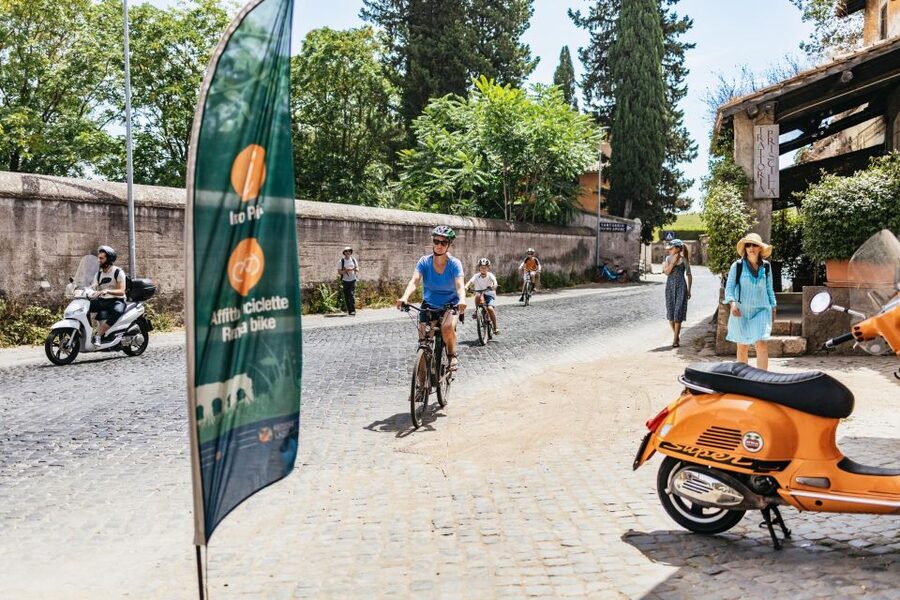
The tour includes guided riding through Caffarella Valley, another reason to choose this route instead of a standard center-city bicycle outing. The valley provides open space and a slower setting between the archaeological stops.
You can expect a mix of nature and Roman remains rather than a series of grand buildings. The point is not to replace the Colosseum or Forum, but to show how much of Rome’s ancient world survives outside the usual center.
The route through the valley contributes to the tour’s sense of scale. You see that the Appian Way is part of a large protected area, not just a single historic street. For me, this is where the outing feels most different from conventional sightseeing.
The tradeoff is that park paths can be uneven. You need to pay attention to the ground, keep a comfortable distance from the rider ahead, and avoid treating the e-bike like a motor scooter. The tour is accessible to riders who can manage a bicycle, but it is not designed for people with back problems or pregnant participants.
What the $59 price includes
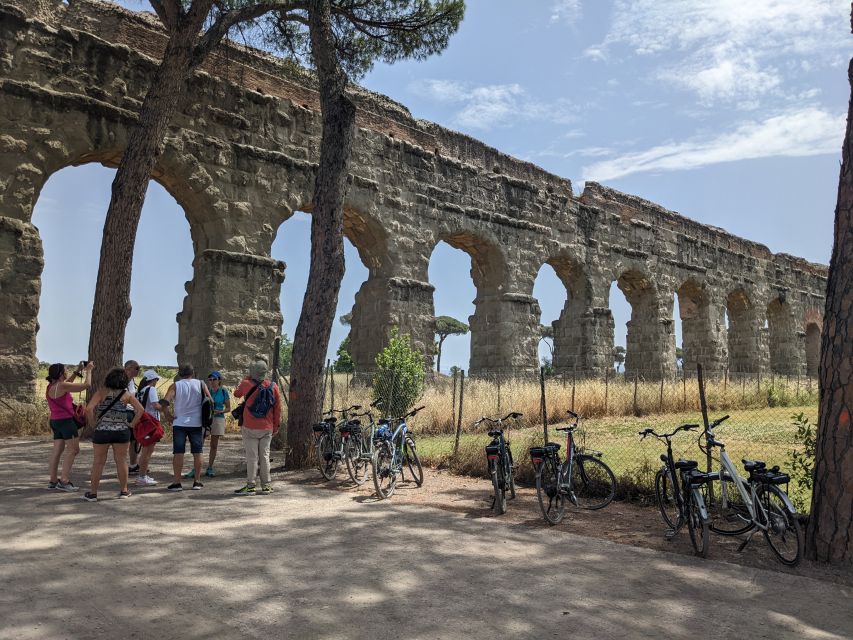
At $59 per person, the tour offers solid value if you want an organized route through several widely separated sites. The fee includes a professional guide, a high-quality e-bike, helmet, lock, map, and half a liter of water.
The e-bike is the key part of the value. You could try to reach the Appian Way and aqueducts independently, but the route covers a large area and includes streets, park tracks, and ancient paving. The guide also handles the storytelling and helps with road crossings, saving you from piecing the route together yourself.
The price does not include catacomb admission, which adds €10 for Saint Sebastian or €10 for Saint Callixtus. Lunch is also separate. Those costs are easy to plan for, but they matter if you are comparing this with a simple bike rental.
The tour has a 4.8 rating from 21 bookings, with especially strong praise for guides who combine clear information with a friendly manner. Federico, Sara, and Alex are named as particularly good guides. One rider felt the tour slowed because of inexperienced cyclists and later thought a self-guided e-bike rental might have suited him better.
That criticism is useful. If you want complete control over your speed and photo stops, a rental gives you more freedom. If you want safety support, background information, and a route that connects the Appian Way with the aqueducts, the guided option earns its price.
Who should book this ride
I would choose this tour if you have already seen Rome’s central sights and want a broader, more physical day outside the historic core. It suits adults and older children who can ride confidently on uneven paths and manage some street traffic.
The e-bikes are available from age 9 and a height of 135 centimeters, but the tour is listed as unsuitable for children under 13. That means families should pay attention to the stated age guidance rather than assume a younger child can join simply because a child seat is available.
Child seats can be requested for children up to 20 kilograms. Adults’ e-bikes are approved for riders up to 90 kilograms. People with back problems and pregnant women should not book this activity.
Bring an ID card or passport, though a copy is accepted. Wear practical clothing and closed shoes, since bare feet are not allowed. The ride takes place rain or shine, so check the forecast and dress for conditions.
Should you book the Appian Way e-bike tour?
Book it if you want to connect the Appian Way, Maxentius’ Circus, Caffarella Valley, and the Aqueducts Park in one well-planned ride. The route gives you famous ruins, old road stones, early Christian sites, and large-scale Roman engineering without keeping you inside the busiest part of Rome.
Skip it if you dislike uneven surfaces, street riding, or group pacing. A self-guided rental may suit a strong and independent cyclist better, while the guided tour is the better choice if you want route support and clear explanations from guides such as Federico, Sara, or Alex.
For most reasonably confident cyclists, $59 is a fair price for the distance covered, the e-bike, and the access to a side of Rome that is easy to miss on a first visit. Add the catacombs only if underground Christian sites are important to you, and allow room in your schedule for the tour’s relaxed pace.
FAQ
How long does the Appia Antica e-bike tour last?
The tour lasts 3.5 hours, including the guided route through the Appian Way, Circus of Maxentius, Aqueducts Park, and Caffarella Valley.
What language is the tour offered in?
The live guided tour is offered in English.
Are e-bikes included in the price?
Yes. The tour includes a high-quality e-bike, helmet, lock, and map.
Can I visit the catacombs?
Yes. You can choose to visit the catacombs of Saint Sebastian or Saint Callixtus. Admission is optional and costs €10 per person at each site.
Is lunch included?
No. Lunch is not included, so you should plan food separately.
Can children join the tour?
E-bikes are available from age 9 for riders at least 135 centimeters tall, but the tour is listed as unsuitable for children under 13. Child seats for children up to 20 kilograms are available on request.
What happens if it rains?
The tour runs rain or shine. Bring clothing suitable for the weather and remember that bare feet are not allowed.
New cycling reviews around Rome
- Rome: Full-Day Guided Tour by E-Bike with Lunch Included★ 4.9 · 36 reviews
- Rome: Panoramic Off-the-beaten-track Cannondale E-Bike tour★ 5.0 · 71 reviews
- In Rome like a star: e-bike tour with photo shoot★ 4.9 · 20 reviews
- Rome :guided night e-bike tour with typical ice-cream★ 5.0 · 55 reviews
- Hidden Rome: Small Group E-Bike Tour with Street Food Stops★ 4.9 · 144 reviews
- Rome: E-Bike Sunset Tour with Pizza Option★ 4.9 · 428 reviews
- Rome: Early Morning E-Bike Tour★ 4.9 · 84 reviews
- Rome: E-Bike Tour of Appia Antica, Aqueducts, and Caffarella★ 4.9 · 51 reviews
Rome Cycling Tours, compared.
Rome EBike Tour: Appian Way, Catacombs & Roman Aqueducts
Read our review →
Rome: Top Highlights & Hidden Gems Tour by Cannondale E-Bike
Read our review →
Rome: Appian Way & Aqueducts E-Bike Tour (Catacombs & Food)
Read our review →
Rome City Small Group Bike Tour with quality Cannondale EBike
Read our review →
Rome by Night – Ebike Small Group Tour – Food and Wine (Option)
Read our review →
Appian Way Aqueducts Bike Tour (Catacombs & Lunch Option)
Read our review →
Rome: Standard or E-Bike Highlights Guided Tour
Read our review →
Browse the lists this ride appears in