Review · THAILAND
Sukhothai: Historical Park & Countryside Cycling Tour
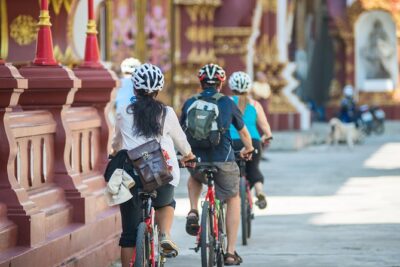
Sukhothai is best understood on two wheels, where rice fields, canals, villages, and ancient temples fit into one long, easygoing day. This tour starts outside the old city, then works its way toward the historical park, giving you both present-day Thailand and the kingdom’s grand Buddhist past.
I like the rural route through rice paddies and the chance to stop at a local furniture workshop rather than simply pedal from temple to temple. I also like the care built into the day: good mountain bikes, cold water, snacks, lunch, hotel transfers, and guides such as Miaow, Chip, and Jib who explain what you are seeing.
The main consideration is the heat. Seven hours on a bicycle can feel long in Thailand, especially during the hotter months, even though the route is mostly flat, paced gently, and broken up by regular stops.
Key Points
- Start in Ban Khuai: Begin in a quiet village outside Sukhothai, far from the usual temple circuit.
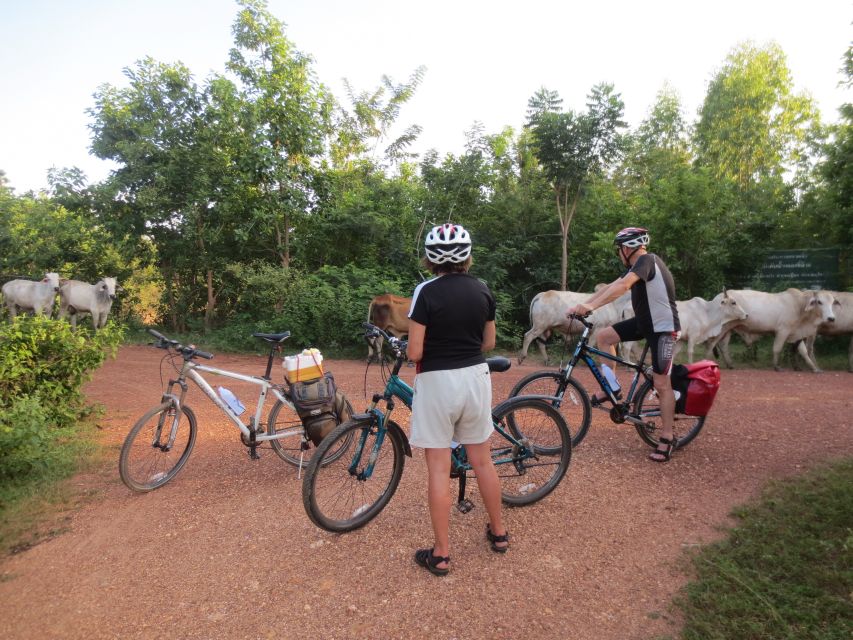
- Ride beside rice fields and canals: Dirt roads and Klong Mae Lampan show you working countryside and daily rural life.
- Meet local makers: A stop at a wood furniture factory reveals another way local families earn a living.
- See the ruins with context: Your English-speaking guide explains Buddhism, temple design, and Sukhothai’s Golden Era.
- Take a proper Thai lunch: A local restaurant meal is included, along with snacks, soft drinks, and plenty of water.
- Enjoy practical support: The small group is limited to 12, with quality bikes, helmets, accident insurance, and hotel transfers.
Why Cycling Gives Sukhothai More Meaning
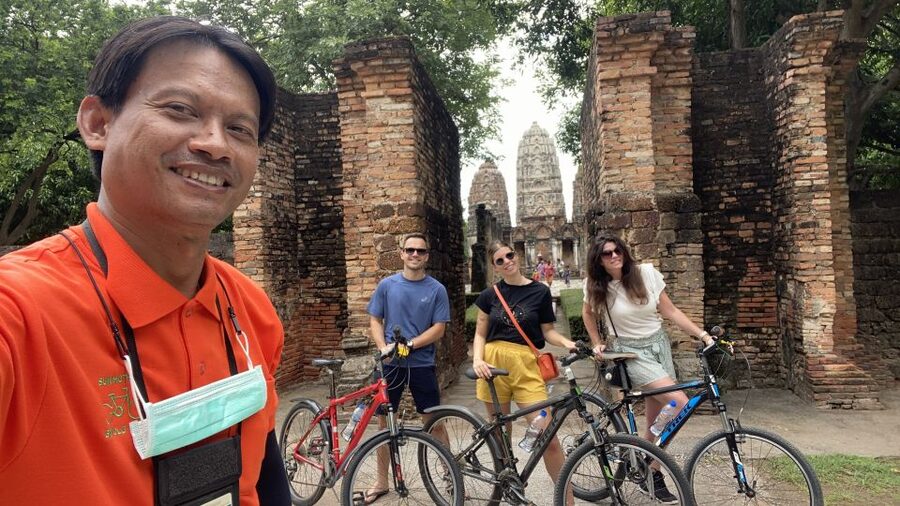
Sukhothai Historical Park is not a single compact monument. It spreads across a broad area, with temple remains, ponds, roads, trees, and open ground between the main sites. You can walk through part of it, but a bicycle lets you cover more distance without turning the visit into a hot march.
What makes this tour especially useful is the order of the day. You do not begin with a list of famous ruins and then leave. You first see the countryside around Sukhothai, where modern life gives the old capital some context. Rice farming, irrigation, village homes, local workshops, and small roads help you understand the place as a living province rather than only an archaeological site.
The cycling itself is not presented as a race. The route is mostly flat, and the group stops often for explanations, photographs, drinks, snacks, and short rests. One participant in their mid-50s with medium fitness found the pace comfortable, while other riders appreciated that the guide allowed time to look around rather than rushing from one stop to the next.
You still need to be comfortable riding for much of a day. The roads include dirt tracks and rural lanes, so this is not a paved city ride. People with mobility impairments, serious back problems, or pregnancy should choose another way to see Sukhothai.
More Countryside Cycling Tours in Thailand
- Chiang Mai Countryside Guided Bike Tour
★ 5.0 · 153 reviews - Half-day E-bike Countryside and rice paddies (flat land, GUIDED)
★ 4.5 · 94 reviews - Rural Explorer Mountain Biking Tour Chiang Mai
★ 5.0 · 55 reviews
From Your Hotel to Ban Khuai
Pickup is scheduled for around 8:15 AM, with transport included from hotels within 15 kilometers of central Sukhothai. You should wait in your hotel lobby 10 minutes before the arranged time. The transfer takes you to Ban Khuai, a small village on the edge of the city, where the cycling begins.
The equipment is one of the tour’s strong practical points. You receive a mountain bike with 24 gears, front suspension, and a helmet. Riders have described the bicycles as comfortable, well maintained, and suitable for both longer distances and off-road riding. Staff may prepare the bikes before you start, and some riders have found their names attached to the bicycles.
The support team also matters. The guide leads the ride, while additional staff may travel at the front or rear of the group. This is useful on roads that require crossings, and one rider specifically appreciated a staff member using a red flag to help the group cross larger roads safely.
The small-group limit is 12 people. That keeps explanations easier to hear and makes it more practical for the guide to adjust the pace. In quieter periods, the tour may run with only one or two participants, but the experience still operates as planned.
Rice Fields, Dirt Roads, and Kao Laung Mountain
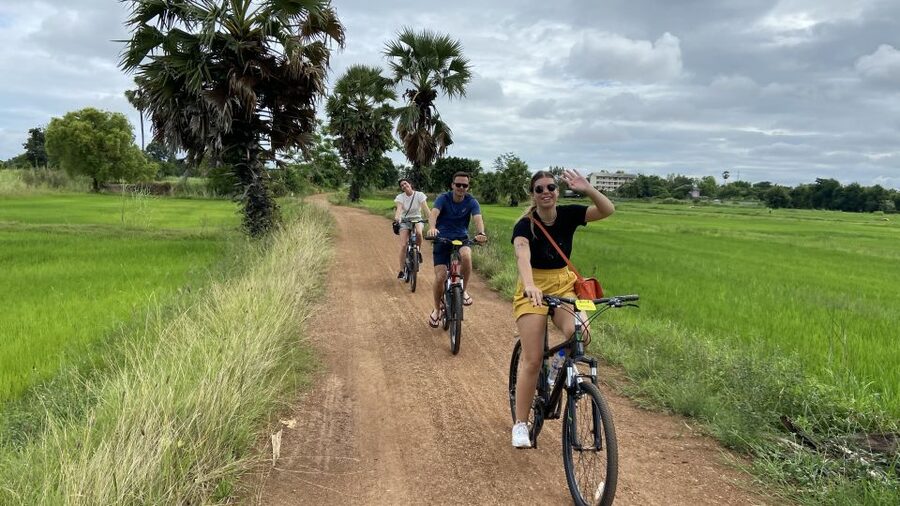
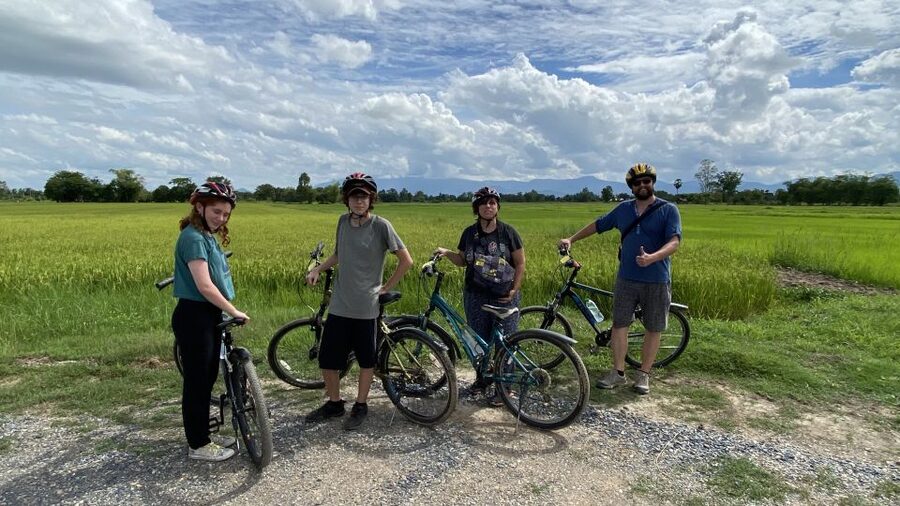
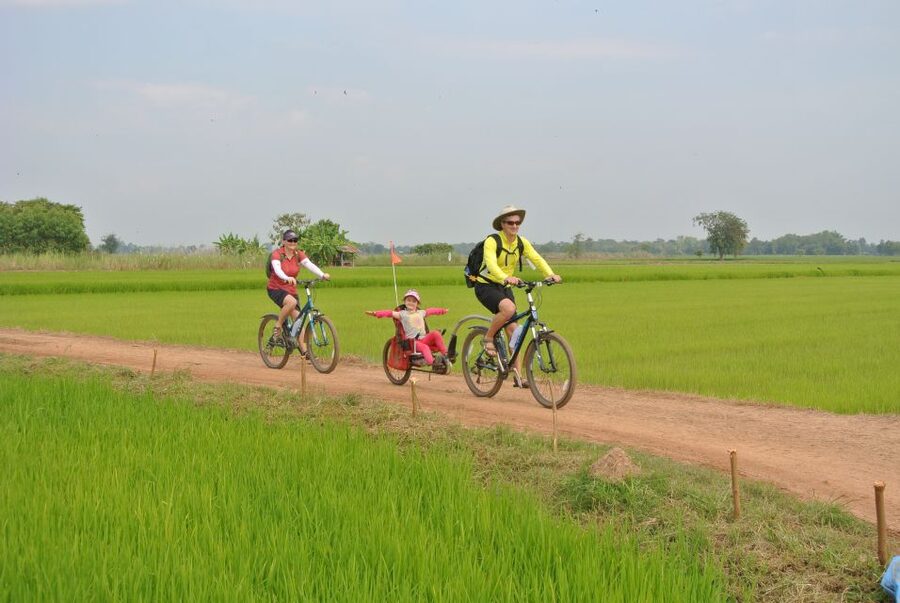
The first stretch takes you through a quiet village, then out onto dirt roads between rice paddies. This is the part of the tour that gives you something a standard historical-site visit cannot: a close look at the countryside around Sukhothai.
The views reach toward Kao Laung Mountain, and the open fields make a strong contrast with the later temple ruins. Depending on the season and recent weather, the tracks can feel dry and dusty or more adventurous after rain. One rider found that rain the previous day added fun to the ride, but you should still expect rural surfaces rather than smooth pavement.
Your guide explains how people in the area live and work. You might see farming activity, hear about planting the next crop, and, if timing and conditions allow, take part in planting. The tour does not promise this as a fixed activity, so think of it as a possible local encounter rather than a scheduled demonstration.
This is also where the local connection becomes clear. Guides such as Miaow grew up in the area and know many of the people along the route. Riders have found that villagers wave as the group passes, giving the ride a friendly, personal feel. You are not being dropped into a staged cultural display. You are moving through places where people actually live and work.
That said, rural life is not a theme park attraction. Some stops may be brief, and what you see can depend on the season, weather, and the day’s work in the fields. The value comes from the guide’s explanation and your willingness to pay attention to ordinary details.
A Furniture Workshop Along the Way
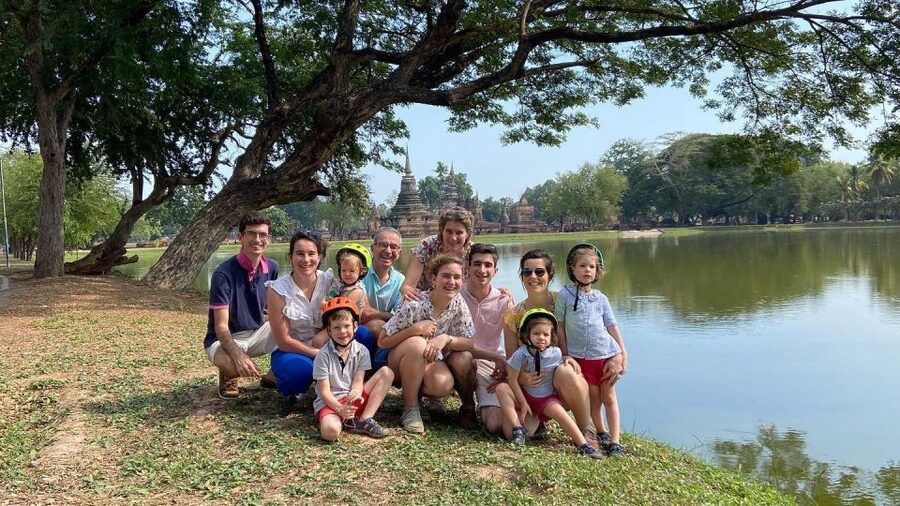
A stop at a wood furniture factory adds a useful change of pace. You can watch a local carpenter turn timber into finished pieces and learn about a trade that gives farming families another source of income.
This stop is easy to overlook when planning a temple day, but it helps explain the local economy. Sukhothai is more than its ancient capital, and the workshop shows a practical, modern side of the province. The visit also breaks up the cycling and gives your legs a short rest.
You should not expect a large industrial tour or an elaborate craft performance. It is a working local business, and the interest lies in seeing the process at close range. If you enjoy small human details, this may become one of the day’s more memorable stops.
More Heritage and Temple Bike Tours in Thailand
- Bangkok: Temples, Canals & Local Life Bike Tour
★ 4.9 · 3,511 reviews - Bangkok: Night Bike Tour with Temples & Flower Market Visit
★ 4.8 · 751 reviews - Bangkok: Night Bike Tour with Temples & Flower Market Visit
★ 5.0 · 223 reviews - Ayutthaya City and Historical Park Bike Tour
★ 4.8 · 175 reviews
Following Klong Mae Lampan
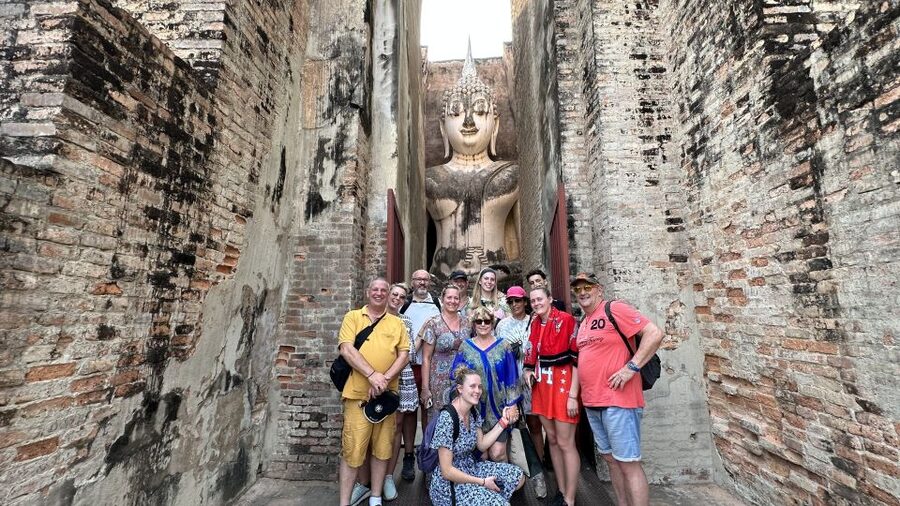
The route continues along small irrigation canals known as Klong Mae Lampan. These waterways pass through rural villages and help connect the fields with the communities around them.
Cycling beside a canal keeps the route calm and scenic. It also gives your guide a natural setting for explaining agriculture, water use, and local routines. You may see homes, animals, field work, and people going about their day, though the exact scenes will change with the season.
This part of the ride is a good reason to bring sunglasses, a sun hat, sunscreen, and comfortable clothing. The roads are open, and shade is not guaranteed at every point. The team supplies drinking water, soft drinks, local snacks, and sometimes cooling towels, but you should still protect yourself from the sun.
The tour includes regular breaks rather than asking you to pedal continuously. Riders have received homemade sweet and savory snacks, grilled bananas, and other local treats. These small food stops make the ride feel more connected to the area and help keep your energy up.
Entering Sukhothai Through the Eastern Gate
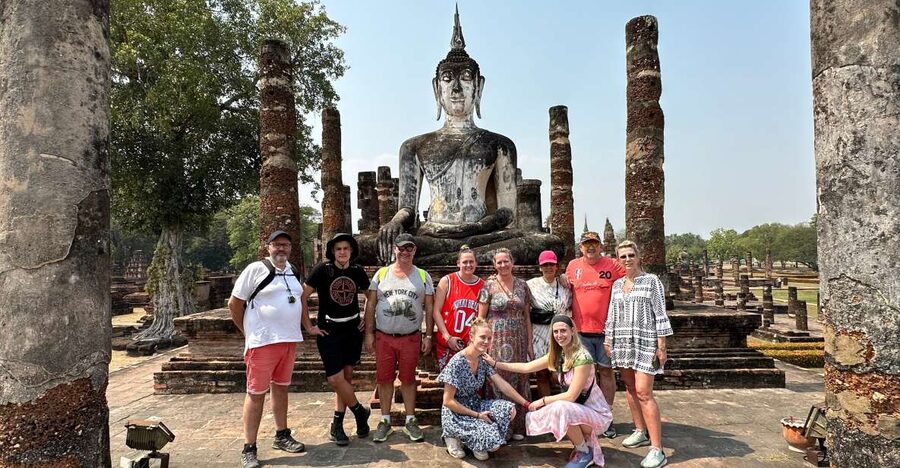
After the countryside section, you reach Sukhothai’s Eastern Gate and begin the historical part of the tour. This transition works well because the old capital appears after you have seen the modern communities and farmland around it.
Sukhothai is tied to a period often described as Thailand’s Golden Era. The temples show a blend of Buddhist and Hindu ideas, with careful proportions, carved details, stupas, seated Buddha images, and broad open grounds. The ruins are beautiful, but their meaning is easier to grasp with an explanation.
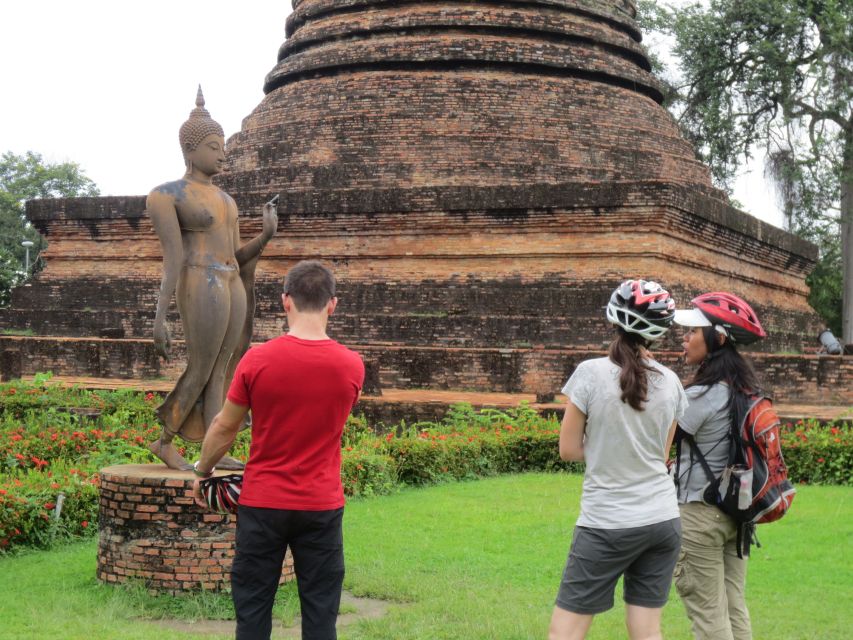
Your guide discusses the development of Sukhothai, the role of Buddhism in Thailand, and the design of the temples. Guides including Miaow, Chip, Jib, and Meow have been praised for clear English, lively storytelling, and an ability to answer questions without making the history feel like a classroom lecture.
The strongest guides do more than name each wat. They explain what the structures were used for, how religious ideas shaped the art, and why certain architectural forms matter. That turns a photo stop into a place you can read and understand.
You also get time to explore independently and take pictures. This balance is important. A guided tour is most useful when it gives you context, then leaves enough quiet time for you to look at the details yourself.
Temples, South Sukhothai, and the Golden-Era Ruins
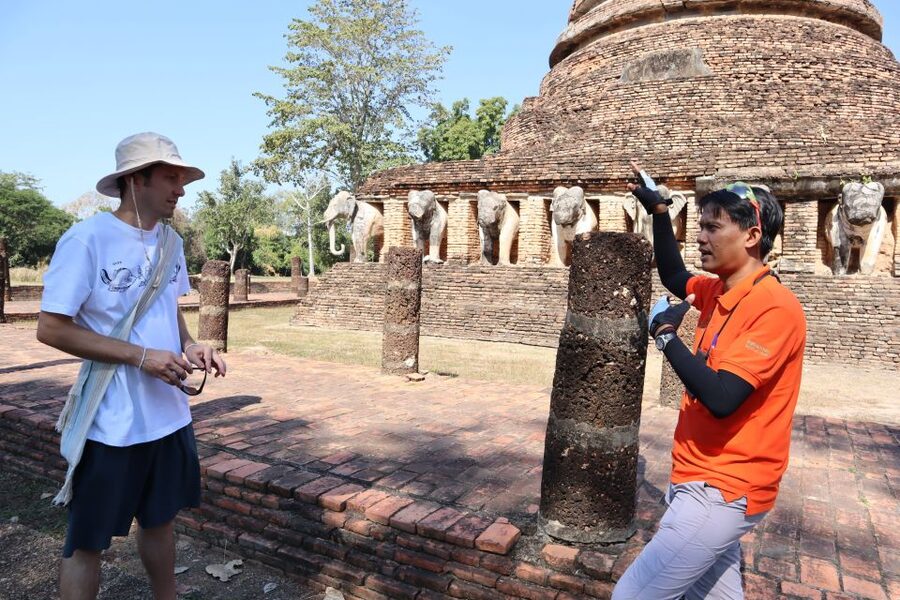
The route covers key areas of the historical park and continues toward the southern section. You may also visit temple remains outside the central square, depending on the day’s route.
The park is well maintained, but it is spread out. Cycling between sites keeps the day flowing and saves you from walking long distances under direct sun. It also lets you see the ruins in relation to the surrounding ponds, trees, walls, and open spaces.
Do not expect every temple to be explored at great length. Seven hours must cover the countryside, meals, cycling, and historical park, so the guide will select important sites and manage the timing. The benefit is a broad view of Sukhothai rather than an exhaustive archaeological study.
I would pay close attention to how the guide connects the temples to present-day Thai beliefs. The tour includes history, architecture, and Buddhism, but it also explains how local people relate to the old city and the surrounding area. That wider view is what makes the day more than a sightseeing ride.
Lunch at a Local Thai Restaurant
Lunch is included at a local Thai restaurant, usually after the first major section of the historical park. This is not just a packed meal eaten beside the bikes. You sit down, cool off, and have a proper restaurant meal.
Food has been a major part of the experience for many riders. The meal may include a starter, main course, drink, and water, with choices available. Local snacks are also provided earlier in the day, and the food is described as tasty, generous, and connected to nearby producers in some cases.
The exact menu can change, so you should not book expecting one particular dish. If you need to explain dietary restrictions, do so when booking or before the tour begins. The supplied information does not promise specific dietary arrangements, so it is wise to ask in advance.
Lunch also supports a local business rather than treating food as an afterthought. That fits the wider character of the tour, which keeps returning to local people, local work, and local food.
Heat, Fitness, and What to Bring
The route is generally gentle, but the climate is not. Temperatures can reach 36 degrees Celsius, and the hottest part of the day may arrive while you are still cycling through the park.
Wear light, comfortable clothes and shoes. Cycling shoes are preferred, but ordinary comfortable athletic shoes are suitable if you are not using clip-in pedals. Bring sunglasses, a sun hat, and sunscreen.
Drink water before you feel thirsty. The support team provides plenty of drinking water and soft drinks, plus snacks and sometimes cold towels, but your own sun protection still matters. A breathable shirt and clothing that covers your shoulders can also make temple visits more comfortable.
The tour is best for adults and families with children who can ride for several hours. One participant completed it with a two-and-a-half-year-old child and received extra support, but the tour data does not specify child seats or other special equipment. Ask the provider directly if you need family cycling gear.
People who rarely ride bicycles may still manage the route because it is flat and includes frequent stops. If you have back trouble, limited mobility, or cannot comfortably ride on dirt roads, this is not the right choice.
Is $53 Good Value for Seven Hours?
At $53 per person, the tour is strong value if you want more than entry to the historical park. The price covers the guide, bicycle, helmet, local accident insurance, park entrance, hotel pickup and drop-off within the 15-kilometer zone, lunch, snacks, soft drinks, and water.
You are also paying for planning. The route links countryside, canals, a workshop, lunch, and several temple areas in one day. Arranging all of that independently would require transport, bicycle rental, park tickets, food planning, and your own route research.
A cheaper option may be possible if you only want to rent a bicycle and visit the central ruins. That approach gives you more freedom and costs less, but you will miss the village route, local explanations, workshop, organized support, and included meal.
The tour is especially good value for a first visit to Sukhothai. It gives you a clear introduction to the old capital and the living province around it. If you already know the park well, the countryside route still adds something new, and returning riders may be shown a different route.
Booking Details That Matter
The tour lasts about seven hours and is conducted in English. Pickup is included only for hotels within 15 kilometers of Sukhothai city center, so check your accommodation before booking.
You must provide the full names, heights, nationalities, and passport numbers of everyone in your group for insurance purposes. Cancellation is free up to 24 hours before the activity, and you can reserve now and pay later if that option is offered at checkout.
The stated rating is 5 out of 5 from 276 ratings, and 99 percent of participants have given a perfect score. Those figures point to a very consistent experience, especially in guide quality, bike condition, organization, food, and personal care. Still, no organized ride can control the heat, weather, traffic, or exact countryside conditions on a particular day.
Should You Book This Sukhothai Cycling Tour?
I would book it if you want Sukhothai explained rather than simply photographed. The mix of rice fields, village roads, local work, Thai food, canals, and UNESCO ruins gives you a fuller picture than a short temple visit.
It suits you best if you can ride at an easy pace for several hours and do not mind heat or occasional dirt roads. It is also a good choice for solo visitors, couples, small groups, and curious families who value local contact and clear historical background.
Choose a simpler bicycle rental instead if you want complete control over your timing, dislike group activities, or plan to visit only a few central temples. For most first-time visitors who want history, countryside, food, and practical support in one day, the $53 price is well justified.
FAQ
How long does the Sukhothai cycling tour last?
The tour lasts seven hours, including countryside cycling, historical park visits, stops, lunch, and transportation to and from your hotel.
Is hotel pickup included?
Yes. Pickup and drop-off are included for hotels within 15 kilometers, or 9.3 miles, of Sukhothai city center. You should be in your hotel lobby 10 minutes before the scheduled pickup.
What type of bicycle is provided?
You receive a mountain bike with 24 gears, front suspension, and a helmet. The bicycles are intended for both paved and off-road riding.
Is lunch included?
Yes. Lunch at a local Thai restaurant is included, along with snacks, soft drinks, and drinking water throughout the day.
Is the tour suitable for beginners?
The route is mostly flat, and the pace includes regular stops. You should still be comfortable riding for several hours on both village roads and dirt tracks.
How large is the group?
The tour is limited to 12 participants. During quieter periods, it may operate with only one or two participants.
What languages are available?
The live tour guide speaks English.
What should I bring?
Bring comfortable clothes and shoes, preferably cycling shoes, plus sunglasses, a sun hat, and sunscreen. Be prepared for hot weather during the day.
New cycling reviews around Thailand
- Phuket: Half-Day Countryside Cycling Tour with Lunch★ 4.9 · 43 reviews
- Phuket: Yao Island Cycling and Beach Day-Trip★ 4.6 · 35 reviews
- Chiang Mai: Suthep National Park Hiking & DH Mountain Biking★ 4.8 · 151 reviews
- From Chiang Mai: Mae Taeng Valley Hike & Bike Day Trip★ 5.0 · 50 reviews
- Chiang Mai: 25km Leisure Mountain Biking & Jungle Kayaking★ 4.8 · 45 reviews
- Electric Bike Tour★ 4.8 · 89 reviews
- Chiang Mai: 20km Downhill Mountain Biking Challenge Suthep M★ 4.9 · 60 reviews
- Cycling Sukhothai Full Day Countryside Tour★ 4.9 · 26 reviews
Thailand Cycling Tours, compared.
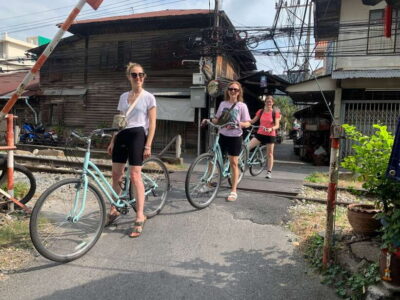
Bangkok: Temples, Canals & Local Life Bike Tour
Read our review →
Bangkok: Night Bike Tour with Temples & Flower Market Visit
Read our review →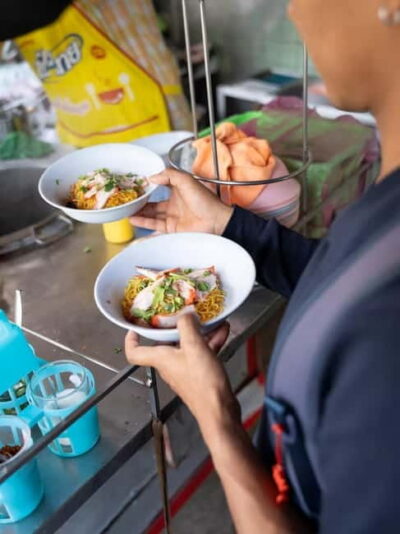
Bangkok: Must-Try Hidden Bike & Food Experience
Read our review →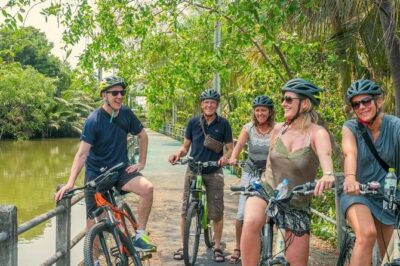
Bangkok Jungle Bike Tour – Hotel-pickup & Lunch
Read our review →