
Review · BERLIN
Berlin: Experience the Alternative Kreuzberg on a Bike Tour
Berlin’s most revealing sights are often not the grand monuments. They are the squatted houses, canal paths, old Wall traces, creative workshops, gritty courtyards, and shiny new buildings sharing the same block. This 17-kilometer bike ride takes you through Kreuzberg, Friedrichshain, Neukölln, and Treptow, showing how Berlin rebuilt itself after reunification.
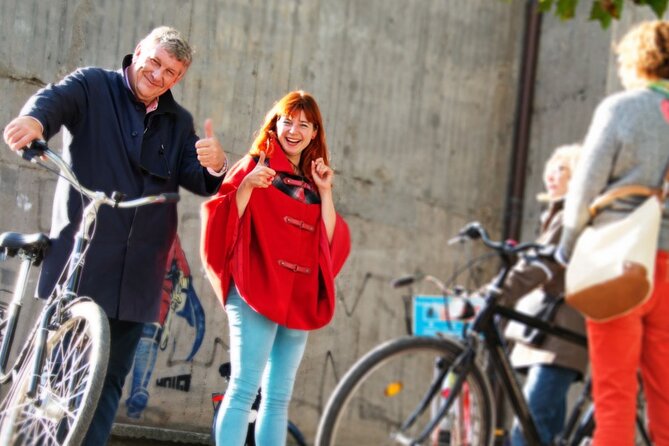
I like two things right away: the route favors quiet side streets and bike paths, and the guide stops every five to ten minutes to explain what you are seeing. Guides such as Vincent, Carl, Jake, and Fiona have earned especially warm praise for their stories, humor, and care with the group. The main consideration is physical: three hours in the saddle can feel demanding in hot weather, even though the pace is relaxed.
Key points at a glance
- Four changing Berlin districts: Ride through Kreuzberg, Friedrichshain, Neukölln, and Treptow, all shaped by the former Berlin Wall and the years since reunification.
- A route built around contrasts: Squatted houses, nightlife, social projects, new buildings, and gentrification appear side by side.
- About 17 kilometers with frequent stops: You are not cycling nonstop. Short talks every five to ten minutes break up the ride.
- A small-group feel: Groups can have up to 15 people, with private tours also available.
- Practical bike setup: Rental bikes include baskets, helmets are available on request, and rain ponchos are supplied if needed.
- A strong guide factor: Vincent, Carl, Jake, Fiona, Peter, Björn, and others have been praised for personal stories and clear explanations.
Why this tour shows a different Berlin
This is not the best choice if your main goal is the Brandenburg Gate, Reichstag, or Museum Island. The meeting point is close to those central sights, but the ride quickly heads toward neighborhoods where Berlin’s identity is less polished and more revealing.
You begin in Nikolaiviertel, only about five minutes from the TV Tower. From there, the route heads toward the former eastern and western edges of the city, with stops that connect Berlin’s political past to its current street culture.
I like the way the tour treats Berlin as a city still in motion. You see renovated buildings and ambitious new projects, but also places shaped by protest, squatting, nightlife, migration, and rising rents. The guide’s job is not just to point out a mural or bridge. It is to explain why the area looks this way and what has changed.
The route is designed by the guide, so no two departures need to follow exactly the same path. Current events, group interests, and local conditions can influence the ride. That flexibility gives the experience a less scripted feel, though it also means you should not expect every stop to receive exactly the same amount of time.
More Cycling Trips in Berlin:
- Berlin: Sights and Highlights Bike Tour with a Local Guide
★ 4.8 · 2,698 reviews - Berlin Highlights 3-Hour Bike Tour
★ 5.0 · 948 reviews - Berlin City Bike Tour with Beer Garden Stop
★ 5.0 · 917 reviews
Starting in Nikolaiviertel and reaching the Spree
The office is in the courtyard entrance at Poststraße 11. Look for the FREE BERLIN sign. After choosing a bike and sorting out helmets or child seats, the group begins in Nikolaiviertel, a central district near the TV Tower.
Nikolaiviertel is a useful starting point because it places you close to Berlin’s oldest central area, yet the tour does not stay in the postcard version of the city. The opening talk is brief, about five minutes, then the ride shifts toward Berlin’s alternative districts.
One strength of the tour is its steady rhythm. You cycle for a short stretch, stop for a story, and continue. That helps you notice details without spending three hours on a nonstop ride. If you are new to city cycling, this format also gives you regular chances to catch your breath and get comfortable with the bike.
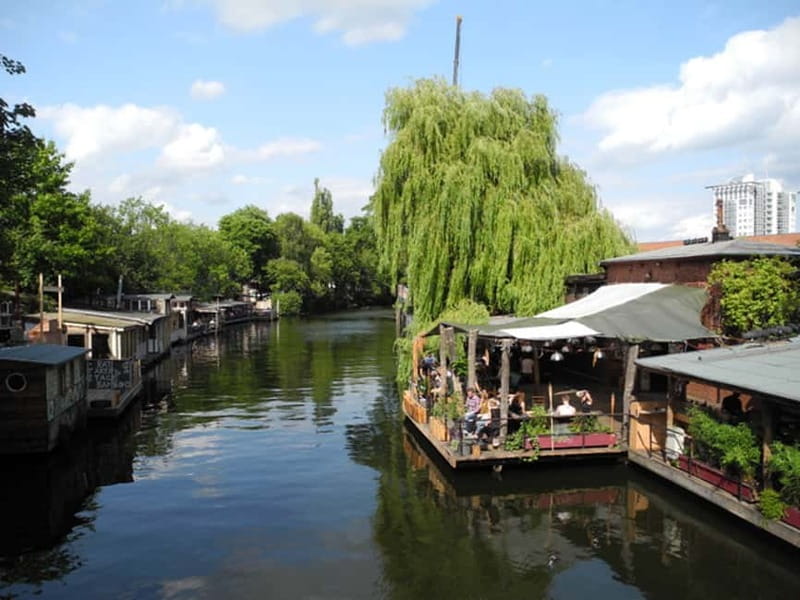
The ride later follows parts of the Spree and the Landwehr Canal. These waterside sections offer a welcome break from traffic and show how Berlin mixes public parks, industrial remains, boats, clubs, and apartment blocks.
The Treehouse, Berghain, and Berlin’s unusual creativity
The Treehouse is an early reminder that Berlin’s alternative culture often takes physical form. This is not simply a standard sightseeing stop. It points to the city’s habit of making room for unusual projects and personal expressions, sometimes in spaces that would be developed differently elsewhere.
The next stop is the area around Berghain Panorama Bar. You do not go on a club night, but the stop helps explain Berlin’s international reputation for nightlife and its connection to former industrial buildings. The guide can place the club in the wider story of Berlin’s post-Wall culture, where disused spaces became venues, studios, and meeting places.
This part of the ride will suit you if you are interested in how a city’s cultural life grows outside official institutions. It may be less satisfying if you prefer long interior visits or formal museum commentary. The stops are short, around five minutes each, and the value comes from the explanation and the wider route rather than from entering attractions.
East Side Gallery and Oberbaumbrücke
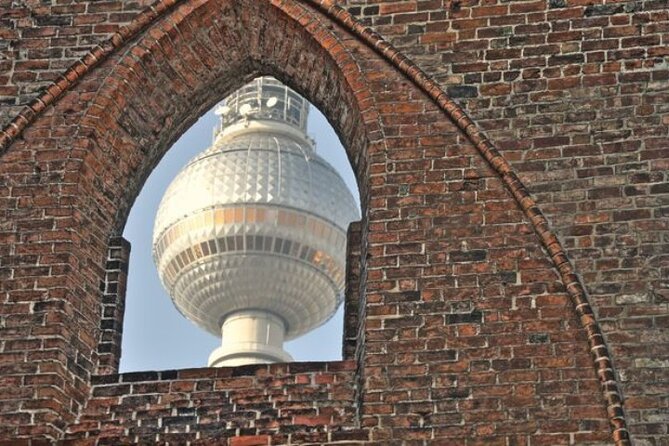
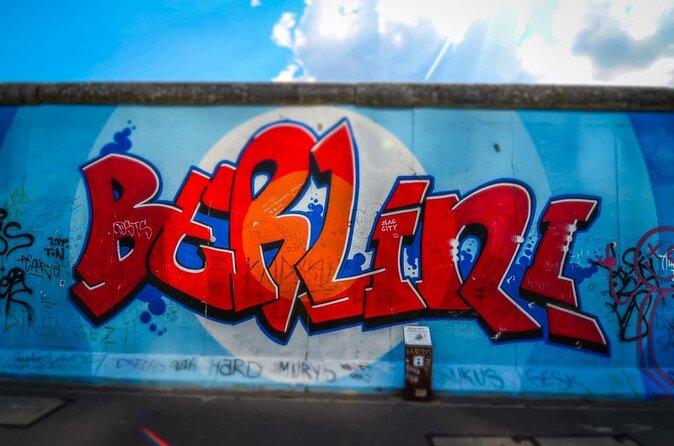
The East Side Gallery is one of the route’s clearest links to the Berlin Wall. The surviving section carries murals painted after the Wall fell, turning a former barrier into an open-air art site.
You stop here for photographs and a short talk. The stop is meaningful because it joins Berlin’s political past with its modern creative image. At the same time, it can be busy, and five minutes is enough for orientation rather than a full study of every mural. If you want to examine the artwork closely, plan a separate visit.
Oberbaumbrücke provides another strong photo stop. Its towers and arches make it one of Berlin’s most recognizable bridges, and its position between Kreuzberg and Friedrichshain gives it special importance. The bridge once marked a divided city and now links two districts known for nightlife, restaurants, art, and rising property prices.
The ride across or near the bridge helps make the city’s changes visible. Old boundaries remain part of local identity, even as the neighborhoods become more connected and more expensive.
Same roads, a different ride:
- Berlin Highlights: 3-Hour Bike Tour
★ 4.9 · 809 reviews - Berlin Highlights Sightseeing Bike Tour in Small Groups
★ 5.0 · 652 reviews - Berlin: The Wall and Third Reich Guided Bike Tour
★ 4.8 · 578 reviews - Berlin: Alternative Bike Tour of Kreuzberg & Friedrichshain
★ 4.7 · 548 reviews
RAW-Gelände and the rougher side of Friedrichshain
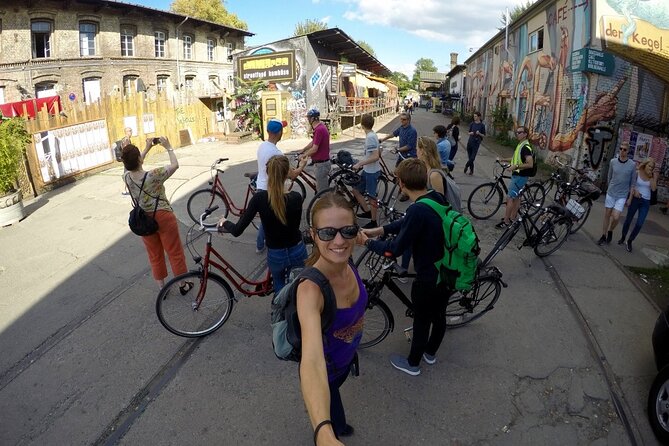
RAW-Gelände is one of the most characterful stops. The former railway works became associated with clubs, street art, cultural projects, and alternative uses. It shows the Berlin habit of giving industrial leftovers a second life.
You will notice that this kind of place is not polished in the conventional sense. That is the point. The tour uses RAW-Gelände to explain Berlin’s creative spirit, but also the tension that follows when once-cheap, informal areas become popular.
The guide-led format matters here. A quick look at painted walls and old structures cannot tell you why the site matters. A local guide can connect the physical setting with the broader changes in Friedrichshain.
The short stop also keeps the tour moving. You are seeing many parts of the city rather than spending an hour in one complex. That makes the ride useful for a first visit, though you may want to return later if one district catches your interest.
Houseboats, Molecule Man, and the Spree
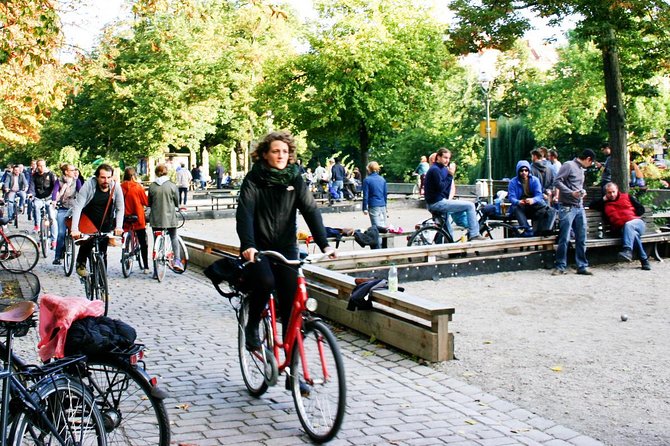
The Berlin Tag und Nacht houseboat brings the route back to the river and to Berlin’s television and nightlife culture. It is an unusual landmark, and the guide uses it as another example of how the city’s waterways serve as public space, performance space, and a setting for unconventional projects.
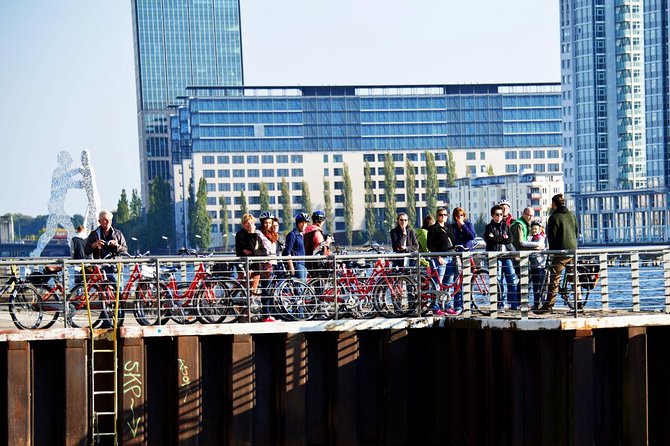
Near the Spree, the Molecule Man sculpture provides one of the most recognizable views of the ride. Three large figures lean toward one another in the river, creating a striking sight from the banks and bridges.
This is one of the more scenic stretches of the tour. You get a break from tight neighborhood streets and a chance to see Berlin from the water’s edge. The route also demonstrates a key theme of the experience: new construction, public art, nightlife, and older industrial areas can all appear within a short ride.
Club der Visionäre, Wrangelkiez, and Görlitzer Park
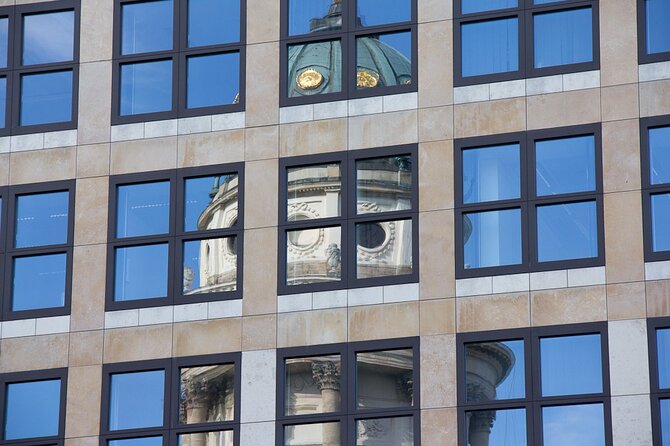
Club der Visionäre and Wrangelkiez bring you into the heart of Kreuzberg’s social and nightlife culture. Wrangelkiez is a neighborhood of side streets, shops, cafés, apartment buildings, and street activity. The guide explains how the district developed and how its character has shifted over time.
This is where the tour’s discussion of gentrification becomes especially useful. You are not being shown a frozen version of alternative Berlin. You see a neighborhood that has attracted artists and nightlife, then attracted new investment and higher prices. That story is central to understanding modern Kreuzberg.
Görlitzer Park adds another layer. The park is a major local gathering space, but it is also tied to debates about public safety, policing, migration, and urban change. The guide can help you see why a park may carry very different meanings for residents, business owners, and visitors.
Some people will find this frank look at city problems more useful than a polished sightseeing route. Others may prefer a lighter outing. The tour does not present Berlin as perfect, and that honesty is part of its appeal.
Neukölln, Maybachufer, and Admiralbrücke
The route continues toward Neukölln and the canal. Stops near CarLoft Modul GmbH and Maybachufer show how residential design, local commerce, and waterway life fit together.
Maybachufer is especially appealing for its canal setting and neighborhood atmosphere. The route then reaches Admiralbrücke, another photo stop and a familiar gathering point beside the Landwehr Canal. These waterside sections are among the calmer parts of the ride.
You should not expect a long market visit or free time to shop. The tour uses Maybachufer as part of a wider ride, not as a standalone food or market excursion. Still, the stop helps you understand why Berlin’s canals are important public spaces.
The route through Neukölln also adds balance. The tour is not limited to the better-known parts of Kreuzberg and Friedrichshain. You see an area shaped by social change, new development, and different communities, all within the same city story.
Kottbusser Tor, Rio-Reiser-Platz, and Bethanien
Kottbusser Tor is one of the route’s liveliest urban stops. It is a major transport and street-life center, and it gives you a sharper look at the density and contrasts of Kreuzberg.
This is not a quiet monument stop. Traffic, people, shops, and urban noise are part of the scene. The guide helps connect the location with the neighborhood’s social history and its continuing change.
Rio-Reiser-Platz offers a different mood. Named for musician Rio Reiser, the square points toward Berlin’s music and political culture. It is a good example of how local identity is expressed through public places, not only through museums or official memorials.
The final major stop is Künstlerhaus Bethanien. The former hospital complex became associated with artists and cultural work, making it a fitting ending for a route focused on Berlin’s creative side. It also reinforces the theme that old buildings can take on new uses.
From there, the group returns to the starting point at FREE BERLIN Bike Tours. After three hours, you have crossed several districts and seen a broad range of modern Berlin without spending the whole day in traffic.
How hard is the 17-kilometer ride?
The tour is described as relaxed, and the frequent stops mean you are not cycling continuously for three hours. One earlier participant found the route safe and the bike sturdy, with plenty of stops to make the distance manageable.
Still, 17 kilometers is real exercise. Hot weather can make the ride tiring, as one summer outing showed. The guide should adjust the pace to the group, and guides have been praised for checking that everyone was safe and comfortable, but you should be ready to pedal through city streets and paths.
Bikes are regularly serviced by certified mechanics and come with baskets. Helmets are available if requested, and waterproof ponchos are supplied in rainy conditions. Large luggage can be left with the operator during the ride.
Children are welcome, and infant seats can be requested. The available information does not give a minimum age or specific bike sizes, so families should confirm those details before booking.
Guide quality and group size
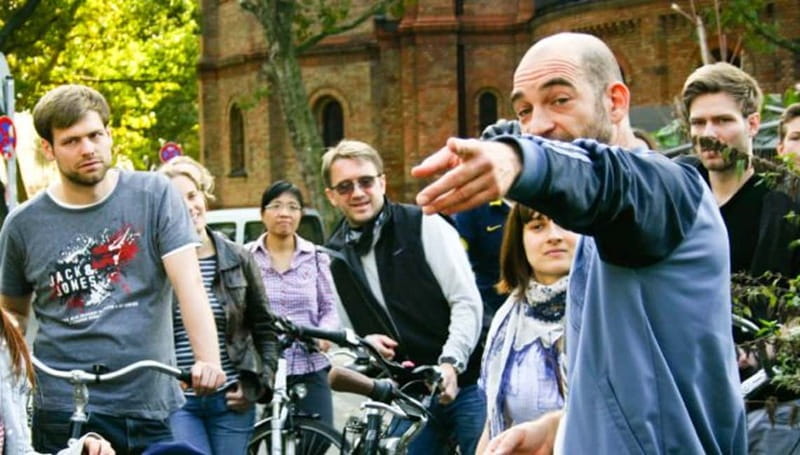
The guide is a major part of this experience. Names associated with particularly strong tours include Vincent, Carl, Jake, Fiona, Peter, Björn, Theo, and Liz. Their strengths have included personal stories, humor, local knowledge, clear safety guidance, and the ability to keep the group involved.
You may not receive one of those exact guides on your departure, but the repeated praise for the guiding approach is worth noting. A good guide turns ordinary streets into part of the story and explains why a building, park, club, or bridge matters.
Groups can include up to 15 people. That is small enough for questions and a friendly pace, but not so small that the ride feels like a private outing. If you want full control over the start time and route, a private version can be arranged.
The tour is offered in English, German, and French. Reserve and pay later is available, and cancellation is free up to 24 hours before the tour.
Is $41 a fair price?
At $41 per person, the price is sensible for a three-hour guided ride that includes the bike rental. You are also getting a route across several districts, a local guide, regular talks, and equipment such as baskets and rain ponchos.
The value is strongest if you want context as well as transport. A rental bike alone would let you cover ground, but it would not explain the Wall, alternative projects, club culture, gentrification, or the social changes behind the streets.
The price is less attractive if you want a short, monument-heavy ride or plan to spend most of your time inside attractions. This is a moving city walk by bicycle, not a ticketed attraction tour.
Who should book this ride?
I would choose it for a first or second visit when you want to understand how Berlin feels beyond the major sights. It suits adults, families with children, people interested in urban change, and anyone who enjoys local stories more than formal lectures.
It is also a good choice if you are deciding where to spend more time later. The route gives you a useful survey of Kreuzberg, Friedrichshain, Neukölln, and Treptow, so you can return to Maybachufer, RAW-Gelände, the East Side Gallery, or another district at your own pace.
I would think twice if you dislike cycling, hot weather, city traffic, or frequent changes of scenery. The route is relaxed, but it is still long enough to require moderate stamina.
Should you book the Alternative Kreuzberg Bike Tour?
Book it if you want Berlin’s rough edges and creative side explained by a local guide, with enough cycling to connect the neighborhoods. The combination of quiet paths, canal views, Wall history, street culture, and short talks gives you a useful picture of a city that keeps changing.
For the best experience, request a helmet if you want one, ask about an infant seat well ahead of time, and bring water for warm days. If you prefer a slower pace or have a specific interest in nightlife, architecture, or social history, ask about a private tour and shape the route around it.
FAQ
Where does the bike tour start?
Meet at the FREE BERLIN office in the courtyard entrance of the building at Poststraße 11. Look for the FREE BERLIN sign. The meeting point is in Nikolaiviertel, about five minutes from the TV Tower.
How long is the tour?
The tour lasts three hours and covers roughly 17 kilometers.
Which districts does the route visit?
The route includes Kreuzberg, Friedrichshain, Neukölln, and Treptow, with rides along parts of the Spree River and Landwehr Canal.
Is a bike included in the price?
Yes. You can choose a rental bike, and the bikes have baskets. Helmets are available if requested.
Can children join the tour?
Yes. Children are welcome, and infant seats can be provided on request.
What languages are available?
The tour is offered in English, German, and French. Private and small-group options are available.
New cycling reviews around Berlin
- Private Highlights of Berlin Bike Tour★ 5.0 · 13 reviews
- From Berlin: Gardens & Palaces of Potsdam Bike Tour★ 5.0 · 61 reviews
- Berlin: Top secret bike tour and hidden gems of the city★ 4.8 · 411 reviews
- Berlin: Small Group Bike Tour Through City Center★ 4.9 · 64 reviews
- Berlin: Illuminated Berlin by Bike Taxi★ 4.8 · 162 reviews
- Berlin: From East to West & Wall Tour by Bike with a Guide★ 4.8 · 171 reviews
- Berlin: Green City Guided Bike Tour★ 4.6 · 29 reviews
- Berlin (E)Bike Tour Historical Highlights in Small groups★ 4.5 · 24 reviews
Berlin Cycling Tours, compared.
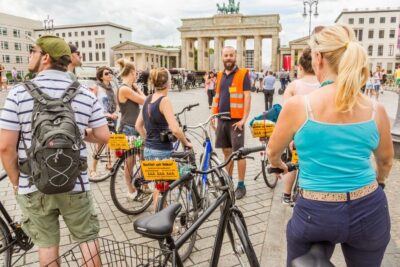
Berlin: Sights and Highlights Bike Tour with a Local Guide
Read our review →
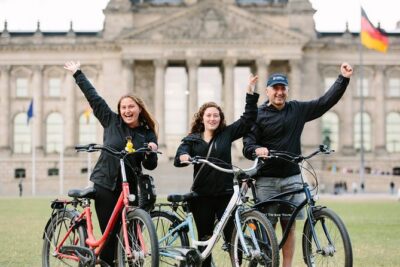
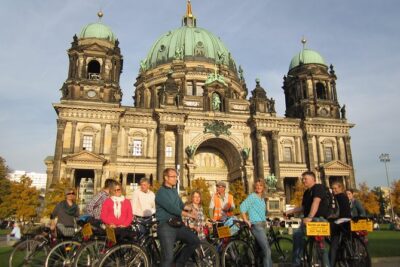
Berlin Highlights Sightseeing Bike Tour in Small Groups
Read our review →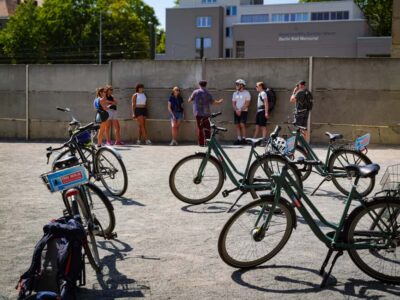
Berlin: The Wall and Third Reich Guided Bike Tour
Read our review →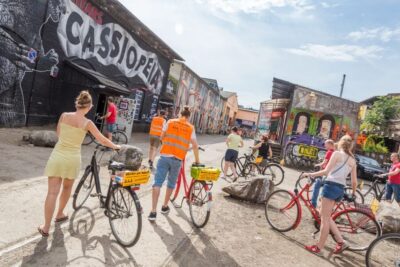
Berlin: Alternative Bike Tour of Kreuzberg & Friedrichshain
Read our review →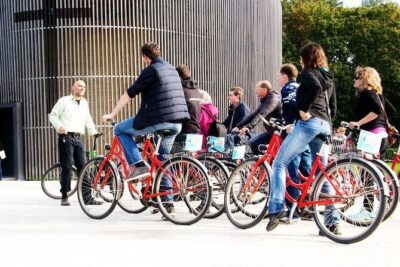
Berlin: Guided Bike Tour to Explore the Highlights
Read our review →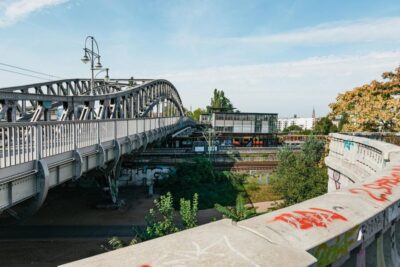
Berlin: Cold War & Berlin Wall History Guided Bike Tour
Read our review →Browse the lists this ride appears in