
Review · MEXICO CITY
Mexico City; ART NACO : Murals & Street Art Bike Tour
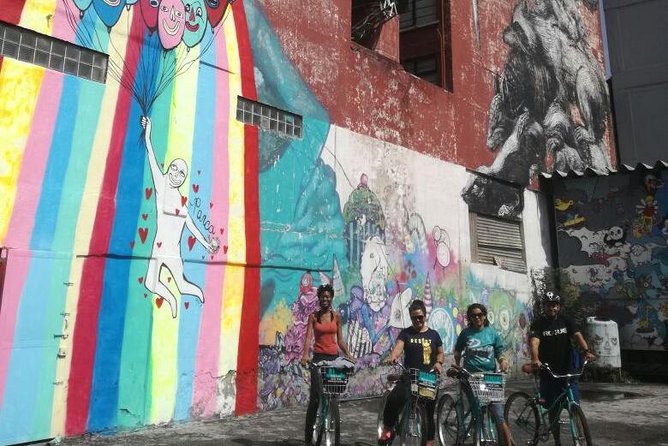
Mexico City’s best street art is not confined to a museum. This small-group bike ride takes you through Guerrero, Obrera, Doctores, Juárez, and Cuauhtémoc, where murals appear on working neighborhood streets rather than behind velvet ropes. You get local context, a fitted bicycle, bottled water, and a plate of Mexican street food along the way.
I like two things right away: the maximum of 10 people keeps the ride personal, and the extra guides often make city cycling feel far less tense. Guides such as Iván, Alberto, Gaby, and Eduardo have been praised for explaining both the art and the neighborhoods. The blue-corn tacos and other local snacks are a welcome part of the experience, not an afterthought.
The main caution is equipment and communication. Most rides go smoothly, but some bicycles have needed better brakes or gears, and one guide was hard for an English-speaking rider to follow. A delayed start has also caused problems for people with firm afternoon plans.
Key points to know before you book
- Street art beyond the tourist center: Ride through Guerrero, Lagunilla, Obrera, Doctores, Juárez, and Cuauhtémoc rather than seeing only the familiar sights.
- Two possible routes: Poray offers a northern or southern option, with the northern route described as having more history by one couple.
- Slow, supported cycling: Guides help the group cross busy streets, and additional staff may block traffic or keep the riders together.
- Street food is included: Expect choices such as tacos, quekas, tlacoyos, gorditas, chilaquiles, and options for dietary restrictions.
- Small group, three hours: The tour is capped at 10 people and begins at 10:00 a.m. at Avenida Paseo de la Reforma 24-1.
- Check the bicycle before leaving: Brakes, gears, and general fit matter more here than shiny paint or a fancy frame.
Why this bike ride reveals a different Mexico City
Mexico City is enormous, and you can spend days moving between major museums, plazas, and grand public buildings without seeing how art works at street level. This ride changes the scale. You pedal through neighborhoods where murals share walls with shops, homes, workshops, and ordinary traffic.
That is the real value. You are not simply being driven from one painted wall to another. The bicycle connects the stops, so you get a sense of how the neighborhoods fit together. The pace is reported to be slow, and the route includes quieter local streets as well as busy crossings.
The tour also offers a useful balance between art and place. Guides explain artists and images, then connect them to Mexican history, customs, and neighborhood life. Iván, in particular, has been praised for knowing the artists, the stories behind the work, and local cultural connections. Alberto is described as patient and well informed, while Gaby receives high marks for clear explanations and group care.
Guide quality may vary. One rider found the English difficult to follow, and another felt the guide talked too much about subjects that did not fit the art. That is worth keeping in mind if you want a tightly scripted art lecture. The experience appears stronger when your guide is one of the art-focused leaders who can explain why a work matters, not just point to a wall and name its painter.
More Street Art Bike Tours in Mexico:
- Mexico City: Art Naco, murals & street art bike tour
★ 4.7 · 166 reviews - London Bike Tour: Landmarks, Secret Gems, Pub Stop & Street Art
★ 5.0 · 943 reviews - Barcelona Street Art and Graffitti Bicycle Tour
★ 5.0 · 361 reviews
Starting near Reforma and heading into local neighborhoods
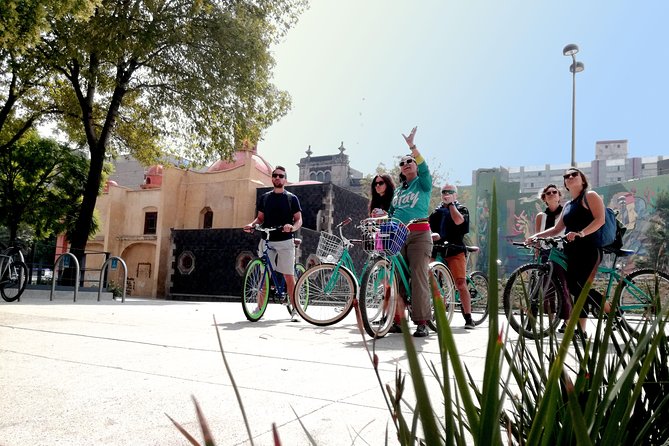
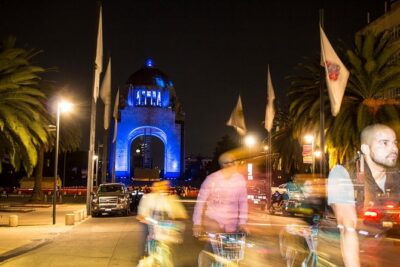
The meeting point is at Avenida Paseo de la Reforma 24-1 in Colonia Centro, near public transportation. The tour starts at 10:00 a.m. and returns to the same place after roughly three hours. There is no hotel pickup, so allow time to reach the starting point on your own.
The beginning is useful for getting comfortable with the bicycle and the group. Poray fits a bike to you, and the small size of the group makes it easier to hear instructions and stay together. Groups of six or nine have sometimes had several guides, which gives the ride a protective escort through traffic.
You should still inspect your bicycle before setting off. One rider had weak brakes, and another bicycle had gears that shifted without warning. Other riders found the bicycles comfortable, so the equipment is not automatically a problem. The sensible move is to test the brakes, change gears, and ask for another bike immediately if something feels wrong.
Guerrero, Lagunilla, and the less polished city
One route includes Colonia Guerrero, Lagunilla, and parts of the non-tourist center. These areas give the tour its strongest local character. You will not be cycling through a carefully arranged sightseeing district. You might find busy streets, practical businesses, older buildings, and public art that feels tied to the neighborhood around it.
That setting helps explain why a bike is useful. You can cover more ground than on foot, but you still move slowly enough to notice walls, corners, and small changes in the streetscape. You also avoid the sealed-off feeling of a bus window.
The traffic support matters here. Several riders specifically appreciated the additional guides who helped the group cross streets and kept riders safe. One described a guide as the expert blocker, a plain but useful description of someone positioning himself between the group and moving cars.
Do not mistake this for a traffic-free ride. Mexico City streets demand attention, and you need to be comfortable on a bicycle. Still, the pace is not presented as athletic. People describe the cycling as slow and manageable, with frequent stops for art and explanation.
Obrera, Doctores, and the Antique Toy Museum
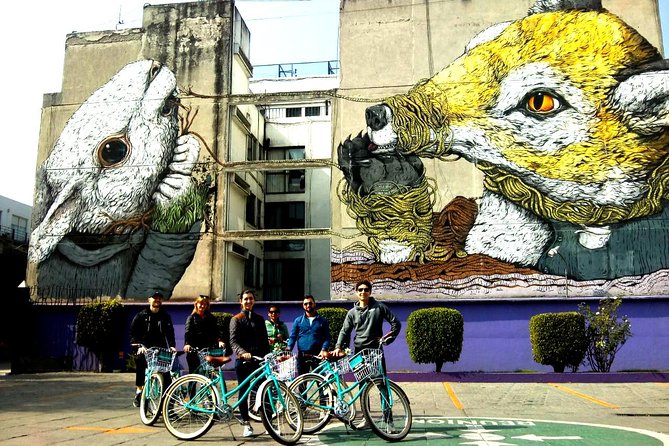
The route continues toward Obrera and Doctores, two neighborhoods that many first-time visitors would not reach on their own. Here, the focus shifts to local and international street artists and to the way public art has developed within the city.
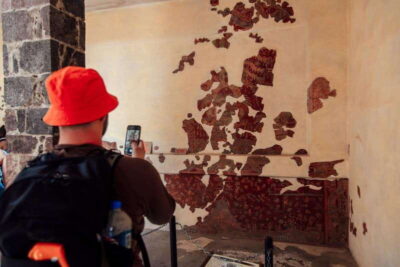
A notable stop is the Antique Toy Museum, associated with Mexico City’s first Street Art Festival in 2011. That connection gives the art a useful setting. The museum is not just another point on a sightseeing list. It represents an early effort to bring street art into public view and to encourage the surrounding community to preserve and promote new work.
You should expect the guide to add the meaning here. The murals are more rewarding when you know something about the artists, the community, and the history behind the images. Several riders felt the stories made the art more memorable, while one negative experience suggests that the tour depends heavily on how well the guide handles those explanations.
If you have an interest in Mexican history as well as visual art, the northern route may suit you particularly well. One couple chose it because it emphasized the city’s past. Poray presents two route choices, north or south, but the exact route available to you may depend on the day and the guide.
More Cycling Trips in Mexico:
- Electric Bike Beach Adventure with Tequila Tasting and Lunch
★ 5.0 · 1,162 reviews - Frida Kahlo VIP [Museum Tickets Included] Bike, Markets & Churros
★ 5.0 · 1,072 reviews - Mexico City: 19 City Highlights Bicycle Tour
★ 5.0 · 425 reviews - Mexico City: 19 City Highlights Bicycle Tour
★ 5.0 · 302 reviews
A pause at Pushkin Garden and a change of pace
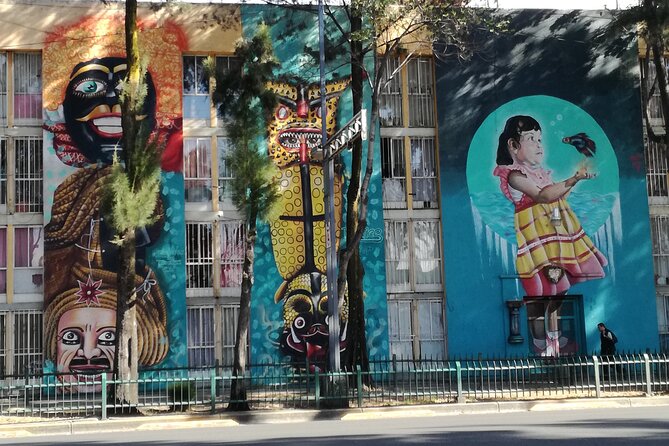
The ride includes a break at Pushkin Garden before continuing toward Roma. This pause is practical as well as pleasant. Three hours on a bicycle in a large city is easier when you have a moment to stop, listen, and reset.
The garden break also helps connect different sides of Mexico City. You may begin in older central neighborhoods, then pass into areas with a different architectural feel and a stronger café and cultural presence. The tour does not ask you to spend the entire time pedaling hard. That slower rhythm is one reason people with moderate cycling ability have enjoyed it.
The route is not a formal fitness ride. You will stop often, hear explanations, and eat during the outing. Even so, wear comfortable clothing and shoes, and do not book it if you strongly dislike riding beside city traffic.
Juárez, Cuauhtémoc, and the large Alameda murals
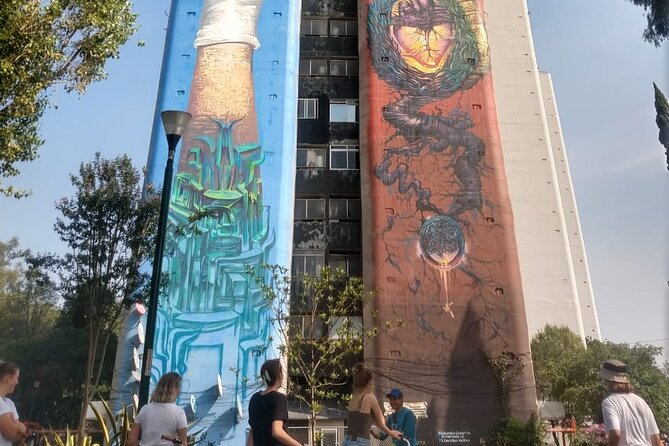
The final section crosses Juárez and Cuauhtémoc, leading toward some of the larger murals around the Alameda area and the Diego Rivera mural. This portion gives the tour a grander finish after the closer, neighborhood-scale works earlier in the ride.
The Alameda murals are useful for comparing different techniques and sizes. Earlier paintings may feel woven into the daily life of a block. The larger works near the central area show how mural art can command an entire public setting.
A guide can make a major difference at these stops. The strongest accounts describe explanations of the artists, the history, and the meaning of the work without flooding the group with facts. Iván is also credited with links to a local print shop and museum, which suggests the best guides bring personal connections rather than relying only on memorized dates.
The route can also produce small surprises. One couple noticed a library they wanted to enter, and the guide offered to watch the bicycles while they took a look inside. That kind of flexibility is part of the appeal of a local guide, though you should not assume every extra stop will be possible on every departure.
The street food stop is part of the lesson
Food is included, and the choices are more substantial than a bottle of water and a token snack. The listed options include tacos, quekas, tlacoyos, gorditas, chilaquiles, and other street foods, with choices intended for different diets.
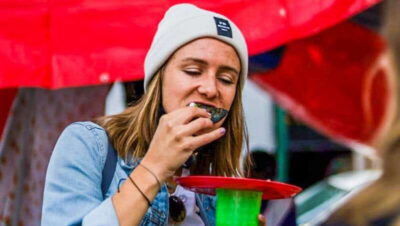
A stop for blue-corn tacos has been a highlight for some riders. Others enjoyed vegan food or a local lunch spot chosen by the guide. The exact food stand can vary, but the point is clear: you get to try everyday Mexican food in the neighborhoods you have just been riding through.
This is one reason the $60.56 price can make sense. You are paying for a fitted bike, a local guide, traffic support, a three-hour route, and food, not simply for access to a mural. If you are already comfortable exploring Mexico City by bike and finding street art yourself, the price may feel less compelling. If you want someone else to handle the route, explain the work, and lead you to a local food stop, the cost is reasonable for a small-group outing.
Tell the operator about dietary restrictions when booking. The food program is designed to offer choices, but the information does not promise that every item will be available at every stop.
Safety, group size, and the practical trade-offs
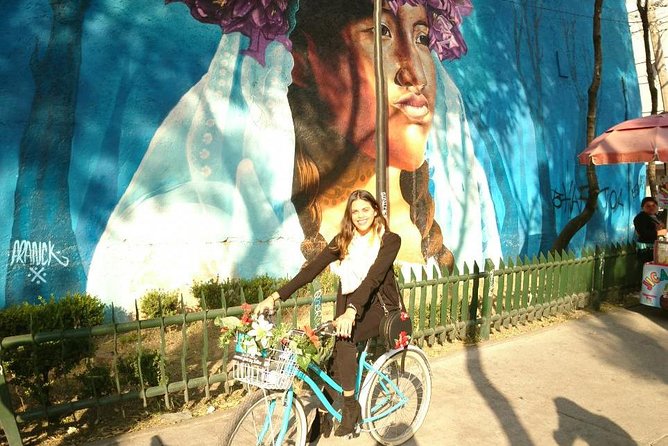
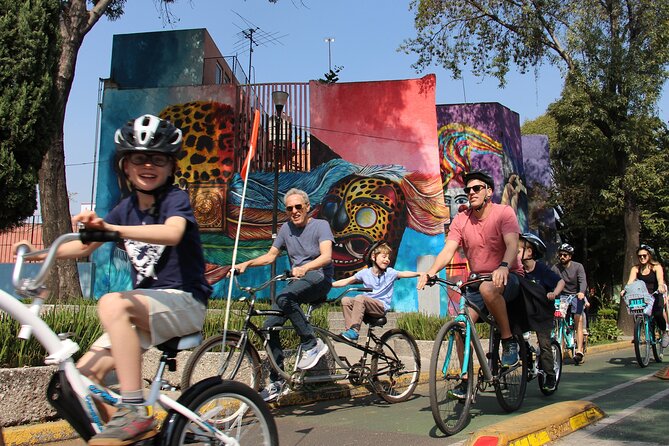
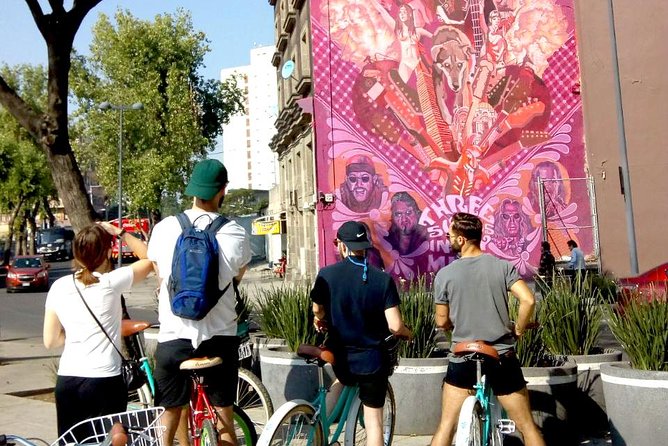
The maximum group size is 10. That is small enough for questions and large enough to create a visible group on city streets. On some departures, two or three guides have accompanied the riders, with one guide leading and others helping at intersections.
This support is the most praised part of the ride after the art itself. People who felt nervous about cycling in Mexico City found the escorted crossings reassuring. The route still takes place in real traffic, so no guide can remove every risk, but the extra staff clearly changes the experience.
The ride is open to most people who can participate in a normal city bicycle outing. Children must be with an adult, and a child rate applies only when the child shares the booking with two paying adults. At least two people are required per booking, while the group maximum is 10.
English is offered, but the guide may be multilingual. If detailed English explanations are essential to you, it is sensible to confirm the language arrangement before booking. Several guides have been praised for clear English, yet one person found communication limited.
Timing is another practical concern. The stated duration is about three hours, but one delayed departure ran roughly 50 minutes over because the group waited for a late rider and a photographer. Most of the feedback points to a smooth outing, but I would avoid scheduling a flight, museum reservation, or other fixed appointment immediately afterward.
Who will enjoy this tour most
I would choose this ride if you want to:
- See parts of Mexico City beyond the usual central sights
- Learn how murals connect to artists, neighborhoods, and Mexican history
- Try local food without having to choose a stand yourself
- Cycle at an easy pace rather than train for a long-distance ride
- Travel with a small group and receive traffic support
- Find a more personal introduction to the city at the start of your stay
It is especially useful early in a Mexico City visit. The ride can help you understand the city’s layout and point you toward neighborhoods, museums, food, and public art you may want to explore later.
I would hesitate if you need top-quality bicycles, dislike city riding, or have a strict schedule after the tour. I would also think twice if your main goal is a formal museum-style presentation of mural art. The experience is strongest as a combination of cycling, neighborhood discovery, local stories, and food.
Poray offers free cancellation up to 24 hours before the start time. Changes or cancellations made inside that window are not accepted for a refund, so keep the local cutoff in mind.
Should you book ART NACO?
Yes, if your idea of Mexico City includes side streets, public art, local food, and stories that do not fit neatly into a museum label. The small group, slow pace, and traffic support give this tour a practical edge, while guides such as Iván, Alberto, Gaby, and Eduardo can add real depth when assigned to your ride.
Book it with realistic expectations. Check the bicycle carefully, allow extra time after the scheduled finish, and understand that guide quality and English fluency may vary. If those points work for you, this is a strong way to see a less familiar side of Mexico City in three useful hours.
FAQ
How long is the ART NACO bike tour?
The tour lasts approximately three hours. It begins at 10:00 a.m. and ends back at the meeting point.
Where does the tour start and finish?
It starts at Avenida Paseo de la Reforma 24-1, Colonia Centro, Cuauhtémoc, Mexico City. The activity ends at the same meeting point.
What neighborhoods does the bike tour visit?
Possible areas include Colonia Guerrero, Lagunilla, Obrera, Doctores, Juárez, Cuauhtémoc, the Alameda area, and Roma. Poray offers a northern or southern route.
Is the bicycle included?
Yes. The tour includes a bicycle fitted to you, along with bottled water and street food snacks.
How many people can join the tour?
The maximum group size is 10 people. A minimum of two people per booking is required.
Can children join the tour?
Yes, children must be accompanied by an adult. The child rate applies only when the child shares the booking with two paying adults.
New cycling reviews around Mexico
- Oaxaca City: Bike Tour with Professional Guide+Art workshop★ 4.8 · 23 reviews
- Oaxaca: Guided Bike Tour to the Largest Tree in the World★ 5.0 · 16 reviews
- Mexico City: Private Chapultepec Park Bike Tour★ 4.8 · 16 reviews
- 🟢Street Food Bike Tour Mexico City🟢★ 5.0 · 15 reviews
- Mexico City: Guided Bike Tour of Culture and Local Taste★ 5.0 · 14 reviews
- Mexico City: Chapultepec & Reforma Historic Bike Experience★ 4.5 · 30 reviews
- Mexico City: Art Naco, murals & street art bike tour★ 4.7 · 166 reviews
- Electric Bike City Tour with a taco stop.★ 4.9 · 58 reviews
Mexico City Cycling Tours, compared.
Mexico City Highlights E-Bike Tour With Foodie Stops
Read our review →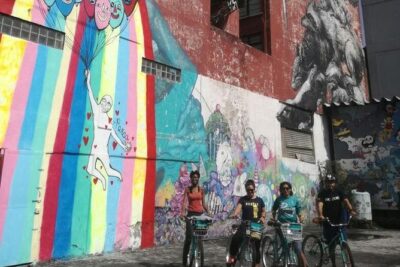
Mexico City: Art Naco, murals & street art bike tour
Read our review →
From Mexico City: Teotihuacan Pyramids and Bike Tour
Read our review →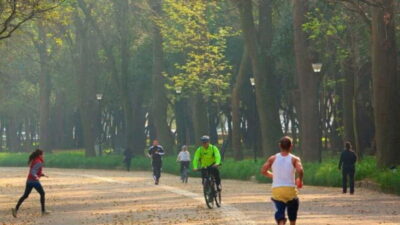
Browse the lists this ride appears in