
Review · BUENOS AIRES
Buenos Aires: North or South Buenos Aires Bike Tour
Buenos Aires opens up quickly from a bicycle. In four hours, you can move from old San Telmo and La Boca to Puerto Madero and Plaza de Mayo, or from Retiro and Recoleta to Palermo’s parks. The big choice is the route: South for port history, tango, football, and colorful streets, or North for grand buildings, parks, and late-19th-century Buenos Aires.
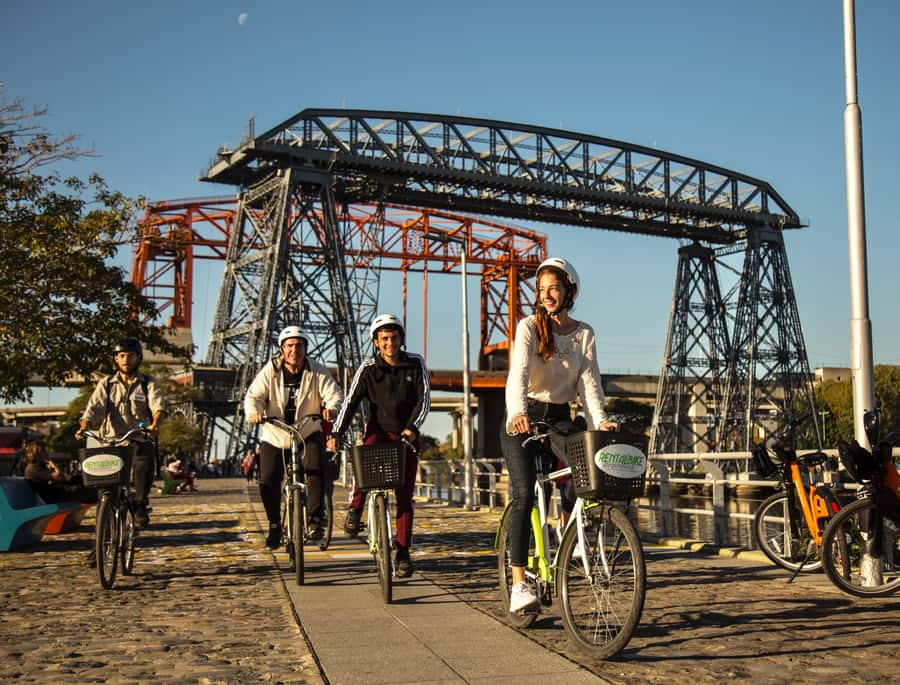
I like the comfortable cruiser bikes, baskets, helmets, and the small groups capped at eight people. I also like the guides’ personal touch. Santiago, Florencia, Pilar, Ana, and Dilson have been praised for clear English, good local stories, and adjusting the pace to suit the group.
The main consideration is traffic. Much of the ride uses bike lanes, but both routes include some city streets, and the North circuit can involve busier roads. The ecological reserve may close after rain or on Mondays, and the tour runs in light rain, so check the forecast and dress sensibly.
Key points to know before you ride
- Pick your Buenos Aires carefully: The South circuit visits San Telmo, La Boca, Puerto Madero, the ecological reserve, and Plaza de Mayo. The North circuit covers Retiro, Recoleta, Palermo, and the city’s major parks.
- You cover a lot of ground: Four hours by bike gives you a useful first look at districts that are spread far apart.
- Guides shape the experience: Santiago, Florencia, Pilar, Ana, and other bilingual guides explain history, local customs, football, tango, and practical places to eat or go out.
- Most riding is manageable: The pace is described as relaxed, and the city is generally flat, but you still need to feel comfortable riding near traffic.
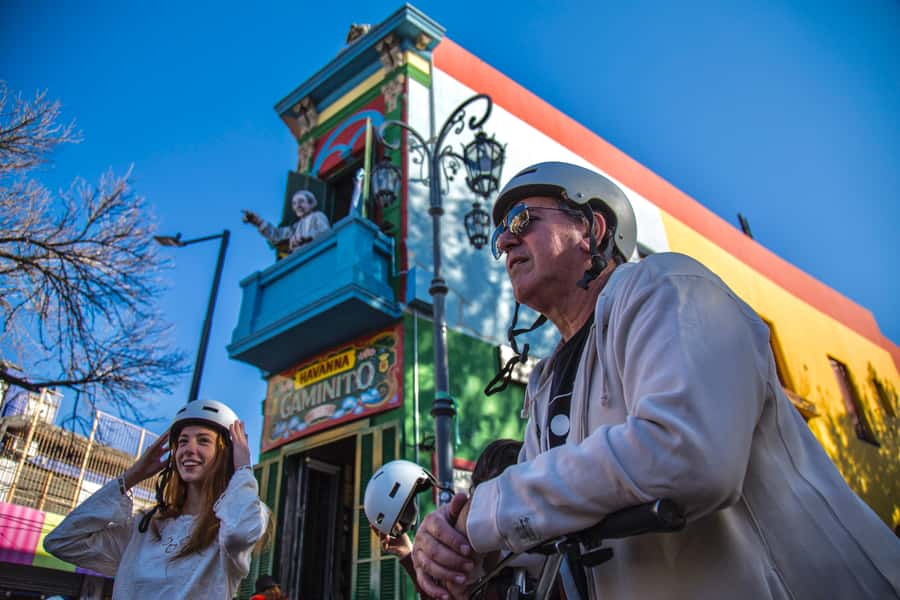
- La Boca includes free time: You can get off the bike and walk around Caminito instead of simply passing through.
- Bring your own water bottle: A refill station is available, but bottled water is not listed as included.
Choosing between the North and South circuits
This is not one route with two small variations. The circuits show you different sides of Buenos Aires.
Choose the South circuit if this is your first visit and you want the city’s oldest districts, port life, football culture, street art, and government center. It has the most dramatic contrast, from the old streets of San Telmo to the polished towers of Puerto Madero.
Choose the North circuit if you prefer architecture, elegant avenues, museums, monuments, and open parkland. Recoleta and Palermo offer a calmer ride in places, though the route is farther from the starting point and can require more time on busier roads.
I would not try to treat one circuit as a substitute for the other. If you have two mornings and enjoy cycling, doing both gives you a very useful overview of Buenos Aires.
More Cycling Trips in the world:
- Lion City Bike Tour of Singapore
★ 5.0 · 6,211 reviews - Big Bike tour Amsterdam – See all in 3 unforgettable hours
★ 4.7 · 4,929 reviews - 3-Hour Porto Highlights on a Electric Bike Guided Tour
★ 5.0 · 4,392 reviews
Starting in Montserrat with a safety briefing
The tour begins at the Rental Bike Argentina shop in the Montserrat area, listed at Chile 1141 or Chile 1145 depending on the booking option. Arrive 15 minutes early. The maximum wait is 10 minutes, after which the bike group leaves without a refund.
You receive a cruiser bike, helmet, bell, and basket. The opening safety instructions matter because the route includes both bike lanes and sections shared with city traffic. You need to be at least 1.50 meters tall, and the minimum age is 12.
The group limit of eight is one of the tour’s strongest practical features. A guide can keep a small group together more easily, stop without creating a crowd, and answer questions. Some departures may be even smaller. One person described riding with only a guide and a spouse, which allowed the route to be adjusted around personal interests.
The pace is not presented as a race. Several guides, including Ana, Santiago, and Dilson, have been praised for keeping the ride comfortable for people with different abilities. You should still be able to ride for four hours with regular stops.
South circuit: from San Telmo to Plaza de Mayo
San Telmo and Parque Lezama
The South route begins around San Telmo, the old quarter where the city’s earlier character is easiest to sense. The ride continues to Parque Lezama, where the guide explains the first foundation of Buenos Aires, immigration, and the roots of tango.
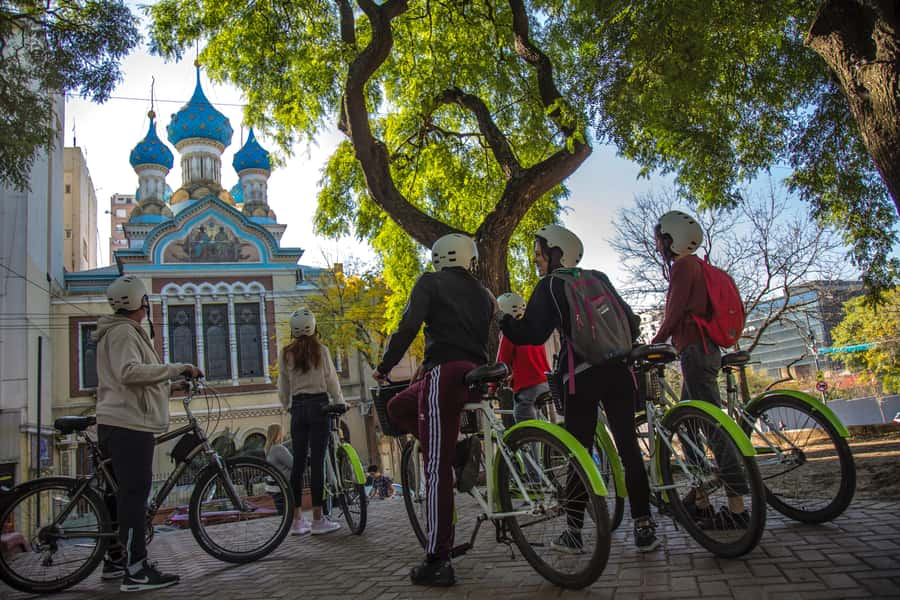
This is a useful opening because the guide is not simply pointing at buildings. You get a basic explanation of how the city grew through port activity and immigration, then see how tango developed within that urban mix. The Russian Orthodox Church of the Holy Trinity is another short photo stop in this area.
Parque Lezama is also a chance to settle into the bike. The route is flat in this part, and the stop breaks up the first stretch of riding.
Same roads, a different ride:
- Ninh Binh Full-Day Tour from Hanoi to Hoa Lu, Tam Coc & Mua Cave Via Boat & Bike
★ 5.0 · 4,384 reviews - Small Group Guided Bike Tour of Amsterdam’s Hidden Gems
★ 5.0 · 3,936 reviews - 3-hour Complete Prague Bike Tour
★ 5.0 · 3,674 reviews - Bangkok: Temples, Canals & Local Life Bike Tour
★ 4.9 · 3,511 reviews
La Boca and La Bombonera
The route then heads toward La Boca, one of Buenos Aires’ most recognizable districts. Your guide explains the area as a former port neighborhood shaped by immigration, work, football, and popular culture.
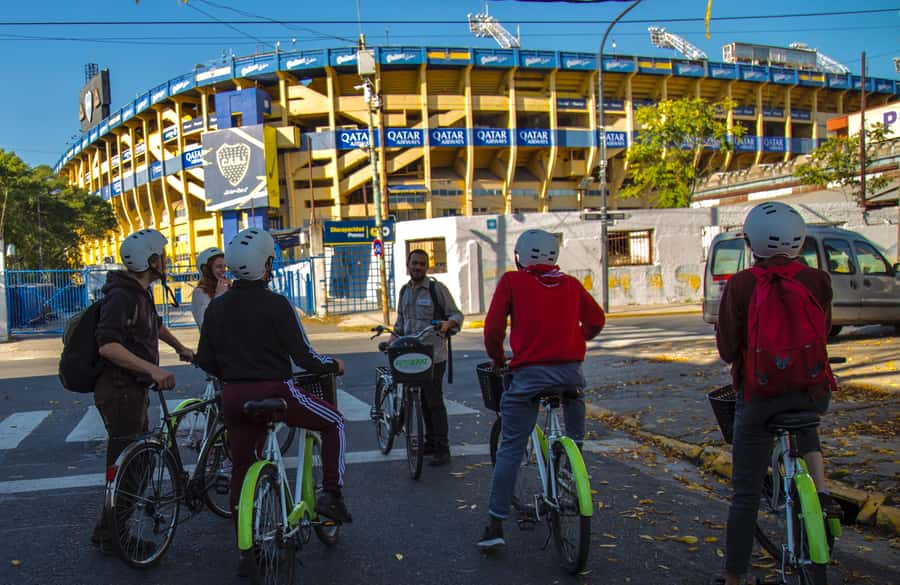
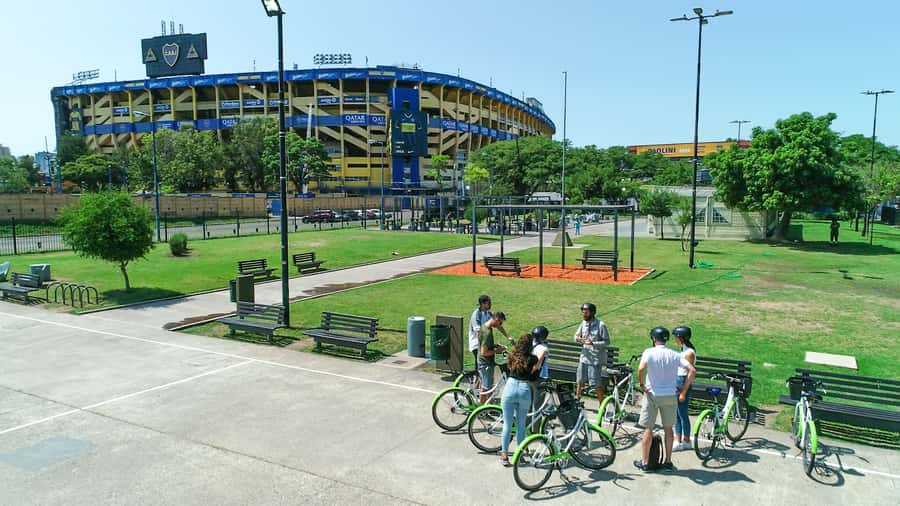
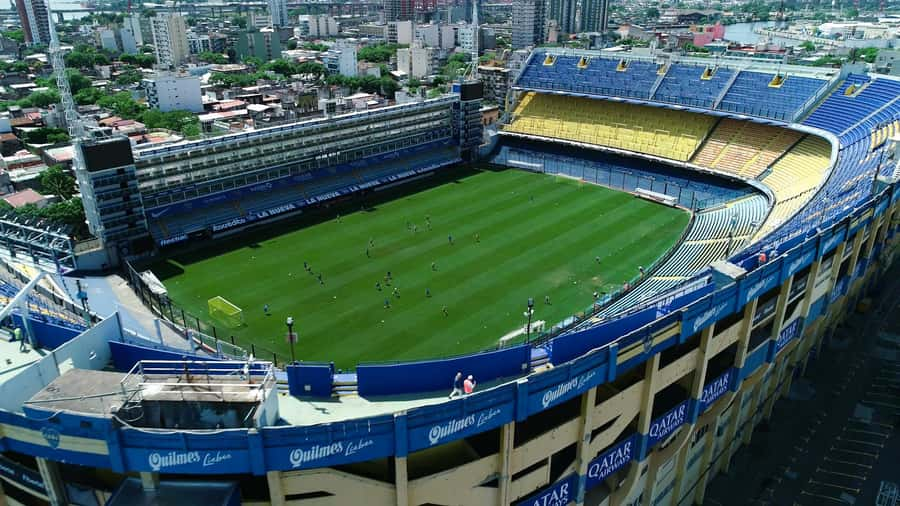
A stop at La Bombonera introduces the football side of the city. The stadium is closely tied to Boca Juniors and local passion, so even people who do not follow football can see why it matters here. The stop is mainly about seeing the stadium and hearing its place in neighborhood life, not attending a match.
You then continue to Caminito, the colorful street area associated with artists, tango imagery, and the city’s old port. The tour allows free time here, which is important. You can leave the bike, look at the painted buildings, browse the street art, and take photographs instead of viewing Caminito only from the saddle.
I would keep your expectations sensible. La Boca is a tourist-focused area, and the stop is relatively short. One guide also pointed out that the tour cannot spend as long there as a walking visit. If the neighborhood interests you most, return later on your own with more time.
Puerto Madero and the ecological reserve
From La Boca, the route changes mood as you ride toward Puerto Madero. This former harbor area has been rebuilt as one of the city’s most modern districts, with newer architecture and a very different feel from San Telmo and La Boca.
The Fuente de las Nereidas by Lola Mora is a planned photo stop along the way. The sculpture gives the guide another opening to discuss Argentine art and public spaces.
The ecological reserve sits between the city and the Río de la Plata. The reserve covers about 865 acres and brings open space and wildlife into a route otherwise filled with buildings and traffic. You may see a quieter side of Buenos Aires here, with scenic views and a break from the hard city streets.
There is an important catch: the reserve is closed on Mondays and can close because of bad weather. Wet conditions from the previous day may also prevent cycling inside. If this section is a priority, avoid Monday and check conditions before booking.
Plaza de Mayo and the city center
The final South circuit section brings you to Plaza de Mayo, the political and historic center of Buenos Aires. This is where the city was definitively founded in 1580.
The stops here include the Casa Rosada, the presidential offices; the Cabildo, the old city hall; and the Metropolitan Cathedral, once associated with Pope Francis. The Centro Cultural Kirchner is also included on the wider route.
This is the point where the earlier pieces connect. The port, immigration, old neighborhoods, government, and modern redevelopment are all within one bike ride. The tour ends back at the starting shop after roughly four hours.
North circuit: monuments, Recoleta, and Palermo parks
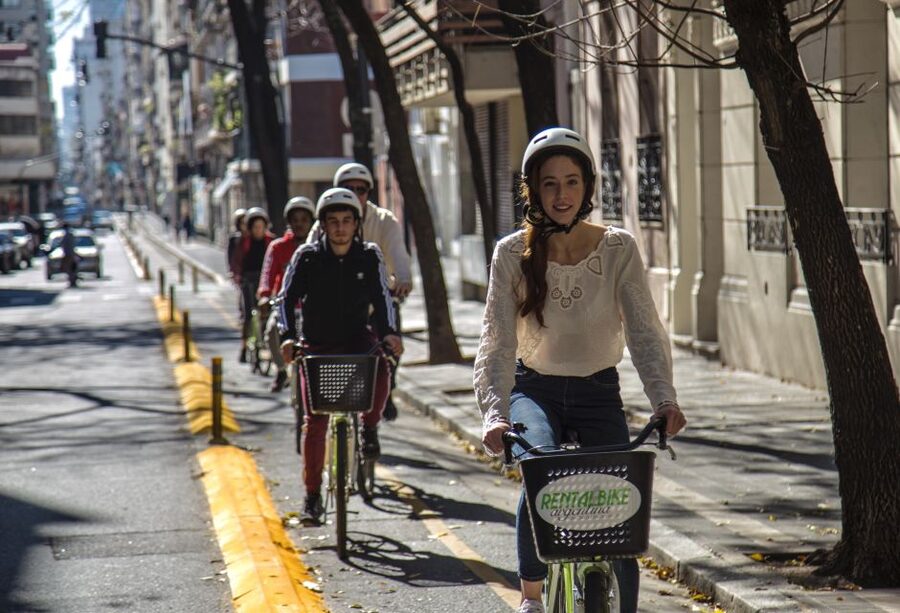
Downtown, Retiro, and Plaza San Martín
The North circuit begins by crossing the center of Buenos Aires and then moves toward Retiro. This route gives you a strong introduction to the city’s late-19th-century ambitions, when grand public buildings and palaces helped shape its European-influenced identity.
Plaza San Martín is one of the main stops. The guide explains the square and its monuments, including the Monument to the Fallen in the Malvinas. You also pass the Kavanagh Building, a major architectural landmark, the Basilica of the Most Holy Sacrament, and the Torre Monumental.
These stops are mostly about seeing the buildings from outside. The route is best for broad visual context rather than long interior visits. Your guide supplies the details while you move between monuments.
Recoleta and the cemetery area
Recoleta shifts the tone again. The district is known for its cemetery, cafes, ice cream shops, museums, and polished streets. It is one of the most attractive areas for a slower look at Buenos Aires’ upper-class architecture and public spaces.
The bike tour does not enter Recoleta Cemetery. The route may stop near it or pass by the entrance, but you should plan a separate visit if you want to see the tombs and mausoleums inside.
A stop near the Israeli Embassy adds another point of interest before the route continues north. The guide may explain the surrounding area and major landmarks, but the schedule does not allow for long visits at every stop.
Floralis Genérica and Palermo
The Floralis Genérica, the giant metal flower, is one of the North circuit’s most recognizable photo stops. You get time here to take pictures and walk around briefly.
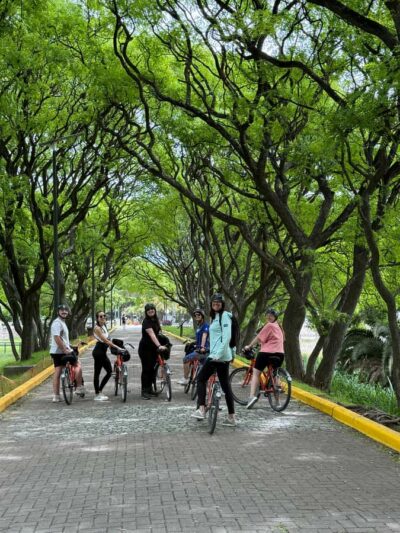
From there, the route continues through Palermo, passing the Planetario Galileo Galilei and heading toward the open spaces of Tres de Febrero Park and the Rose Garden. This is where the North circuit feels most relaxed. The broad parks provide a welcome change after the traffic and formal avenues of the center.
One practical point: the North route is farther from the start and includes more cycling between major stops. That means slightly less time standing at each landmark, but it also lets you see more of the city as a connected whole.
Several people have found that the North circuit gave them a useful taste of Palermo and Recoleta, while still leaving reasons to return later for museums, cafes, and the cemetery. I agree with that approach. Think of this ride as an orientation, not a replacement for a full day in either neighborhood.
Congress Square on the return
The route heads back through the city and finishes at Plaza del Congreso, beside the impressive building that houses Argentina’s legislative power. It is a strong final stop because it brings the ride back to formal civic Buenos Aires after the parks and residential districts of the North.
The North circuit ends at the same bike shop area in Montserrat. Depending on the exact option booked, the listed drop-off points are Chile 1141, Chile 1145, or Rental Bike Argentina.
What the guides add to the ride
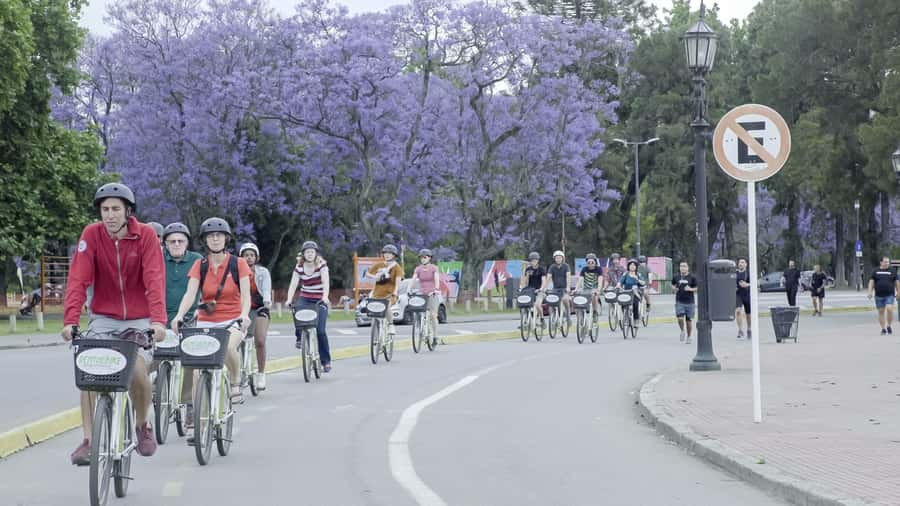
The guide is the main reason this tour offers more than a standard bike rental. You are not only following a route. You are hearing why a neighborhood looks the way it does, how immigration shaped the city, and why football, tango, monuments, and public squares matter.
The bilingual format is useful if you speak English or Spanish. Guides such as Florencia and Pilar have been praised for clear English, while other guides have led the tour in both languages.
The best guide style here seems to be conversational rather than scripted. Ana has been noted for adjusting to the group’s ability. Santiago has supplied tips on tango, restaurants, bars, and evening plans. Dilson has been appreciated for combining historical facts with a calm manner. That kind of local advice is most useful if you take the tour near the start of your stay.
You should speak up if you cannot hear. One small-group ride had a guide whose voice was quiet, though the group size made it manageable. In a larger city street, staying close to the guide is important.
Bikes, traffic, weather, and comfort
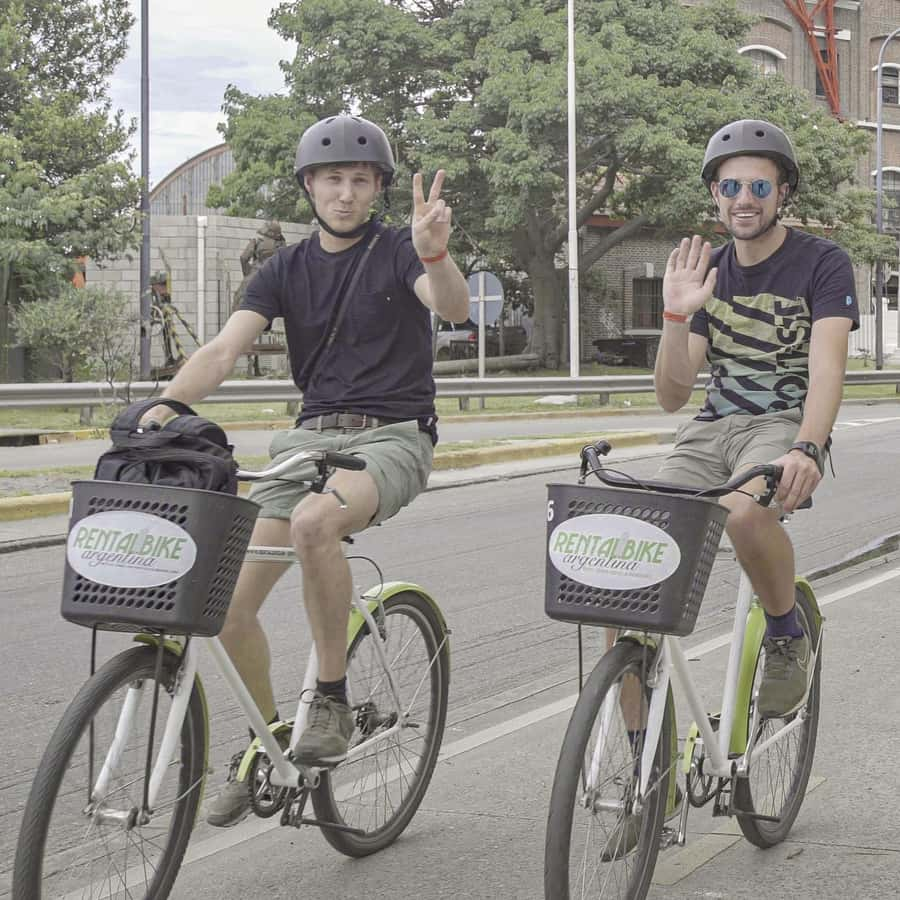
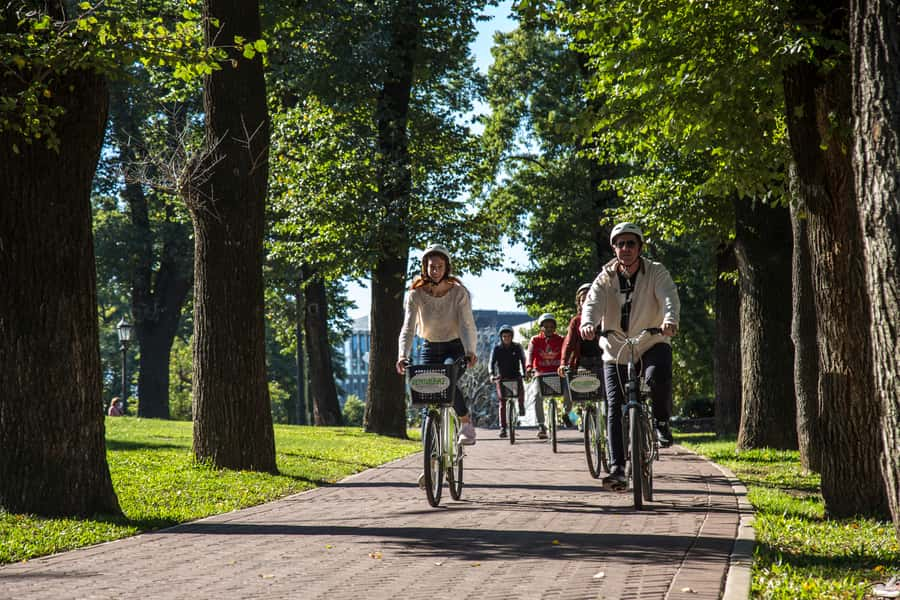
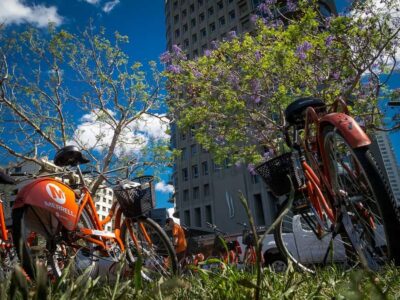
The cruiser bikes are designed for an easy urban ride, not speed. Baskets are handy for a reusable bottle and small personal items, and helmets are provided. A refill machine is available, but you should bring your own bottle.
The city is generally flat, and the pace is described as comfortable. Still, this is an active four-hour outing. Wear shoes you can pedal in and clothing suited to the forecast.
Most of the route may use bike lanes, but you will sometimes ride beside cars or on open streets. This matters more on the North circuit, where busier roads may be part of the longer ride. If you are an uncertain cyclist, the South circuit may feel like the better first choice.
The tour runs in light to moderate rain. Heavy rain, strong winds, or an official weather alert can cause a suspension or rescheduling. Bring a light rain layer, and in winter carry extra clothing. One person found the North route chilly in winter, while others completed rides in rain with ponchos supplied by the guide.
The tour is not suitable for children under 12, pregnant women, people with mobility, heart, respiratory, back, or seizure conditions, people with recent surgery, people over 118 kilograms, or people over 95. It is also not suitable for people with visual impairment or other pre-existing medical conditions that make cycling unsafe.
Is $38 good value?
At $38 per person, this is a strong value if you want an introduction to Buenos Aires rather than a slow visit to a single neighborhood. A taxi or public transport can move you between districts, but it will not give you the same steady view of streets, parks, buildings, and daily city life.
You are also paying for a bilingual guide, bike, helmet, basket, safety briefing, and a small group. The four-hour length gives the price real weight, especially when you consider how far apart La Boca, Puerto Madero, Recoleta, and Palermo are.
The value drops if you dislike cycling in traffic or want extended time inside museums, the cemetery, La Bombonera, or other attractions. This is a moving overview, with short stops. Use it to learn where you want to return, not to check every landmark off your list.
Free cancellation up to 24 hours before departure and the option to reserve now and pay later make booking less risky. Tips for the guide are not included.
Who should book this Buenos Aires bike tour?
I would book this early in a Buenos Aires stay if you enjoy cycling and want a clear sense of the city’s layout. It is especially useful for a first visit, a short stay, or anyone who finds a large capital easier to understand from the street.
Pick South for the strongest mix of old neighborhoods, La Boca, football, tango, modern harbor redevelopment, and Plaza de Mayo. Pick North for architecture, monuments, Recoleta, Palermo, and parks.
Skip it if you are uncomfortable riding near cars, need frequent long rests, or want to spend serious time inside attractions. If you meet the physical requirements and can manage a four-hour ride, this is one of the more efficient ways to get your bearings in Buenos Aires.
FAQ
How long is the Buenos Aires bike tour?
The tour lasts four hours, including cycling, guided stops, photo breaks, and short periods of free time.
Can I choose between a North and South route?
Yes. You can choose the South circuit or the North circuit when booking.
What does the South circuit include?
The South route includes San Telmo, Parque Lezama, La Boca, La Bombonera, Caminito, Puerto Madero, the ecological reserve, Plaza de Mayo, Casa Rosada, the Cabildo, and other central landmarks.
What does the North circuit include?
The North route includes Downtown Buenos Aires, Retiro, Plaza San Martín, the Kavanagh Building, Recoleta, Floralis Genérica, Palermo, the Planetario, the Rose Garden, and Plaza del Congreso.
Does the tour enter Recoleta Cemetery?
No. The North tour does not enter Recoleta Cemetery. It may stop near or pass by the cemetery area.
Is the ecological reserve always open?
No. The ecological reserve is closed on Mondays and may close because of bad weather or poor conditions after rain.
Is the tour offered in English?
Yes. The live guide speaks Spanish and English.
What is included in the price?
The price includes a bilingual guide, cruiser bike, bell, basket, helmet, and access to a water refilling machine.
What should I bring?
Bring comfortable shoes, clothing suited to the weather, and a reusable water bottle.
What is the minimum age and height?
Participants must be at least 12 years old and at least 1.50 meters tall.
What happens if it rains?
The tour may run in light to moderate rain. It can be suspended or rescheduled during heavy rain, strong winds, or an official weather alert.
How early should I arrive?
Arrive 15 minutes before the start. The group leaves after a maximum wait of 10 minutes, and there is no refund for a late arrival.
New cycling reviews around the world
- Riga: Beer or Cider Bike Tour★ 4.7 · 121 reviews
- Ria Formosa: Guided Bike Tour (3h), Início na Quinta do Lago★ 4.8 · 14 reviews
- Riga Explorer Bike Tour★ 4.8 · 127 reviews
- Rio de Janeiro: Guided Bike Tours in Small Groups★ 4.5 · 133 reviews
- Rhodes: eBike Highlights Tour w/ Personal Photographer★ 4.9 · 99 reviews
- Rethymno: Guided e-Bike Tour on Mili Gorge and Soft Drinks★ 4.9 · 36 reviews
- Rhodes: Anthony Quinn Bay E-Bike Tour with Snorkeling★ 4.9 · 15 reviews
- Rent a bike in Amsterdam | 1, 2, 3+ hours★ 4.5 · 68 reviews
Buenos Aires Cycling Tours, compared.
Buenos Aires Bike Tour: North Districts, Recoleta and Palermo
Read our review →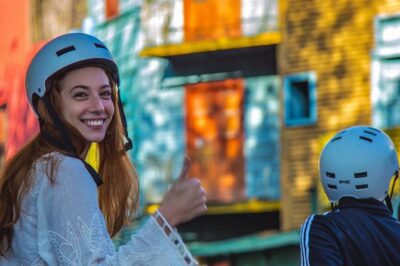
Browse the lists this ride appears in