
Review · ITALY
Ostuni: E-bike Tour, Ancient Olive Trees & Oil Tasting
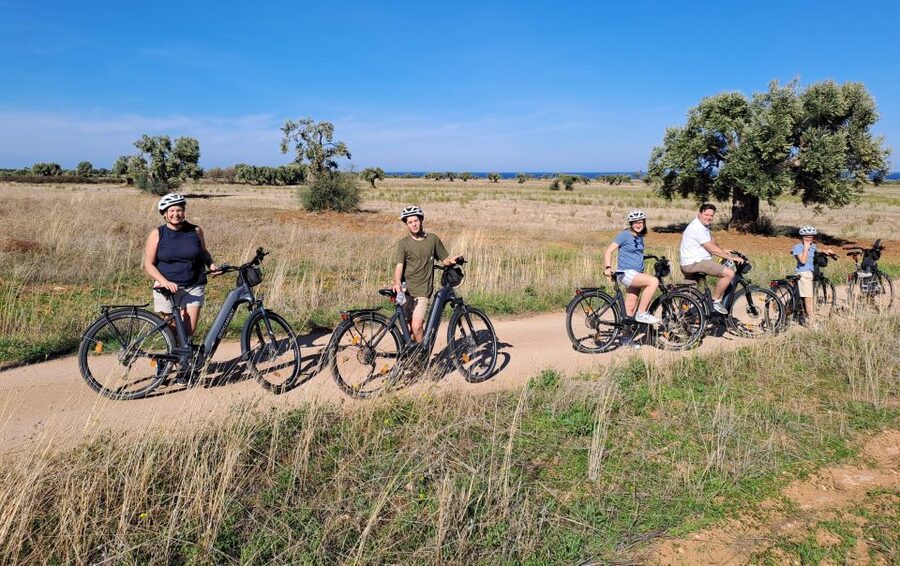
Ostuni’s countryside makes far more sense from a bicycle seat than through a car window. This small-group ride takes you beneath centuries-old olive trees, along rural paths and stone walls, then into a local oil mill where you can taste the finished product. Guide Rocco leads the outing, with local history and plenty of photo stops built into the pace.
I especially like the pairing of the Montalbano Dolmen and the olive mill. One shows Apulia’s prehistoric past, while the other explains a food tradition still active today. The main thing to consider is the bike cost: the $55 tour price does not include a rental e-bike, so you may pay another €45 for an adult bike.
Key points to know before you book
- Ancient olive groves: Ride through the Coastal Dunes Regional Park among old trees, dry-stone walls, Mediterranean scrub, and rural lanes.
- A 4,000-year-old monument: Stop at the Montalbano Dolmen, a striking reminder that Apulia’s story began long before the white towns.
- A short Via Francigena walk: Leave the bikes briefly for a scenic stretch of this historic pilgrimage route.
- Oil made on site: Visit a traditional mill and taste extra virgin olive oil produced there.
- Small group, local guide: The group is limited to nine people, and Rocco guides in English, French, or Italian.
- Bring your own bike to save money: Your e-bike is accepted at no extra charge. Rental bikes are paid for locally.
Why an e-bike is the right way to see Ostuni’s countryside
The white town of Ostuni gets most of the attention, but the countryside around it is the real setting for Apulia’s olive culture. An e-bike lets you cover enough ground to see several parts of that setting without turning the outing into a fitness test.
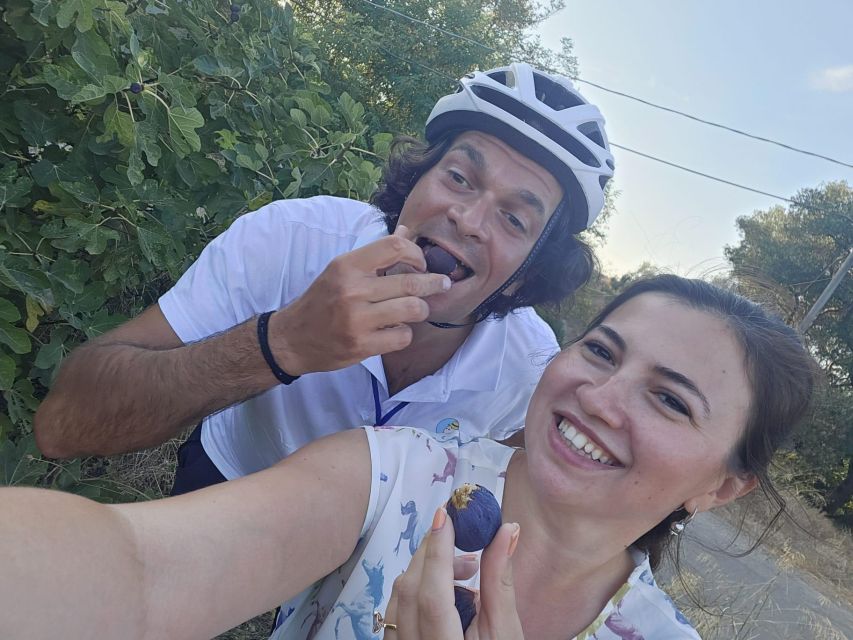
The ride begins at Cooperativa L’Agricola Montalbanese. You set off through quiet rural lanes and easy paths, with regular stops for photos and short explanations. The pace is intended to be comfortable, not competitive. That matters here, since the best moments come from looking around: twisted olive trunks, pale stone walls, prickly pear, figs, almonds, carob, and other plants that have long supported rural life.
You should still expect some uneven riding. One section includes rocky dirt roads, and slowing down is sensible, especially if you are new to e-bikes. The route is not presented as a technical mountain-bike ride, but it is also not a fully smooth cycle path from start to finish.
An e-bike takes the strain out of the ride and leaves you alert enough to listen. That is a good trade in warm weather, when a longer uphill push could distract from the scenery. The bikes used on the tour have been described as easy to control, though you should still be comfortable starting, stopping, steering, and riding on an unpaved surface.
More E-Bike Tours in Italy
- Rome EBike Tour: Appian Way, Catacombs & Roman Aqueducts
★ 5.0 · 1,766 reviews - Rome: Top Highlights & Hidden Gems Tour by Cannondale E-Bike
★ 4.9 · 1,760 reviews - Rome: Appian Way & Aqueducts E-Bike Tour (Catacombs & Food)
★ 4.9 · 1,498 reviews
Ancient olive trees in the Coastal Dunes Regional Park
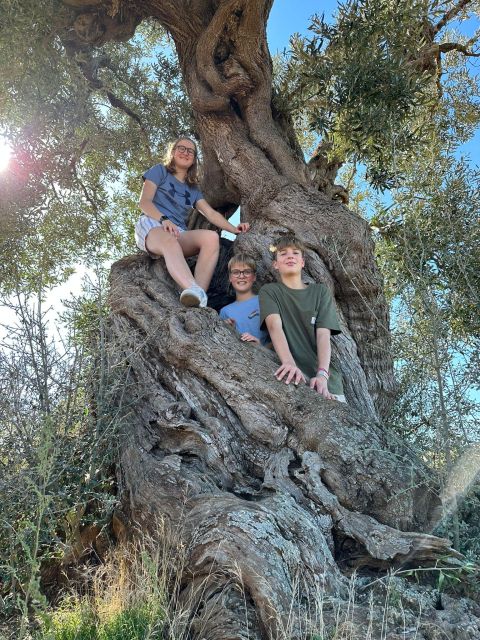
The olive groves are the heart of the experience. These are not rows of young orchard trees planted for tidy production. Many are old, broad, and shaped by time, with trunks that look almost sculpted. The dry-stone walls add another layer, marking fields and paths without concrete or modern fencing.
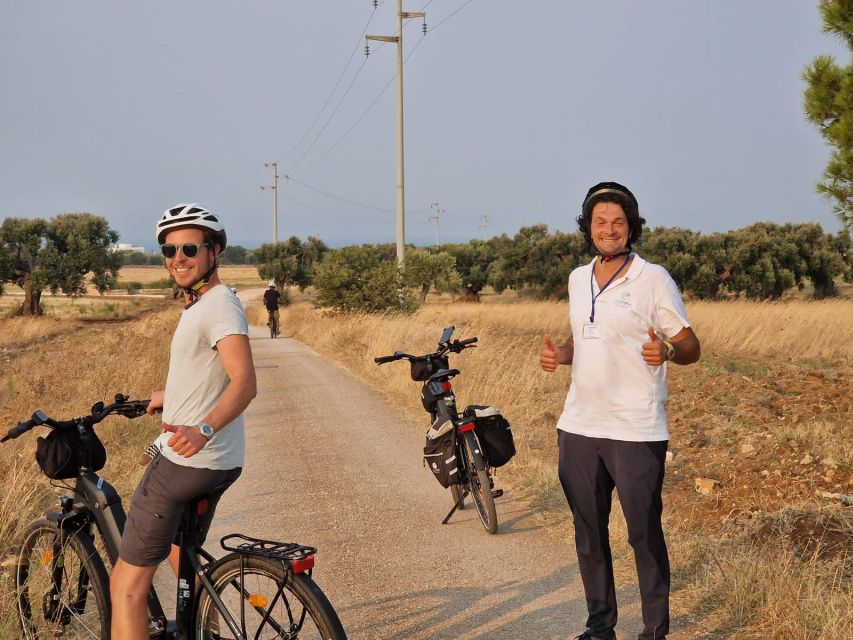
Rocco uses the ride to explain the trees, the area, and local customs. His approach is one of the strongest reasons to choose this tour instead of simply renting a bike. You are not only moving through the countryside. You are given a way to read it.
The scenery changes with the season. In spring, wildflowers can add color between the stones and trees. Summer brings stronger heat and bright Mediterranean light. Insects can be noticeable, so mosquito spray is a useful extra during warmer months. Water is included, and the guide has also been praised for carrying practical extras such as gloves, warm clothing, rain ponchos, and additional water when conditions called for them. That does not guarantee every item on every departure, but it shows a thoughtful approach to changing weather.
The regular photo stops also help. This is not the kind of tour where you are pushed from one landmark to the next. Rocco is known for taking photos and making time for questions, including questions about the plants and fruit growing along the route.
The Montalbano Dolmen and a short walk on the Via Francigena
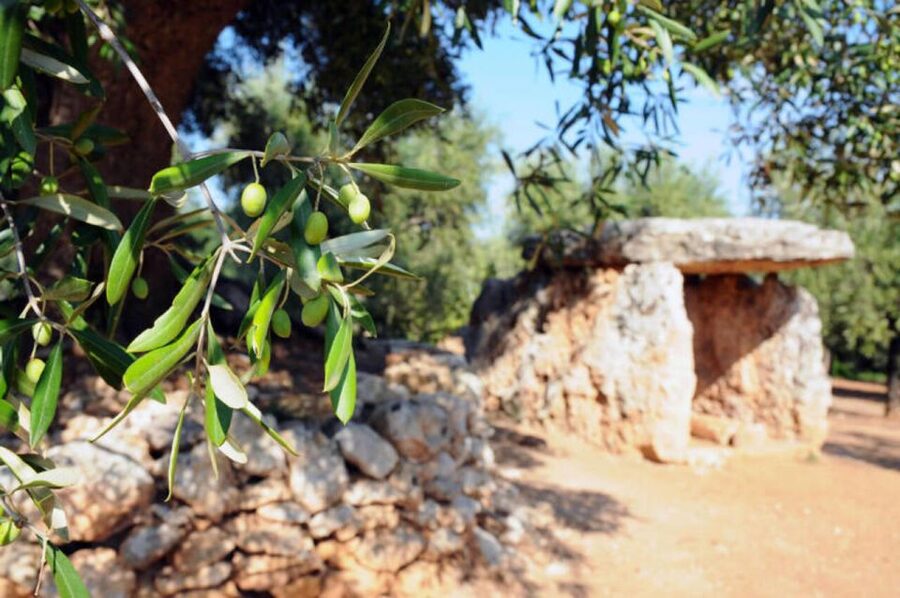
The Montalbano Dolmen gives the ride a useful change of pace. After seeing the olive groves, you step back roughly 4,000 years to a prehistoric stone monument. It is a brief stop, not a full archaeological visit, but it adds real depth to the day. You begin to see the area not only as farmland, but as a place shaped by people for thousands of years.
The dolmen is especially worthwhile if you enjoy small historical sites that sit in their original surroundings. There is no grand museum setting here. The interest comes from the stone itself and from the contrast between this ancient structure and the working olive fields around it.
The tour also includes a short walk along the Via Francigena. This route is associated with long-distance pilgrimage across Europe, but here you experience only a scenic stretch framed by olive groves and stone walls. The walk is a modest part of the day, yet it breaks up the cycling and gives you time to notice details that pass quickly from a bike.
I like this combination because the stops are connected by place, not simply added to fill time. The dolmen points to Apulia’s distant past. The Via Francigena points to movement through the region over later centuries. The olive mill shows how local work continues today.
Inside the oil mill, from harvest to bottle
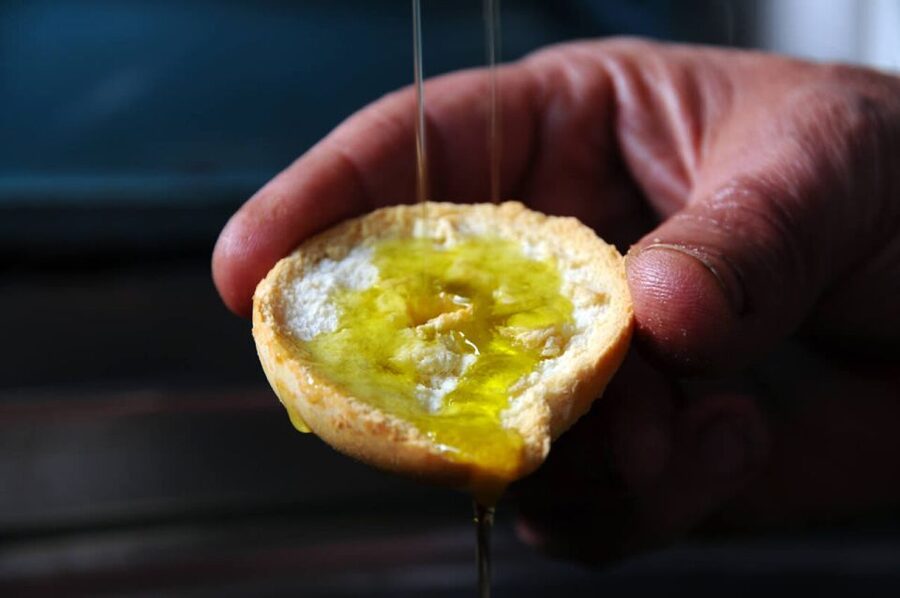
The final major stop is the oil mill, where the tour shifts from scenery to food. You learn the basic stages that turn olives into extra virgin olive oil, including harvesting, pressing, storage, and bottling.
This part is useful even if you already cook with olive oil. Labels can be confusing, and tasting oil directly helps you understand the difference between a mild supermarket oil and a fresher oil with clear aromas and a stronger finish. The guide explains the main qualities to look for while you taste EVO oil made on site.
The visit is not treated as a rushed shop stop. You see how the oil is produced and then taste several characteristics in a guided way. That makes the bottle you may buy afterward more meaningful. You know what went into it and what you are tasting.
If you like food experiences with a direct link to the place, this is one of the tour’s best features. You are not simply sampling a regional product in a restaurant. You are visiting a working oil mill in the same countryside where the olives grow.
The oil tasting also provides a practical lesson for the rest of your trip. Afterward, you may pay more attention to the oil served with bread, vegetables, seafood, and local dishes. Apulia’s olive oil is not an accessory here. It is part of the area’s daily life and economy.
More Food and Market Bike Tours in Italy
- Tuscany Bike Tours Through the Chianti Hills with Wine Tasting
★ 5.0 · 1,300 reviews - Rome by Night – Ebike Small Group Tour – Food and Wine (Option)
★ 5.0 · 1,275 reviews - Rome by Night: E-bike Small Group Tour -Food & Wine (Option)
★ 4.9 · 1,233 reviews - Appian Way & Aqueducts small group e-bike tour(catacombs & food)
★ 5.0 · 531 reviews
Guide Rocco and the small-group pace
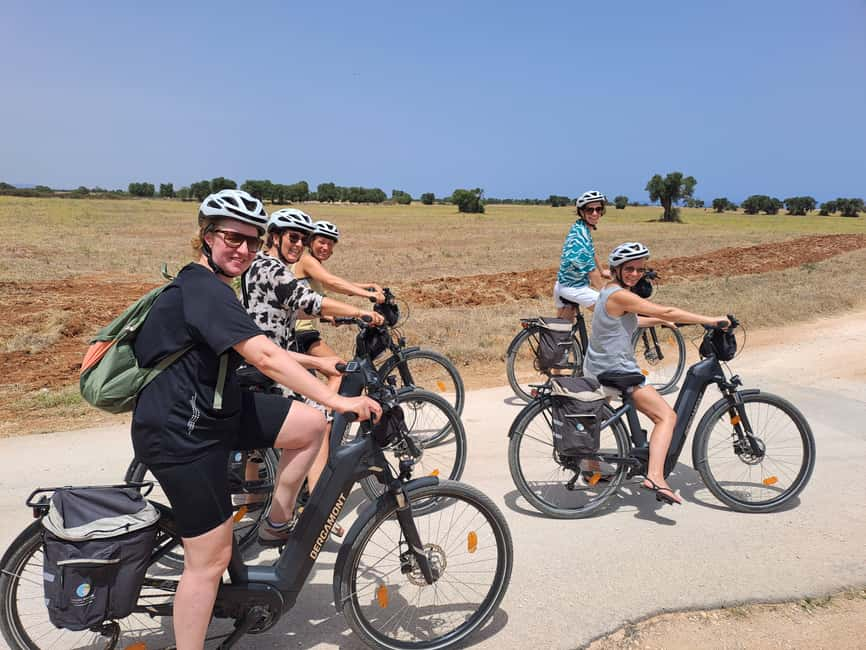
The group is limited to nine participants, which suits this type of outing. A small group makes it easier to ask questions, stop for photos, and keep a steady pace without a long line of cyclists stretching down the road.
Rocco is the main guide, and his role goes beyond leading from the front. He explains local history, olive growing, and oil production in English, French, or Italian. He also helps with practical matters, including photos, equipment, and changes in pace.
That personal attention is particularly valuable if your group has mixed cycling ability. On one outing, a family member who could not ride was taken by scooter while the rest of the group continued. That is not a formal promise that every non-cyclist can join in the same way, so you should contact the operator before booking if someone in your party cannot ride. Still, it shows the kind of flexible response that can make a family outing work.
The experience is best described as relaxed rather than athletic. You will stop often, hear explanations, and spend time at the dolmen and mill. If you want to cover a large distance quickly, this is not the right choice. If you want context and a gentle ride, the format works well.
What the $55 price really gets you
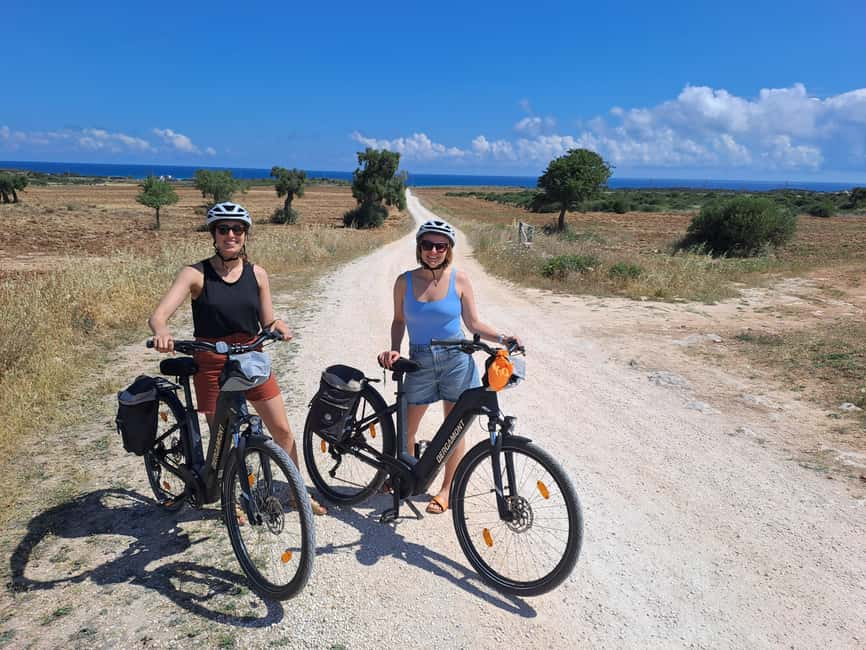
The listed price is $55 per person, and it includes the local escort, assistance throughout the experience, water, the oil mill visit, and the olive oil tasting. It does not include an e-bike unless you bring your own.
For an adult rental e-bike, helmet, and bags, the local charge is €45. That puts the practical total at $55 plus €45, before considering exchange rates. A small e-bike for someone under 150 centimeters costs €40, while a semi-child tandem costs €30 and a child seat costs €15. The smaller options should be checked at least two days before the tour because availability is limited.
That price is fair if you value the guide and the oil mill visit, not just the bicycle. A simple bike rental can be cheaper, but it will not give you the dolmen, Via Francigena stop, route planning, local explanations, or tasting. If you already own or have access to an e-bike, the value improves considerably because you avoid the extra rental charge.
I would also compare the full cost for your group before booking. A family of four renting adult bikes could add €180 locally. For some groups, the guided format is worth it. For others, especially confident cyclists with their own bikes, the main benefit is the local knowledge rather than the equipment.
Who will enjoy this three-hour outing most
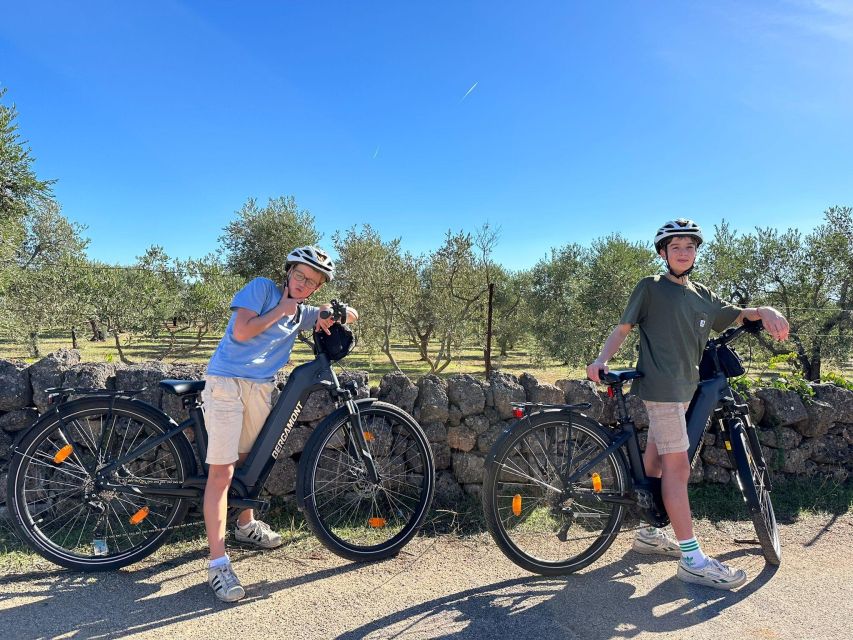
I would choose this tour if you want a gentle introduction to the countryside outside Ostuni and prefer a few meaningful stops to a long list of sights. It suits couples, families, and small groups who want scenery, local food, and history in one compact experience.
It is also a good early-trip activity. The ride gives you context for the olive trees, stone walls, plants, and food you will see across Apulia during the rest of your visit. You may understand the region better after three hours here than after another quick pass through a town center.
Families should consider the height and bike options carefully. Adult bikes are intended for people over 150 centimeters. The operator lists a smaller e-bike, semi-child tandem, and child seat, but the smaller choices need advance availability checks.
You should also be ready for outdoor conditions. The route includes rural paths and some rocky sections, and the weather can change. Comfortable clothing, sun protection, and mosquito spray are sensible additions. Water is provided, but I would still dress for a warm bike ride rather than a casual sightseeing walk.
Practical details that make the day easier
The tour lasts three hours and begins and ends at Cooperativa L’Agricola Montalbanese. If you are driving, parking your rental car at the oil mill area has been convenient for previous participants, but you should still confirm the exact meeting details when booking.
The tour is offered in English, French, and Italian. The group size is capped at nine, which keeps the ride personal. Starting times vary, so check availability for your date.
You can cancel up to 24 hours before the start for a full refund, and the booking can be reserved with payment later. Those policies are useful if your Apulia plans are still shifting, though they do not remove the need to confirm e-bike availability for children or smaller riders.
Bring a camera or a GoPro if you have one. The route offers open views, old trees, stone walls, and seasonal flowers, and the guide is happy to stop for photographs. Just keep the camera secure on the rougher paths.
Should you book the Ostuni e-bike and olive oil tour?
I would book it if you want to understand the countryside around Ostuni instead of seeing only the famous white town. The best reasons are the combination of ancient olive groves, the Montalbano Dolmen, and a working oil mill, plus Rocco’s attentive guiding.
I would hesitate only if you dislike uneven paths, cannot comfortably ride a bicycle, or are focused strictly on keeping costs low. The rental e-bike adds a significant amount, and the ride includes rocky sections rather than smooth pavement all the way.
For most people who enjoy food, quiet scenery, and local stories, this is a strong three-hour choice. Bring your own e-bike if possible. If not, budget for the rental and treat the extra cost as payment for a guided countryside outing, not just a bicycle.
FAQ
How long does the Ostuni e-bike tour last?
The experience lasts three hours, including the e-bike ride, photo stops, the Montalbano Dolmen, a short walk on the Via Francigena, the oil mill visit, and the tasting.
Where does the tour begin and end?
The tour starts and finishes at Cooperativa L’Agricola Montalbanese.
Is the e-bike included in the price?
No. You may bring your own e-bike at no extra cost. If you need one on site, an adult e-bike with helmet and bags costs €45 locally.
What e-bike options are available for children?
A small e-bike for riders under 150 centimeters costs €40, a semi-child tandem costs €30, and a child seat costs €15. The small e-bike, tandem, and child seat should be checked for availability at least two days in advance.
What languages does the guide speak?
The tour is available in English, French, and Italian.
What is included besides the bike ride?
The price includes a local tour escort, assistance during the experience, water, the oil mill visit, and an extra virgin olive oil tasting.
Can I cancel the tour if my plans change?
Yes. You can cancel up to 24 hours in advance for a full refund. You can also reserve the activity and pay later.
More Heritage and Temple Bike Tours in Italy
- Bangkok: Temples, Canals & Local Life Bike Tour
★ 4.9 · 3,511 reviews - Historical Singapore Bike Tour on Full-Sized Bicycles
★ 5.0 · 1,421 reviews - Barcelona: 2.5-Hour Bike or E-Bike Historical Tour
★ 4.5 · 1,262 reviews - Bangkok: Night Bike Tour with Temples & Flower Market Visit
★ 4.8 · 751 reviews
New cycling reviews around Italy
- Private Rome Bike tour★ 4.5 · 46 reviews
- Private Secrets of Florence Electric Bike Tour★ 4.9 · 49 reviews
- Rome: Private Half-Day Bike Tour with E-bike★ 5.0 · 24 reviews
- Private Highlights of Milan Bike Tour★ 4.8 · 59 reviews
- Pisa: Self-Guided tour to the sea by E-Bike★ 4.9 · 45 reviews
- Pisa: Historic Center Tour by Bike Self-Guided★ 4.4 · 68 reviews
- Pisa: Cycling to the Sea on a Self-Guided Tour★ 4.7 · 46 reviews
- Pisa: Self-Guided Bike Tour to Lucca★ 4.9 · 28 reviews
Italy Cycling Tours, compared.
Rome EBike Tour: Appian Way, Catacombs & Roman Aqueducts
Read our review →
Rome: Top Highlights & Hidden Gems Tour by Cannondale E-Bike
Read our review →
Rome: Appian Way & Aqueducts E-Bike Tour (Catacombs & Food)
Read our review →
Rome City Small Group Bike Tour with quality Cannondale EBike
Read our review →
Tuscany Bike Tours Through the Chianti Hills with Wine Tasting
Read our review →
Rome by Night – Ebike Small Group Tour – Food and Wine (Option)
Read our review →
Florence: Guided E-Bike Tour to Piazzale Michelangelo
Read our review →
Florence: 2-Hour Guided Sightseeing Bike Tour
Read our review →Browse the lists this ride appears in