
Review · INDONESIA
Bali Downhill Cultural Cycling Tour
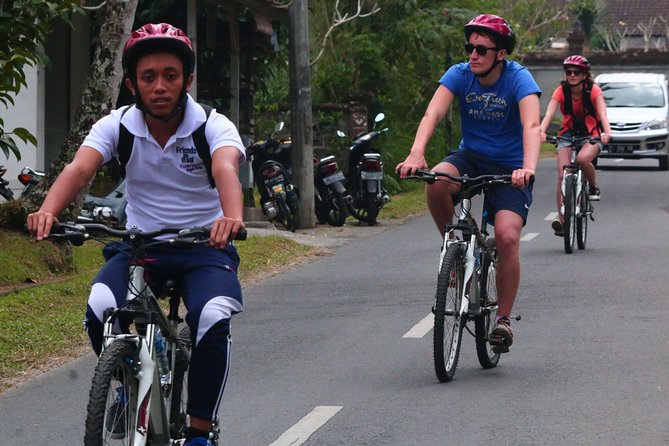
Bali’s best cycling days are not about speed. They are about getting off the busy tourist route and seeing how people live. This mostly downhill ride from Kintamani toward Ubud takes you through village roads, farms, rice-growing areas, and family compounds, with a local guide explaining what you are seeing along the way.
I like the school charity visit, which gives the day a useful purpose, and the chance to sit with a local priest and his family over coffee. The guides, including Agus, Ari, Dika, and Nyomah on different departures, are praised for their English and care. The main thing to consider is that the ride is not one long smooth descent. You cover about 27 kilometers, with some uphill sections and stretches on ordinary roads.
What makes this ride worth your day
- A 3.5-hour route from Kintamani to Ubud: Mostly downhill, but with a few climbs that may require you to walk the bike.
- A school visit with direct support: Part of the tour price goes toward essential school supplies, and you can bring extra pencils or drawing books.
- A rare look at rural family life: Visit a local priest’s compound and speak with the family through your guide.
- Organic coffee and tea tasting: Stop at a plantation for several samples, including coffee and tea grown in Bali.
- A meal beside rice paddies: Finish with Balinese food at Padi Organic restaurant in Laplapan village.
- Strong value at $45: Transfers, equipment, breakfast, lunch, guiding, water, charity support, and personal insurance are included.
From your hotel to the Kintamani volcano area
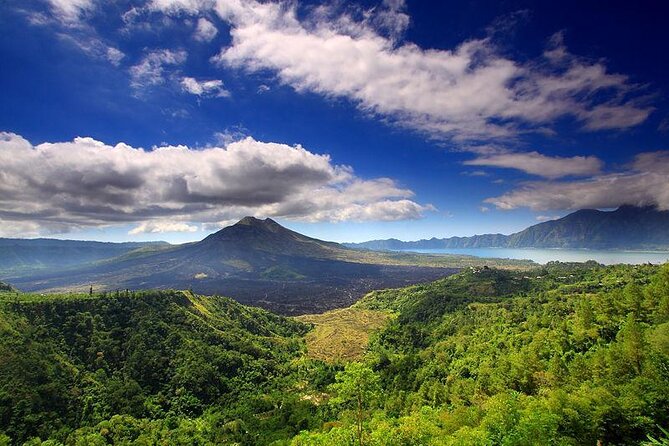
The day begins with hotel pickup, usually about 30 minutes before the advised pickup time. You then drive uphill toward Kintamani, a volcano region with wide views over Mount Batur and Lake Batur.
This transfer matters because the tour uses the highlands as your starting point. Instead of spending the day pedaling uphill from Ubud, you begin at a cooler, higher point and gradually work your way down through rural Bali. The drive also gives you a clear change of scenery before the cycling starts.
A light breakfast overlooking Mount Batur and Lake Batur is part of the planned experience. The view can be a fine introduction to the day, but it should not be the only reason you book. Weather and timing affect what you see, and one reported departure did not include this breakfast stop as expected.
Bring a light layer for this first part of the morning. Kintamani is higher and cooler than Ubud, and the tour specifically advises layered clothing. You will want comfortable sportswear and closed-toe shoes that work for both cycling and short walks.
More Cycling Trips in Indonesia:
- Electric Cycling Tour of Ubud with Free Hotel Transfer and Lunch
★ 5.0 · 1,397 reviews - From Ubud: Downhill Bike Tour with Rice Terraces and Meal
★ 4.9 · 664 reviews - Menoreh Village Cycling
★ 5.0 · 611 reviews
A school visit with a practical purpose
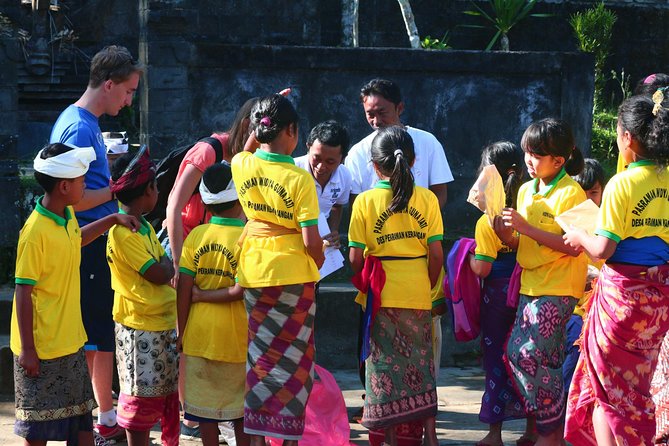
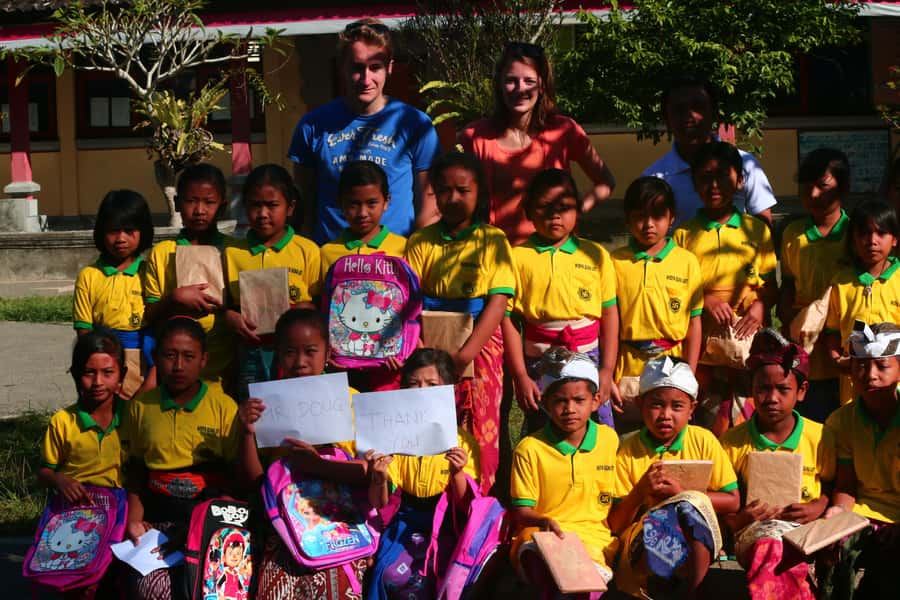
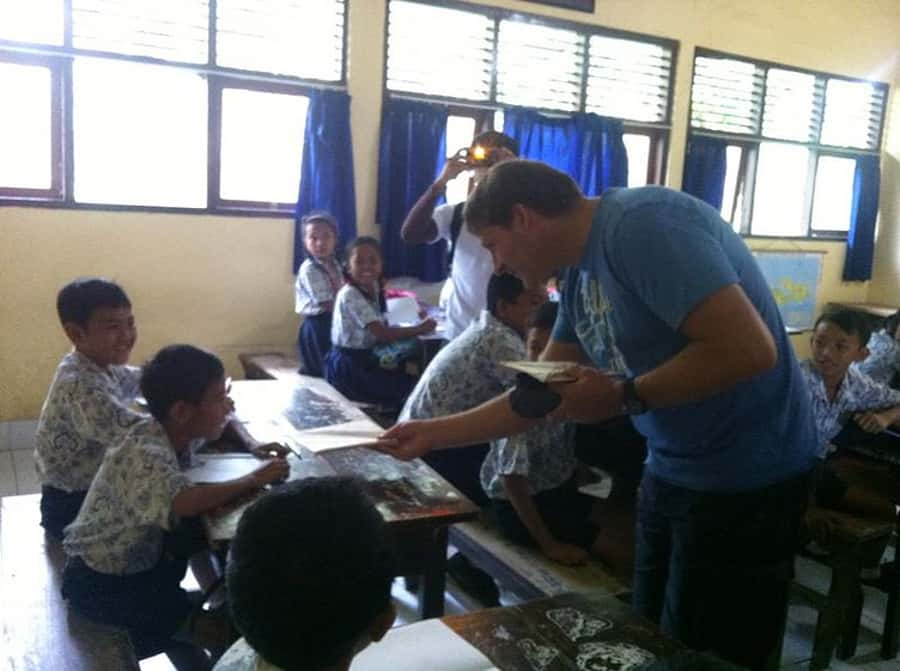
Before getting on the bikes, you visit a local village school. This is not simply a photo stop. The operator donates part of the tour cost for essential school supplies, which are distributed during the visit.
You may also bring extra items yourself. A useful tip is to bring supplies in equal sets rather than one large mixed bundle. One family found that taking about 20 packs of pencils and around 20 drawing books made it easier for teachers to share them among classes. You should treat this as optional, since the tour already includes a charity contribution.
The school stop gives you a glimpse of rural education and the daily setting of a local community. It also asks you to be considerate. Children are not a sightseeing display, so follow your guide’s lead about photos, gifts, and interaction.
This is one of the most meaningful parts of the day because it connects your payment with something practical. It also gives you a better sense of village life before you begin riding through the area.
Coffee, tea, and the plantation stop
The route includes a visit to an organic plantation with free tastings. You can sample several kinds of coffee and tea, and some departures have included luwak coffee among the choices.
The tasting is part educational stop and part shopping opportunity. You may learn about local crops, see some of the animals associated with luwak coffee production, and sample products before deciding if you want to buy anything. Some people find the range of coffees, teas, and chocolate hard to resist, so keep your spending in mind if you are trying to travel light.
The word organic is part of the tour description, but you should still view this as a short plantation visit rather than a full agricultural lesson. The real value is the chance to taste products connected to Bali’s farming economy and to ask your guide questions in a relaxed setting.
Alcohol is not included. Coffee, tea, water, breakfast, and lunch are covered, but souvenirs and personal purchases are yours to pay for.
The downhill ride through villages and farms
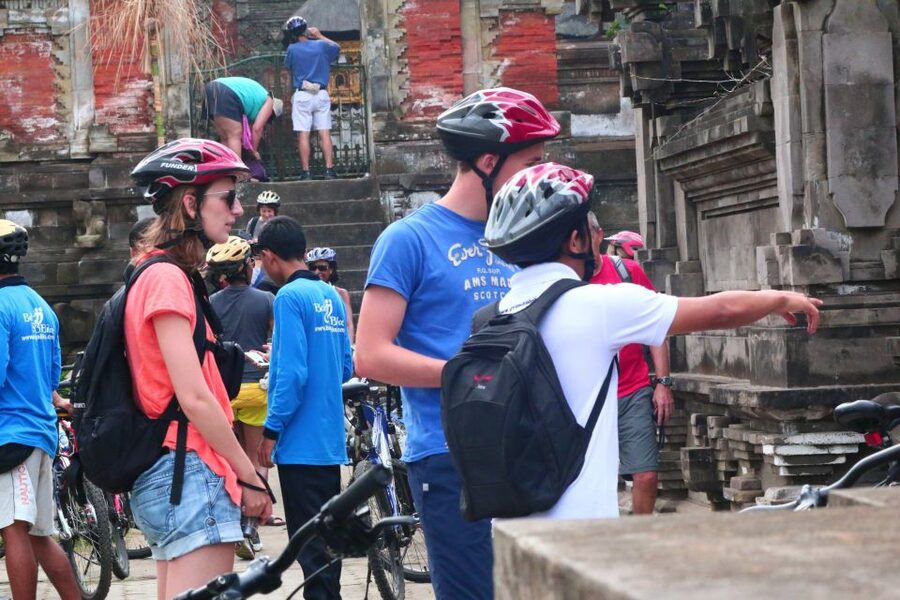
The cycling begins after the highland stops, with a route toward Ubud that takes about three and a half hours. The total distance has been described as roughly 27 kilometers.
Most of the route is downhill, which makes this much easier than a standard long-distance cycling tour. Riders in their 60s have completed it comfortably, and people who were not regular cyclists still managed the day with a slower pace. One steep uphill section was handled on foot by some riders, and that is perfectly reasonable.
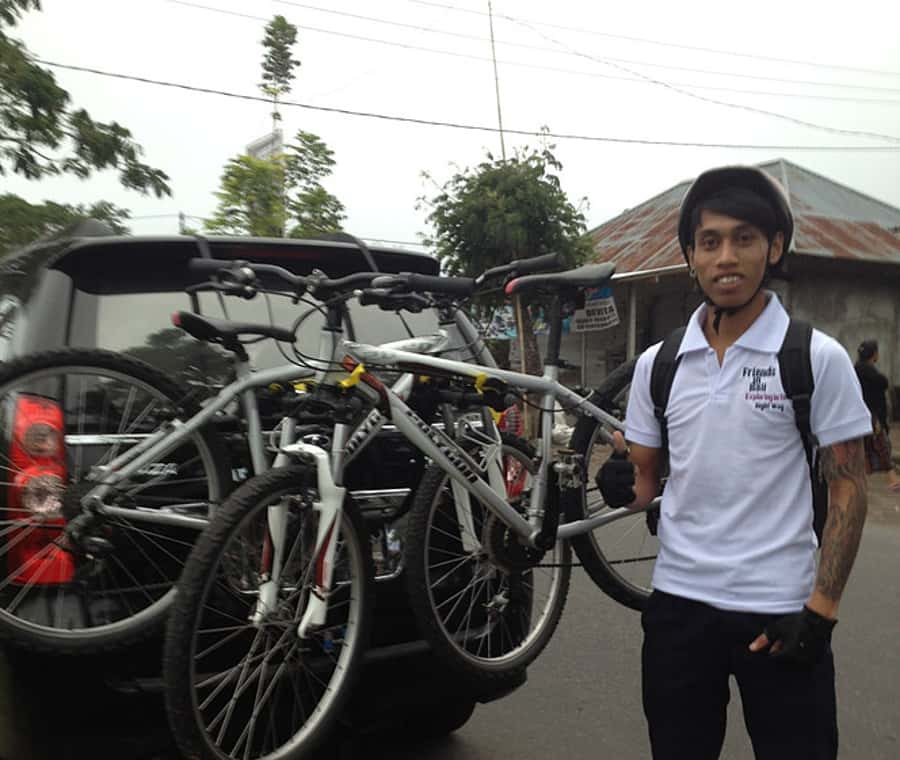
You still need a reasonable level of fitness. The route includes a few climbs, and you will be riding for several hours. The bikes are supplied, along with cycling equipment and mineral water, but you should bring sunscreen and wear practical clothing.
The road conditions are an important part of the decision. Much of the ride uses quiet rural roads, but it is not a private trail through rice paddies. Some people expect to cycle directly through the fields and are surprised by the amount of road riding. If you want a route entirely inside rice fields, this may not be the right cycling day.
That said, the road sections allow you to pass through real village communities rather than simply circling a tourist attraction. Your guide points out local farms, homes, temples, traditions, and daily routines. Guides such as Agus and Ari have been praised for clear English, while Dika has been noted for adjusting the pace to suit less confident cyclists.
You should also be ready for traffic. One strong point of the guiding is attention to safety on busier sections, but Bali roads require care. Stay with the group, follow the guide’s instructions, and do not assume every downhill stretch will be empty.
Same roads, a different ride:
- Ubud: Rice Terraces & Villages Half-Day Fat Tire E-Bike Tour
★ 4.9 · 602 reviews - Ubud: Downhill Cycling with Volcano, Rice Terraces and Meal
★ 5.0 · 536 reviews - Ubud eBikes Tour to Tegallalang Rice Terrace
★ 5.0 · 507 reviews - Electric Bike Tour in Ubud
★ 5.0 · 281 reviews
Understanding Balinese rice culture on foot
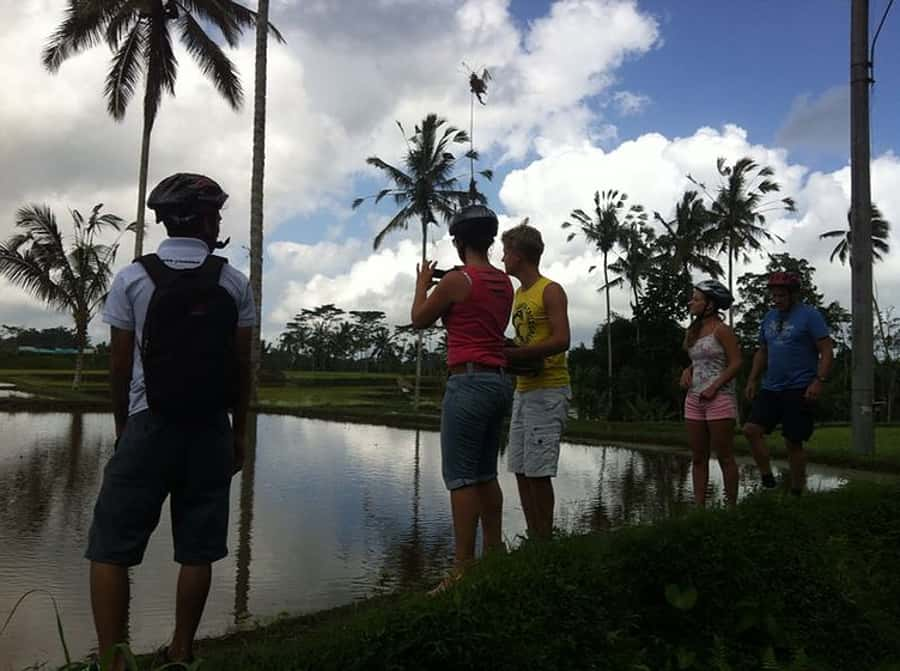
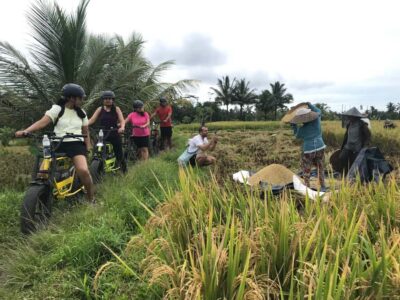
At some point during the ride, you take a short walk through rice-growing areas. Your guide explains how rice planting works and why rice remains so important to Balinese life.
This stop helps you read the countryside. The paddies are not just pretty scenery. They are part of a working food system, a source of local income, and a place shaped by community cooperation and water management.
Do not expect a long hike. It is a short walk inserted into the cycling day, so comfortable walking shoes are useful. Closed-toe footwear is recommended for the entire tour because you will be moving between bikes, roads, farms, and village paths.
The guide’s explanation is what gives this section value. Without context, you might simply see green fields. With a local perspective, you can better understand the work behind them and the way farming fits into family and village life.
Coffee with a priest and his family
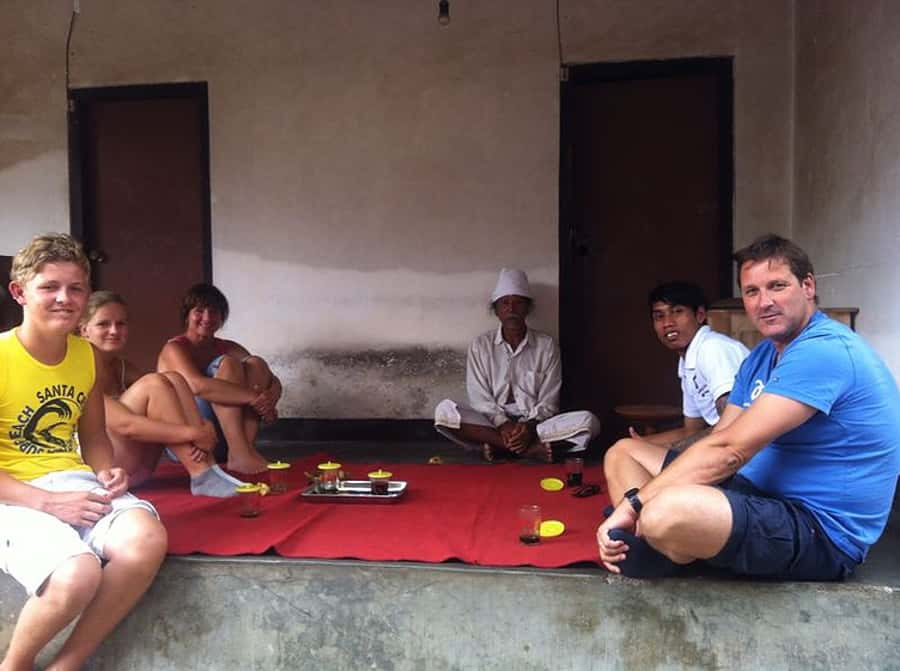
The most personal stop comes at a local family compound, where a priest joins you for coffee and conversation. Your guide translates, allowing you to ask about Balinese family life and rural traditions.
This is not a staged performance with a formal show. It is a quiet opportunity to sit in a family setting and hear how local customs work. The priest’s role also gives the conversation a cultural and spiritual angle, though the exact topics will depend on the guide, the family, and your questions.
The compound visit is especially valuable if you want more than scenery. You can ask about family arrangements, religious responsibilities, village life, and the way tradition fits into modern Bali. Keep your questions respectful, and remember that you are entering someone’s home, not a museum.
Coffee and homemade snacks are served during the stop. The pace is usually relaxed, which provides a welcome break after the road riding. It also gives your guide a chance to explain details that are difficult to understand while moving on a bicycle.
Lunch in Laplapan village
The cycling ends at Padi Organic restaurant in Laplapan, a village surrounded by rice paddies. A Balinese lunch is included, and food is one of the parts of the day that receives the most consistent praise.
The meal gives you time to sit down properly after the ride. It also keeps the focus on local food rather than sending you back to a generic hotel restaurant. Expect an Indonesian-style meal, with dishes such as chicken satay included on at least one departure, though the exact menu can vary.
Lunch is a practical part of the package, not just a bonus. After three and a half hours on a bike, you will appreciate having food, shade, and a calm setting at the finish. The restaurant’s position among rice paddies also provides a final rural view before you return to the more developed parts of Bali.
Return transportation to your hotel is included. That makes the day easier to manage, especially if your accommodation is in Ubud or another pickup area covered by the operator.
Guides who shape the experience
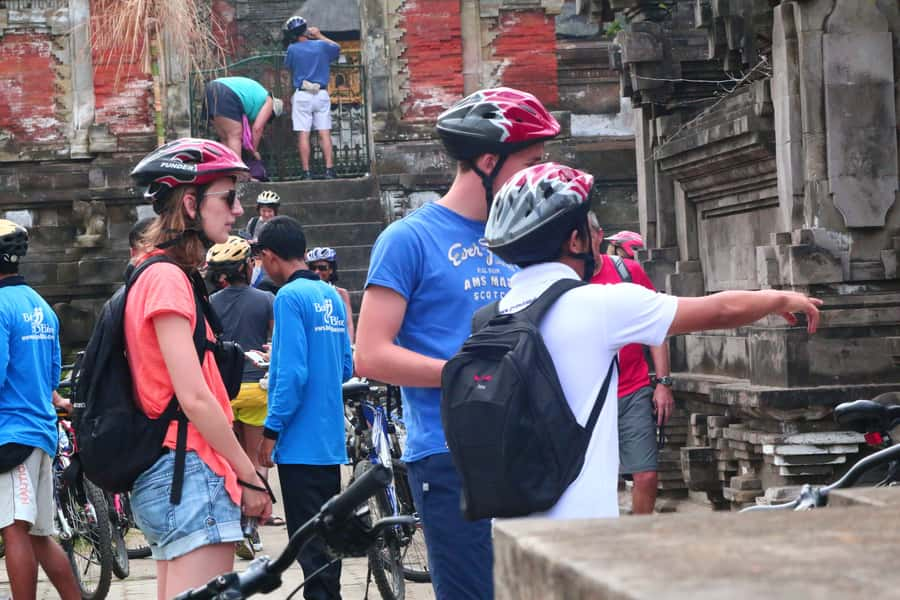
The guide is central to this tour. The cycling itself is fairly simple, but the cultural stops depend on someone who can explain what you are seeing and translate conversations naturally.
Agus has been praised for answering questions in very clear English and for taking care of small details. Ari has also been singled out for strong English and useful explanations during the school and family-compound visits. Dika adjusted the pace for riders who were not confident cyclists, while Nyomah was noted for setting the tone with thoughtful conversation about Balinese culture.
These names do not mean you can request a particular guide. They show the type of service the tour can provide, but your guide will depend on the date and staffing.
The tour is available in English and Indonesian. If you want the cultural side to matter, ask questions throughout the day. The best information may come while you are stopped beside a village road or sitting over coffee, not during a formal speech.
What the $45 price really includes
At $45 per person, this is strong value for an eight-hour day. You receive hotel return transfers, cycling equipment, mineral water, a light breakfast, the school charity contribution, a guide, Balinese lunch, and personal insurance coverage up to $75,000.
The package also saves you from arranging separate transport between Ubud and Kintamani. That long transfer alone would take planning and money, while this tour combines it with a full day of activities.
The price does not include sunscreen, alcoholic drinks, souvenirs, personal expenses, or gratuity. Bring cash for purchases and a tip if you feel the guide and driver earned one. Sunscreen is especially important because the cooler highland start can make you forget how much sun you will get later.
The main value is not the bicycle rental. It is the combination of transport, guiding, food, cultural access, and charity support. If you want only a fast ride, you may find the stops slow the day down. If you want a broader picture of rural Bali, the price works well.
Who should book this cycling day
I would recommend it to riders who want an easy-paced cultural outing and do not need every kilometer to be on a dedicated cycle path. It suits couples, families, older adults with reasonable mobility, and casual cyclists who are comfortable riding for several hours.
You should be able to handle a bicycle, stop and start on ordinary roads, and manage a few uphill sections. You can walk the bike on a steep part, but this is not a completely effortless ride.
It is not suitable for pregnant women or wheelchair users. Bring cash, sunscreen, sportswear, layered clothing, and closed-toe walking shoes. Hotel pickup times begin about 30 minutes before the scheduled time, so be ready early.
The tour may not suit you if your main goal is riding deep through the rice paddies. The route includes village roads and traffic, with only a short walk through the rice fields. It is best understood as a cultural cycling route, not a pure mountain-bike or trail-riding adventure.
Should you book it?
Book this tour if you want to connect several sides of Bali in one day: farming, education, family life, coffee production, village roads, and local food. The school donation and priest-compound visit give it more substance than a standard scenic bike ride.
Think twice if you want a guaranteed Mount Batur breakfast view or a ride entirely through paddy fields. The planned breakfast may vary, and the route includes more public road riding than some people expect.
For most reasonably fit riders, the combination of a mostly downhill route, careful guides, included meals, and hotel transfers makes this a very good-value day. Bring sensible expectations, ask questions, and let the ride move at a steady pace.
FAQ
How long is the Bali Downhill Cultural Cycling Tour?
The full activity lasts about eight hours. The cycling portion from Kintamani toward Ubud takes approximately three and a half hours.
Is the cycling route entirely downhill?
No. The ride is mostly downhill, but it includes a few uphill sections. One steep section may be easier to walk with the bicycle.
Does the tour include hotel pickup and return transport?
Yes. Hotel pickup and return transfers are included. Pickup may begin about 30 minutes before the advised schedule.
What food is included?
A light breakfast overlooking Mount Batur and Lake Batur is part of the planned itinerary, and Balinese lunch at Padi Organic restaurant in Laplapan is included. The breakfast view and timing can vary.
What happens during the school visit?
You visit a local village school, and part of the tour cost supports essential school supplies. You may also bring additional items such as pencils or drawing books.
What languages are available for the guide?
Guides are available in English and Indonesian.
Can I cancel or pay later?
You can cancel up to 24 hours in advance for a full refund. The activity also offers reserve-now, pay-later booking.
New cycling reviews around Indonesia
- Mount Batur: Black Lava Cycling Tour w/ Natural Hot Spring★ 3.8 · 63 reviews
- Kuta: Kintamani Culture and Nature Guided Cycling Tour★ 5.0 · 14 reviews
- Jatiluwih (UNESCO Site) 2-Hour E-Bike Cycling Tour★ 4.3 · 49 reviews
- Bali: Jatiluwih Rice Terraces 1 Hour Electric Bike Tour★ 4.7 · 41 reviews
- E-Bike: Ubud Rice Terraces & Traditional Villages Cycling★ 4.6 · 37 reviews
- Jogja Hidden Gems – Cycling Tour★ 5.0 · 12 reviews
- Bali: Kintamani Downhill Bike Tour, Jungle and Waterfalls★ 4.9 · 20 reviews
- Ubud: Downhill Cycling with Volcano, Rice Terraces, and Meal★ 4.9 · 189 reviews
Indonesia Cycling Tours, compared.
Electric Cycling Tour of Ubud with Free Hotel Transfer and Lunch
Read our review →
From Ubud: Downhill Bike Tour with Rice Terraces and Meal
Read our review →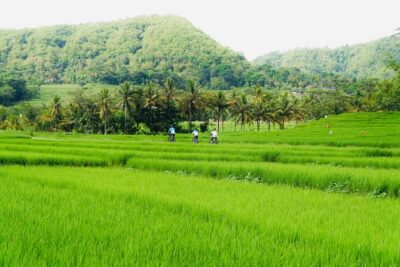
Ubud: Rice Terraces & Villages Half-Day Fat Tire E-Bike Tour
Read our review →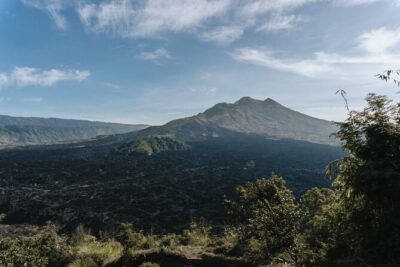
Ubud: Downhill Cycling with Volcano, Rice Terraces and Meal
Read our review →
Browse the lists this ride appears in