
Review · BARCELONA
Barcelona | StreetArt Bike Tour Moco Museum
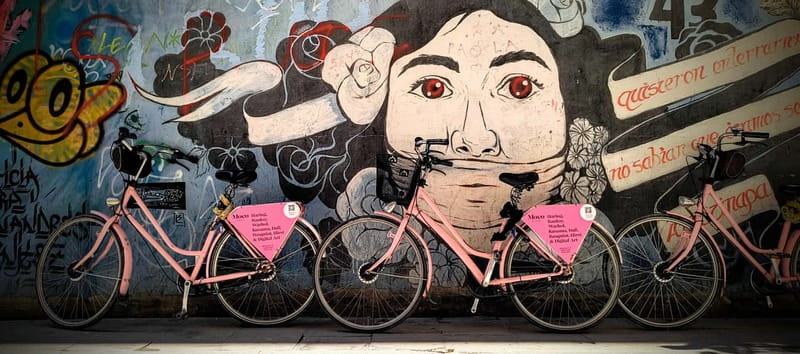
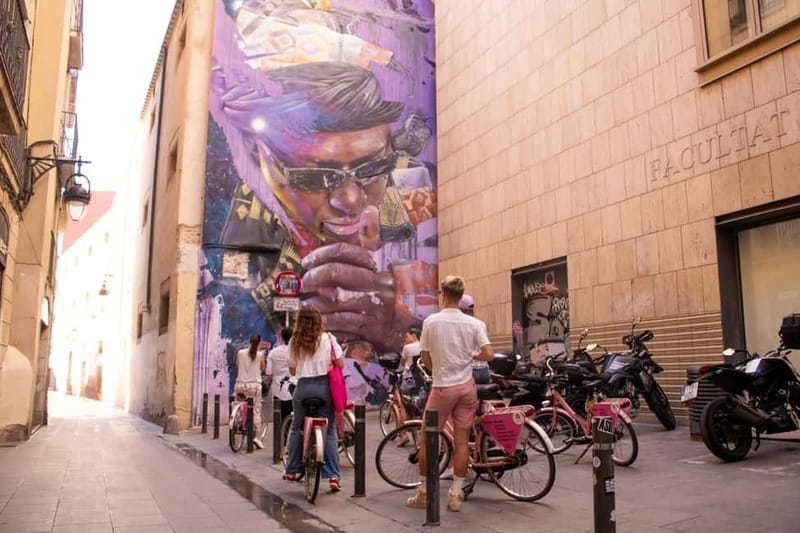
Barcelona’s street art is not confined to one gallery. It appears on old industrial walls, side streets, public sculptures, and the edges of major landmarks. This 2.5-hour bike tour links those scattered works, from Keith Haring’s AIDS mural and Xupet Negre to El Beso and La Gamba, while an English-speaking guide explains the artists and messages.
I like the route’s mix of serious social art and playful public sculpture, and I like that it keeps changing as walls and artworks change. Guides such as Eirini have earned especially warm praise for their energy and useful Barcelona tips. The main drawback is pace: you’ll pass many works by bike, with only short stops, so this is not a slow photography walk.
Key points at a glance
- Keith Haring’s AIDS mural: A major stop near MACBA, with time to hear why the work matters.
- A changing route: Barcelona’s street art evolves, so the exact selection may shift over time.
- Electric bike sightseeing: You cover Raval, the waterfront, the Gothic Quarter, and Passeig de Gracia without spending the whole day on foot.
- More than graffiti: The route includes La Gamba, El Cap de Barcelona, El Beso, Casa Batlló, and the Palau de la Música Catalana.
- Useful tour extras: Your bike, a bottle of water, picture stops, and a handlebar bag are included.
- A few limits to note: You need to ride a bike, the tour is not suitable for wheelchair users, and adults must request a helmet in advance for an extra cost.
Why this route works for Barcelona street art
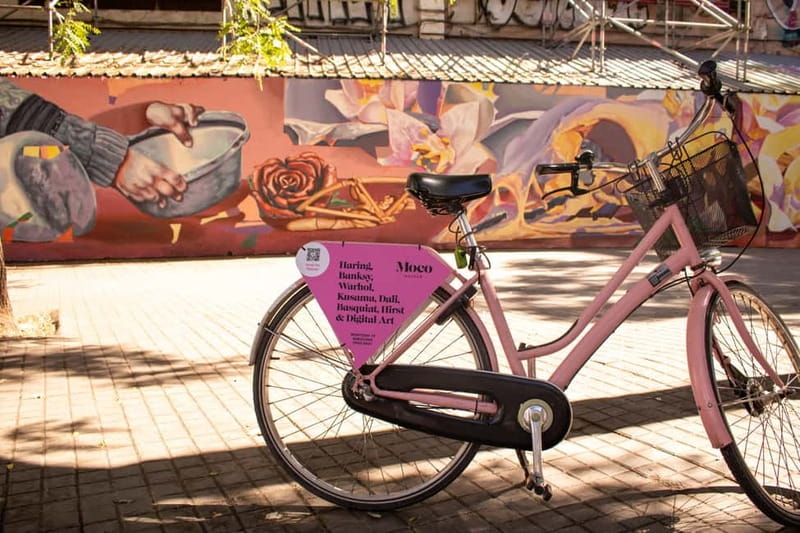
I like this experience because it treats street art as part of the city rather than as a separate attraction. You move through areas where contemporary paintings sit beside older streets, civic buildings, former industrial sites, and famous Barcelona architecture.
The route also gives you a useful first look at several central districts. It begins near Carrer dels Tallers, heads through the area around the Centre de Cultura Contemporània de Barcelona and MACBA, continues toward Raval and the waterfront, then returns through the cathedral area, the Palau de la Música Catalana, Passeig de Gracia, and Casa Batlló.
That range is valuable if you have limited time. You are not only looking at walls. You are also getting a moving introduction to the city’s layout, with a guide filling in the meaning behind the art.
The tradeoff is that street art is temporary. A mural may be painted over, a work may be removed, or the route may shift. That is part of the subject, but it means you should think of the tour as an introduction to Barcelona’s urban art scene, not a guaranteed checklist of permanent sights.
More Museum Visits in Barcelona:
- Frida Kahlo VIP [Museum Tickets Included] Bike, Markets & Churros
★ 5.0 · 1,072 reviews - Paris: Street Art Open-Air Museum Bike Tour
★ 4.8 · 51 reviews - Geneva Countryside And Art Museum At A Castle Wine By E-Bike
★ 3.8 · 16 reviews
Meeting at Carrer dels Tallers 45
The meeting point is at Carrer dels Tallers 45, in the passage used by Barcelona Ciclo Tour. Look for the palm tree and enter the passage, where the team will meet you.
Arrive about 10 minutes early. That gives you time to find the passage, meet the guide, receive your bike, and get settled before the 11 am start listed for the tour. Starting in this central location is handy if you are staying near the old center, but you should still allow extra time if you are coming from another part of Barcelona.
The tour includes one bike per person, a free bottle of water, and a small handlebar bag for belongings. Bring sunglasses, sunscreen, a hat, comfortable clothing, and a charged smartphone. Headphones are not allowed, which makes sense on a guided bike ride and helps you hear instructions in city traffic.
Helmets are free for children up to age 16 and mandatory for them. Adults can request a helmet in advance for an additional cost. The tour runs in wet weather as well as dry weather, and a free poncho is provided if rain arrives.
The first stops: CCCB, MACBA, and Keith Haring
The opening section brings you toward the Centre de Cultura Contemporània de Barcelona, or CCCB. The Sant Jordi Sculpture and the skyline provide an early photo stop, and the guide begins to frame Barcelona as a city where public art, local traditions, and modern visual culture meet.
You then continue to the Barcelona Museum of Contemporary Art, better known as MACBA. The museum itself is not the focus here. Instead, the surrounding streets and plaza area give the tour its first strong dose of urban art.
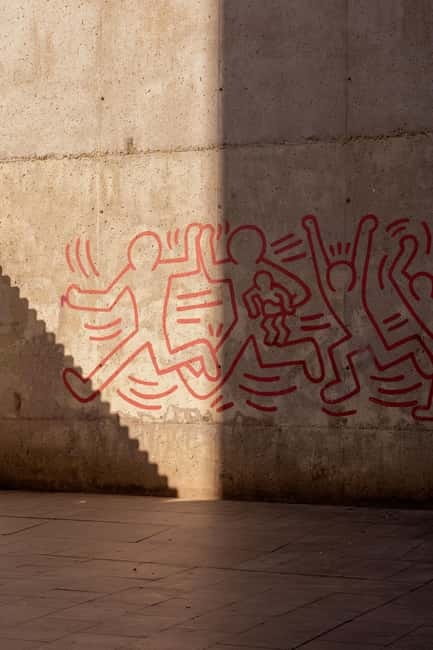
The Keith Haring mural is one of the most important stops. Known as the Mural del Sida, it carries a direct message about AIDS awareness and social responsibility. This is the point where the tour moves beyond color and style. Your guide explains the work’s subject and why it has such weight in Barcelona’s public art story.
You also see Colp One Dog in the MACBA area. The stop is short, but the guide’s explanation helps you read the work rather than simply photograph it. If you enjoy understanding the ideas behind murals, this early section is likely to be the strongest part of the tour.
Raval’s side streets and early graffiti
From the MACBA area, the bikes head through streets such as Carrer de Joaquín Costa and Carrer de Ferlandina. These narrower streets offer a closer look at how art appears in everyday settings, often on walls that do not look important until you notice the painting.
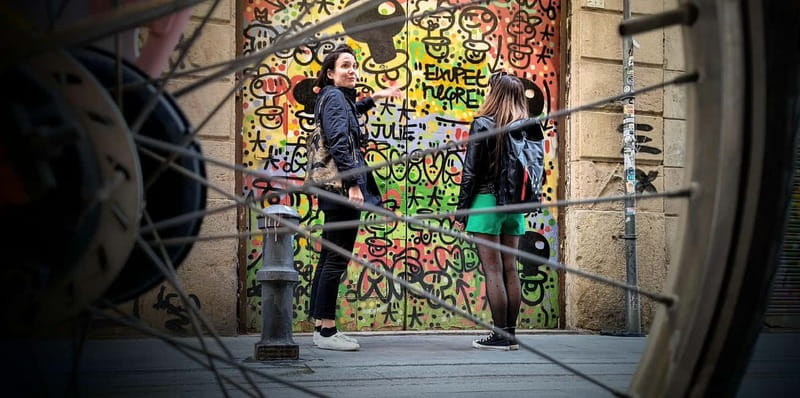
Birdie Al Awan is one of the works highlighted here. You also see Xupet Negre, identified as one of Barcelona’s earliest graffiti works. That detail gives the stop extra value. The city’s street art is not only about new murals made for social media. It also has an older local layer, tied to the early development of graffiti and urban lettering.
This is also where cycling changes the experience. On foot, you might spend much of your time navigating between sites. By bike, you can connect several streets and districts in one outing. The downside is that you need to stay alert and follow the guide, so you may not have much time to study every wall.
More Cycling Trips in Barcelona:
- Highlights & Hidden Spots of Barcelona Bike Tour w/ Local Guide
★ 4.5 · 3,009 reviews - Barcelona 3-hour Bike or E-Bike Tour: Highlights and Hidden Gems
★ 5.0 · 1,429 reviews - Barcelona: Private Group Bike Tour
★ 4.8 · 1,420 reviews - Barcelona: 2.5-Hour Bike or E-Bike Historical Tour
★ 4.5 · 1,262 reviews
Raval’s public messages and changing walls
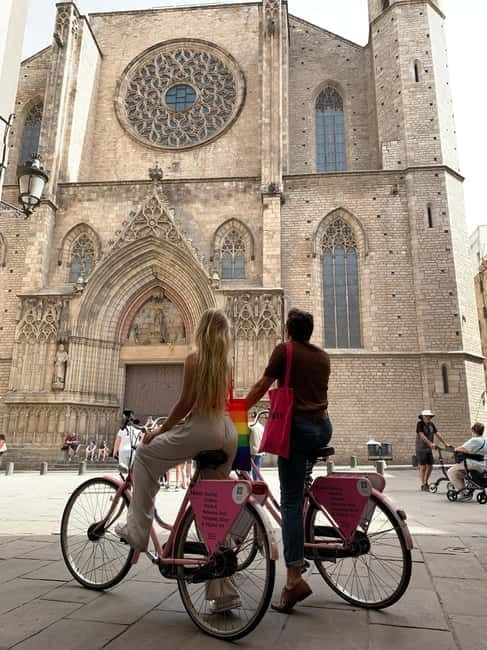
The route continues to Rambla del Raval, where the subject matter becomes more openly social. The Feminist wall, Space Invader, and work by Ana Eliza are among the featured pieces.
These stops show how street art can carry different voices within a small area. Some works focus on identity, some on public space, and some on visual play. Your guide adds context about the artists and the messages, helping you see how the works relate to the neighborhoods around them.
Street art changes faster than a normal sightseeing route. A mural may be replaced or altered before your visit, and the tour is designed to adapt. I see that as a fair bargain: you may not see every listed piece exactly as described, but you are more likely to encounter what is current when you go.
Àgora Benítez and the route toward the waterfront
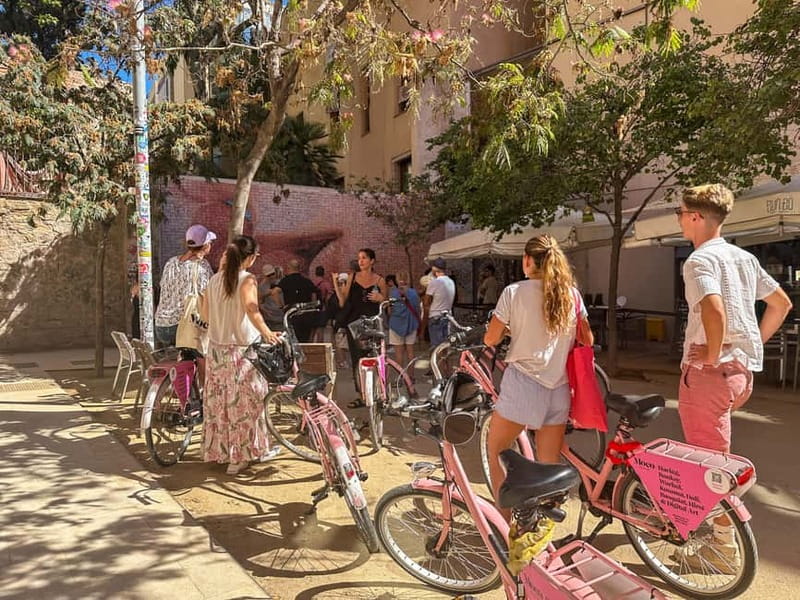
The route moves through Carrer de l’Aurora and toward the area around Àgora Juan Andrés Benítez. Works associated with Àgora Benítez are presented as part of the area’s art story, and the stop adds another layer to the Raval section.
You then continue along Carrer de la Riereta and Carrer de Sant Pau before reaching the Paral·lel area. These passages are useful because they show how the tour moves between small streets and larger avenues. You get a sense of Barcelona’s changing scale without having to arrange separate transport.
At the Jardins de les Tres Xemeneies, old industrial structures provide the setting. The garden is an especially fitting place for a street art tour: former industrial elements sit alongside public space and contemporary expression. You can photograph the surroundings and hear how the city has turned an industrial site into a place for people and art.
The route also passes Theatre Arnau and Galería Arnau. These stops connect the area’s present-day art activity with its older performance and neighborhood identity. The tour does not ask you to spend long periods inside attractions, so think of this as an outdoor orientation rather than a museum visit.
Columbus Monument, La Gamba, and the waterfront
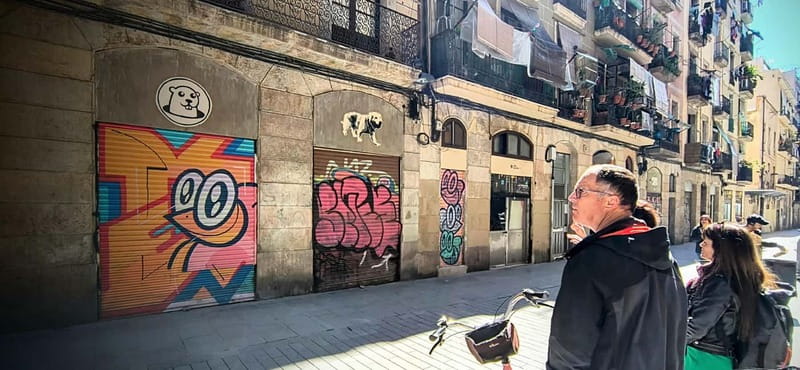
From Paral·lel, the bikes head toward the waterfront and Columbus Monument. This part offers a change of scenery from Raval’s narrow streets and painted walls.
At Passeig de Colom, you see La Gamba, the famous lobster sculpture by Mariscal. It is an amusing public artwork, but it also shows how Barcelona’s visual culture extends beyond murals. The city uses sculpture, architecture, painted walls, and large public installations side by side.
You also pass El Cap de Barcelona, sometimes called BCNs Head, associated with Leinceshtain. These oversized works are easy to appreciate from a bike because they are made to be seen in public space. The guide helps connect them to the broader question of what counts as street art.
This section is good for photos, but it may feel less focused if you booked only for graffiti. The value is in the contrast. You begin with politically charged walls and end up looking at large public sculptures beside major urban routes.
Cathedral Square and El Beso
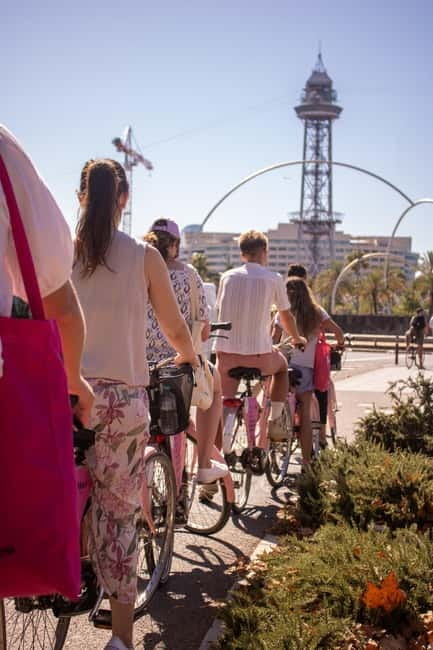
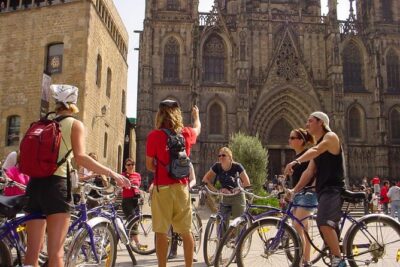
The route then reaches the Barcelona Cathedral area. The cathedral is passed rather than toured, so you should not expect interior access or a detailed architectural visit.
Near the cathedral, El mural del petó, or El Beso, creates one of the most recognizable photo stops. The photomosaic is made from many small images and forms a larger picture when viewed from a distance. It is a good example of art that rewards both close inspection and a wider view.
The nearby Picasso mural adds another link between Barcelona’s artistic past and its present street culture. These stops are particularly useful if you want to see how art works in a historic setting. Medieval streets and major religious architecture provide the backdrop, while the murals bring in modern memory and public participation.
Because the route is by bike, you may not get unlimited time at either piece. I recommend having your phone ready before the stop and listening to the guide’s explanation first, then taking photos.
Palau, Passeig de Gracia, and Casa Batlló
After the cathedral area, the tour passes the Palau de la Música Catalana and continues toward Passeig de Gracia. This stretch broadens the experience again, moving from street-level art to some of Barcelona’s best-known architecture.
Casa Batlló is the final major sightseeing point before returning to Carrer dels Tallers 45. The tour includes a photo stop and guided commentary, but it does not include entry to Casa Batlló. That distinction matters. You will see the exterior and hear about the site, but this is not a Gaudí house visit.
I like ending here because it gives you a useful contrast. The tour begins with unofficial and socially driven art, then closes with an internationally recognized architectural landmark. You see how Barcelona presents creativity in many forms, from an early graffiti piece to a grand modernist façade.
The return to the starting point keeps the logistics simple. You do not need to arrange a separate way back after the tour.
What the guide adds
The guide is central to the experience. Without explanations, several stops would be quick pictures on a wall. With a guide, you get stories about the artists, the meaning of the work, and the way the city’s art scene changes.
The strongest praise has focused on the guide’s enthusiasm and subject knowledge. Eirini is specifically noted as an excellent guide, and another guide offered useful food recommendations after the ride. That kind of local advice can make the tour more useful than a simple list of photo stops.
The tour is offered in English. Since the route includes traffic, changing streets, and many short stops, you should expect a lively presentation rather than a long lecture at each site.
Is $34 a fair price?
At $34 per person, the tour offers reasonable value if you want several central districts covered in one morning. Your price includes the bike, guide, water, handlebar bag, and picture stops. You are also paying for the route planning and the guide’s ability to explain works that you might otherwise pass without noticing.
The value is strongest for first-time visitors, people with only a few days in Barcelona, and anyone who prefers active sightseeing. You cover more ground than on a walking tour and get a broad introduction to Raval, the waterfront, the Gothic Quarter, and Passeig de Gracia.
It is less useful if you want a slow, highly detailed study of each mural. The tour lasts 2.5 hours, and many stops last only five or 10 minutes. Serious street art photographers may prefer to use this ride as an orientation, then return on foot to the places that interest them most.
You can cancel up to 24 hours before the activity for a full refund, and you can reserve now and pay later. The activity is not suitable for anyone who cannot ride a bike or for wheelchair users.
Who should book this bike tour?
I would choose this tour if you want to combine street art with a broad view of central Barcelona. It works well for families with children who can ride, couples, solo visitors, and anyone who likes learning through movement rather than sitting in a museum.
The route is also a good choice early in your stay. You can note areas you want to revisit, collect food suggestions from the guide, and get your bearings across several neighborhoods.
I would skip it if you dislike cycling in city streets, need step-free access, or want a quiet art walk. The pace, bike format, and short stops are part of the package.
Final verdict
Book this tour if you want Barcelona’s street art explained in context and you like the idea of covering a lot of ground by bike. The Keith Haring mural, Xupet Negre, El Beso, and the mix of public sculpture and modernist architecture give it real variety.
Go in with the right expectation: this is a lively introduction, not a gallery-style examination of every artwork. At $34, it is a practical way to see changing street art, learn the stories behind it, and discover parts of Barcelona you might otherwise pass by.
FAQ
Where does the tour start?
It starts at Carrer dels Tallers 45 in Barcelona. Enter the passage by the palm tree, where the Barcelona Ciclo Tour team will meet you.
Where does the tour end?
The tour returns to Carrer dels Tallers 45.
How long does the tour last?
The activity lasts 2.5 hours. Starting times depend on availability, with an 11 am start provided for this tour.
Is the tour conducted in English?
Yes. The tour includes a live English-speaking guide.
Is a bike included?
Yes. One bike per person is included, along with a handlebar bag and a free bottle of water.
Are helmets provided?
Helmets are provided free for children up to age 16, and helmets are mandatory for those children. Adults can request a helmet in advance for an additional cost.
What happens if it rains?
The tour runs rain or shine. A poncho raincoat is provided free of charge if needed.
Can I cancel the booking?
Yes. You can cancel up to 24 hours in advance for a full refund. You can also reserve now and pay later.
New cycling reviews around Barcelona
- Barcelona: Guided Half-Day Wine and Electric Bike Tour★ 4.9 · 50 reviews
- From Barcelona: Private Alella Wine Tour by Electric Bike★ 4.5 · 80 reviews
- From Barcelona: Penedès E-Bike Tour with 2 Winery Visits★ 4.9 · 17 reviews
- Explore Barcelona by Bike & Photo Shooting★ 5.0 · 61 reviews
- Barcelona Tapas 3-Hour Bike Tour★ 4.6 · 164 reviews
- Barcelona: Tapas Tasting Tour by Regular Bike or E-Bike★ 4.0 · 26 reviews
- Barcelona: Undiscovered Secrets of Picasso on E-Bike★ 4.5 · 13 reviews
- Barcelona: Sagrada Familia Electric Scooter or Bike Tour★ 5.0 · 20 reviews
Barcelona Cycling Tours, compared.
Highlights & Hidden Spots of Barcelona Bike Tour w/ Local Guide
Read our review →
Barcelona 3-hour Bike or E-Bike Tour: Highlights and Hidden Gems
Read our review →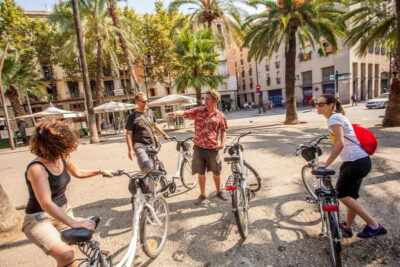
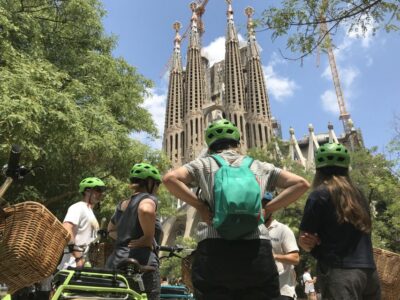
Barcelona: 2.5-Hour Bike or E-Bike Historical Tour
Read our review →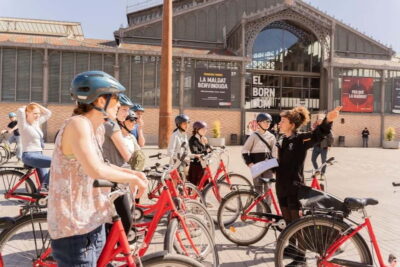
Barcelona: Sagrada Familia or City Tour by Bike or eBike
Read our review →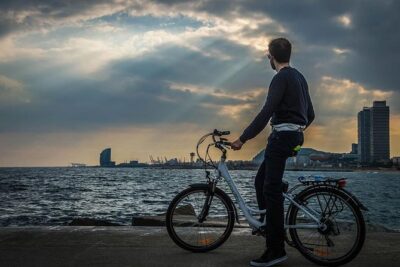
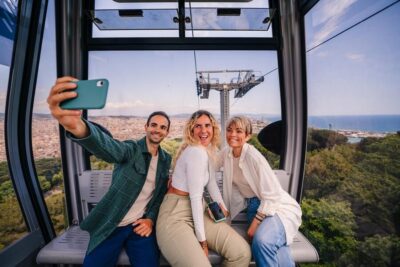
Barcelona: E-Bike Tour with Montjuic Cable Car & Boat Ride
Read our review →
Barcelona e-Bike Tour: Gaudí & Old Town Small Group
Read our review →Browse the lists this ride appears in