
Review · CANADA
E-bike through Toronto’s Dynamic Neighbourhoods
Toronto reveals itself best when you leave the standard sightseeing loop. This 210-minute e-bike tour links trendy streets, immigrant communities, leafy parks, street art, mental-health projects, and the waterfront, giving you a much broader sense of how the city works.
I especially like the chance to see Lower Ossington and St. James Town, two very different neighborhoods with strong local stories. I also like the small group limit of eight, which makes it easier to ask questions and keep the ride social. The main drawback is that the tour depends on the operator having enough staff available, so last-minute cancellations have occurred.
Key points at a glance
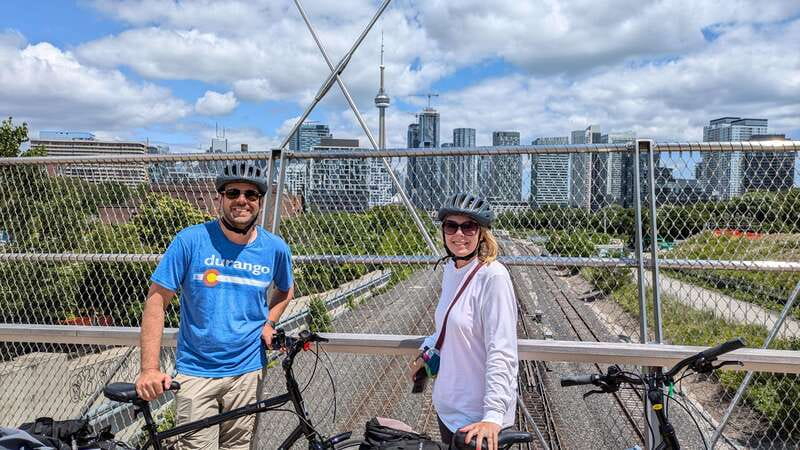
- Covers a wide slice of Toronto: The route connects Lower Ossington, Trinity Bellwoods, the Bloor Street Cultural Corridor, Graffiti Alley, CAMH, Ontario Place, and Rosedale.
- An e-bike does the hard work: You can cover far more ground than on a walking tour, with less physical strain.
- Mariana has earned special praise: She is noted for friendly guidance, useful city information, and clear help with e-bike operation.
- Small groups matter: With no more than eight people, the ride stays personal and interactive.
- The focus is local life: You see how neighborhoods change, how communities respond to challenges, and how Toronto plans for the future.
- The basics are covered: Your bike, helmet, water, and a granola bar are included, but drinks at the coffee stop are extra.
A city tour built around neighborhoods, not landmarks
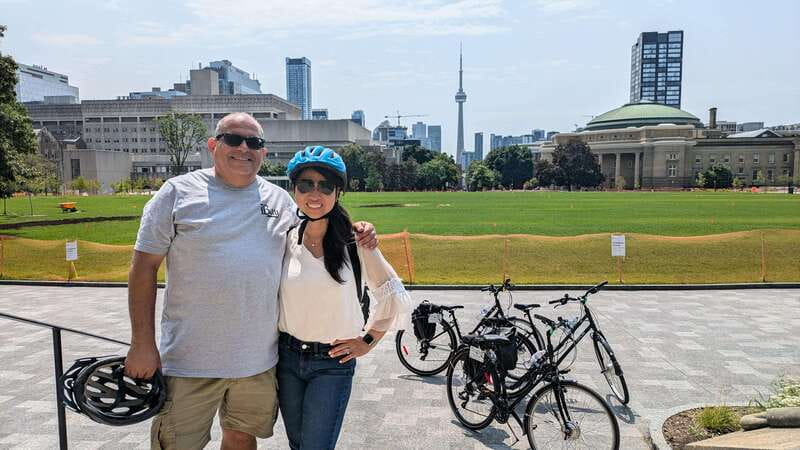
This is not a quick ride past Toronto’s best-known buildings. It is a neighborhood tour with wheels, and that changes the story.
Toronto is a city of sharp contrasts. A street can shift from polished restaurants to apartment towers, from old brick homes to public art, or from a quiet ravine edge to a major cultural corridor within a short ride. An e-bike lets you connect those places in one outing.
I like this format for a first visit because you get your bearings quickly. You also get something new on a return trip. Instead of spending the whole ride at one attraction, you move through several parts of the city and learn how they relate to one another.
The tour lasts three and a half hours. That is long enough to go well beyond downtown, but not so long that the ride takes over your whole day. The pace should suit curious adults who want a broad introduction rather than a workout or a checklist of famous sights.
More E-Bike Tours in Canada
- Epic Electric Bike Tour by Cycle City Tours
★ 5.0 · 848 reviews - Montreal eBike Sightseeing Tour
★ 5.0 · 573 reviews - Montreal: E-Bike Sightseeing Tour
★ 4.8 · 365 reviews
Lower Ossington shows Toronto’s changing side
Lower Ossington is one of the early highlights. This stretch was once easy to overlook. It later became known for restaurants, bars, shops, and creative businesses, earning a reputation far beyond Toronto.
The useful part of seeing it with a guide is the chance to consider why a neighborhood changes. You are not simply told that the street is fashionable. You get a sense of how local businesses, new residents, older buildings, and changing tastes can reshape a place.
This stop will appeal to you if you like urban change and independent businesses. It may be less satisfying if you want a long stop at one attraction, since the point is to read the neighborhood as a whole rather than settle in for a meal or shopping session.
St. James Town brings the city’s diversity into focus
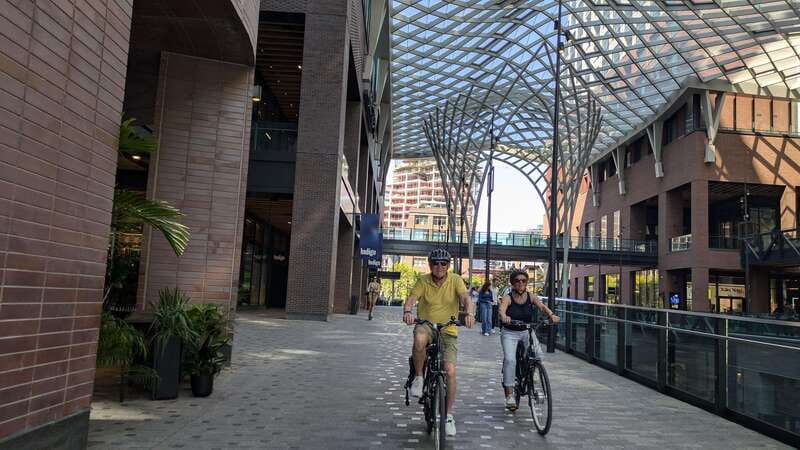
St. James Town offers a very different view of Toronto. It is one of the city’s most culturally diverse communities, and the tour uses the neighborhood to discuss practical issues such as food access, health care, and social services.
That makes this stop more useful than a simple photo opportunity. You learn about the ways residents and local organizations respond to daily needs. It also helps explain why Toronto cannot be understood only through its polished shopping streets and waterfront views.
For me, this is one of the strongest parts of the route. It connects the city’s diversity with real city planning and community work. Keep in mind that the subject matter is more serious than the art and park stops. That is part of the value, but it may not suit someone looking only for light sightseeing.
Trinity Bellwoods offers a pause among city life
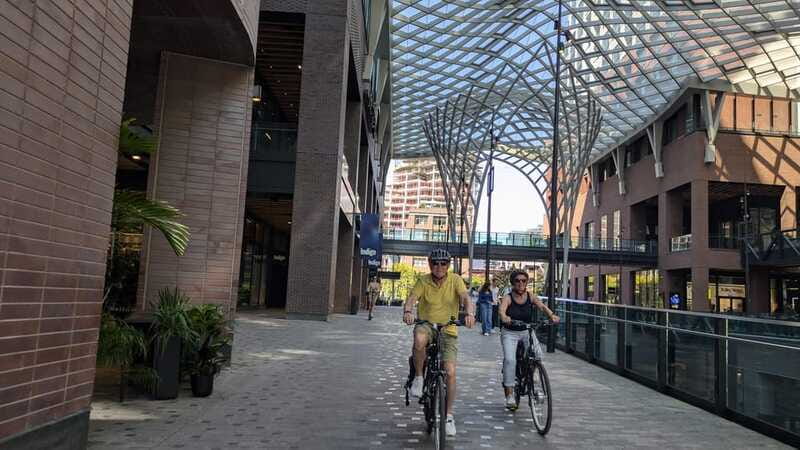
Trinity Bellwoods is a popular green space where the ride slows down. It is a good place to watch the city at leisure, with people using the park as part of their everyday routine.
The park gives the tour a useful change of rhythm. After riding through busy streets and commercial areas, you get a sense of how green space fits into urban life. The point is not a grand monument. It is the local atmosphere, people-watching, and the simple pleasure of a park near the center of the city.
You should not expect an extended picnic or a long break here. Think of Trinity Bellwoods as a window into how residents spend time outdoors. It also provides a welcome breather during a long ride.
Same roads, a different ride:
- The Grand Bicycle Tour by Cycle City Tours
★ 5.0 · 1,827 reviews - The Stanley Park Bicycle Tour by Cycle City Tours
★ 5.0 · 785 reviews - 3 Hour Montreal City Bike Tour with Wine or Beer (AM & PM)
★ 5.0 · 332 reviews - Montreal: Guided Bike Tour of City, Old Port & Plateau
★ 4.8 · 331 reviews
The Bloor Street Cultural Corridor links art and food
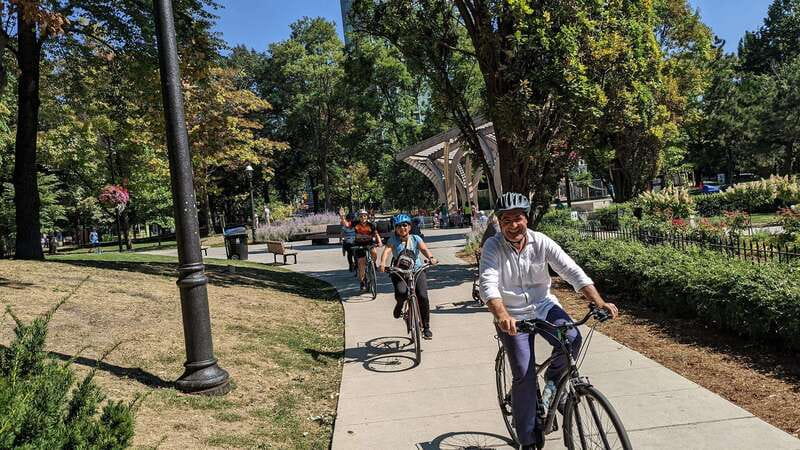
The Bloor Street Cultural Corridor brings together museums, performance venues, and food from many parts of the world. This section shows Toronto as a cultural city, not only a business center.
A guide can add value here by explaining how arts institutions and immigrant communities shape the same stretch of the city. You get a wider view than you would from visiting one museum on your own.
The route does not promise admission to museums or performances, so plan to return later if a particular venue catches your eye. The strength of this stop is context. It helps you mark places for later exploration while keeping the bike tour moving.
Graffiti Alley keeps changing
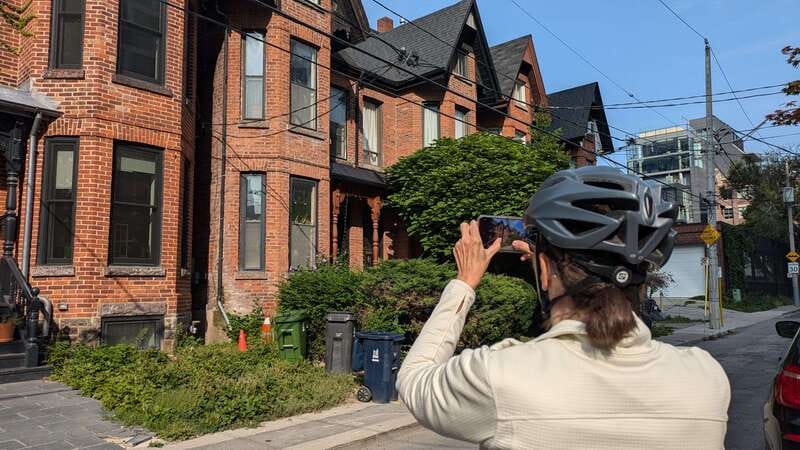
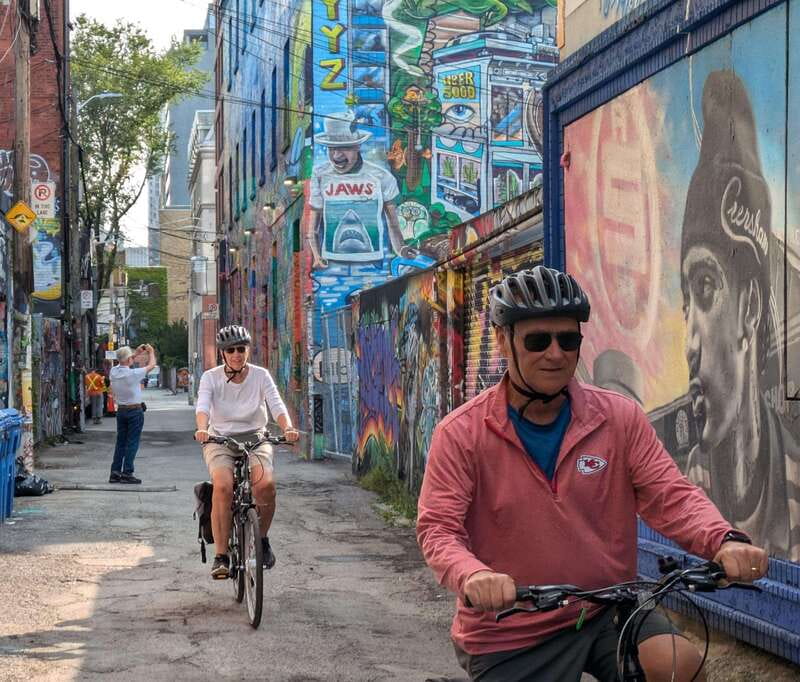
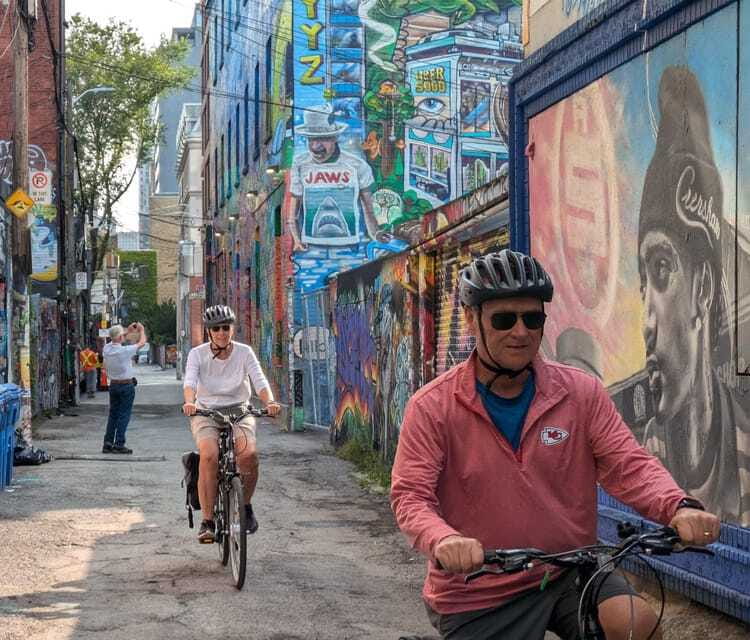
Graffiti Alley is one of the more visual stops. Its street art changes over time, so the exact walls you see are part of a living record rather than a fixed attraction.
This is an easy place to enjoy even if you know little about street art. Bring your camera, but also pay attention to how the artwork fits the surrounding streets. The alley shows a more informal side of Toronto and gives the route a splash of color without requiring a formal gallery visit.
Because the art changes, no two visits are quite the same. The tradeoff is that this is an outdoor stop, so the experience depends on conditions and on what is painted there at the time of your ride.
CAMH explains a different kind of city progress
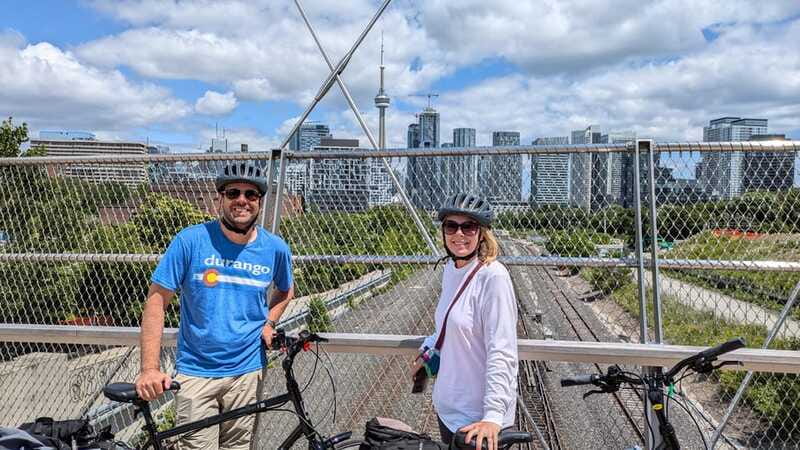
The stop at CAMH, the Centre for Addiction and Mental Health, adds an important public-service story. The tour looks at Toronto’s changing approach to mental health and the changes taking place around the center.
This is a thoughtful inclusion. Many city tours talk about food, architecture, and entertainment, but far fewer explain how a city addresses mental health. The stop gives you a chance to consider how institutions can become more open and connected to the surrounding community.
It is not a standard sightseeing attraction, and that is precisely why it earns its place. If you prefer a tour made only of scenic stops, this section may feel less immediately entertaining. If you want to understand how Toronto is trying to become more livable, it adds real substance.
Ontario Place and Trillium Park show a waterfront in transition
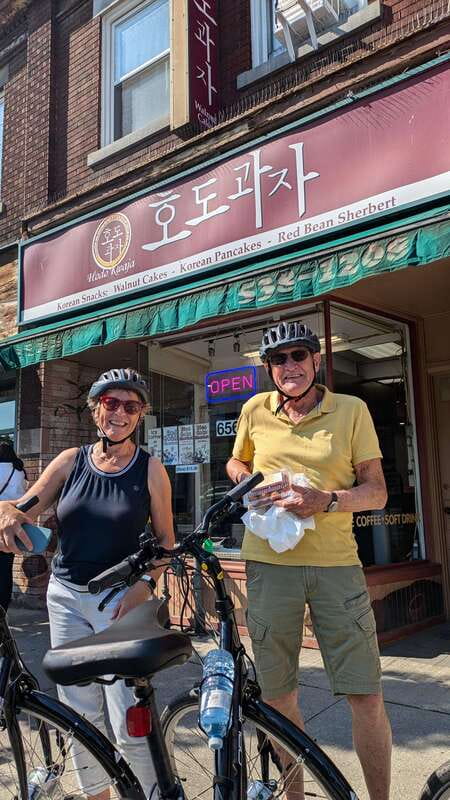
The ride continues toward Ontario Place and Trillium Park. Here, the focus shifts to the waterfront and to a major venue in the middle of change.
The route gives you a chance to see how Toronto is rethinking public space, entertainment, and access to the water. Trillium Park provides a more open setting after the denser neighborhoods, while Ontario Place adds the question of what should happen to a well-known city site as plans evolve.
This is a good example of why the tour works better than a simple list of attractions. You are not only seeing where Toronto is now. You are also hearing about what the city may become. Since the area is undergoing transformation, some details may change over time.
Rosedale finishes with a quieter contrast
Rosedale provides one of the sharpest changes in mood. The ride takes you through one of Toronto’s most affluent neighborhoods, known for picturesque streets and a much quieter feel than the central districts.
The interesting angle is not simply looking at expensive homes. You also hear the stories behind the streets and see how this part of the city contrasts with St. James Town, Lower Ossington, and the waterfront.
That contrast gives the entire tour shape. Toronto is not one uniform place. It is a collection of neighborhoods with different incomes, cultures, building types, and public concerns. Rosedale makes that point without needing a long lecture.
What riding an e-bike adds
An e-bike is the practical reason this itinerary can work. Toronto is spread out, and walking between all these areas would be unrealistic in one outing. A regular bike could also make the distance tiring, especially if you are not used to urban cycling.
The electric assist lets you cover more ground with less effort. That leaves you with more attention for the guide, the streets, and the neighborhoods instead of saving energy for the next hill or long stretch.
You still need to know how to ride a bicycle. The experience is not suitable for people who cannot ride, and it is limited to participants aged 16 and over. Comfortable clothing is the main suggested item to bring. Your helmet, water, and granola bar are supplied.
One particularly useful detail is that the guide helps with bike operation. Mariana has been praised for making the e-bike experience easy for first-time riders while also explaining the city clearly. That is important if you have never used an electric bike before.
Why the eight-person limit matters
A maximum of eight people is a real advantage here. The route includes serious topics and many neighborhood changes, so you will likely have questions. A small group gives you a better chance to ask about a street, a building, or a community project without losing the guide in a crowd.
It also makes the ride easier to manage. The group can stay together more naturally, and the guide can keep an eye on riders who are still learning the bike.
The experience may feel especially personal if the booking is light. One rider described having what amounted to a private tour and praised the chance to learn, take photos, and talk with the guide. You should not count on being alone, but the small maximum keeps the outing from feeling like a parade.
Price, timing, and what you receive
At $107 per person, this is not the cheapest way to see Toronto. I think the price is easier to justify when you consider the duration, the e-bike rental, the helmet, the guide, and the sheer distance covered.
A walking tour can offer more detail in one area, while a standard sightseeing bus can cover distance with less physical effort. This ride sits between the two. You get the mobility of a vehicle, the street-level view of a bicycle, and live local interpretation.
Water and a granola bar are included. Drinks at the coffee stop are not, so bring a payment method if you want something beyond the supplied snack. Gratuity is also separate.
The meeting point is in the parking garage at 124 St Patrick Street, about 50 meters south of Dundas on the west side of the street. Enter the garage, follow the yellow signs to level P2, section H. If the garage door is closed, move closer and it should open automatically. You can call 416-477-2184 for directions.
The booking terms are useful for uncertain plans. You can cancel up to 24 hours before departure for a full refund, and you can reserve now and pay later. Still, I would keep some flexibility in your schedule because at least one booking problem involved a same-day cancellation after an earlier cancellation had already disrupted plans.
Who will enjoy this ride most
I would choose this tour if you want to understand Toronto through its neighborhoods rather than only see major sights. It is a strong match for first-time visitors with one day in the city, since the route gives you a broad overview quickly.
It also suits repeat visitors who have already seen the standard downtown attractions. The mix of street art, community issues, green space, culture, waterfront planning, and affluent residential streets gives you a more layered view.
You should be comfortable on a bicycle and able to ride for three and a half hours with stops. The minimum age is 16. If you want a slow food tour, a museum visit, or a short scenic spin, this may not be the right format.
The English-language guide is central to the experience. Mariana has received especially strong praise for her friendliness, city information, and technical help with the bikes. The tour is best for people who enjoy asking questions and making sense of what they see.
FAQ
How long is the e-bike tour?
The tour lasts 210 minutes, or three and a half hours.
How many people can join the tour?
The group is limited to a maximum of eight participants.
What neighborhoods and places does the tour visit?
The route includes Lower Ossington, St. James Town, Trinity Bellwoods, the Bloor Street Cultural Corridor, Graffiti Alley, CAMH, Ontario Place, Trillium Park, and Rosedale.
Is the e-bike included in the price?
Yes. The electric bike and helmet are included, along with water and a granola bar snack.
Do I need to know how to ride a bicycle?
Yes. The activity is not suitable for people who cannot ride a bike.
Is there a minimum age?
Yes. The tour is not suitable for children under 16.
What happens if I need to cancel?
You can cancel up to 24 hours in advance for a full refund. You can also reserve your spot and pay later.
Should you book it?
Book this ride if you want a wide, street-level introduction to Toronto and like the idea of connecting neighborhoods by bike. The route is unusually varied, the group is small, and the e-bike makes a long city ride manageable.
I would be cautious if your schedule cannot handle a possible last-minute change, or if you want a tightly controlled sightseeing itinerary with no operational risk. For most active adults and older teens who can ride a bike, though, this is a smart way to see how Toronto’s communities, public spaces, and future plans fit together.
New cycling reviews around Canada
- Quebec City: Montmorency Falls and Microbrewery eBike Tour★ 5.0 · 19 reviews
- Ottawa: 2 or 3.5-Hour Guided Bike Tour with a Local Guide★ 4.9 · 84 reviews
- Ottawa 200th Anniversary Guided Bike Tour★ 4.6 · 20 reviews
- Ottawa: 4 or 8-Hour Bike Rental with Self-Guided Tour★ 4.7 · 51 reviews
- Niagara-on-the-Lake: Bicycle Tour with Wine Tasting★ 4.5 · 23 reviews
- Montreal: Non Touristy Pink Bike Tour★ 5.0 · 27 reviews
- Montreal: All-Day Bicycle Rental★ 4.8 · 15 reviews
- Kelowna: Wine Tasting by E-bike, Smartphone Guide & Lunch★ 4.8 · 30 reviews
Canada Cycling Tours, compared.

The Stanley Park Bicycle Tour by Cycle City Tours
Read our review →


3 Hour Montreal City Bike Tour with Wine or Beer (AM & PM)
Read our review →
Montreal: Guided Bike Tour of City, Old Port & Plateau
Read our review →
Browse the lists this ride appears in