
Review · THE WORLD
Experience Intramuros with Bamboo Bicycle – Ecotours
Intramuros is Manila’s old walled city, and a bamboo bicycle is a smart way to cover its scattered sights without rushing from one gate to the next. You choose your own bike at the Bambike shop, then follow a guide through plazas, churches, wartime sites, and sections of the old walls.
I like the easy, mostly flat pace and the way guides such as Anj, Paolo, Chi, JD, and Josh explain the places instead of simply pointing them out. I also like the small-group feel, bottled water, helmets, and the extra care used when the group crosses roads.
The main drawback is that this is more of a guided sightseeing ride than a long bike outing. You may spend less time pedaling than expected, and traffic, pedestrians, heat, rain, and an occasional sewage-like smell can affect the ride.
Key points to know before you book
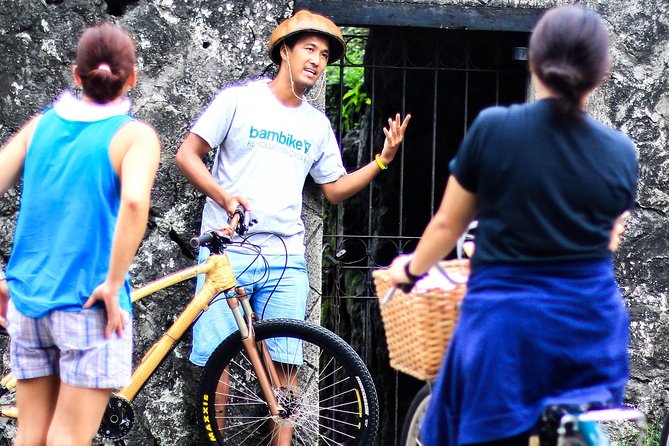
- Choose your own bamboo bike: Bikes come in different styles and sizes, so you can select one that feels comfortable.
- The route covers Intramuros highlights: Expect Fort Santiago, Plaza Roma, Manila Cathedral, San Agustin Church, old gates, gardens, and a section of the walls.
- The cycling is gentle: The route is largely flat, with frequent stops for history, photos, and short walks.
- Road safety gets real attention: Guides help keep the group together and may stop traffic while you cross busier roads.
- The price includes practical extras: For $39, you get a guide, bike, helmet, water, sunscreen or a rain poncho when needed, a cold towel, and refreshments.
- Allow for tropical weather: The tour runs in changing weather conditions, so dress for heat and carry a light layer for rain.
Why a bamboo bike works well in Intramuros
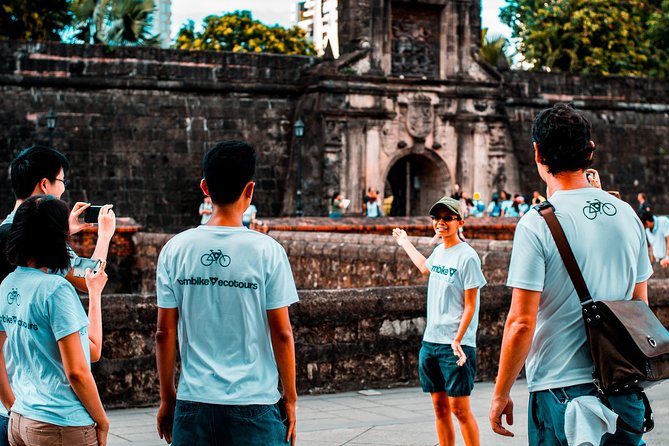
Intramuros is not one single attraction. It is a collection of gates, churches, plazas, defensive walls, gardens, and rebuilt streets spread across Manila’s historic core. Walking lets you see the details, but the distances and heat can make a full circuit tiring.
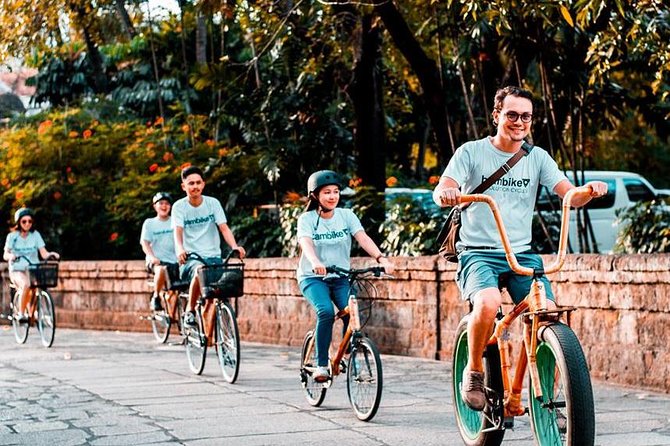
The Bambike gives you a relaxed middle ground. You move often enough to cover ground, but the stops are frequent enough for explanations and photographs. The route is not a workout. It is a slow ride with a history lesson attached.
The bikes themselves are part of the appeal. Each one has its own look, and you choose from several sizes and styles at the start. You also get a helmet, and sunscreen or a rain poncho can be provided when needed. Bottled water is available during the ride, which matters in Manila’s heat.
The tour is limited to 15 people, though groups can be smaller. That size allows the guide to keep an eye on the riders and answer questions without turning the experience into a large procession. Guides also use pictures at times to help explain events and places.
More Cycling Trips in the world:
- Lion City Bike Tour of Singapore
★ 5.0 · 6,211 reviews - Big Bike tour Amsterdam – See all in 3 unforgettable hours
★ 4.7 · 4,929 reviews - 3-Hour Porto Highlights on a Electric Bike Guided Tour
★ 5.0 · 4,392 reviews
Starting at Casa Manila and Plaza San Luis
You meet at Bambike headquarters in the Casa Manila area of the Plaza San Luis Complex. The staff handles waivers, helps you select a bike, and checks your comfort before the ride begins. This first ten minutes is useful, especially if you have not ridden a bamboo bike before.
Casa Manila is a reconstructed traditional house inspired by Spanish Colonial architecture. The stop is brief, about 15 minutes, but it gives you a visual introduction to the type of domestic setting associated with colonial-era Manila.
I would not expect a long house tour here. The value is in seeing the architecture and getting oriented before the cycling begins. If you have only one day in Intramuros, the short stop keeps the tour moving.
Muralla Road, the Japanese cannon, and wartime Manila
The group rides along Muralla Street and pauses at a Japanese cannon. Here the guide connects Intramuros to the Japanese Occupation and World War II.
This stop helps correct a common impression of Intramuros. The district is not only about Spanish churches and stone walls. Its story also includes occupation, destruction, survival, and rebuilding. Guides such as Paolo, Josh, and Anj are often praised for giving context and answering questions, so this is a good place to ask about the wartime period.
The road sections are generally easy, but you are not riding on a closed track. Cars, motorcycles, pedestrians, and uneven activity around the old city can appear along the route. Children need to know how to ride well, and adults should stay alert rather than treating the ride as a carefree bicycle path.
Puerta Real Gardens and the old defense system
Puerta Real Gardens introduces one of the main gates of Intramuros and the defensive planning beyond the walls. The stop lasts about 20 minutes, giving you time to look at the gate and hear how the Spanish built and used the city’s defenses.
This is one of the places where a guide adds real value. A gate can look like a simple photo stop if you do not know its purpose. With an explanation of the walls, entry points, and defensive strategy, the layout of Intramuros becomes easier to understand.
You will also get a short break at Café Y Ruedas after riding toward the walls. This stop lasts about 15 minutes and is intended as a refreshment pause. The experience includes a refreshment here, while food and drinks beyond what is specified are not included. Some tours finish with a sweet cold treat, but the exact refreshment can vary.
Same roads, a different ride:
- Ninh Binh Full-Day Tour from Hanoi to Hoa Lu, Tam Coc & Mua Cave Via Boat & Bike
★ 5.0 · 4,384 reviews - Small Group Guided Bike Tour of Amsterdam’s Hidden Gems
★ 5.0 · 3,936 reviews - 3-hour Complete Prague Bike Tour
★ 5.0 · 3,674 reviews - Bangkok: Temples, Canals & Local Life Bike Tour
★ 4.9 · 3,511 reviews
Puerta del Parian and Manila’s Chinese influence
Puerta del Parian is one of the more useful stops for understanding the city beyond its Spanish monuments. The guide discusses the gate, the nearby public spaces, and the role of Chinese people and Chinese influence in Philippine history.
The stop is scheduled for around 30 minutes, making it one of the longer pauses. That gives you time to take photographs and ask questions instead of hearing a quick explanation while balancing on a bicycle.
I especially like this part of the route because it broadens the story. Intramuros can easily be presented as a purely Spanish colonial district. The discussion at Puerta del Parian points to the wider mix of communities that shaped Manila.
Plaza Roma and Manila Cathedral
At Plaza Roma, you learn about one of Intramuros’ central public spaces and the important buildings around it. The Manila Cathedral is the main focus, and the group spends about ten minutes at the plaza before visiting the church.
Manila Cathedral is described as the heart of Christianity in the Philippines. The stop includes a look at the interior and an explanation of the church’s long history. Since the cathedral is an active religious site, keep your behavior respectful and follow any instructions given during the visit.
The plaza is also a good place for photographs because it helps show how the religious and civic parts of Intramuros fit together. The visit is short, so you should not expect a full architectural tour. Still, it makes sense as part of a route that connects the old city’s major institutions.
Fort Santiago is the main history stop
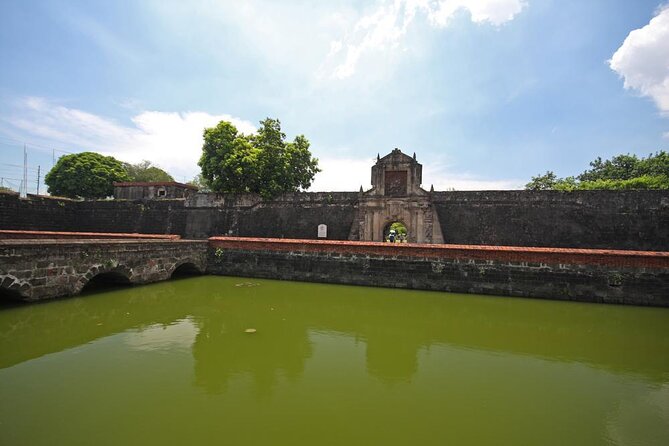
Fort Santiago receives the longest scheduled visit, about 40 minutes. This is the most substantial stop on the tour and the place where you will do the most walking. The route takes you into the stone fortress and to sites tied to major events in Philippine history.
Your bicycle will not carry you through every part of Fort Santiago. A small amount of walking is involved, and you should wear comfortable shoes. The stop gives the guide time to explain the fortress rather than reducing it to a quick photo opportunity.
For many people, Fort Santiago will be the highlight. It is also where the gentle cycling format makes sense. You arrive without having spent your energy walking across the entire district, then explore the fortress on foot with your attention on the site.
Guides have been praised for keeping the group safe and together, and a second guide may help manage road crossings on the way. That support is helpful in a historic district where traffic and pedestrians share the same streets.
San Agustin Church and the final return
The final listed stop is San Agustin Church, also known as the Immaculate Conception Parish. The visit is brief, about five minutes, but the church carries major weight as the oldest church in the Philippines and a UNESCO World Heritage Site.
Because this is a short stop, think of it as a final glimpse rather than a detailed church visit. If you want more time inside, you may need to return separately. The tour ends back at the Bambike meeting point.
Before you leave, you receive a cold towel. After a warm ride through Manila, that small detail is welcome. A snack or cold treat may also be part of the finishing refreshments, depending on the tour arrangements.
What the $39 price really buys you
At $39 per person, this is not the cheapest way to move through Intramuros. You could walk around the district for less, and walking may give you more freedom to linger at individual churches or museums.
The value comes from combining transport, a local guide, safety support, and historical interpretation. You do not need to work out a route between Fort Santiago, the gates, Plaza Roma, and San Agustin Church. The bike lets you cover the wider district, while the guide provides the connecting story.
The price includes the bamboo bicycle, helmet, guide and tour escort, bottled water, sunscreen or a rain poncho when needed, a cold towel, and gratuities. That makes the cost easier to justify for first-time visitors who want a structured introduction to Intramuros.
I would book it if you have limited time in Manila or want help making sense of the old city. I would skip it if your main goal is extended cycling, because the tour includes many stops and some walking. One of the recurring practical points is that the ride itself is easy, but there is not a huge amount of uninterrupted biking.
Weather, traffic, and comfort tips
The tour can operate in changing weather, and ponchos are available if rain arrives. Still, poor weather can lead to cancellation, with a different date or full refund offered in that case. Dress for heat and humidity, and use the available sunscreen.
Rain can make the streets less comfortable, even if the warm weather keeps the ride manageable. The route may also include areas with unpleasant odors, including a sewage-like smell reported during part of one ride. That is not something the operator can fully control, but it is worth knowing before you book.
The streets can be crowded with pedestrians, and at times you ride alongside cars and motorcycles. The guides place strong emphasis on keeping the group together. They may block or stop traffic during crossings, which adds confidence, but you still need to ride carefully and follow instructions.
Children must be accompanied by an adult. Most people who can participate in a basic bicycle ride should manage the gentle pace, but children should be comfortable riding near traffic. Service animals are allowed, and the meeting point is near public transportation.
Who will enjoy this Intramuros ride
This is a good choice for first-time visitors, solo visitors who want an organized outing, couples, families with competent young riders, and anyone who prefers a slow ride to a long walk. It also works well for people who want history explained in plain language, with time for photographs.
The guides receive especially strong praise for energy, care, and clear storytelling. Anj is described as funny and well prepared, Paolo brings enthusiasm to the history, and Chi, JD, Josh, Justine, Chloe, and Mika have all been singled out for making the ride comfortable and informative.
Solo visitors can fit in easily because the group format gives you company without requiring a private booking. The small size also makes it easier to ask questions. If you like to travel independently, you still get some time at the stops to look around on your own.
This is less suitable for someone seeking a fast, athletic bike tour. It is also not ideal if you dislike organized stops or need complete control over how long you spend inside each church or fort. The route is designed to show you the main points in about three hours, not to provide a detailed museum visit at every stop.
Should you book the Bambike tour?
Book it if you want an easy, well-organized introduction to Intramuros and value a guide who can connect Spanish colonial buildings, Chinese influence, World War II, Christianity, and Fort Santiago into one story. The bamboo bikes are fun, the route is manageable, and the included safety support is useful on shared roads.
Skip it if you want several hours of continuous riding or prefer to explore each site at your own pace. At $39, the tour earns its price through convenience, interpretation, equipment, refreshments, and coverage of a wide area.
For most visitors with only a short stay in Manila, I would choose it. Just bring patience for traffic, heat, possible rain, and a sightseeing pace that gives history more attention than cycling.
FAQ
How long does the bamboo bicycle tour last?
The tour lasts approximately three hours and ends back at the Bambike headquarters in Intramuros.
Where does the tour start?
It starts at Bambike HQ in the Casa Manila area of the Plaza San Luis Complex, at Real Street corner M. General Luna Street, Intramuros, Manila.
What sights are included?
The route includes Casa Manila, a Japanese cannon along Muralla, Puerta Real Gardens, Café Y Ruedas, Puerta del Parian, Plaza Roma, Manila Cathedral, Fort Santiago, and San Agustin Church.
Is the cycling difficult?
The route is generally flat and paced gently, with regular stops. You will also ride on some city roads shared with cars and motorcycles, and a short amount of walking is required inside Fort Santiago.
Are bikes and helmets included?
Yes. The bamboo bicycle and helmet are included, and you choose a bike style and size at the start of the tour.
What happens if it rains?
The tour can operate in changing weather, and rain ponchos are provided when needed. If the experience is canceled because of poor weather, you can receive a different date or a full refund.
Can children join the tour?
Yes, but children must be accompanied by an adult and should be able to ride safely near cars and motorcycles.
New cycling reviews around the world
- Riga: Beer or Cider Bike Tour★ 4.7 · 121 reviews
- Ria Formosa: Guided Bike Tour (3h), Início na Quinta do Lago★ 4.8 · 14 reviews
- Riga Explorer Bike Tour★ 4.8 · 127 reviews
- Rio de Janeiro: Guided Bike Tours in Small Groups★ 4.5 · 133 reviews
- Rethymno: Guided e-Bike Tour on Mili Gorge and Soft Drinks★ 4.9 · 36 reviews
- Rhodes: Anthony Quinn Bay E-Bike Tour with Snorkeling★ 4.9 · 15 reviews
- Rhodes: eBike Highlights Tour w/ Personal Photographer★ 4.9 · 99 reviews
- Rent a bike in Amsterdam | 1, 2, 3+ hours★ 4.5 · 68 reviews