
Review · DENVER
Explore Denver by E-bike Guided Tour
Denver’s best city tour may be the one that keeps you moving. This three-hour e-bike ride links RiNo murals, Union Station, Larimer Square, and the State Capitol with neighborhoods you might otherwise miss, including Five Points and Capitol Hill. You get a useful first look at Denver without being sealed inside a van.
I like the small maximum of six people and the clear mix of riding and storytelling. I also like that guide Mitch brings the city’s African American history, political past, art scene, and local characters into the same tour. The main consideration is direct sun and Denver’s elevation. Dress in layers, carry water, and remember that Mitch’s personal views may occasionally enter discussions of cultural or political issues.
Key points to know before you ride
- Small group of six: The limited size makes it easier to ask questions and stay connected with Mitch.
- A first-time-friendly e-bike route: The ride is mostly flat, and the bikes are described as light, new, and easy to handle.
- Two RiNo art stops: You visit the Denver Walls alleyways at the beginning and end, with time to see murals up close.
- More than postcard sights: Five Points, Molly Brown, Cheesman Park, and Larimer Square add social and local history.
- Three hours used well: Fifteen minutes cover safety and instruction, 75 minutes are spent riding, and 90 minutes are spent at stops.
- Good value at $75: You see a broad slice of Denver with a guide, bike, and historical context included.
Why an e-bike is a smart way to meet Denver
Denver spreads out just enough to make walking every stop tiring, yet its central sights fit together nicely by bike. An e-bike gives you the reach of a vehicle tour with a much closer view of the streets, murals, parks, and old buildings.
I like the balance here. You are not pedaling for three straight hours. The tour includes a 15-minute introduction with safety rules and e-bike instruction, about 75 minutes of total riding between stops, and roughly 90 minutes of guided information at the sites. That makes the experience active without turning it into an endurance test.
The route is described as mostly flat, and one first-time e-bike rider found it safe and uncomplicated. That matters if you have never used an electric bicycle. You still pedal and steer, but the motor helps keep the ride comfortable.
The group limit of six is another strong point. Mitch can give direct instructions, answer questions, and keep the group together more easily than on a large city tour. It also gives the ride a more personal feel, particularly at places such as Five Points, where the story needs more than a quick photograph.
More E-Bike Tours in the USA
- Red Rock Canyon eBike Half-Day Tour
★ 5.0 · 1,870 reviews - Austin Biker Gang E-Bike Tour
★ 5.0 · 1,399 reviews - Asheville Historic Downtown Guided Electric Bike Tour with Scenic Views
★ 5.0 · 1,234 reviews
Starting in RiNo, where Denver puts its art outdoors
The tour begins at 3270 Blake Street in the RiNo Art District. RiNo, short for River North, is one of the clearest places to see Denver’s modern art identity in public view.
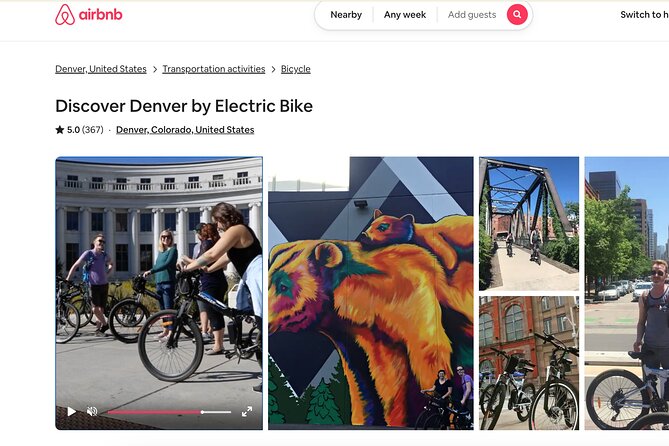
The first stop takes you into one of the district’s famous mural alleyways, connected with the Denver Walls festival. The festival presents 86 graffiti-style murals across six back alleys. You are not simply riding past painted walls from a distance. The plan is to walk through the alleyways and see the work close up.
This is a strong opening because it gives you instant color and a sense of place. It also sets up the second RiNo stop at the end of the route, when you return for a longer look at more murals. Bring a camera, but do not spend the whole stop staring at your screen. The point is the scale and variety of the work around you.
The drawback is simple: street art changes. Individual murals may not look exactly as expected on a later visit, and an alleyway is not the same as a formal museum with labels and climate control. If you want a quiet, carefully arranged art experience, this is not that. If you want art woven into the city streets, it works very well.
Coors Field and the city’s baseball identity
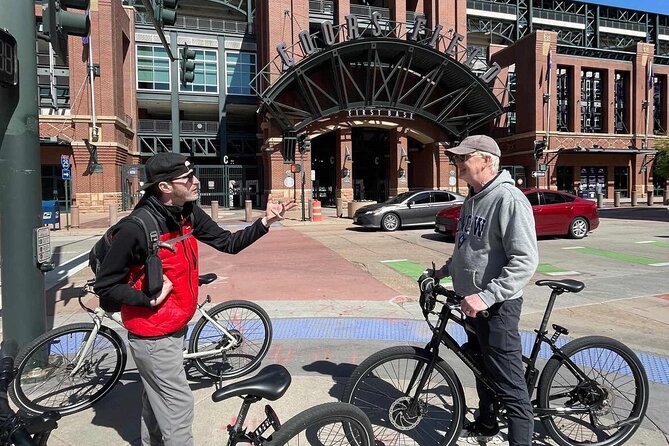
From RiNo, the ride reaches Coors Field, home of the Colorado Rockies. The stop is brief, about five minutes, and takes place outside the stadium.
Mitch uses the ballpark to explain its construction and effect on Denver. That makes this more than a quick sports photograph. You get a sense of how a major venue can shape the city around it and become part of local identity.
Do not expect a stadium tour or a game ticket. The value is the outside view and the context. Five minutes is enough for an introduction, but not enough for a detailed examination of the building. I see this stop as a useful link between Denver’s older civic story and its newer entertainment districts.
Union Station, Denver’s grand front door
Denver Union Station is one of the tour’s most important stops. You pause outside the iconic station for about ten minutes and hear how its construction affected the city and why it remains important to Denver residents.
The station works especially well on a city orientation tour because it connects Denver’s past and present. It is a major downtown landmark, but it also represents movement, growth, and the way Denver developed as a transportation center.
I like the fact that the stop is not treated as just a pretty building. Mitch’s focus includes the station’s place in the hearts of local people, which gives the stop a more personal angle. You can look at the architecture while also learning why the building matters beyond its appearance.
Again, this is an outside visit. If you want time to sit inside, eat, or inspect every detail, plan that for another part of your day. The three-hour ride keeps moving.
Same roads, a different ride:
- Guided Bike Tour of Old Town Key West
★ 5.0 · 2,611 reviews - NYC: Central Park Bike Rentals
★ 4.2 · 2,528 reviews - NYC: Central Park Bike Rental
★ 4.1 · 1,651 reviews - Central Park Bike Rental
★ 4.7 · 1,509 reviews
Larimer Square and Denver’s first settlement
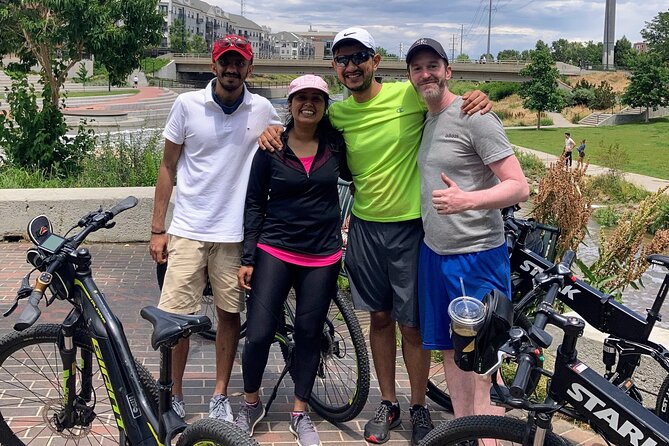
Larimer Square brings the route into Denver’s earliest official settlement. It is described as the city’s oldest and most historic block, and the ten-minute stop focuses on Denver’s formation and early development.
This is where the tour shifts from modern street art and major transportation projects to the city’s beginning. I find that contrast useful. You can better understand Denver when you see both the old block that helped form the city and the newer districts that now attract attention.
The short stop will give you an introduction, not a full architectural study. Still, it is enough to place Denver’s origin story on the map and make later sights easier to understand.
The Big Blue Bear and Denver’s public art
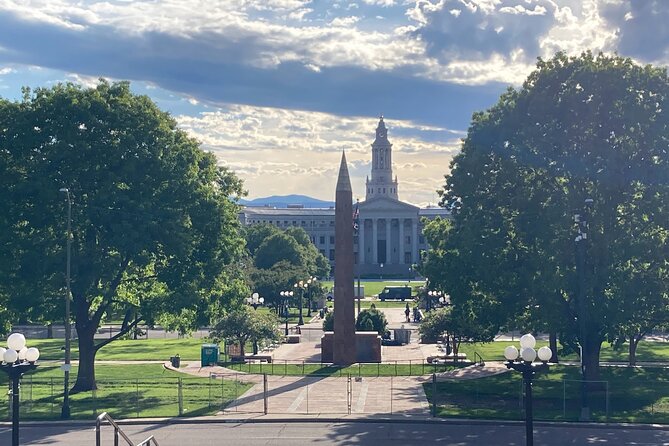
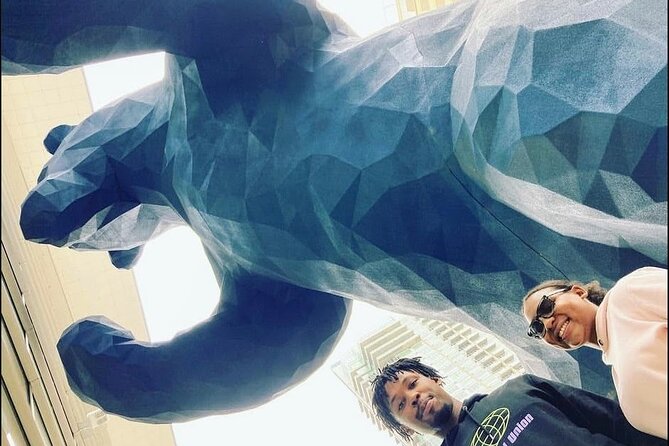
At the Colorado Convention Center, the tour stops for about ten minutes in front of the large blue bear. Officially associated with the city’s public art scene, the sculpture is one of Denver’s most photographed pieces.
This is an easygoing stop, but it earns its place. The bear is instantly recognizable and makes a good photo. It also supports a larger point that runs through the tour: Denver likes art in public places, where you encounter it during an ordinary day rather than only after buying a museum ticket.
I appreciate the range here. The tour does not treat art as something limited to RiNo’s murals. The Big Blue Bear shows another side of Denver’s public art culture, one built for a major civic building and the people passing by it.
The Capitol and the meaning of Mile High
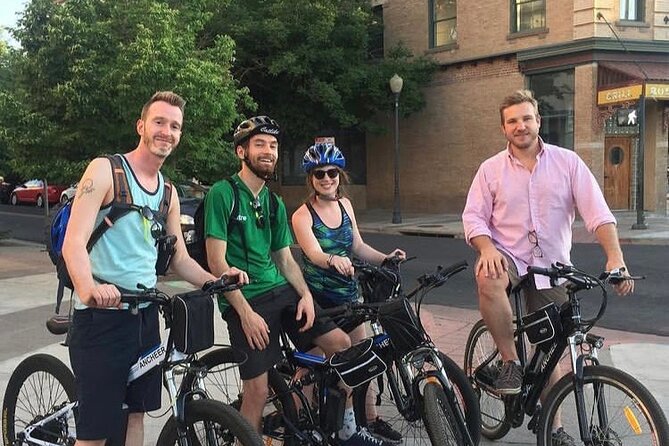
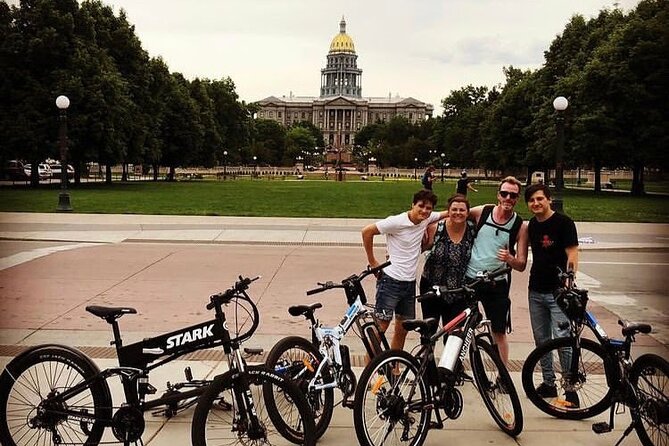
The Colorado State Capitol brings you to the center of Denver’s political life. You stop near the golden dome for about ten minutes and learn how Denver earned its nickname as the Mile High City.
This is one of those places where a guide adds real value. A quick look at the dome is easy. Understanding the elevation reference and its connection to Denver’s identity is more useful.
The stop also gives you a change of pace. After murals, a ballpark, a train station, and public sculpture, you are looking at a formal civic building. The tour’s history is broad rather than narrowly focused, and that variety suits a first visit.
The elevation deserves practical attention. One rider noted that direct sun and Denver’s altitude can make the temperature feel five to ten degrees warmer. I would wear layers and protect yourself from the sun. The route may be mostly flat, but the climate can still make a warm day feel more demanding than expected.
Molly Brown and Capitol Hill’s grand houses
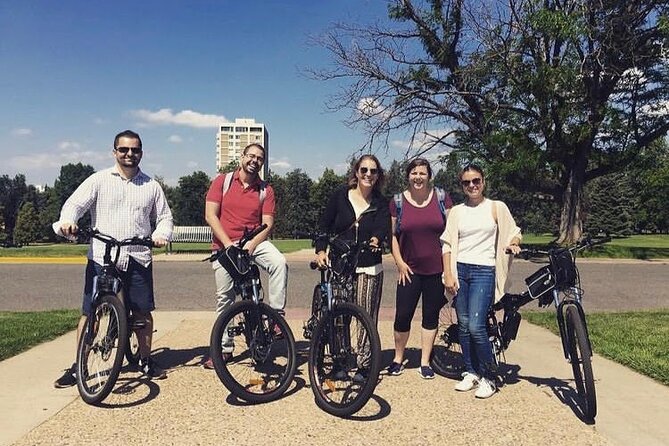
The ride through Capitol Hill leads to the area around the Molly Brown House Museum. You see turn-of-the-century brownstone-style mansions and learn about Margaret Brown, one of Denver’s best-known historical figures.
Molly Brown’s story connects Denver to the sinking of the Titanic, but the tour also looks at her political and social influence in the city. That broader treatment makes the stop more worthwhile than a simple celebrity anecdote.
The houses add visual interest. You are not only hearing about one person. You are riding through a neighborhood that helps explain the wealth, ambition, and social life of Denver around the turn of the century.
The stop lasts about ten minutes and does not include admission to the museum. If you want an interior visit, you would need to arrange that separately. On the e-bike tour, you get the neighborhood setting and an introduction to Molly Brown’s role.
Cheesman Park and Denver’s ghost story
Cheesman Park offers a green pause in the middle of the city. The route passes through the park while Mitch tells Denver’s most famous ghost story and explains why the park is considered one of the most haunted in the United States.
This is the tour’s most playful stop. The story adds a little mystery without requiring you to choose a separate ghost walk. It also shows another side of Denver, one that is less about official buildings and more about local folklore.
The park is a pleasant change after several urban landmarks. You get open space, a slower ride, and a story that may stick with you longer than a list of dates. The haunted reputation is part of the tale, not a promise of a supernatural event, so keep your expectations in the right place.
Five Points, jazz, and a harder part of Denver’s story
Five Points is one of the most valuable stops because it asks you to look beyond the polished center. Mitch covers Denver’s African American history, the effects of redlining and segregation, the neighborhood’s jazz culture, and one of Colorado’s most culturally important hotels.
This section gives the tour more weight. Denver’s story is not only golden domes, historic squares, and attractive murals. Five Points also brings questions about who could live where, who had access to opportunity, and how culture survived and grew under unfair conditions.
I like that the route includes this neighborhood rather than treating Denver as a collection of photo stops. It gives you a better sense of the people and communities that shaped the city.
The subject matter can lead into current political and cultural discussion. Mitch’s presentation is personal at times, and one point to consider is that his own views may enter those conversations. If you prefer a strictly neutral script, that may bother you. If you enjoy a guide who connects history to present-day issues, you may find it useful.
Returning to RiNo for the final mural walk
The tour ends where it began, back in RiNo. This second mural stop is described as the most extensive and popular part of the route, with a walk through the alleys and close views of the Denver Walls artwork.
Ending with street art is a good choice. By this point, you have seen the formal and informal sides of Denver: government, sports, transportation, early settlement, historic homes, public sculpture, parks, and neighborhood culture. The murals bring the city back to its present-day creative energy.
You finish at the original meeting point on Blake Street. That makes the logistics simple, especially if you are planning another activity nearby. The tour does not leave you across town looking for a ride back.
Is $75 a fair price?
At $75 per person, I see this as fair value if you want both transportation and interpretation. You get an e-bike, a three-hour guided route, safety instruction, and access to a small group that covers a wide section of central Denver.
The tour includes no admission ticket to the listed stops, but most visits are outside and do not require one. That keeps the price focused on the ride and Mitch’s guidance rather than on entry fees.
The value is strongest during a first visit, when you want to understand how the neighborhoods fit together. It is also useful if you have limited time and do not want to piece together RiNo, downtown, Capitol Hill, Cheesman Park, and Five Points on your own.
You may find less value here if you already know Denver well and only want a long, fast bike ride. The pace includes ten-minute history stops and short visits, so this is a sightseeing tour first and a cycling workout second.
Who should book this ride?
I would choose this tour for a first-time visitor, a solo visitor who wants an easy way to meet the city, or a couple looking for something more active than a walking tour. Families can also do well here, especially if older children or teenagers are comfortable on bikes. One teenager was especially engaged by the interactive approach, which says something about the guide’s ability to keep the history moving.
It also suits anyone who wants a city introduction with more substance than a quick highlight reel. Mitch covers Denver’s art, architecture, politics, social history, folklore, and neighborhoods in one route.
You should have a moderate level of physical fitness. The route is mostly flat and the e-bikes are designed to make riding easier, but you still need to ride for about 75 minutes in total. Weather matters too. The experience requires good weather, and poor conditions can lead to a different date or a full refund.
The experience is offered in English, uses mobile tickets, and is near public transportation. You can cancel for a full refund up to 24 hours before the start time. Changes or cancellations inside that window are not accepted for a refund.
Should you book the Explore Denver by E-bike Guided Tour?
I would book it if you want a broad, active introduction to Denver and like your history delivered with personality. The strongest features are the small group, the easy e-bikes, the two RiNo mural visits, and the decision to include Five Points and Cheesman Park alongside the standard downtown sights.
I would skip it only if you want a quiet, highly formal presentation, a strenuous cycling trip, or substantial indoor time at museums and landmarks. For most visitors, $75 buys a useful three-hour orientation, a lot of city ground, and a better feel for Denver than you can get from a single downtown walk.
FAQ
How long is the Explore Denver by E-bike Guided Tour?
The tour lasts approximately three hours. This includes 15 minutes of safety guidance and e-bike instruction, 75 minutes of riding between stops, and about 90 minutes of guided information at the stops.
Where does the tour start?
The tour starts at 3270 Blake St, Denver, Colorado 80205.
Where does the tour end?
The activity returns to the same meeting point at 3270 Blake Street.
How many people can join the tour?
The tour has a maximum of six people.
Is the tour offered in English?
Yes. The experience is offered in English.
Do I need previous e-bike experience?
No previous e-bike experience is stated as a requirement. The tour includes an introduction, safety guidelines, and e-bike instruction. The route is mostly flat, and a first-time rider was able to complete it without difficulty.
What locations does the tour visit?
The route includes the RiNo Art District, Coors Field, Denver Union Station, Larimer Square, the Colorado Convention Center and Big Blue Bear, the Colorado State Capitol, the Molly Brown House area, Cheesman Park, and Five Points. It returns to RiNo for a second mural visit.
Are admission tickets included?
The listed stops have no admission ticket charge as part of the outdoor visits. The tour does not state that admission to the Molly Brown House Museum or any other indoor attraction is included.
What happens if the weather is poor?
The experience requires good weather. If it is canceled because of poor weather, you will be offered another date or a full refund. You can also cancel at least 24 hours before the start time for a full refund.
New cycling reviews around the USA
- Portland, Maine: Coastal Lighthouses Guided Bicycle Tour★ 4.8 · 23 reviews
- Portland: Food Carts of the Eastside Bike Tour★ 4.9 · 16 reviews
- Essential Portland: 2-Hour Guided Bike Tour★ 4.8 · 43 reviews
- Portland: E-Bike Tour at Multnomah Falls★ 4.8 · 20 reviews
- Pittsburgh: Beauty of the Burgh Bike Tour★ 4.9 · 37 reviews
- NYC: Central Park Guided Electric Bike Tour★ 4.9 · 25 reviews
- Oahu: Kualoa Electric Bike Tour★ 4.6 · 14 reviews
- Oahu: Waikiki E-Bike Ride and Manoa Falls Hike★ 4.9 · 28 reviews
Denver Cycling Tours, compared.

Bike & Brew: Beautiful Denver Downtown Tour by E-Bike or Bicycle
Read our review →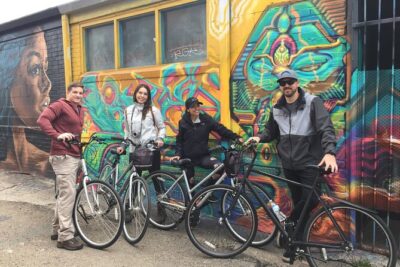
The Best of Denver: E-Bike & Bicycle Tour of the Downtown Sites
Read our review →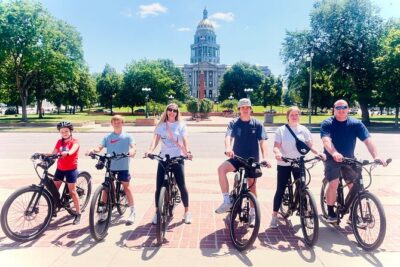
Denver’s Highlights and Hidden Gems Guided E-Bike Tour
Read our review →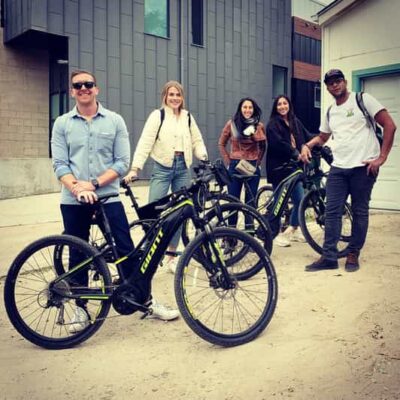
Discover Denver: Electric Bike Tour with Local Guide
Read our review →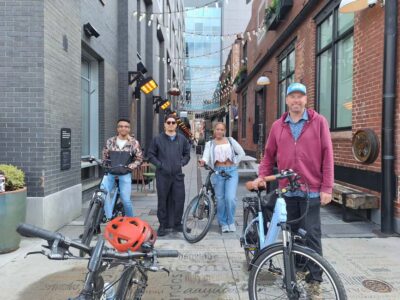
Denver’s Highlights: A Guided Bike or Ebike Adventure
Read our review →Browse the lists this ride appears in