
Review · FLORENCE
Florence: Guided Bike Tour in Small Group
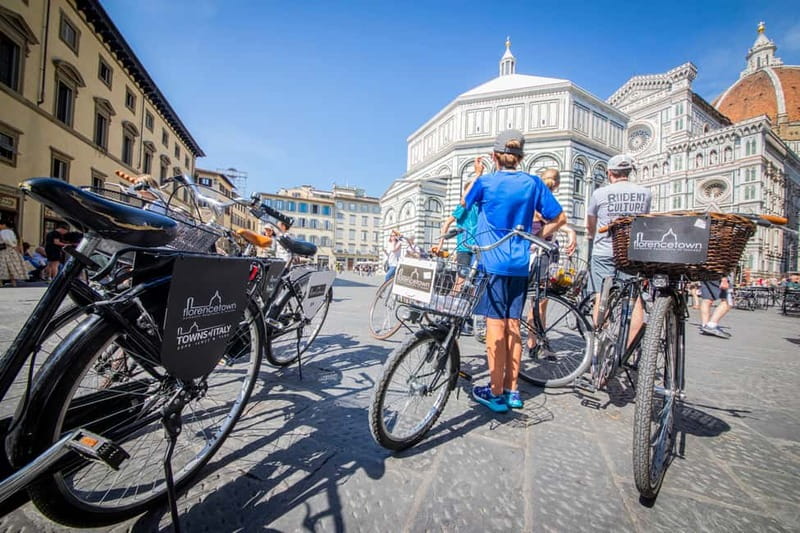
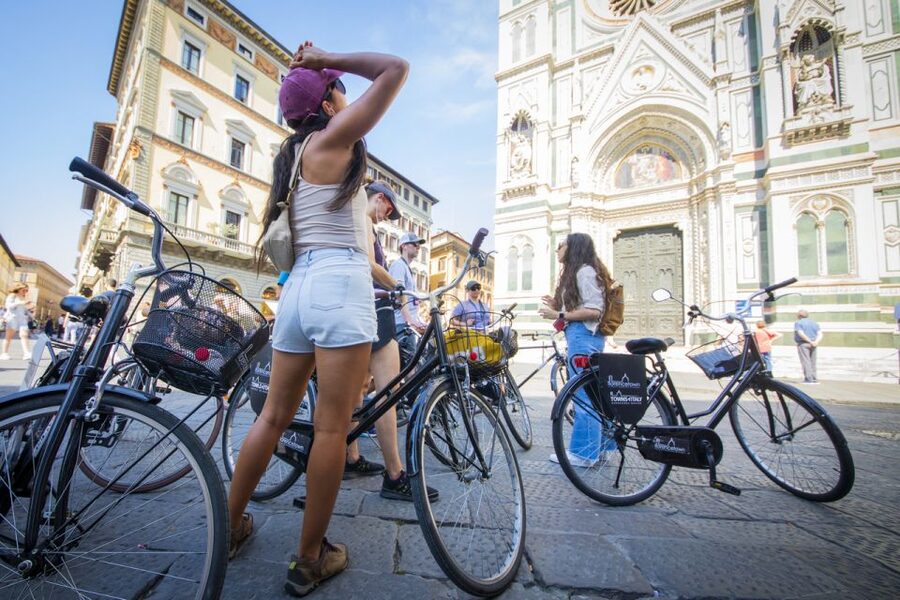
Florence is compact, but its famous sights are spread across a busy historic center. This two-hour bike tour lets you cover the Duomo, Piazza della Signoria, Santa Croce, Santa Maria Novella, and Pitti Palace without spending the whole day on foot. I like the old-fashioned Graziella bikes, which add Italian character, and I like the local guides, especially Lorenzo, Thomas, and Giacinta, who bring the streets and buildings to life with useful stories and good city tips.
The main caution is traffic and uneven paving. You need normal bike skills, and you’ll ride among pedestrians, other cyclists, and occasional cars. The route is flat and gentle, but crowded streets and cobblestones require attention.
Key points to know
- A fast first look at Florence: Cover major sights in two hours, making this a smart first-day activity.
- Classic Graziella bikes: The lightweight vintage-style bikes are easy to ride and part of the fun.
- Local guides add real value: Guides such as Lorenzo, Thomas, Giacinta, and Sara explain art, architecture, local life, and odd historical details.
- Flat but not traffic-free: The route avoids demanding climbs, but you still need to handle crowds, cobbles, and city riding.
- Good for families: Child seats, trailers, and tandems are available for different age groups.
- Flexible upgrades: A private guide gives you more personal attention, while an English shared e-bike option is available from 2026 for riders aged 15 and older.
Why a bike is useful in central Florence
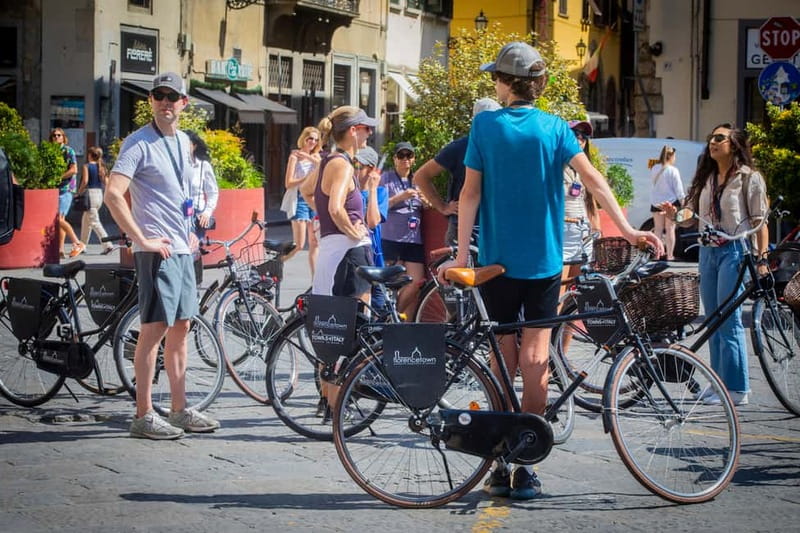
Florence is small enough to walk, but a bike changes the rhythm of the visit. You can move from Santa Croce to the Duomo, then cross toward the Arno and reach Pitti Palace without burning several hours on pavement.
I like this tour best as an introduction to the city. You see the major landmarks, learn how the center fits together, and collect ideas for places to return to later. A guide can point out a side street, square, museum, restaurant area, or architectural detail that you might miss while following a map.
The two-hour format also works well when your time is tight. It is long enough to give you a useful overview, but short enough to fit around museum reservations or an afternoon train. You should not confuse it with a museum tour. The stops are for views, photos, and explanation. Entry to the Duomo complex, churches, palaces, and museums is not included.
More Small-Group Bike Tours in Italy
- Florence Vintage Bike Tour–guided, small group or private option
★ 4.5 · 524 reviews - Florence Small Group Electric Bike City Tour
★ 4.0 · 324 reviews - Florence: Untold Small Group Bike Tour
★ 4.8 · 80 reviews
The Graziella bike and how the ride feels
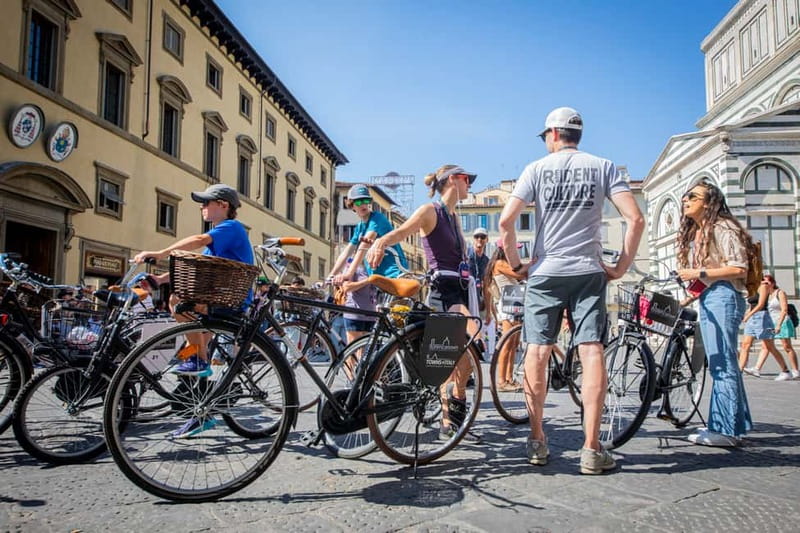
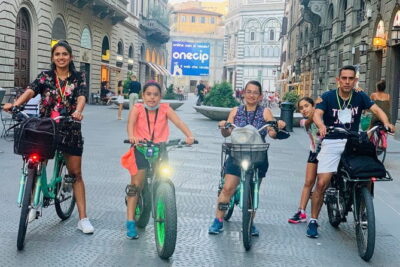
The standard bicycle is a classic Italian Graziella, a small, practical city bike with a vintage look. The bikes are described as lightweight and easy to ride, and several riders found them comfortable and in good condition.
The route itself is not strenuous. It stays flat, and the guide keeps the pace relaxed. That makes the tour suitable for many casual cyclists and for families with older children. You do not need racing-bike fitness.
You do need basic control. Florence’s center can be crowded, especially around the Duomo, Piazza della Signoria, and other major squares. Cobblestones and uneven paving can also make the ride bumpy. One rider fell when a bicycle caught on uneven stones, so keep your speed modest and do not hurry to close a gap. The guide will wait.
Helmets and insurance are included. Some rides use audio equipment so you can hear the guide while moving, though one rider found the earpiece difficult to keep in place over rough paving. At stops, you may hear better by gathering close to the guide rather than standing at the edge of a busy square.
Santa Croce begins the city story
The tour starts near Via dei Vagellai, with the exact meeting point depending on your booking. From March 2026, the meeting point is scheduled to move to Via della Mosca 10/r in Florence, so check the current confirmation before setting out.
The first major stop is Piazza di Santa Croce. The square is anchored by the Basilica of Santa Croce, one of Florence’s most important churches and a landmark tied to famous Florentine figures. From the bike, you get an exterior introduction rather than a church visit.
This is a good opening stop because it feels more spacious than some of the tight streets closer to the Duomo. Your guide can explain the square, the church front, and the role of this part of the city before the group moves into denser traffic.
Piazza della Signoria puts art in the street
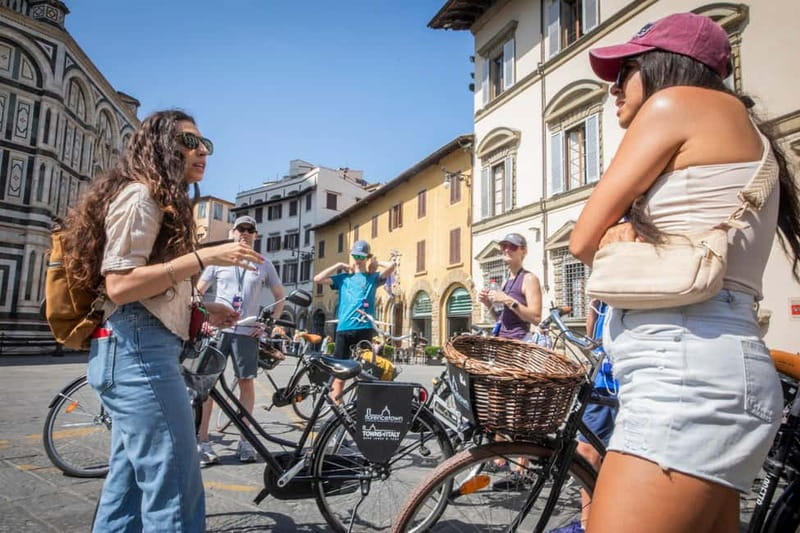
Next comes Piazza della Signoria, one of Florence’s best outdoor displays of sculpture and architecture. The Palazzo Vecchio gives the square its strong medieval and civic character, while the surrounding statues make the area feel like an open-air art room.
The tour allows about 20 minutes here, including cycling and a photo stop. That is enough time to understand the setting and take pictures, but not enough for a careful look at every sculpture. If you want detailed art interpretation, plan to return on foot.
This stop also shows the tradeoff of seeing Florence by bike. The square is easy to reach, but it is often crowded. You may need to dismount or move slowly near pedestrians. Your guide’s job is partly historical and partly practical, helping the group cross and regroup safely.
More Small-Group Bike Tours in Florence:
- Small Group Guided Bike Tour of Amsterdam’s Hidden Gems
★ 5.0 · 3,936 reviews - Rome City Small Group Bike Tour with quality Cannondale EBike
★ 5.0 · 1,380 reviews - Complete Cracow Bike Tour (small group of maximum 15 people!)
★ 5.0 · 1,322 reviews - Rome by Night – Ebike Small Group Tour – Food and Wine (Option)
★ 5.0 · 1,275 reviews
Piazza della Repubblica gives you a change of scale
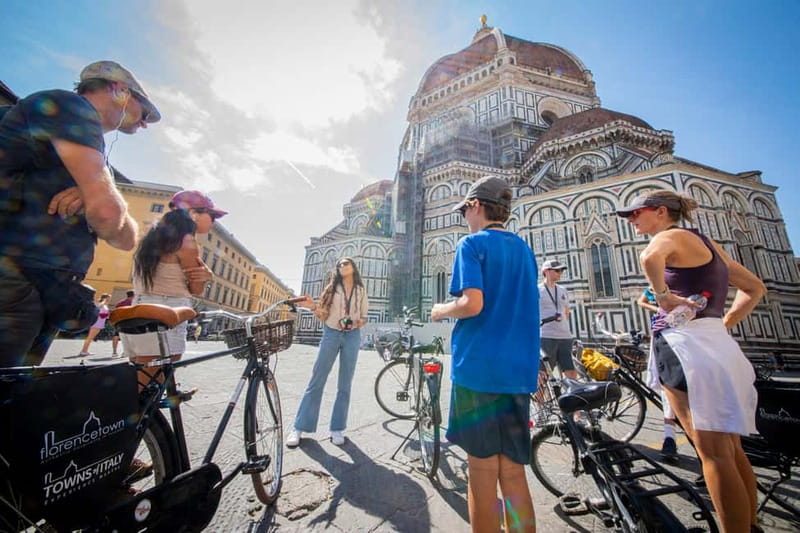
Piazza della Repubblica is a broad, open square with a different feel from the older, tighter lanes. It gives you room to look around, take photos, and listen without being pressed against a church wall or surrounded by narrow streets.
The stop is brief, about 10 minutes as part of the cycling route. That suits the tour’s purpose. You are getting an orientation, not a long lecture at every location.
I find stops like this useful because they help you understand Florence as a working city, not only a collection of famous monuments. The guide can connect the square to the city’s changing streets, public spaces, and daily life.
The Duomo is the visual centerpiece
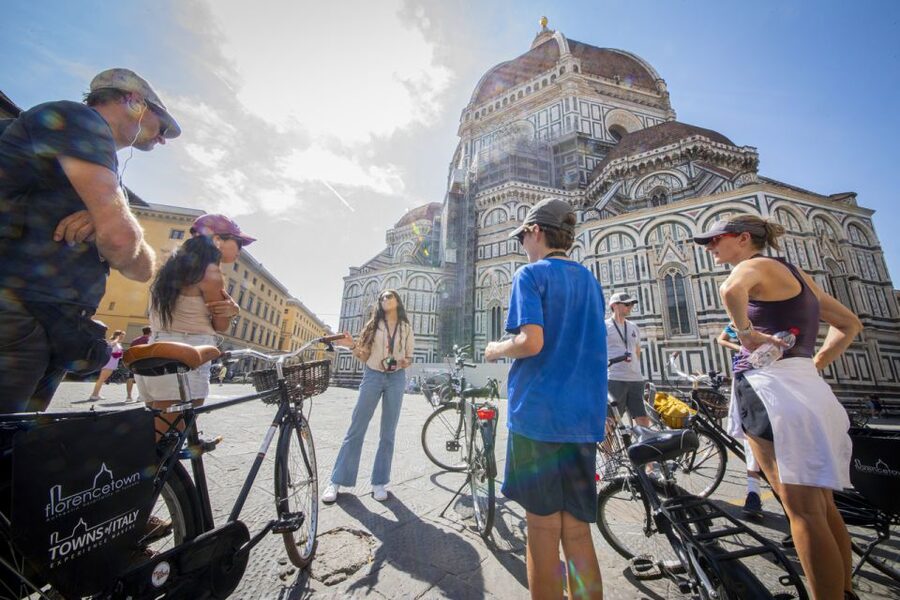
The Florence Duomo complex is the tour’s biggest landmark stop. The cathedral, dome, bell tower, and baptistery area create one of the most memorable views in the city.
You will stop outside for photos and commentary. The tour does not include entry, and there is no time to climb the dome or visit the interior. That is not a flaw, but you should plan separately if those are priorities. Timed admission for the complex can sell out, especially during busy periods.
The bike is useful here because the guide can bring you close to the action without requiring a long walk from a distant starting point. The downside is noise. The area is crowded, and it can be hard to hear every word. Stay close during the explanation, then take your photos once the group is positioned.
Santa Maria Novella adds a quieter architectural stop
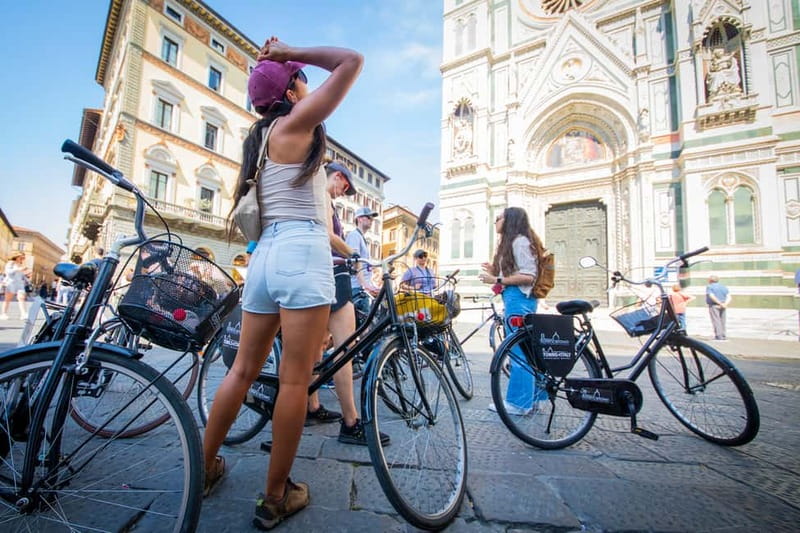
The route continues to the Basilica of Santa Maria Novella. This church is near the main railway station, but its square can feel calmer and more balanced than the packed area around the Duomo.
You will see the exterior and hear about its place in Florence’s religious and artistic story. Again, this is not an interior visit. The short stop works well for photography and for learning how the city’s major churches relate to one another.
If you are arriving or leaving Florence by train, this stop also helps you get your bearings. You will know exactly where the station district sits in relation to the historic center.
Santa Trinita leads you toward the river
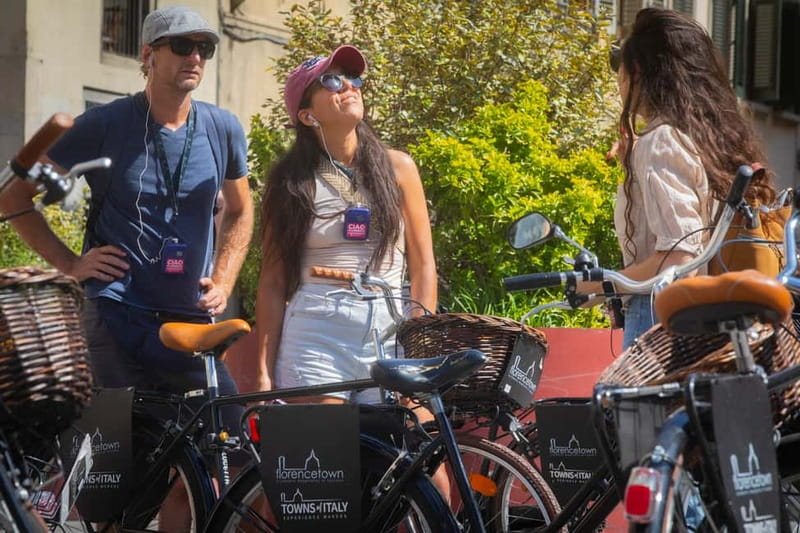
Piazza Santa Trinita sits along the route toward the Arno and the Oltrarno district. The square is a useful transition point, connecting the dense central streets with the bridges and palaces beyond.
The tour gives you another short photo and explanation stop here. The value is not simply the square itself. It is the way the guide links the city’s main quarters, helping you understand the route instead of seeing each landmark as an isolated postcard.
This part of the ride can also feel busier, so follow the guide’s signals and avoid riding side by side. The group may need to pause while pedestrians cross or while the guide finds a safe place to gather.
Pitti Palace and the final stretch across the Arno
Pitti Palace is the final major stop. Located on the Oltrarno side of the river, it gives the tour a broader reach than a route limited to the cathedral district.
You see the palace from outside and hear about its role in Florence. The stop does not include museum admission, so save the palace interiors and collections for another visit if you want them.
Reaching Pitti Palace by bicycle is one of the tour’s practical advantages. On foot, crossing from the Duomo area to this side of the river takes time, especially when you stop for photos. By bike, the route feels more connected.
The tour then returns to the starting area near Via dei Vagellai, with the exact drop-off point depending on the option booked. You finish with a clearer mental map of Florence and a list of places worth revisiting.
Guides are the heart of the experience
The strongest part of this tour is the guide. The company has been running tours for about 20 years, and the staff’s local knowledge comes through in the range of commentary. Lorenzo is repeatedly praised for his clear English, warmth, and understanding of Florence. Thomas, who grew up in the city, is noted for knowing the streets and local stories especially well.
Other guides, including Giacinta, Sara, Gloria, and Jasinta, have been described as patient, engaging, and good at answering questions. Some guides suggest restaurants, museums, gelato stops, and less obvious places to add to your plans.
The tone is not a formal academic lecture. You get historical facts, art and architecture, local customs, and amusing details while moving from place to place. That mix suits a short city orientation.
Group size can affect the experience. The tour is advertised as small-group, and private bookings are available. A past group of 20 was harder to manage, even with an excellent guide. If you want easy conversation, more questions, or a slower photo pace, choose the private option if your budget allows.
Families, children, and e-bike options
This tour is designed for a range of ages. Standard adult bikes are available, along with child seats for children from age 0 to 5, bike trailers for ages 6 to 8, and tandem bikes for children age 9 and older riding with an adult.
A family group with children aged 9, 12, and 14 found the flat route manageable and enjoyable. The short stops help prevent the ride from feeling like a long physical workout. A gelato break has also been part of some outings, though food and snacks are not officially included, so treat that as guide-dependent rather than guaranteed.
From 2026, an e-bike option is available on English shared tours. The minimum age is 15, with no exceptions. This is useful if you want to reduce effort, but it does not remove the need for bike control in crowded streets.
The activity is not recommended for pregnant women or people with mobility impairments. If you have mobility, visual, hearing, or cognitive needs, contact the booking office before reserving. A private format may allow the team to suggest a more suitable arrangement.
Weather, heat, and the practical details
The tour runs rain or shine. In bad weather, it changes to a walking tour, so bring footwear suitable for both options. A past rainy-day group still received a private walking experience, and the guide adapted well.
Summer heat is another factor. July and August can be hot, although guides may keep you in shade where possible. Start with water, wear light clothing, and use sunscreen. The route includes regular stops, which makes it easier than continuous cycling, but you are still outdoors for two hours.
English and Spanish-speaking guide options depend on the booking you select, while the e-bike option is listed for English tours only. Confirm your language, meeting point, bike type, and group format before paying.
The price is about $41 per person. That is fair value if you want transport between major sights, a helmet, insurance, a bike, and a guide who can turn a simple ride into a city lesson. It is less useful if you prefer slow museum visits or already know Florence well.
Free cancellation is available up to 24 hours before the start time, and you can reserve now and pay later. Those terms help if your schedule is still shifting.
Who should book this Florence bike tour?
I would choose this tour for a first or second day in Florence. It helps you get your bearings quickly, saves your feet, and gives you enough historical context to decide where to spend more time afterward.
It is especially suited to couples, families with bike-capable children, solo visitors who want a social activity, and anyone who finds a walking tour too slow. It also suits travelers with only a short stay.
I would skip it if you dislike city cycling, have trouble balancing on uneven surfaces, or want long interior visits. In that case, a walking tour or museum-focused plan may suit you better.
Should you book it?
Book it if you want a cheerful, efficient introduction to Florence and are comfortable riding around crowds. The flat route, strong local guides, vintage bikes, and broad list of sights make $41 a reasonable price.
For the best experience, book early in your stay, stay close to the guide, ride slowly over cobbles, and treat the tour as an orientation rather than a substitute for museums. Choose private if personal attention matters, and choose the English e-bike option from 2026 only if every rider is at least 15.
FAQ
How long is the Florence bike tour?
The tour lasts two hours, including cycling, explanations, and photo stops.
What sights does the route include?
The route includes Piazza di Santa Croce, Piazza della Signoria, Piazza della Repubblica, the Florence Duomo complex, Basilica of Santa Maria Novella, Piazza Santa Trinita, and Pitti Palace.
Are museum and monument entrances included?
No. The tour visits the exteriors only. Entry to museums, churches, palaces, and monument interiors is not included.
Are bikes and helmets provided?
Yes. A classic Graziella bike and helmet are included. Child seats, trailers, and tandem bikes are available for the stated age groups.
Can I choose an e-bike?
From 2026, an e-bike option is available on English shared tours for riders aged 15 and older. The minimum age is 15, with no exceptions.
What happens if it rains?
The tour runs in all weather. If conditions are unsuitable for cycling, it changes to a walking tour.
New cycling reviews around Florence
- Private Secrets of Florence Electric Bike Tour★ 4.9 · 49 reviews
- From Florence: Tuscan Hills Biking with Farm Tour and Lunch★ 4.9 · 32 reviews
- Tuscany Hills Bike Tour with Lunch at farm and Wine Tasting★ 4.9 · 18 reviews
- Florence: Untold Small Group Bike Tour★ 4.8 · 80 reviews
- Florence Premium E-Bike Tour + Photo Shoot and Tastings★ 5.0 · 34 reviews
- Florence Medici Bike Tour – Cycle Through History and Power★ 4.2 · 23 reviews
- Florence: Tuscany Bike Tour with Wine & Olive Oil★ 4.9 · 174 reviews
- Florence: E-Bike Tour with Olive Oil in the Tuscan Hills★ 4.8 · 134 reviews
Florence Cycling Tours, compared.
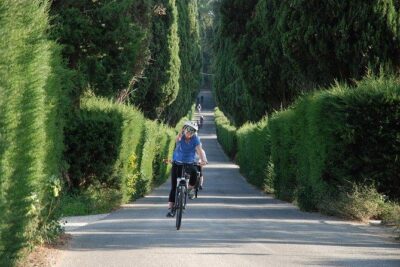
Tuscany Bike Tours Through the Chianti Hills with Wine Tasting
Read our review →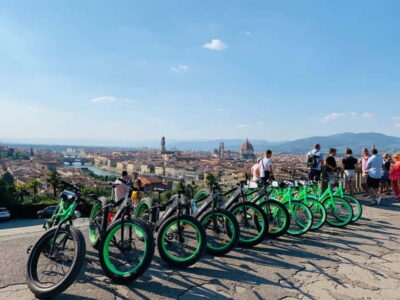
Florence: Guided E-Bike Tour to Piazzale Michelangelo
Read our review →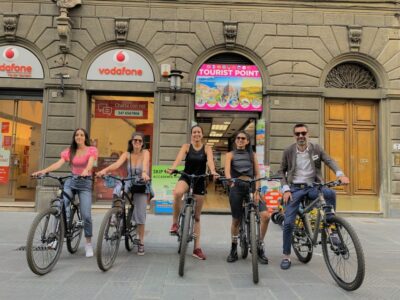
Florence: 2-Hour Guided Sightseeing Bike Tour
Read our review →
Private Self-Guided E-Bike Ride in Tuscany with Vineyard Visit
Read our review →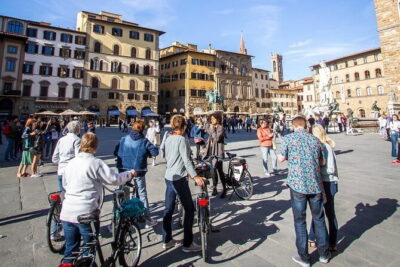
Florence Vintage Bike Tour–guided, small group or private option
Read our review →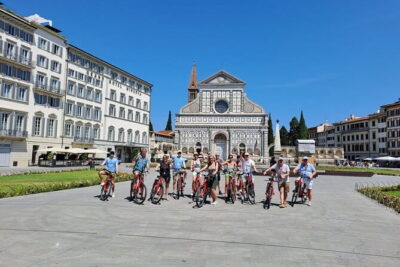
Browse the lists this ride appears in