Review · AMSTERDAM
From Amsterdam: Countryside Bike Tour
The best thing about this tour is how quickly Amsterdam gives way to open fields and quiet villages. After a short ferry ride across the IJ, you are pedaling through Waterland, where dikes, canals, grazing animals, and old farmhouses show how much work it takes to keep the Netherlands dry. Holysloot’s apple pie and the final stop at Holland’s last chalk windmill add plenty of charm.
I like the flat, easy route and the small-group size, which makes it simple to hear the guide and ask questions. I also like that the ride is more than pretty scenery: guides such as William, Pierce, Joris, and Astrid explain water management, farming, village life, and the old windmill trade as you go.
The one point to take seriously is the distance. This is a leisurely ride, but it covers about 18 miles, or 30 kilometers, in four hours. You do not need to be a strong cyclist, but you should be comfortable on a bike and ready for some saddle soreness.
Key points to know before you book
- Ferry into Waterland: Begin by crossing the IJ from Amsterdam, then leave the city behind almost at once.
- About 18 flat miles: The route is gentle, but the distance still requires basic cycling stamina.
- Holysloot apple pie stop: Pause at a small village restaurant for coffee, tea, and the much-loved homemade pie.
- Ransdorp’s unusual church tower: See the former Waterland capital and its distinctive flat-topped tower.
- Holland’s last chalk windmill: Finish with a look at an unusual survivor of the country’s old mill industry.
- Small English-speaking groups: Groups are limited to 12, with helmets available if you request one.
Leaving Amsterdam by ferry and bicycle
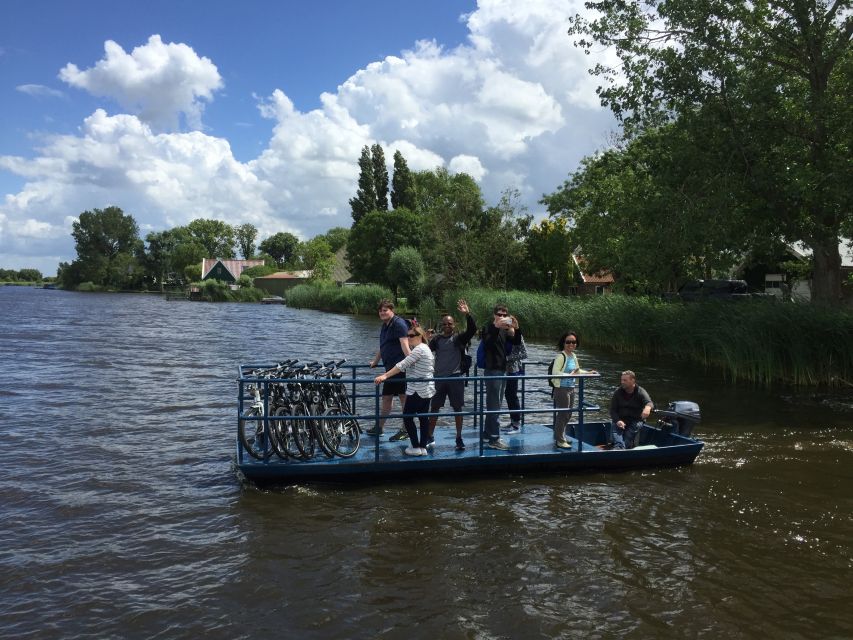
This tour starts in central Amsterdam, but its real character begins on the other side of the IJ. You take the ferry with your bicycle, a useful little transition from city streets to the quieter world north of Amsterdam.
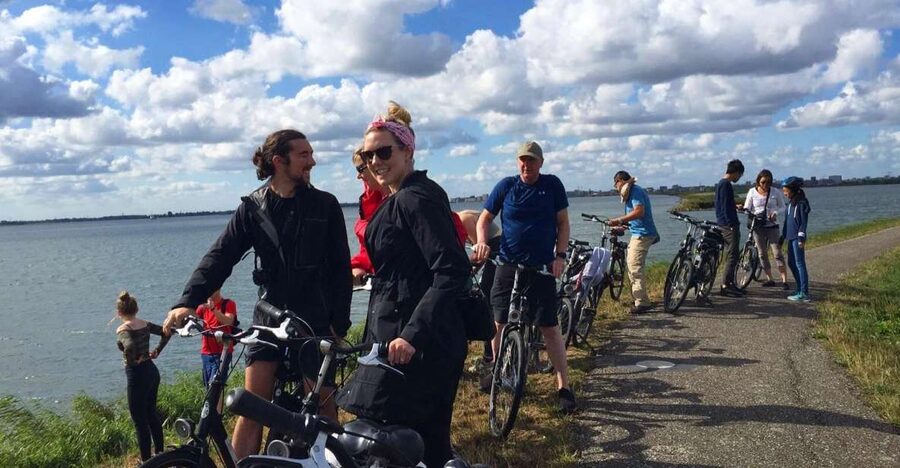
The crossing also gives you a quick look at the city from the water. Once you reach the far side, the route heads onto dams and dikes, with the guide setting a relaxed pace and keeping the group together. You will still have to pay attention around roads and other riders, but this is not a race or a demanding sport ride.
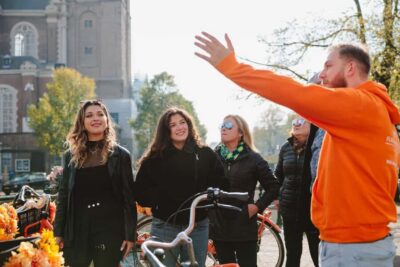
The groups are capped at 12 people. That matters here. A cycling tour can become frustrating when the group stretches out and the guide’s explanations disappear into the wind. The smaller size allows for regular stops, questions, and a more personal feel. Guides including William, Pierce, Joris, Astrid, Sipko, and Sen have been praised for keeping the pace comfortable and checking that everyone is doing well.
Your bike is included, and a helmet is available if requested. The bicycles have been described as sturdy and comfortable, though comfort on a bike is personal. If you have not cycled recently, you may want to ask for the helmet and take the distance seriously.
More Countryside Cycling Tours in Amsterdam
- Countryside Bike Tour from Amsterdam: Cheese, Clogs & a Windmill
★ 5.0 · 1,485 reviews - Amsterdam: Windmill, Cheese, and Countryside E-Bike Tour
★ 4.5 · 1,308 reviews - Cheese, Canals & Windmill Countryside E-Bike Tour Amsterdam
★ 5.0 · 501 reviews
Waterland’s dikes explain the Dutch countryside
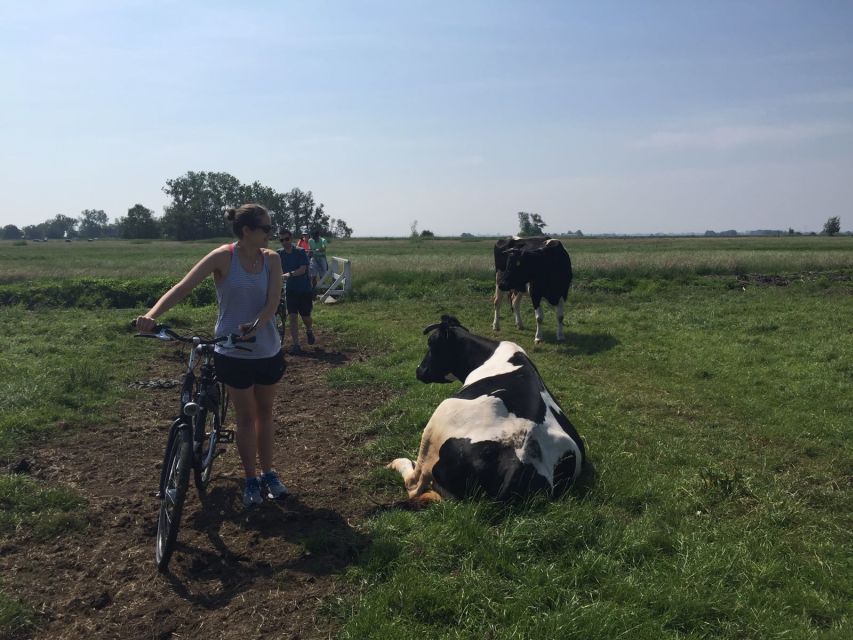
The ride through Waterland is the main event, not simply a trip between named stops. The countryside is broad and open, with fields, canals, waterways, and grazing cows, sheep, and horses. You pass old fishermen’s villages, farming communities, garden homes, and small roads where the quiet feels far removed from Amsterdam.
The scenery is attractive, but the guide’s explanation gives it meaning. Much of this ground depends on dikes, embankments, drainage channels, and careful water control. As you pedal along, you learn how Dutch communities have worked to keep their homes and fields dry for centuries.
This is one of the strongest reasons to choose the countryside route instead of a city cycling tour. Amsterdam’s canals are famous, but Waterland shows the larger Dutch engineering problem. Here, water management is not just an old story on a museum sign. It shapes the roads, fields, villages, and daily life around you.
Guides have also discussed current environmental concerns, including the pressure that climate change places on the Netherlands. The ride gives you a practical view of the subject. You see the embankments beneath your wheels and the low farmland on both sides, rather than hearing a general lecture in a classroom.
The route is flat almost throughout. That makes the mileage manageable for many casual cyclists, and several stops break up the ride. Still, flat does not mean effortless. You may find your legs and sitting bones notice the distance before the route ends, especially if you rarely ride.
Holysloot brings the best halfway break
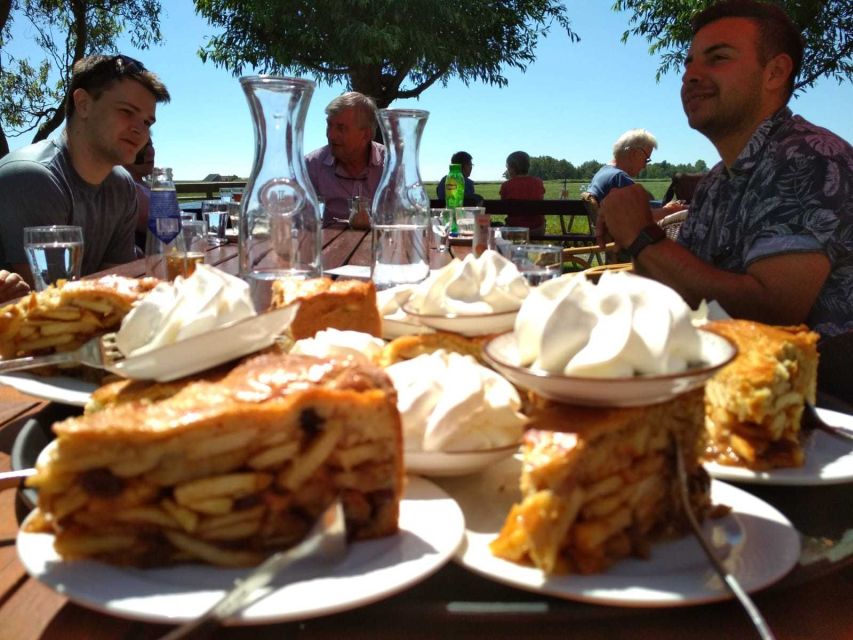
Around the middle of the tour, you stop in Holysloot, a tiny village surrounded by farmland. The setting is the opposite of central Amsterdam: quiet, compact, and peaceful, with time to sit down and catch your breath.
The usual treat is coffee or tea with homemade apple pie. Food and drinks are not included in the tour price, so bring a payment method and expect to pay for your order. The pie has become one of the tour’s most memorable details, and it makes practical sense too. After several miles of cycling, a warm drink and a sweet snack are welcome fuel.
This stop is also your best chance to speak with the guide. Ask about the villages, the drainage system, farming, or anything you have noticed along the route. Guides often use the break to talk with people one on one, which is easier in a group of 12 than on a large coach outing.
Do not treat the café stop as a full meal. The information describes a coffee break, and the main focus remains the cycling. If you need a substantial lunch, eat beforehand or plan for food after the tour.
The village setting is part of the appeal. You are not stopping at a generic roadside café. You are pausing in a small Waterland community, surrounded by the kind of farmland that most Amsterdam visitors never see.
Ransdorp and its flat church tower
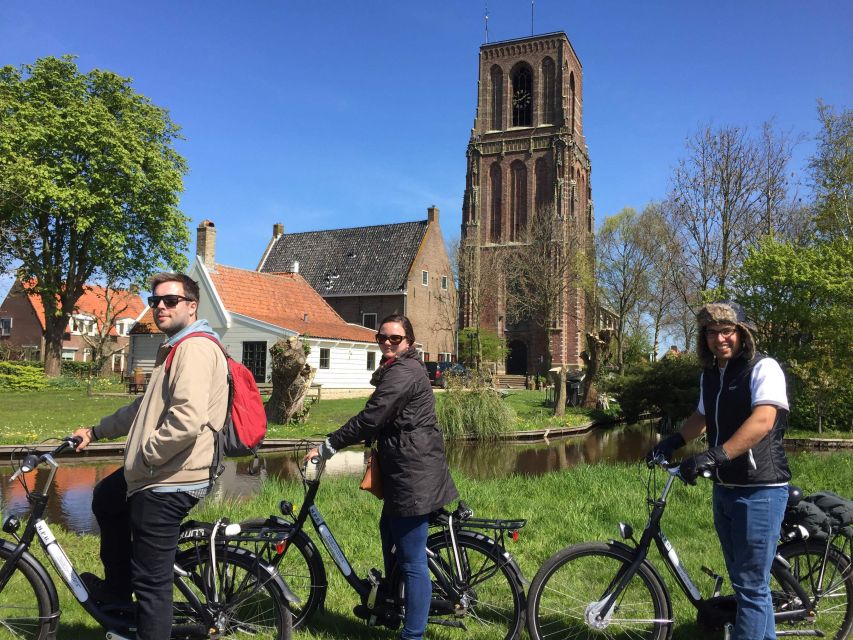
After Holysloot, the route continues to Ransdorp. This former capital of the Waterland region is best known for its unusual church tower, which has a flat top rather than the pointed shape many people expect.
The stop gives the guide another chance to connect architecture with local history. Ransdorp is small, so the pleasure comes from seeing the village in context, not from spending hours at a long list of attractions. You cycle in, look around, hear the story, and continue through the surrounding fields.
This rhythm suits the tour. You are not rushing from one major sight to another, and you are not spending the whole day in the saddle without context. The repeated pattern of riding, stopping, listening, and riding again keeps the four hours balanced.
The route also includes chances to see farm animals and take photographs. One practical point: the group may not stop every time an animal appears. If photographing cows, sheep, or horses is a priority, ask the guide at a suitable stopping point rather than expecting an unscheduled pause beside every field.
More Countryside Cycling Tours in the Netherlands
- Amsterdam’s Countryside Half-Day Bike Tour in Small Group
★ 5.0 · 460 reviews - Amsterdam: Cheese Tasting, Windmill & Countryside Bike Tour
★ 4.7 · 386 reviews - Amsterdam: Countryside Bike Tour and Zaanse Schans Windmills
★ 4.9 · 152 reviews - Amsterdam: Dutch Countryside E-Bike with Cheese & Clogs
★ 4.9 · 95 reviews
Holland’s last chalk windmill
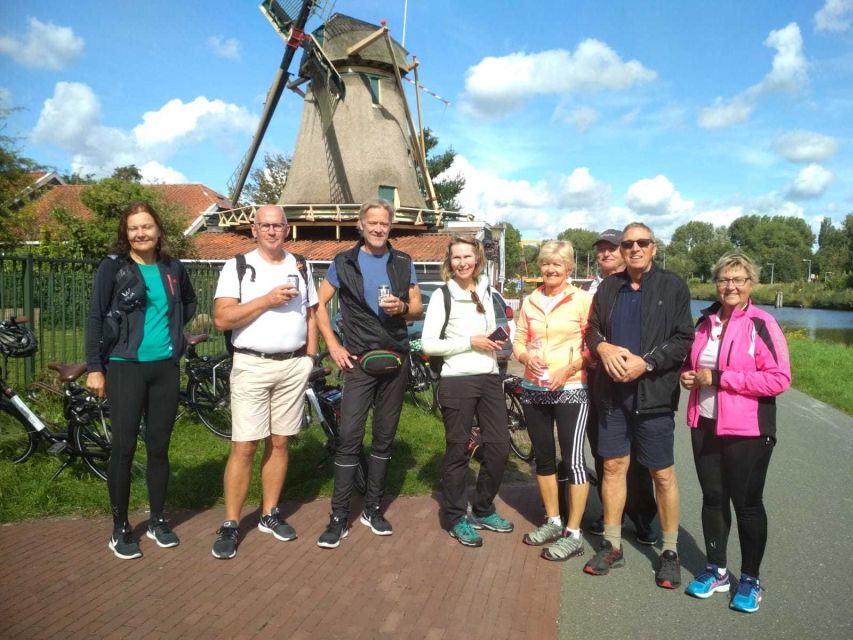
On the way back toward Amsterdam, you stop at Holland’s last chalk windmill. This is more than a standard windmill photo stop. The guide explains how mills worked and how the windmill industry supported Holland during the 17th and 18th centuries.
The mill helps tie together the tour’s main ideas. Water control, farming, local industry, and wind power all shaped this region. You get a chance to see the structure, learn about its function, and take photographs before the final ride back.
Wind conditions can affect what you see. One person was fortunate to see the windmill turning, but the mill may not be operating during every visit. The stop remains worthwhile for its history and appearance, but do not book the tour solely for a working-mill demonstration.
After leaving the mill, you cycle back toward Amsterdam and return to the starting area. The tour lasts four hours, so the timing works well as a half-day activity rather than a full-day commitment. You still have the rest of the day for museums, canals, or an evening meal.
What the $47 price really includes
At about $47 per person, the tour offers reasonable value if you want a guided introduction to the countryside without arranging bikes, a route, and transport yourself. The price includes the bicycle and guide, and the ferry crossing is part of the route. A helmet is available on request.
The main value is not simply the rental bike. You are paying for a planned 18-mile route, local interpretation, group leadership, and a way to reach villages that would be awkward to visit on foot from Amsterdam. The guide also handles the route while you focus on cycling and scenery.
Food and drinks cost extra. The Holysloot stop is a small added expense, but it is easy to budget for. You should also consider the value of your time. A self-guided ride might cost less in some cases, but you would need to find the route, understand the waterways, manage the ferry connection, and provide your own context.
The high rating of 4.9 from 200 reviews reflects very strong satisfaction, but I would not let that number replace the practical details. The tour suits people who want a real ride. It is not a short photo outing with a few minutes of pedaling.
Weather, fitness, and the small details that matter
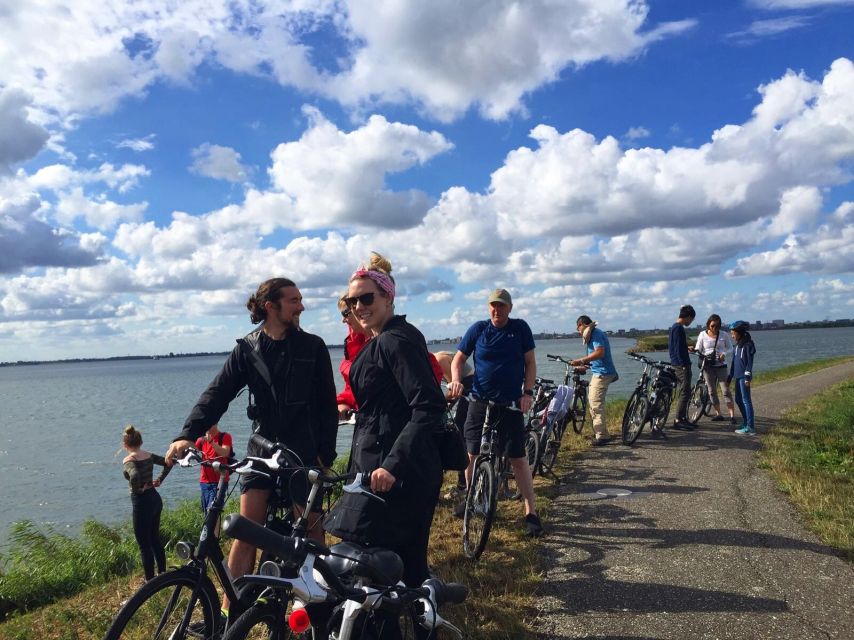
The tour runs rain or shine. That makes weather planning important. Bring clothing suitable for the forecast and be ready for wind or rain in the open countryside. One past ride took place in intermittent rain, yet the countryside and warm café stop still made the outing worthwhile. Even so, poor weather can change the comfort of a four-hour bike ride.
You must be able to ride a bike. The route is flat and described as leisurely, with regular short rests, so hills are not the problem. Distance is the issue. If you cycle now and then, the route should feel manageable at an easy pace. If you have not ridden in years, you may regain your balance quickly but still feel tired by the end.
Several families and groups with teenagers found the ride a highlight of their time in Amsterdam. The format also works for adults who want exercise and fresh air without a hard workout. It may be less suitable if someone in your party cannot ride, dislikes open-air activity, or wants a flexible schedule with many indoor stops.
Cyclists who are used to city bikes may find the route comfortable. If you are not a regular cyclist, padded clothing is not essential, but practical clothing helps. The exact bike setup is not detailed, so ask the operator about fit if you have particular needs.
Parking near the meeting point is very limited and paid. Taking a taxi or ride service may be easier than arriving by car. This is a useful point to plan before the morning of the tour.
The guide can shape the whole experience
The scenery is good, but the guide makes the ride work. A strong guide keeps the group together, explains what you are seeing without stopping too often, and notices when someone needs a break.
William has been praised for his humor, safety awareness, and enthusiasm for the area. Pierce has been described as engaging and good at checking the pace. Joris, Astrid, Sipko, Sen, and others have also led rides with a relaxed style and clear explanations. Guides can vary by date, so you should not book expecting one specific person unless the operator confirms it.
The best guiding moments come when the history stays tied to the road. You may hear about Amsterdam’s canal system, the Waterland villages, farming, dikes, and the problems of living below or near water. That context makes the ride feel like a lesson in how the Netherlands works, without turning it into a formal class.
Small groups help here. The guide can answer questions, take a photograph during a stop, and adjust the pace within reason. One guide even adjusted the route based on what the group wanted to see. That flexibility is useful, though the main route and total distance still need to be respected.
Who should book this countryside bike tour?
I would choose this tour if you have at least half a day in Amsterdam and want a clear change from the city. It is especially good for:
- First-time visitors who want to see more than central Amsterdam
- Casual cyclists comfortable with a flat 18-mile ride
- Families with older children or teenagers who can ride confidently
- Anyone interested in Dutch water management and rural life
- People who like small groups and live storytelling
- Visitors who want fresh air, farm scenery, and a relaxed café stop
I would think twice if you want a short, effortless ride. Four hours and 30 kilometers is a real outing, even at an easy pace. I would also skip it if rain would ruin your day, since the tour operates in all weather.
Should you book the Amsterdam countryside bike tour?
Book it if your idea of a good Amsterdam day includes leaving the city, riding beside dikes, seeing cows and quiet villages, and learning why water control matters so much here. The apple pie in Holysloot is a pleasant bonus, while Ransdorp and the chalk windmill give the route memorable stops.
The decision comes down to the distance. The terrain is flat, the pace is gentle, and guides make regular stops, but 18 miles still requires basic fitness. If you can handle that, the $47 price is fair for the bike, ferry route, guide, and carefully planned half-day in Waterland.
FAQ
How long is the Amsterdam countryside bike tour?
The tour lasts four hours and covers approximately 18 miles, or 30 kilometers.
Is the cycling route difficult?
The route is flat and described as leisurely, with short rest stops along the way. You still need to be comfortable riding a bike for several hours.
What places do you visit?
The route includes Waterland’s countryside, old fishermen’s villages, farmer towns, Holysloot, Ransdorp, and Holland’s last chalk windmill.
Is food included in the price?
No. Food and drinks are not included, but the tour stops in Holysloot for coffee or tea and homemade apple pie.
Is a helmet provided?
A helmet is available if requested. The bicycle is included in the tour price.
What happens if it rains?
The tour runs rain or shine. You should dress for the forecast and be prepared to cycle outdoors for four hours.
New cycling reviews around Amsterdam
- Rent a bike in Amsterdam | 1, 2, 3+ hours★ 4.5 · 68 reviews
- Private Amsterdam Bike Tour with a Local★ 4.2 · 22 reviews
- Amsterdam: Waterland District Countryside Villages Bike Tour★ 4.7 · 67 reviews
- Amsterdam: Zaanse Schans Windmills & Zaandam E-Bike Tour★ 4.9 · 162 reviews
- Amsterdam: Guided Sightseeing Bike Tour★ 4.7 · 80 reviews
- Amsterdam: Private City Bike Tour in italian★ 4.7 · 34 reviews
- Amsterdam: Dutch Countryside E-Bike with Cheese & Clogs★ 4.9 · 95 reviews
- Amsterdam: Explore the City Highlights by Bike★ 4.8 · 160 reviews
Amsterdam Cycling Tours, compared.
Big Bike tour Amsterdam – See all in 3 unforgettable hours
Read our review →
Small Group Guided Bike Tour of Amsterdam’s Hidden Gems
Read our review →
Amsterdam: Off the Beaten Path Bike Tour in French
Read our review →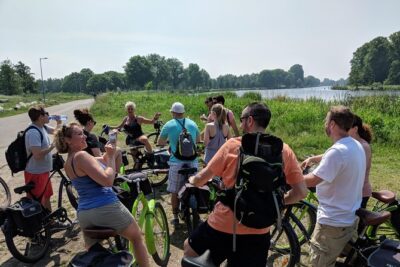
Countryside Bike Tour from Amsterdam: Cheese, Clogs & a Windmill
Read our review →
Amsterdam: Hidden Gems & Highlights Guided Bike Tour
Read our review →
Amsterdam: Relaxed City Highlights Guided Bike Tour
Read our review →