
Review · THE WORLD
From La Paz: The World’s Most Dangerous Road Biking Tour
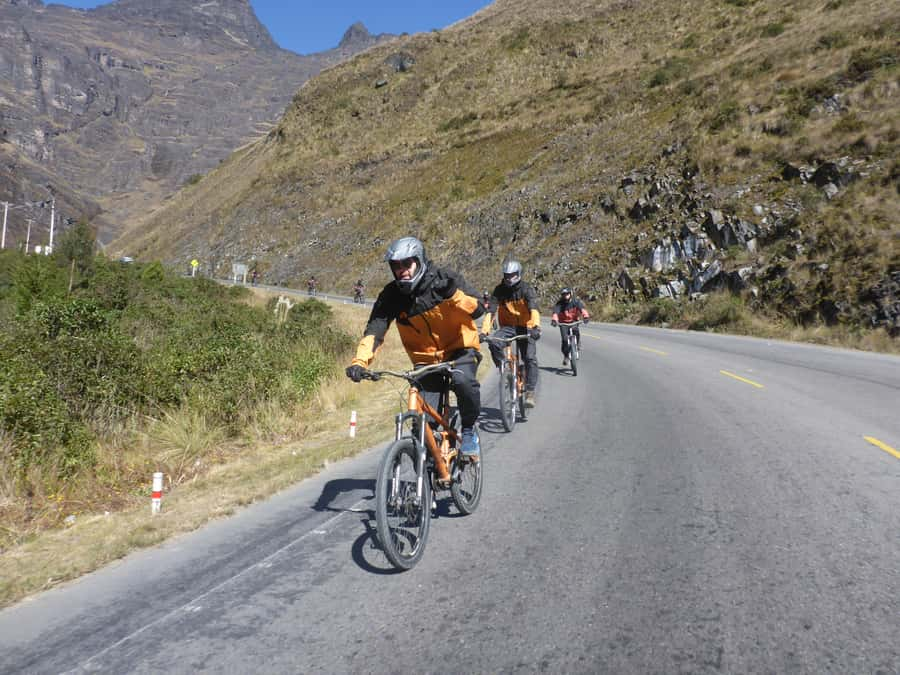
The most striking part of this day is the fast change in scenery. You leave the cold, high Andes at 4,700 meters and finish near the Bolivian Amazon at 1,200 meters, riding from snow peaks through misty forest, waterfalls, and warm jungle air.
I like the careful guide support and the excellent finish: a buffet lunch, shower, and swimming pool after 64 kilometers on a dirty bike. I also like that the guides let confident riders move at their own pace while still keeping a close eye on the group. The main drawback is the long vehicle time, especially the roughly three-hour ride back to La Paz, and this is not a gentle bike outing.
- 4,700-meter start: Begin at Cristo de la Cumbre among cold air and snow-covered peaks.
- 64 kilometers downhill: Most of the route descends, but rough dirt, wet surfaces, and exposure still demand care.
- Real Death Road section: The ride changes from pavement to a narrow, misty dirt road at Chuspipata.
- Strong guide support: English and Spanish speaking guides handle safety briefings, bike checks, repairs, and first aid.
- Comfortable finish: Buffet lunch, showers, swimming pool, and time to relax are included.
- Bring more than courage: Warm clothes, swimwear, sunscreen, insect repellent, cash, and dry clothes all matter.
From Snow Peaks to Hot Jungle in One Day
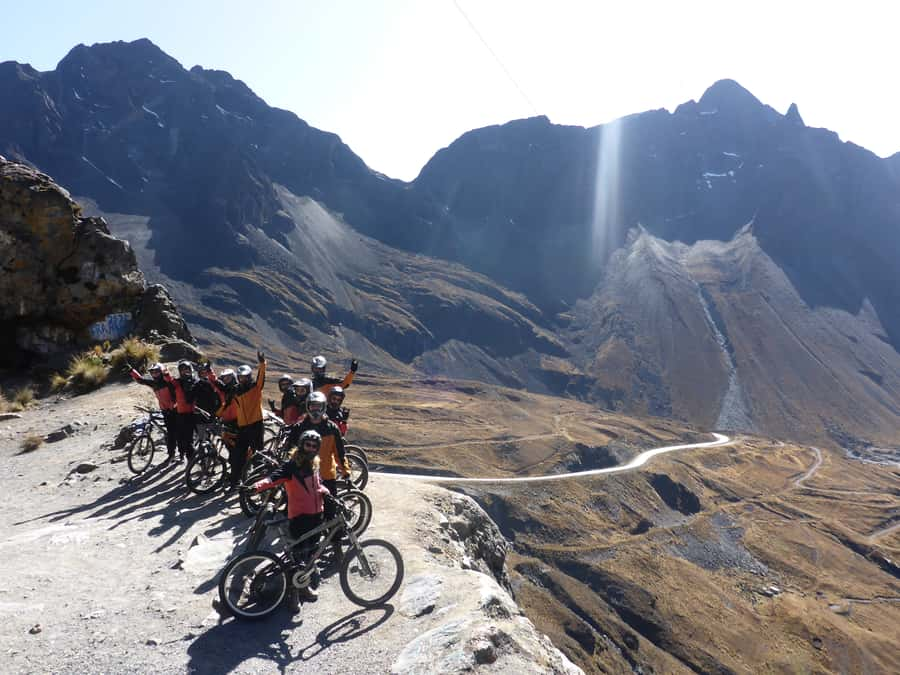
This is one of Bolivia’s great geographic shortcuts. In a single day, you travel from the high-altitude world around La Paz into warm Yolosita, near the entrance to the Bolivian Amazon.
The figures explain the appeal. You start at about 4,700 meters and finish at 1,200 meters, with roughly 64 kilometers of riding. Much of the route is downhill, but the descent is not effortless. You still need to steer, brake, absorb bumps, and stay alert for changing road conditions.
I would not book this because of the nickname alone. The road is famous, but the better reason to go is the combination of altitude change, scenery, physical challenge, and solid support. It gives you a close look at Bolivia’s sharp change in climate and terrain rather than a quick view from a bus window.
The day costs $129 per person. That is not a budget activity, but the price covers a full-suspension downhill mountain bike, hydraulic disk brakes, protective clothing, a full-face helmet, gloves, elbow and knee pads, private transport, food, water, guides, and photos and short videos uploaded to Dropbox. Add the 50-boliviano Death Road tax, and possibly the optional zipline fee.
For a full-day adventure with this much equipment and support, I see the price as fair. The value depends on your comfort with downhill biking. If you already enjoy mountain biking, you are paying for access, transport, equipment, and a well-supported route. If you rarely ride, the cost does not make the physical demands disappear.
Meeting at Vertigo Biking in La Paz
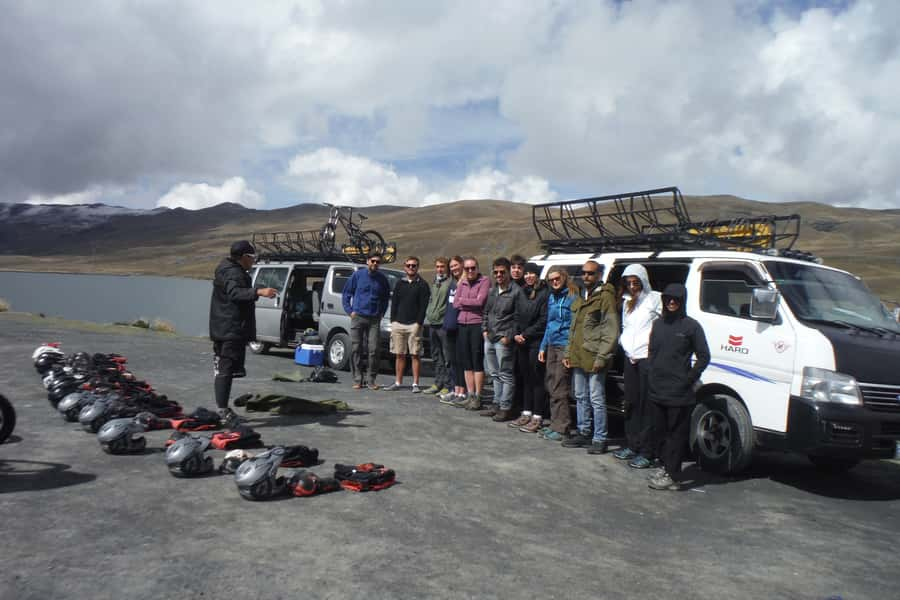
Your day begins at the Vertigo Biking office. Look for the company bus parked outside. The pickup point is simple, but arrive prepared because the first transfer takes you up toward the high starting point.
The vehicle ride to Cristo de la Cumbre takes about 45 minutes. This is useful time to organize your layers and settle in before the riding begins. La Cumbre is cold compared with the warm finish, so do not arrive in shorts and assume the day will stay hot.
The group leaves with a minimum of two people. You should check that a departure is confirmed for your chosen date before making firm plans around it. The tour is offered in English and Spanish.
Guides check the bikes and explain how to use the brakes and handle the route. Their role matters here. A downhill bike with good brakes helps, but it does not replace clear instructions or sensible riding.
More Cycling Trips in the world:
- Lion City Bike Tour of Singapore
★ 5.0 · 6,211 reviews - Big Bike tour Amsterdam – See all in 3 unforgettable hours
★ 4.7 · 4,929 reviews - 3-Hour Porto Highlights on a Electric Bike Guided Tour
★ 5.0 · 4,392 reviews
Cristo de la Cumbre at 4,700 Meters
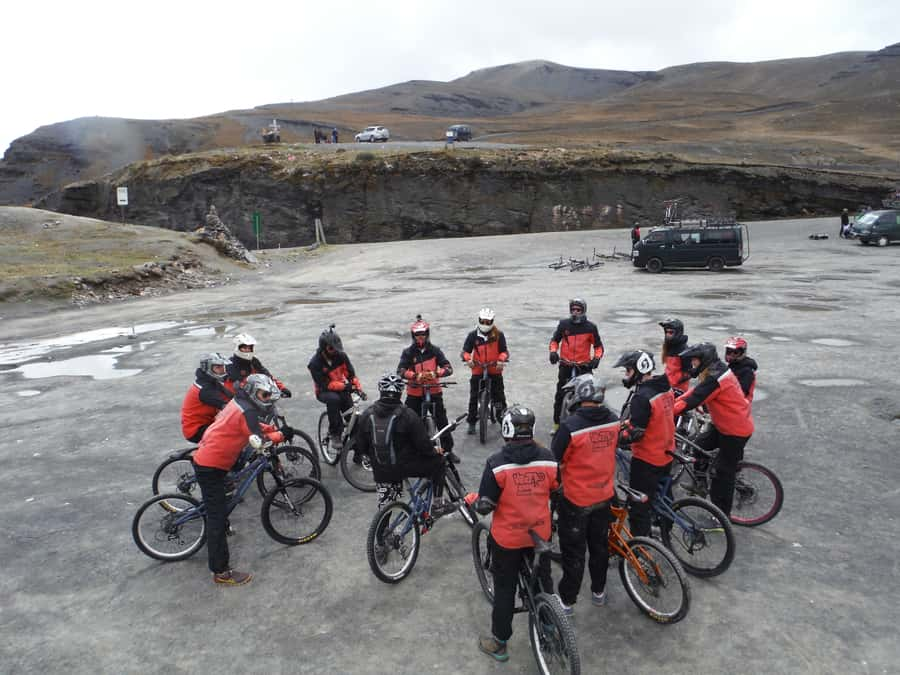
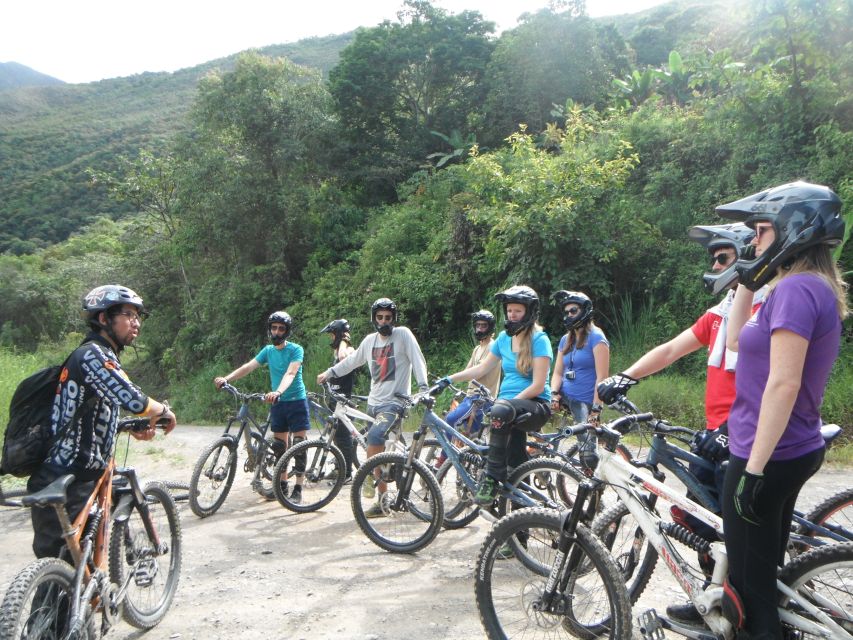
The first stop is Cristo de la Cumbre, where you receive a safety briefing of about 30 minutes. The high Andes setting is part of the experience, not just a place to unload the bikes. Snow-covered peaks and thin, cold air make a strong contrast with the warm valley below.
This is where you get your first feel for the equipment. The bikes are full suspension and use hydraulic disk brakes. You also receive a full-face helmet, jacket and pants, gloves, and elbow and knee protection.
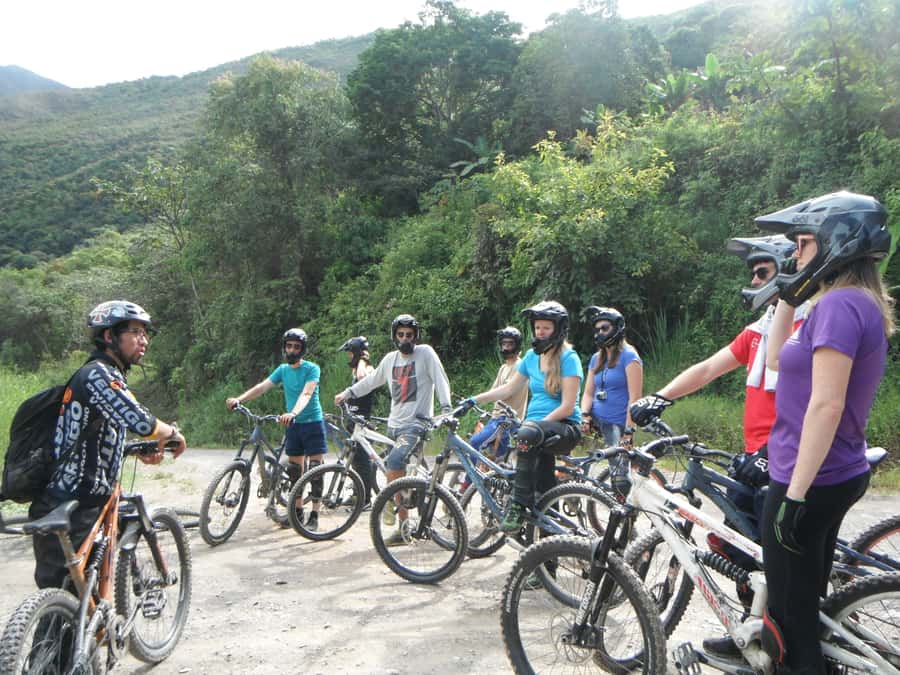
The safety talk is worth your full attention. You will receive instructions for braking, spacing, and road behavior before setting off. Guides also make repeated stops later to check bikes and give more directions. That repeated contact is reassuring, particularly if you are not used to downhill riding.
Wear your warmest practical layer for this section. You can remove clothing as the air gets warmer, but you cannot get warmer clothing from the road if you start underdressed.
The Paved Descent Gives You Time to Adjust
The first riding section follows a paved road for about an hour. This is a smart introduction. You can learn the bike, test the brakes, and get used to descending before the rougher road begins.
You pass small villages and stop several times. These pauses let the guides take photos, inspect the bikes, and explain what is coming next. If you prefer to keep moving, the stops may feel frequent, but they serve a real purpose.
This opening section also shows why the tour suits a range of cycling ability better than a route that begins straight on dirt. Confident riders can get comfortable quickly. Less experienced riders can practice controlling their speed before reaching the famous road.
Do not treat the paved part as a race. The day becomes more demanding later, and saving energy is sensible. You want enough focus left for the changing surface, water, and tight sections ahead.
Chuspipata Marks the Real Start of Death Road
At Chuspipata, the setting changes. The actual Death Road section begins here, with dirt under your wheels, thick vegetation, mist, and low cloud.
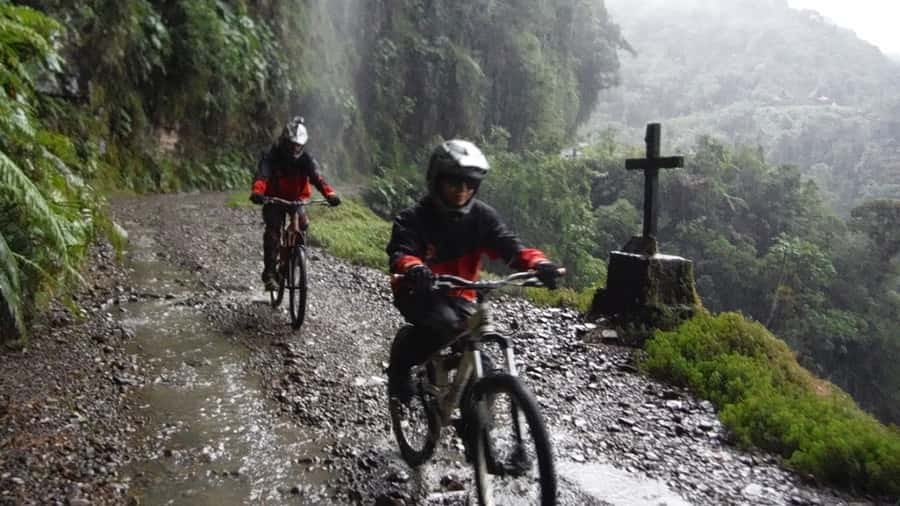
This is the part most people have imagined before arriving, but it is also where you need to take the riding seriously. The surface can be uneven, and the road may be wet. Small waterfalls cross the route, and tiny rivers can leave you soaked. Mud and spray are part of the day, not an unfortunate surprise.
The descent through the forest lasts about four hours, including safety talks, photo stops, and breaks. You move from cold air toward warm conditions as the altitude drops. The change is quick enough that your clothing choices matter. A jacket that feels essential at the start may become uncomfortable later.
The route has an adventurous feel without leaving you on your own. Guides ride with the group, provide directions, and help with bike problems. First-aid training and qualified mechanics are part of the support. A support vehicle is also available when needed.
The right approach is to ride at a pace you can control. Some people want the thrill of moving quickly downhill. Others need more time to manage the bends and rough sections. The guides can allow riders to go at their own speed, but you should never confuse freedom with permission to ignore safety instructions.
Same roads, a different ride:
- Ninh Binh Full-Day Tour from Hanoi to Hoa Lu, Tam Coc & Mua Cave Via Boat & Bike
★ 5.0 · 4,384 reviews - Small Group Guided Bike Tour of Amsterdam’s Hidden Gems
★ 5.0 · 3,936 reviews - 3-hour Complete Prague Bike Tour
★ 5.0 · 3,674 reviews - Bangkok: Temples, Canals & Local Life Bike Tour
★ 4.9 · 3,511 reviews
Wet Roads, Waterfalls, and Changing Weather
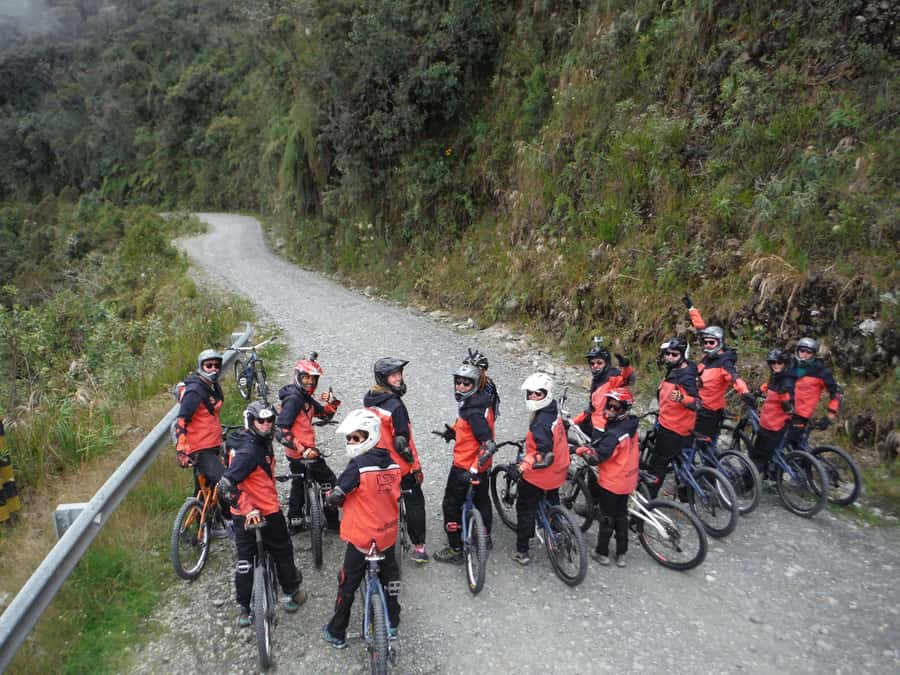
One of the best parts of the route is the steady change in weather. You begin among cold mountain peaks, pass through mist and low cloud, and finish in heat.
The small waterfalls are especially memorable because they make the road feel active and unpredictable. You may go under falling water or across wet sections, so protect anything in your daypack that should stay dry.
Use the supplied clothing, but bring a change of clothes as well. By the end, you can be hot, dirty, and wet from the road. Swimwear is useful for the hotel or resort finish, and insect repellent becomes more relevant as you descend into warmer country.
Water is supplied without a stated limit, and snacks are available along the route. That matters on a long day with steady concentration and physical effort. Still, bring your own daypack so you can carry personal items and dry clothing without depending on space in the support vehicle.
Photo Stops Without Losing the Adventure
The guides stop often enough for photos and short videos. The tour includes photos and short videos uploaded to Dropbox, so you do not have to spend the whole ride trying to film yourself.
There is a viewpoint stop of about 15 minutes, followed by time in a traditional village for photos and a guided visit of around 30 minutes. These pauses break up the riding and let you look around instead of staring at the road.
The photo support is more useful than it may first sound. On a demanding route, stopping to take your own picture can be awkward, and handling a phone around wet gloves is not ideal. You can focus on riding and still leave with a record of the day.
The stops also give you a chance to check your clothing, drink water, and notice how much the temperature has changed. Use them for recovery, not only for photographs.
Yolosita and the Best Part of the Finish
The riding ends in Yolosita, at about 1,200 meters. By this point, the cold mountain air has been replaced by heat, and you will likely be ready for a proper wash.
A private vehicle takes you to a hotel or resort area where you have about 105 minutes for lunch and relaxation. The buffet meal is included, as are showers and use of the swimming pool.
I like this ending because it recognizes what the day asks of you. A sandwich eaten beside the bikes would be adequate, but a meal, shower, and pool make the finish feel complete. You can get the mud off, change clothes, eat properly, and cool down before the long journey back.
Bring swimwear and a dry change of clothes in your daypack. This is one of those trips where a small practical item can improve the whole final hour.
The zipline is available for an extra charge if you want another activity at the finish. It is not included, so carry cash if you are considering it. The 50-boliviano road tax is also separate.
Guides, Bikes, and Safety Support
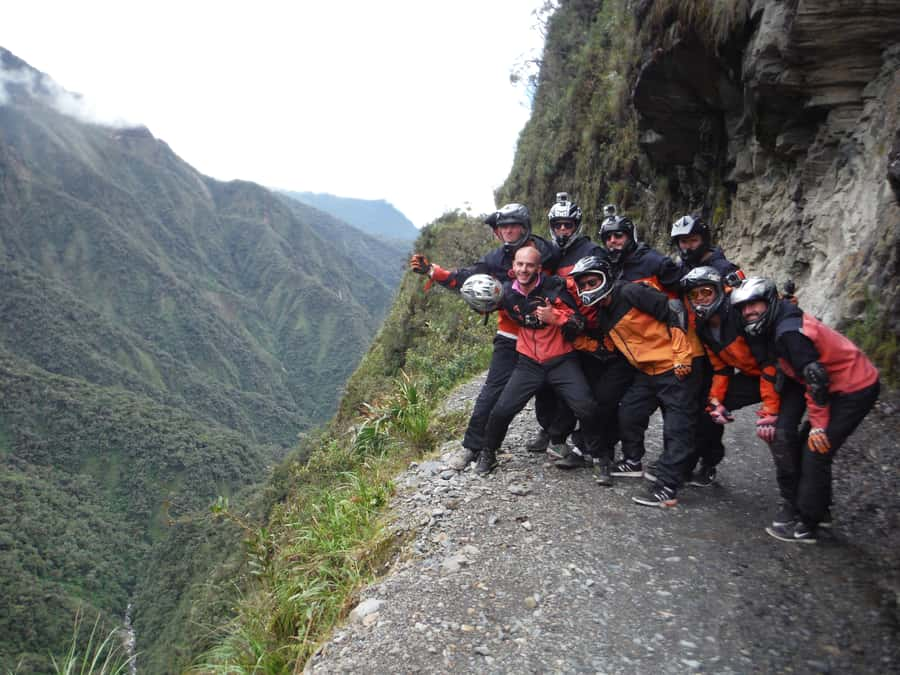
The guide team is one of the strongest reasons to choose this outing. The service includes bilingual English and Spanish speaking guides, first-aid training, bike checks, and mechanics familiar with the equipment.
Several guides receive especially strong praise for the way they handle the day. Victor is noted for fluent English, cultural conversation, and careful attention. Freddy is praised both as a guide and for safe driving. Chris, Maury, Javier, and Eddy are also associated with friendly support and clear direction.
The consistent pattern is useful: the guides explain each stage, keep an eye on the group, and encourage riders who find the road hard. One rider who found the route challenging credited Freddy’s patient support with helping finish it.
The bikes may not all look brand new or high-tech. That should not be your main concern. For this route, working brakes, suspension, and a sound frame matter more than fresh paint. The equipment is designed for downhill use, with hydraulic disk brakes and full suspension.
The safety equipment follows international standards and includes a full-face helmet. Wear it correctly and keep the protective pads on for the whole rough-road section. This is not the place to trade protection for a better photograph.
Who Should Book This Ride
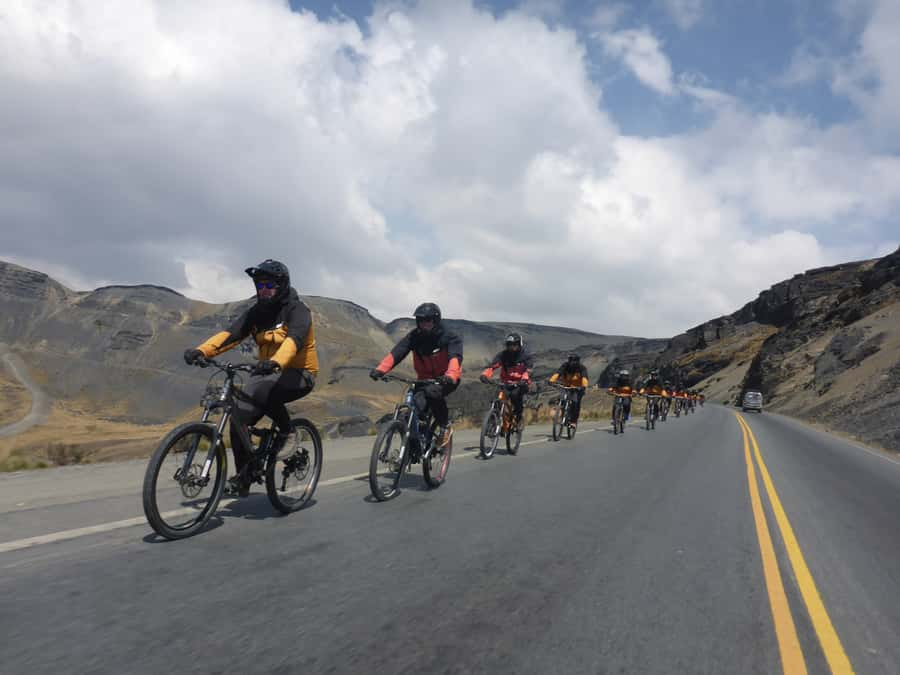
I would recommend this tour to you if you can ride a bike confidently and want a physical outdoor day rather than a sightseeing trip from a seat. You do not need to be an expert mountain biker, but you do need to handle a bike and accept a long downhill route on mixed surfaces.
It is a good fit for people who enjoy dramatic scenery, changing climates, and a bit of controlled fear. The guides can support different speeds, which helps, but the road still requires balance, braking, and attention.
I would not choose it if you cannot ride a bike, have a mobility impairment, use a wheelchair, or are pregnant. The tour also has a minimum height of 155 centimeters. Anyone under that height should not book.
Think carefully if you dislike wet clothes, dirt, long vehicle transfers, or physically demanding days. The return journey takes about three hours by bus, so the adventure does not end when you leave the bike.
What to Pack for the 64-Kilometer Descent
Pack light, but pack with the full day in mind.
- Warm clothing for La Cumbre
- Sunglasses
- Sunscreen
- Insect repellent
- Swimwear
- A complete change of clothes
- A small daypack
- Cash for the road tax and optional zipline
- Passport or identity card, with a copy accepted
The company supplies the main riding gear, including the helmet, clothing, pads, gloves, and bike. You do not need to bring your own mountain bike.
I would keep your phone protected from water and mud. The guides provide photos and short videos, so there is less need to risk your phone during the ride.
Is the $129 Tour Worth It?
At $129, this is not the cheapest way to spend a day near La Paz. It is a full service experience, though. You get transport, a downhill bike, safety equipment, bilingual support, water, snacks, lunch, a shower, pool time, and media from the day.
The strongest value comes from the support. Death Road is not simply a public road where you rent a bicycle and hope for the best. Bike checks, first-aid training, mechanics, guide briefings, and a support vehicle all reduce the stress of managing the route alone.
The weak point is comfort during transport. The return to La Paz takes about three hours, and the vehicle has drawn some criticism. You should also know that the equipment may show signs of regular use, even though the important parts, such as brakes and suspension, are intended to work properly.
I would call the price fair for the complete package, especially if you want the pool and buffet finish. If your main goal is only to ride fast downhill, you may care less about the lunch, photos, and hotel facilities. If you want a supported day with a clean ending, those extras carry real value.
Should You Book Death Road With Vertigo Biking?
Yes, if you want one of Bolivia’s most unusual day trips and you are comfortable on a bike. The route gives you a rare change from high Andes to hot lowlands, while the guides provide the safety structure this road demands.
Book it for the scenery, the altitude change, the wet forest ride, and the satisfaction of finishing 64 kilometers. Choose another activity if you cannot ride confidently or if a long return drive sounds worse than the adventure itself.
Before paying, confirm that your date has at least two people booked to depart. Bring layers, dry clothes, swimwear, cash, and a sensible attitude toward speed. The best day here is not about being first down the road. It is about staying in control, seeing the country change around you, and reaching the pool in one piece.
FAQ
How long does the Death Road biking tour last?
It is a full-day experience. The riding and stops take several hours, followed by lunch and pool time, with the return bus to La Paz taking about three hours.
Where does the tour begin?
The meeting point is the Vertigo Biking office in La Paz. The tour bus should be parked outside the office.
How far do you ride?
The route covers about 64 kilometers, beginning at La Cumbre and finishing in Yolosita.
What altitude do you start and finish at?
You start at about 4,700 meters at La Cumbre and finish at about 1,200 meters in Yolosita.
Is the tour offered in English?
Yes. The tour has live guides in English and Spanish.
What equipment is included?
You receive a full-face helmet, pants, jacket, elbow and knee pads, gloves, and a full-suspension downhill mountain bike with hydraulic disk brakes.
Is lunch included?
Yes. A buffet lunch is included, along with snacks during the ride and unlimited water.
What costs extra?
The 50-boliviano Death Road tax is not included. A zipline is also available for an additional payment on the day.
Can I cancel the booking?
You can cancel up to 24 hours in advance for a full refund. The reserve-now, pay-later option is also available.
New cycling reviews around the world
- Riga: Beer or Cider Bike Tour★ 4.7 · 121 reviews
- Riga Explorer Bike Tour★ 4.8 · 127 reviews
- Rio de Janeiro: Guided Bike Tours in Small Groups★ 4.5 · 133 reviews
- Ria Formosa: Guided Bike Tour (3h), Início na Quinta do Lago★ 4.8 · 14 reviews
- Rethymno: Guided e-Bike Tour on Mili Gorge and Soft Drinks★ 4.9 · 36 reviews
- Rhodes: Anthony Quinn Bay E-Bike Tour with Snorkeling★ 4.9 · 15 reviews
- Rhodes: eBike Highlights Tour w/ Personal Photographer★ 4.9 · 99 reviews
- Rent a bike in Amsterdam | 1, 2, 3+ hours★ 4.5 · 68 reviews