
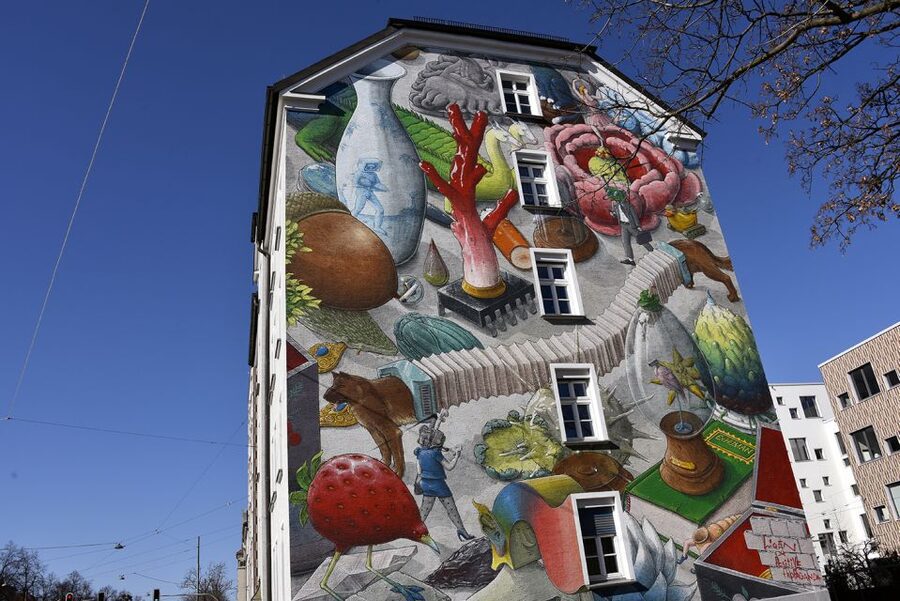
Review · MUNICH
Munich: Street Art Bike Tour
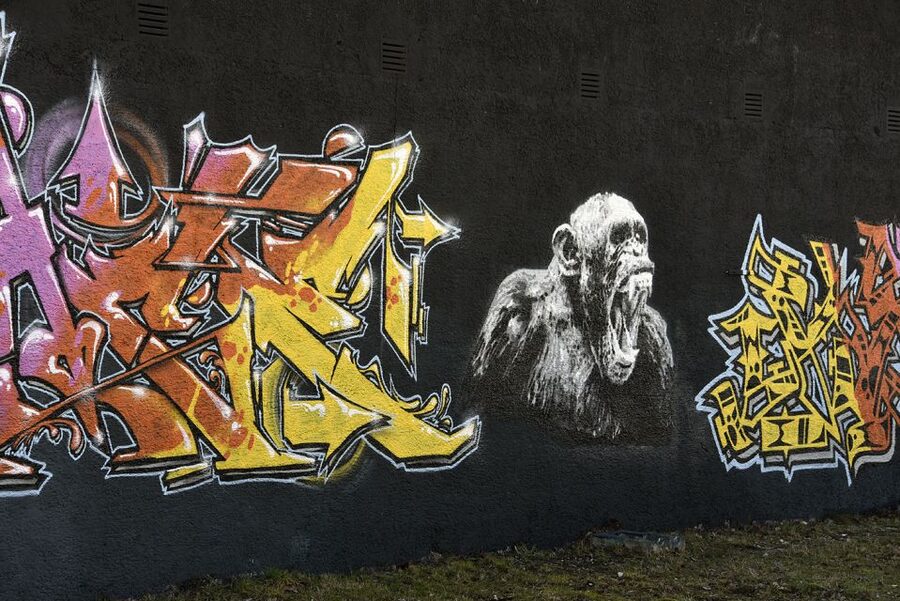
Munich may look polished and proper, but its graffiti story began here in the 1980s. This three-and-a-half-hour bike tour follows that less tidy, more creative side of the city, from the Isar river to Giesing and the former slaughterhouse district.
I like the ride itself, which gets you away from the packed center, and I like the mix of old-school graffiti writers with newer artists. Guide Ulrike has also shown patience with English-speaking families, even though the advertised tour language is German.
The main drawback is the length for younger riders. A 12-year-old found the nearly four-hour outing too long, while another family with children aged 10 and 12 had a great time. You also need to be comfortable on a bike, and the tour is not suitable for wheelchair users or children under 10.
Key points at a glance
- Munich’s 1980s graffiti roots: Learn why the city was once linked with New York as a major center for graffiti.
- A ride beyond Marienplatz: Cycle along the Isar, through Giesing, and toward the slaughterhouse district.
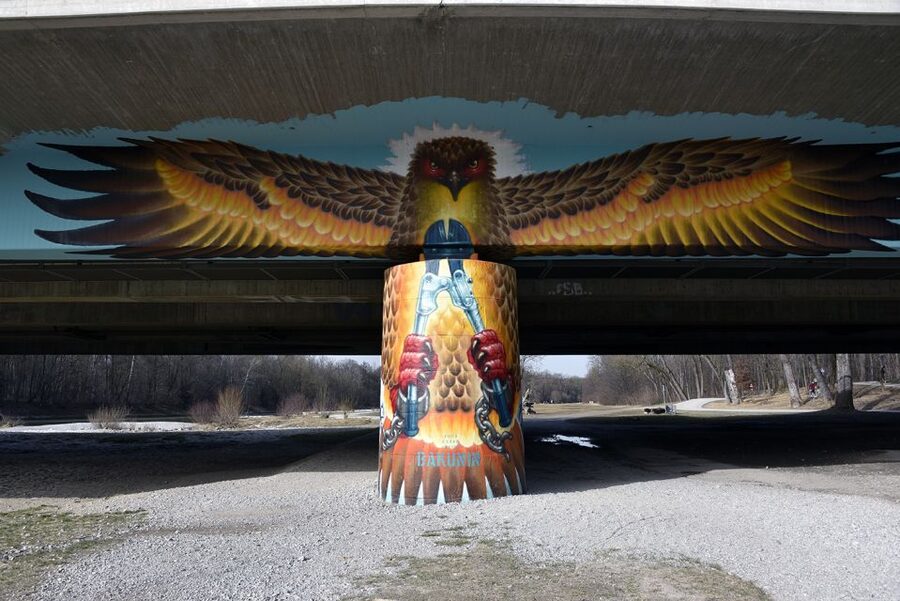
- Old masters and new artists: See work by artists who helped shape Munich’s scene, along with newer pieces.
- A useful break by the railway bridge: The route includes time to pause on a boat near the bridge.
- German-speaking guidance: Ulrike has helped English-speaking participants, but German is the stated tour language.
- Rental bike included: The $40 price covers your guide and bike, with the route lasting 210 minutes.
Why Munich is an unlikely graffiti city
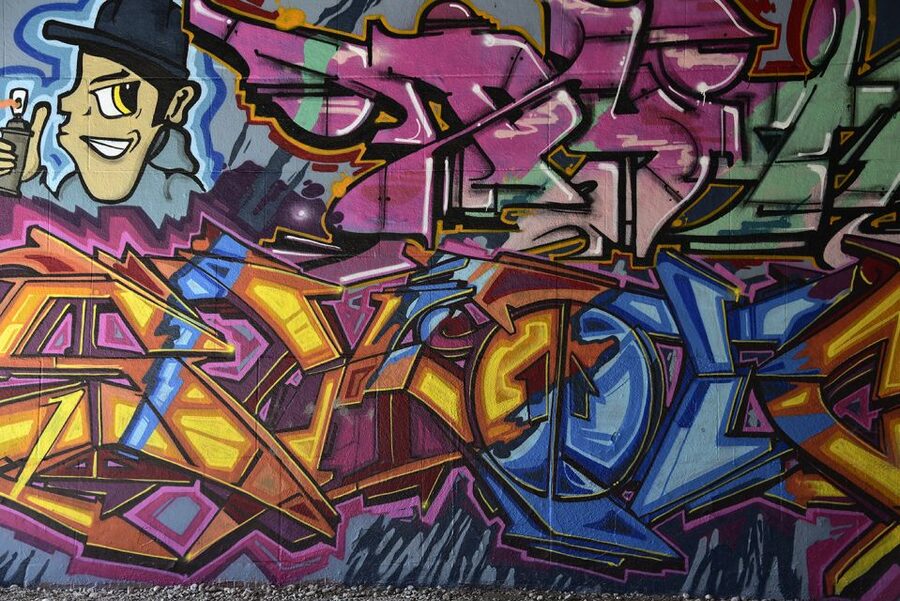
Munich is known for grand squares, tidy streets, polished shops, and carefully protected historic buildings. That makes its graffiti past easy to miss. Yet the city played an important role in Germany’s graffiti movement during the 1980s, when Munich was considered a major center alongside New York.
That contrast gives this tour its purpose. You are not simply pedaling from one colorful wall to another. You are learning how a controlled, well-kept city made room for a form of art that was once treated as vandalism.
I like this angle because it changes how you read Munich. A painted wall is no longer just a splash of color. It becomes part of a story about youth culture, public space, artistic reputation, and the people who helped establish graffiti in Germany.
Your guide points out work by older artists who shaped the local scene, then connects it with pieces by newer names. The exact stops can vary, so you should expect a moving tour rather than a fixed gallery visit. The value comes from seeing works in their actual setting and hearing why they matter.
More Street Art Bike Tours in Munich:
- London Bike Tour: Landmarks, Secret Gems, Pub Stop & Street Art
★ 5.0 · 943 reviews - Barcelona Street Art and Graffitti Bicycle Tour
★ 5.0 · 361 reviews - London: Landmarks & Secrets Bike Tour with Pub & Street Art
★ 4.9 · 314 reviews
Starting at Marienplatz with a rental bike
The tour begins in front of the Tourist Information Office at Marienplatz. Look for a guide carrying a yellow street art tour sign with red letters. That detail matters in a busy square, where several walking tours may gather at the same time.
Marienplatz is a central and easy-to-find meeting point, but it is not the artistic focus of the tour. Think of it as the launch point before you leave the postcard version of Munich behind.
Your rental bike is included. That removes one common hassle, although you should still expect a standard cycling outing rather than a slow walking tour with occasional movement. You will be riding for much of the 210 minutes, with stops to look at artworks and hear explanations.
If you are booking for a family, take the age guidance seriously. Children under 10 cannot join, and the length may test younger riders even when they meet the minimum age. One 12-year-old found the tour too long, while two children aged 10 and 12 enjoyed it. That difference may come down to interest in art, cycling stamina, weather, and how comfortable the child is with a long outing.
Following the Isar’s painted edges
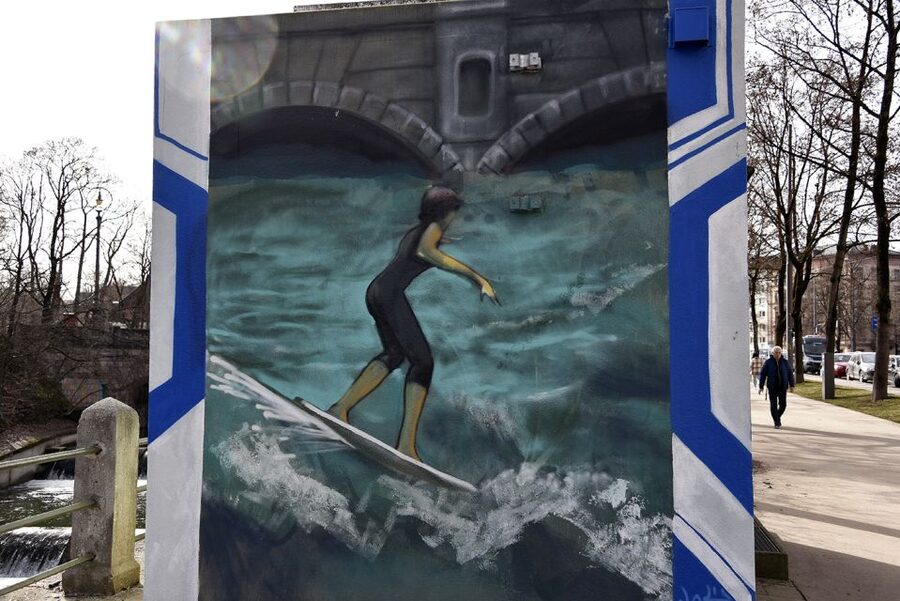
The route heads toward the Isar, one of the best places to understand how Munich’s street art fits into public space. Along the river, artists have left their mark in settings that feel less formal than the city center.
I enjoy this part of the route because the river gives the tour breathing room. You are not stopping at a museum label or standing in front of a framed canvas. You are moving through the city, spotting artwork as part of the urban surroundings.
The Isar section also helps explain why a bike is useful. Munich’s best-known sights are concentrated around the center, but street art often appears farther out, along transport routes, river areas, industrial edges, and neighborhoods that do not feature on a first-time sightseeing route.
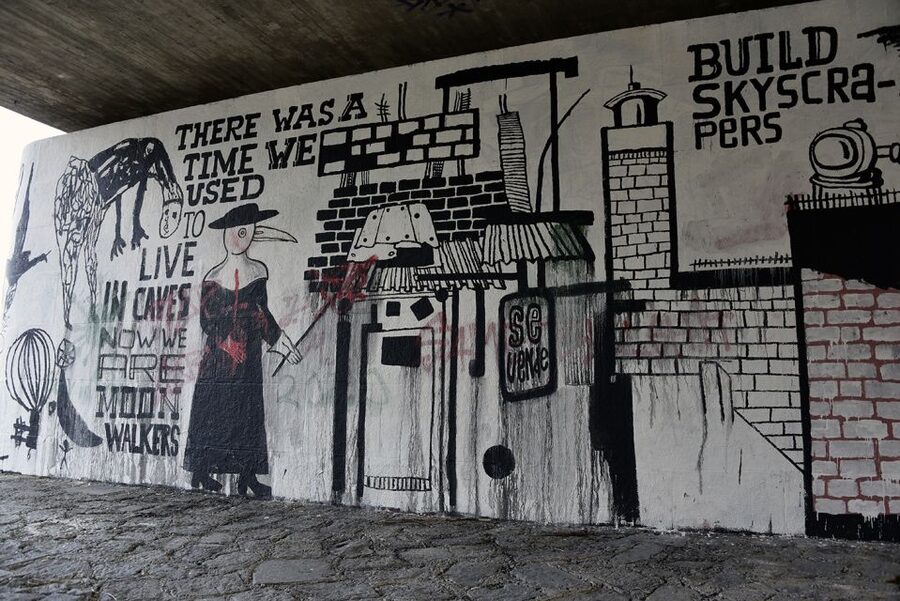
Do not expect every wall to look pristine. Street art changes. Paint fades, new work appears, and some pieces may be partly covered. That is part of the point. This is a living art form, not a permanent exhibition.
Your guide supplies the context that a self-guided ride would miss. You can see colors and large-scale images on your own, but you may not know which artists are important, how Munich’s scene developed, or why one piece is worth stopping for. The tour turns those visual details into a connected story.
Riding into Giesing, Munich’s former working-class quarter
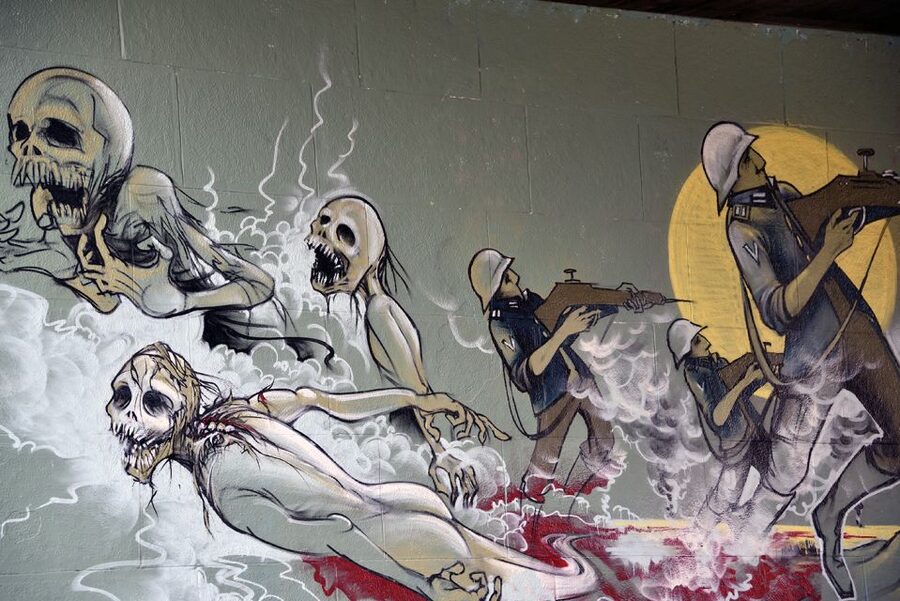
From the river, the tour continues to Giesing. This former working-class neighborhood offers a sharper contrast with central Munich than the usual route between Marienplatz, the Residenz, and the English Garden.
Giesing is one of the reasons I would choose this experience over a standard city bike tour. You get a look at a part of Munich that many short visits skip, and the street art feels tied to the neighborhood rather than placed there for tourists.
The route is also a useful reminder that Munich is not one uniform city. Its districts have different social histories and visual identities. A guide who knows the local scene can point out how the art fits into those differences, instead of treating every mural as a generic photo stop.
This section may appeal especially to repeat visitors. If you have already seen the main squares and royal buildings, the ride offers a fresh reason to explore Munich. You will still begin in the center, but much of the tour’s character comes from moving outward.
The trade-off is time. Giesing takes effort to reach, and this is not a compact art walk. You should book it because you want the wider ride and neighborhood context, not because you are looking for a quick collection of murals near Marienplatz.
More Cycling Trips in Munich:
- Munich 3-Hour Guided Bike Tour
★ 4.5 · 1,731 reviews - Classic Mike’s Bike Tour daily @ 11.30 incl Beer Garden & Surfers
★ 5.0 · 1,246 reviews - Neuschwanstein Castle by Bus Incl. Bike Ride or Hohenschwangau
★ 5.0 · 607 reviews - Munich: Guided City Tour by Bike with Beer Garden Stop
★ 4.7 · 604 reviews
The slaughterhouse district and industrial Munich
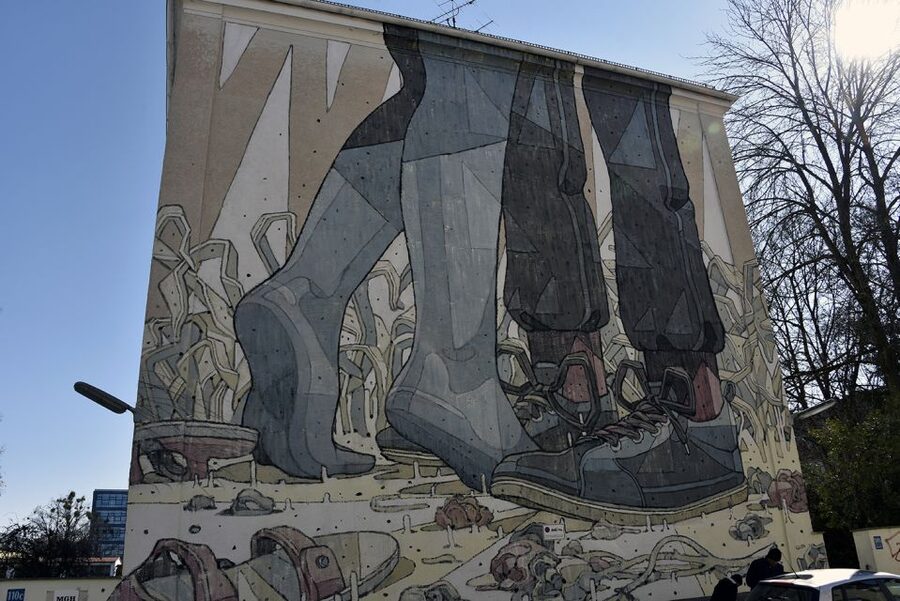
The itinerary then heads toward the slaughterhouse district. This area gives the tour another change of mood, moving from the river and residential streets toward a more practical, workaday part of town.
Street art often makes particular sense in such settings. Large walls, rail infrastructure, and industrial surroundings can provide room for big pieces and strong visual contrasts. The art does not sit apart from the city. It interacts with the buildings, bridges, streets, and working areas around it.
I would not expect a polished open-air museum. The appeal is the raw setting and the chance to see art where it developed naturally. Some people will find this more interesting than a neatly arranged mural district. Others may prefer a tour with a predictable list of famous sights.
The guide’s explanations are important here. The route includes work by respected older artists as well as newer creators, so you get both the roots of the movement and its current direction. If you care mainly about taking pictures, you may find the talk slows you down. If you want to understand what you are seeing, the explanations add real value.
A pause on a boat beside the railway bridge
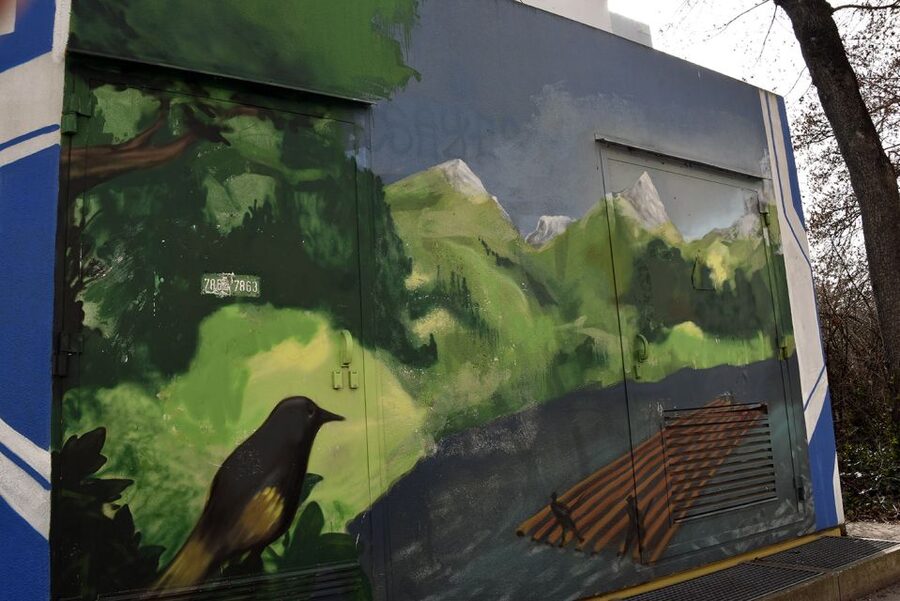
The route includes a break on a boat near a railway bridge. It is an unusual stop and gives the long ride a natural pause.
The setting also fits the tour’s subject. Railways, bridges, riverbanks, and industrial edges are the kinds of places where large public artworks can sit alongside the everyday workings of a city. You get time to rest while staying connected to the urban surroundings.
This break may be especially welcome if you are riding with children. The tour does not simply ask you to pedal and listen without pause. Still, the full outing remains long, so I would not treat one break as a guarantee that every child will stay engaged.
Weather can affect the experience. One rainy outing became a private tour instead of a group ride, which turned bad weather into a lucky arrangement for that group. You should bring a practical attitude toward conditions, since the tour is outdoors and cycling remains central to it.
What the guides add to the ride
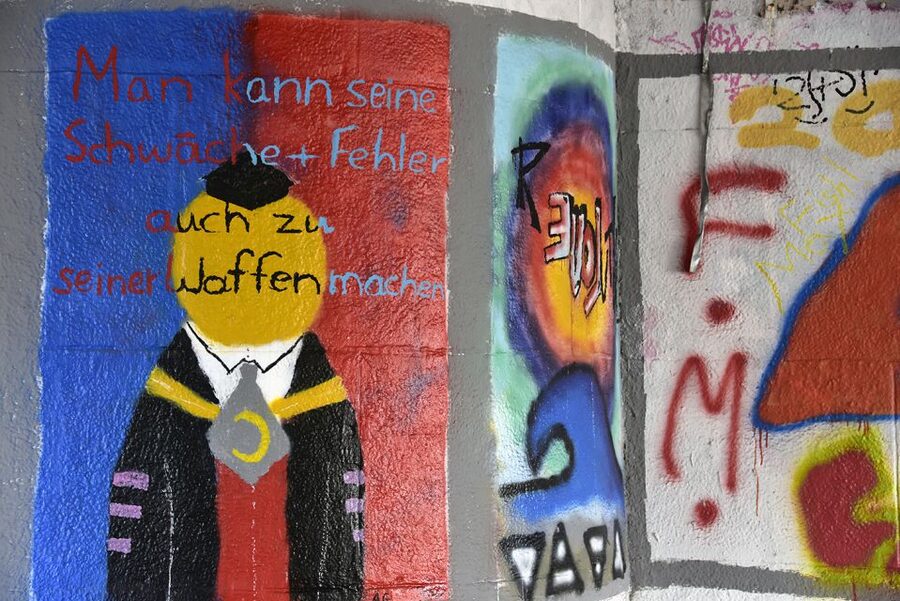
The stated tour language is German, and that should guide your booking decision. The tour is not presented as an English-language experience.
That said, guide Ulrike has made a real effort to help English-speaking participants, explaining the subject carefully and patiently. Her friendliness and willingness to adapt were singled out by an English-speaking family, whose children aged 10 and 12 enjoyed the ride. That is encouraging, but it does not replace confirming language arrangements before you pay.
A good guide matters more on a street art tour than on a simple sightseeing ride. Much of the artwork may be unfamiliar, and the context is not always obvious from the wall itself. You want someone who can explain the local scene, identify major artists, and connect older work with what is happening now.
The tour has also earned praise for being varied and informative. That combination is important. Three and a half hours of cycling can feel repetitive if every stop follows the same pattern. Moving between the Isar, Giesing, and the slaughterhouse district gives the outing a changing rhythm.
Private groups are available. That may suit you if your party wants a more personal pace or needs to ask plenty of questions. The standard language remains German, so clarify that point for a private booking as well.
Is $40 a fair price?
At $40 per person, the tour is reasonably priced if you would otherwise need to rent a bike and arrange your own route. The fee includes both the guide and rental bike, which means the main cost covers access to local knowledge as well as transport.
A self-guided ride could cost less, especially if you already have a bike. But you would need to find the artworks, plan the route to Giesing and the slaughterhouse district, and work out which artists and pieces matter. You would also miss the explanations that give the murals their meaning.
The price makes less sense if you want a short introduction to Munich or only a few easy photo stops. The duration is 210 minutes, and much of that time is spent riding between areas. You are paying for a full local outing, not a quick central-city attraction.
I see the best value for adults, older children, repeat visitors, and anyone interested in how public art develops outside formal galleries. First-time visitors can also enjoy it, but you should be happy to give up part of a traditional sightseeing day.
Who should book the Munich Street Art Bike Tour?
I would choose this tour if you like cities beyond their famous monuments. You will see Munich from a less polished angle, ride into districts many visitors skip, and hear about an important part of German graffiti culture.
It suits confident cyclists who can manage a long ride with regular stops. It also works well for families with children aged 10 and up, provided the children enjoy biking and can handle nearly four hours. The mixed family experience shows why age alone is not enough to judge suitability.
English speakers should contact the provider before booking. The tour is listed in German, although Ulrike has helped English-speaking participants successfully. That makes the experience possible for some visitors, but you should not assume full English guiding.
The tour is not suitable for wheelchair users, and alcohol and drugs are not allowed. Free cancellation is available up to 24 hours before the start, and you can reserve now and pay later, which helps if your Munich plans are still shifting.
My call: book it for the route, not just the murals
Book this tour if you want to connect Munich’s graffiti history with real neighborhoods, river paths, railway structures, and industrial spaces. The combination of cycling, local stories, and work by both established and newer artists gives you a fuller picture than a quick mural hunt.
Skip it if you want an English-language tour guaranteed from the start, a short walk, or a tightly timed collection of central sights. The route is long, the German language matters, and the city’s outer districts are as important as the artwork itself.
For the right person, $40 is a fair deal. You get a rental bike, a guide, a substantial ride, and a side of Munich that is easy to miss from the usual sightseeing circuit.
FAQ
Where does the Munich Street Art Bike Tour begin?
Meet the guide in front of the Tourist Information Office at Marienplatz. The guide will carry a yellow street art tour sign with red letters.
How long does the tour last?
The tour lasts 210 minutes, or three and a half hours.
What is included in the price?
The price includes a tour guide and a rental bike.
What language is the tour offered in?
The stated tour language is German. Guide Ulrike has helped English-speaking participants, but you should confirm language arrangements before booking.
Does the tour visit Giesing?
Yes. The route includes a bike ride to Giesing, a former working-class neighborhood.
Which parts of Munich does the route cover?
The tour follows the Isar river, continues to Giesing, and then heads toward the slaughterhouse district. It also includes a break on a boat near a railway bridge.
Can children join the tour?
Children under 10 cannot join. Children aged 10 and above may participate, but the three-and-a-half-hour duration may be tiring for some younger riders.
Is the tour accessible for wheelchair users?
No. The tour is not suitable for wheelchair users.
New cycling reviews around Munich
- Munich by Bike: Half-Day Tour with Local Guide★ 4.7 · 417 reviews
- Munich: Bike Tour with Beer Garden Break★ 4.9 · 391 reviews
- Munich Essentials Bike Tour★ 4.9 · 401 reviews
- Munich: Mini Classic Bike Tour with Beer Garden Stop at 4 PM★ 4.8 · 28 reviews
- Munich: Neuschwanstein Castle by Bus with Alpine Bike Ride★ 4.9 · 217 reviews
- Best of Munich Electric Bike Tour★ 4.7 · 23 reviews
- Best of Munich Electric Bike Tour★ 5.0 · 38 reviews
- Munich Small-Group Bike Tour★ 4.5 · 510 reviews
Munich Cycling Tours, compared.
Classic Mike’s Bike Tour daily @ 11.30 incl Beer Garden & Surfers
Read our review →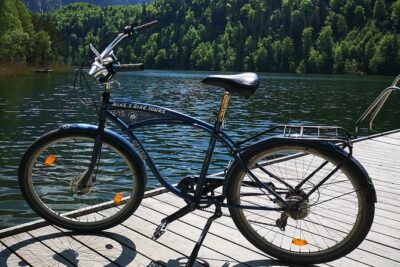
Neuschwanstein Castle by Bus Incl. Bike Ride or Hohenschwangau
Read our review →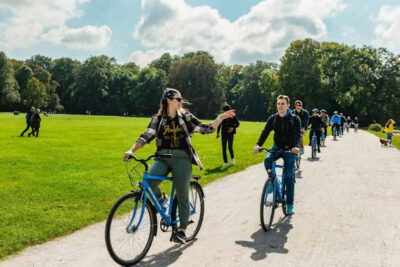
Munich: Guided City Tour by Bike with Beer Garden Stop
Read our review →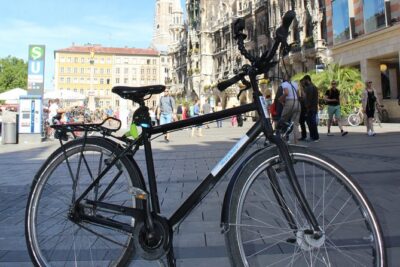
Browse the lists this ride appears in