
Review · USA
New Orleans: Heart of the City Bike Tour
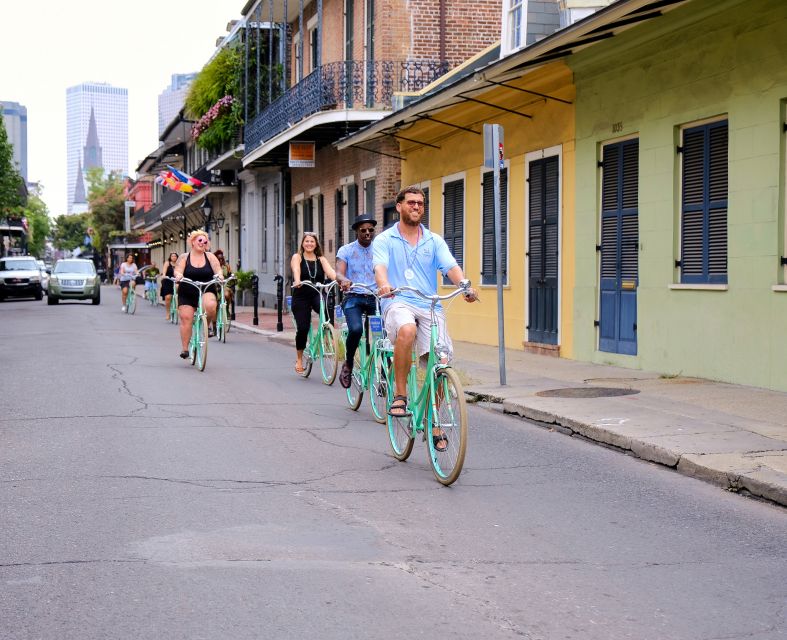
New Orleans’ story makes more sense from a bicycle seat, especially when the route leads from the French Quarter to St. Roch Cemetery. You move slowly enough to notice the city’s old streets, pause for history, and see how burial customs and Creole culture grew from the city’s colonial past. I like the calm six-mile route and the chance to explore five historic neighborhoods without spending three hours on foot.
I also like the small group, limited to 10 people, and the local advice from guides such as Eric, who has been praised for restaurant and jazz-bar suggestions. The main drawback is practical: you ride in city traffic, the tour runs rain or shine, and it is not suitable for anyone who cannot ride a bike or feels uneasy on streets.
Key points at a glance
- Six easy miles: The route moves at a leisurely pace, making it manageable for regular bike riders rather than serious cyclists.
- Five historic neighborhoods: You travel through the French Quarter, Faubourg Marigny, Bywater, and other old parts of New Orleans.
- St. Roch Cemetery: This above-ground cemetery adds a thoughtful look at local burial practices.
- Creole culture explained: Your guide connects New Orleans’ colonial past with the cultures that shaped the city.
- Small group format: With no more than 10 participants, it is easier to ask questions and keep up with the guide.
- Useful local tips: Guides may point you toward places to eat and hear live jazz during the rest of your stay.
Why a bicycle is a smart way to see New Orleans
New Orleans can feel scattered when you explore it one block at a time. The French Quarter, Faubourg Marigny, Bywater, the riverfront, and St. Roch Cemetery each have a different mood, yet they sit close enough together for a bicycle route.
That is the strength of this tour. You cover ground without being rushed from one photo stop to the next. The route totals about six miles, but the pace is deliberately easy. You stop to listen, then ride on. This is sightseeing with movement, not a workout disguised as a tour.
I would choose this experience early in a New Orleans visit. The route gives you a basic map of the oldest parts of the city, and the guide’s suggestions can help shape your plans for food, music, and later walks. Eric, one of the guides associated with the tour, is especially noted for giving restaurant and jazz-bar advice that participants used during their stay.
The ride is best for someone comfortable on a standard city bicycle. You do not need to be a strong cyclist, but you do need to handle streets, turns, and stops. The city is flat, which helps, but flat does not mean traffic-free.
More Cycling Trips in the USA:
- Guided Bike Tour of Old Town Key West
★ 5.0 · 2,611 reviews - NYC: Central Park Bike Rentals
★ 4.2 · 2,528 reviews - Red Rock Canyon eBike Half-Day Tour
★ 5.0 · 1,870 reviews
Starting between Toulouse Street and St. Peter Street
The meeting point is between Toulouse Street and St. Peter Street, next door to Arrow Cafe. That is a useful landmark, but you should still allow time to find the exact starting spot and get settled before the group leaves.
The tour usually runs in the morning. That timing makes sense in New Orleans, where heat and humidity can become more tiring later in the day. A morning ride also leaves your afternoon open for museums, a meal, or a second look at one of the neighborhoods you pass through.
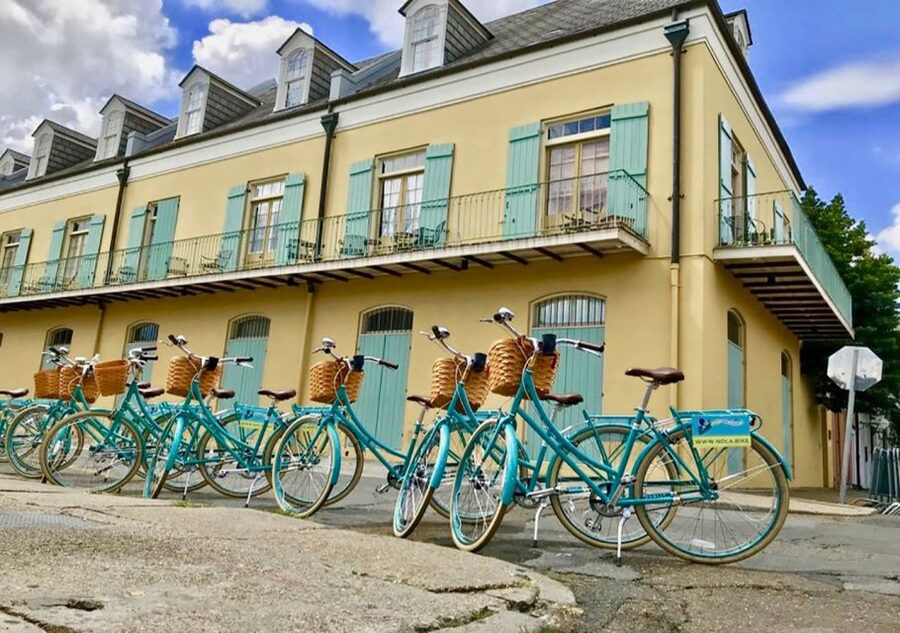
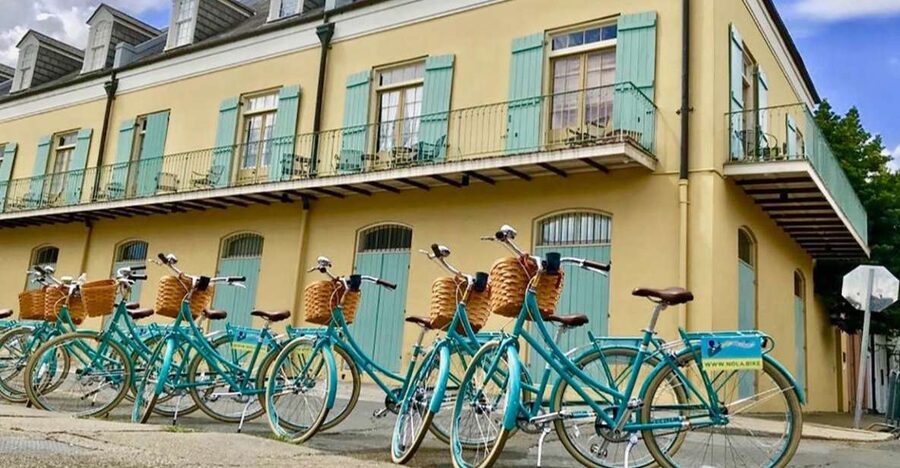
You receive a professionally maintained bicycle and a bottle of water. Helmets are available, though listed as optional. I would use one, particularly because the tour takes place on city streets. Wear comfortable shoes, not sandals, flip-flops, or slippers. You will not want loose or flimsy footwear while pedaling and stopping.
The group limit of 10 matters here. A large cycling line can be awkward in old city streets, while a small group gives the guide more room to explain details and answer questions. It also makes it easier to stay together at intersections and during cemetery stops.
Rolling through the French Quarter and Faubourg Marigny
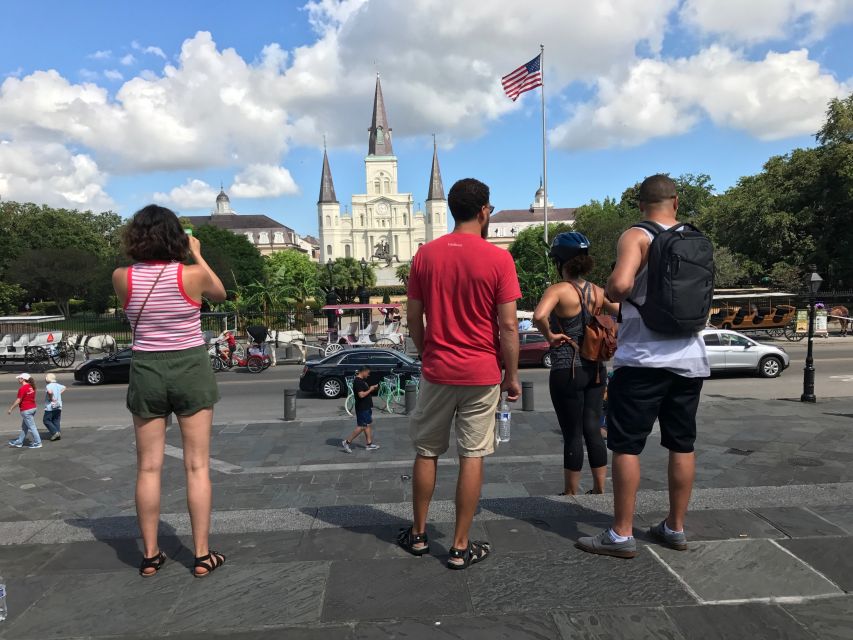
The French Quarter is the obvious place to begin, but the value comes from hearing its development explained as you ride beyond the best-known streets. You can look at the quarter as a collection of old buildings, or you can connect it to the larger story of colonial New Orleans and the cultures that followed.
The bicycle makes this section more efficient than a walking tour. You can move along the flat streets, pause for a short talk, then continue without losing the shape of the neighborhood. The guide’s job is not simply to name buildings. It is to explain how the city grew and how its Creole culture developed.
Faubourg Marigny brings a change in feel. The tour presents it as one of the city’s historic areas, giving you a chance to see New Orleans beyond the central French Quarter. You should not expect a long stop at every landmark. This is a broad orientation tour, so the guide has to keep the group moving.
That balance is useful for a first visit. You get enough context to decide where you want to return on your own. It also keeps the three-hour outing from becoming a series of long lectures.
Following the Mississippi River at an easy pace
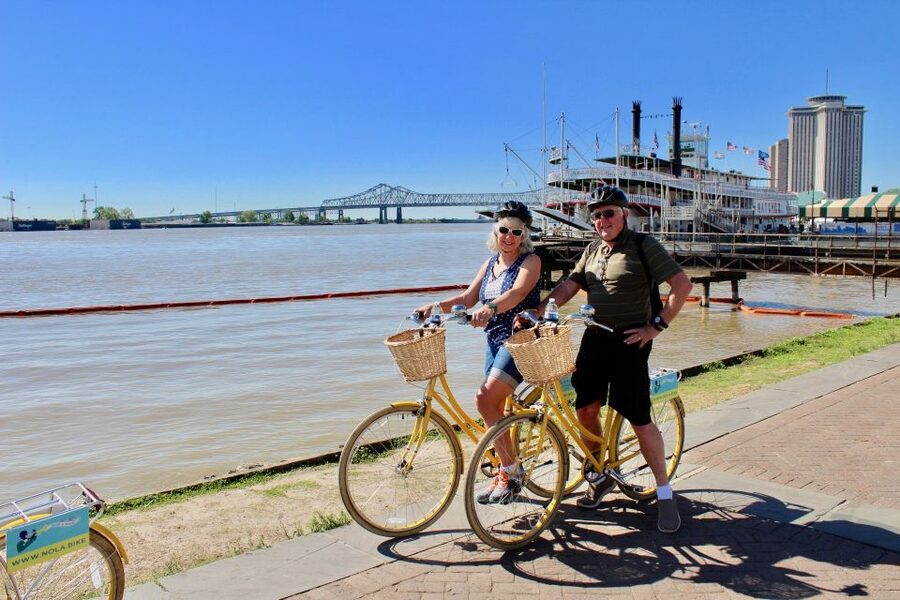
The riverfront section gives the ride a different rhythm. You pedal along the banks of the Mississippi River while the guide continues the story of New Orleans and its place as a colonial city.
The river is not simply a scenic backdrop. It helps explain why New Orleans developed where it did and why movement, trade, and cultural exchange mattered so much to its growth. The supplied tour details do not promise a particular viewpoint or a long riverfront stop, so think of this part as a moving introduction rather than a dedicated river cruise.
I like this portion because it breaks up the denser streets of the older neighborhoods. You have room to ride, then return to the city’s close-packed historic areas. The pace also gives you time to look around without having to choose between watching the road and listening to a long talk.
Rain is a real consideration. The tour runs rain or shine, and one recent outing continued after rain began, with the guide providing rain ponchos. That is a generous practical touch, but it does not make wet riding comfortable for everyone. If poor weather is forecast before departure, you can reschedule or receive a refund. Once the tour has started, refunds are not offered for weather.
Same roads, a different ride:
- NYC: Central Park Bike Rental
★ 4.1 · 1,651 reviews - Central Park Bike Rental
★ 4.7 · 1,509 reviews - Austin Biker Gang E-Bike Tour
★ 5.0 · 1,399 reviews - Asheville Historic Downtown Guided Electric Bike Tour with Scenic Views
★ 5.0 · 1,234 reviews
Bywater and the route into St. Roch Cemetery
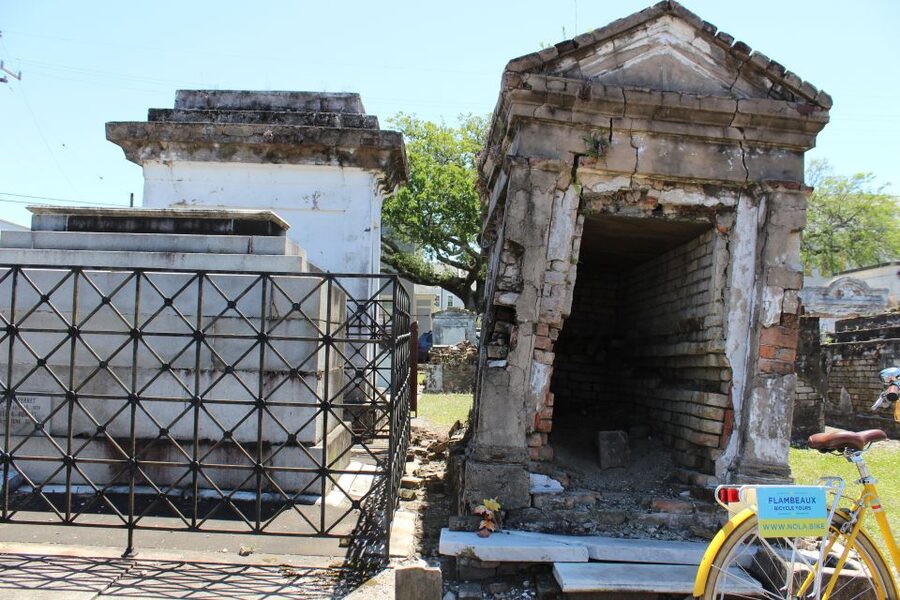
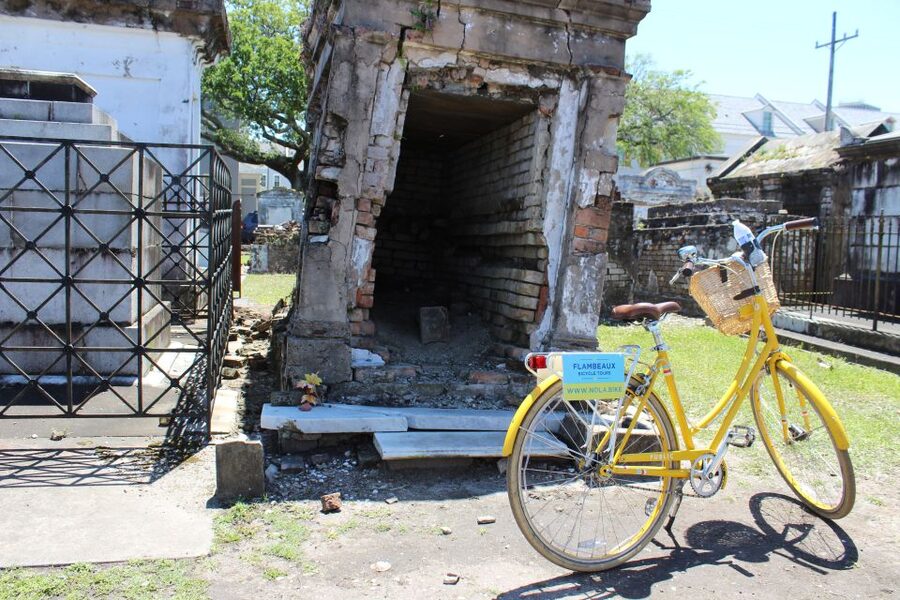
The ride continues through Bywater and then reaches St. Roch Cemetery, one of the most distinctive parts of the experience. This is not just a quick exterior glance. You enter an above-ground cemetery and learn about New Orleans burial practices.
That subject gives the tour a stronger sense of place. In New Orleans, cemeteries are part of the city’s public history, not merely quiet grounds at the edge of town. The cemetery stop lets the guide explain a custom that may be unfamiliar if you come from a place where underground burials are the norm.
The visit has also been singled out as an exceptional part of the outing, with the guide able to greet people connected to the cemetery. That local familiarity can make the stop feel less like a packaged attraction and more like a visit within the community.
You should approach this part with respect. It is not a spooky attraction or a staged performance. The emphasis is on burial practices, heritage, and the people who shaped New Orleans. If you want a tour built mainly around ghost stories, vampires, or legends, choose a dedicated evening walking tour instead.
The cemetery also adds variety. The French Quarter introduces architecture and colonial development. The riverfront shows the city’s setting. Bywater and St. Roch bring you closer to daily neighborhoods and local customs.
Creole culture explained through the city’s old neighborhoods
The tour’s main subject is not architecture alone. It is the development of New Orleans’ Creole culture, and that is where the guide’s storytelling matters most.
The word Creole has a complicated place in New Orleans history. The tour promises an explanation of the influences and development behind the culture rather than a shallow label. As you move through older neighborhoods, the guide connects the city’s colonial past with its cultural treasures.
I would pay close attention during the stops instead of treating the route as a checklist. The most useful information comes from seeing how several parts of the city fit together: the old streets, the river, neighborhood development, and burial customs. You leave with a better framework for understanding the city instead of a pile of disconnected dates.
The guides have received strong praise for making the history easy to follow and entertaining. Eric, in particular, is described as someone who can talk about New Orleans for hours without making the ride feel like a classroom. That matters on a bike tour, since a dry lecture would make even six easy miles feel long.
The English-language format is important to note. The live tour is offered in English, so this is a better choice for anyone comfortable listening to detailed historical explanation in that language.
What the three-hour pace feels like
Three hours is long enough to cover several neighborhoods but short enough to fit into a busy visit. The route is described as very leisurely, and the six-mile distance confirms that this is not a speed-focused ride.
You will spend part of the time cycling and part of the time stopped while the guide talks. The exact length of each pause is not specified, so do not expect a rigid schedule with a fixed number of minutes at every location.
The easy pace makes this tour accessible to ordinary bike riders, but the age and size rules still matter. Participants must be older than 13 and at least 4 feet 11 inches tall. Anyone under 18 must be with a legal guardian. The activity is not suitable for children under 13, people with mobility impairments, or anyone who cannot ride a bike.
The listed height information is slightly inconsistent, with one note saying 4 feet 11 inches and another saying 4 feet 9 inches, or 150 centimeters. If you are near the limit, confirm the requirement when booking rather than guessing.
The tour is also not a good fit if you want complete freedom to stop for food or drinks. Food and beverages are not included, and the group needs to follow the guide’s route. Bring only what you need, including comfortable shoes and water. A bottle is supplied, but extra drinks are your responsibility.
Is $55 a fair price?
At $55 per person, this is not the cheapest way to see New Orleans, but the price is reasonable if you value a guide, bicycle, and broad neighborhood coverage in one outing.
You are paying for three hours of live interpretation, a maintained bike, a small group, water, and a route that links several parts of the city. Renting a bicycle alone would not give you the colonial context, the Creole culture discussion, or the cemetery visit. A self-guided ride might cost less, but you would need to plan the route and research what you are seeing.
The small group is a key part of the value. A limit of 10 people gives you a better chance to ask about a street, neighborhood, restaurant, or jazz venue. It also helps the ride feel more personal than a large sightseeing vehicle.
I would consider the tour good value for a first or second day in the city, especially if you like history and want practical local advice. It is less useful for someone who already knows the oldest neighborhoods well or prefers to spend three hours inside museums and historic buildings.
You can reserve now and pay later, which helps if your schedule is still taking shape. Cancellation is free up to 24 hours before departure. Those terms are helpful, but the more important planning point is weather. Decide before the tour begins if conditions are too poor for you, since a refund is not available after the ride is underway.
Who should book this New Orleans bike tour?
I would recommend it to you if you:
- Can ride a bicycle comfortably on city streets
- Want a broad introduction to old New Orleans
- Prefer a relaxed ride to a hard cycling excursion
- Like history, local customs, and cultural context
- Want time to ask a guide for food and jazz suggestions
- Are happy to tour in English
- Can commit to a three-hour morning activity
I would skip it if you cannot ride, have mobility limits that make cycling difficult, or dislike being outside in uncertain weather. It is also not the best match if you want a tightly scripted tour with long interior visits or a meal included.
Should you book the Heart of the City Bike Tour?
Book it if you want to understand New Orleans by seeing how its neighborhoods connect. The strongest reasons are the easy six-mile route, the small group, and the St. Roch Cemetery stop, which adds a meaningful look at local burial customs.
The guides are the deciding factor. A guide such as Eric can turn the ride into more than transportation by linking colonial history, Creole culture, neighborhood change, restaurants, and jazz. If that style suits you, schedule this early in your stay and use the advice to plan the days that follow.
Skip it if riding in traffic makes you nervous or if you need weather certainty. For the right rider, though, $55 buys a useful introduction to New Orleans that is active, personal, and grounded in the city’s oldest neighborhoods.
FAQ
How long is the Heart of the City Bike Tour?
The tour lasts three hours and covers about six miles at a very leisurely pace.
How large is the tour group?
The group is limited to 10 participants.
Which neighborhoods does the tour visit?
The route includes the French Quarter, Faubourg Marigny, Bywater, and other historic areas. It is designed to explore five of New Orleans’ oldest neighborhoods.
Does the tour visit St. Roch Cemetery?
Yes. You enter St. Roch Cemetery and learn about New Orleans burial practices and the city’s above-ground cemetery tradition.
Is bicycle rental included?
Yes. A professionally maintained bicycle is included, along with a bottle of water. Helmets are available but optional.
What should I wear or bring?
Bring comfortable shoes. Sandals, flip-flops, and slippers are not allowed. The tour operates in city streets and runs rain or shine.
What are the age and height requirements?
Participants must be over 13 and at least 4 feet 11 inches tall. Anyone under 18 must be accompanied by a legal guardian.
What happens if it rains?
The tour runs rain or shine. If bad weather occurs before the tour, you can reschedule or receive a refund. Refunds are not offered once the tour has begun.
New cycling reviews around the USA
- Portland, Maine: Coastal Lighthouses Guided Bicycle Tour★ 4.8 · 23 reviews
- Portland: Food Carts of the Eastside Bike Tour★ 4.9 · 16 reviews
- Essential Portland: 2-Hour Guided Bike Tour★ 4.8 · 43 reviews
- Portland: E-Bike Tour at Multnomah Falls★ 4.8 · 20 reviews
- Pittsburgh: Beauty of the Burgh Bike Tour★ 4.9 · 37 reviews
- NYC: Central Park Guided Electric Bike Tour★ 4.9 · 25 reviews
- Oahu: Kualoa Electric Bike Tour★ 4.6 · 14 reviews
- Oahu: Waikiki E-Bike Ride and Manoa Falls Hike★ 4.9 · 28 reviews
USA Cycling Tours, compared.






Asheville Historic Downtown Guided Electric Bike Tour with Scenic Views
Read our review →

Browse the lists this ride appears in