

Review · USA
New Orleans: Scenic City Bike Tour
New Orleans makes more sense when you see how its French Quarter connects to the old bayou country beyond it. This three-hour ride follows shaded Esplanade Avenue, passes Creole mansions, stops at St. Louis Cemetery No. 3, and reaches City Park and Bayou St. John. I like the relaxed pace and the way the route gets you beyond the usual French Quarter circuit.
I also like the small group of no more than 10 and the guides’ mix of history and personal interests. Guides such as Eric and Jeremy have brought strong local knowledge, and Jeremy has added his perspective as a musician when discussing jazz. The main drawback is practical: summer heat, humidity, and a bicycle seat can make three hours feel long, even on a flat route.
Key points at a glance

- A flat route with real range: Start in the French Quarter and reach Esplanade Ridge, City Park, Mid-City, and Bayou St. John in one outing.
- Cemetery customs are part of the story: St. Louis Cemetery No. 3 gives you a closer look at New Orleans burial practices.
- Esplanade Avenue is a highlight: Ride beneath live oaks while viewing Creole mansions and the city’s changing neighborhoods.
- The group stays small: A maximum of 10 people makes it easier to hear the guide and ask questions.
- The ride is leisurely, not athletic: Previous participants have praised the steady pace, but you still need to be comfortable on a bike for three hours.
- Good value at $55: Bicycle use, bottled water, and guiding are included, though meals and hotel transport are not.
Why this bicycle route explains New Orleans so well
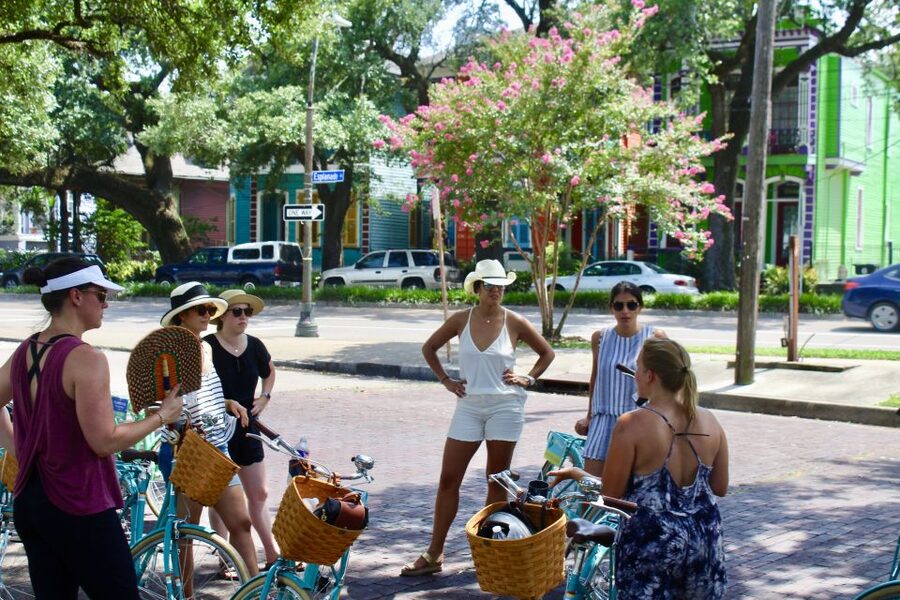
A walking tour can show you the French Quarter in close detail, but a bicycle lets you understand the city’s shape. You begin in the historic core, then pedal outward along a route that follows New Orleans’ growth into areas once shaped by water and bayous.
That change of setting is the tour’s main strength. You are not simply checking off attractions. You see how old neighborhoods, broad avenues, cemeteries, waterways, parks, and newer public paths fit together.
The ride covers the French Quarter, Faubourg Marigny, Esplanade Avenue, St. Louis Cemetery No. 3, City Park, Bayou St. John, Mid-City, the Lafitte Greenway, Louis Armstrong Park, and Congo Square. That is a lot of ground for three hours, but the route is described as flat and leisurely rather than strenuous.
The guide adds the meaning between the stops. You learn about Creole culture, how the city expanded into what used to be bayou, and why Bayou St. John mattered to Native Americans and French settlers. That gives the outing more substance than a simple sightseeing ride.
More Cycling Trips in the USA:
- Guided Bike Tour of Old Town Key West
★ 5.0 · 2,611 reviews - NYC: Central Park Bike Rentals
★ 4.2 · 2,528 reviews - Red Rock Canyon eBike Half-Day Tour
★ 5.0 · 1,870 reviews
Starting in the French Quarter and Faubourg Marigny
The meeting point is on North Rampart Street in the French Quarter, between Toulouse and St. Peter streets, next to Arrow Cafe. After you check in, you are fitted with a bicycle and given a bottled water. A helmet is optional, so you can choose what feels right for you.
Starting here makes sense. The French Quarter is the city’s most familiar district, but seeing it from a bicycle gives you a quick orientation before the route heads into less-visited areas. You will ride through this old center before moving toward Faubourg Marigny and Esplanade Avenue.
The first part is useful for getting your bearings. You are close to major visitor sights, yet the purpose is not to linger at every corner. This is a moving tour, with stops selected to explain how New Orleans developed rather than to provide a long visit at a single attraction.
Because the group is limited to 10, you should be able to stay close to the guide and hear the commentary. That matters in city traffic and at roadside stops. It also gives the experience a more personal feel than a large coach excursion.
Esplanade Avenue and the Creole mansions
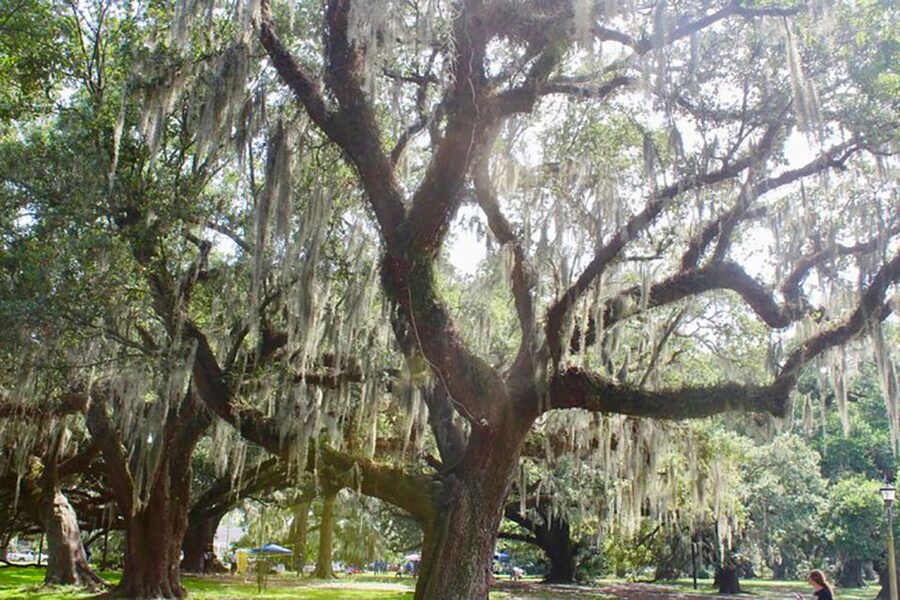
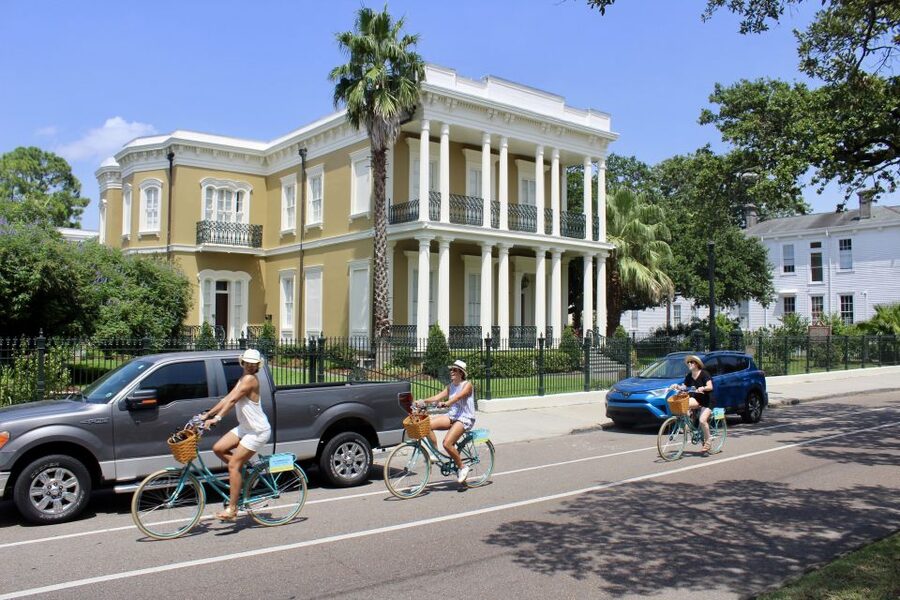
Esplanade Avenue is one of the most appealing stretches of the route. The ride follows a broad, leafy avenue beneath mature live oak trees, with Creole mansions providing a strong sense of place.
This is where the bicycle format earns its keep. You can cover a long avenue without tiring yourself out on foot, while still moving slowly enough to look around. The shade is welcome, especially in New Orleans’ warmer months.
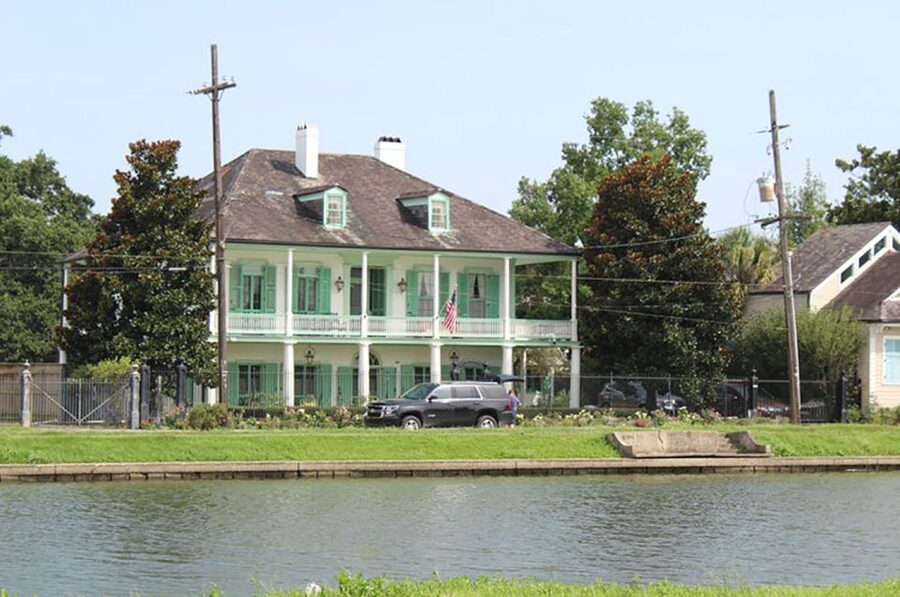
The houses also help explain the city’s social and architectural mix. The tour connects what you see along the avenue to Creole culture, rather than treating the buildings as a row of pretty facades. Your guide can help you notice how the neighborhood differs from the French Quarter and why the city expanded along routes like this.
Previous participants have repeatedly singled out the pace as comfortable. That is important here. A fast ride would turn Esplanade Avenue into a blur, while a very slow ride might make the full route feel rushed. The balance appears to be a steady cruise with regular stops for explanation.
St. Louis Cemetery No. 3 and New Orleans burial customs
The stop at St. Louis Cemetery No. 3 gives the tour one of its clearest cultural lessons. New Orleans burial practices are closely tied to the city’s environment, traditions, and community life, and the guide explains those customs as part of the city’s wider story.
You should not expect a long, formal cemetery visit with time to inspect every detail. It is one stop within a larger bike route. Still, it adds depth to the day because it shows that New Orleans culture is not only music, food, and colorful streets.
This stop may appeal most to you if you enjoy understanding the reasons behind local customs. It can feel less important if you want a pure cycling outing with minimal commentary. The tour is firmly a history and culture experience as well as a ride.
Bring respectful behavior and listen closely to the guide’s instructions. The cemetery is an active place of remembrance, not just a photo stop. That distinction is part of what makes the visit worthwhile.
Same roads, a different ride:
- NYC: Central Park Bike Rental
★ 4.1 · 1,651 reviews - Central Park Bike Rental
★ 4.7 · 1,509 reviews - Austin Biker Gang E-Bike Tour
★ 5.0 · 1,399 reviews - Asheville Historic Downtown Guided Electric Bike Tour with Scenic Views
★ 5.0 · 1,234 reviews
City Park, swampy views, and a change of pace
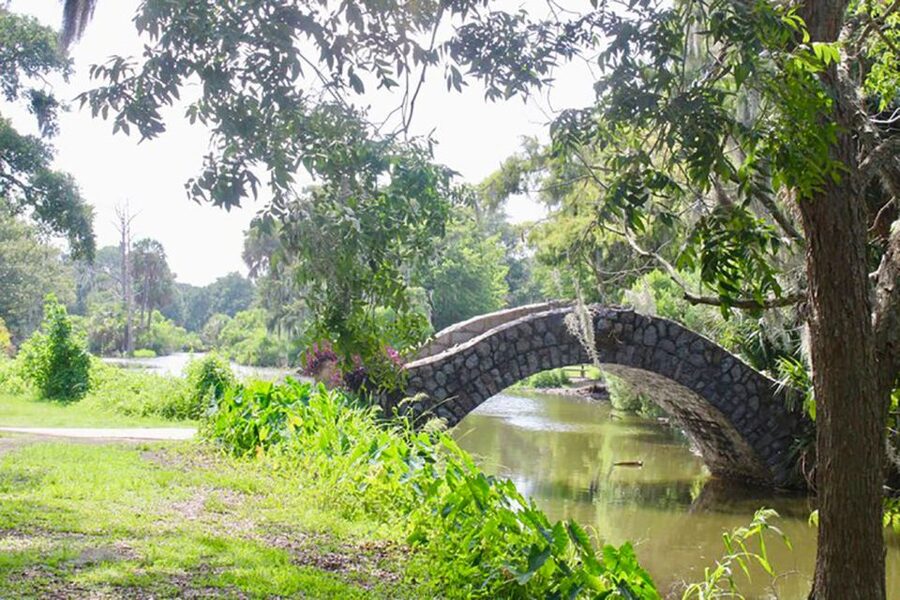
After the cemetery, the route continues toward City Park. The setting opens up, with greenery and swampy views replacing the denser streets of the French Quarter and Esplanade Ridge.
This portion gives your legs a break from urban riding and shows another side of New Orleans. City Park is not presented simply as a place to pass through. The tour uses it to explain how water, low ground, and open land shaped the city’s growth.
The park section is also where the ride’s eco-friendly character feels most natural. You are moving quietly under your own power, with more time to notice the surroundings than you would have from a car. Do not expect a long free period to explore the park independently, since the tour continues as a guided circuit.
The afternoon timing can be convenient, but it also makes weather a real consideration. The tour is usually available in the afternoon, and New Orleans heat can be strong. Wear proper shoes, avoid sandals and flip flops, and bring a sensible attitude toward sun and humidity. One bottle of water is included, but you may want to plan your own hydration needs around the three-hour duration.
Bayou St. John and the city’s earliest routes
Bayou St. John is one of the most meaningful stops because it connects geography to settlement. Native Americans and French settlers used this historic waterway, and its position helped shape the founding and later growth of New Orleans.
The guide explains why the bayou mattered rather than treating it as scenery alone. You learn how a water route could influence movement, trade, and the placement of a city. That context helps you understand why New Orleans developed in such an unusual pattern.
For me, this is the part that best answers the tour’s central question: how did a city built around waterways expand beyond its original core? You can see the answer in stages, from the older districts to the broad avenue, parkland, bayou, and Mid-City neighborhoods.
The stop should suit anyone who likes local history with a physical sense of place. You are not sitting in a museum hearing an abstract explanation. You are looking at the waterway while learning why it mattered.
Mid-City, Lafitte Greenway, and Louis Armstrong Park
The route also includes Mid-City and the Lafitte Greenway, linking the older core with parts of New Orleans that many first-time visitors miss. This keeps the tour from becoming a loop around the most photographed streets.
The Lafitte Greenway is particularly useful as a connector. It helps show how different parts of the city relate to each other and gives you another section of the ride away from the heaviest tourist traffic.
Louis Armstrong Park and Congo Square bring the story back to music, community, and cultural exchange. Congo Square is an important part of New Orleans’ cultural identity, and the stop fits well with the tour’s focus on Creole culture and jazz.
A guide with a musical background can add a personal layer here. Jeremy, one of the guides associated with this experience, is a musician and has brought that perspective to discussions of jazz. Guide quality matters greatly on a tour like this, since the ride itself is straightforward. The strongest part of the experience comes from how clearly and engagingly the guide connects each place.
What the three-hour pace feels like
The route is designed for people who can ride a bicycle comfortably but do not want a workout. The flat streets and leisurely pace make it accessible to many adults and older teenagers, but three hours is still a meaningful amount of time in the saddle.
You will stop at several points for stories and explanations, so you are not pedaling continuously. Even so, you should choose comfortable clothing and closed-toe shoes. Sandals and flip flops are not allowed, and participants must be at least 13 years old and taller than 4 feet 11 inches.
Anyone under 18 must be accompanied by a legal guardian. Unaccompanied minors are not permitted, and the operator requires every participant to sign a waiver. The tour is also not suitable for anyone who is intoxicated.
The pace has received especially strong praise. People have found it easy to follow, and the bicycles have generally been described as being in good condition. That does not remove the need to be honest about your own comfort on a bike. If you rarely cycle, the distance and heat may be more important than the flat route suggests.
The guide makes the difference
This experience depends heavily on the person leading it. The route has plenty to see, but a weak guide could reduce it to a string of streets and stops.
The guiding team has included Eric and Jeremy. Eric has been praised for giving a strong experience, while Jeremy has been noted for combining city history with his background as a musician. The best fit for you is a guide who can explain facts clearly without turning the ride into a lecture.
The available comments point to three consistent strengths: clear information, an entertaining delivery, and enthusiasm for New Orleans. That combination is especially useful on a bicycle tour. You need enough detail to understand the city, but not so much that you lose track of the group or spend the whole afternoon standing beside your bike.
A small group also helps. With no more than 10 participants, questions are easier to ask and the guide can keep an eye on the pace. It is not a private tour, but it should feel more personal than a large organized group.
Is $55 a fair price?
At $55 per person, the tour offers reasonable value for a three-hour guided experience. The price includes the bicycle, bottled water, and the English-speaking guide. You are paying not just for a rental bike, but for a planned route through several districts and for the explanations that connect them.
The value is strongest if you want a broad introduction to New Orleans. In one outing, you visit the French Quarter, Esplanade Ridge, City Park, Bayou St. John, Mid-City, Louis Armstrong Park, and Congo Square. Seeing all of those areas independently would take more planning and likely more time.
The price is less attractive if you only want a short bicycle rental or free time in City Park. This is a guided history and culture tour, so you should be ready to stop, listen, and follow the planned route.
Hotel pickup and drop-off are not included, and food is not included. You need to reach the North Rampart Street meeting point yourself and plan any meal or snack separately. Those are small costs, but they matter when comparing this outing with a larger sightseeing package.
The cancellation policy gives you some flexibility: you can cancel up to 24 hours ahead for a full refund. You can also reserve now and pay later, which helps if your New Orleans schedule is still shifting.
Who should book this bike tour?
I would choose this tour for a first or second visit when you want more than the French Quarter but do not want to spend a full day on an organized excursion. It suits you if you enjoy local stories, can ride at a relaxed pace, and want a guide to explain how the city fits together.
It is also a good choice for couples, friends, and older teenagers who prefer active sightseeing. The route offers enough variety to keep the afternoon moving, while the cultural stops give it purpose.
I would think twice if you dislike heat, have difficulty riding for three hours, or want a flexible schedule with long stops. The tour is not a hop-on, hop-off ride, and it is not designed around food tastings or extended time inside attractions.
Should you book it?
Book this tour if you want a clear, engaging introduction to New Orleans beyond the postcard streets. The strongest reasons are the flat route, small group, easy pace, and the range of places covered in three hours. St. Louis Cemetery No. 3, Bayou St. John, Congo Square, and the live-oak shade of Esplanade Avenue give the outing more character than a standard city ride.
Skip it if you are uncomfortable on a bicycle or visiting during weather you know you cannot handle. For most reasonably confident riders, though, $55 is a fair price for a thoughtful route and a guide who can connect Creole culture, burial customs, waterways, neighborhoods, and jazz into one useful afternoon.
FAQ
Where does the New Orleans Scenic City Bike Tour meet?
The meeting point is on North Rampart Street in the French Quarter, between Toulouse and St. Peter streets, next to Arrow Cafe.
How long does the bike tour last?
The tour lasts three hours and is usually available in the afternoon.
What places does the route visit?
The route includes the French Quarter, Faubourg Marigny, Esplanade Avenue, St. Louis Cemetery No. 3, City Park, Bayou St. John, Mid-City, the Lafitte Greenway, Louis Armstrong Park, and Congo Square.
Is the route difficult?
The route is flat and leisurely, but you should be comfortable riding a bicycle for three hours. The minimum age is 13, and participants must be taller than 4 feet 11 inches.
What is included in the price?
The $55 price includes bicycle use, an optional helmet, and one bottled water. Food and hotel pickup and drop-off are not included.
Can I cancel or pay later?
You can cancel up to 24 hours in advance for a full refund. You can also reserve your place and pay later.
New cycling reviews around the USA
- Portland, Maine: Coastal Lighthouses Guided Bicycle Tour★ 4.8 · 23 reviews
- Portland: Food Carts of the Eastside Bike Tour★ 4.9 · 16 reviews
- Essential Portland: 2-Hour Guided Bike Tour★ 4.8 · 43 reviews
- Portland: E-Bike Tour at Multnomah Falls★ 4.8 · 20 reviews
- Pittsburgh: Beauty of the Burgh Bike Tour★ 4.9 · 37 reviews
- NYC: Central Park Guided Electric Bike Tour★ 4.9 · 25 reviews
- Oahu: Kualoa Electric Bike Tour★ 4.6 · 14 reviews
- Oahu: Waikiki E-Bike Ride and Manoa Falls Hike★ 4.9 · 28 reviews
USA Cycling Tours, compared.





Asheville Historic Downtown Guided Electric Bike Tour with Scenic Views
Read our review →

Browse the lists this ride appears in