
Review · PARIS
Paris Bike Tour Hidden Secrets in the Latin Quarter & Le Marais neighborhoods
Paris reveals itself differently from a bicycle. In four hours, you can slip through the Latin Quarter’s narrow lanes, pause at an ancient Roman arena, eat a crepe near Rue Mouffetard, then pedal into Le Marais for Jewish history, elegant squares, and medieval walls. The route is built around places many first-time visitors miss.
I like the small-group format, capped at 12, and the way the tour mixes famous names with quiet corners. I also like the guides’ personal touch. Arnaud, Aaron, Lena, Joris, Lulu, and others have been praised for clear explanations, humor, and careful pacing. The main caution is traffic: this is city cycling, not a car-free park ride, so you need to feel steady on a bike.
Key points to know
- Two historic neighborhoods in one morning: Cycle through the Latin Quarter and Le Marais, with plenty of stops rather than four straight hours in the saddle.
- A local lunch break: You get about 30 minutes near Rue Mouffetard to buy crepes, bakery food, or a café meal.
- Small groups matter: The maximum is 12 people, though a smaller group can make street crossings and guide contact easier.
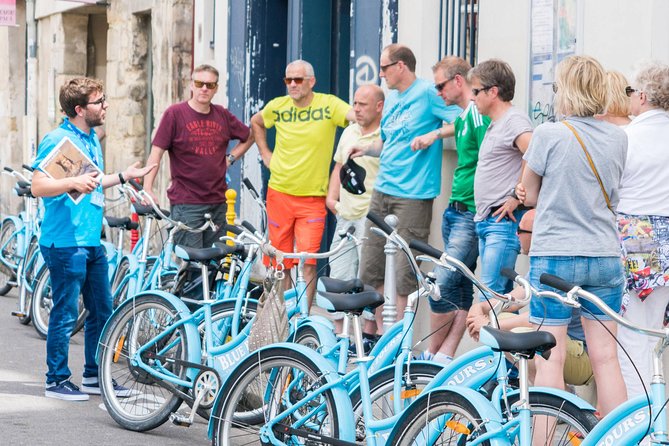
- Bikes and helmets are included: The bikes are reported to be in good condition, but they have no baskets, so bring a small backpack.
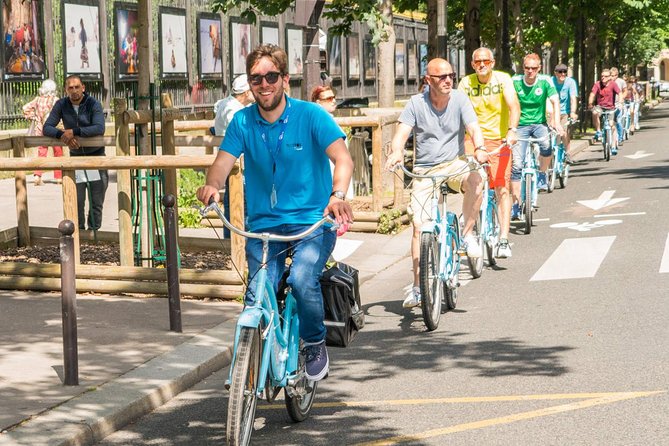
- Traffic requires confidence: You will ride beside cars, buses, scooters, and pedestrians in parts of central Paris.
- Plan for weather: The tour runs in all weather. Wear practical clothes and shoes, and bring rain protection.
What this four-hour Paris bike tour actually feels like
The meeting point is Fontaine Saint-Michel, near Notre-Dame, at 10:00 a.m. The fountain can be hard to spot if white market tents or construction block the view, so give yourself extra time and look carefully for the guide.
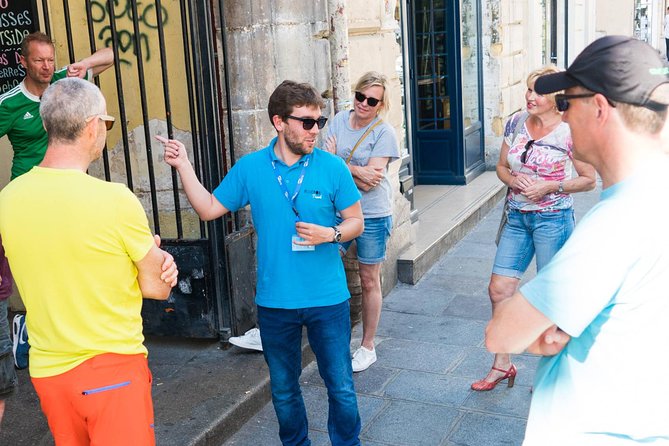
From there, the route moves through the Latin Quarter, then crosses toward Le Marais before returning to the starting point. The stops are short, usually 10 to 20 minutes, which keeps the morning moving. You are not simply hearing a lecture at one monument. You are stopping, walking the bike when needed, looking around, and then using the bicycle to connect the next piece of Paris.
The price is $54.42 per person. That includes the bicycle, helmet, and guide, but not lunch, drinks, admission to Saint-Sulpice, or a tip. For a half-day of sightseeing, it is a fair price if you value orientation and local stories. You cover more ground than on foot, and you get a route that would be difficult to plan on your own.
The value drops if you are mainly seeking famous postcard sights. This tour is more about texture, local streets, small discoveries, and context than about entering major museums or spending a long time inside one monument.
More Hidden Gems Bike Tours in Paris
- Electric Bike Tour of Paris’ Hidden Gems
★ 4.9 · 1,377 reviews - Paris Local Districts and Stories Off the Beaten Track Guided Bike Tour
★ 5.0 · 1,264 reviews - Paris 4-Hour Bike Tour: Off the Beaten Path
★ 4.8 · 426 reviews
Shakespeare and Company starts the Latin Quarter route
The first stop is Shakespeare and Company, the much-loved English-language bookshop near the Seine. Its medieval setting, wooden beams, plaster walls, and crowded shelves give it a feeling quite different from a modern bookstore.
You hear the story of the shop and get about 15 minutes of free time inside. The shop is known for giving visiting writers a place to sleep, so you might see someone connected with its literary tradition while browsing.
This is a good opening stop because it sets the tone. You are not rushing straight to a grand monument. You are beginning with a small Paris institution tied to books, writers, and the long habit of lingering in the Latin Quarter.
Le Procope and Saint-Sulpice add famous names and odd details
Le Procope, founded in 1686, is presented as Paris’s oldest café. The guide points out its links with figures such as Benjamin Franklin, Voltaire, Napoleon Bonaparte, and Victor Hugo. You have about 10 minutes here, mainly for stories and photographs rather than a full meal.
Next comes Saint-Sulpice, one of the largest churches in Paris. Its two towers do not match, and its history has enough strange turns to fill a short stop. The church also gained new attention after appearing in The Da Vinci Code.
The stop lasts about 15 minutes, and you may go inside. Admission is not included, so check the current arrangements before you count on an interior visit. The church is worth seeing for its scale and unusual appearance, but do not expect a long, quiet examination of every detail. This is a moving bike tour, not a church-focused visit.
The Pantheon gives the route a grand center
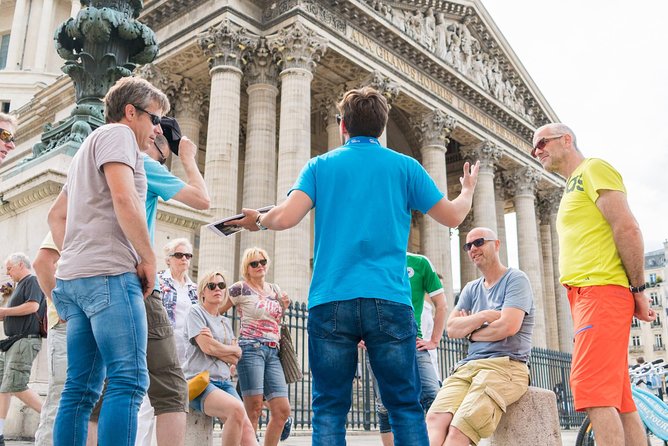
The Pantheon is one of the morning’s biggest landmarks. Its massive form can be easy to overlook when you are focused on the more famous Notre-Dame area, yet it carries major national importance as a burial place for distinguished French figures.
The guide introduces people connected with the building, including Pierre and Marie Curie, Alexandre Dumas, Victor Hugo, and Josephine Baker. The stop is about 15 minutes, with admission listed as free for the tour stop.
I like this part of the route because it connects architecture with French public memory. You get a quick sense of who France chooses to honor, then move on before the visit becomes tiring. If the Pantheon is high on your personal list, you will probably want to return later for a longer visit.
Same roads, a different ride:
- Versailles Palace Bike Tour with Market & Marie-Antoinette hamlet
★ 5.0 · 2,680 reviews - Paris: Charming Nooks and Crannies Bike Tour
★ 4.8 · 2,585 reviews - From Paris: Versailles Bike Tour w/ Palace, Gardens, & Picnic
★ 5.0 · 2,150 reviews - Paris: City Highlights Bike Tour
★ 4.7 · 1,835 reviews
Rue Mouffetard is the practical lunch break
The lunch stop near Marché Monge and Rue Mouffetard lasts about 30 minutes. This is not a catered meal. You pay for your own food, and the guide can point you toward savory crepes, bakeries, or small cafés.
The break is useful for more than eating. It gives you a chance to rest your legs, refill if needed, and see a part of the Latin Quarter associated with daily neighborhood life. The time is short, so I would not plan a formal sit-down meal. A crepe or bakery item makes more sense.
Bring a small backpack rather than relying on the bike. The bicycles do not have baskets, and carrying loose shopping bags while riding would be awkward. The lunch stop is also a good reason to keep your order simple.
Arenes de Lutece reveals Roman Paris
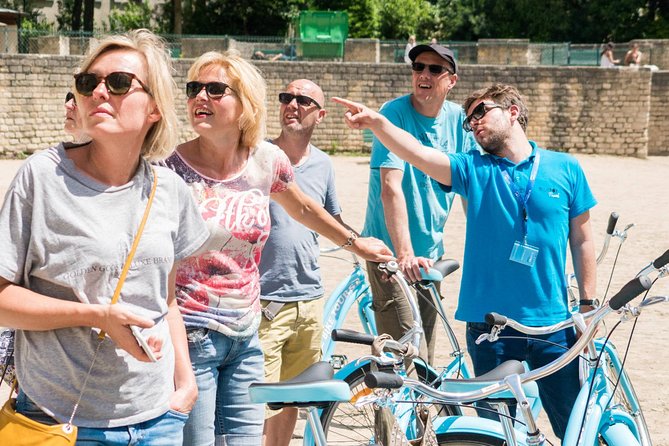
The Arenes de Lutece is one of the route’s most surprising stops. Paris began as Roman Lutetia, and this former arena offers a physical reminder of that early period. You cycle into the arena area and hear about the games and spectacles once held there.
The stop takes around 20 minutes. It is a strong example of what this tour does best: it connects a modern neighborhood with an older layer that is easy to miss from a taxi or metro window.
You should not expect a Colosseum-scale monument. The appeal is the contrast. A Roman arena sits within a present-day Paris neighborhood, and the guide helps you understand why that matters.
Le Marais changes the tone of the morning
Le Marais was once marshland, then developed over many centuries. Its identity today is tied to fashionable shops, handsome streets, and a long-established Jewish community.
The tour’s timing can be helpful if you ride on a Sunday. Many Paris shops close for at least one day each week, while Le Marais commonly closes on Saturday instead. That makes Sunday a particularly active shopping day in the area, though it can also mean more pedestrians and tighter riding conditions.
You will need to stay close to the guide here. Streets can become crowded, and some sections are better handled by walking the bike.
The Shoah Memorial brings a serious pause
The Memorial de la Shoah is a sober stop. A wall records the names of more than 3,900 non-Jewish French people who risked their lives to save Jewish people during World War II.
The visit lasts about 15 minutes. It is not a light sightseeing stop, but it gives the Le Marais portion a needed sense of place. The neighborhood’s Jewish identity is not just about restaurants and shops. It also carries painful memories, and the memorial asks you to acknowledge them.
The guide’s approach matters here. The strongest guides on this route, including Arnaud and others praised for thoughtful explanations, balance facts with respect and do not rush the subject.
Rue des Rosiers is best explored on foot
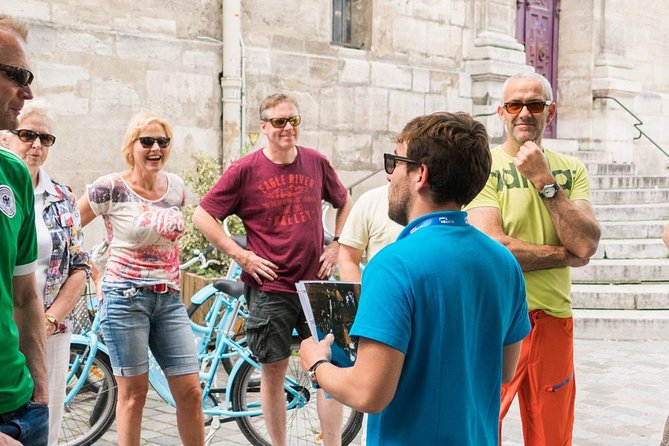
At Rue des Rosiers, you walk your bicycle along a pedestrian street and look into small shops and restaurants. The street is closely tied to the Jewish quarter and is known for kosher food, boutiques, and inviting aromas.
This is a short stop, about 15 minutes, so you will not have time for a full meal. Think of it as an introduction. If you enjoy the area, return later on foot, when you can browse more slowly and decide where to eat.
The instruction to walk the bike is important. Do not try to pedal through a busy pedestrian lane. It is safer, more polite, and more enjoyable to move at the same pace as people around you.
Place des Vosges offers the prettiest pause
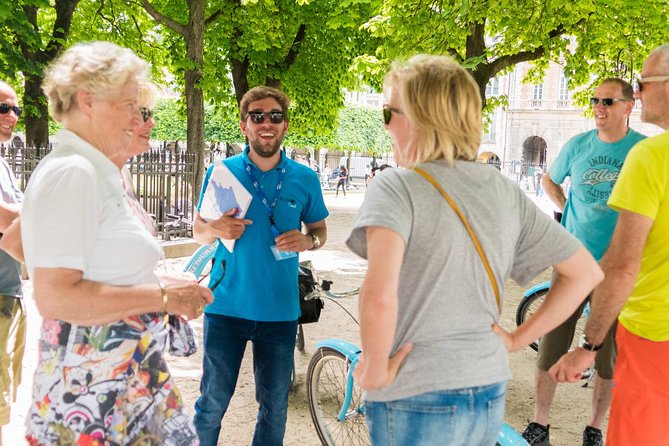
Place des Vosges is one of Paris’s most elegant squares. Its red-brick buildings date from the 1500s, and the arcades frame a grassy center used by local families and picnickers.
The guide gives you about 15 minutes to take in the square. It is a pleasant contrast to the narrow streets and serious memorial. You see the polished side of Le Marais, with art shops and a grand hotel, while the center remains open to ordinary neighborhood life.
This is a good place for photographs, but the short stop means you will not have time to visit every arcade or explore nearby streets. Mark it as a place to revisit if you want a slower afternoon.
Medieval walls and a turreted mansion finish the route
The Wall of Philip II Augustus is one of the route’s most useful history lessons. The French king built a defensive wall around Paris in the 1100s, during the era of Richard the Lionheart in England. The guide explains their unusual relationship and why the wall mattered.
The surviving section is described as the largest and best preserved part visible today. You get about 15 minutes there, enough to understand the scale and purpose without turning the stop into an archaeology class.
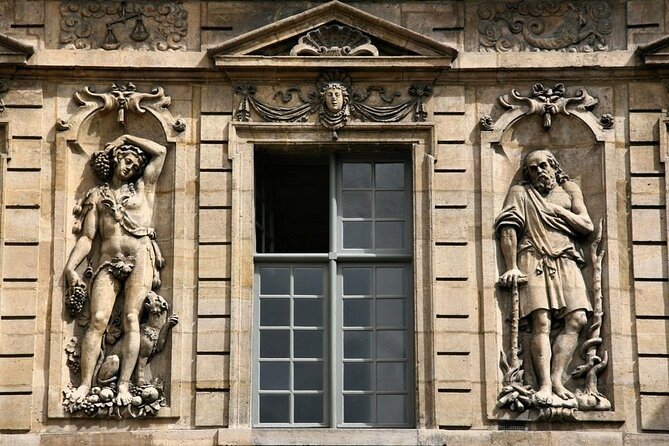
The final stop is the Hotel de Sens, a fortress-like mansion with turrets and gargoyles. Its facade still carries a cannonball, tied to a memorable story from the building’s past. It is exactly the kind of detail that is easy to miss if you pass by on public transportation.
Riding conditions deserve honest attention
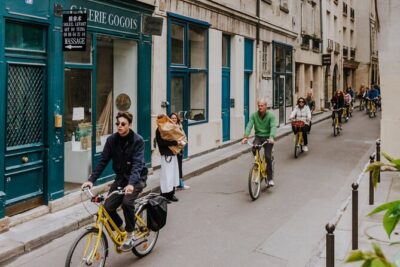
The tour is manageable for many riders, but it is not ideal for anyone nervous on a bicycle. You may ride near cars, buses, scooters, and pedestrians. Some sections have bike lanes, while others do not, and the group may need to cross busy roads.
One-speed bikes with low gearing can require firm standing pedaling on hills and at intersections. Several riders found the pace comfortable, while one older rider described the outing as a real workout. That is a fair warning: four hours includes stops, but you still need decent stamina.
The group can separate briefly at traffic lights. This is more noticeable when several people are inexperienced. A guide such as Lucien or Aaron can make the ride feel calmer through clear signals and careful navigation, but no guide can remove Paris traffic.
I would not choose this tour for someone who rarely cycles, fears close traffic, or expects a protected cycle path all morning. Confident city cyclists, families with bike-ready children, and active adults are a better match.
Bikes, children, weather, and what to bring
Bikes and helmets are included. The bicycles have been described as new and comfortable, although one rider reported a squeaky brake. Check your brakes before setting off and tell the guide at once if anything feels wrong.
Children aged 10 and older must be able to cycle independently. Children from 1 to 4 can use a reserved child seat on a parent’s bicycle. Children aged 5 to 9 may ride independently if able or use a reserved tandem attachment. Every child needs a paid place in the group.
Wear closed, practical shoes. Flip-flops are specifically discouraged. Bring a small backpack because there are no bike baskets, and pack a rain jacket or poncho. The tour operates in all weather, and one guide has been known to carry ponchos when rain was expected, but you should still arrive prepared.
Tips are not included. If your guide handles the streets well, answers questions, and keeps the group together, a tip is appropriate.
Should you book this Paris bike tour?
Book it if you want a fast but personal introduction to two central neighborhoods, especially if you have already seen the major monuments or prefer local streets to a standard coach route. The mix of Roman remains, literary Paris, French national memory, Jewish heritage, cafés, and elegant squares gives the morning real variety.
Skip it if city traffic makes you uneasy, if you need a fully car-free route, or if you want long interior visits at the Pantheon or Saint-Sulpice. At $54.42, the tour offers good value for an active half-day, provided you understand that the bicycle is both the attraction and the responsibility.
The strongest reason to book is the guide. Names such as Arnaud, Aaron, Lena, Joris, Lulu, Lucien, and Michael have been associated with humor, local detail, kindness, and safe navigation. A good guide turns a string of stops into a readable story about Paris. A small group makes that connection easier.
FAQ
How long does the Paris bike tour last?
The tour lasts approximately four hours, beginning at 10:00 a.m. and ending back at the Fontaine Saint-Michel meeting point.
Where does the tour start and finish?
It starts at Fontaine Saint-Michel, Place Saint-Michel, 75005 Paris, France. The activity ends back at the same meeting point.
What is included in the tour price?
The price includes a local guide, bicycle rental, helmet rental, and the guided visit through the Latin Quarter and Le Marais.
Is lunch included?
No. You receive about 30 minutes for lunch near Rue Mouffetard and pay for your own food and drinks.
Is the tour suitable for children?
Children aged 10 and older must know how to cycle independently. Children aged 1 to 4 may ride in a reserved child seat, while children aged 5 to 9 may ride independently or use a reserved tandem attachment.
How many people can join the tour?
The maximum group size is 12 people.
Does the tour run in bad weather?
Yes. The tour runs in all weather, so dress according to the forecast and bring rain protection when needed.
Do the bikes have baskets?
No. The bicycles do not have baskets, so bring a small backpack for personal items.
Can I cancel for a full refund?
You can cancel up to 24 hours before the local start time for a full refund. Cancellations or changes made less than 24 hours before the start time are not accepted for a refund.
New cycling reviews around Paris
- Private Highlights of Paris Bike Tour★ 4.9 · 12 reviews
- Paris: Guided Private E-bike Sightseeing Tour★ 4.4 · 19 reviews
- Paris: Street Art Open-Air Museum Bike Tour★ 4.8 · 51 reviews
- Paris: Versailles Golf Cart & Bike Tour with Palace Entry★ 4.8 · 58 reviews
- Paris: Versailles Palace and Queen Hamlet E-Bike Tour★ 5.0 · 126 reviews
- Paris: Private guided tour in Rickshaw bike – Gustave Eiffel★ 4.6 · 22 reviews
- Paris : Private guided tour in Rickshaw bike – Napoléon★ 4.5 · 23 reviews
- Paris : Private guided tour Rickshaw bike – Saint-Germain★ 4.7 · 15 reviews
Paris Cycling Tours, compared.
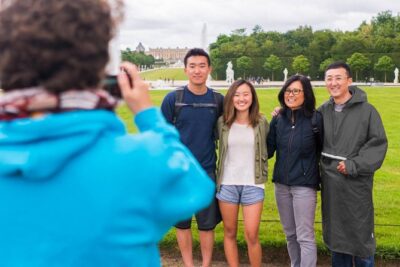
Versailles Palace Bike Tour with Market & Marie-Antoinette hamlet
Read our review →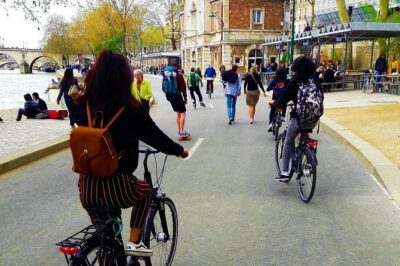
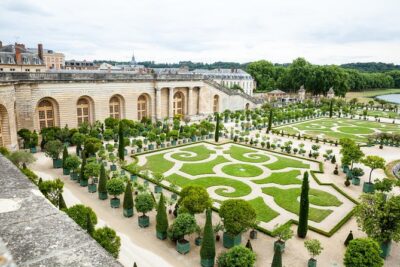
From Paris: Versailles Bike Tour w/ Palace, Gardens, & Picnic
Read our review →
Paris Local Districts and Stories Off the Beaten Track Guided Bike Tour
Read our review →
Highlights of Paris Bike Tour w/ a Local Guide (English or Dutch)
Read our review →Browse the lists this ride appears in