
Review · ITALY
Rome: Monuments and Belvederes Bike Tour
Rome: Monuments and Belvederes Bike Tour is a smart way to connect the city’s big sights in three hours. You pedal from the narrow lanes of Trastevere to the Aventine Hill, the Colosseum, Capitoline Hill, Trevi Fountain, Spanish Steps, Pincio terrace, Piazza Navona, and Saint Peter’s Basilica. It is a sightseeing sampler with some fine views along the way.
I like the hilltop viewpoints, especially the Aventine and Capitoline stops, because they help you understand how Rome is arranged. I also like the mix of grand monuments and ordinary streets, from imperial ruins to Trastevere’s alleys. The main drawback is simple: Rome has traffic, uneven streets, and hills, so this is not the right pick if you cannot ride comfortably.
- Aventine Hill provides an early city panorama, with a calmer setting than the major monuments.
- The Colosseum and Circus Maximus appear in the same ride, giving useful context about ancient Rome’s public life.
- Capitoline Hill offers a clear view toward the Roman Forum, even though the tour does not include an interior archaeological visit.
- Trevi Fountain, the Spanish Steps, and Piazza Navona bring together three of central Rome’s most famous public spaces.
- Bikes, helmets, and a child seat are included, with guides speaking English, French, Spanish, or Italian.
- The route returns to Via di San Calisto in Trastevere, making it easy to pair with an evening meal in the neighborhood.
Why a Bike Helps You See Rome in Three Hours
Rome is spread across a wide center, and its monuments do not line up in a tidy walking route. A bike lets you cover more ground without spending the whole morning on foot, while still moving slowly enough to notice fountains, churches, lanes, and hilltop views.
This is not a race through town. The plan includes photo stops and guided sightseeing at each major point. You should think of it as a well-paced introduction, not a substitute for entering the Colosseum, Roman Forum, Vatican Museums, or the Pantheon.
The tour begins at Via di San Calisto, 9, in Trastevere. Arrive 15 minutes early. You will receive a bike and helmet, and a child seat is available for families who need one. Bring a passport or identity card, or a copy of one, as requested for the activity.
Trastevere and the Ride to Aventine Hill
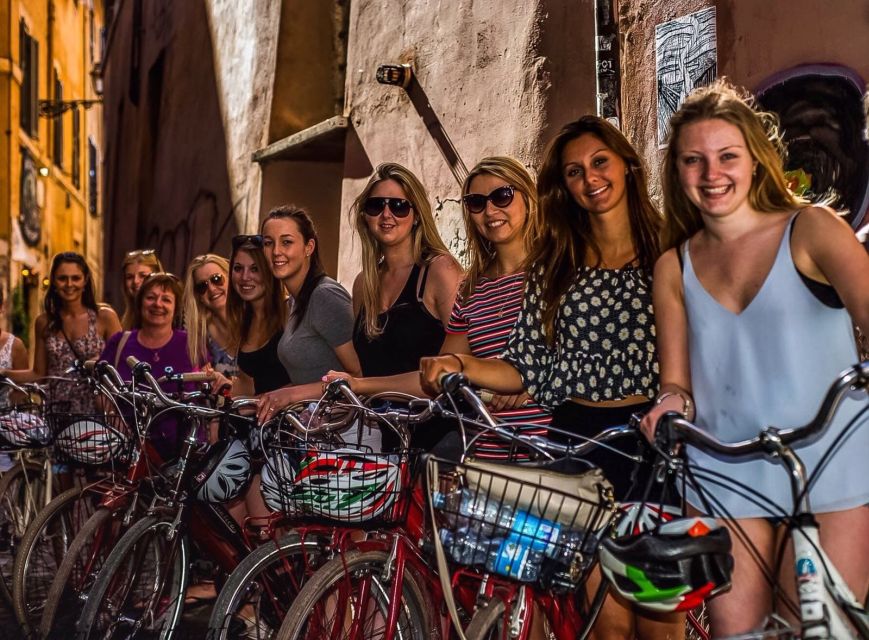
Trastevere gives the tour a pleasant start. Its narrow streets feel quite different from Rome’s grand ceremonial avenues, and the neighborhood provides an immediate sense of the city’s layered character. You begin among older lanes before heading toward one of Rome’s classic viewpoints.
Aventine Hill is one of the most rewarding stops on the route. From here, you get a broad view over Rome, and the change in height helps make sense of the city. It is a quieter pause before the tour reaches the heavy traffic of the ancient center.
The hill is also a reminder that Rome is not flat. You will be cycling uphill and downhill during the outing. The route may suit a reasonably active rider, but you should not book it if you cannot ride a bike. The supplied information does not give a detailed difficulty grade, so anyone concerned about hills should ask the provider before booking.
More Cycling Trips in Italy:
- Rome EBike Tour: Appian Way, Catacombs & Roman Aqueducts
★ 5.0 · 1,766 reviews - Rome: Top Highlights & Hidden Gems Tour by Cannondale E-Bike
★ 4.9 · 1,760 reviews - Rome: Appian Way & Aqueducts E-Bike Tour (Catacombs & Food)
★ 4.9 · 1,498 reviews
Circus Maximus and the Colosseum
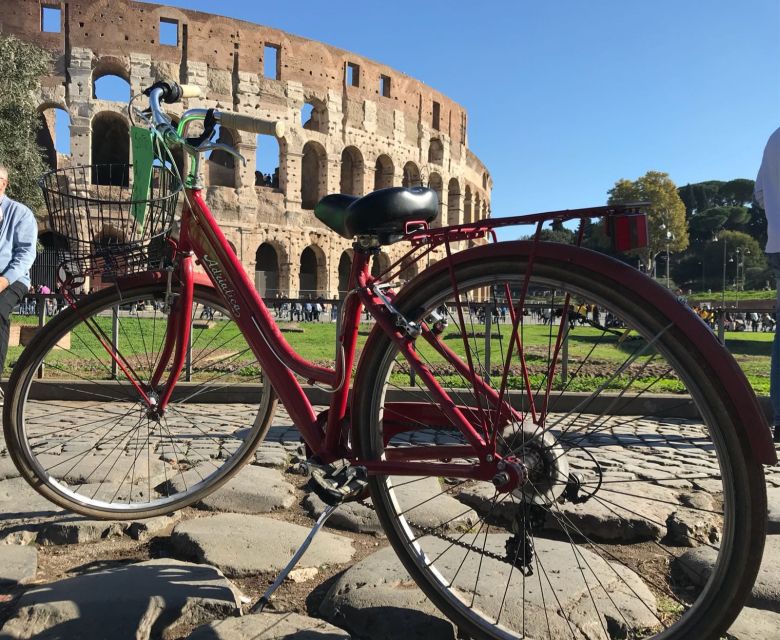
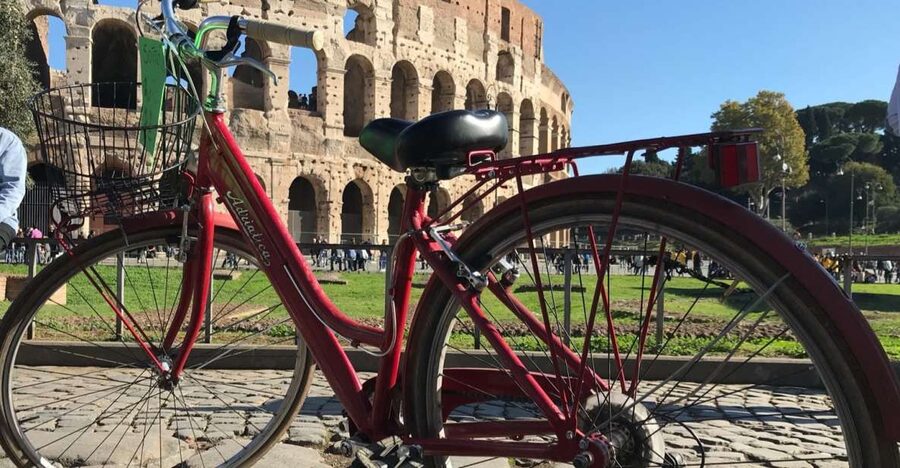
From Aventine Hill, the ride continues toward Circus Maximus and the Colosseum. These two sites make a useful pair. Circus Maximus was a vast venue for public spectacles, while the Colosseum is the famous surviving symbol of imperial Rome.
You will stop for sightseeing and photographs rather than enter either monument. That matters when you set expectations. The tour gives you orientation, stories, and exterior views, but a separate ticket is needed if you want to walk inside the Colosseum or explore the Roman Forum at length.
The bike format works well here because you can view the monuments in relation to one another. On foot, it is easy to treat each site as a separate stop. From a bike, you see how the ancient public center connects with the surrounding hills and streets.
Your guide is the key to this portion. The tour promises stories about Rome’s secrets and anecdotes about the city. Past guide names associated with this experience include Lorenzo, Mario, and Maurizio. If one of them leads your group, you can expect a personal, story-led approach rather than a silent transfer between monuments.
Capitoline Hill and the Roman Forum View
Capitoline Hill is one of the most important stops for understanding ancient Rome. From the viewpoint, you can look across the Roman Forum and see the remains of the city’s old political and religious center.
The view is valuable because the Forum can be confusing at ground level. Columns, arches, and broken walls do not always explain themselves. From above, the ruins form a clearer picture, and your guide can point out how the ancient center was arranged.
This is another exterior viewing stop, not an archaeological-site visit. If your priority is walking among the Forum ruins, plan a separate visit on another part of your Rome schedule. The bike tour gives you the broad picture first, which can make a later visit more rewarding.
The Capitoline approach also adds another uphill section. You do not need to be a serious cyclist, but you should be comfortable riding in a historic city with changes in grade and pavement.
Trevi Fountain and the Spanish Steps
After the imperial ruins, the tour shifts to Rome’s Baroque and early modern center. Trevi Fountain is one of the major photo stops. Its theatrical design makes it easy to understand why this corner of Rome attracts so much attention.
You will visit the fountain as part of the guided route, but the experience is brief compared with a dedicated stop. Use the time to admire the sculpture, listen to the explanation, and take your photographs without expecting a long pause for sitting or people-watching.
The Spanish Steps follow, with Trinità dei Monti church above. This section gives you a different view of Rome, built around elegant stairs, a grand church, and the flow of central streets. The route brings together two of the city’s best-known public spaces without requiring you to find them on your own.
Crowds and traffic can make both places less relaxed than the hilltop stops. A bike helps you reach them efficiently, but you may need to walk the bike or leave it briefly while viewing a crowded square. The exact riding conditions can change with the day and the city center.
Same roads, a different ride:
- Rome: Appian Way, Catacombs, & Roman Aqueducts E-bike Tour
★ 4.9 · 1,421 reviews - Rome City Small Group Bike Tour with quality Cannondale EBike
★ 5.0 · 1,380 reviews - Milan: Hidden Gems Guided Bike Tour
★ 4.8 · 1,334 reviews - Tuscany Bike Tours Through the Chianti Hills with Wine Tasting
★ 5.0 · 1,300 reviews
Pincio Balcony and Piazza del Popolo
The ride then reaches the Pincio balcony, another panoramic point above the city. This is one of the tour’s strongest ideas: instead of seeing Rome only from street level, you repeatedly climb to places where the city opens out.
From the Pincio, you can look toward Piazza del Popolo and the wider center. The stop provides a useful pause after the fountain and stair sections, and it gives you a chance to see the relationship between Rome’s major avenues, churches, and public spaces.
The itinerary includes Rione IV Campo Marzio, the historic district around much of the central route. This keeps the ride connected to Rome’s everyday urban fabric rather than limiting it to ruins. You move between monumental places and the streets that link them.
Piazza Navona and Bernini’s Fountain
The route returns through the medieval city toward Piazza Navona. This long, elegant square is famous for Bernini’s Fountain of the Four Rivers, one of Rome’s most theatrical fountains.
Piazza Navona is a good place for your guide to explain how Rome reused older urban spaces and filled them with later architecture. The tour focuses on the square and its fountain, with time for photographs and a short visit rather than a full art-history lecture.
I like this part because it keeps the tour from becoming a parade of only ancient ruins. Rome’s character comes from its layers: imperial remains, medieval lanes, Baroque fountains, Renaissance churches, and modern city life all sit close together.
Castel Sant’Angelo and Saint Peter’s Basilica
Near the end, the ride reaches Castel Sant’Angelo and Saint Peter’s Basilica. These are two of Rome’s most recognizable landmarks, and seeing them together gives you a strong finish.
Castel Sant’Angelo began as a Roman mausoleum and later took on other roles, while Saint Peter’s Basilica represents the center of the Vatican area. The tour offers exterior views and a chance to admire the setting. It does not include entry into the basilica or Vatican sites.
That distinction is important. If you want to climb the dome, visit the Vatican Museums, or explore Castel Sant’Angelo inside, you will need separate tickets and additional time. This bike tour is best used to get your bearings and identify places to revisit.
After the stop, you ride back toward Via di San Calisto, 9. The return to Trastevere makes the experience convenient for a meal or further exploring in the neighborhood.
What the $71 Price Gets You
At $71 per person, the tour sits in the middle range for a three-hour guided city activity. The value comes from combining a guide, bicycle, helmet, and a child seat with a route that reaches many separate parts of Rome.
You are paying mainly for time saved and local explanation. Covering Trastevere, Aventine Hill, Circus Maximus, the Colosseum, Capitoline Hill, Trevi Fountain, the Spanish Steps, Pincio, Piazza Navona, and the Vatican area on foot would take much longer and require careful route planning.
The price does not include food, drinks, hotel pickup, or drop-off. It also does not include entry to the major monuments. Add those costs if you plan to visit inside after the ride.
For a first visit, I think the price can make sense if you want a broad overview in one morning or afternoon. If you prefer slow museum visits and long stops at each monument, spend the same money on a smaller walking tour or individual site tickets instead.
The Guides and the Feel of the Experience
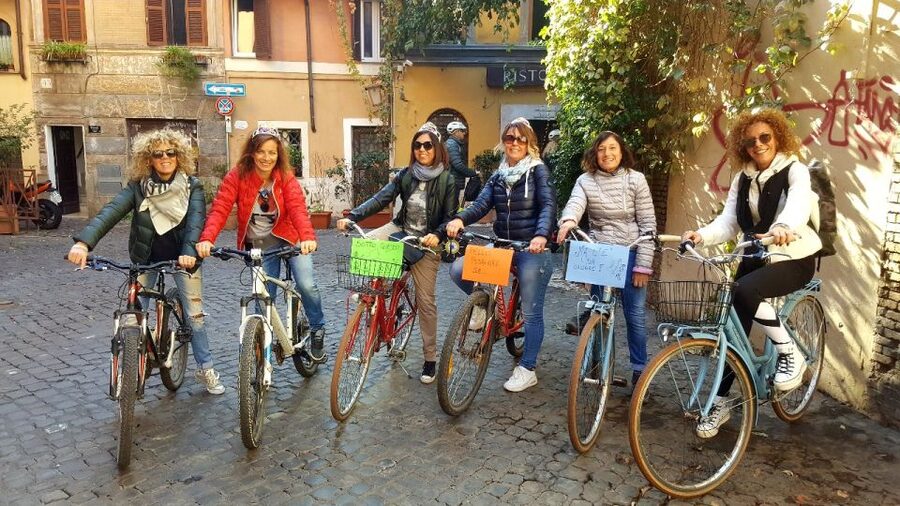
The strongest praise attached to this activity centers on the guides. Lorenzo has been described as friendly and full of city anecdotes, while Mario and Maurizio have led different bike routes through the capital. The practical takeaway is that the guide can shape the experience more than the bike itself.
Expect live guiding in English, French, Spanish, or Italian. The route is not simply a ride with an audio recording. Your guide leads the group, explains the monuments, and answers questions along the way.
One useful detail from past outings is that a guide has offered restaurant suggestions at the end. Treat that as a possible benefit rather than a guaranteed service, but it fits the tour’s local, conversational character.
The overall rating is 4.7 from 26 ratings, with strong marks for the guides, stories, and fun of seeing Rome by bike. The sample includes a French-language account of an unusual three-hour route, along with enthusiastic comments in English, French, Portuguese, and Spanish. One short four-star response simply called it cool, so the experience is well regarded but not beyond criticism.
Who Should Book This Ride
I would recommend this tour to first-time visitors who want a fast but meaningful orientation. You will see enough of Rome to decide where you want to return for a longer visit.
It also suits people who enjoy moving through a city rather than sitting in a tour vehicle. The route includes real streets, hills, narrow lanes, famous squares, and broad viewpoints. Families may appreciate the included child seat, though the rider must be able to use a bike and manage the route’s urban conditions.
This is less suitable for anyone who wants long museum visits, a fully accessible route, or a relaxed, flat ride. The activity specifically excludes people who cannot ride a bike, and the route includes hills. You should also be prepared for a three-hour outing without included food or drinks.
Practical Advice Before You Go
Wear comfortable clothes and shoes that work for cycling. Bring your passport or identity card, or a copy, and arrive 15 minutes before the scheduled start at Via di San Calisto, 9.
Check the available start times when booking. The activity lasts three hours, and free cancellation is available up to 24 hours before the start for a full refund. You can also reserve now and pay later, which helps if your Rome schedule is still changing.
Do not plan this ride as your only visit to the Colosseum, Roman Forum, Vatican, or Castel Sant’Angelo. Use it as an overview, then return to the places that catch your interest with proper entry time.
Should You Book the Rome Bike Tour?
Book it if you want to connect Rome’s major sights quickly, enjoy city views from Aventine, Capitoline, and Pincio, and prefer a guide who adds stories to the ride. The route is especially useful early in your stay, when you are still learning how Rome fits together.
Skip it if cycling hills or riding through busy historic streets sounds stressful. At $71, the value is strongest for active visitors who want many landmarks in one guided outing. For everyone else, a walking tour with fewer stops may be more comfortable.
FAQ
How long does the Rome bike tour last?
The tour lasts three hours.
Where does the tour begin and end?
It begins and ends at Via di San Calisto, 9, in Rome.
How early should I arrive?
Arrive at the meeting point 15 minutes before the activity starts.
Which landmarks does the route include?
The route includes Trastevere, Aventine Hill, Circus Maximus, the Colosseum, Capitoline Hill, Trevi Fountain, the Spanish Steps, Trinità dei Monti church, the Pincio balcony, Piazza del Popolo, Piazza Navona, Castel Sant’Angelo, and views of Saint Peter’s Basilica.
Is entry to the Colosseum or other monuments included?
No. The tour includes guided sightseeing and photo stops, but admission to monuments is not included.
What languages are available?
The live tour guide can lead the experience in English, French, Spanish, or Italian.
What equipment is included?
A bike and helmet are included. A child seat is also available.
Can I cancel for a refund?
You can cancel up to 24 hours in advance for a full refund. The activity also offers a reserve-now, pay-later option.
New cycling reviews around Italy
- Rome: Full-Day Guided Tour by E-Bike with Lunch Included★ 4.9 · 36 reviews
- Rome: Panoramic Off-the-beaten-track Cannondale E-Bike tour★ 5.0 · 71 reviews
- In Rome like a star: e-bike tour with photo shoot★ 4.9 · 20 reviews
- Rome :guided night e-bike tour with typical ice-cream★ 5.0 · 55 reviews
- Hidden Rome: Small Group E-Bike Tour with Street Food Stops★ 4.9 · 144 reviews
- Rome: E-Bike Sunset Tour with Pizza Option★ 4.9 · 428 reviews
- Rome: Early Morning E-Bike Tour★ 4.9 · 84 reviews
- Rome: E-Bike Tour of Appia Antica, Aqueducts, and Caffarella★ 4.9 · 51 reviews
Italy Cycling Tours, compared.
Rome EBike Tour: Appian Way, Catacombs & Roman Aqueducts
Read our review →
Rome: Top Highlights & Hidden Gems Tour by Cannondale E-Bike
Read our review →
Rome: Appian Way & Aqueducts E-Bike Tour (Catacombs & Food)
Read our review →
Rome City Small Group Bike Tour with quality Cannondale EBike
Read our review →
Tuscany Bike Tours Through the Chianti Hills with Wine Tasting
Read our review →
Rome by Night – Ebike Small Group Tour – Food and Wine (Option)
Read our review →
Florence: Guided E-Bike Tour to Piazzale Michelangelo
Read our review →
Florence: 2-Hour Guided Sightseeing Bike Tour
Read our review →Browse the lists this ride appears in