Review · SEOUL
Seoul E-bike Tour
Seoul’s best introduction may be on two wheels. This three-hour e-bike ride links palace gates, old neighborhoods, a traditional market, and a Buddhist temple without asking you to spend the whole morning on foot. The electric assist is especially useful on the hills around Bukchon Hanok Village.
I like the smart early route, which helps you reach major sights before the streets become difficult to navigate. I also like the small-group format, with a maximum of 15 people, plus local snacks at Tongin Market. The main consideration is that you need moderate fitness, basic cycling confidence, and a reusable water bottle.
Key things to know before you book
- Gyeongbokgung Palace and the changing of the guard: Timing may allow you to see this ceremony from a good viewing spot.
- Electric bikes for Seoul’s hills: The motor takes much of the strain out of Bukchon and other rising streets.
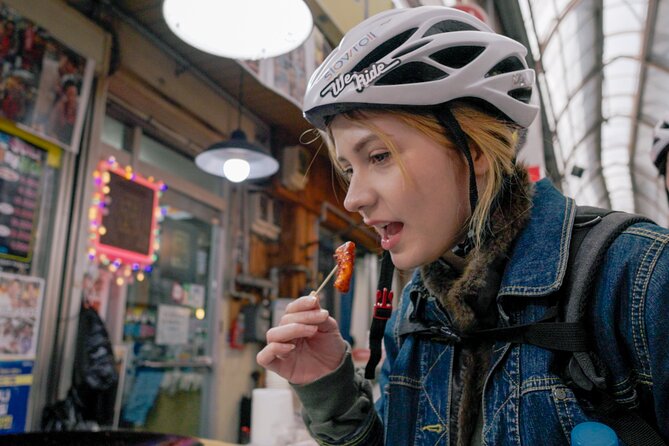
- Traditional food at Tongin Market: Your guide provides local snacks, including rice cakes and tteokbokki on some departures.
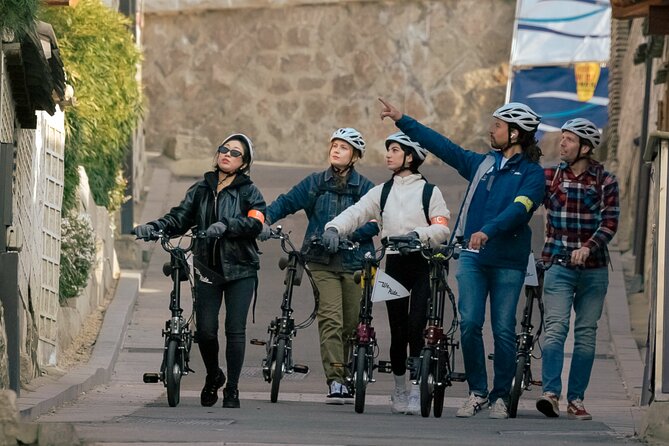
- Small groups with safety support: Guides ride at the front and back when needed, helping the group move through city streets.
- Photos sent after the tour: Guides such as Harry and Taejin have taken photos throughout the ride so you can enjoy the stops without constantly using your phone.
- Early arrival is required: Plan to arrive 20 to 30 minutes before departure for fitting, safety instruction, and preparation.
Why an e-bike works so well in central Seoul
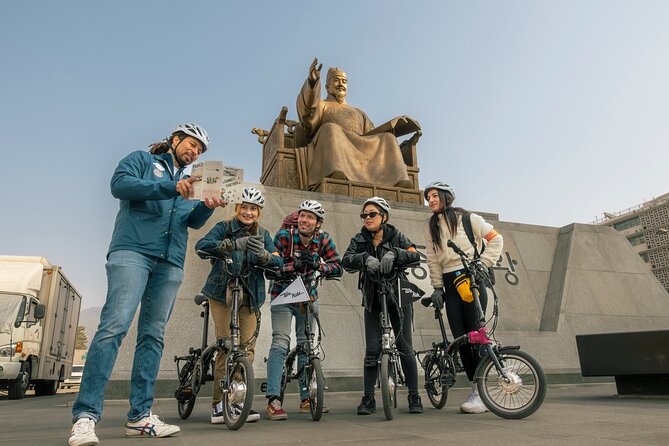
Seoul is a big city, but many of its most interesting sights sit fairly close together in the historic center. The trouble is that the distances between them can be tiring on foot, while a bus or taxi can leave you watching the city through glass. An e-bike gives you a useful middle ground.
You ride between major sights, then stop for short explanations, photographs, food, or a brief walk. The electric motor does not remove the active part of the experience, but it makes the hills and longer connections much easier. Several people of different ages have managed the route together, including one reported group ranging from age 10 to 65.
You should still be comfortable steering, braking, and following a guide through city streets. The tour is not a race, and the team places strong attention on safety. The guides may use a front-and-back riding arrangement, which helps keep the group together.
The route also favors smaller streets and bike lanes when possible. That matters in Seoul, where large roads can be noisy and intimidating if you are unfamiliar with local traffic. The ride is active, but it is not designed as a strenuous cycling workout.
More E-Bike Tours in the world:
- 3-Hour Porto Highlights on a Electric Bike Guided Tour
★ 5.0 · 4,392 reviews - Lisbon: Hills, Alfama, and Mouraria Tour by Electric Bike
★ 4.8 · 3,438 reviews - Athens Scenic Electric Bike Tour with optional Acropolis visit
★ 5.0 · 3,350 reviews
Starting at Jongno Town
The meeting point is at Le Meilleur Jongno Town, 19 Jong-ro, in Seoul’s Jongno District. You need to arrive 20 to 30 minutes before the stated tour time, not at the last minute.
This early period is used for bike fitting, helmet and vest distribution, safety instruction, and basic preparation. It is included in the overall outing, but it is not sightseeing time. If you arrive just as the group is due to leave, you are making the morning harder for yourself and the guide.
The tour provides the e-bike, helmet, safety vest, and insurance. Bring a reusable water bottle, since one is required. You can also purchase a bottle before departure, and a refill point is available along the route according to the practical guidance shared during the ride.
The group can include up to 15 people, though some departures are much smaller. A small group helps the guide answer questions, manage crossings, and adjust the pace. It also makes stops at narrow lanes and market stalls less awkward.
Cheonggyecheon Stream: Seoul’s old waterway
The first sightseeing stop is Cheonggyecheon Stream, once a major waterway through the city. You pause for about 10 minutes, enough to hear how this central part of Seoul changed over time and to look at the stream itself.
This is not a long riverside walk. Think of it as an opening lesson in how Seoul’s older infrastructure and modern city life sit side by side. The stop helps place the rest of the morning in context before you move toward the palace district.
Gyeongbokgung Palace and a chance to see the guards
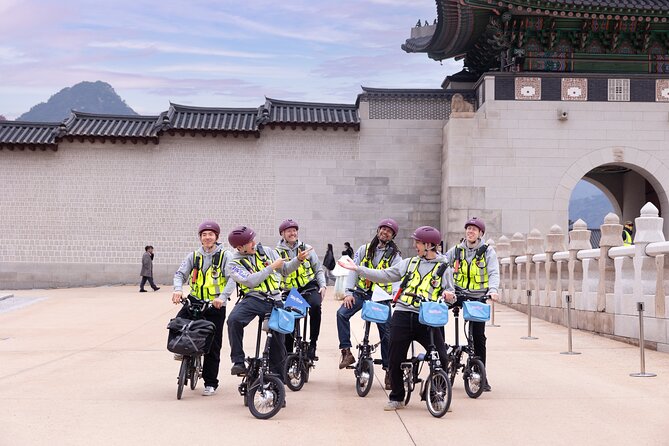
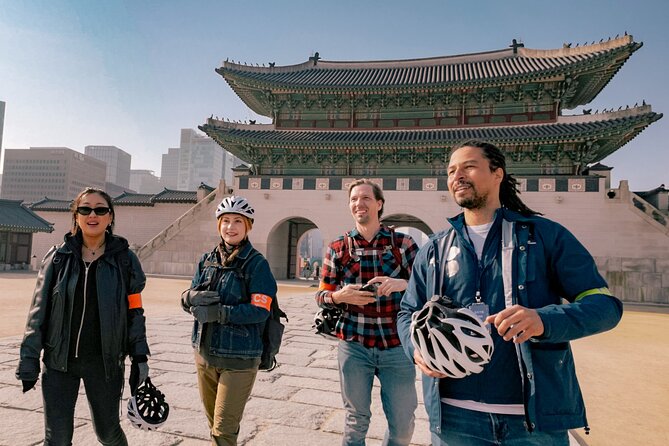
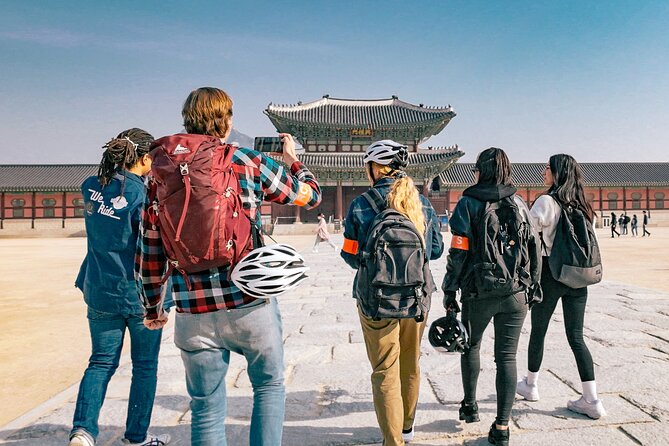
Gyeongbokgung Palace is one of the tour’s central sights. You stop near the grand gate for about 10 minutes, with an explanation of its role as the oldest palace in Seoul’s historic royal center.
The short visit is useful for orientation and photographs, but it is not a substitute for a full palace visit. If you want to explore the palace buildings, courtyards, and museum areas at a slower pace, plan to return independently after the tour.
Timing can make this stop especially rewarding. Guides Jun and Taejin have brought groups in time to watch the changing of the guard from beginning to end, and the guides know where to stand for photographs. This depends on the departure time and ceremony schedule, so you should treat it as a possible bonus rather than a guarantee.
Because the palace is a major Seoul sight, this is one place where an early start pays off. The group can see the gate before the area becomes more crowded, then continue before the visit turns into a long stop.
More Cycling Trips in the world:
- Lion City Bike Tour of Singapore
★ 5.0 · 6,211 reviews - Big Bike tour Amsterdam – See all in 3 unforgettable hours
★ 4.7 · 4,929 reviews - Ninh Binh Full-Day Tour from Hanoi to Hoa Lu, Tam Coc & Mua Cave Via Boat & Bike
★ 5.0 · 4,384 reviews - Small Group Guided Bike Tour of Amsterdam’s Hidden Gems
★ 5.0 · 3,936 reviews
Tongin Market and local Korean snacks
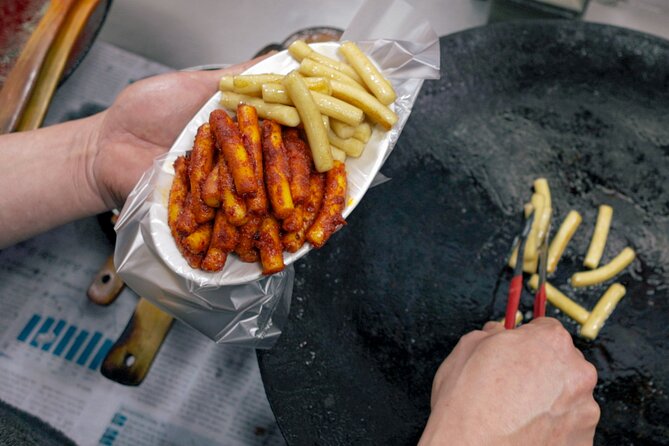
At Tongin Market, the focus shifts from royal Seoul to everyday food culture. The tour includes snacks from the traditional market, with guides recommending local specialties. Depending on the day, you might try tteokbokki or several types of rice cake.
The food stop is brief, around 10 minutes, so do not expect a full meal. Lunch is not included. Still, this small tasting adds something a palace-and-photo itinerary often lacks: a direct connection with the ordinary food stalls and neighborhood businesses that make the older districts feel lived in.
The market stop is also a good reason to keep the group small. A guide can point out what to try, explain what you are eating, and keep the break moving without turning it into a formal restaurant visit. One useful detail: some food selections have included vegan snacks, but you should tell the guide about dietary needs before ordering.
If you have a large appetite, plan lunch afterward. The included food is a tasting, not a replacement for one.
Seochon and the older city wall
Seochon offers a quieter look at the area around the palace. The stop includes a glimpse of an old city defense and passage through the oldest surviving gate in Seoul’s city wall. There may also be an optional hot drink and a short walk.
This section gives the ride some texture. You are not simply moving from one famous landmark to another. You are seeing older lanes, defensive features, and neighborhood streets that make more sense when explained by someone familiar with the city’s past.
The walk is short, but the route is not entirely flat. If you have limited mobility or dislike getting on and off a bike often, take note. The tour is best for someone who can handle moderate physical activity and a little unevenness without needing a long rest at each stop.
The Blue House and a change of scenery
The route continues to the Blue House, the former presidential residence. The stop lasts about 10 minutes and adds a modern political chapter to the morning’s older royal and neighborhood sights.
This is a useful contrast with Gyeongbokgung Palace. Within a relatively short ride, you move from the royal court to the center of South Korea’s recent government history. The tour does not spend hours inside the site, so the value here comes from seeing its setting and hearing the guide’s explanation.
The Blue House is also part of the route’s wider design. You are getting more than a list of central Seoul’s most famous postcard views. The morning connects royal power, city defenses, local food, residential architecture, and modern government.
Bukchon Hanok Village and the tour’s biggest hill
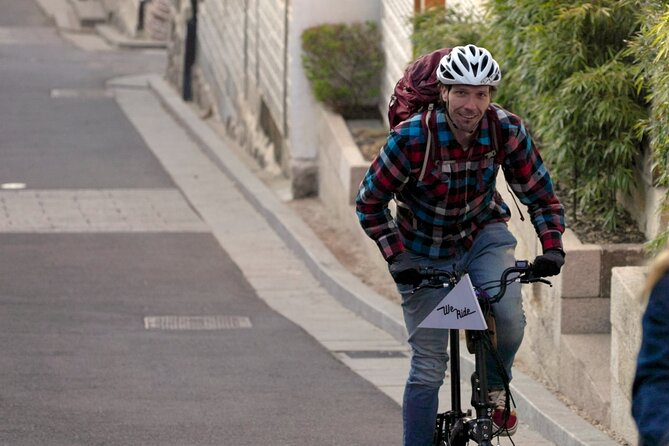
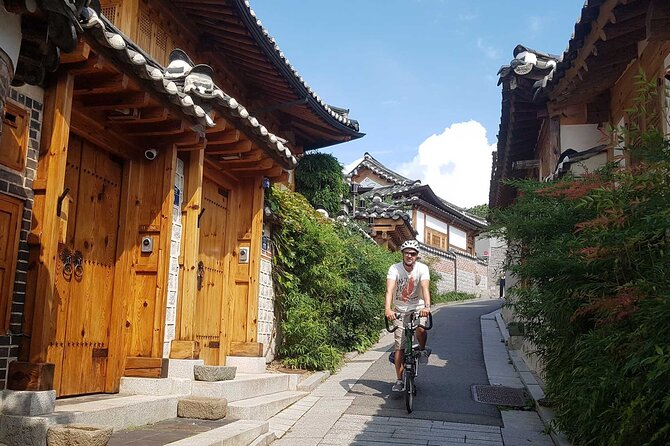
Bukchon Hanok Village is likely the most demanding cycling section. Its traditional hanok homes and narrow streets are picturesque, but the hills can make a walking visit tiring, especially in warm weather. The e-bike is a major help here.
You stop for about 15 minutes for photographs and a closer look at the neighborhood. Some departures have also included a visit to a traditional hanok home, where the guide explained the architecture and the underfloor heating system used in Korean homes.
You should remember that Bukchon is a residential area, not simply an outdoor photo set. Keep your voice down, follow the guide’s instructions, and avoid blocking narrow lanes. The brief stop gives you a look without turning the visit into a long intrusion into the neighborhood.
This is one place where the electric motor changes the experience. You still pedal, but the assist takes away much of the strain on the climb. One person described zipping through the hilly village without breaking a sweat, which is a fair picture of what the bike is meant to do.
Jogyesa Temple and the quiet finish
Jogyesa Temple provides a calm ending after the palace district, market, and hillier neighborhoods. You have about 15 minutes to look around the temple grounds and take in the quieter atmosphere.
The stop works well at the end because it slows the pace. Rather than finishing beside another traffic-heavy road, you get a peaceful final look at Seoul’s religious life. The temple also rounds out the cultural range of the trip, which has already included royal, political, residential, and food traditions.
The ride then returns to the original meeting point. Since the activity ends where it begins, you can collect anything left at the starting location and continue to your next Seoul plan from Jongno.
The guides, safety, and photographs
Guide quality matters greatly on a city bike tour. The team has included TJ, Harry, Vincent, Jun, Taejin, Hagar, Limmi, and others, so the exact guide pairing depends on the departure. Vincent has been noted for clear English and detailed explanations, while TJ and Harry have been praised for keeping the ride friendly, organized, and safe.
The guides do more than point at buildings. They explain changes in Seoul’s culture and city life, recommend places to eat afterward, and sometimes help you work out how to reach your next destination. That last service is easy to overlook, but it is valuable during a first visit.
Photography is another thoughtful feature. Guides have taken pictures at the palace, village, and other stops, then sent them afterward. This lets you pay attention to traffic, food, and the guide instead of holding your phone up at every stop. You should not assume a formal professional photo package, but the extra pictures can become a useful record of the morning.
The tour includes safety equipment and insurance. Even so, you remain responsible for following instructions and riding within your ability. The company recommends a moderate level of fitness, and that advice should be taken seriously if you are not used to cycling.
Timing, weather, and value at $120
At $120 per person, this is not the cheapest way to see Seoul’s center. You are paying for an e-bike, equipment, insurance, a guide, a snack stop, route planning, and the convenience of moving between several districts in about three hours.
The value is strongest if you have limited time or want a useful first look before exploring certain places on your own. A taxi could move you between some stops, but it would not give you the same street-level view. Walking is cheaper, but you would cover less ground and feel the hills more sharply.
The price is harder to justify if you already know central Seoul well, prefer long independent visits inside museums and palaces, or want a full meal rather than market snacks. The stops are short by design. You get breadth, local explanation, and efficient movement, not extended time at each attraction.
The tour relies on decent weather. If poor weather forces cancellation, you are offered another date or a full refund. You can cancel for a full refund up to 24 hours before the start time, but changes or cancellations inside that window are not refunded.
Who should book this Seoul ride?
I would choose this for a first or short visit, especially if you want to understand how Seoul’s main historic districts fit together. It suits active couples, families with older children, solo visitors who like a social outing, and anyone who finds a full day of walking too tiring.
It is also a good opening activity. After the ride, you will know which areas deserve a longer return visit, whether that means a full palace exploration, more time in Bukchon, or a separate food stop around Tongin Market.
You should think twice if you are uncomfortable cycling in urban surroundings, cannot manage moderate activity, or need long, unhurried visits at every attraction. You should also allow extra time before departure for bike fitting and bring water.
Should you book the Seoul E-bike Tour?
Yes, if you want a lively overview of central Seoul and value local guidance more than long museum visits. The combination of e-bike assistance, early routing, market snacks, historic neighborhoods, and small-group support gives you a lot in three hours.
Book it early in your Seoul stay if possible. That way, you can return to Gyeongbokgung, Bukchon, Seochon, or the market after learning what interests you. At $120, it is a considered purchase, but for a first look at Seoul without exhausting your legs, it is a strong use of one morning.
FAQ
How long does the Seoul E-bike Tour last?
The experience lasts approximately three hours. You must also arrive 20 to 30 minutes before departure for bike fitting, safety instruction, and preparation.
What sights are included?
The route includes Cheonggyecheon Stream, Gyeongbokgung Palace, Tongin Market, Seochon, the Blue House, Bukchon Hanok Village, and Jogyesa Temple. The tour begins and ends at the We Ride Korea meeting point.
Are e-bikes and safety equipment included?
Yes. The tour includes use of an e-bike, a helmet, a safety vest, and insurance.
Is food included?
Yes. Local Korean snacks from the traditional market are included. Lunch is not included.
Do I need to bring water?
Yes. You must bring a reusable bottle or purchase one before the tour. A refill station is available along the route.
How many people can join the tour?
The maximum group size is 15 people.
What happens if the weather is poor?
The experience requires good weather. If it is canceled because of poor weather, you can choose another date or receive a full refund. For your own cancellation, a full refund is available if you cancel at least 24 hours before the start time.
New cycling reviews around the world
- Riga: Beer or Cider Bike Tour★ 4.7 · 121 reviews
- Ria Formosa: Guided Bike Tour (3h), Início na Quinta do Lago★ 4.8 · 14 reviews
- Riga Explorer Bike Tour★ 4.8 · 127 reviews
- Rio de Janeiro: Guided Bike Tours in Small Groups★ 4.5 · 133 reviews
- Rethymno: Guided e-Bike Tour on Mili Gorge and Soft Drinks★ 4.9 · 36 reviews
- Rhodes: Anthony Quinn Bay E-Bike Tour with Snorkeling★ 4.9 · 15 reviews
- Rhodes: eBike Highlights Tour w/ Personal Photographer★ 4.9 · 99 reviews
- Rent a bike in Amsterdam | 1, 2, 3+ hours★ 4.5 · 68 reviews
Seoul Cycling Tours, compared.
From Seoul: Nami Island, K-drama Garden & Rail Bike Day Tour
Read our review →
Day Trip to Nami Island with Rail bike and The Garden of Morning Calm
Read our review →