
Review · SEVILLE
Seville: Relaxing City Bike Tour with a Tour Guide
Seville opens up beautifully from a bicycle seat. In about three hours, you can move from the cobblestones of Barrio Santa Cruz to the broad paths of María Luisa Park, cross toward Triana, and reach the Guadalquivir without spending the day on foot. The route mixes famous sights with smaller streets and pauses often for stories and photos.
I like two things especially: the easy, mostly flat riding and the guides’ warm, personal style. Guides such as Carmen, Juan, Alvarito, Paulo, and Daniel have been praised for adjusting the pace, explaining local culture, and offering useful ideas for tapas and flamenco afterward. The main consideration is city traffic: crowded tourist areas can make the cycling a little tricky, even though the route includes cycle lanes and regular stops.
Key points at a glance
- Start in Plaza de Santa Cruz: Meet at Plaza Santa Cruz 4, behind the Jardines de Murillo, in the heart of the old quarter.
- Cover about 10 kilometers: The route links Santa Cruz, María Luisa Park, Plaza de España, the river, Triana, and central Seville.
- Ride at a calm pace: Guides adapt the speed to the group, with frequent stops every few minutes in some sections.
- See Seville’s grandest settings: The former royal tobacco factory, Torre del Oro, Plaza de España, the cathedral area, and Metropol Parasol all fit into one outing.
- Keep the group personal: The maximum group size is 15, and some departures may be much smaller.
- Pay about $35 per person: Bike rental, optional helmet, bottled water, a guide, and liability insurance are included.
Why a bicycle works so well in Seville
Seville is a good city for a gentle bike tour because much of the route is flat. You are not grinding up steep hills or racing from one stop to the next. Instead, you pedal for a short stretch, park or slow down, hear the explanation, and continue.
That rhythm matters. On foot, the route between Santa Cruz, Plaza de España, the river, and Triana can take a fair part of your day. By bike, you connect these places quickly while still seeing the streets between them. You get the broad outline of Seville without reducing the city to a checklist.
The tour is also useful early in a visit. I would book it on your first or second day, then use the guide’s suggestions to choose where to eat, which neighborhoods deserve more time, and which sights you want to revisit. Several guides have also given practical tips for tapas bars and flamenco shows, which can be more useful than another general history lecture.
The route is not a workout. The stated distance is about 10 kilometers, and the pace is adjusted to suit the group. Still, you need to be able to ride a bicycle confidently. The tour is not suitable for anyone who cannot cycle, and busy tourist areas require attention.
More Guided Rides in Seville:
- Seville: Guided Tour by Electric Bike
★ 4.8 · 712 reviews - Sunset Guided Bike Tour in Seville
★ 5.0 · 438 reviews - 3-hour Guided Bike Tour along the Highlights of Seville
★ 5.0 · 315 reviews
Beginning among the orange trees in Santa Cruz
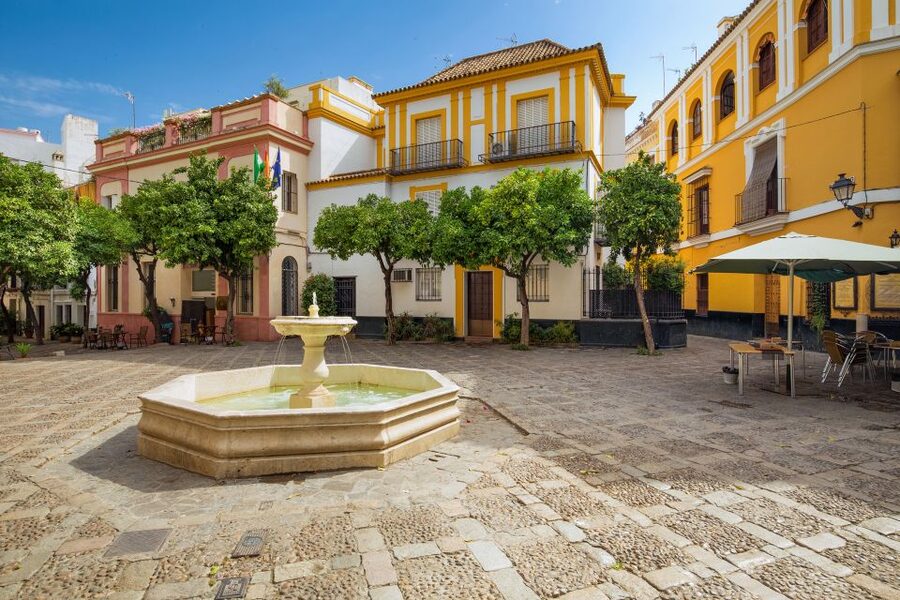
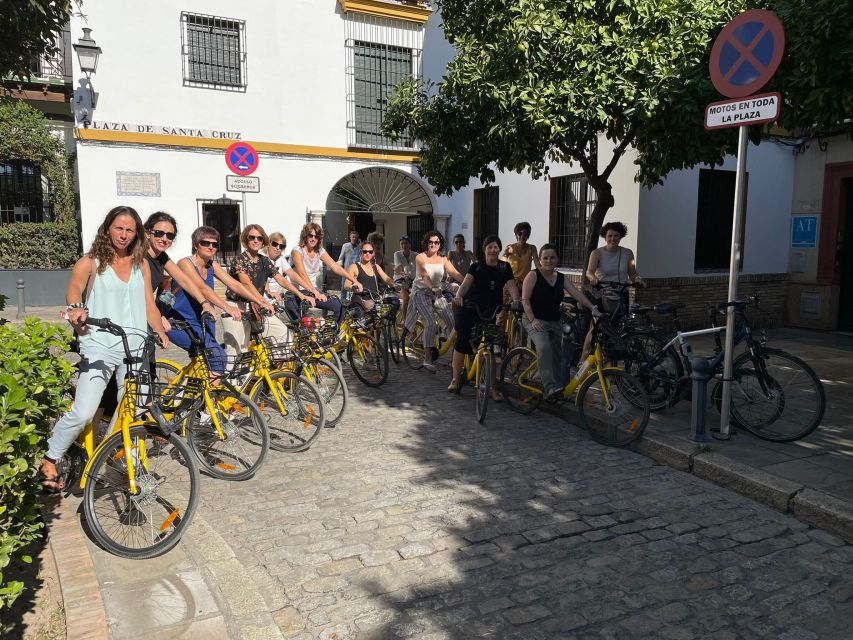
The meeting point is Plaza de Santa Cruz 4, behind the Jardines de Murillo. This puts you in one of Seville’s most atmospheric areas from the moment you arrive.
Barrio Santa Cruz is a maze of narrow lanes, small squares, whitewashed walls, and old buildings. It is lovely, but it can also be awkward on a bicycle. Expect to walk or roll slowly in tighter sections rather than cruise freely. Your guide will usually control the pace here, which is helpful when pedestrians fill the lanes.
The opening section gives you a feel for Seville’s layered past and its intimate street plan. Guides have been praised for explaining the city’s religion, politics, architecture, and culture in a relaxed way rather than delivering a dry lecture. Carmen, in particular, is frequently described as friendly and careful about checking that everyone is comfortable.
You will not spend the whole tour pedaling. Stops are built into the experience, sometimes only five or ten minutes apart. That makes the ride manageable for people who have not been on a bike recently.
The leafy route through Murillo Gardens
From Santa Cruz, the ride moves into the Jardines de Murillo. Orange trees and palms replace the tight lanes, giving you more space and a calmer start to the cycling.
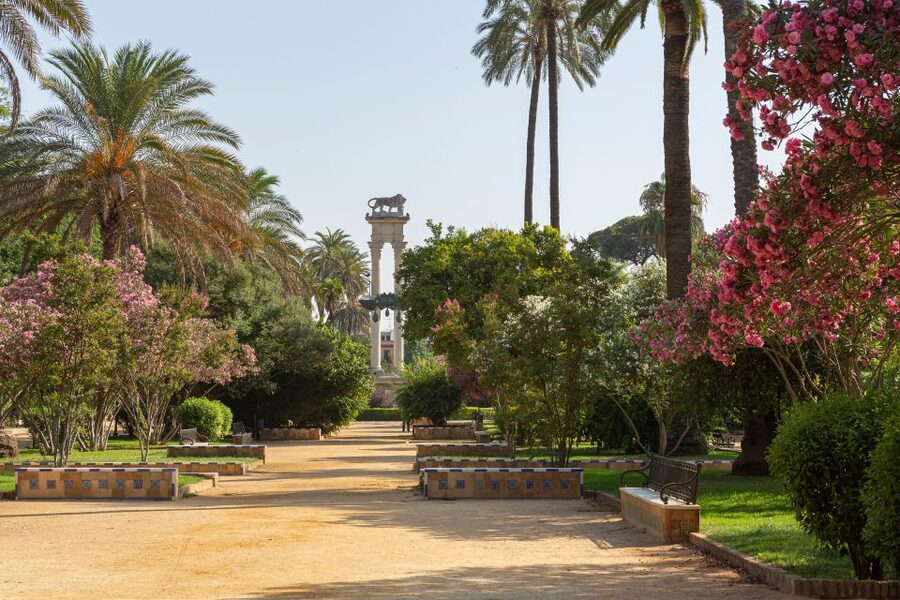
This is one of the best places to settle into the bike. The gardens provide shade and a pleasant break from the stone streets, especially in Seville’s hotter months. Sunscreen and comfortable clothing are sensible choices, even though the pace is easy.
The route through the gardens also shows why a bicycle is useful here. You can cover the area without rushing, then stop when the guide points out a detail or explains how the gardens connect with the historic quarter. You are close to major monuments, yet the setting feels quieter than the cathedral area.
María Luisa Park and the tiles of Plaza de España
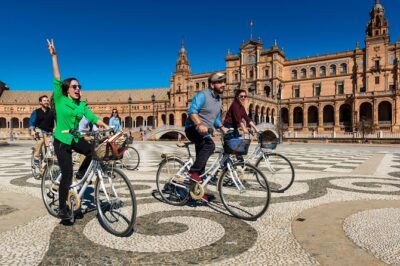
The tour then reaches Parque de María Luisa, Seville’s large central park, and Plaza de España. This is the visual high point for many people.
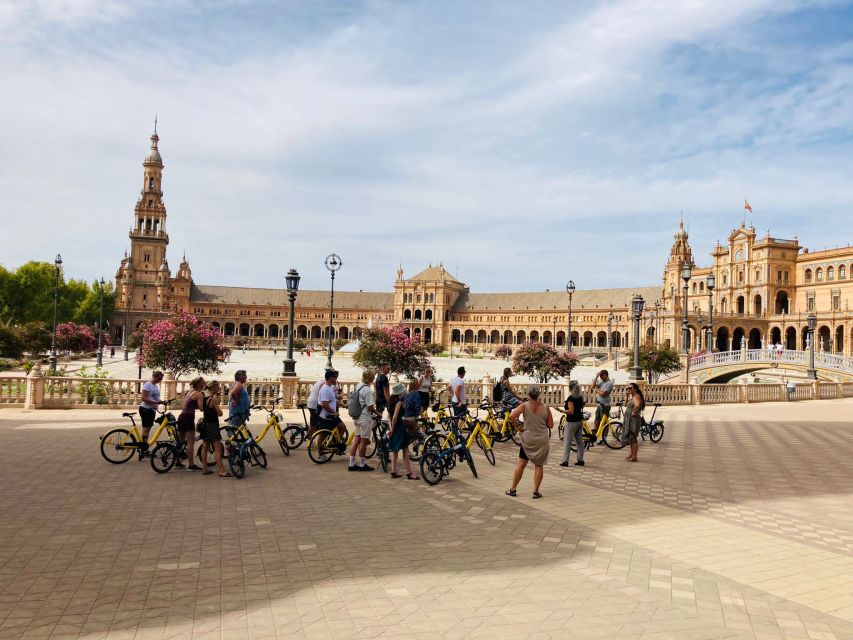
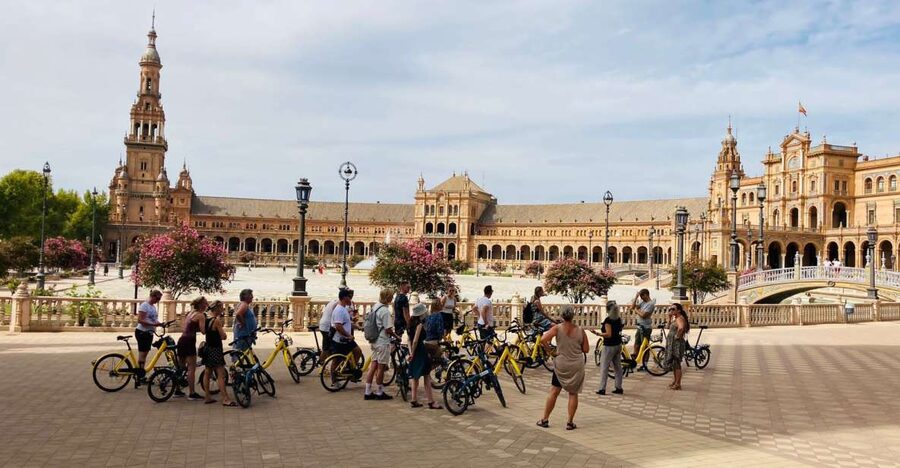
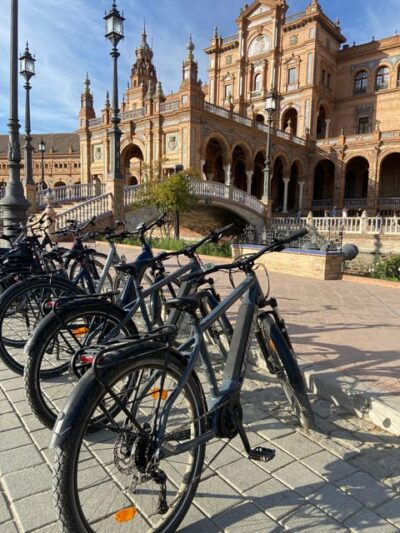
María Luisa Park gives you a leafy change of scene, with broad paths and more room to ride. Plaza de España is the famous semicircular complex built for the 1929 Iberian-American Exposition. Its tiled alcoves represent Spain’s provinces, and the long walls of patterned ceramic make it one of the easiest places in Seville to appreciate decorative tilework.
Give yourself time to look rather than simply snap a picture. The scale of the plaza is best understood from the open space in front of it, while the mosaics reward a closer look. Your guide can add context about the exposition and Seville’s architecture, then let you take in the setting.
This part is generally easy, but it is also popular. Crowds can slow the group, and bicycles may need to be walked in the busiest spots. That is not a flaw in the route so much as a fact of visiting one of the city’s most photographed places.
More Cycling Trips in Seville:
- Seville Highlights Bike Tour (English)
★ 5.0 · 2,225 reviews - Seville: Highlights City Bike Tour
★ 4.8 · 2,168 reviews - Seville: City Sightseeing and Local Culture Bike Tour
★ 4.9 · 1,120 reviews - Seville Electric Bike Tour – Small Group
★ 5.0 · 841 reviews
The former tobacco factory and Seville’s grand architecture
The ride includes the Antigua Fábrica de Tabacos, the former royal tobacco factory. Its large scale gives you a different view of Seville from the intimate streets of Santa Cruz.
The building is a useful stop because it links architecture with the city’s economic past. It is not just another impressive façade. The factory recalls the importance of tobacco production and the international connections that shaped Seville.
From here, the tour continues through a mix of landmark areas and city streets. The guide’s role is important: the buildings can blur together if you simply pedal past them, but a good explanation gives each place a reason to matter. Guides such as Juan and Alvarito have been praised for connecting the city’s ancient past with later architecture, art, flamenco, and daily life.
Along the Guadalquivir to Torre del Oro
The riverside section opens the tour up again. The Guadalquivir provides broad views and a welcome change after the narrow streets and busy monument areas.
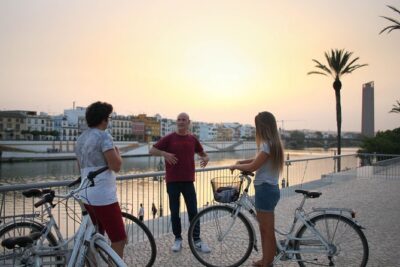
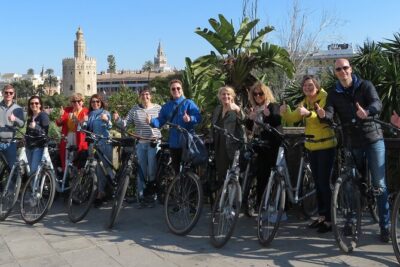
Torre del Oro is one of Seville’s most recognizable river landmarks. The tower’s position by the water makes it especially photogenic, and the stop helps you understand the river’s role in the city’s development. You will see Seville from a wider angle here, with fewer walls pressing in around you.
Riverside riding can feel very easy, but stay with the group. The guide may need to slow down or regroup, particularly where pedestrians and other cyclists share the path. One useful point from the tour’s practical side is that guides keep an eye on the group in busier sections rather than simply racing ahead.
Crossing into Triana, the home of flamenco and ceramics
The route continues to Triana, across the river from the old center. Triana has a strong local identity and is associated with flamenco and traditional ceramics.
This stop gives the tour some character beyond the standard monument circuit. Plaza de España and the cathedral are essential sights, but Triana helps you see Seville as a living city with neighborhood traditions. The emphasis on ceramics also ties back to the tilework you saw earlier.
Several guides have a special interest in flamenco, and that can add a useful cultural layer to this part of the ride. You may also get suggestions for a flamenco performance later in your stay. Treat those suggestions as a starting point, since the tour does not include a show or a meal.
The route through Triana may include busier streets. You should be comfortable watching traffic, following the guide, and stopping when the group stops. The reward is a broader picture of Seville, not just the postcard center.
The cathedral, Giralda, and Metropol Parasol
The tour also passes Seville Cathedral and the Giralda, two of the city’s defining landmarks. You will see them from outside during the bike tour, so this is an orientation visit rather than a substitute for going inside.
That distinction matters. If you want the cathedral interior, the tomb of Christopher Columbus, or the climb up the Giralda, plan a separate visit and allow more time. The bike tour shows you where these places are and helps you decide how to organize the rest of your day.
Metropol Parasol, commonly called Las Setas, gives the route a modern finish. Its large wooden structure contrasts sharply with Seville’s older stone and tile buildings. Including it alongside the cathedral and Giralda makes the tour feel like a quick lesson in how the city has changed over time.
You may not stop for a long time at every major landmark. The value here is coverage. You see many parts of Seville in one morning or afternoon, then return later to the sights that catch your interest.
What the pace and group size really mean
The advertised group limit is 15 people, which is small enough for a guide to keep track of the group without turning the outing into a private tour. Actual departures can be much smaller, and some people have ended up with a private or nearly private experience.
A small group also makes it easier to ask questions. Guides have been praised for stopping to check the pace and direction, especially with older riders and families. One family with children aged seven and nine found the guide good at keeping the outing enjoyable and manageable.
The word relaxing is accurate, but do not interpret it as completely effortless. You still need to steer, watch for pedestrians, and handle the occasional crowded section. The flat terrain helps, and some riders who had not cycled for years found the easy-to-handle bikes and frequent stops reassuring.
Departure information is not perfectly consistent. The details give times of 10:00 and 14:00, while another instruction says tours depart daily at 10:30. Check the available time when you book and confirm the meeting time so you are not waiting at Plaza de Santa Cruz at the wrong hour.
Guides who make the difference
The guide is the heart of this experience. The strongest praise goes to guides who explain clearly, use humor, and adjust the outing to the people in front of them.
Carmen has been singled out for her friendly manner, good English, clear explanations, and careful pacing. Juan is praised for combining local stories with history, flamenco, food suggestions, and an easygoing personality. Alvarito is noted for his enthusiasm and ability to make the past engaging for both adults and children.
Other named guides, including Daniel, Paulo, Pablo, Leo, Leon, Ally, Ale, and Jose, have also been described as approachable and well informed. The exact guide depends on the departure, so you should not book expecting a particular person unless the operator confirms it.
Language options include Spanish, English, French, Italian, and Dutch in the main activity details. Additional information also lists German, Russian, and Portuguese, so ask for your preferred language when booking rather than relying on the shorter list.
Comfort, safety, and what to bring
A city bike and bottled water are included. A helmet is included as an option, so request one if you want it. Liability insurance is also part of the package.
Wear clothing you can pedal in and bring sunscreen. Seville’s sun can feel strong even on an easy ride, and the route includes open areas such as Plaza de España and the riverfront. Bring a passport or ID card, as requested in the practical information.
The tour is for people who can ride a bicycle. It is not designed for anyone unable to cycle, and there is no promise of an alternative vehicle. The flat route helps, but comfort on a bike matters more than athletic ability.
Is $35 a fair price?
At about $35 per person, the tour offers reasonable value if you want orientation and sightseeing in one package. You receive the bike, helmet option, guide, water, and insurance, while the route connects areas that would take longer to link on foot.
The biggest value is time. You can see Santa Cruz, the gardens, María Luisa Park, Plaza de España, the river, Triana, and the central monuments in one outing. A walking tour may offer more detail at each individual stop, but it will cover less ground.
The bike tour does not include entrance tickets to the cathedral, Giralda, Alcázar, or other attractions. You are paying for the route, guiding, equipment, and city overview, not for admission to the monuments. That makes it best as a first-day introduction, followed by separate visits inside the places you want to explore properly.
Free cancellation up to 24 hours before departure and a reserve-now, pay-later option add flexibility. Check the precise departure time and language before finalizing your booking.
Who should book this Seville bike tour?
I would recommend it to first-time visitors who want to understand Seville’s layout quickly. It is also a good match for couples, families with cycling children, and adults who prefer a calm ride to a long walking route.
You will get the most from it if you enjoy hearing stories about architecture, religion, politics, flamenco, and local culture while moving between sights. It is less suitable if you want long, detailed visits inside every monument, dislike cycling near crowds, or cannot ride confidently.
The route’s main strength is its balance. You see the grand places, but you also pass through gardens, the riverfront, and Triana. You cover a lot without being pushed hard, and the guide can point you toward the parts of Seville worth exploring later.
FAQ
Where does the bike tour meet?
The meeting point is Plaza Santa Cruz 4 in Barrio Santa Cruz, behind the Jardines de Murillo.
How long does the tour last?
The activity is listed as 2.5 hours in one set of details and three hours in the itinerary information. Plan for roughly three hours and confirm the exact duration when booking.
How far do you cycle?
The route covers approximately 10 kilometers.
Is the route difficult?
The terrain is described as flat and suitable for all levels, and guides adapt the pace to the group. You must still be able to ride a bicycle and manage busy areas.
What sights are included?
The route includes Barrio Santa Cruz, Jardines de Murillo, María Luisa Park, Plaza de España, the former royal tobacco factory, the Guadalquivir riverside, Torre del Oro, Triana, Seville Cathedral, the Giralda, and Metropol Parasol.
Is a helmet included?
Yes. A helmet is included, and it is described as optional.
Is bottled water provided?
Yes, bottled water is included.
What languages are available?
The main activity information lists Spanish, English, French, Italian, and Dutch. Additional details also list German, Russian, and Portuguese, so specify your preferred language when booking.
What should I bring?
Bring a passport or ID card, comfortable clothing, and sunscreen.
Can I cancel the booking?
You can cancel up to 24 hours in advance for a full refund. A reserve-now, pay-later option is also available.
Should you book it?
Book this tour if you want a friendly introduction to Seville, broad coverage, and an easy ride rather than a serious cycling challenge. At $35, it is a sensible way to see how the city fits together before choosing which monuments and neighborhoods deserve a closer look.
Skip it if you cannot ride, want extensive interior visits, or feel uneasy cycling through crowded public areas. For most first-time visitors who can handle a bicycle, the combination of flat streets, frequent stops, small groups, and guides such as Carmen and Juan makes this a practical and enjoyable start to Seville.
New cycling reviews around Seville
- From Seville: Half-Day Guided Bike Trip to Italica★ 4.9 · 126 reviews
- E-Bike tour in Sevilla★ 4.6 · 34 reviews
- Bike Tour in Seville★ 4.8 · 20 reviews
- Seville: Electric Bike Tour in Small Group★ 4.9 · 185 reviews
- Seville: Electric Bike City Tour★ 4.7 · 188 reviews
- 3-hour Guided Bike Tour along the Highlights of Seville★ 5.0 · 315 reviews
- Seville: Bike Rental for a Day★ 4.1 · 72 reviews
- Seville: Bike Rental★ 4.2 · 29 reviews
Seville Cycling Tours, compared.
Seville: City Sightseeing and Local Culture Bike Tour
Read our review →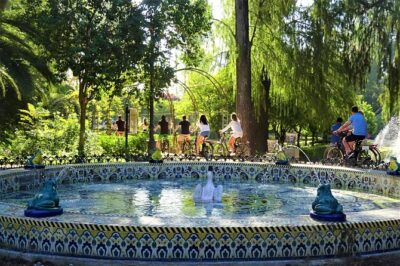
3-hour Guided Bike Tour along the Highlights of Seville
Read our review →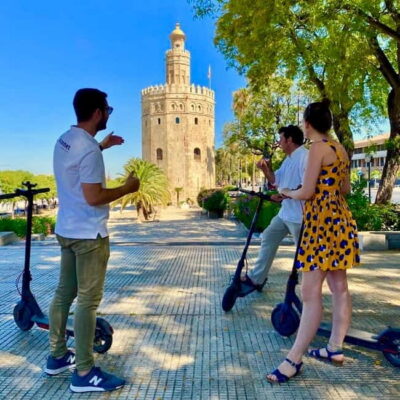
Browse the lists this ride appears in