
Review · SIEM REAP
Siem Reap: Bike the Angkor Temples – Full-Day 30km Tour
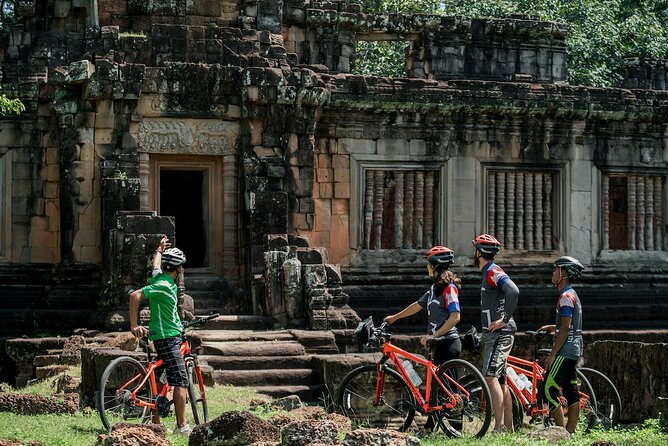
The best part of this tour is not simply reaching Angkor Wat. It is the way you get there, pedaling through forest tracks, villages, and quiet roads before arriving at the great temples. The bicycle gives you a closer look at everyday Cambodia, not just the famous stone monuments.
I like the small-group feel, with no more than 10 people, and the care built into the ride: fitted mountain bikes, helmets, cold water, fruit, a guide in front, and often another rider helping at the back. I also like the guides, including Chen, Moon, Wich, and Samnang Chan, who bring history and local context to the stops. The drawback is simple: 30 kilometers in tropical heat is a real day of exercise, and sandy or bumpy trails may test casual riders.
Key points to know before you book
- The route covers about 25 to 30 km: Most roads are flat, but forest tracks can be sandy, uneven, and tiring.
- You visit the essential temples: Angkor Wat, Bayon, the Elephant Terrace, Ta Prohm, and other Angkor Thom sights are part of the day.
- Villages are part of the experience: You pedal through rural areas and see homes, farms, rice fields, and daily life around the park.
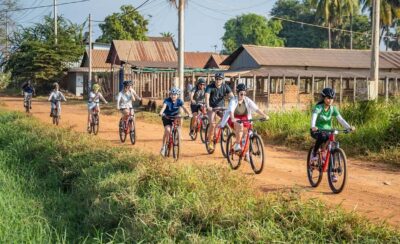
- The tour is capped at 10 people: That makes it easier to ask questions and keep a comfortable group pace.
- The $35 price excludes the Angkor Pass: A one-day temple ticket costs an additional $37.
- Lunch is optional: Snacks, fruit, and bottled water are included, while the local lunch depends on the option you choose.
Why a bicycle changes your Angkor day
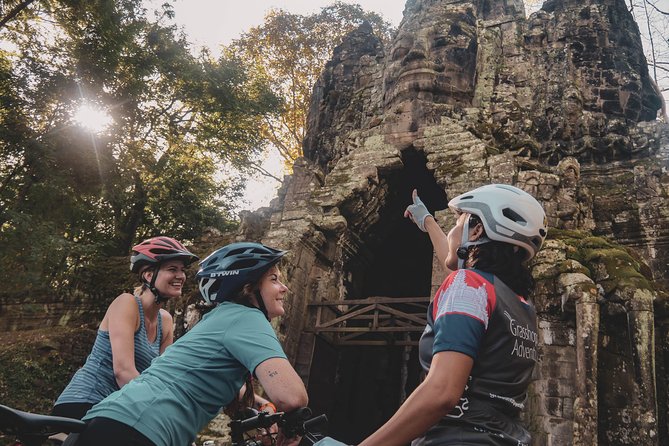
Angkor Archaeological Park is far too large to explore comfortably on foot. A car or tuk-tuk gets you between temples quickly, but the ride itself becomes dead time. On a bicycle, the roads and trails are part of the day.
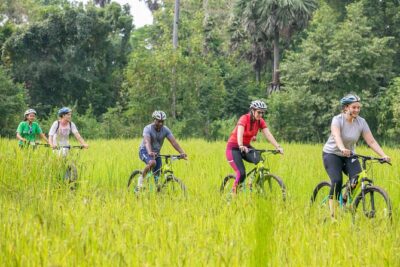
You pass beneath tall trees, cross through wide gates, and follow smaller routes that keep you away from the main traffic where possible. The pace is slow enough to notice village homes and bits of rural life. You may ride through wooded areas, along dirt trails, and past rice fields before reaching another ruined temple.
That added movement is the main reason to choose this tour. You are not simply being delivered to a series of monuments. You feel the scale of Angkor through your legs, and the change from road to forest gives the park a more physical sense of place.
This is not a racing tour. The group stops often for water, photos, temple visits, fruit, and lunch. Still, the day requires moderate physical fitness. Several people found the ride manageable but tiring, especially in temperatures around 35 degrees Celsius. Sand, bumps, and long stretches in the sun can make the final part feel harder than the morning.
More Heritage and Temple Bike Tours in Cambodia:
- From Siem Reap: Angkor Wat Sunrise and Temples E-Bike Tour
★ 5.0 · 52 reviews - Bangkok: Temples, Canals & Local Life Bike Tour
★ 4.9 · 3,511 reviews - Historical Singapore Bike Tour on Full-Sized Bicycles
★ 5.0 · 1,421 reviews
Starting at 7:30 am in Siem Reap
You make your own way to ផ្ទះគ្រូ Café, the starting point in Siem Reap. There is no hotel pickup or drop-off, so check the route from your hotel before the morning begins. The tour starts at 7:30 am and finishes back at the same meeting point.
The staff provide a mountain bike and helmet, then adjust the bike to your height. One especially useful detail is that bikes may be labeled with names, which makes it easier to find the right one during stops. The bikes are fitted for mixed conditions, including paved roads, forest paths, sand, and uneven ground.
Before setting off, the guide gives a safety briefing. Expect advice on pace, road position, and hand signals. This matters because the opening and closing parts of the ride use public roads, while the forest sections require steady handling rather than speed.
The ride to the Angkor entrance also gives the guide a chance to check the group. If someone needs a small adjustment, it is easier to sort out early than halfway around the park.
Angkor Wat: start with the great monument
Angkor Wat is the first major stop, and that is a sensible choice for a first visit. The temple is vast, highly detailed, and difficult to absorb in a quick visit. You have about an hour to walk through its galleries and examine the carved scenes and bas-reliefs.
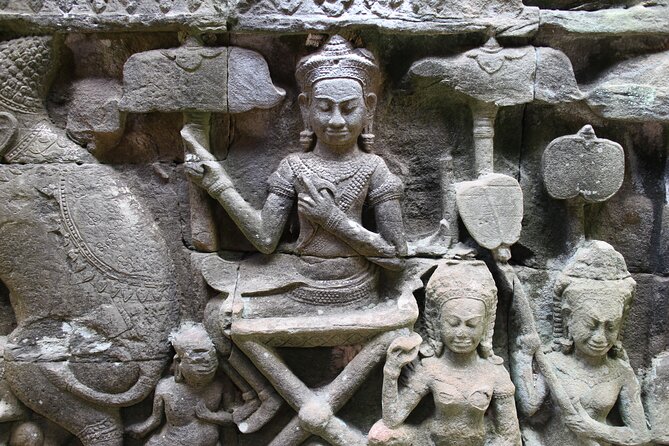
The guide explains the temple’s Hindu background, including images connected with the Ramayana. That context helps you read the carvings as more than decoration. Look up at the towers, then slow down for the long carved walls, where the scale of the storytelling becomes clearer.
Starting here also means you see Angkor Wat in the morning rather than leaving it as a rushed final stop. The trade-off is that the group may not finish with the most famous temple, but an early visit gives you time to appreciate it before the day’s heat builds.
Wear clothing that meets temple rules. Sleeveless and see-through shirts are not allowed, and shorts or trousers must reach at least the knee. A light, breathable shirt with longer shorts or trousers is the practical choice.
Angkor Thom and Bayon’s stone faces
From Angkor Wat, the route continues toward Angkor Thom. The ride through the great gates is one of the memorable bicycle moments of the day. Stone figures line the approach, with expressive divinities and demons that signal the importance of the ancient city.
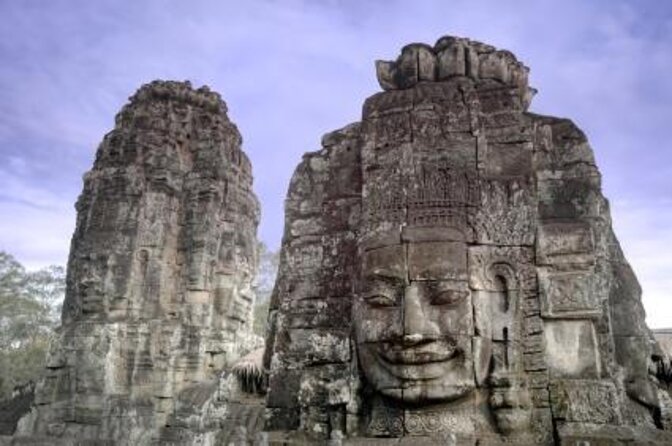
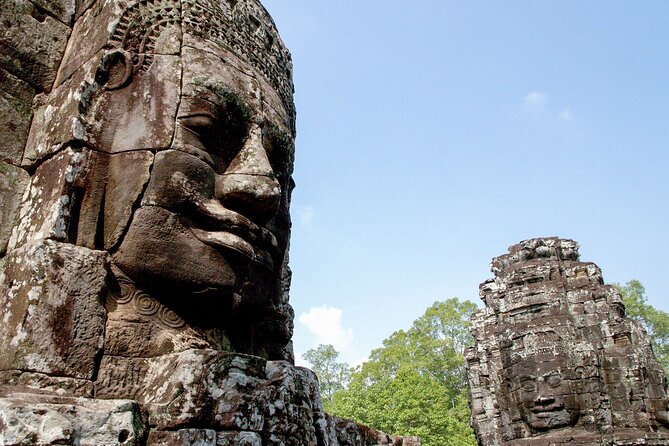
Bayon is the main stop inside Angkor Thom. Its towers are topped by the famous serene faces, often described as smiling bodhisattvas. The temple is more compact and confusing than Angkor Wat, with galleries and towers packed closely together. A guide is useful here because it is easy to walk past a detail without understanding what you are seeing.
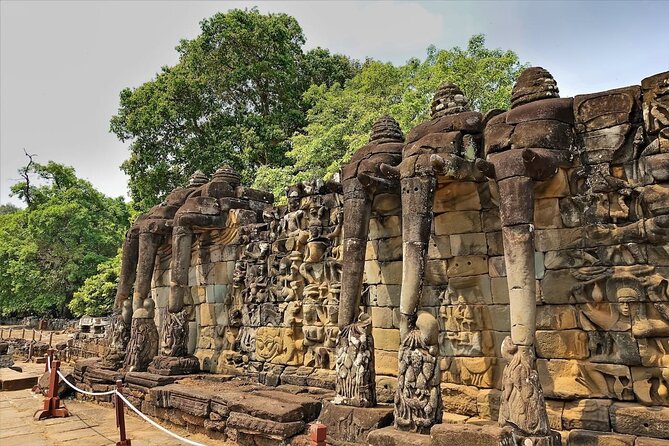
The ride also takes in the Terrace of the Leper King, the Terrace of the Elephants, and the Royal Enclosure. These areas help fill out the picture of Angkor Thom as a royal city rather than a single temple. You get a mix of carved walls, broad ceremonial spaces, and shaded paths.
This part of the day combines cycling with walking. Bring sandals only if they are secure, since you will move between bike and temple paths. Comfortable shoes are a better bet than anything chosen only for photographs.
More Full-Day Rides in Cambodia:
- Ninh Binh Full-Day Tour from Hanoi to Hoa Lu, Tam Coc & Mua Cave Via Boat & Bike
★ 5.0 · 4,384 reviews - From Perth: Rottnest Island Full-Day Bike and Ferry Trip
★ 4.7 · 2,548 reviews - Versailles Full Day Bike Tour with Palace, Gardens, & Picnic
★ 5.0 · 2,217 reviews - Cat Ba: Lan Ha, HaLong bay full day- biking, kayaking, lunch
★ 4.8 · 1,166 reviews
Lunch and fruit at Srah Srang
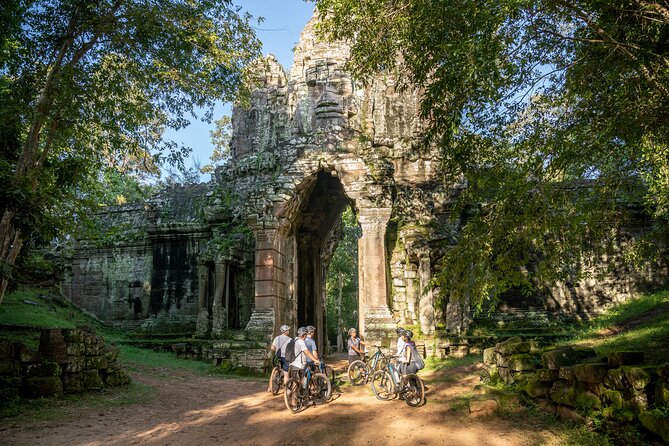
The midday pause is important because the heat can catch up with you quietly. Fruit, snacks, and bottled water are included, and the lunch option provides a local Khmer meal arranged ahead of time. Several meals were described as generous and tasty, with enough time to sit rather than eat in a hurry.
Srah Srang is connected with the lunch portion of the day. The stop lasts around two hours in the itinerary, which gives you room to eat, rest, and take in the setting. If you choose the option without lunch, you should confirm exactly what food arrangements apply, since the supplied details specify the meal only for people who select the lunch option.
Water is supplied throughout the ride, and cold drinks are a welcome help. The return to the office includes a cold coconut drink and, in some cases, a chilled towel. Those small touches matter after hours of cycling in the heat.
If you have dietary needs, provide them when booking. This is also the time to decide how much energy you want to spend on the temple walks. Resting properly at lunch makes the afternoon much more enjoyable.
Ta Prohm and the afternoon forest ride
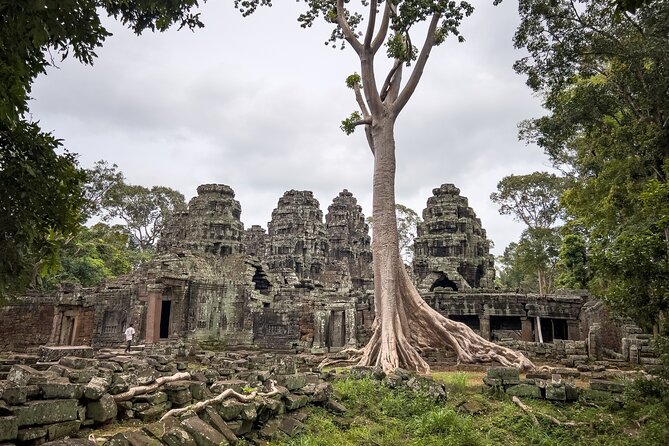
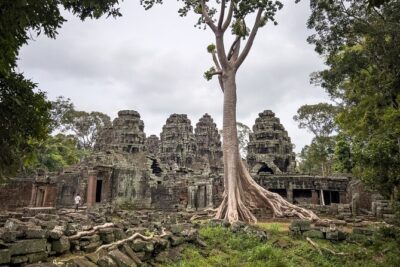
Ta Prohm is the afternoon highlight for many people. Trees grow over and around the ruins, with thick roots gripping the stone walls. The temple feels more enclosed and atmospheric than Angkor Wat or Bayon, though it can also be more awkward to walk through because of uneven surfaces and narrow passages.
The ride to Ta Prohm follows quieter corridors and forested routes. This is where the bicycle feels most useful. You move through the park under your own power, with the sound and pace changing as the group leaves the larger roads.
Your guide explains the temple’s history, stories, and symbolism, then gives you time to explore and take photos. The stop is not just a quick exterior look. Plan on about an hour, including walking around the ruins.
The forest tracks can be rough. One rider found that the sandy and bumpy sections caused tired knees, while another praised the mountain bikes for handling the road conditions. The bikes are not a substitute for cycling ability, so you should be comfortable maintaining balance on uneven ground.
Returning through villages and countryside
The route back to Siem Reap takes you through small villages and rural areas. This is one of the tour’s strongest features because it shows how much exists beyond the temple entrances. You may see farmyards, homes, wooded stretches, and rice fields rather than a continuous line of monuments.
The guides also connect the temple sites with modern Cambodia. Guides such as Chen, Moon, Wich, Mun, Meun, Pat, Samnang Chan, Samie, and Sunchen have been praised for clear explanations and friendly support. Names and guide assignments can change, so do not book this expecting one particular person, but the guiding style is a major part of the experience.
The group normally rides at a controlled pace, with one guide leading and another helping from behind when staffing allows. That setup is especially useful on public roads and at turns. You are not left to find your way through the park alone.
By late afternoon, you return to ផ្ទះគ្រូ Café. Expect to feel pleasantly tired rather than fresh. If you have evening plans, leave some time to shower and rest.
What the $35 price really covers
The tour costs $35 per person, which is a fair price for a full day of guiding, bike hire, helmet use, refreshments, and temple transport under your own power. The price becomes more attractive if you value the village and forest routes, since a basic vehicle transfer would not provide the same access to those smaller paths.
The important extra cost is the Angkor Pass. A one-day entry ticket costs $37, so your total before lunch is effectively $72 per person. Lunch adds more if you select that option. Group discounts may be available, but the supplied details do not give a discount amount.
You should compare this with the value of a private vehicle day. A car or tuk-tuk may be easier in extreme heat and can cover the park with less effort. The bicycle tour earns its price through the route, exercise, and guide attention, not through luxury transport.
A private upgrade may suit you if you want more control over timing and questions. The standard tour already has a maximum of 10 people, so it is not a large coach outing.
Who should book this cycling tour?
I would choose this tour if you want Angkor to feel like a place you move through, not just a collection of stops. It suits first-time visitors who want the major temples but also care about villages, forest paths, and local scenery.
It is a good fit for active couples, friends, solo participants who like meeting a small group, and families with older children. Child seats are available on request for children weighing up to 14 kilograms. The supplied information does not state a minimum age, so families should confirm suitability before booking.
You should think twice if you dislike heat, have difficulty cycling 25 to 30 kilometers, or want a slow temple day with minimal walking. The route is mostly flat, but flat does not mean effortless. Heat, sand, rough tracks, and repeated stops add up.
Dress for both cycling and temple entry. Use sunscreen, a hat, practical shoes, and clothing that covers the shoulders and knees. Carrying too much is unnecessary because water and snacks are supplied.
Booking, cancellation, and practical details
Confirmation is provided at booking, and the activity accepts service animals. It is near public transportation, though you still need to reach the café yourself. The tour operates with a maximum of 10 people and offers mobile ticketing.
Free cancellation is available if you cancel at least 24 hours before the 7:30 am start. Changes or cancellations inside that window are not accepted for a refund, and cut-off times use local Cambodian time.
The most useful preparation is simple: check the weather, eat a sensible breakfast, and be honest about your cycling fitness. You do not need to be a racing cyclist, but you should be comfortable riding for several hours and handling occasional rough ground.
Should you book it?
Book this tour if you want the essential Angkor temples combined with exercise and a closer look at life around the park. The careful bike setup, steady guiding, regular drinks, fruit, lunch option, and small group make the long day manageable.
Skip it in favor of a vehicle tour if the 30-kilometer distance sounds unpleasant or if heat affects you badly. For everyone else, this is a strong-value way to see Angkor Wat, Bayon, and Ta Prohm while also experiencing the roads, villages, and forests that connect them.
FAQ
How far do I ride on the tour?
The cycling distance is about 15 to 18 miles, or 25 to 30 kilometers. The route is mostly flat, but some dirt trails are sandy, bumpy, or unsuitable for beginning riders.
What temples are included?
The route includes Angkor Wat, Bayon, Ta Prohm, the Terrace of the Leper King, the Terrace of the Elephants, and the Royal Enclosure. Srah Srang is also part of the day.
Does the tour include the Angkor Pass?
No. Temple admission is not included. A one-day Angkor Pass costs $37 per person.
Is lunch included?
Lunch is included only if you select the lunch option. Snacks, fruit, and bottled water are included for the tour.
Where does the tour start and finish?
You meet at ផ្ទះគ្រូ Café in Siem Reap at 7:30 am. The activity ends back at the same meeting point, and hotel pickup and drop-off are not included.
What clothing is required for the temples?
Sleeveless and see-through shirts are not permitted. Pants and shorts must reach at least the knee for temple entry.
Can children join the bike tour?
Most travelers can participate, and a child seat is available on request for a child weighing up to 14 kilograms. The provided information does not state a minimum age.
New cycling reviews around Cambodia
- Phnom Penh: Mekong Islands & Silk Islands Guided Bike Tour★ 4.9 · 48 reviews
- Phnom Penh: Mekong Islands Sunset Bike Tour include drinks★ 4.8 · 19 reviews
- Phnom Penh: Silk Islands Half-Day Bike Tour★ 4.9 · 315 reviews
- Cycle Angkor Backroad Bike Tour / E-Bike or Tuk Tuk★ 4.9 · 16 reviews
- Ho Chi Minh City: 2-Day Bike & Kayak Mekong Delta Tour★ 4.9 · 64 reviews
- From Siem Reap: Angkor Wat Sunrise and Temples E-Bike Tour★ 5.0 · 52 reviews
- Explore the Village &Countryside By Bicycle-Half Day Morning★ 4.8 · 13 reviews
- Small Group Countryside Sunset Bike Tours★ 5.0 · 39 reviews
Siem Reap Cycling Tours, compared.
Siem Reap Countryside Bike Tour / E-Bike or Tuk Tuk
Read our review →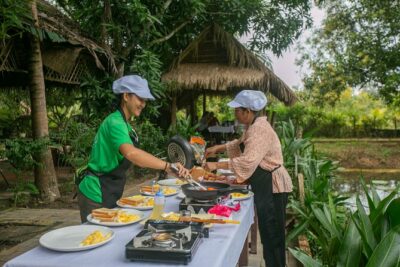
Siem Reap: Angkor Wat Sunrise Bike Tour & Jungle Breakfast
Read our review →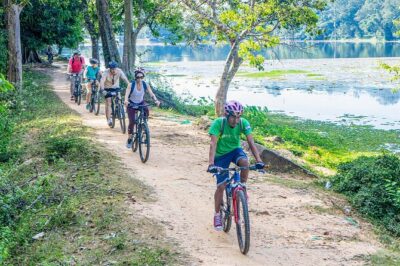
Cycle the Angkor Backroads with lunch / E-Bike or Tuk Tuk
Read our review →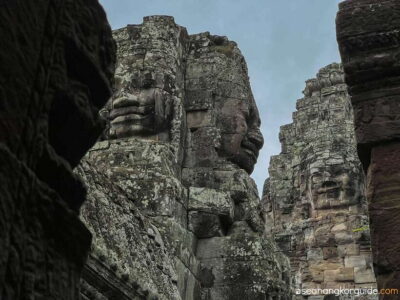
From Siem Reap: Angkor Wat Sunrise and Temples E-Bike Tour
Read our review →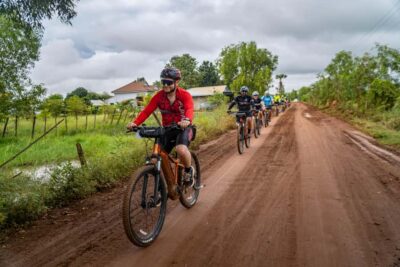
Angkor Wat: Guided Sunrise Bike Tour w/ Breakfast and Lunch
Read our review →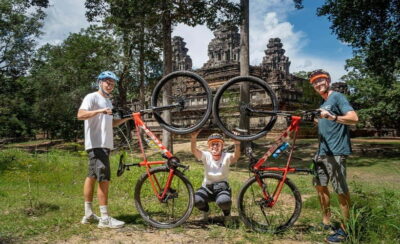
Cycle Angkor Backroad Bike Tour / E-Bike or Tuk Tuk
Read our review →Browse the lists this ride appears in