
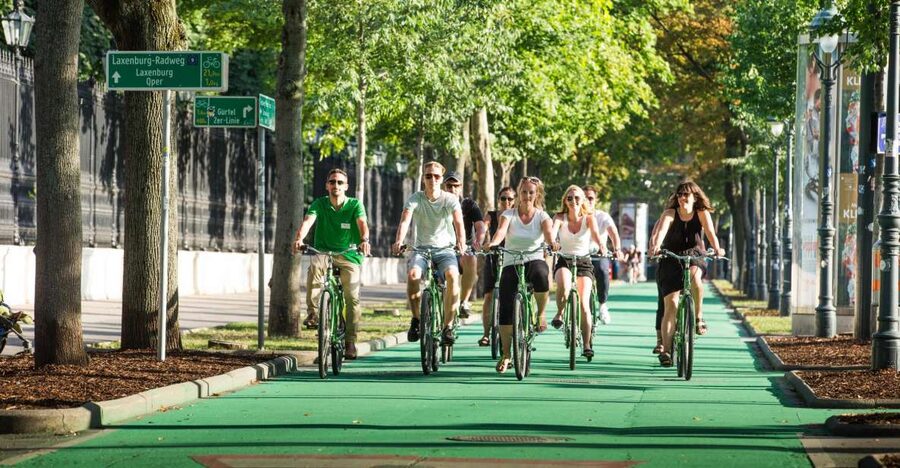
Review · VIENNA
Vienna by Bike 3-Hour All-In-One City Bike Tour in English
Vienna reveals itself especially well from a bicycle. In three hours, you can pedal from the grand Ringstrasse to the playful Hundertwasserhaus, then continue to the Prater Ferris wheel and return beside the Danube Canal. It is a smart way to cover ground without sitting behind a bus window.
I like the easy pace and frequent stops, which give you time to listen, take photos, and catch your breath. I also like the guides’ personal touch. Lisa, Marco, Horst, Jan, Robert, and Karl are repeatedly praised for turning architecture and politics into clear, lively stories.
The main consideration is that this is more a tour of Vienna’s broad central sights than a close look at the oldest lanes of the historic center. You also ride in all weather, although rain ponchos are supplied when needed.
Key points at a glance
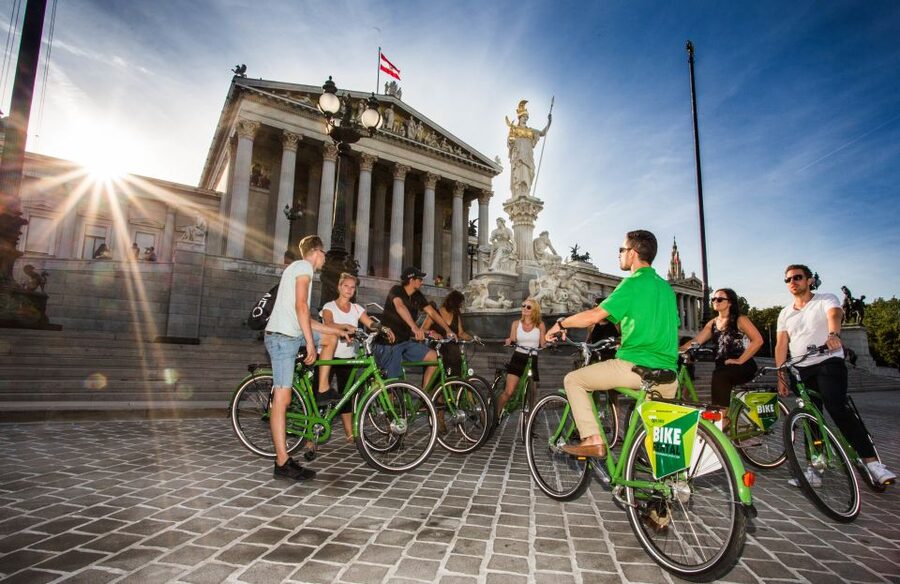
- The Ringstrasse is the backbone: See the Opera House, Rathaus, Parliament, Vienna University, Imperial Palace, and other grand buildings from the saddle.
- You cover a lot of ground: The route has been described as more than 10 kilometers, with easy cycling and plenty of stops.
- The ride is mostly gentle: Comfortable city bikes, good paths, and a largely flat route make this approachable for many casual cyclists.
- The route mixes imperial and modern Vienna: Karlskirche and Heroes’ Square share the day with Hundertwasserhaus and the Danube Canal.
- The guides add real value: Expect history, political context, local details, humor, and practical suggestions for the rest of your stay.
- The Prater makes a memorable finish: The giant Ferris wheel gives the tour a lighter ending after the grand imperial sights.
Why a bicycle is a smart way to see Vienna
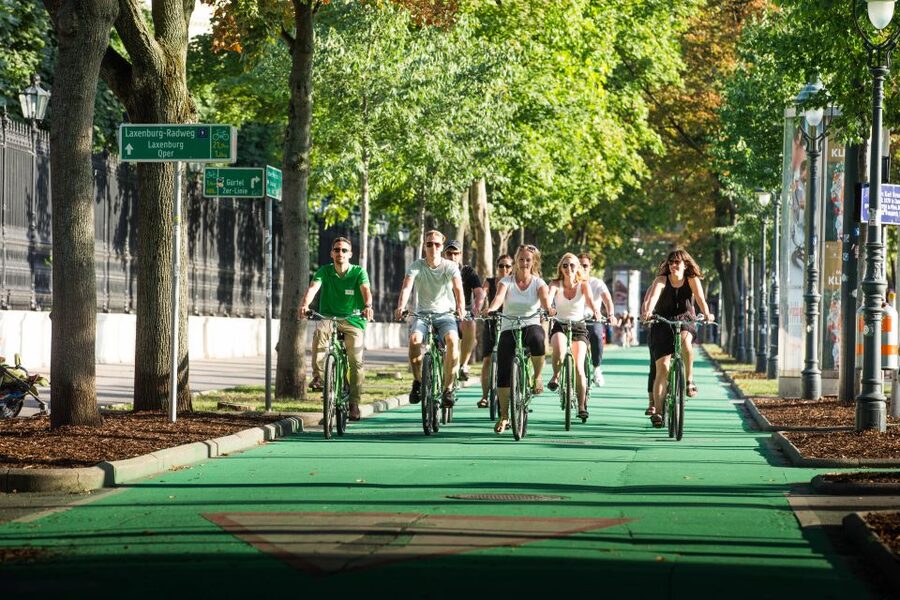
Vienna is spread out enough that walking alone can make a three-hour sightseeing plan feel rushed. On a bicycle, you move between major sights quickly, yet still stop often enough to hear the story behind them.
I like this middle ground. You are not trapped in a vehicle, and you are not spending the whole afternoon marching between monuments. You get fresh air, a little exercise, and a better sense of how Vienna’s districts and major avenues connect.
The route uses safe, well-surfaced roads and cycle paths where possible. Guides keep the group together at crossings and intersections, and the pace is intended to be leisurely rather than athletic. Some groups have included children, older riders, and people using e-bikes to make the ride easier.
That said, you should be comfortable riding a bicycle in an urban setting. The route is described as easy and largely flat, but you will still be sharing space with city traffic at times. Comfortable clothes are the only stated requirement, though sensible shoes and weather-ready layers are practical choices.
More Three-Hour Experiences in the world:
- 3-Hour Porto Highlights on a Electric Bike Guided Tour
★ 5.0 · 4,392 reviews - 3-hour Complete Prague Bike Tour
★ 5.0 · 3,674 reviews - Porto: City Highlights 3-Hour Guided Electric Bike Tour
★ 4.8 · 3,092 reviews
Starting at Franz Josefs Kai
The meeting point is at Franz Josefs Kai, 45, in Vienna’s 1010 district. Schottenring station, served by the U2 and U4 subway lines, is the nearest public transport stop.
Allow time to arrive early. The group needs to select bikes, handle basic preparation, and get underway together. Modern city bikes and helmets are provided, and the bikes are described as comfortable and easy to handle. One rider specifically noted that the seats were comfortable, while another appreciated the option of an e-bike for a sore foot.
The route has been described as covering over 10 kilometers, but the ride does not feel like a race. Stops break up the distance, and the guide uses those pauses for explanations and photographs. The result is a useful balance: enough riding to feel like a bike tour, but enough stopping to make it a sightseeing tour.
The Ringstrasse and imperial Vienna
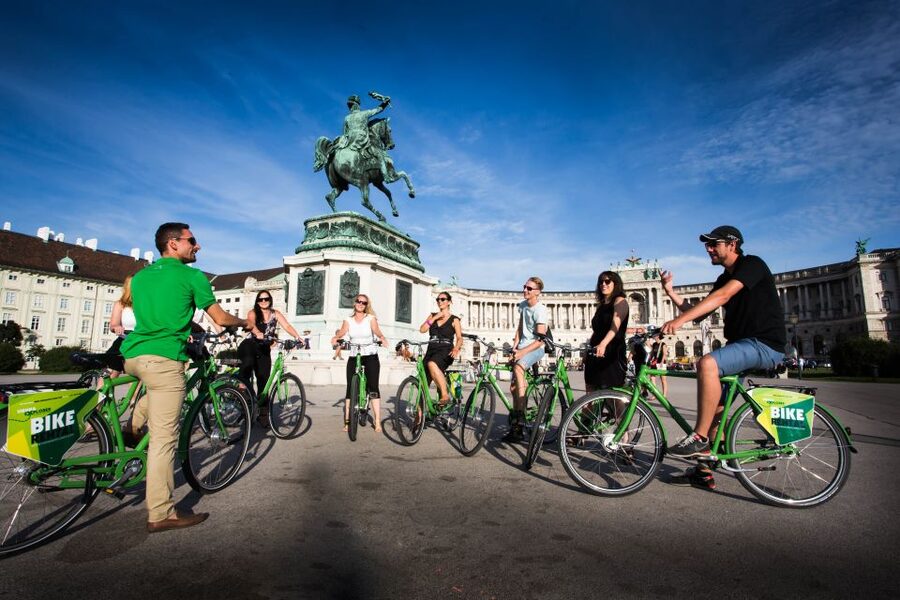
The Ringstrasse is the heart of the experience. This grand boulevard traces the former line of Vienna’s medieval walls, which were demolished in the 19th century as the city expanded. The new ring road became a showcase for the power and confidence of the Habsburg Empire.
From your bike, you pass some of the city’s most important public buildings. The route includes the Vienna Opera House, the Gothic-style Rathaus, the Parliament buildings, Vienna University, and the Imperial Palace.
The Vienna Opera House is a highlight for its Neo-Renaissance design. Even if you do not attend a performance, seeing its elaborate exterior in the context of the Ringstrasse helps explain Vienna’s role as a major European center for music and court culture.
Rathaus brings a different mood. Its tall Gothic façade and dramatic tower give the building the look of a medieval civic palace, though it belongs to the 19th century. Parliament, with its classical columns and formal design, reflects the political ideals that shaped the Austro-Hungarian Empire.
The guide’s commentary matters here. A list of grand façades can blur together, but the better guides connect buildings to the political system, royal court, and changing city. Jan has been praised for explaining history in a clear way, while Robert is noted for adding political context, including Austria’s past and present.
Heroes’ Square and the weight of history
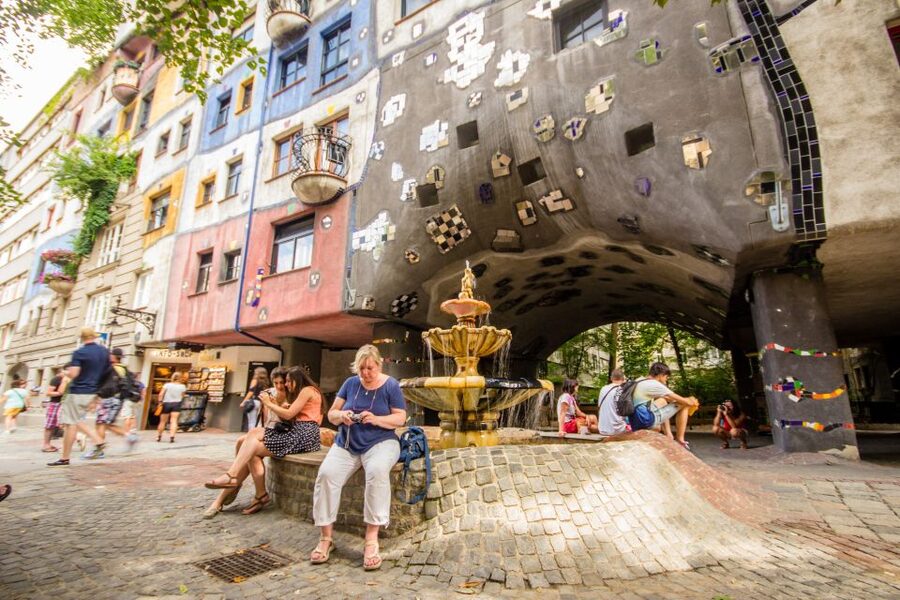
Heroes’ Square, or Heldenplatz, brings you close to the Imperial Palace and the ceremonial center of Vienna. Its wide open space and imposing buildings were designed to project imperial power.
This is also a place where the 20th century leaves a darker mark. The tour addresses Adolf Hitler’s 1938 Anschluss speech, delivered here after Nazi Germany annexed Austria. That topic is handled as part of the city’s political story, not brushed aside in favor of pretty architecture.
This stop gives the ride more substance. You are not simply looking at royal buildings. You are also seeing spaces that were used for political theater and mass public events. Guides have been praised for explaining war and occupation with care, including personal and family connections to that period.
The large square can also help you understand Vienna’s scale. The historic center is not only a cluster of narrow streets and cafés. It includes broad ceremonial spaces built to display authority.
More Cycling Trips in the world:
- Lion City Bike Tour of Singapore
★ 5.0 · 6,211 reviews - Big Bike tour Amsterdam – See all in 3 unforgettable hours
★ 4.7 · 4,929 reviews - Ninh Binh Full-Day Tour from Hanoi to Hoa Lu, Tam Coc & Mua Cave Via Boat & Bike
★ 5.0 · 4,384 reviews - Small Group Guided Bike Tour of Amsterdam’s Hidden Gems
★ 5.0 · 3,936 reviews
Karlskirche and the view across Karlsplatz
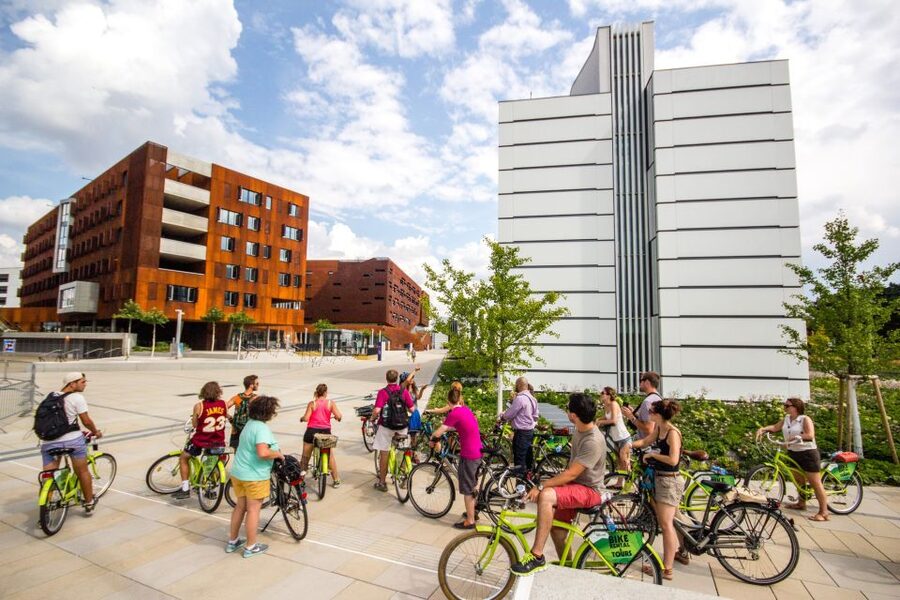
Karlskirche, on Karlsplatz, offers one of the tour’s most striking architectural stops. Its large dome and columns create a bold blend of classical and Baroque ideas.
The church is particularly useful for showing how Vienna’s architecture changes from one district to the next. The Ringstrasse brings long stretches of 19th-century civic architecture, while Karlskirche reaches further back into the city’s religious and imperial past.
You stop to admire the exterior and take photographs. The tour is not a church interiors program, so you should not expect a long indoor visit at every monument. The strength here is the range of views and the way the guide places each building into the wider story of Vienna.
Along the Danube Canal
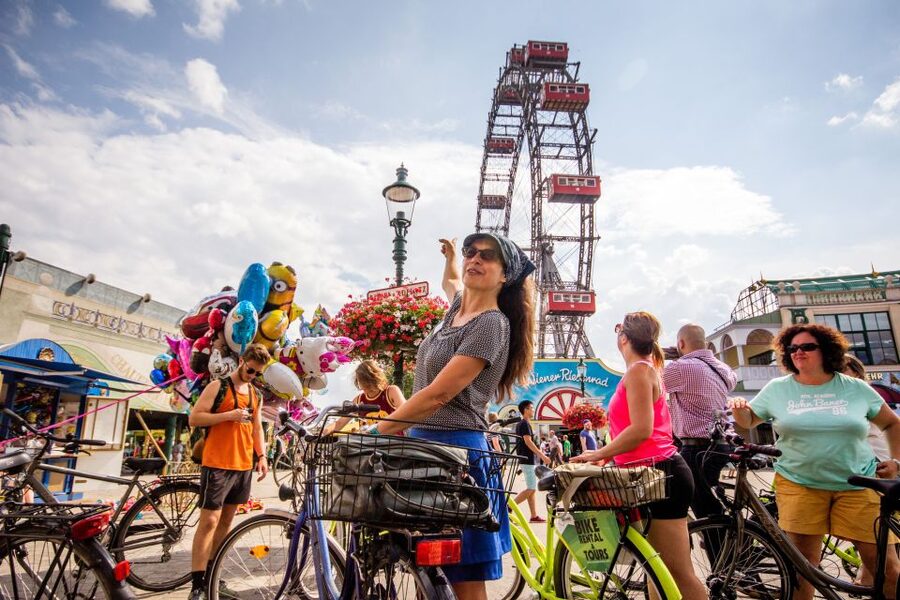
The ride beside the Danube Canal gives your legs a break from the grand avenues and offers a more relaxed side of the city. The canal is a sidearm of the Danube, not the broad main river, but it still gives the route a welcome change in scenery.
This part of the tour is useful because it shows Vienna beyond its imperial center. You trade ceremonial buildings for waterside riding and urban details. One guide also used the ride to discuss environmental and everyday political issues, giving the tour a local edge rather than sticking only to 18th and 19th-century history.
The canal section can be especially pleasant in good weather. In rain, the open route is less appealing, though ponchos are supplied. The activity runs in all weather conditions, so check the forecast and dress accordingly.
Hundertwasserhaus, Vienna’s playful side
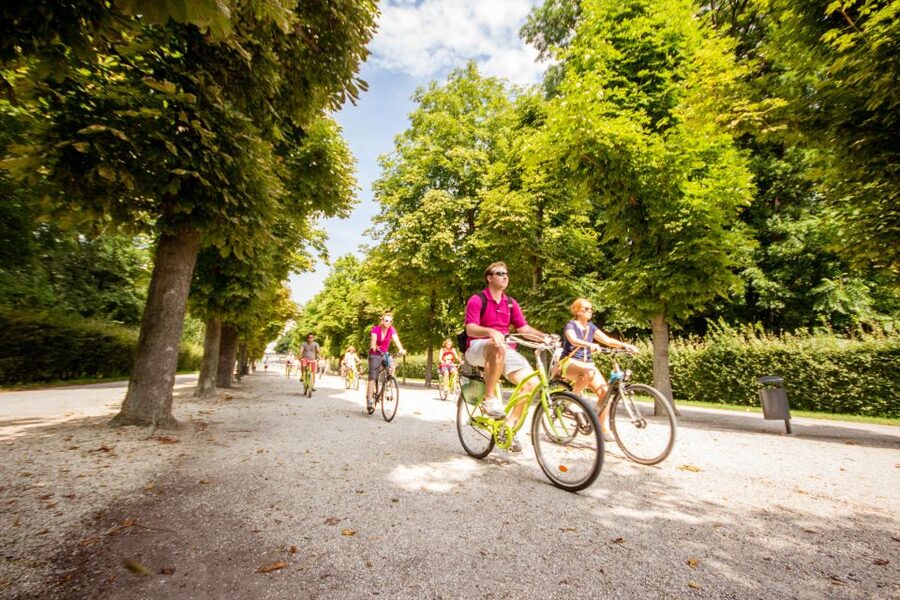
Hundertwasserhaus is one of the most memorable stops because it breaks nearly every rule established by the Ringstrasse. The apartment complex is known for irregular shapes, bright colors, uneven surfaces, and an imaginative relationship with plants and architecture.
After hours of formal façades, domes, columns, and government buildings, this is a welcome jolt. It shows that Vienna is not only a city of imperial grandeur. It also has a modern, eccentric streak.
You get time to look closely and take pictures. The stop is especially good for families and anyone who prefers visual surprises to another monumental building. The guide can also explain why the building matters, rather than treating it as a quick photo backdrop.
The ride to Hundertwasserhaus adds variety to the day, but it also means the tour is not confined to the immediate old town. If your priority is the narrow medieval streets around St. Stephen’s Cathedral, you will need to explore those separately.
The Prater and the giant Ferris wheel
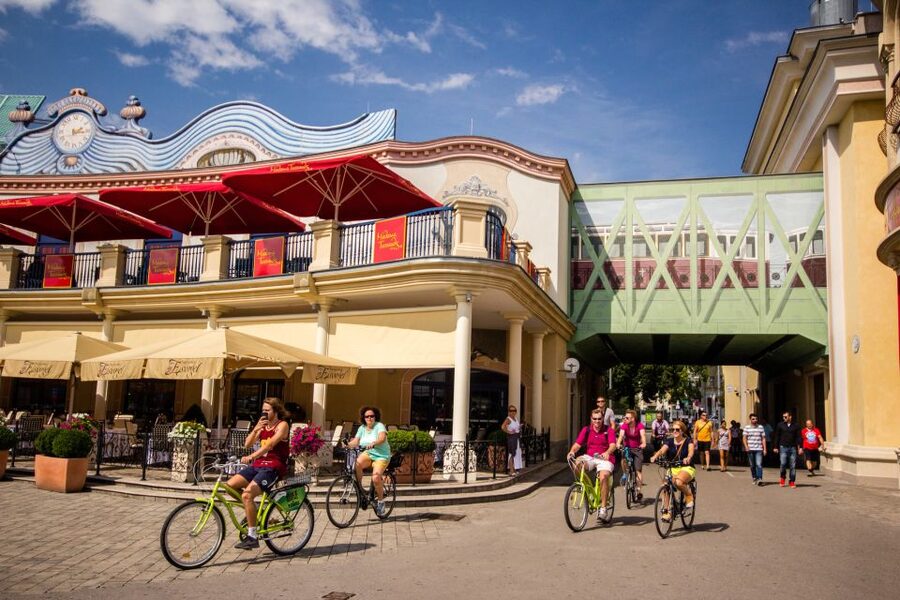
The route continues to Prater Park, home to Vienna’s giant Ferris wheel. The wheel is one of the city’s best-known symbols and gives the final part of the ride a lighter, more recreational feel.
Prater is not simply another palace square. It offers open parkland and a different kind of Vienna, one connected with leisure, public entertainment, and time outdoors. A guide may add small local details here, such as the explanation of why some areas have trees but no bushes.
The Ferris wheel is a strong photo stop, though the tour does not include a ride on it. You see it as part of the cycling route and continue on the bicycle rather than turning the stop into a separate attraction visit.
From Prater, you pedal back along the banks of the Danube Canal. That return route helps close the loop and gives you another waterside stretch before the tour ends.
The guides make the difference
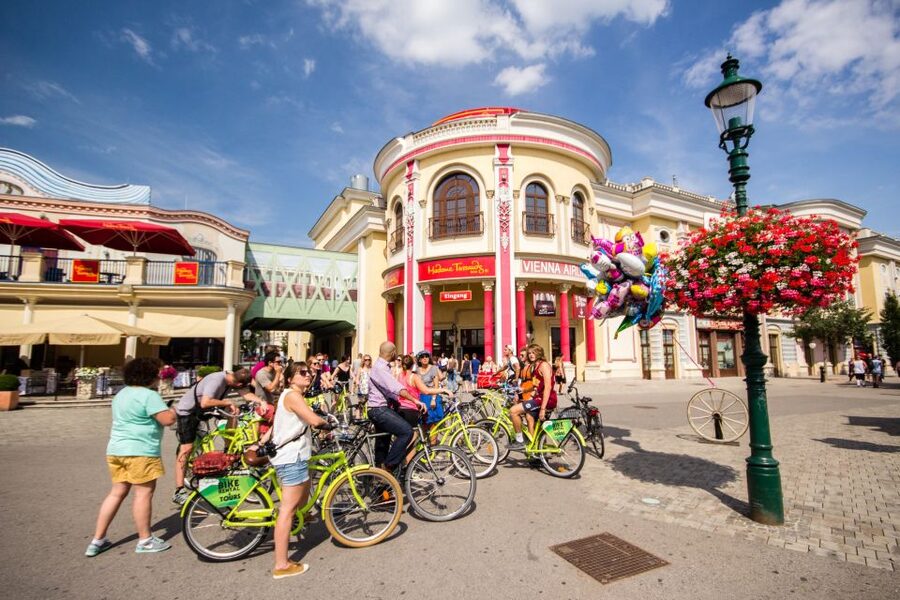
The strongest part of this tour is not just the route. It is the quality of the live commentary. The most praised guides include Lisa, Marco, Horst, Jan, Robert, Karl, and Clemens.
Lisa is known for high energy and humor, even in poor weather. Marco has been praised for answering questions in detail, from major events in Austrian history to small oddities such as numbers marked on trees. Horst is noted for funny stories, local knowledge, and a steady cycling speed.
Jan has received particular praise for helping the youngest and oldest riders through traffic and for making history easy to follow. Robert is valued for giving clear information without overwhelming the group. These are useful differences to keep in mind, although your assigned guide will depend on the departure.
English is the stated tour language, with English and German-speaking guide support listed for the activity. If English is your second language, fast speech or a strong accent may make some commentary harder to follow. One rider specifically found that a native English speaker would have had an easier time. Do not hesitate to ask the guide to repeat an important point.
Pace, group size, and comfort
The ride is designed for sightseeing, not speed. You stop at major sights, hear short talks, and continue through the city. Several guides are praised for keeping a safe, comfortable pace and looking after riders at crossings.
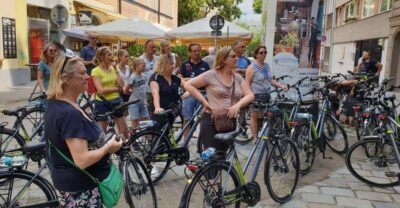
Group size can affect the experience. One group numbered 14, which is manageable but not intimate. A larger group can make it harder to ask questions or hear every comment, especially when several people gather around the guide.
The bikes are a real strength. They are modern city bikes with comfortable seats and easy handling, and helmets are available. E-bikes have also been available on some departures, which can help if you are worried about fitness or want extra assistance.
The tour operates in rain and other weather conditions. Ponchos are provided during wet weather, though you should expect the ride to be less pleasant during a sudden downpour. One tour had to stop partway through because of heavy rain, so fair-weather cyclists may want to choose a day with a better forecast.
Is $55 a fair price?
At $55 per person, this is not the cheapest way to see Vienna. You are paying for the bicycle, equipment, guide, route planning, and three hours of organized sightseeing.
I think the price makes sense if you have only a short stay or want a strong first look at the city. In one afternoon, you reach places that would take much longer on foot, and you get historical context at each major stop. The tour can also help you plan the next two days by showing which areas deserve a return visit.
The value is lower if you already know Vienna well or mainly want to spend time inside museums and churches. This tour focuses on exterior views, streets, squares, canals, and parks. You will not have long interior visits or extended free time at each sight.
Free cancellation is available up to 24 hours before the tour for a full refund, and you can reserve now and pay later. Check departure times when booking, since the three-hour activity has set starting times that vary by availability.
Who should book this ride?
I would choose this tour for a first day in Vienna. It gives you a citywide outline and leaves you with a list of places to revisit on foot or by public transport.
It suits adults, families with older children, casual cyclists, and visitors who like history with a little exercise. The route is also a good fit if you prefer a guide who talks at stops rather than delivering a constant monologue while you ride.
You may want another plan if you dislike cycling in city traffic, have mobility limits that make a three-hour bike ride difficult, or want a tour centered on the old town’s interior sights. The route is easy by cycling standards, but it is still a continuous ride.
FAQ
How long is the Vienna bike tour?
The tour lasts three hours.
What language is the tour in?
The live tour guide speaks English. English and German-speaking guide support is listed for the activity.
Where does the tour meet?
Meet at Franz Josefs Kai, 45, 1010 Vienna. The nearest subway station is Schottenring, served by lines U4 and U2.
What sights are included?
The route includes the Ringstrasse, Vienna Opera House, Rathaus, Parliament, Vienna University, the Imperial Palace, Heroes’ Square, Karlskirche, Hundertwasserhaus, the Danube Canal, and Prater Park with its giant Ferris wheel.
Are bikes and helmets provided?
Modern city bikes are provided, and helmets are available. The bikes are described as comfortable and easy to ride.
Is the cycling difficult?
The route is described as safe, well surfaced, mostly flat, and suitable for a leisurely pace. It covers more than 10 kilometers according to one tour description, so you should be comfortable cycling for three hours with regular stops.
What should I wear?
Wear comfortable clothes. Since the tour operates in all weather, weather-appropriate layers are a sensible choice.
What happens if it rains?
The tour operates in wet weather, and rain ponchos are provided. Heavy rain can affect the route and may cause a tour to stop early.
Can I cancel the booking?
You can cancel up to 24 hours in advance for a full refund. You can also reserve now and pay later.
Should you book it?
Book this tour if you want to cover a wide section of Vienna quickly, hear clear historical stories, and enjoy a gentle ride rather than a hard workout. The mix of Ringstrasse grandeur, Heroes’ Square, Hundertwasserhaus, the Danube Canal, and Prater gives you a much broader view than a short old-town walk.
I would especially recommend it early in your stay. Choose a dry day if you can, arrive ready to ride, and expect the tour to complement rather than replace visits inside Vienna’s museums, churches, and palace buildings.
New cycling reviews around the world
- Riga: Beer or Cider Bike Tour★ 4.7 · 121 reviews
- Ria Formosa: Guided Bike Tour (3h), Início na Quinta do Lago★ 4.8 · 14 reviews
- Riga Explorer Bike Tour★ 4.8 · 127 reviews
- Rio de Janeiro: Guided Bike Tours in Small Groups★ 4.5 · 133 reviews
- Rethymno: Guided e-Bike Tour on Mili Gorge and Soft Drinks★ 4.9 · 36 reviews
- Rhodes: Anthony Quinn Bay E-Bike Tour with Snorkeling★ 4.9 · 15 reviews
- Rhodes: eBike Highlights Tour w/ Personal Photographer★ 4.9 · 99 reviews
- Dresden: Bike Rental – City Bike with Option Children Seat★ 4.5 · 13 reviews
Vienna Cycling Tours, compared.
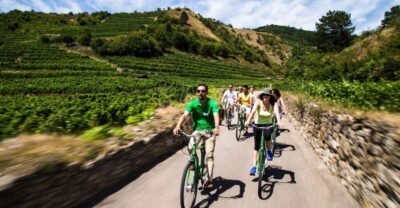
Wachau Valley Wine Tasting Bike Tour from Vienna
Read our review →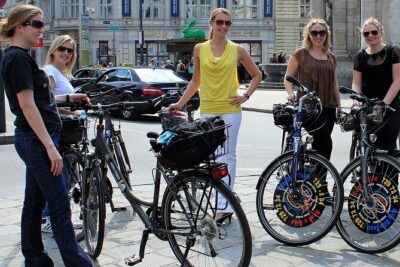
Grape Grazing: Wachau Valley Winery Biking Tour
Read our review →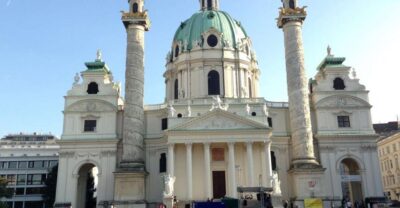
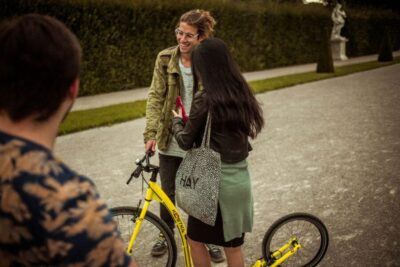
Vienna: Guided Tour by Kick Bike or E-Scooter with a Local
Read our review →Browse the lists this ride appears in