
Review · SEVILLE
From Seville: Half-Day Guided Bike Trip to Italica
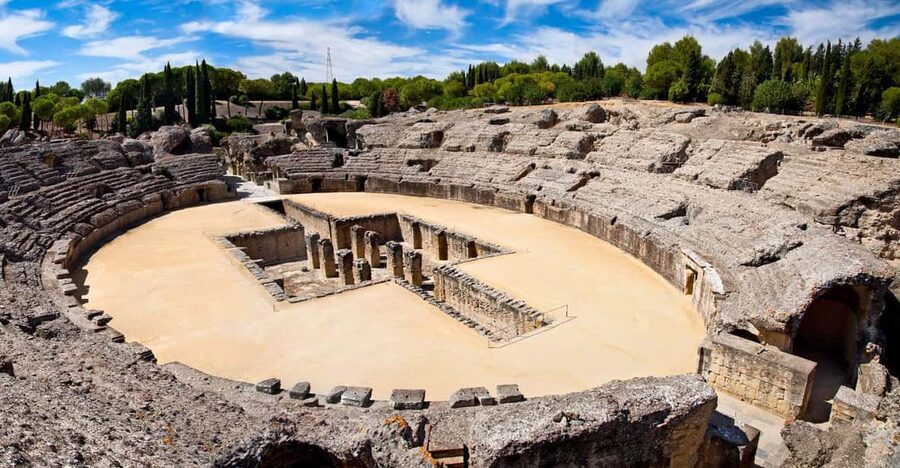
Itálica is the prize here: a vast Roman city outside Seville with remarkably well-preserved mosaics, grand houses, baths, and an amphitheater built for about 25,000 spectators. Reaching it by electric bike turns a half-day archaeological visit into a small adventure through Seville, Santiponce, and the countryside.
I like two things in particular. First, the ride uses Seville’s extensive cycle network for much of the route, so you get out of the tour bus and see parts of the city at street level. Second, guides such as Rigo, Danny, and Natasha bring useful context to both Roman Italica and modern Andalusia. The main consideration is simple: this is not suited to wheelchair users, and cooler weather can feel sharp on the bike, so dress in layers.
Key points at a glance
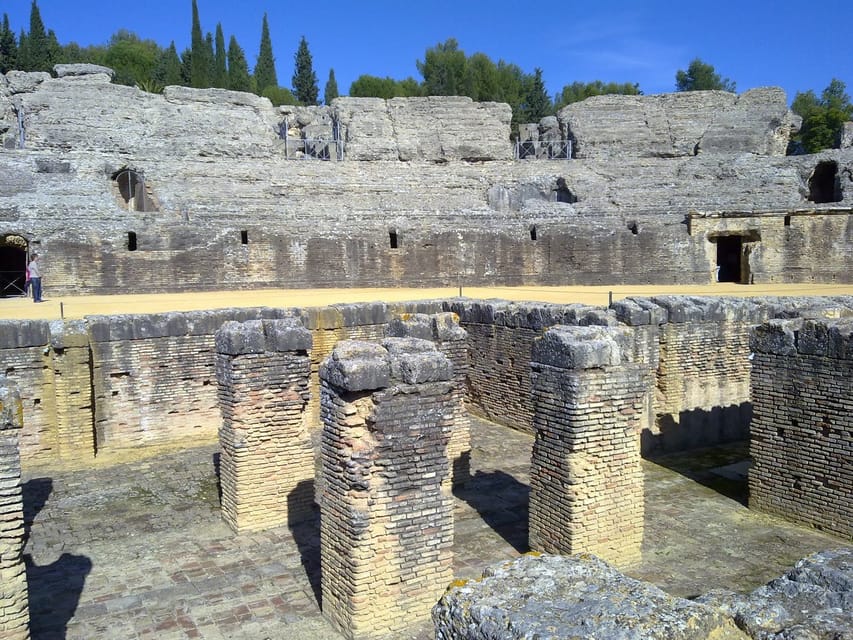
- Roman Italica is much more than an amphitheater: You see house foundations, colorful mosaics, baths, and other remains from a large Roman settlement.
- The e-bike makes the 5-hour outing manageable: You can pedal for exercise or use the motor assistance when the route or weather calls for it.
- The ride adds real sightseeing value: The route passes through Seville, smaller communities, countryside, and part of the Camino de Santiago.
- Santiponce gives the trip a local pause: You can stop for a classic Andalusian breakfast before entering the archaeological center, though food is extra.
- English-language guiding matters at Italica: The ruins are easier to understand when someone explains how the houses, amphitheater, and baths fitted together.
- Bring layers and practical clothing: The ride is easy, but wind and winter temperatures can make an otherwise mild day feel cold.
Why cycling is the smart way to reach Italica
Itálica lies near Santiponce, outside Seville. You can visit by other means, but the bike trip makes the journey part of the outing instead of treating it as dead time between the city and the ruins.
The route uses cycle paths for much of the way. That matters in Seville, where cycling lets you cover ground quickly without being sealed inside a vehicle. You also get a look at parts of the city that may not appear on a standard walking route, then continue toward smaller towns and open country.
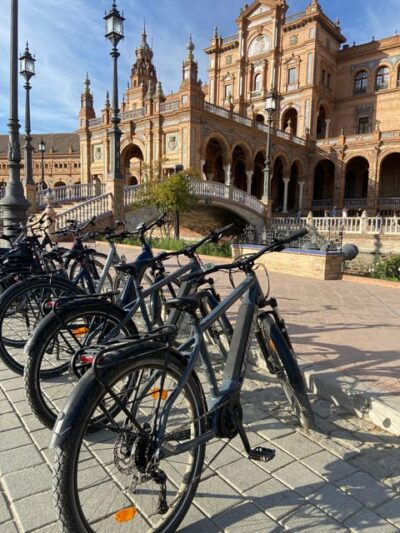
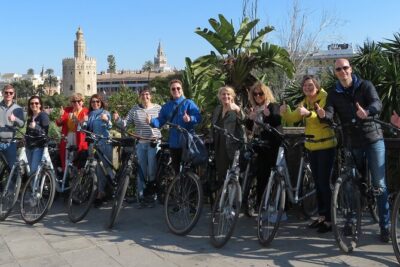
The pace is described as relaxed, not a race. The electric bikes do most of the hard work when you choose the assistance, while stronger cyclists can pedal more and use the outing as light exercise. You receive a helmet and bottled water, and the bikes have a small bag for personal belongings.
A different route back makes the ride feel less repetitive. The exact roads can vary, but the point is useful: you are not simply tracing the same line in reverse. One section follows the Camino de Santiago, adding an unexpected pilgrimage-route detail to the morning.
More Half-Day Rides in Seville:
- Red Rock Canyon eBike Half-Day Tour
★ 5.0 · 1,870 reviews - Lisbon: 7 Hills Half-Day Electric Bike Tour
★ 4.9 · 1,592 reviews - Ubud: Rice Terraces & Villages Half-Day Fat Tire E-Bike Tour
★ 4.9 · 602 reviews
Starting in central Seville
The meeting point is the ATD Bikes shop on a pedestrian street. Allow a little time to locate the shop and get organized, since one past participant found the initial instructions could have been clearer. Once the bikes are assigned, you receive your helmet, water, and basic guidance before setting off.
The opening part of the ride can function as a moving introduction to Seville. Guides have pointed out city sights and local details while leading groups safely through the center. This is one of the better reasons to choose the bike option instead of arranging separate transport to Italica.
You should be comfortable riding a bicycle and following a guide through shared urban spaces. The tour is not described as a technical ride, and the electric assistance reduces the physical demand, but it remains a cycling activity. Wear clothes you can move in, and avoid treating it like a formal city tour.
Santiponce and the Andalusian breakfast option
Santiponce is more than a waypoint. It gives you a chance to see a smaller Andalusian community and hear about local customs before the Roman site takes over the day.
You may have the option to stop at a local café for a classic Andalusian breakfast. It is not included in the $53 price, and food and drinks beyond the supplied bottled water are also extra. This keeps the base cost clear, but you should bring a payment method and allow room in the budget if that pause appeals to you.
The breakfast stop is especially useful in cooler weather or if you prefer a slower start to the archaeological visit. It also gives the guide a natural moment to explain local food traditions and daily life. Do not count on it as a full meal included in your booking, though. The experience description presents it as an optional purchase.
Entering the Roman city of Italica
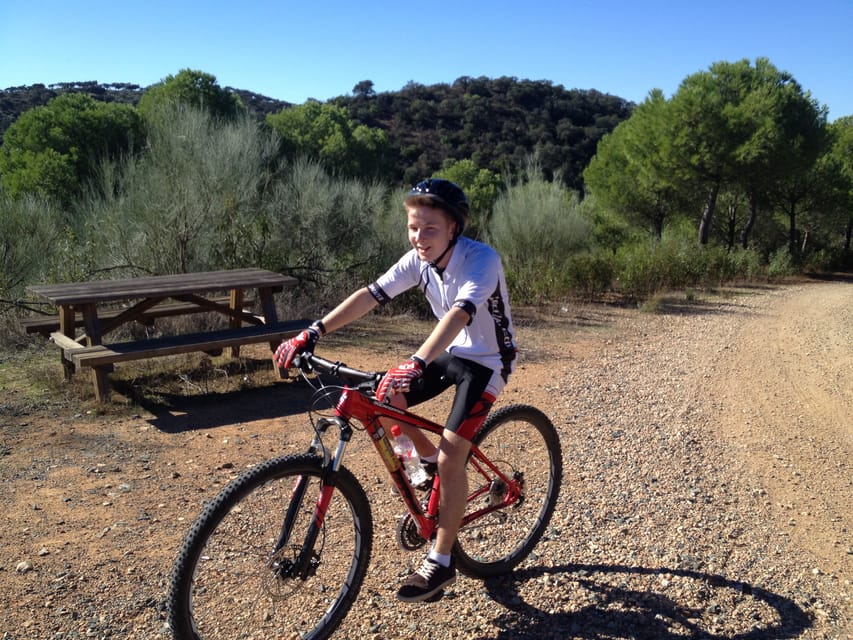
At the archaeological center, the tour shifts from active sightseeing to a guided walk through the ruins. Itálica was connected with the Roman emperors Trajan and Hadrian, and that imperial link gives the site an importance beyond its location near Seville.
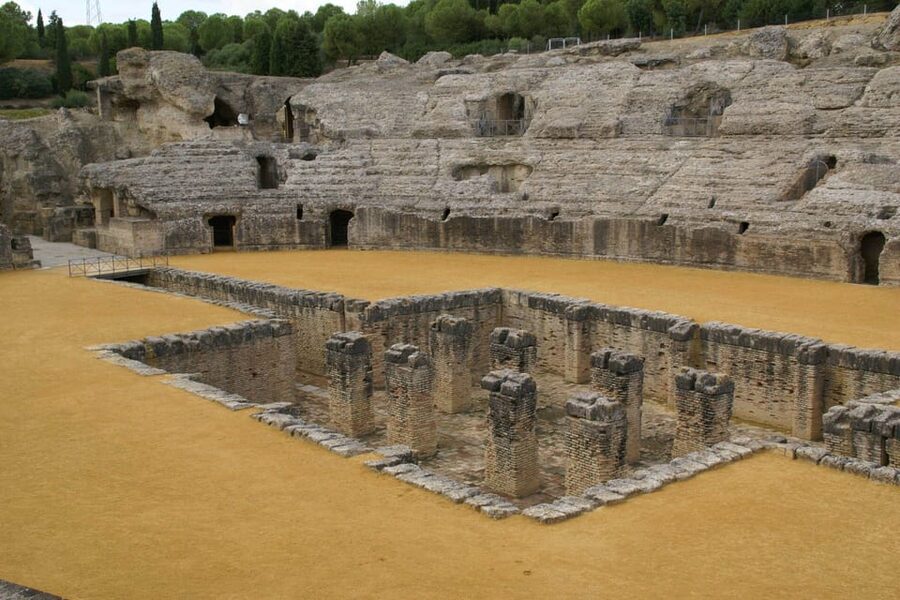
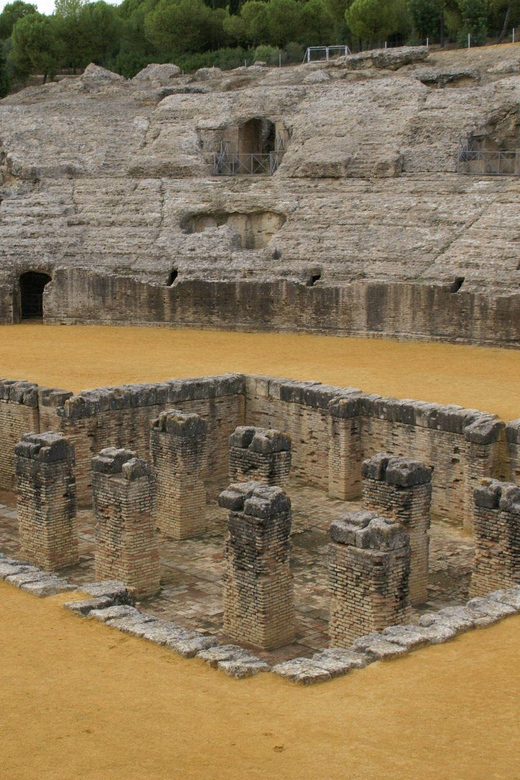
The most memorable feature for many visitors is the amphitheater. Its scale is hard to grasp from a photograph. The arena could hold roughly 25,000 spectators, and you can see the spaces linked with the contests, including the entrance used by gladiators and the room where fighters waited before appearing.
The amphitheater is not the only reason to come. Parts of the residential quarter reveal large Roman houses with mosaic floors, suggesting that wealthy inhabitants once lived here. You can also see the remains of a major bath complex and walk through streets that make the settlement feel like a city rather than a single monument.
Much of Italica remains unexcavated. Some artworks and mosaics are now in museums in Madrid, in private or aristocratic properties in Seville, or beneath parts of the modern settlement. That means you are not seeing the complete ancient city, but what has been opened to the public is still extensive.
The guide adds real value here. Small signs can identify locations, but they rarely explain the full connection between a house, a bath, a public venue, and the wider Roman world. Guides including Rigo, Danny, Tim, and Natasha have been praised for making the site easier to follow and for answering questions in clear English.
More Guided Rides in Seville:
- Seville: Relaxing City Bike Tour with a Tour Guide
★ 4.8 · 1,588 reviews - Seville: Guided Tour by Electric Bike
★ 4.8 · 712 reviews - Sunset Guided Bike Tour in Seville
★ 5.0 · 438 reviews - 3-hour Guided Bike Tour along the Highlights of Seville
★ 5.0 · 315 reviews
The mosaics and houses are the quiet triumph
The amphitheater gets the headline, but I would give the mosaics more time than you might expect. The floors help you picture the people who used these homes, not just the walls they left behind.
Large houses with multiple rooms and decorated floors point to considerable wealth. You might find yourself looking down more often than up, so sturdy, comfortable footwear is sensible even though the ride itself is easy.
The site also rewards patience. Italica is not a polished reconstruction with every building restored. You see foundations, walls, fragments, and patterns, then use the guide’s explanation to connect them. That raw quality is part of the appeal, but readers who want a single fully intact monument should adjust expectations.
What the five-hour timing really gives you
Five hours sounds long for a short excursion, but the time includes the ride out, the village and countryside, the archaeological visit, and the return to Seville. It is best treated as a half-day plan, not a quick add-on squeezed between two fixed appointments.
The schedule also gives you a change of rhythm. You begin in the city, move through cycle paths, reach a smaller town, pause for food if you wish, then spend focused time among Roman remains before riding back.
The exact starting time depends on availability. Build the tour into a morning or afternoon without placing another time-sensitive activity immediately afterward. The ride is described as relaxed, but city cycling, stops, and a full archaeological visit naturally require some flexibility.
In winter, cold air can be more noticeable on a moving bicycle, even when you are not working hard. Gloves and layers are sensible advice. In warmer months, sun protection and water remain practical, though bottled water is supplied.
Price, inclusions, and overall value
At $53 per person, the tour combines bike rental, electric assistance, helmet, bottled water, an English-speaking guide, the ride to Italica, and the ride back. You are paying for more than admission to an archaeological site. You are also getting transport, route planning, city orientation, and interpretation.
Food is not included. Neither is lunch or other drinks. The archaeological entrance fee is not listed among the inclusions, so check the current arrangements before you book. One past participant cited an entrance price of €1.50, but site fees can change and should not be assumed from an old visit.
The value is strongest for you if you would otherwise need to arrange transport to Italica and then hire or download information to make sense of the ruins. It is less compelling if you only want a brief look at the amphitheater or dislike organized cycling.
The high rating, 4.9 from 126 reviews, fits the tour’s strongest points: easy bikes, safe-feeling cycle paths, lively guides, and a site that exceeds expectations in size. One person gave four stars rather than five, noting that Italica was worth the trip and the cycling was good. That is a useful reminder that the core outing is strong, but the shop briefing and initial organization may not feel perfectly polished every time.
Which guide style can you expect?
The guide is central to the experience because the day includes both a moving city tour and a Roman site visit. Rigo is repeatedly singled out for warmth, humor, and strong explanations. Danny and Daniel are also named for clear guidance around Seville and the ruins, while Natasha, Tim, Teun, Eduardo, and Luce have led highly praised outings at different times.
You cannot necessarily choose your guide, but the pattern is clear: expect an English-language guide who explains the route, points out city sights, and provides Roman and local context. The emphasis is educational without turning the day into a classroom lecture.
If you have questions about Roman customs, the emperors, mosaics, or Sevillian traditions, ask them as you go. The tour seems to work best when you treat the guide as a conversation partner rather than simply following behind.
Who should book this Italica bike trip?
I would recommend it most strongly to people who enjoy two subjects at once: cycling and ancient sites. You do not need to be a powerful cyclist because the e-bike supplies assistance, but you should be happy spending several hours on a bicycle.
It also suits first-time visitors who want to see more than the central monuments of Seville. The route shows the city from a different angle, then carries you into the surrounding area without requiring a car.
Families and groups of friends may enjoy the mix of movement, outdoor time, and history. The tour can also work for solo visitors who prefer a guide and a planned route rather than managing transport alone.
It is not suitable for wheelchair users. It may also be a poor fit if you need a fully predictable schedule, want a luxury vehicle, or prefer to spend the entire day indoors. The ride is part of the attraction, not just a way to reach the ruins.
Should you book it?
Book this if you want Italica with context and you like the idea of reaching Roman ruins under your own power, with an electric motor ready when needed. The combination of city cycling, Santiponce, countryside, and an impressive amphitheater gives you a fuller half-day than a simple transfer would.
Skip it if you only want the fastest possible visit, have mobility limits, or strongly dislike cycling in any form. For most active visitors, though, the $53 price is fair because it bundles transport, equipment, guiding, and a memorable visit to one of Andalusia’s most important ancient sites.
FAQ
How long does the tour last?
The tour lasts five hours, including the bike ride from Seville to Italica, time at the archaeological site, and the return ride.
Where does the tour meet?
You meet at the ATD Bikes shop on a pedestrian street in Seville.
What language is the tour conducted in?
The live tour guide speaks English.
Is an electric bike included?
Yes. An electric bike is included in the tour price.
Are helmets provided?
Yes. Helmets are included.
Is bottled water included?
Yes. Bottled water is provided.
Is breakfast included?
No. You may have the option to buy a classic Andalusian breakfast in Santiponce, but food and drinks are not included.
Is lunch included?
No. Lunch and other food and drinks are not included.
Is the tour suitable for wheelchair users?
No. The activity is not suitable for wheelchair users.
Can I cancel for a full refund?
Yes. You can cancel up to 24 hours in advance for a full refund. You can also reserve now and pay later, keeping your plans flexible.
New cycling reviews around Seville
- E-Bike tour in Sevilla★ 4.6 · 34 reviews
- Bike Tour in Seville★ 4.8 · 20 reviews
- Seville: Electric Bike Tour in Small Group★ 4.9 · 185 reviews
- Seville: Electric Bike City Tour★ 4.7 · 188 reviews
- 3-hour Guided Bike Tour along the Highlights of Seville★ 5.0 · 315 reviews
- Seville: Bike Rental for a Day★ 4.1 · 72 reviews
- Seville: Bike Rental★ 4.2 · 29 reviews
- Sevilla Bike Rental★ 4.5 · 49 reviews
Seville Cycling Tours, compared.
Seville: Relaxing City Bike Tour with a Tour Guide
Read our review →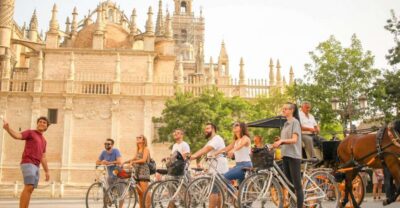
Seville: City Sightseeing and Local Culture Bike Tour
Read our review →
3-hour Guided Bike Tour along the Highlights of Seville
Read our review →Browse the lists this ride appears in