
Review · INDONESIA
Bali: Jatiluwih Rice Terraces 1 Hour Electric Bike Tour
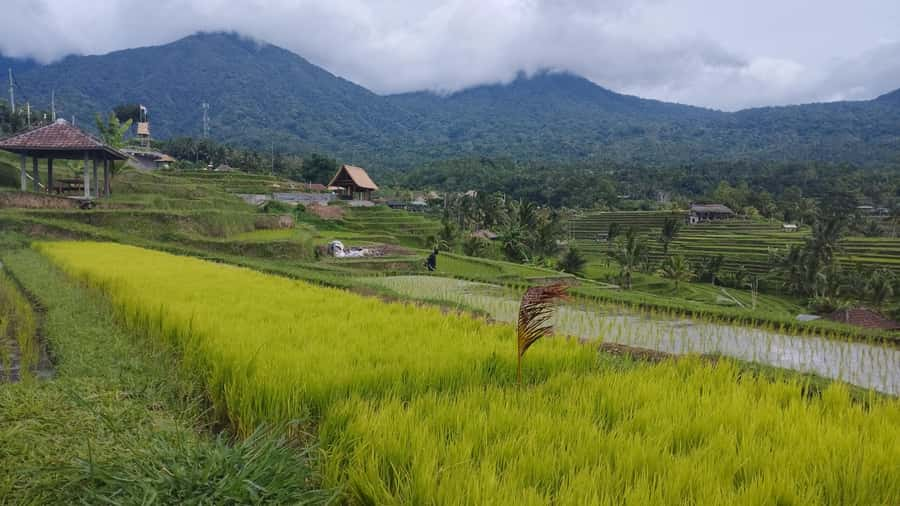
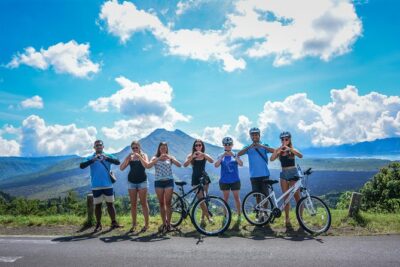
Jatiluwih’s rice terraces are best understood from a moving bicycle, and this one-hour e-bike ride gives you a quick, scenic look without demanding serious cycling fitness. You glide past rice fields, thick bamboo, village roads, and broad valleys framed by four extinct volcanoes. I especially like the electric assistance on the climbs and the chance to stop for views and photos with a local English-speaking guide.
I also like that the guide explains more than the scenery. You get a look at traditional irrigation, rice farming, and ordinary life in the area. The main drawback is time: one hour passes quickly, so this is a sampler rather than a full-day exploration, and you’ll need to pay the Jatiluwih entrance fee separately.
Key points to know before you book
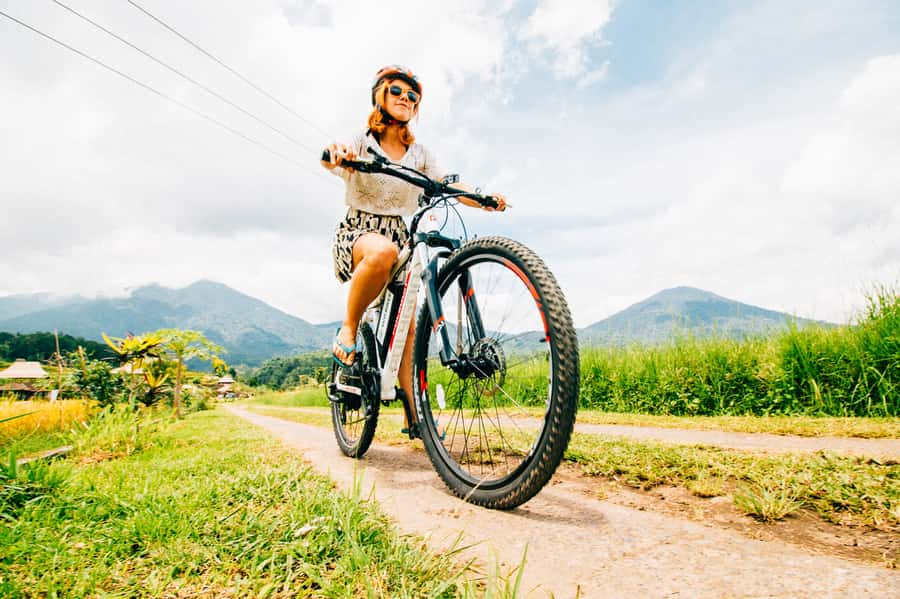
- Electric power matters on the hills: The e-bike makes uphill sections far easier than they would be on a standard bicycle.
- The route shows more than rice fields: Expect bamboo forests, village areas, open valleys, and views toward four extinct volcanoes.
- Local guiding adds context: Your English-speaking guide can explain rice culture, irrigation, nature, and daily life.
- The tour is short and focused: One hour works well as an add-on to a Jatiluwih visit, but it will not cover every corner of the area.
- The price is $22 per person: That includes the bike, helmet, guide, insurance, water, and a raincoat if needed, but not the entrance fee.
- Basic cycling ability is required: You must be able to ride a bike, meet the minimum height of 145 centimeters, and weigh no more than 120 kilograms.
Why Jatiluwih is worth seeing by bicycle
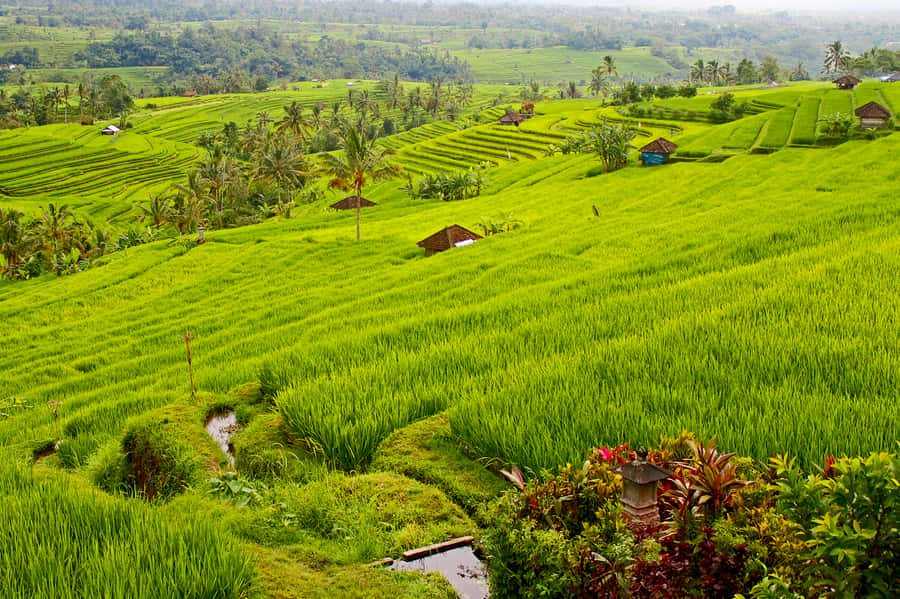
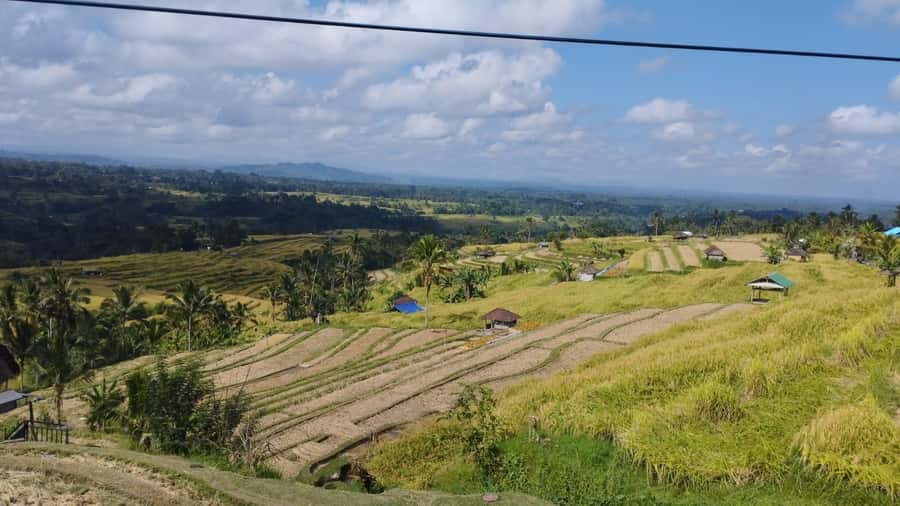
Jatiluwih is known for its broad rice terraces, not just small photo-friendly paddies. The fields spread across the lower slopes and valleys, giving you a much wider view than you get at many of Bali’s more compact rice-growing sites.
The terraces also reflect the traditional irrigation system that supports rice farming in Bali. This is not simply a pretty arrangement of green steps. Water, fields, paths, villages, and farming routines fit together as part of a living system. Your guide can help you notice that connection instead of treating the terraces as a backdrop for photographs.
I like the bicycle format because it keeps you close to the ground. From a car, you pass the fields quickly and stop only at selected points. On an e-bike, you can look across a paddy, notice bamboo rising beside the road, and hear your guide explain what you are seeing. The pace is still efficient, but it feels less removed from the place.
Jatiluwih is also less about a single famous viewpoint and more about the changing view along the route. One bend may open onto rice fields, while another brings you close to thick vegetation or a village. The setting between four extinct volcanoes gives the area a strong sense of scale.
More E-Bike Tours in Indonesia
- Ubud: Rice Terraces & Villages Half-Day Fat Tire E-Bike Tour
★ 4.9 · 602 reviews - Ubud eBikes Tour to Tegallalang Rice Terrace
★ 5.0 · 507 reviews - Electric Bike Tour in Ubud
★ 5.0 · 281 reviews
Starting at Banjar Gunungsari in central Jatiluwih
The meeting point is at Banjar Gunungsari, Desa Jatiluwih, Bali 8215. To find the local supplier’s office, enter the small street in central Jatiluwih directly opposite Warung Krishna. The office is clearly marked.
That direction is useful because the meeting point is not described as a large transport hub. You’ll want to allow enough time to locate the small street, especially if you are arriving by car or arranging your own transport. The entrance fee for Jatiluwih is not included in the $22 tour price, so budget for that separately.
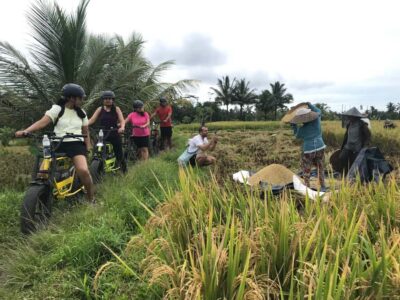
At the start, you receive the electric bike and helmet, meet your guide, and get ready for the ride. The equipment list also includes insurance, drinking water, and a raincoat if needed. The raincoat is a practical touch in Bali, where a bright morning can change quickly, particularly in a highland setting.
The provider is Green Bikes Bali. Tours are conducted in English, and the guide is there to answer questions about the rice terraces, local culture, and the surrounding area. The small-group feel reported by one booking party of six suggests this can be a friendly format, though the supplied information does not promise a fixed group size.
The first ride through the UNESCO-listed terraces
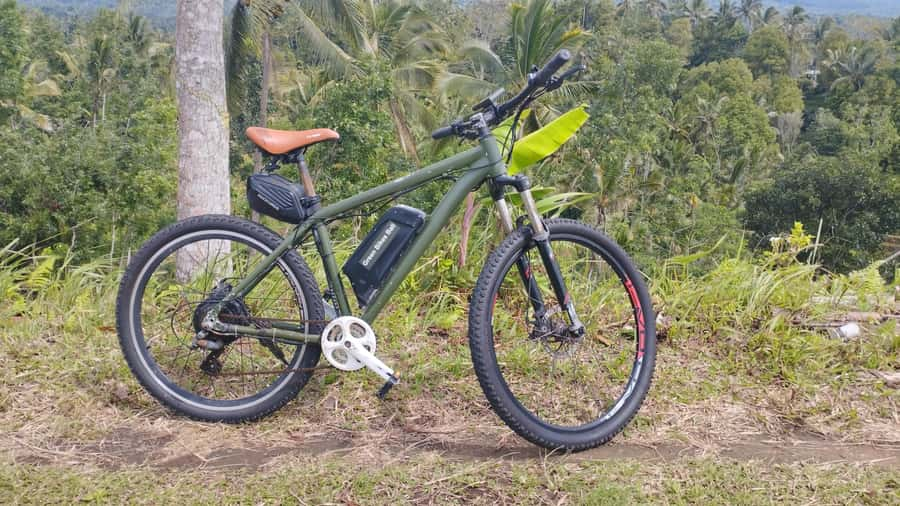
Once you set off, the main attraction arrives quickly: the stepped rice fields of Jatiluwih. The electric motor lets you pay attention to the views instead of saving all your energy for the next incline.
That assistance is not just a comfort feature. One booking party found the electric bicycles especially helpful because some sections would be tiring on regular bikes. The motor makes the ride more approachable for people who are active but not keen on a hard cycling workout.
You still need to know how to control a bicycle. This is not a passive sightseeing ride, and the tour is not suitable for anyone who cannot ride. The e-bike helps with effort, but you remain responsible for steering and balancing.
The route gives you changing angles on the terraces. You may look down over fields from a raised road, pass closer to the paddies, or stop at viewpoints along the way. A guide can point out how the irrigation system supports the fields and explain why the terraces matter to local life.
Do not expect a long, leisurely stop at every attractive view. With only an hour, the guide must keep the group moving. That is a fair trade for a short tour, but it helps to arrive knowing you are booking an introduction rather than an all-day cycling route.
Bamboo forests, villages, and everyday Bali
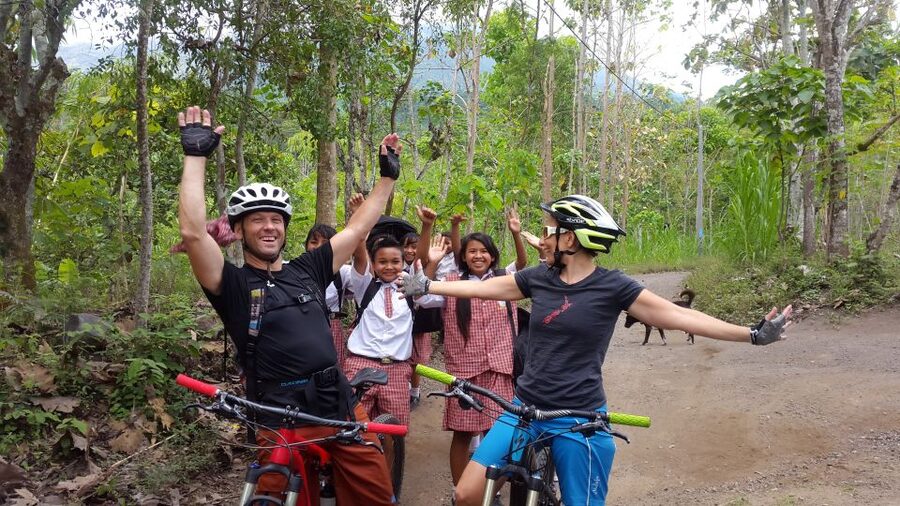
The rice terraces are the headline, but the route also brings you through giant bamboo forests and local village areas. These sections keep the tour from feeling like a simple ride between photo stops.
Bamboo changes the mood of the route. The tall growth creates a more enclosed setting, contrasting with the open sweep of the paddies. It also shows how much plant life surrounds the cultivated fields. The ride is not only about neat rows of rice, but about the mix of farms, trees, vegetation, roads, and homes that make up this part of Bali.
Village sections offer a glimpse of daily life rather than a staged cultural show. You might see homes and local surroundings as you pass, while the guide explains what the area is like for people who live and work there. The supplied information does not promise specific village visits or arranged meetings, so think of this as observation from the route rather than a formal village activity.
This is where a local guide earns the fee. The views are easy to admire on your own, but the meaning of the fields and the routines behind them are less obvious. Ask questions as you ride. The guide can discuss rice farming, the traditional irrigation system, the natural surroundings, and local culture in a way that gives the scenery more weight.
Same roads, a different ride:
- Electric Cycling Tour of Ubud with Free Hotel Transfer and Lunch
★ 5.0 · 1,397 reviews - From Ubud: Downhill Bike Tour with Rice Terraces and Meal
★ 4.9 · 664 reviews - Menoreh Village Cycling
★ 5.0 · 611 reviews - Ubud: Downhill Cycling with Volcano, Rice Terraces and Meal
★ 5.0 · 536 reviews
Valleys framed by four extinct volcanoes
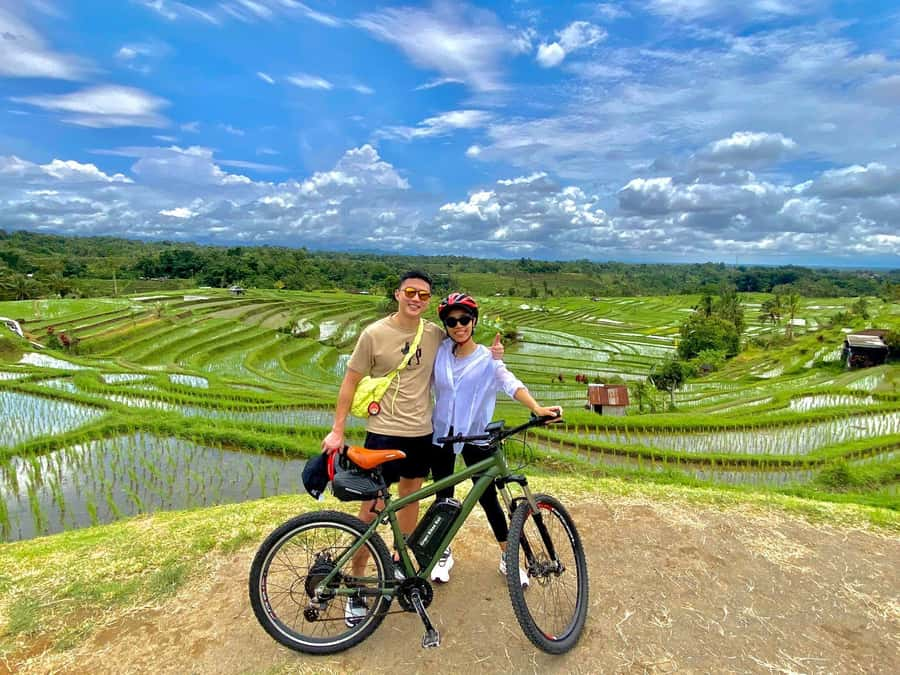
One of the strongest visual features is the setting between four extinct volcanoes. The broad valleys and highland views give Jatiluwih a spacious feel, and the volcanic backdrop helps explain why the area looks so different from a dense urban part of Bali.
The volcano views depend on conditions. The information provided does not promise clear skies, a particular volcano viewpoint, or a precise photo stop. On a clear day, you can expect the setting to add scale to the terraces. In cloud or rain, the atmosphere may be moodier, but the distant views can be less distinct.
I would keep your camera ready, but I would not make the tour depend on one perfect panorama. The value comes from the sequence of scenes: rice fields, bamboo, villages, valley views, and the sense of riding through a working rural area.
The guide may stop at several points for photos and views. One recent booking party particularly appreciated the stops and the guide’s help with taking pictures. That is useful if you are traveling without someone to photograph you, though the exact number and length of stops will depend on the route and group.
How much the $22 price really buys you
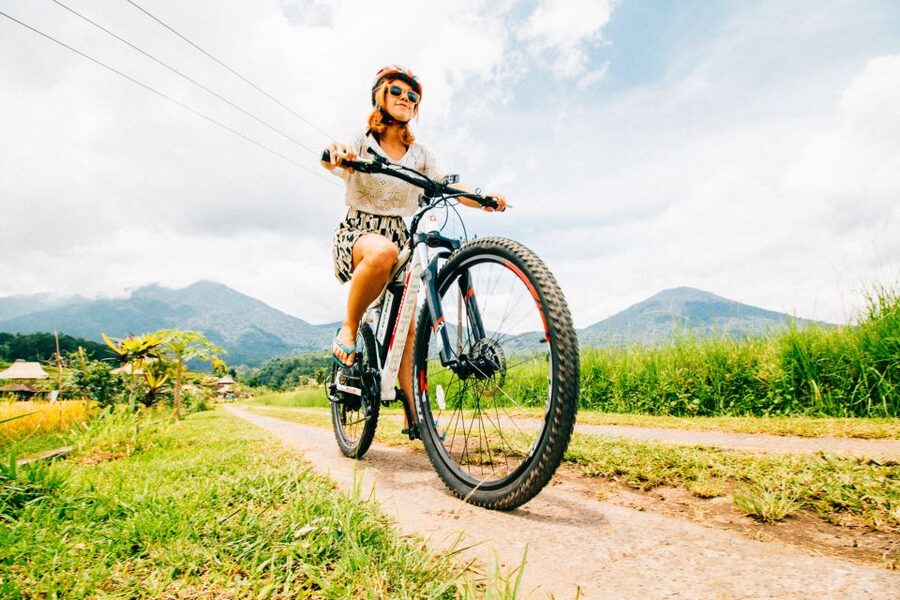
At $22 per person, this is a reasonable add-on for a short guided activity. The price covers the electric bike, helmet, English-speaking guide, insurance, water, and a raincoat if needed. The included equipment means you do not need to arrange a bicycle separately or work out a route through the terraces yourself.
The strongest value comes from the e-bike and guide together. A self-guided walk or drive may cost less in activity fees, but it will not give you the same moving view of the terraces or the same chance to ask questions about farming and local life. A regular bicycle tour might also be cheaper in some places, but the electric motor is important here because the route includes climbs.
The price is less compelling if you only want a long cycling session. One hour is enough to sample the area, but not enough for a slow, detailed tour with long breaks. If you have already paid to enter Jatiluwih and want to explore for most of the day, you may wish to pair this ride with additional sightseeing on your own.
Remember that the Jatiluwih entrance fee is extra. Since the activity price does not cover admission, calculate the full cost before booking. Even so, the package remains fairly good value for someone who wants a guided ride and does not want to worry about bicycle hire, safety gear, water, or route planning.
Fitness, size, weather, and practical comfort
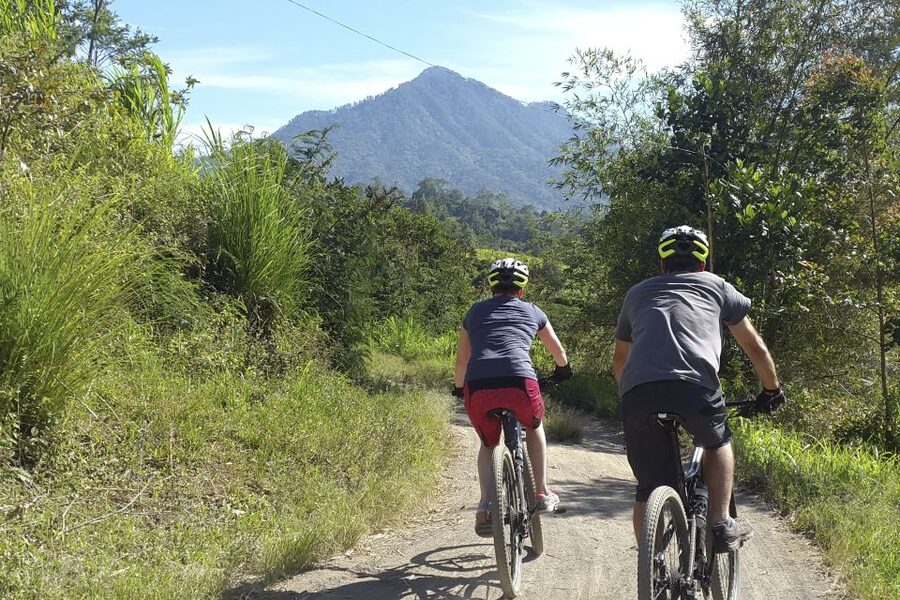
You do not need serious cycling fitness, but you do need basic bike skills. The e-bike reduces the effort on hills, yet the tour still involves riding for an hour and managing a bicycle on the route.
The stated limits are clear:
- You must be at least 145 centimeters tall.
- You must weigh no more than 120 kilograms.
- You must know how to ride a bicycle.
- The tour is conducted in English.
The supplied information does not give a detailed road surface description, a list of steep sections, or a precise bike model. Because of that, I would not promise a completely effortless ride. The electric assistance helps, but the experience remains active.
Bali weather is another consideration. A raincoat is included if needed, which is helpful in Jatiluwih’s changeable conditions. Still, wear clothing that can handle a wet spell and shoes suitable for cycling. The tour does not list a clothing requirement, so simple practical gear is the sensible choice.
Water is included, but keep expectations modest for a one-hour activity. If you need more than a short bottle, bring your own supply. You should also arrive ready to ride rather than expecting a long equipment fitting or extended orientation.
Who will enjoy this one-hour ride most
I would recommend this tour to you if you want a close look at Jatiluwih but have limited time. It works well as a compact activity before or after other sightseeing in the area.
It also suits people who like active sightseeing but do not want a demanding bike workout. The electric motor takes the sting out of the hills, making the ride more accessible than a standard bicycle tour. Couples, families with older children who meet the height requirement, and small groups can all find the format convenient if everyone can ride.
The tour is particularly useful for first-time visitors to Jatiluwih. You get an easy introduction to the terraces, the irrigation system, the surrounding vegetation, and village life without having to plan a cycling route.
I would choose a longer or more flexible outing if your main goal is extensive photography, a slow rural walk, or a full study of the rice-growing system. The one-hour limit means the guide has to keep a steady pace. You will see a good range of scenery, but you will not have unlimited time at each stop.
Booking details that matter
You can cancel up to 24 hours before the activity for a full refund. The reserve-now-and-pay-later option also lets you hold a place without paying immediately, which is useful when your Bali schedule is still shifting.
Starting times depend on availability. Since the tour lasts only one hour, check the available slot against your transport plans and the time needed to reach central Jatiluwih. The meeting point is at the Green Bikes Bali office near Warung Krishna, not a general hotel pickup point listed in the supplied details.
The activity has a 4.7 rating from 41 reviews, and the strongest praise centers on three things: friendly guides, good electric bikes, and the chance to stop for attractive views. One booking party also found the guide especially helpful with photographs and explanations of the surrounding nature.
The less enthusiastic response was simply that the activity was short. That is the key point to keep in mind. The tour is not trying to be a full-day expedition, and you should book it for a focused taste of Jatiluwih rather than complete coverage.
Should you book the Jatiluwih e-bike tour?
Book it if you want an easy, guided way to see the UNESCO-listed rice terraces from several angles. For $22, you get the bicycle, helmet, guide, insurance, water, and rain protection, while the electric motor makes the hills manageable for most people who can ride.
I especially recommend it if you have limited time, want local explanations, or would rather pedal through the countryside than view it from a car. Just allow extra money for the entrance fee and remember that one hour is short.
Skip it if you cannot ride a bicycle, fall outside the height or weight limits, or want a slow, all-day exploration. For everyone else, this is a practical and enjoyable introduction to Jatiluwih’s rice culture, village surroundings, bamboo forests, and volcanic valleys.
FAQ
How long does the Jatiluwih electric-bike tour last?
The tour lasts one hour. Starting times depend on availability.
What is included in the $22 price?
The price includes an electric bike, helmet, English-speaking guide, insurance, water, and a raincoat if needed.
Is the Jatiluwih entrance fee included?
No. The Jatiluwih Rice Terrace entrance fee is not included in the tour price.
Where is the meeting point?
Meet at Banjar Gunungsari, Desa Jatiluwih, Bali 8215. Enter the small street in central Jatiluwih directly opposite Warung Krishna. The local supplier’s office is clearly marked.
Do I need to speak English?
The live tour guide language is English.
Who cannot join the tour?
The tour is not suitable for people who cannot ride a bike, people under 145 centimeters tall, or people weighing more than 120 kilograms.
More One-Hour Experiences in Indonesia
- Paris Evening Bike Tour with 1-hour Seine River Cruise
★ 4.5 · 210 reviews - Lisbon: 1-Hour Beer, Sangria or Wine Bike Sightseeing Tour
★ 4.3 · 110 reviews - Basel: Fancy a bike tour through 3 countries in 60 minutes?
★ 5.0 · 22 reviews
New cycling reviews around Indonesia
- Mount Batur: Black Lava Cycling Tour w/ Natural Hot Spring★ 3.8 · 63 reviews
- Kuta: Kintamani Culture and Nature Guided Cycling Tour★ 5.0 · 14 reviews
- Jatiluwih (UNESCO Site) 2-Hour E-Bike Cycling Tour★ 4.3 · 49 reviews
- E-Bike: Ubud Rice Terraces & Traditional Villages Cycling★ 4.6 · 37 reviews
- Jogja Hidden Gems – Cycling Tour★ 5.0 · 12 reviews
- Bali: Kintamani Downhill Bike Tour, Jungle and Waterfalls★ 4.9 · 20 reviews
- Bali Downhill Cultural Cycling Tour★ 4.8 · 42 reviews
- Ubud: Downhill Cycling with Volcano, Rice Terraces, and Meal★ 4.9 · 189 reviews
Indonesia Cycling Tours, compared.
Electric Cycling Tour of Ubud with Free Hotel Transfer and Lunch
Read our review →
From Ubud: Downhill Bike Tour with Rice Terraces and Meal
Read our review →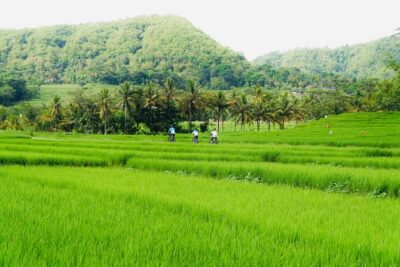
Ubud: Rice Terraces & Villages Half-Day Fat Tire E-Bike Tour
Read our review →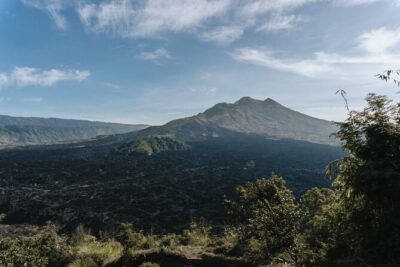
Ubud: Downhill Cycling with Volcano, Rice Terraces and Meal
Read our review →
Browse the lists this ride appears in