Review · ROME
Rome: City Highlights Electric Bike Tour
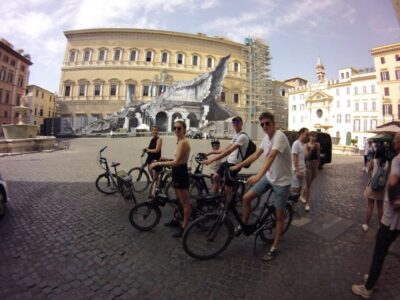
Rome is much easier to grasp from a bicycle seat. This four-hour ride links the Colosseum, Pantheon, Trevi Fountain, St. Peter’s Basilica, and a string of grand squares without asking you to march across the city on foot. The route uses the Tiber bike path, quiet lanes, and back streets when possible.
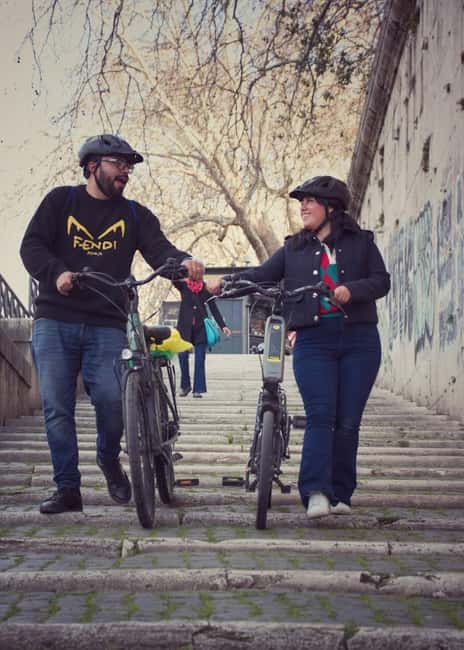
I like the small groups of up to eight per guide, which make it easier to ask questions and keep a sensible pace. I also like the guides’ personal touch: Daniela has tailored routes to guests’ interests, while Giorgio, Fabio, Alessio, and others have been praised for history, patience, and taking good photos. The main catch is simple: an e-bike still requires pedaling, and you need to be comfortable riding in a busy city.
Key points to know before booking
- Four hours on two wheels: Cover far more ground than a walking tour, with time for photo stops at Rome’s biggest sights.
- A route built around famous landmarks: See the Colosseum, Circus Maximus, Piazza Navona, Trevi Fountain, Piazza di Spagna, and St. Peter’s Basilica.
- Quiet lanes help, but traffic is not banished: The tour favors the Tiber path and low-traffic streets, though some surface-road riding is unavoidable.
- Guides add the local color: Daniela, Giorgio, Fabio, Alessio, and other multilingual guides explain stories, odd details, and practical Rome tips.
- Small groups keep things personal: The normal limit is eight people per guide, with private tours available.
- Bring cycling confidence: A short riding test comes before departure, and the guide can refuse participation if you cannot safely handle the bike.
Why an e-bike works so well in Rome
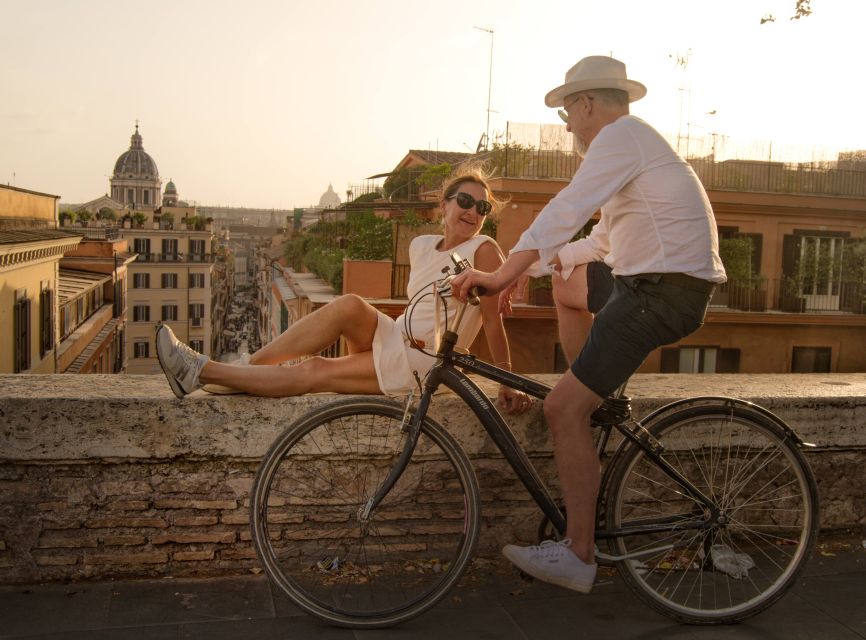
Rome’s sights are scattered across a large historic center. Walking between the Colosseum, Campo de’ Fiori, Castel Sant’Angelo, and the Spanish Steps can eat up much of a day, especially in summer heat or after a morning of museum visits.
The electric assist makes the distance manageable. You still pedal, but the motor takes the sting out of long stretches and modest inclines. Several riders describe the bikes as easy to use and comfortable, including first-time e-bike users. One important clarification: this is not a motorized sightseeing ride. You must pedal, steer, brake, and balance.
The route is designed to reduce stress. Much of it follows the Tiber bike path, parks, side streets, and back roads. You may still encounter cars, scooters, pedestrians, and tight spaces. In crowded areas near the Colosseum or major fountains, you may need to walk the bicycle. That is sensible, not a flaw. Rome’s central streets can become too packed for safe riding.
A guide such as Ilenia or Noam may need to manage crossings and slow the group through busy sections. The cycling is safest when you stay close, follow instructions, and accept that the guide may alter the route for a public event or a safety concern.
More City Highlights Bike Tours in Italy
- Rome: Top Highlights & Hidden Gems Tour by Cannondale E-Bike
★ 4.9 · 1,760 reviews - Rome: Standard or E-Bike Highlights Guided Tour
★ 4.7 · 777 reviews - Rome: City Highlights E-Bicycle Tour
★ 4.9 · 740 reviews
Starting beside the Tiber
The listed meeting point is at Lungotevere delle Armi 44, though the precise start can depend on the option you book. Confirm it before setting out, especially if you choose a private tour or a different departure time.
After a bike fitting and basic instructions, the guide conducts a pre-departure test. This is important. You need enough control to start, stop, turn, and ride around other people. If you are rusty, practice before booking. The operator lists pregnancy, mobility limitations, vertigo, recent surgery, heart problems, low fitness, and a weight above 220 pounds as reasons the activity may not be suitable.
The tour can be offered in English, Italian, Spanish, or French. You receive a helmet cover, and a poncho is available if rain arrives. Infants up to 20 kilograms can ride free in a child seat. Children under 139 centimeters need a bike extension such as a tag-along or trailer, and riders must be at least 12 to operate an e-bike.
Tiber Island and the ancient core
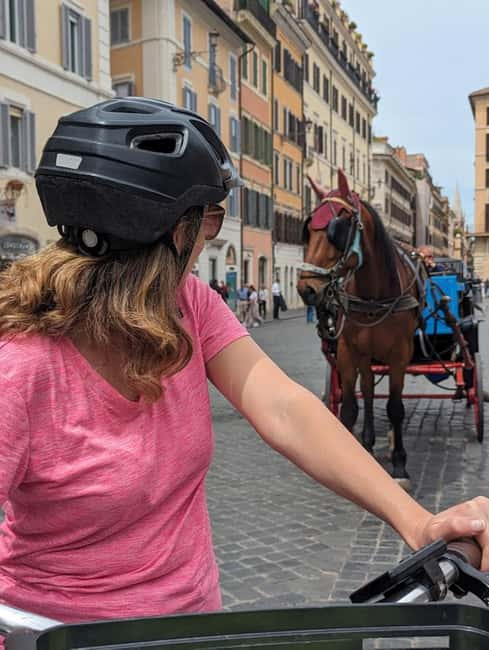
The ride reaches Tiber Island early. This small island in the river gives you a useful sense of Rome’s geography. It also makes a calm opening section before the route moves toward the ancient monuments.
The island stop is brief, around ten minutes. You are not getting an extended archaeological visit, but the guide can set up the story of Rome as a city shaped by its river, bridges, and crossings. The Tiber path also gives you a break from traffic and a chance to settle into the bike.
From there, the group heads toward Circus Maximus. The huge open basin once held chariot races and public spectacles. Today, the scale is the point. You can look across the long valley toward the Palatine Hill and picture how many people once gathered here.
The stop is mainly for photos and a short explanation. If you want a detailed study of the Palatine, Forum, or Colosseum interior, book a separate archaeological visit. This tour is about orientation and atmosphere, not admission to monuments.
The Colosseum and Piazza Venezia
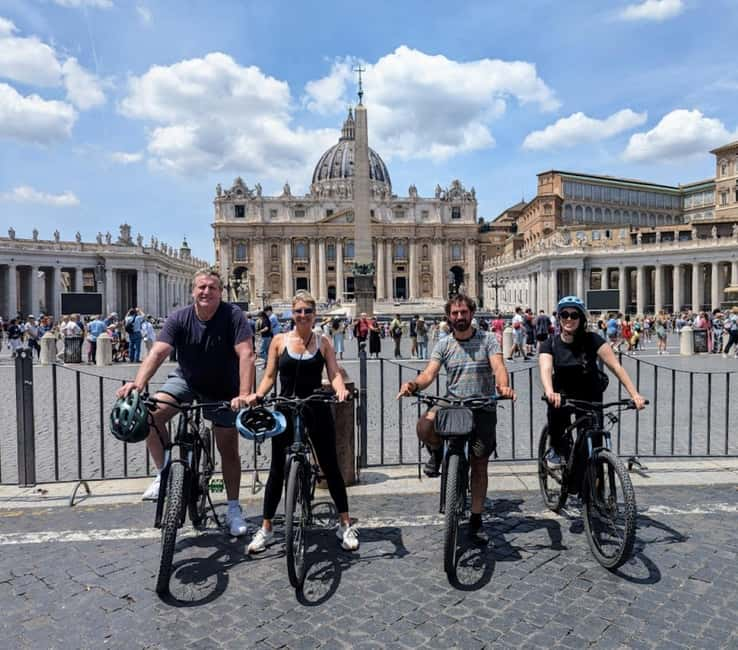
The Colosseum is the tour’s most obvious showstop. You will see the exterior, stop for photographs, and hear the guide place the amphitheater in the larger story of imperial Rome. The scheduled stop is about 15 minutes, so do not expect to enter or explore the arena’s underground levels.
That limitation can actually help if you are using the bike tour as a first look at Rome. You get your bearings, note what deserves a longer visit, and avoid spending the entire morning in one place. Plan a separate timed ticket if walking through the Colosseum is a priority.
Piazza Venezia brings you into the city’s monumental center. The broad square and the massive Vittoriano monument make a strong contrast with the narrow lanes you have just ridden. Again, the stop is a photo and orientation break rather than a museum visit.
You will likely appreciate the way a bike links these places. On foot, the transitions can feel like long marches. From the saddle, each monument becomes part of a connected city story.
More City Highlights Bike Tours in Rome
- Rome Highlights by E-Bicycle Small group
★ 5.0 · 486 reviews - Rome’s Best by E-bike: Guided City Tour (Small Group or Private)
★ 5.0 · 207 reviews - Rome: Panoramic Off-the-beaten-track Cannondale E-Bike tour
★ 5.0 · 71 reviews - Rome E-Bike Highlights Tour & Tasting in Secret Cave
★ 4.7 · 16 reviews
The Jewish Ghetto and Campo de’ Fiori
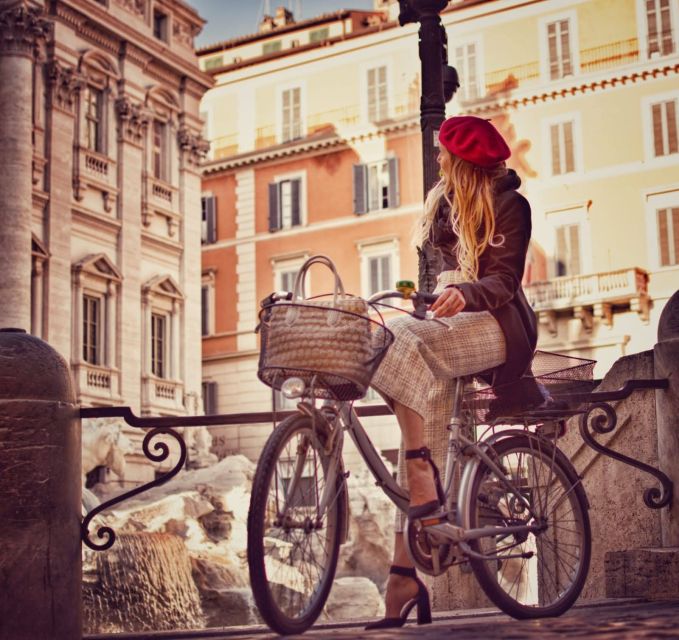
The Jewish Ghetto adds a more intimate side of Rome. Here, the route moves away from the giant imperial monuments and into older streets with a strong local identity. The guide’s stories matter more than a checklist of sights, since the scheduled riding stop is short.
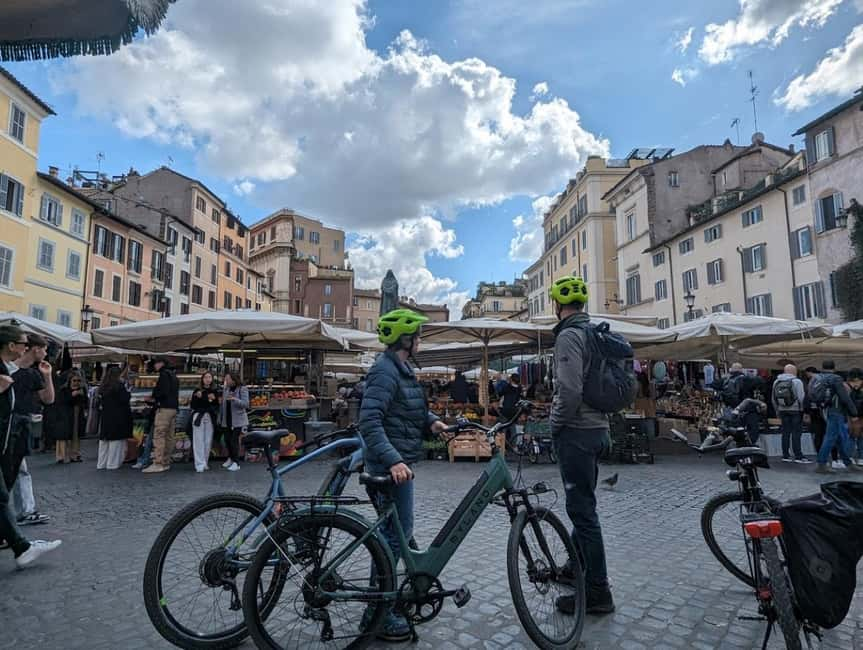
Campo de’ Fiori follows. The square is known for its market by day and its social life later on. It is one of the places where Rome feels less like an open-air museum and more like a city people use. The group stops for photos, but do not count on having time to browse every stall or sit for a meal.
This section is one reason the tour works better than a simple hop-on, hop-off circuit. You move through neighborhoods rather than only viewing monuments from a vehicle. You also get the advantage of a local guide who can point out details you would probably miss while trying to navigate.
Piazza Navona, the Pantheon, and the historic center
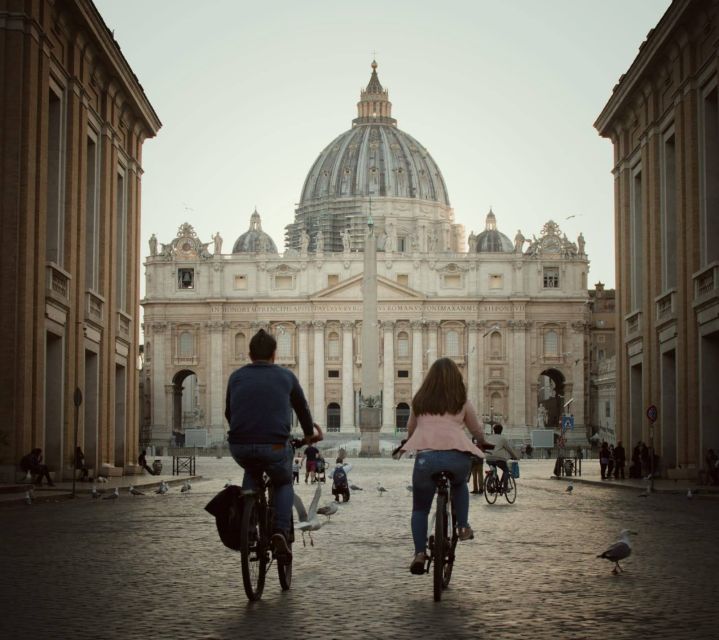
Piazza Navona is one of Rome’s great public rooms, shaped by its long oval form and Baroque fountains. You will stop for photographs and a short talk, then continue through the dense historic center.
The Pantheon is another essential exterior stop. Its ancient columns and enormous dome make it one of the city’s most impressive buildings, but the tour does not include an interior visit. If you want to see the dome from inside, return independently when you have enough time for the queue and security process.
A practical point: central Rome is often crowded around these sights. You may ride only part of the way and push the bike through pedestrian-heavy stretches. That can feel less thrilling than cycling, but it keeps the group safe and prevents the tour from becoming a tense obstacle course.
The guide may also adjust the order. A festival, road closure, or unusual crowd can change the plan. The promise is broad coverage of the historic center, not a rigid guarantee that every stop will happen in exactly the listed sequence.
Castel Sant’Angelo and St. Peter’s Basilica
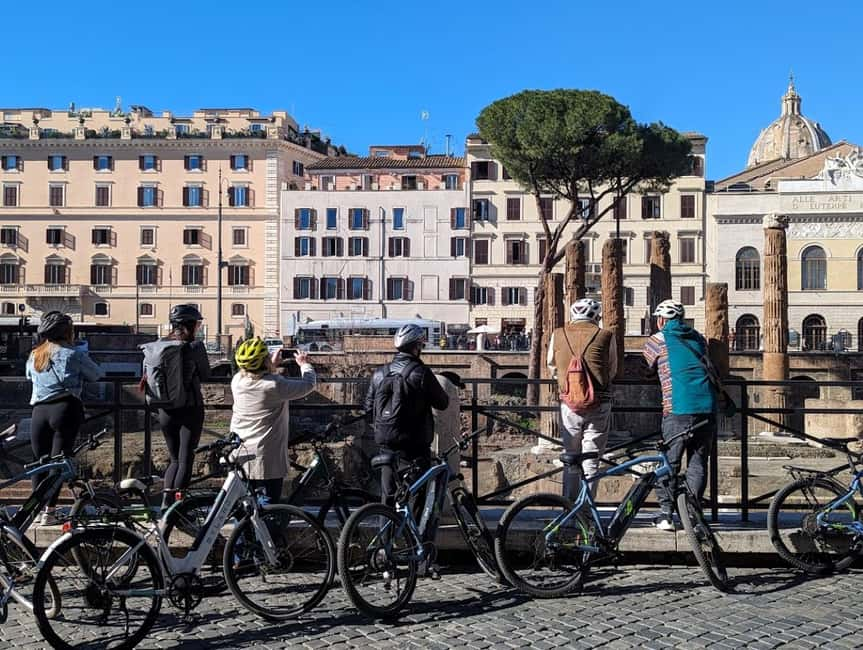
Castel Sant’Angelo gives you one of the city’s strongest river views and one of its most recognizable silhouettes. The former mausoleum, later fortress, and papal refuge sits beside the Tiber, making it a natural cycling stop.
The visit is an exterior photo stop. If you want the fortress rooms, rooftop views, or the passageway to the Vatican, plan a separate ticketed visit.
The route continues to St. Peter’s Basilica. From the outside, the scale of the piazza and the basilica’s facade are enough to make a powerful impression. The tour does not take you through the basilica, Vatican Museums, or Sistine Chapel. That is worth stressing because the word Vatican can lead people to expect an indoor Vatican visit.
Still, reaching St. Peter’s by bicycle is useful. You see how the Vatican fits into the city rather than treating it as an isolated half-day destination. If you have only a short time in Rome, this overview can help you decide where to return.
Trevi Fountain, the Spanish Steps, and Piazza del Popolo
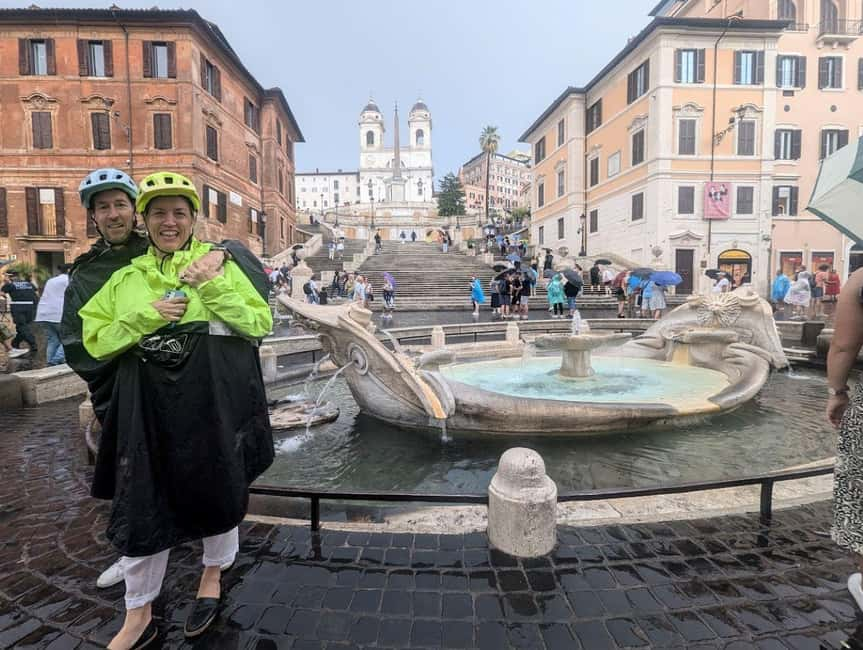
The route then turns back toward the historic center and the Trevi Fountain. This is one of the busiest parts of the ride. You may have to dismount, and your guide will direct where to stop so the group does not block the crowd.
The fountain is a classic photo stop, not a long break. Bring a few euros if you want to follow the coin-toss tradition, though the activity does not include a formal fountain ritual. One guide was even able to provide change for a rider, but you should not rely on that.
Piazza di Spagna and the Spanish Steps come next. The steps are for looking, not cycling, and the surrounding streets can be packed. This is another point where a bike lets you reach the sight quickly but does not let you ride freely through every inch of the area.
The final listed stop is Piazza del Popolo, a broad northern gateway to the old city. It offers a calmer sense of space after the tight lanes and dense crowds near Trevi and the Spanish Steps. From there, the ride returns to Lungotevere delle Armi, usually using the same general river-side starting area.
The guides make the four hours work
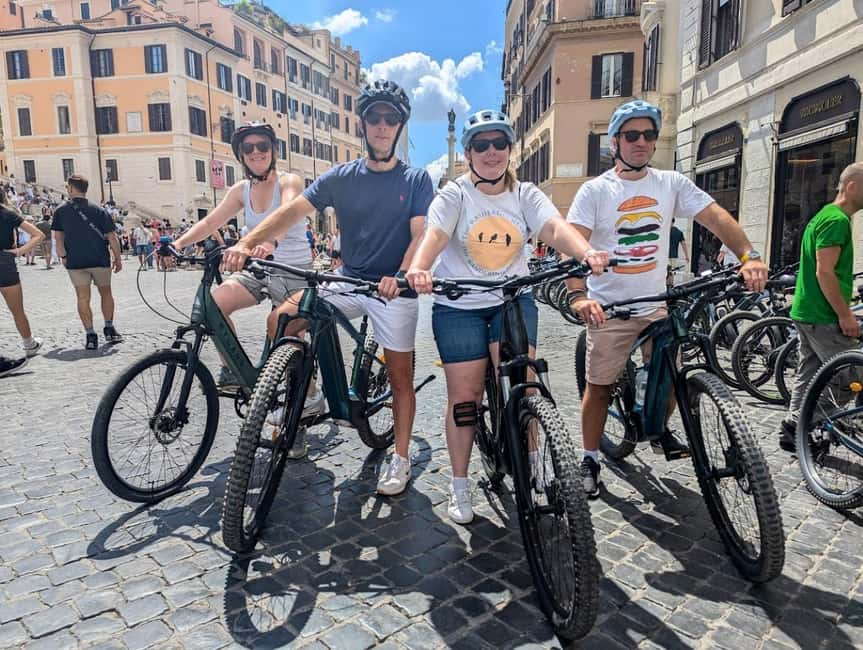
The strongest part of this experience is the guide. Daniela has been singled out for tailoring routes, telling stories, and taking excellent pictures. Giorgio has been praised for patience and a lively style. Fabio is described as relaxed, informative, and easy to communicate with, while Alessio has adjusted routes to guests’ interests and ability.
Those details matter because four hours can feel either rushed or wonderfully efficient. A good guide knows when to explain, when to let you ride, and when to stop for a photo. The best feedback points to guides who avoid drowning the group in facts and instead tell enough history to make each place meaningful.
At the start, tell the guide what you have already seen and what you plan to visit later. The route can sometimes be adjusted, particularly on a private booking. One group of beginners had the route modified to suit their ability, while another group was guided through back streets to avoid traffic.
Small groups help. The standard limit is eight people per guide, although the operator may run with fewer or include one or two extra people to keep a booking together. A private version gives you the guide exclusively, which is useful for families, mixed-age groups, or anyone with specific priorities.
Price, pace, and who gets the best value
At $80 per person, this is not the cheapest way to see Rome. It is good value if you want a broad first look, have only a half-day, or find long walks tiring. You are paying for the bike, guide, route planning, safety support, and the ability to connect sights spread across the city.
It is less useful if your main goal is entering monuments. No Colosseum, Pantheon, Vatican, or Castel Sant’Angelo admission is included. Think of the tour as a moving introduction, then schedule indoor visits separately.
The pace is generally described as easy and not exhausting, but the route covers substantial ground. One rider reported about 17 kilometers, so the four hours are active even with electric assistance. Wear comfortable clothes, carry water, and be ready for sun, rain, crowds, and occasional walking.
The flexible booking terms also help: cancellation is allowed up to 24 hours before departure for a full refund, and you can reserve now and pay later. The minimum is four participants. If that minimum is not reached, an alternative date or full refund is offered.
Should you book the Rome City Highlights Electric Bike Tour?
Book it if you want to see a large part of Rome in one morning or afternoon, prefer moving through neighborhoods instead of sitting on a bus, and can ride confidently in city conditions. It is especially useful for first-time visitors, families with older children, mixed-age groups, and anyone who wants to save their legs for museums and dinners.
Skip it if you cannot comfortably pedal, have a condition listed as unsuitable, or want long, detailed visits inside the major monuments. Also skip it if riding beside occasional traffic makes you anxious.
For the best experience, choose an earlier start if available, tell the guide your priorities, and treat the tour as your Rome orientation. You will see the big sights, pick up local stories, and learn where you want to spend more time later. At $80, that is a fair trade for four active hours and a much clearer sense of how the Eternal City fits together.
FAQ
How long does the Rome electric bike tour last?
The tour lasts four hours.
How much does the tour cost?
The listed price is $80 per person.
What sights are included on the route?
The route includes Tiber Island, Circus Maximus, the Colosseum, Piazza Venezia, the Jewish Ghetto, Campo de’ Fiori, Piazza Navona, Castel Sant’Angelo, St. Peter’s Basilica, the Pantheon, Trevi Fountain, Piazza di Spagna, and Piazza del Popolo.
Does the tour enter the Colosseum or Vatican Museums?
No. The listed stops are exterior visits, photo stops, or short guided riding sections. Admission to the Colosseum, Vatican Museums, and other interiors is not included.
Do I need experience riding an e-bike?
You need a minimum cycling level and must be able to ride safely in city conditions. The guide conducts a pre-departure test and can deny participation if you cannot manage the bike safely.
Does an e-bike still require pedaling?
Yes. The bikes provide electric assistance, but you still need to pedal.
How large are the tour groups?
The normal limit is eight people per guide. The tour may run with fewer people or include one or two extra participants to keep bookings together.
Is a private tour available?
Yes. A private option is available, with the local guide reserved exclusively for your group.
What languages are offered?
Guides may lead the tour in English, Spanish, French, or Italian.
Can children or infants join the tour?
Infants up to 20 kilograms can ride free in a provided child seat. Children under 139 centimeters must use a bike extension, such as a tag-along or trailer. The minimum age to operate an e-bike is 12.
More E-Bike Tours in Rome
- Rome by Night – Ebike Small Group Tour – Food and Wine (Option)
★ 5.0 · 1,275 reviews - Rome by Night: E-bike Small Group Tour -Food & Wine (Option)
★ 4.9 · 1,233 reviews - Appian Way, Catacombs and Aqueducts Park Tour with Top E-Bike
★ 5.0 · 735 reviews - Rome: Appian Way E-Bike Tour Catacombs, Aqueducts & Picnic
★ 4.6 · 727 reviews
More E-Bike Tours in Italy
- Rome EBike Tour: Appian Way, Catacombs & Roman Aqueducts
★ 5.0 · 1,766 reviews - Rome: Appian Way & Aqueducts E-Bike Tour (Catacombs & Food)
★ 4.9 · 1,498 reviews - Rome: Appian Way, Catacombs, & Roman Aqueducts E-bike Tour
★ 4.9 · 1,421 reviews - Rome City Small Group Bike Tour with quality Cannondale EBike
★ 5.0 · 1,380 reviews
New cycling reviews around Rome
- Rome: Full-Day Guided Tour by E-Bike with Lunch Included★ 4.9 · 36 reviews
- Rome: Panoramic Off-the-beaten-track Cannondale E-Bike tour★ 5.0 · 71 reviews
- In Rome like a star: e-bike tour with photo shoot★ 4.9 · 20 reviews
- Rome :guided night e-bike tour with typical ice-cream★ 5.0 · 55 reviews
- Hidden Rome: Small Group E-Bike Tour with Street Food Stops★ 4.9 · 144 reviews
- Rome: Early Morning E-Bike Tour★ 4.9 · 84 reviews
- Rome: E-Bike Sunset Tour with Pizza Option★ 4.9 · 428 reviews
- Rome: E-Bike Tour of Appia Antica, Aqueducts, and Caffarella★ 4.9 · 51 reviews
Rome Cycling Tours, compared.
Rome EBike Tour: Appian Way, Catacombs & Roman Aqueducts
Read our review →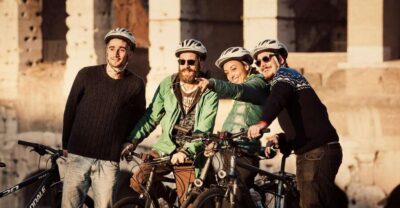
Rome: Top Highlights & Hidden Gems Tour by Cannondale E-Bike
Read our review →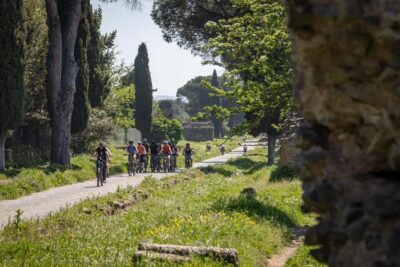
Rome: Appian Way & Aqueducts E-Bike Tour (Catacombs & Food)
Read our review →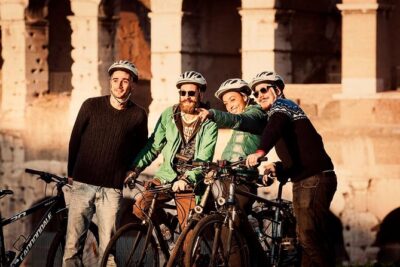
Rome City Small Group Bike Tour with quality Cannondale EBike
Read our review →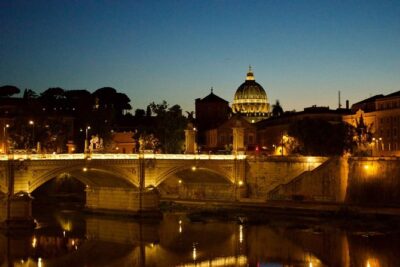
Rome by Night – Ebike Small Group Tour – Food and Wine (Option)
Read our review →
Appian Way Aqueducts Bike Tour (Catacombs & Lunch Option)
Read our review →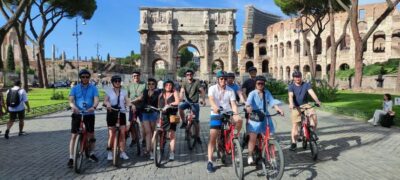
Rome: Standard or E-Bike Highlights Guided Tour
Read our review →