
Review · BARCELONA
Barcelona Montjuic Three-Hour Bike Tour
Barcelona’s Montjuïc bike tour is really a city ride with a hilltop finish, not a hard push to the castle. You start near the port, pass the Columbus Monument and Raval, cross Plaza de España, then pedal toward the Olympic ring and Miramar viewpoint before returning through Port Vell.
I like the broad mix of Barcelona sights, from the 1929 Exhibition grounds and Magic Fountain to the 1992 Olympic sites. I also like the relaxed setup: bikes, helmets, a drink, rain jackets, and child seats are provided, while the guide handles the route. The main catch is important: standard bikes do not take you all the way to the top of Montjuïc or the castle, so anyone expecting an electric-bike climb should choose another tour.
Key points to know before you pedal off
- Three hours from port to port: The ride begins near the harbor and finishes through Port Vell, giving you a useful first look at central Barcelona.
- Montjuïc without the full summit climb: You see the Olympic area, Palau Sant Jordi, the stadium, Joan Miró Foundation, and Miramar, but not necessarily Montjuïc Castle.
- A sightseeing route, not a workout: The route is designed to avoid traffic where possible, though you still need to be comfortable riding uphill.
- Strong guide potential: Elisa is praised for making the route interesting and family-friendly, while Dani is singled out as a fun guide.
- Good family provisions: Helmets and child seats are included, and the tour runs in English, French, Spanish, Italian, and Catalan.
- Watch the minimum group rule: At least four people are needed for the tour to run, so confirm the departure before building your day around it.
A Barcelona overview that starts beside the sea
The tour begins by the port, where the ocean air gives the ride an easy start. That opening matters because Barcelona can feel crowded and complicated on foot. A bike lets you cover several districts in one outing without spending the whole morning underground or waiting for taxis.
I would treat this as an orientation ride for your first day or two in town. You get a quick sense of how the waterfront, old neighborhoods, grand avenues, exhibition grounds, and Montjuïc fit together. It does not replace a close visit to each monument, but it helps you decide where to return on foot.
The guide leads the group and sets the pace. You are not left to sort out Barcelona traffic on your own, and the route is described as simple, safe, and designed to limit time around traffic. That is useful in a city where road crossings and busy streets can distract from the buildings around you.
Still, this is a bike tour. You need to pedal, steer, and manage some uphill riding. The route is called relaxing, but standard bicycles require real effort on Montjuïc’s slopes. If you rarely ride or are traveling with children, ask about the pace and child-seat setup before booking.
More Three-Hour Experiences in Barcelona:
- Barcelona 3-hour Bike or E-Bike Tour: Highlights and Hidden Gems
★ 5.0 · 1,429 reviews - Barcelona Historical 3-Hour Bike Tour
★ 4.7 · 222 reviews - Barcelona: Guided Highlights Bike or eBike Tour (3 Hours)
★ 4.7 · 197 reviews
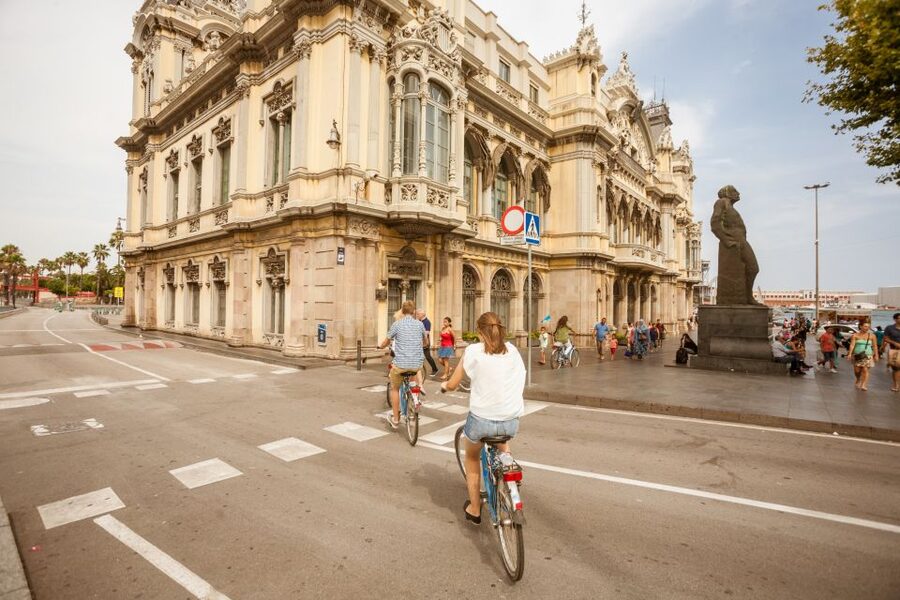
Raval, the Columbus Monument, and the old harbor edge
After leaving the port, the route heads toward Raval, an area tied to the 1929 Universal Exhibition and filled with grand buildings and older city streets. The tour does not present Barcelona as a series of isolated postcard stops. Instead, you move through neighborhoods and see how the city changes from the waterfront inward.
The Columbus Monument is one of the first major landmarks. It rises at the lower end of La Rambla and points toward the sea, making it an easy visual marker between the old city and the port. From a bicycle, you can appreciate its position in the larger setting rather than simply stopping for a quick photograph.
The Raval section is especially useful if you want more than Barcelona’s most polished avenues. One family described being shown attractive corners that are less tourist-focused, which suggests that the guide may add local context beyond the basic route. That extra explanation is where a guided ride earns its keep. Without a guide, you might pass through Raval without understanding why its streets and buildings matter.
The tradeoff is time. A three-hour tour cannot pause at every site, and some places will be viewed from the saddle rather than entered. Think of this part as a moving introduction to the city, not a museum visit.
Plaza de España and the 1929 Exhibition grounds
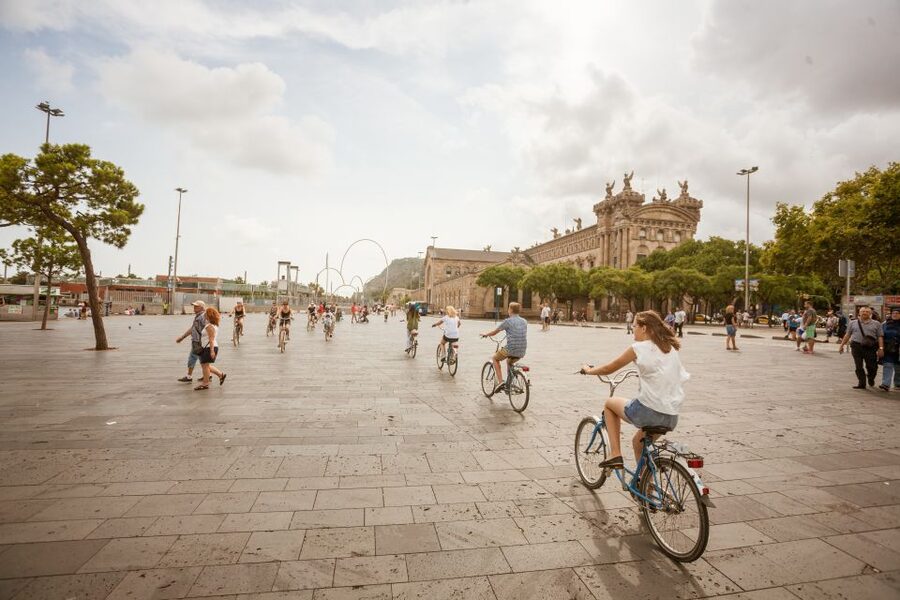
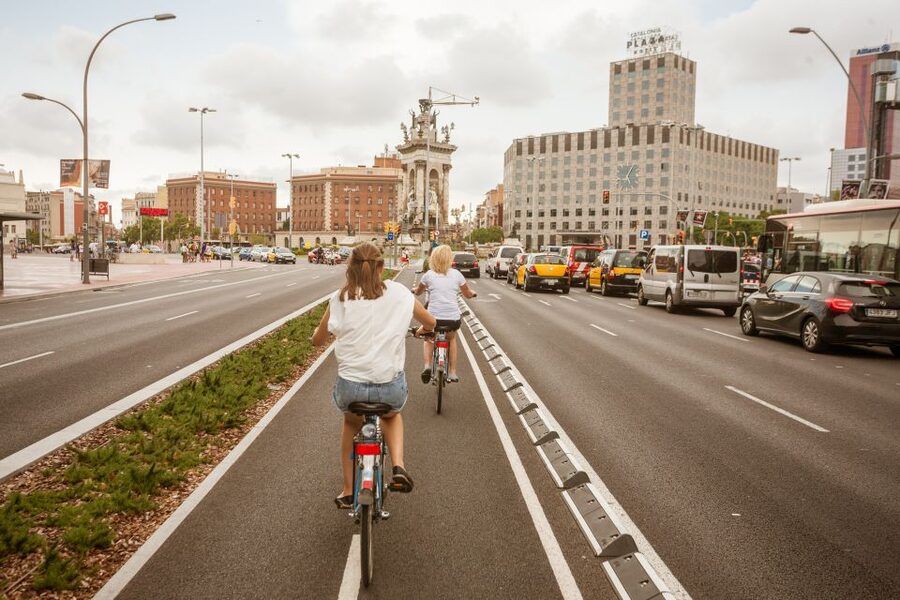
The ride continues to Plaza de España, one of Barcelona’s largest and most imposing squares. Its Venetian Towers and sculptural work by Miquel Blay give the area a grand entrance, especially as you approach along Avinguda de la Reina Maria Cristina.
This is a strong part of the route for architecture lovers. The avenue leads toward the old exhibition grounds, where classic and modern Spanish design meet. You get a sense of the scale of Barcelona’s 1929 International Exhibition and why this area still feels ceremonial.
Cycling gives you a practical advantage here. You can take in the full axis of the avenue without walking a long distance between the square and the hill. The guide can point out the relationship between the towers, the avenue, the fountains, and the buildings higher up.
You should not expect a long stop at every structure. The tour’s value comes from seeing the sequence in context. If you want detailed architectural study, plan to return later with more time and comfortable shoes.
The Magic Fountain, with one practical warning
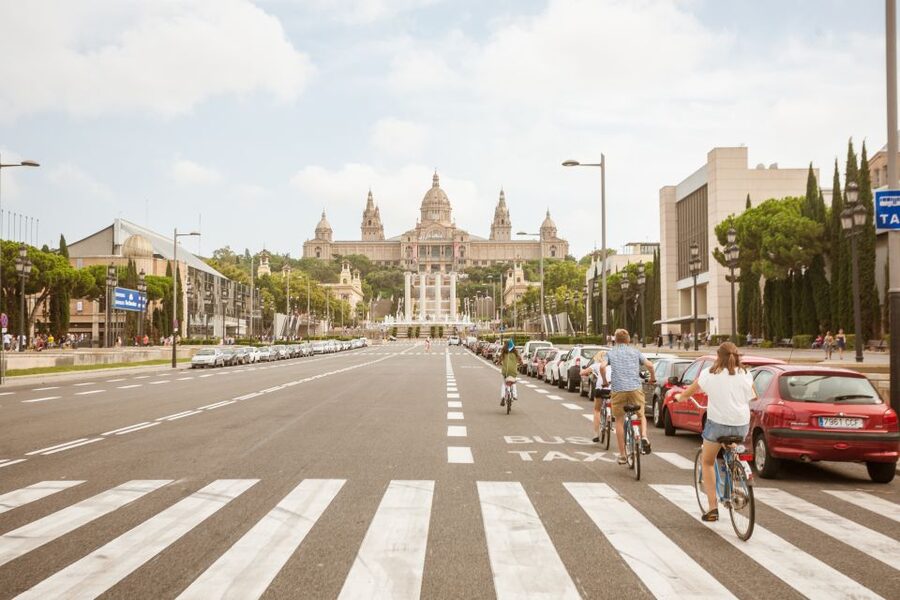
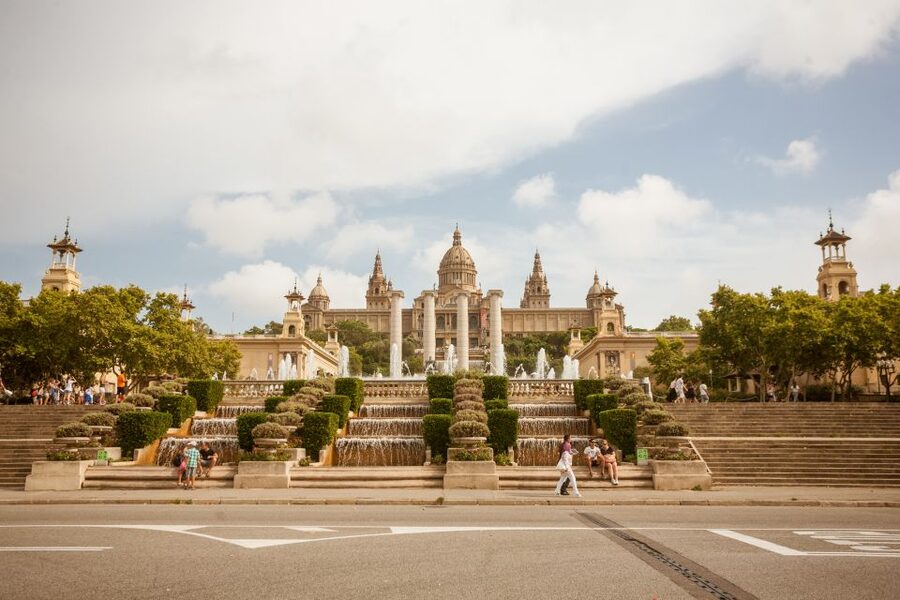
The Magic Fountain is another key stop on the climb. Its water, light, and display effects are among Barcelona’s best-known attractions, and the setting near the exhibition grounds makes it easy to understand why the fountain was built as part of this monumental district.
The tour description presents it as a visual highlight, but the exact display schedule can vary. You should not assume that a daytime ride will include the full light-and-music performance. At minimum, you can expect to see the fountain and its setting, while a special display depends on the time of day and operating schedule.
That is one reason the 11 a.m. and 4 p.m. departures create different moods. The morning ride offers cooler conditions in much of the year and leaves your evening free. The afternoon ride can give you a later view of the city, but you should confirm what will actually be operating on your date.
Rain does not automatically cancel the tour. Rain jackets are supplied, and the rides go ahead in all weather. I would still dress for changing conditions and wear shoes that stay secure on the pedals. A wet day may soften the views, but it does not remove the architectural stops.
More Cycling Trips in Barcelona:
- Highlights & Hidden Spots of Barcelona Bike Tour w/ Local Guide
★ 4.5 · 3,009 reviews - Barcelona: Private Group Bike Tour
★ 4.8 · 1,420 reviews - Barcelona: 2.5-Hour Bike or E-Bike Historical Tour
★ 4.5 · 1,262 reviews - Barcelona: Sagrada Familia or City Tour by Bike or eBike
★ 4.8 · 928 reviews
Riding toward the Olympic ring
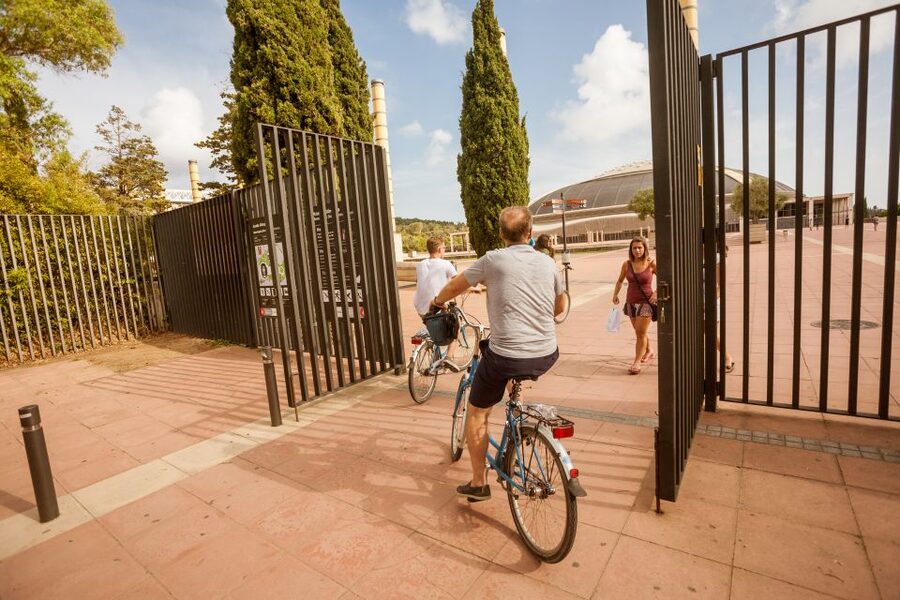
From Plaza de España, the route heads up Montjuïc toward the Olympic ring. This section connects two major moments in Barcelona’s public life: the 1929 exhibition and the 1992 Olympic Games.
You will see the Olympic Stadium and Palau Sant Jordi along the way. The Olympic Stadium gives the ride a sense of place and scale, while Palau Sant Jordi is notable for its large, modern structure and its role as a major event venue. The route lets you see how the hill was used again decades after the exhibition grounds were developed.
This is also where the tour’s main physical limitation becomes clear. The bicycles are not electric, and the route does not necessarily continue to the highest point or Montjuïc Castle. One French rider specifically found the title misleading for that reason. I would book this tour for the Olympic area and city views, not for a full castle visit.
You might need to work on the uphill sections, even though the route is described as easy and safe. The guide can manage the pace, but a regular bicycle cannot remove the slope. If the castle is your priority, plan a separate visit using another form of transport.
A pause near the Joan Miró Foundation
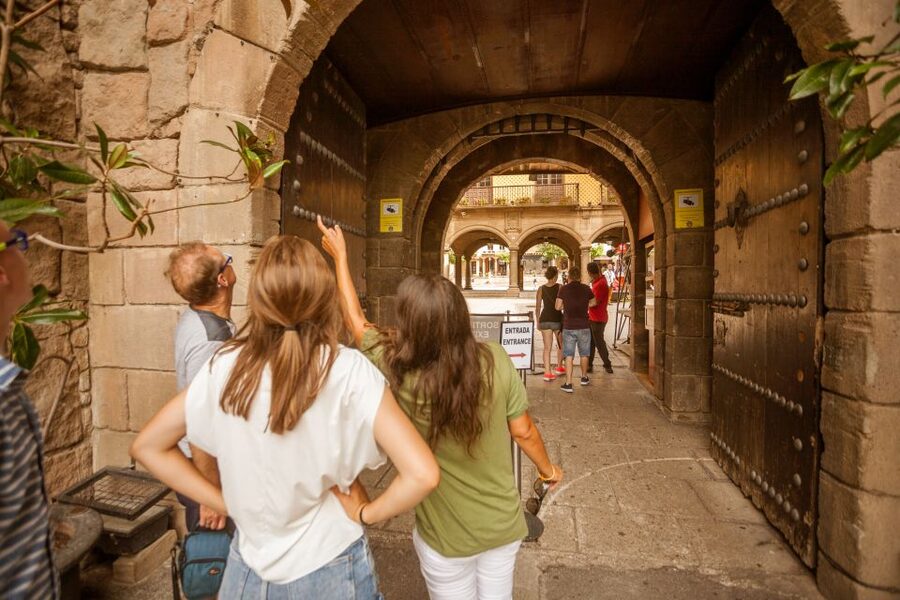
The route includes a chance to rest near the Joan Miró Foundation, a modern art museum on Montjuïc. The stop gives your legs a break and adds a cultural note to a ride that otherwise focuses on streets, monuments, and views.
You should understand that seeing the foundation from the outside or stopping nearby is not the same as taking a museum tour. The three-hour schedule does not leave room for a full gallery visit. If Miró’s art is high on your list, save the museum for another time and buy an admission ticket separately.
Even a short pause has value. Montjuïc is much easier to enjoy when you are not rushing up the hill, and this break helps keep the experience social and manageable for families. It also gives the guide a natural moment to explain the area before the ride continues.
Miramar and the payoff over Barcelona
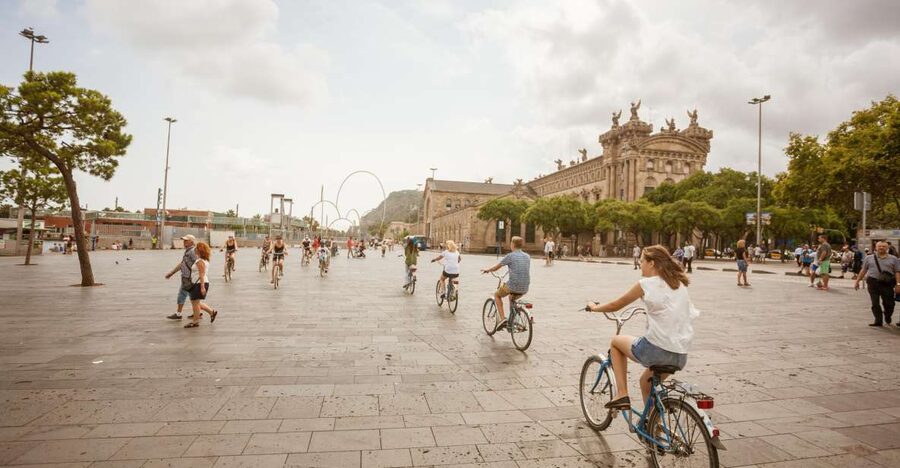
At Miramar, the tour reaches one of its best viewpoints. From this side of Montjuïc, you can look across Barcelona toward the Mediterranean Sea and see how the port, central city, and coastline relate to one another.
This is the moment that makes the climb worthwhile. The view is broad rather than intimate, but it gives you a clear picture of Barcelona’s position between the sea and the hills. I would take a few minutes here to orient yourself. After the ride, streets and districts you visit on foot will make more sense.
The view also explains why the tour does not need to reach Montjuïc Castle to be worthwhile. The main reward is the panorama from the hill, not simply checking off the highest building. That said, do not book this experience if your personal goal is a castle interior or a full summit visit.
The descent is likely to feel easier than the climb, but you still need to pay attention to the bike and the group. Let the guide control the route and spacing. A scenic downhill ride is only enjoyable when you are not racing it.
Returning through Port Vell
The final section takes you back through Port Vell, an old fishing area that has become one of Barcelona’s popular waterfront districts. This gives the ride a tidy shape: you begin by the sea, climb through the city and Montjuïc, then return to the harbor.
Port Vell is useful for an after-tour stroll. You can end the ride with a meal, continue along the waterfront, or use your new sense of direction to explore nearby areas. Since the tour finishes in a central part of the city, you are not stranded on the hill after the views.
This closing section also balances the Montjuïc climb. The ride is not only about monuments on a mountain. It links the port, older neighborhoods, grand exhibition avenues, Olympic buildings, and the modern waterfront in one continuous route.
How good is the $42 value?
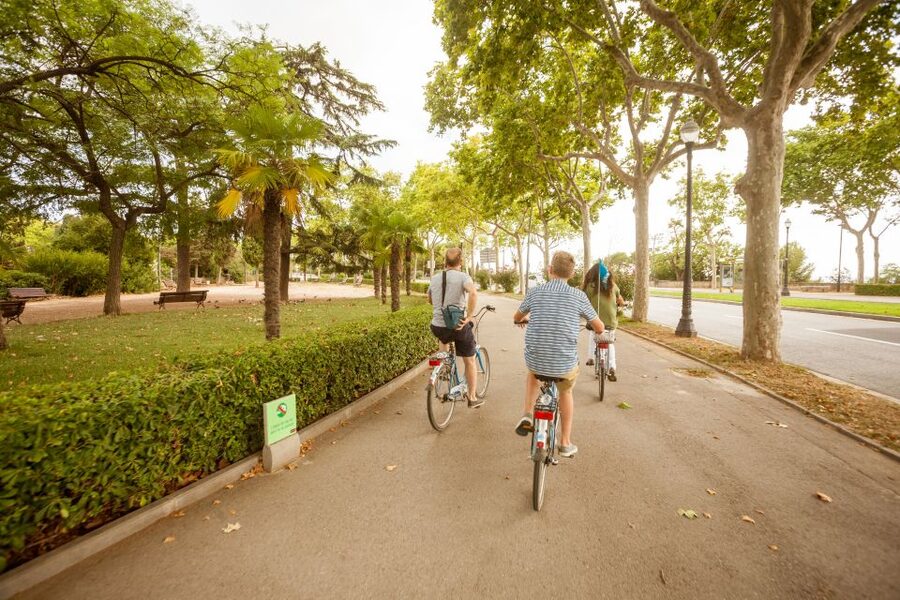
At $42 per person, I consider this fair value if you want a guided overview and plan to use the full three hours. The bicycle, helmet, drink, guide, and child seat if needed are included. You are also paying for route planning and local explanation, not simply a bike rental.
The value is strongest for first-time visitors, families, and anyone who wants to see several districts without arranging transportation between them. A guide such as Elisa can add the city stories that make a moving tour more than a simple ride. Dani is also specifically praised for bringing a fun tone to the experience.
The value is weaker if you already know Barcelona well or only want Montjuïc Castle. You would be paying for a wide city route when your real interest is one hilltop attraction. The lack of electric bikes also matters for riders who do not enjoy climbs.
The flexible booking terms help reduce the risk. You can cancel up to 24 hours ahead for a full refund, and you can reserve without paying immediately. The tour does need a minimum of four people, so I would confirm that it is running before fixing other plans around it.
Who should book this ride?
I would recommend it to you if you want:
- A first look at several Barcelona districts in one morning or afternoon
- A guided ride with history, architecture, and city views
- A family outing with child seats available
- A moderate way to reach Montjuïc’s Olympic area
- A tour led in English, French, Spanish, Italian, or Catalan
- A route that includes both the old port and the newer waterfront
I would be more cautious if you want a hard cycling challenge, a fully electric ride, or a visit to Montjuïc Castle. The tour gives you a hilltop viewpoint and Olympic landmarks, but it should not be sold to yourself as a complete Montjuïc summit experience.
Should you book the Barcelona Montjuïc bike tour?
Book it if you want a friendly, useful introduction to Barcelona that mixes neighborhoods, architecture, Olympic history, and wide city views. The three-hour route covers plenty without requiring you to spend the whole day in the saddle, and the included equipment keeps the planning simple.
Skip it if the Magic Fountain performance or Montjuïc Castle is your main reason for going, or if uphill cycling sounds unpleasant. For most first visits, though, the combination of port air, Raval streets, Plaza de España, Olympic sites, Miramar, and Port Vell makes $42 a reasonable price for a guided city overview.
FAQ
How long is the Barcelona Montjuïc bike tour?
The tour lasts three hours.
How much does the tour cost?
The price is $42 per person.
Where does the tour begin?
The ride begins by the port in Barcelona.
Does the tour go to Montjuïc Castle?
No specific visit to Montjuïc Castle is included. The route goes toward the Olympic ring, Palau Sant Jordi, the Olympic Stadium, the Joan Miró Foundation, and Miramar. A standard bicycle does not take you all the way to the top of the hill.
Are electric bikes provided?
No. The tour uses standard bicycles, so you should expect to pedal uphill.
What is included in the price?
Bicycle rental, a tour guide, a drink, and a helmet are included. Child seats are available if desired, and rain jackets are supplied when needed.
What languages are available?
The live guide service is available in Spanish, Italian, Catalan, French, and English.
When does the tour operate?
Tours run daily at 11 a.m. and 4 p.m., except on December 25, December 26, and January 1. You should arrive 10 minutes before the start, and at least four people are needed for the tour to run.
New cycling reviews around Barcelona
- Barcelona | StreetArt Bike Tour Moco Museum★ 4.6 · 13 reviews
- Barcelona: Guided Half-Day Wine and Electric Bike Tour★ 4.9 · 50 reviews
- From Barcelona: Private Alella Wine Tour by Electric Bike★ 4.5 · 80 reviews
- From Barcelona: Penedès E-Bike Tour with 2 Winery Visits★ 4.9 · 17 reviews
- Explore Barcelona by Bike & Photo Shooting★ 5.0 · 61 reviews
- Barcelona Tapas 3-Hour Bike Tour★ 4.6 · 164 reviews
- Barcelona: Tapas Tasting Tour by Regular Bike or E-Bike★ 4.0 · 26 reviews
- Barcelona: Undiscovered Secrets of Picasso on E-Bike★ 4.5 · 13 reviews
Barcelona Cycling Tours, compared.
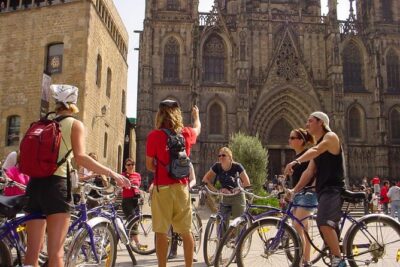
Highlights & Hidden Spots of Barcelona Bike Tour w/ Local Guide
Read our review →
Barcelona 3-hour Bike or E-Bike Tour: Highlights and Hidden Gems
Read our review →
Barcelona: 2.5-Hour Bike or E-Bike Historical Tour
Read our review →
Barcelona: Sagrada Familia or City Tour by Bike or eBike
Read our review →
Barcelona: E-Bike Tour with Montjuic Cable Car & Boat Ride
Read our review →
Barcelona e-Bike Tour: Gaudí & Old Town Small Group
Read our review →Browse the lists this ride appears in