
Review · ROME
Appian Way Aqueducts Bike Tour (Catacombs & Lunch Option)
Rome’s ancient Appian Way is best understood at bicycle speed. This tour takes you beyond the Colosseum crowds, through city traffic and the Aurelian Walls, then into open parks where broken Roman roads, tombs, aqueducts, and country paths fill the view. The e-bike makes the distance manageable, but this is still a real ride, not a gentle sightseeing roll.
I like two things especially: the change of scenery from central Rome to the quiet Caffarella and Aqueduct parks, and the chance to connect famous ruins with the engineering that kept ancient Rome alive. Guides such as Ava, Alex, Chris, Iman, and Paolo are praised for clear riding instructions, good stories, and careful group management.
The catch is the terrain. You will handle traffic, dirt paths, short hills, and large uneven stones on the Appian Way. If you have not ridden a bicycle for years, choose the shorter tour, or pick a walking visit instead.
Key points to know before you book
- The five-hour version adds the St. Callixtus Catacombs, a guided underground visit with corridors stretching for about 20 kilometers.
- The Appian Way is rough in places, with deep gaps between large cobblestones and stretches of dirt or uneven trail.
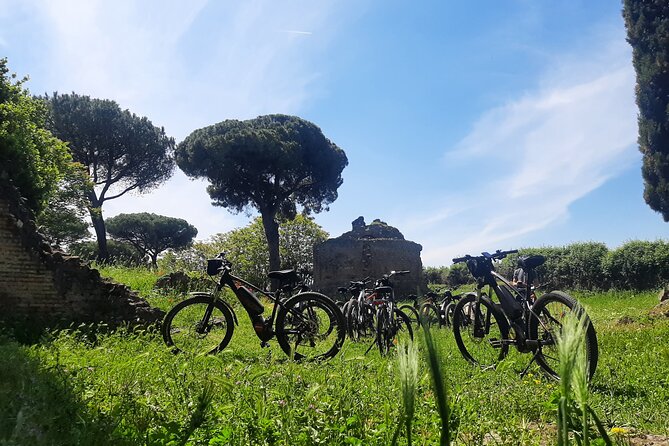
- You ride through two large green areas, Caffarella Park and the Aqueduct Park, far from the tight streets around the Colosseum.
- The e-bikes include suspension and electric assistance, but you still need to know how to ride well and control the bike confidently.
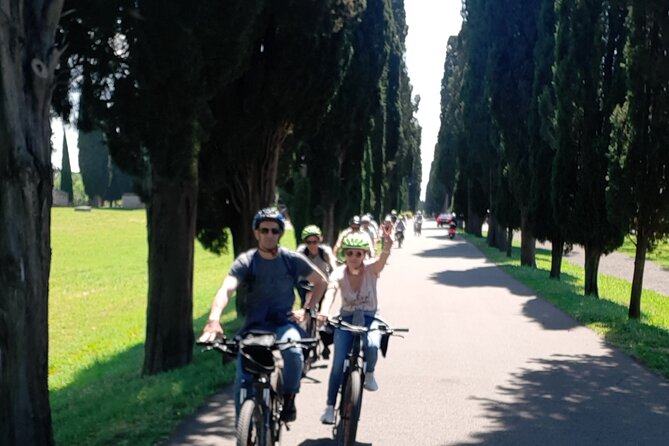
- The group is limited to 12 people, which gives the guide room to check on riders and explain the ruins.
- The tour returns to the starting shop, with the bike, helmet, phone holder, and child equipment included.
Why this route shows you a different Rome
Rome can wear you out. The historic center asks you to dodge scooters, tour groups, and uneven pavement while looking up at monuments. This ride gives you a few hours of fresh air and open space without giving up the ancient city.
You begin at Roma STARBIKE on Via dei SS. Quattro, a short distance from the Colosseum. After fitting your helmet and e-bike, the guide leads the group through the city toward the Aurelian Walls. This first section is the least relaxed part of the ride, since you are sharing roads with traffic and getting used to the bike.
That transition matters. You do not simply appear at a Roman ruin by bus. You pedal out of modern Rome, pass through an ancient gateway, and watch the city thin out around you. The route feels like a small journey rather than a string of disconnected stops.
The group size, capped at 12, helps here. Guides have room to give directions, wait for slower riders, and explain what you are seeing. Alex, Chris, Ava, Iman, and Paolo are all praised for a mix of history, humor, patience, and attention to safety. Guide assignments can change, but the experience clearly depends a great deal on having someone who can manage both traffic and a mixed-ability group.
More Rides with Lunch in Rome:
- Rome: Appian Way Aqueducts Bike Tour (UPG Catacombs & Lunch)
★ 4.9 · 692 reviews - Electric Cycling Tour of Ubud with Free Hotel Transfer and Lunch
★ 5.0 · 1,397 reviews - Bangkok: Bike and Canal Boat Tour with Lunch
★ 4.9 · 1,350 reviews
Porta San Sebastiano and the Aurelian Walls
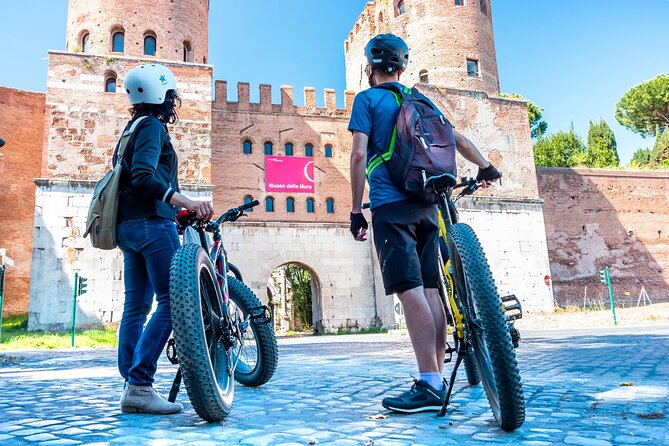
Porta San Sebastiano is the first proper stop. The gate was part of the Aurelian Walls, built around AD 275, and marks the beginning of the historic Via Appia Antica.
Allow about 15 minutes here. Look closely at the stonework and the medieval graffiti left by pilgrims passing through over the centuries. It is a useful reminder that the Appian Way did not become a relic overnight. People continued to use and mark this route long after the Roman Empire had faded.
This stop also gives you a chance to settle into the bike. Pay attention to the guide’s instructions before the route gets rougher. The electric motor helps on hills, but it does not steer or brake for you.
Caffarella Park, Rome’s rural edge
Once you enter Parco della Caffarella, the ride changes character. The park forms part of the Appian Way Regional Park and is one of Rome’s largest open green areas. Its paths pass through fields and wooded sections, with scattered remains of ancient buildings.
This is one of my favorite parts of the route because it gives you a side of Rome that is easy to miss. You might see farm animals and small traces of rural life among the ruins. The combination feels surprisingly close to the countryside, even though you are still within the wider city.
The park is not a perfectly smooth cycle path. Dirt, loose surfaces, and short hills call for steady handling. The e-bike reduces the effort, especially in warm weather, but you still need to watch the ground and keep enough distance from the rider ahead.
The Nymphaeum of Egeria
The Nymphaeum of Egeria is a brief, atmospheric stop along the way. Ancient tradition connects the spring with Egeria, a nymph who loved Numa Pompilius, Rome’s second king. After his death, she was said to have wept until her tears became a spring.
The stop lasts about 20 minutes. The story adds a human touch to the stones and trees around you, while the guide can place the site within Rome’s early legends. It is not a grand monument, so keep your expectations in check. Its appeal comes from the setting and the story rather than from a fully preserved building.
More Cycling Trips in Rome:
- Rome EBike Tour: Appian Way, Catacombs & Roman Aqueducts
★ 5.0 · 1,766 reviews - Rome: Top Highlights & Hidden Gems Tour by Cannondale E-Bike
★ 4.9 · 1,760 reviews - Rome: Appian Way & Aqueducts E-Bike Tour (Catacombs & Food)
★ 4.9 · 1,498 reviews - Rome: Appian Way, Catacombs, & Roman Aqueducts E-bike Tour
★ 4.9 · 1,421 reviews
The Appian Way and Cecilia Metella
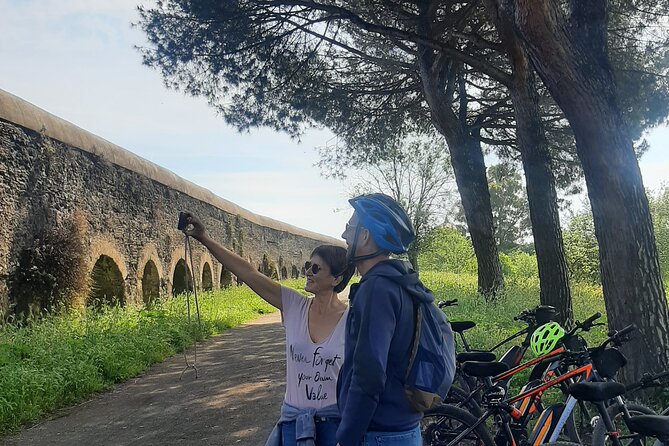
The Via Appia Antica was known to the Romans as Regina Viarum, the queen of roads. Construction began in the fourth century BC under Appius Claudius, initially to help move Roman troops south toward Capua. The road was later extended as far as Brindisi, a major port on the Adriatic coast.
Riding here makes the scale of Roman road building easier to grasp. You are not only looking at an old road from a distance. You are moving along its route, beside tombs and broken walls, with the same broad direction that once connected Rome to southern Italy.
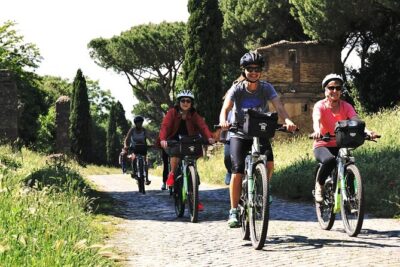
This is also where the ride can become uncomfortable. The Appian stones are large, with deep spaces between them. You may be able to use a dirt strip beside the road in some sections, but not everywhere. The e-bikes have suspension, which helps, yet your hands, back, and seat still take some punishment. Padded cycling shorts are not required, but comfortable clothing and a water bottle are sensible choices.
The Mausoleum of Cecilia Metella is one of the most impressive stops. This first-century BC pagan tomb is among the best-preserved mausoleums on the Appian Way. It was later incorporated into the Castrum Caetani, a medieval fortress complex connected with the wealthy Caetani family.
You can also see the remaining perimeter walls of the church of San Nicola. The stop lasts about 20 minutes, enough to take photographs and hear how the site changed from a Roman tomb to a medieval stronghold.
What the five-hour option adds underground
The five-hour tour includes the Catacombs of St. Callixtus. The visit lasts about 50 minutes and is guided separately as part of the official funerary complex of the Church of Rome.
St. Callixtus is one of the largest underground cemeteries in Rome. Its corridors extend for roughly 20 kilometers, and the complex includes the burial places of more than 50 martyrs and 16 popes. The site dates back to the second century BC, though its Christian use belongs to the later history of Rome.
This is the most traditional sightseeing stop on the ride, but it adds a completely different mood. Above ground, the tour is about roads, open fields, and engineering. Below ground, it becomes a quiet look at burial customs and early Christianity.
The catacombs are not included in the four-hour version. If underground Roman sites are high on your list, the longer option is the clear choice. If you prefer the riding itself and worry about fatigue, the shorter tour may suit you better.
Aqueduct Park and the meal stop
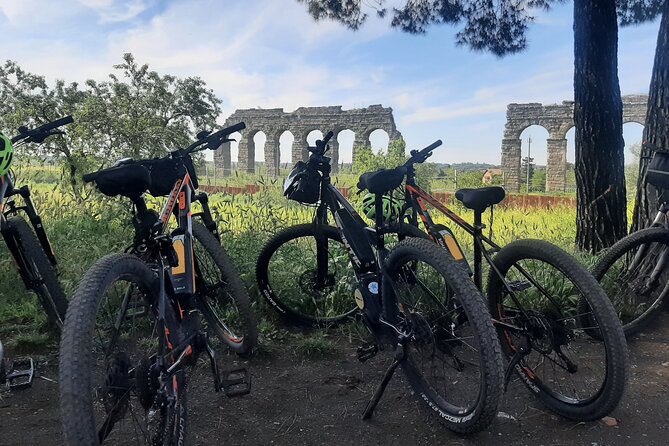
The five-hour version continues to Parco degli Acquedotti, one of the most memorable parts of the day. The park is crossed by the remains of ancient water channels, including the great Claudio aqueduct. Some sections are remarkably well preserved, and parts of the old water network are still in operation.
Here you get the clearest view of Roman engineering. The aqueducts are not just fragments beside a path. Their long arches show how the Romans moved water across great distances using carefully controlled gradients. Against the open sky, their size is easier to appreciate than it would be among modern buildings.
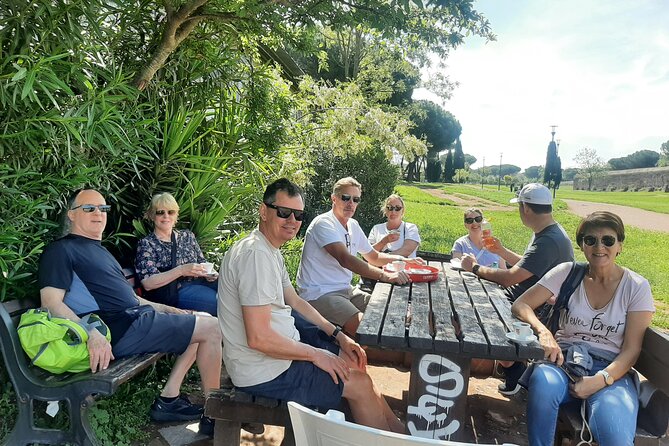
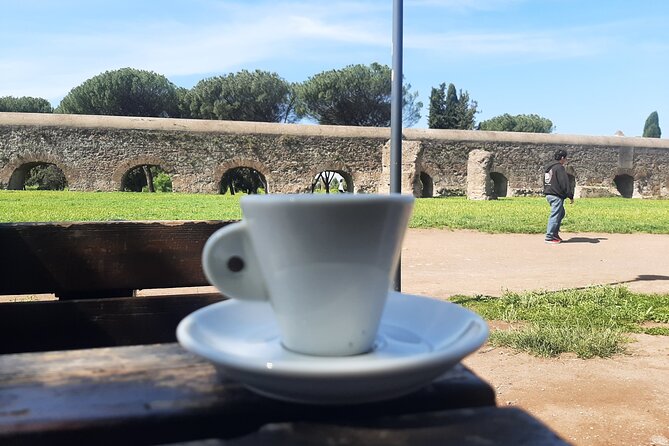
The longer tour includes a meal stop in the morning version and an afternoon aperitif in the afternoon version. The supplied details describe a simple restaurant meal rather than a sealed boxed lunch, so do not book this expecting a formal dining experience. It is best viewed as a practical break that gives your legs time to recover.
The four-hour option does not include the meal or aperitif. That shorter format may be the better match if you want the ruins and parks without committing to the full route.
Circus of Maxentius and the Baths of Caracalla
On the return ride, the Circus of Maxentius offers another strong Roman site along the Appian Way. It is considered the best-preserved Roman circus still standing, with the central spina visible. The obelisk once associated with the circus was later moved to Piazza Navona, where it forms part of Bernini’s Fountain of the Four Rivers.
You get about 20 minutes here. The remains help you picture the scale of Roman public entertainment without the crowds and reconstruction found at more famous central sites.
The final major stop is the Baths of Caracalla, built by the emperor of the same name. For about a century, these were the largest public baths in the Roman world. Much of the structure survives, including the enormous walls and spaces that once held bathing rooms, exercise areas, and social rooms.
The baths were supplied by a branch of the Aqua Marcia through the Antoninian aqueduct. This is a fitting final stop because it links the day’s two main themes: public life and water engineering. After seeing aqueducts in open country, you see where that water helped serve the city.
The tour then returns to the bike shop, where you drop off the e-bike and helmet.
How difficult is the ride?
The word e-bike can sound reassuring, but do not confuse electric assistance with effortless travel. You must know how to ride a bicycle well, handle quick stops, and stay alert around traffic and other cyclists.
The route includes:
- City streets near the start and finish
- Paved roads
- Dirt paths through parks
- Short hills
- Uneven cobblestones and large ancient road stones
- Tight or downhill sections that require control
Most of the route is fairly flat, and the motor helps considerably on inclines. Still, you are on the bike for several hours. Your legs, hands, and backside may feel it by the end. One useful distinction is that cycling ability matters more than athletic speed. You do not need to race, but you do need confidence.
Children from age 6 to 10 may use the child arrangement only if they are under 143 centimeters, or about 4 feet 7 inches, because they use a trailer bike rather than riding a bicycle alone. A child seat is available up to 25 kilograms. The maximum rider weight is 120 kilograms, or 265 pounds.
Is $78.60 a fair price?
At $78.60 per person, the tour costs more than renting a bicycle and following a map. The price includes a high-quality e-bike, helmet, phone holder, child equipment where needed, and a guide. The five-hour version also includes the catacomb visit and a meal or aperitif.
The value comes from the route planning. You would need to connect several separated sites, find a workable path through traffic, arrange entry to the catacombs, and understand what you are seeing. A good guide also makes the ride safer and more meaningful, especially around Rome’s roads.
The price is less appealing if you only want a casual bicycle ride or if you will struggle with rough surfaces. You are paying for a physically active history tour, not a relaxed vehicle excursion.
Practical advice for a better day
Wear shoes that work on pedals and uneven ground. Bring water, use sunscreen in warm weather, and dress for several hours outside. The route offers breaks, but you should not assume you will stop for food early in the ride unless you book the five-hour option.
Arrive ready to ride, not dressed for a formal Roman church visit. The catacombs are included only on the longer tour, and the underground visit has a different pace from the outdoor cycling.
Give yourself time to learn the e-bike before leaving the shop. Test the brakes and electric assistance, and ask the guide to repeat anything unclear. The motor can make the bike feel lively, and confident braking matters on downhill sections.
The tour is offered in English and accepts mobile tickets. It begins and ends at Roma STARBIKE, near the Colosseum, and is close to public transportation. Free cancellation is available up to 24 hours before the start time. Poor weather can also lead to a rescheduled tour or full refund.
Who should book this Appian Way ride?
Book it if you want ancient Rome with room to breathe. You will see the Aurelian Walls, the Appian Way, Caffarella Park, Cecilia Metella, aqueducts, the Circus of Maxentius, and the Baths of Caracalla in one outing. The route also gives you a break from central Rome’s tight streets.
The five-hour version suits active visitors who want the catacombs and a meal break. Families with older children can enjoy it, provided everyone is comfortable on a bicycle. Guides such as Chris, Alex, Ava, Iman, and Paolo have been especially praised for keeping groups together and adding useful stories without rushing the stops.
Skip it if you have poor balance, dislike cycling, or want a smooth ride on paved streets. The ancient stones are part of the appeal, but they are also the main challenge.
FAQ
Where does the Appian Way Aqueducts Bike Tour start?
The tour starts at Roma STARBIKE, located at Via dei SS. Quattro, 58, near the Colosseum in central Rome.
How long does the tour last?
The tour lasts approximately four to five hours. The five-hour version includes the catacombs and a meal or afternoon aperitif.
Are the Catacombs of St. Callixtus included?
They are included only in the five-hour tour. The guided catacomb visit lasts about 50 minutes.
Is lunch included?
Lunch is included in the morning five-hour version, while an afternoon aperitif replaces the meal on the afternoon version. Food and drinks are not included in the four-hour tour.
Do I need to be an experienced cyclist?
You must know how to ride a bicycle well. The route includes city traffic, dirt paths, short hills, and uneven cobblestones, so basic confidence is not enough for everyone.
Are children allowed on the tour?
Children ages 6 to 10 may receive the child reduction only if they are under 143 centimeters tall, because they use a trailer bike rather than riding alone. A child seat is available for children up to 25 kilograms.
What happens if the weather is poor?
If the activity is canceled because of poor weather, you can choose another date or receive a full refund. You can also cancel for a full refund up to 24 hours before the scheduled start time.
Should you book it?
Yes, if you want to see Rome’s ancient roads and aqueducts while getting out into open country. The five-hour tour gives you the fullest day, especially if the catacombs matter to you. The four-hour option is wiser if you are unsure about your stamina.
This is one of the better ways to connect Rome’s ruins with its countryside, but only if you are ready for real cycling. Bring water, expect a sore backside, and let the e-bike help without assuming it will do the work for you.
New cycling reviews around Rome
- Private Rome Bike tour★ 4.5 · 46 reviews
- Rome: Private Half-Day Bike Tour with E-bike★ 5.0 · 24 reviews
- Night Tour of Rome with Top E-bike & optional Italian Dinner★ 4.9 · 108 reviews
- Rome E-Bike Tour: Ultimate Street Food and Market Feast★ 4.9 · 50 reviews
- Rome: Appian Way, Catacombs & Aqueducts by eBike + Transfer★ 4.9 · 421 reviews
- Rome E-Bike Small Group Tour of the Appian Way with Private Option★ 5.0 · 130 reviews
- Rome’s Best by E-bike: Guided City Tour (Small Group or Private)★ 5.0 · 207 reviews
- Rome: Appian Way, Aqueducts & Catacombs (Small Group or Private)★ 5.0 · 103 reviews
Rome Cycling Tours, compared.
Rome EBike Tour: Appian Way, Catacombs & Roman Aqueducts
Read our review →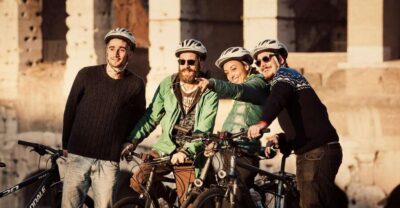
Rome: Top Highlights & Hidden Gems Tour by Cannondale E-Bike
Read our review →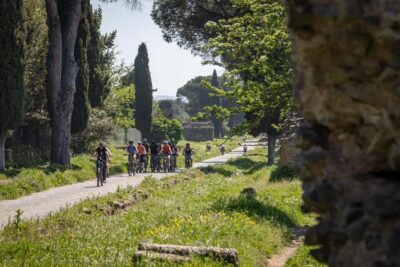
Rome: Appian Way & Aqueducts E-Bike Tour (Catacombs & Food)
Read our review →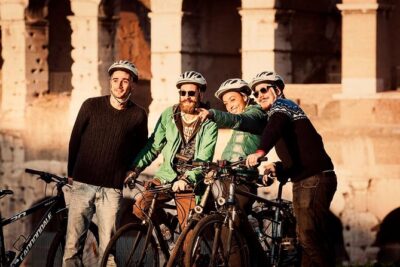
Rome City Small Group Bike Tour with quality Cannondale EBike
Read our review →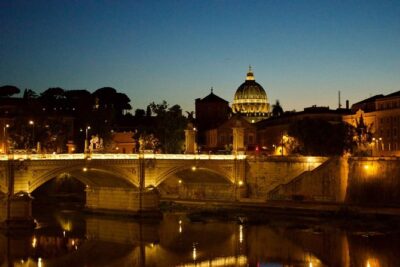
Rome by Night – Ebike Small Group Tour – Food and Wine (Option)
Read our review →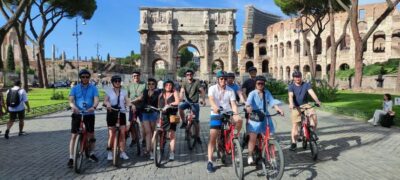
Rome: Standard or E-Bike Highlights Guided Tour
Read our review →
Appian Way, Catacombs and Aqueducts Park Tour with Top E-Bike
Read our review →Browse the lists this ride appears in