Review · ROME
Rome E-Bike Small Group Tour of the Appian Way with Private Option
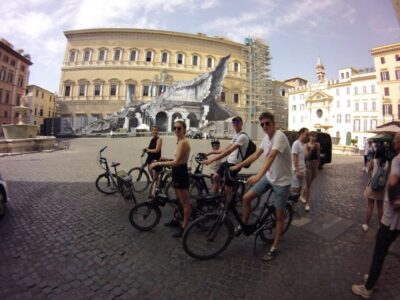
Rome’s most memorable ride may be the one that leaves the city center. This small-group e-bike tour takes you from Circus Maximus along the Appian Way, an ancient road begun in 312 BC, then out toward ruins, villas, churches, and catacombs. You get Roman history with the wind in your face, not just another walk between crowded monuments.
I like the six-person limit, which gives the guide room to stop, explain, and help with the bikes. I also like the route’s change of mood: grand imperial ruins give way to quiet roads and open countryside beyond the old walls. The main drawback is the rough stone surface and some city traffic, so you should be comfortable on a bicycle and ready for a moderately active three hours.
Key points to know before you book
- Ancient road on two wheels: Ride a large section of the Appian Way, one of Rome’s oldest and most important roads.
- Small group of six: The limited size makes it easier to hear the guide and receive help with the bike.
- E-bike assistance: Electric power helps on the route, though the uneven cobbles still require balance and steady pedaling.
- A quieter side of Rome: The ride leaves the busiest central streets and reaches peaceful stretches near churches, parks, and ruins.
- Strong local guides: Enrico, Massimo, Alice, Andy, and Brando have led tours praised for clear explanations, patience, humor, and care.
- Private option available: A private ride suits families or groups that want to move at their own pace.
Why the Appian Way makes a fine bike route
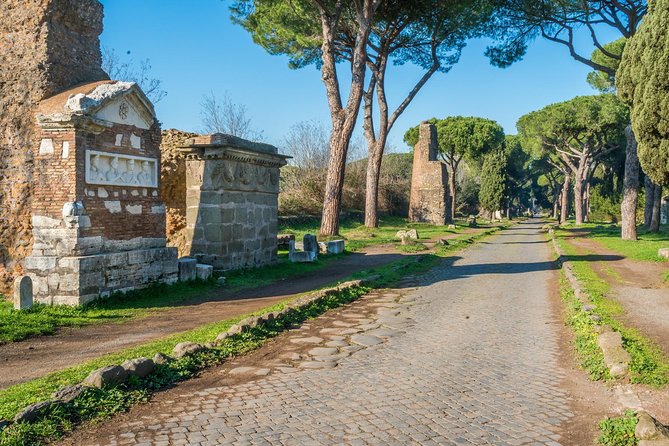
The Appian Way is not simply an old street. It was a major Roman highway, built from 312 BC and used as a vital link across the Roman Empire. Riding it helps you understand Rome as a working power, not only as a collection of grand buildings in the center.
You begin near Via dei Cerchi, 59, beside Circus Maximus. This huge ancient stadium gives you a striking view toward the Palatine Hill and the remains of the imperial villas. It is a sensible starting point because you can see the scale of Roman public life before setting off toward the quieter edge of the city.
I like the way this route connects famous sites with less familiar ones. You see major imperial monuments, but you also pass old gates, mausoleums, churches, private parks, and underground burial networks. The result feels broader than a standard Rome sightseeing circuit.
The road itself brings a physical element that a walking tour cannot match. You cover more ground, and the shift from traffic to countryside happens gradually. The e-bike helps, but this is still a bike ride rather than a motorized sightseeing trip.
More E-Bike Tours in Italy
- Rome EBike Tour: Appian Way, Catacombs & Roman Aqueducts
★ 5.0 · 1,766 reviews - Rome: Top Highlights & Hidden Gems Tour by Cannondale E-Bike
★ 4.9 · 1,760 reviews - Rome: Appian Way & Aqueducts E-Bike Tour (Catacombs & Food)
★ 4.9 · 1,498 reviews
Starting at Circus Maximus and the Palatine Hill
The meeting point is at Via dei Cerchi, 59, near Rome’s largest ancient stadium. Circus Maximus once hosted huge public spectacles, and the view toward the Palatine Hill gives you an immediate sense of Rome’s imperial center.
Your guide sets the tone here with an introduction to the route and the city’s ancient past. The guides associated with this experience include Enrico, Massimo, Alice, Andy, and Brando. The exact guide depends on the departure, but the format is designed for close contact rather than a large group trailing behind a flag.
The first city streets require attention. One review describes periods of traffic, with the guide explaining what to expect from nearby drivers and how the group would move through the road. That is useful advice, especially if you have not cycled in Rome before.
You should not expect a completely car-free ride from the first minute. The reward comes as the route moves away from the central streets. The guide’s job is not only to explain ancient ruins, but also to keep the group together and help you feel steady on the bike.
The Baths of Caracalla and Rome’s imperial scale
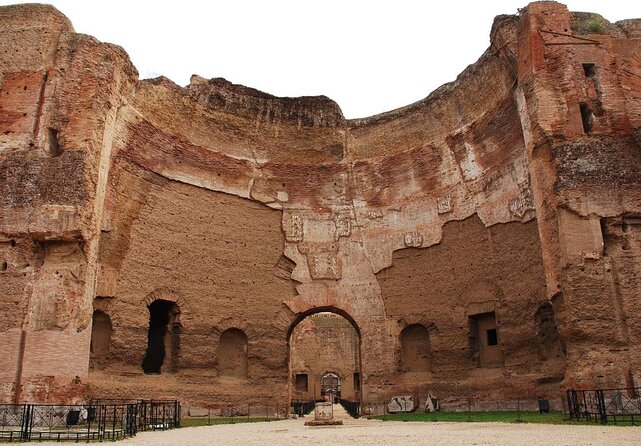
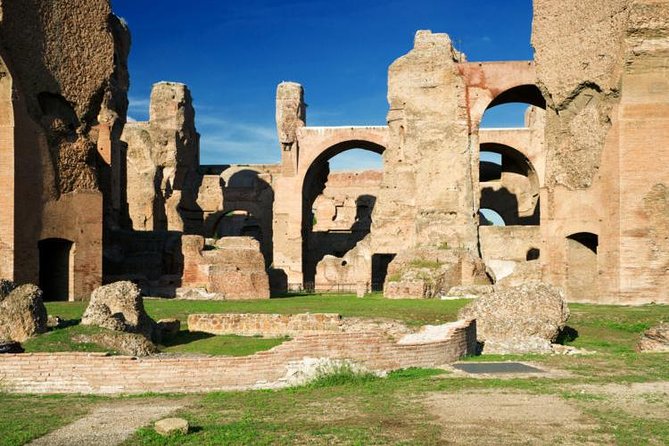
The ride passes the Baths of Caracalla, the second-largest thermal bath complex in Rome. These were not merely places for washing. Roman baths served as social and public centers, and their size hints at the money, labor, and engineering behind imperial Rome.
You see the baths from the route rather than taking a separate guided visit through every interior. That distinction matters. If you want a detailed archaeological visit inside the complex, you may need a separate ticket and more time. On this tour, the baths form one part of a moving story about Rome’s public buildings and imperial power.
I like this stop because it helps bridge the gap between famous Rome and the Appian Way. You start among the city’s biggest monuments, then follow a road that once carried soldiers, officials, merchants, and supplies away from the capital.
The guide pauses at regular points to explain what you are seeing. That rhythm was praised by riders who found the stops brief but useful. You keep moving, yet you are not left to guess why a broken wall or distant structure matters.
Porta San Sebastiano and the city walls
Porta San Sebastiano marks an important change in the ride. Here, you reach one of the old gates through Rome’s defensive walls and begin to feel the city loosen around you.
The gate helps explain how the ancient road connected Rome to the wider Roman world. Roads did not begin at the edge of nowhere. They passed through controlled entrances, crossed the walls, and carried people and goods into the capital.
This section can include traffic, so listen closely to the guide’s instructions. The route is not presented as a sealed cycling path. You are riding in a real city, and the group must pay attention to road conditions and other vehicles.
That is one reason the small group matters. With no more than six people, the guide can make sure the group is ready before moving on. Guides such as Massimo have been praised for helping riders adjust their bikes and regain confidence, which is especially helpful if you have not cycled for some time.
More E-Bike Tours in Rome
- Rome: Appian Way, Catacombs, & Roman Aqueducts E-bike Tour
★ 4.9 · 1,421 reviews - Rome City Small Group Bike Tour with quality Cannondale EBike
★ 5.0 · 1,380 reviews - Rome by Night – Ebike Small Group Tour – Food and Wine (Option)
★ 5.0 · 1,275 reviews - Rome by Night: E-bike Small Group Tour -Food & Wine (Option)
★ 4.9 · 1,233 reviews
Riding the ancient Appian Way
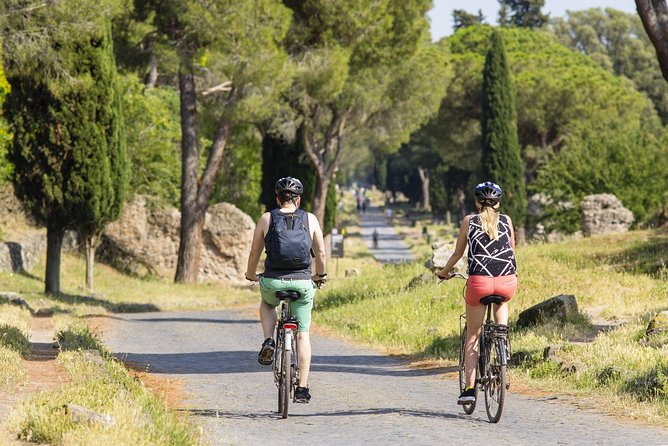
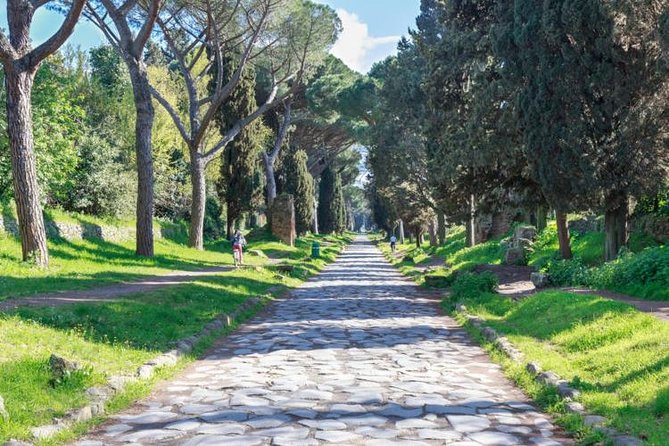
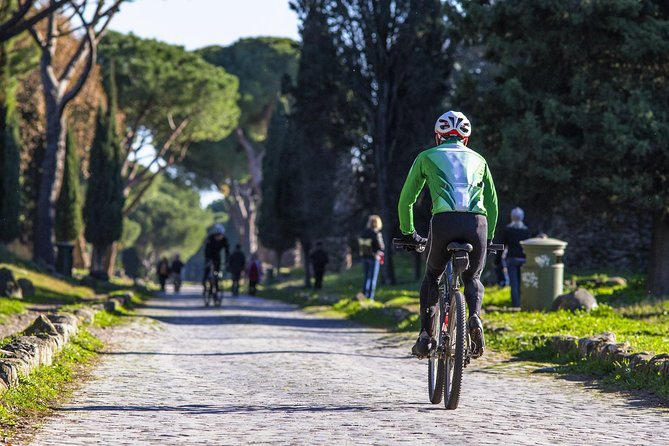
The main event is the ride along the Appian Way and through the surrounding park. The road’s age is part of the appeal, but it also creates the ride’s main physical challenge. Large cobbles and uneven stones can make the bicycle bounce, especially if you try to move too quickly.
The e-bike helps with pedaling, not with every bump. You still need moderate physical fitness, basic balance, and the ability to stay alert over rough ground. One useful tip is to let the bike move at a controlled pace rather than fighting the stones. Your guide can show you the better line through difficult sections.
The reward is the setting. Once outside the city walls, the route becomes quieter and more open. You trade dense traffic for old paving, trees, ruins, and long views along one of Europe’s most famous ancient roads.
I particularly like this part for the sense of distance. Rome’s historic center can feel packed with people and monuments. On the Appian Way, the Roman past is spread out around you, and the bicycle lets you connect the pieces in a single outing.
The road is not smooth, and you should not book this expecting a relaxed ride on fresh pavement. Still, the rough surface is part of what makes the outing memorable. The e-bike makes the distance practical while leaving you close to the ground and the old road.
Villa di Massenzio and the Temple of Romulus
The route includes the Villa di Massenzio and the Temple of Romulus, two sites that add detail to the imperial story. These places are less instantly familiar than the Colosseum, but they help show how much Roman archaeology lies beyond the standard postcard sights.
The Villa di Massenzio is linked with the imperial complex along the Appian Way. Its presence gives the guide a chance to explain how powerful Roman figures used this road and the area beyond the walls.
The Temple of Romulus adds another stop where the guide can connect surviving structures with the changing use of the Appian Way. You will not simply pedal past without context. The tour’s strongest feature is the short explanation at each important point, turning scattered stonework into part of a larger story.
The exact length of time at each site can vary because this is a moving tour. If you want to study every ruin at length, a dedicated archaeological visit may suit you better. If you want to see many sites in one morning or afternoon, the bicycle format works well.
Mausoleums, churches, and the catacombs below
The route visits one of Rome’s oldest and most important mausoleums. Ancient tombs along the Appian Way are a reminder that this road was not only a route for armies and officials. It was also lined with burial places and memorials for the dead.
You also ride past the private park connected with the Church of San Callisto and the Church of San Sebastiano. Beneath this area lie kilometers of catacombs, giving the ride another layer of Roman history, including early Christian burial practices.
The catacombs are not toured from inside during this activity. That is worth knowing before you book. If you want to explore them, plan a separate visit after the bike tour rather than expecting the guide to lead you underground.
Even without entering, the catacombs make the roadside scenery more meaningful. You are moving through a place where the visible ruins are only part of what survives. The guide explains how much of the ancient world is still below ground, which adds weight to the churches and parks you pass.
Villa dei Quintilii and the wider route
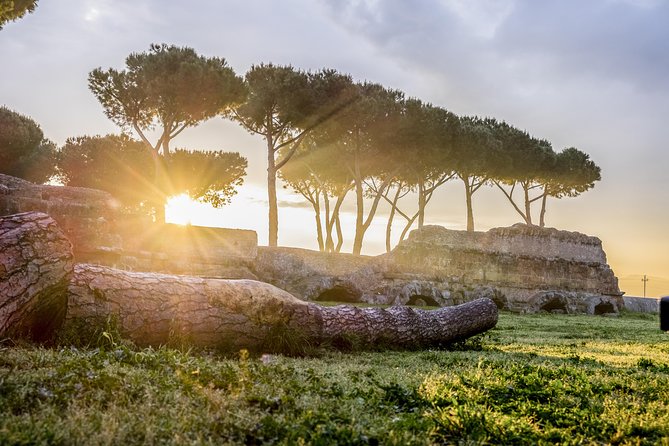
Villa dei Quintilii is among the included sights associated with the route. Along with Villa di Massenzio and the Appian Way Park, it shows how the ride reaches beyond a single famous road or monument.
The benefit is range. In roughly three hours, you can see imperial remains, defensive architecture, baths, mausoleums, churches, and ancient road surfaces. You cover a substantial section of the Appian Way rather than stopping for one brief photo.
The tradeoff is that some sights are viewed from the route or explained during short stops. The activity is built around linking places together, not spending an hour inside each one. I would pair it with a slower museum or archaeological visit if ancient Rome is your main interest.
E-bike comfort on old Roman stones
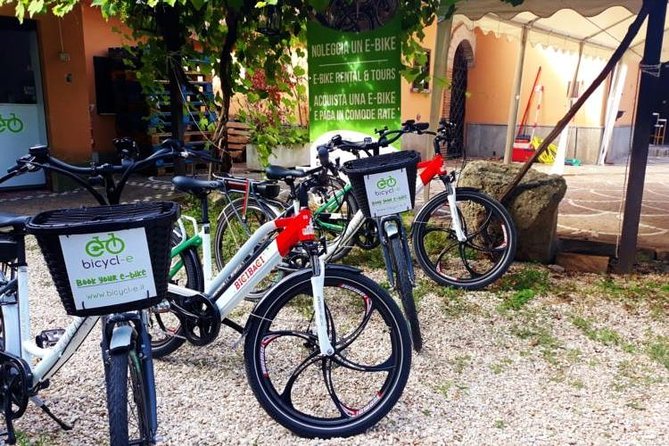
The bicycles are included, and electric assistance makes the route manageable for many people with moderate fitness. You still pedal, steer, brake, and deal with uneven paving, so the e-bike does not remove the need for care.
A rider who wants more exercise may choose a regular mountain bike instead. That option was used successfully on a private tour and made the ride more demanding. If you prefer less effort, the e-bike is the sensible choice.
Families can join, and the operator asks for the ages of children in the group so suitable bikes can be arranged. That is important because the correct bike size matters on cobbled surfaces.
I would wear comfortable clothing and shoes that give you a secure footing. The supplied details do not promise a particular type of helmet or clothing, so ask the operator about equipment if that matters to you before departure.
What the six-person limit changes
A maximum of six people is a real advantage here. On a road with traffic, uneven paving, and frequent stops, a small group is easier to manage than a long line of cyclists.
It also improves the history lesson. Guides such as Enrico have been praised for stopping often and explaining what sits beside the road. Massimo is noted for a steady pace, useful bike help, and a good sense of humor. Alice has been described as patient and closely tied to Rome, while Andy and Brando have also received praise for making the ride clear and enjoyable.
The private option gives you more control over the pace. This can be useful for families, mixed-ability groups, or anyone who wants extra time at a particular site. A private ride is also a better fit if six people in a shared group feels too structured.
Price, timing, and overall value
At about $192.29 per person, this is not a budget bike rental. You are paying for the bicycle, electric assistance, a professional local guide, a small group, and a route that would be difficult to arrange efficiently on your own.
The value is strongest if you want a guide to handle the route and explain the sites as you go. You can cover far more ground than on foot, while avoiding the cost and planning involved in arranging transport between scattered Appian Way monuments.
The price is harder to justify if you only want to pedal casually or if you already know the area well. You could find a cheaper independent rental, but you would need to plan the route, manage traffic, identify the ruins, and deal with the rough road yourself.
The tour lasts about three hours and returns to the starting point. That makes it easy to fit into a Rome schedule, though you should allow time afterward if you plan to visit the catacombs separately.
Free cancellation is available up to 24 hours before the start time. Cancellations made less than 24 hours ahead are not refunded, and changes inside that window are not accepted.
Who should book the Appian Way ride
I would choose this tour if you have already seen some central Rome and want a change from indoor monuments and packed streets. It is also a good choice if you want ancient Roman sites explained in context rather than visited as isolated ruins.
Families can benefit from the private option and the ability to arrange suitable bikes for children. Couples and small groups may prefer the shared tour because the six-person limit keeps it personal without the cost of a fully private outing.
I would think twice if you dislike uneven roads, have difficulty balancing on a bicycle, or want a fully passive sightseeing trip. The ride includes city traffic and rough cobbles, and moderate fitness is recommended even with electric assistance.
Should you book it?
Book it if you want to see a quieter side of Rome, cover a long stretch of ancient road, and learn from a guide who can connect the ruins into one story. The strongest reasons are the six-person limit, the broad route, and the chance to leave the city center without giving up expert explanation.
Choose the private option if your group wants its own rhythm or includes children and mixed cycling abilities. Choose another activity if you want to enter the catacombs during the tour, spend long periods inside each archaeological site, or avoid uneven surfaces entirely.
For the right rider, this is a smart use of three hours: active, historical, and far removed from Rome’s most crowded streets.
FAQ
Where does the Rome Appian Way e-bike tour start?
The tour starts at Via dei Cerchi, 59, 00186 Rome, Italy, near Circus Maximus.
Where does the tour end?
The activity ends back at the meeting point.
How long does the tour last?
The tour lasts approximately three hours.
How many people can join the shared tour?
The group is limited to a maximum of six people.
Is a private tour available?
Yes. A private tour option is available and is intended to let your group go at its own pace.
Are the catacombs included?
The tour explains the catacombs near San Callisto and San Sebastiano, but it does not include a guided visit inside them. A separate visit is recommended.
Do children need special arrangements?
Children are welcome. You should provide the ages of everyone in your party so suitable bikes can be arranged.
What languages are available?
The tour is offered in English, French, Spanish, Portuguese, and Italian. You should request a language other than English in the additional notes when booking.
More Small-Group Bike Tours in Italy
- Appian Way & Aqueducts small group e-bike tour(catacombs & food)
★ 5.0 · 531 reviews - Rome Highlights by E-Bicycle Small group
★ 5.0 · 486 reviews - Florence Vintage Bike Tour–guided, small group or private option
★ 4.5 · 524 reviews - Florence: Guided Bike Tour in Small Group
★ 4.6 · 432 reviews
More Private Cycling Tours in Rome
- Rome’s Best by E-bike: Guided City Tour (Small Group or Private)
★ 5.0 · 207 reviews - Private Rome City Bike Tour with quality Cannondale EBike
★ 5.0 · 176 reviews - Rome: Appian Way, Aqueducts & Catacombs (Small Group or Private)
★ 5.0 · 103 reviews - Private Rome Bike tour
★ 4.5 · 46 reviews
New cycling reviews around Rome
- Private Rome Bike tour★ 4.5 · 46 reviews
- Rome: Private Half-Day Bike Tour with E-bike★ 5.0 · 24 reviews
- Night Tour of Rome with Top E-bike & optional Italian Dinner★ 4.9 · 108 reviews
- Rome E-Bike Tour: Ultimate Street Food and Market Feast★ 4.9 · 50 reviews
- Rome: Appian Way, Catacombs & Aqueducts by eBike + Transfer★ 4.9 · 421 reviews
- Rome’s Best by E-bike: Guided City Tour (Small Group or Private)★ 5.0 · 207 reviews
- Rome: Appian Way, Aqueducts & Catacombs (Small Group or Private)★ 5.0 · 103 reviews
- Private Rome City Bike Tour with quality Cannondale EBike★ 5.0 · 176 reviews
Rome Cycling Tours, compared.
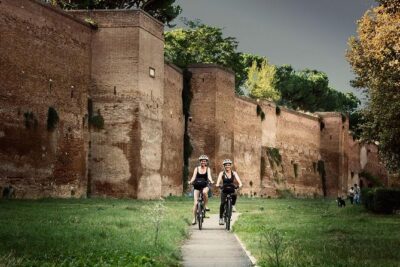
Rome EBike Tour: Appian Way, Catacombs & Roman Aqueducts
Read our review →
Rome: Top Highlights & Hidden Gems Tour by Cannondale E-Bike
Read our review →
Rome: Appian Way & Aqueducts E-Bike Tour (Catacombs & Food)
Read our review →
Rome City Small Group Bike Tour with quality Cannondale EBike
Read our review →
Rome by Night – Ebike Small Group Tour – Food and Wine (Option)
Read our review →
Appian Way Aqueducts Bike Tour (Catacombs & Lunch Option)
Read our review →
Rome: Standard or E-Bike Highlights Guided Tour
Read our review →