
Review · TOKYO
Tokyo Guided Small-Group Biking Tour
Tokyo Guided Small-Group Biking Tour Review
Tokyo is easier to understand from a bicycle seat. In one long day, you move from Shinjuku skyscrapers to quiet residential lanes, from the forested grounds of Meiji Jingu to the polished streets of Ginza, then finish high above the city at the Tokyo Metropolitan Government Building. This 20-mile route gives you a useful sense of how Tokyo’s many districts fit together.
I like the small group, capped at five people, and the way the route mixes famous sights with ordinary neighborhoods. I also like the simple local lunch: you pick a bento at a supermarket, carry it in your backpack, and eat beside Tokyo Bay. The main drawback is clear: this is a full day of riding on a standard bike, including busy city roads, so you need reasonable fitness and confidence on a multispeed bicycle.
Key points to know
- About 20 miles of riding: The route covers a large slice of central Tokyo in roughly 6.5 hours.
- A small group of up to five: The guide can keep the pace together and answer questions without a crowd.
- Gaku is the usual guide: He is praised for friendly explanations, route updates, local tips, and careful traffic leadership.
- Not an e-bike tour: You ride a flat-handlebar cross-city bicycle, with modest hills but plenty of distance.
- A local-style lunch stop: Buy your own bento at a grocery store, then eat waterfront-side near Rainbow Bridge.
- A strong city overview: The final observation deck helps you see the places you passed at street level.
Why This Bike Route Works So Well in Tokyo
Tokyo can feel like several cities stitched together. One neighborhood has glass towers and department stores, another has a tiny shrine tucked beside homes, and a third has broad palace moats and old stone walls. A train can move you between these areas quickly, but it gives you little sense of what lies between stations.
This tour fills in those gaps. You ride through side streets and residential areas rather than simply stopping at major stations. That is the real value here. You see Tokyo as a connected city, not just a list of famous places.
The route is also carefully varied. It begins in Shinjuku, passes through Yoyogi and Harajuku, heads toward Roppongi and Aoyama, reaches Zōjō-ji and Tokyo Bay, then continues through Ginza and the Imperial Palace before returning to Shinjuku. You cover a lot, but the stops break up the riding.
The group size matters. With no more than five riders, the guide can signal clearly, keep an eye on the group, and adjust the pace. Gaku is often singled out for explaining the route before each section, noting how long the next ride will take, and helping riders feel secure on the more demanding streets.
More Small-Group Bike Tours in Japan:
- Small Group Guided Bike Tour of Amsterdam’s Hidden Gems
★ 5.0 · 3,936 reviews - Rome City Small Group Bike Tour with quality Cannondale EBike
★ 5.0 · 1,380 reviews - Complete Cracow Bike Tour (small group of maximum 15 people!)
★ 5.0 · 1,322 reviews
Starting Beneath the Shinjuku Skyscrapers
The meeting point is in Nishishinjuku, close to Tokyo’s tall government and office towers. After fitting your helmet and bicycle, you set off at a relaxed pace through the streets around Shinjuku.
The first section makes a useful point about Tokyo: modern towers can sit only minutes from a small local shrine and a quiet residential lane. This early stop is not one of the city’s headline sights, and that is exactly why it works. You get an everyday view of the city before the route reaches the major landmarks.
The bikes are cross-city models with flat handlebars. They are not cruiser bikes and not electric bikes. You should know how to use a multispeed bicycle, steer around pedestrians, and remain comfortable near traffic. The route is fairly flat, but 20 miles is still a serious day in the saddle.
Meiji Jingu and Yoyogi Park on Foot
From the Shinjuku area, you ride toward Yoyogi Park and Meiji Jingu. The bicycle is useful for reaching the entrance, but you will get off and walk around the shrine grounds with the guide.
Meiji Jingu is Tokyo’s best-known Shinto shrine, set within broad wooded grounds that feel far removed from the nearby shopping streets. The contrast is one of the most memorable parts of the day. You can move from city traffic to a quiet shrine approach without leaving central Tokyo.
Yoyogi Park is especially attractive in spring, when cherry blossoms appear. The timing of the blossoms is not guaranteed, of course, but the park still offers a welcome pause after the first stretch of riding. Depending on the day and the operating conditions, stops can be changed or replaced, so keep your plans flexible.
Omotesando, Roppongi Hills, and Old Aoyama
Next comes Omotesando, one of Tokyo’s most polished shopping avenues. Its broad street and high-end stores show another side of the capital, one built around design, fashion, and major international brands.
You then head toward Roppongi Hills, a large entertainment and shopping complex. This is a good section for seeing how Tokyo combines commercial districts with small backstreets. The route does not keep you on the main road for the entire time. You turn into quieter lanes that offer a closer look at the city’s daily rhythm.
The Aoyama cemetery provides one of the day’s sharpest changes in mood. With its older atmosphere and quiet lanes, it can feel far removed from the sleek buildings nearby. I like this stop because it gives the route some age and stillness without requiring a separate trip across the city.
More Guided Rides in Japan:
- Tokyo Top Highlights 3h Guided E-bike Tour
★ 5.0 · 714 reviews - 3h Tokyo E-Bike Tour: Hidden Gems, and Local Life with guide
★ 5.0 · 670 reviews - Hiroshima 2hr Peace Cycling Tour with Local Guide
★ 5.0 · 321 reviews - Hiroshima: Peace Cycling Tour with Local Guide
★ 4.8 · 286 reviews
Bento Shopping and Lunch Beside Rainbow Bridge
Around midday, you stop at a local supermarket and buy your own bento box. Food and drinks are not included, so plan to pay separately. You place the lunch in your backpack or messenger bag and continue riding.
The waterfront lunch stop is beside Rainbow Bridge, with views toward the Tokyo skyline and the Aqua City Odaiba complex. The ride from the grocery store to the waterfront takes about 25 minutes, so your lunch is not an immediate picnic after shopping.
This is a practical detail that can affect your enjoyment. Bring a bag with room for the food, and avoid buying more than you want to carry. The meal is not a restaurant experience, but it is an easy way to eat as locals often do, with a wide city view and no long sit-down stop.
The waterfront also gives your legs a proper rest. By this point, you have already passed several districts, parks, shrines, and commercial streets. The pause helps keep the second half manageable.
Zōjō-ji and the View of Tokyo Tower
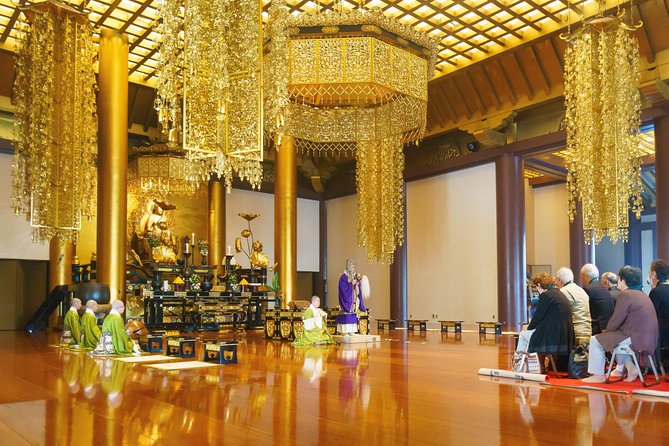
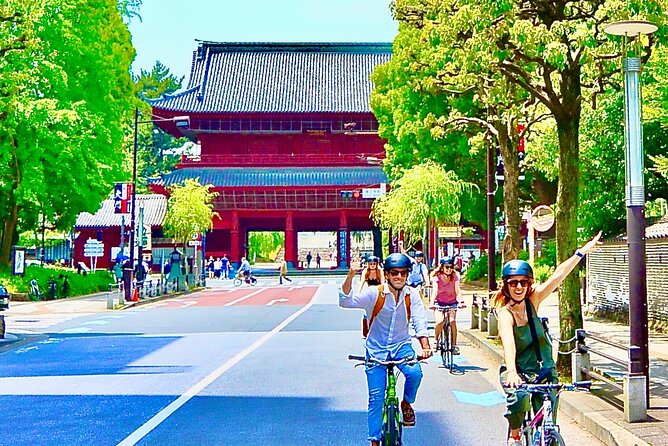
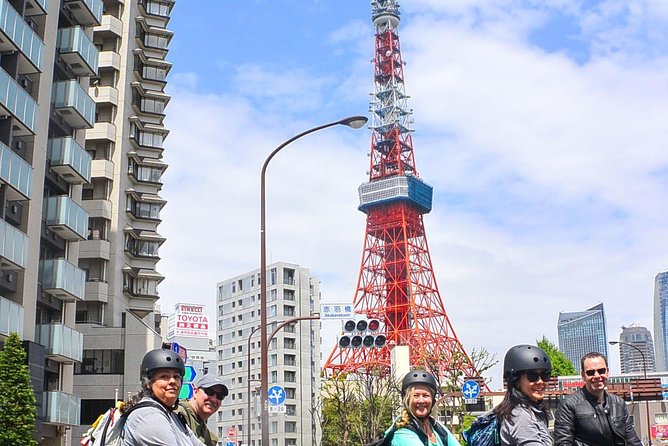
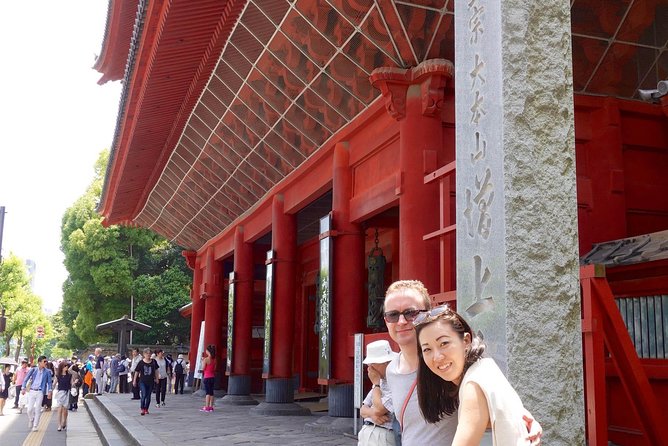
The route includes Zōjō-ji temple, where Tokyo Tower rises behind the temple buildings. This pairing is one of the most recognizable city views on the tour: traditional architecture in the foreground, a bright red communications tower above it.
Zōjō-ji also adds a religious and historical setting to a day that otherwise moves through offices, stores, roads, and homes. You are not simply collecting photographs. You are seeing how older religious sites remain part of present-day Tokyo.
The stop is also well placed in the route. It comes after the waterfront section and before the long ride through Ginza, giving you another change of pace before entering one of the city’s most famous commercial areas.
Ginza Streets and the Imperial Palace Moat
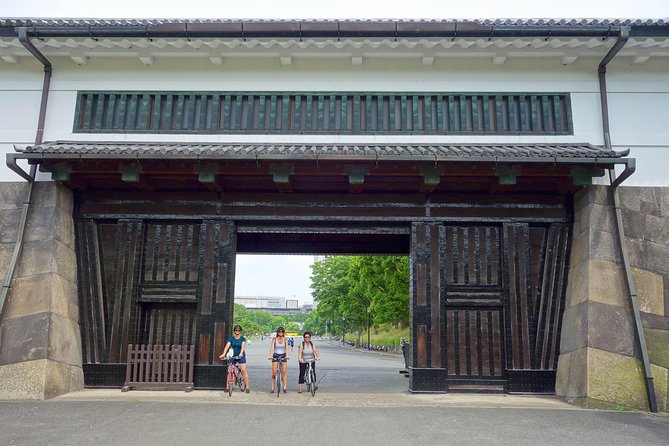
After lunch, you cycle through Ginza. The district is known for exclusive shopping and grand streets, but the route also includes backstreets. That combination lets you see Ginza as both a major destination and a working neighborhood.
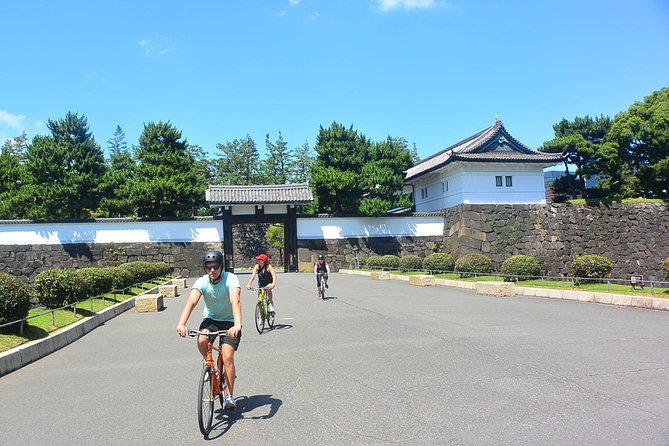
From Ginza, you continue toward the Imperial Palace. The palace grounds include a traditional Japanese garden, tea pavilion, stone walls, and a moat. You ride through two outer gates and follow part of the large moat, while the guide explains what you are seeing.
The Imperial Palace section is less about entering palace buildings and more about the setting: broad defensive spaces, carefully maintained gardens, old stonework, and central Tokyo traffic nearby. It is a valuable stop for understanding how the capital’s past remains visible in the middle of the modern city.
Do not expect a slow, detailed palace tour. The day is built around seeing many districts from the bicycle, with short walks and stops along the way. If you want a long visit focused only on palace gardens or shrine rituals, you would need a separate outing.
Finishing Above Tokyo at 48 Stories
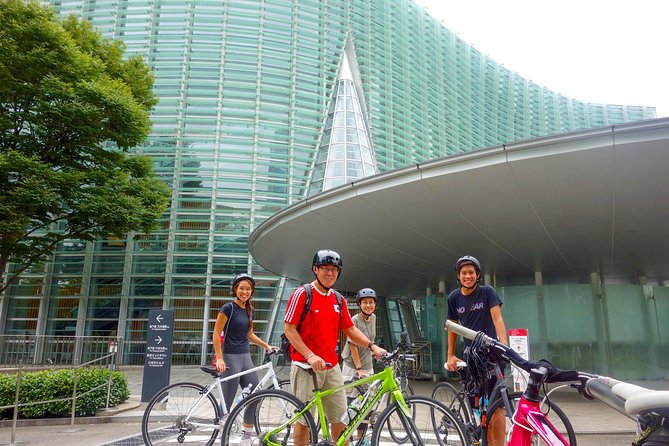
The final major stop is the Tokyo Metropolitan Government Building in Shinjuku. You take a high-speed elevator up 48 floors to an observation area with a 360-degree view.
This ending gives the whole route a satisfying shape. From above, you can look back over the city and recognize places you have just passed at street level. On a clear day, Mount Fuji may be visible, and Tokyo Skytree can also be picked out in the distance.
The observation deck is more than a photo stop. It helps you understand Tokyo’s size and layout after spending the day crossing it. You have seen small lanes, parks, shrines, shopping districts, bayfront, and palace grounds. From the top, they become part of one enormous urban picture.
After the observation visit, it is about a five-minute ride back to the original meeting point. The activity ends where it began.
How Hard Is the 20-Mile Ride?
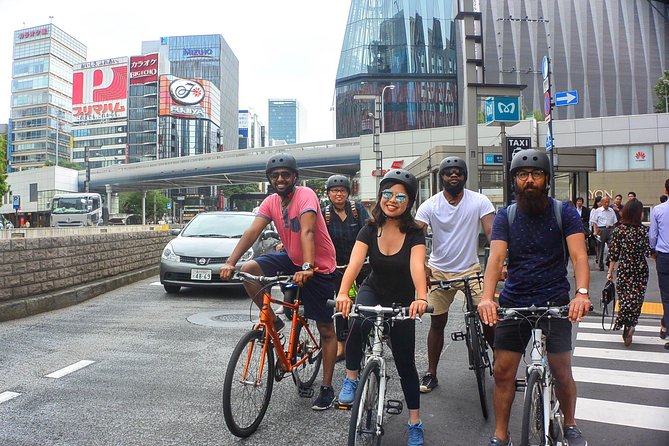
The route has limited elevation gain, and Tokyo is generally fairly flat. That makes it less strenuous than a hilly cycling tour, but the distance and traffic still matter.
You should be comfortable riding for several hours and handling a bicycle on busy roads. Some riders describe the pace as active rather than punishing, with regular stops and few difficult hills. Others point out that it is not easy work, especially because the route covers around 20 miles.
The practical test is simple: if you can ride a standard bike for a full day, steer around pedestrians, and stay alert in city traffic, you are likely a good match. If you rarely cycle or prefer a slow sightseeing day, this may feel like too much.
The tour requires a moderate fitness level. Riders must be at least 12 and no older than 69, and height must be between 125 and 190 centimeters, or about 4 feet 1 inch to 6 feet 3 inches. Height must be entered correctly when booking because the bike cannot be provided if the fit is wrong.
Wear comfortable clothing and bring a backpack or messenger bag. You will need space for lunch, and you should expect to spend much of the day outdoors.
What Makes the Small Group Valuable?
The maximum group size is five, which is unusually useful on a cycling tour. Large bicycle groups can stretch across intersections and make it hard to hear instructions. Here, the guide can give clearer directions and keep the ride more personal.
Gaku receives especially strong praise for his friendly manner, local stories, safety awareness, and route planning. He is also described as helpful with photographs and good at making the day feel like time spent with a local friend rather than a formal lecture.
That style suits this route. The day is not designed as an exhaustive history lesson at every stop. It is more about seeing how Tokyo works, learning what you are looking at, and getting recommendations along the way.
A small group can sometimes become a private tour if other places are not filled. That is not guaranteed, but the five-person cap still keeps the experience intimate.
Is the Price of $106.12 Fair?
At $106.12 per person, the tour is not a cheap way to rent a bicycle for a few hours. The price includes the guide, bike, helmet, route planning, and a full 6.5-hour program. You pay separately for lunch and drinks.
I see the value in the amount of ground covered. A visitor on foot would need several days to connect Shinjuku, Meiji Jingu, Aoyama, Roppongi, Zōjō-ji, Tokyo Bay, Ginza, the Imperial Palace, and the government building. Trains can link the districts, but they do not provide the same view of the streets between them.
You are paying for orientation as much as transportation. A good guide keeps you moving through an unfamiliar city, points out smaller places you might miss, and removes much of the planning burden. The value is strongest if this is your first Tokyo visit or if you have limited time.
It is less attractive if you already know the city well, dislike riding near traffic, or want to spend long periods inside each shrine, park, or museum. In that case, separate neighborhood visits may suit you better.
Weather, Timing, and Cancellation Details
The tour starts in the early morning and lasts about 6.5 hours. It returns to the original Nishishinjuku meeting point, with no hotel pickup or drop-off.
Cycling can be canceled for poor weather, including rain or extreme heat. If that happens, a different date or a full refund is offered. For your own cancellation, you need to cancel at least 24 hours before the start time for a full refund. Late cancellations and late changes are not accepted.
The guide sends an email by 7 a.m. if the tour has been canceled because of weather. Check your email that morning, especially during hot, rainy, or unsettled conditions.
The route can also change for operational reasons. Think of the listed sights as the intended plan, not an absolute promise that every stop will happen exactly as described.
Who Should Book This Tour?
I would choose this tour for a first or second visit to Tokyo, especially if you want an overview before exploring individual areas on your own. It is also a good fit for active couples, families with older children, and solo riders who like meeting a small group.
You should book it if you enjoy moving through a city rather than staying in one attraction. The strongest parts are the connections between districts, the quiet lanes, the shrine and cemetery stops, the supermarket lunch, and the view from the government building.
Think twice if you need an e-bike, have difficulty riding in traffic, or want a relaxed half-day with little physical effort. This is a long ride on a regular bicycle, even though the hills are limited.
For the right rider, I would book it early in a Tokyo stay. You will leave with a mental map of the city, several ideas for later visits, and a better sense of how Tokyo’s old and new sides sit together.
FAQ
How long does the Tokyo biking tour last?
The tour lasts approximately 6 hours and 30 minutes, including cycling, sightseeing stops, lunch shopping, and the observation deck visit.
How far do you ride?
The total route is about 20 miles, or approximately 32 kilometers.
Is the tour conducted on an e-bike?
No. You ride a standard cross-city bicycle with a flat handlebar. It is not an e-bike or a cruiser bike.
How many people can join the tour?
The maximum is five participants per booking and five travelers on the activity.
What is included in the price?
A professional guide, bicycle, and helmet are included.
Is lunch included?
No. You buy a bento box and any drinks at a local supermarket at your own expense, then carry the food to the waterfront for lunch.
What level of fitness is required?
A moderate fitness level is required. You should be comfortable cycling on busy city roads for about 20 miles, with limited elevation gain and regular sightseeing stops.
What are the age and height limits?
The minimum age is 12 and the maximum age is 69. Riders must be between 125 and 190 centimeters tall, or about 4 feet 1 inch to 6 feet 3 inches.
What happens if the weather is bad?
The cycling activity may be canceled in rain, extreme heat, or other poor conditions. You will be offered another date or a full refund. The guide sends an email by 7 a.m. if the tour is canceled.
New cycling reviews around Japan
- Osaka E-Bike Tour With A Local Guide★ 4.7 · 75 reviews
- Osaka: City Highlights Bike Tour★ 4.7 · 20 reviews
- Okinawa: Afternoon Cycling Tour with Local Guide★ 4.8 · 39 reviews
- Nara: City Highlights Shared Group or Private Bike Tour★ 4.9 · 34 reviews
- Nara: Bike Tour in Ancient Capital UNESCO World Heritage★ 5.0 · 43 reviews
- Naha: Guided E-Bike Tour of the 12 Zodiac Temples★ 4.9 · 50 reviews
- Best of Kyoto: Ginkakuji & Path of Philosophy E-Bike Tour★ 4.9 · 79 reviews
- Kyoto: Tailored E-Bike Tour to Highlights & Hidden Gems★ 4.9 · 32 reviews
Tokyo Cycling Tours, compared.
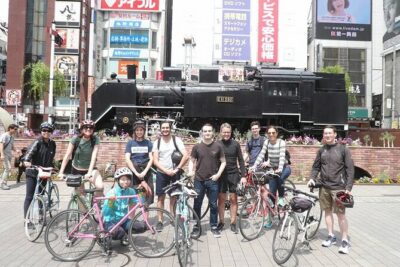
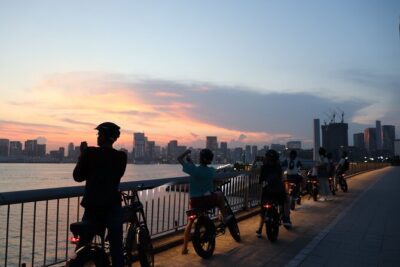
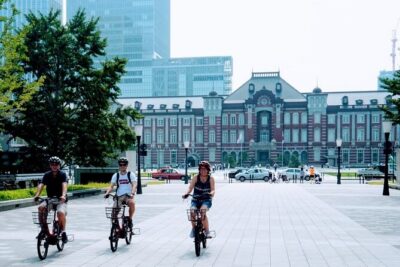
3h Tokyo E-Bike Tour: Hidden Gems, and Local Life with guide
Read our review →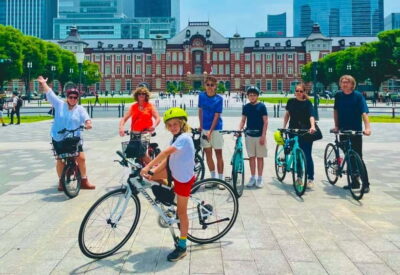
Tokyo: 3-Hour Bike or E-Bike City Highlights Tour
Read our review →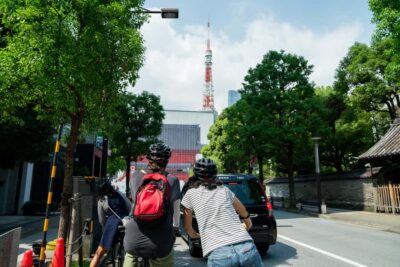
Tokyo: 3-hour Guided E-Bike Tour of the City’s Hidden Gems
Read our review →
3-Hour Tokyo Private E-Bike Tour Starting from Your Hotel
Read our review →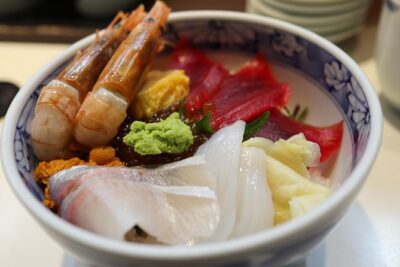
5-Hour Tokyo & Edo Hidden Gem Bike Tour with Lunch
Read our review →Browse the lists this ride appears in