
Review · KYOTO
Bike Tour Exploring North Kyoto plus Lunch
Kyoto reveals itself best at street level, and this tour takes you from grand temples to quiet lanes in a single day. You’ll cover about 13 miles, or 24 kilometers, over roughly six hours, with plenty of stops for shrines, photos, stories, and lunch. The small group, capped at eight, keeps the ride personal.
I like the excellent mix of famous sights and less-visited places, especially Nishi Honganji and the back streets between stops. I also like that the price includes a good Cannondale bike, water, lunch, and the Kinkakuji entrance fee. The main consideration is effort: the pace is manageable for most reasonably fit riders, but this is still a full day in the saddle, often in Kyoto heat.
Key points to know before you book
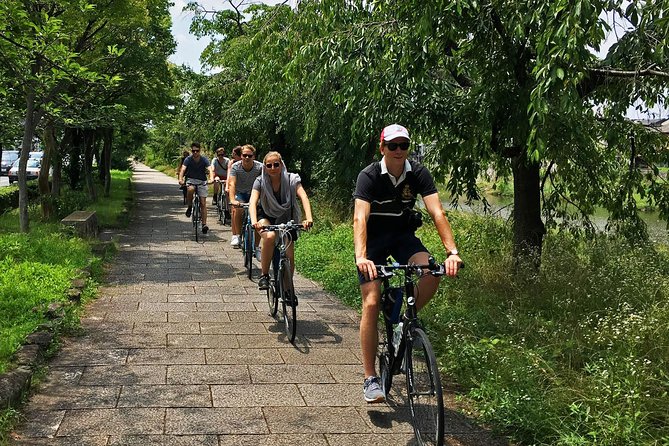
- About 24 kilometers of riding: The route is spread across five to six hours, with breaks at temples, shrines, and cultural sites.
- Small groups of up to eight: Guides such as Mayko, Julian, Indra, Karl, Quinn, and Jay can adjust the pace and give more personal attention.
- Lunch is part of the experience: The meal may be at a noodle restaurant or sushi venue, and dietary needs must be shared ahead of time.
- A strong first-day orientation: You see major Kyoto sights while learning how Buddhism, Shinto, geisha culture, and imperial history shaped the city.
- Comfortable equipment included: You get a fitted Cannondale bike, bottled water, and the required cycling equipment.
- Weather matters: Poor weather can cancel the tour, with a choice of another date or a full refund.
Why cycling works so well in Kyoto
Kyoto’s big sights are spread out. Buses can be crowded, taxis add up, and walking between the northern temples takes time. A bicycle gives you a useful middle ground. You cover real distance without reducing the city to a blur through a vehicle window.
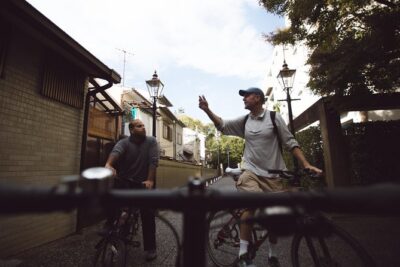
The route also lets you notice the ordinary parts of Kyoto: narrow residential streets, small repairs on old buildings, quiet lanes, and the change in mood as you move from one district to another. Your guide handles navigation, so you can watch the city instead of checking your phone at every intersection.
This is not a racing tour. The cycling takes about two and a half hours of the total day, according to the route details supplied by riders, with the rest divided between visits, explanations, lunch, and short pauses. The pace is generally steady, and there are not many hills, though one incline comes before Kinkakuji. You should still be comfortable riding a bike for several hours.
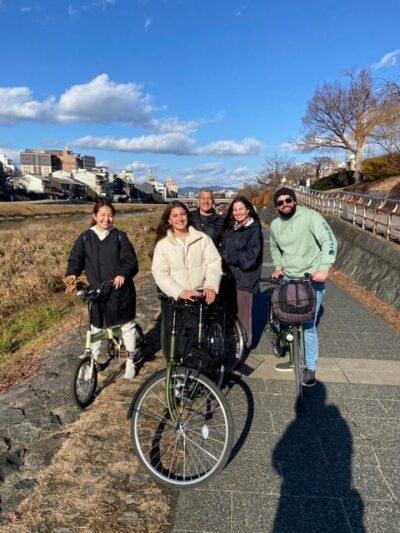
The group size is a real advantage. With no more than eight people, the guide can check on the slower rider, answer questions, and adjust the route or speed. Guides have included Mayko, Julian, Indra, Karl, Quinn, Jay, and Jamie. The strongest part of their role is not simply pointing out buildings. They explain how Buddhist and Shinto traditions differ, how Japanese culture developed, and what places such as Gion mean today.
More Rides with Lunch in Kyoto:
- 4.5-Hour Kyoto Bike Tour with Lunch and UNESCO Zen Temples
★ 5.0 · 122 reviews - Kyoto: Full-Day City Highlights Bike Tour with Light Lunch
★ 5.0 · 52 reviews - Kyoto: Early Bird E-Bike Tour with Lunch
★ 5.0 · 14 reviews
Starting at 10 a.m. with the right bike
You meet at Cycle Kyoto at 7 Higashikujō Nishisannōchō in Minami Ward. The tour begins at 10 a.m., close to public transportation. Allow enough time to arrive without rushing, since the opening 15 minutes are used to meet the guide and group, fit your bike, and prepare for the ride.
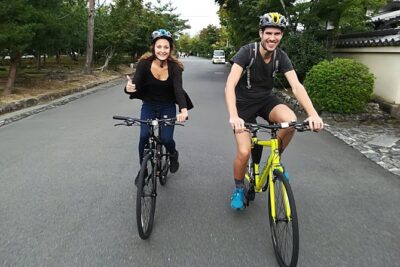
The supplied Cannondale bikes are described as comfortable and are selected according to height. Riders have also noted padded seats and the option to wear helmets. All cycling equipment is included, as is bottled water.
The practical message is simple: wear clothing suited to movement, bring sun protection, and expect to work up a sweat in warm weather. Kyoto can be very hot, and one guide, Quinn, took particular care to keep the group hydrated during a hot ride. The pace can be adjusted, but you should have moderate fitness and feel secure on a bicycle.
Riders must be at least 13 years old. Families with older children can fit well, especially if everyone can ride confidently in a city setting. One family with children aged 12 to 17 took the route, but the stated minimum age is 13, so confirm the age requirement when booking.
Nishi Honganji: a quiet start with serious scale
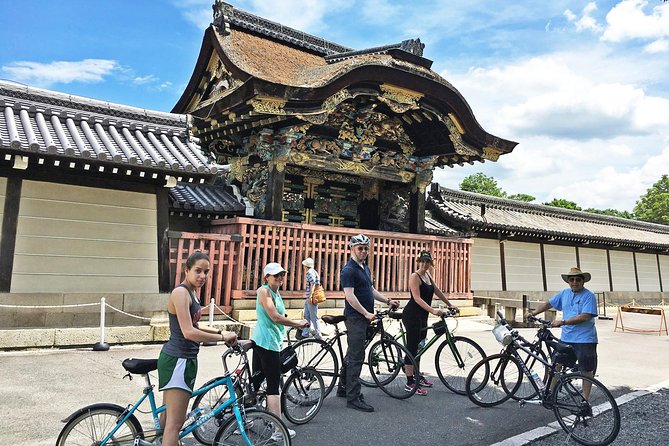
The first major stop is Nishi Honganji, one of Kyoto’s less-visited religious sites and home to one of the largest wooden buildings in the world. Its scale gives you an immediate sense of how much space Japanese religious architecture can command.
This is a useful early stop because it is less frantic than the city’s headline attractions. You can look closely at the wooden construction, hear about the site’s role, and begin to understand how Kyoto’s religious institutions shaped daily life.
The visit is listed at about 15 minutes. That is enough for an introduction and a look around, not a long architectural study. If you prefer extended time at every temple, the schedule may feel brisk. The trade-off is that you get to see several different parts of Kyoto in one outing.
Kitano Tenmangu: local worship and a calmer mood
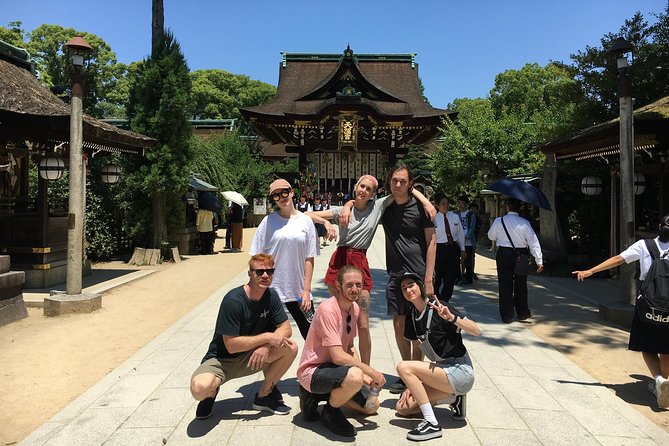
From Nishi Honganji, the route continues to Kitano Tenmangu Shrine. This stop gives the day a different tone. Rather than focusing only on a famous landmark, your guide helps you notice how local people use the shrine.
You can join shrine goers, observe the tranquil setting, and hear about the shrine’s past. The visit lasts around 20 minutes, so listen closely while the guide explains what you are seeing. Indra, Quinn, and other guides have been praised for explaining the differences between Shinto and Buddhism, which makes a stop like this more meaningful than a quick photo break.
The value here is context. A shrine is not just a decorative gate and a place to take pictures. Your guide can explain customs and beliefs that are easy to miss if you arrive alone, especially when you do not know what parts of the setting deserve your attention.
More Cycling Trips in Kyoto:
- Hidden Kyoto E-Biking tour
★ 5.0 · 1,843 reviews - Arashiyama Bamboo Forest & Hidden Gems Bike Tour (Early Bird)
★ 5.0 · 613 reviews - 5 Top Highlights of Kyoto Full Day Bike Tour (E-bike option)
★ 5.0 · 511 reviews - Full Day Biking Tour Exploring the Best of Kyoto
★ 5.0 · 498 reviews
Kinkakuji: Kyoto’s famous Golden Pavilion
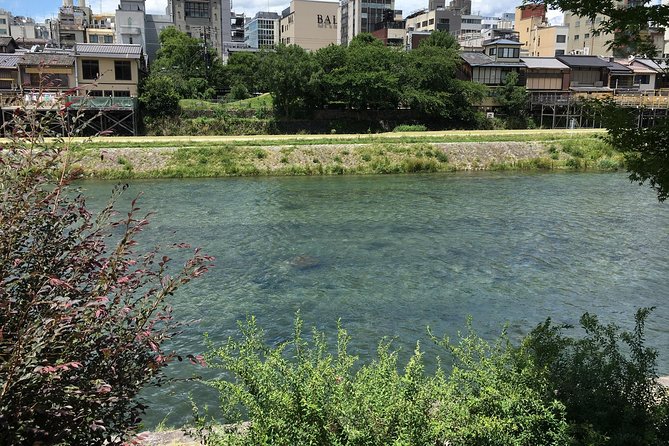
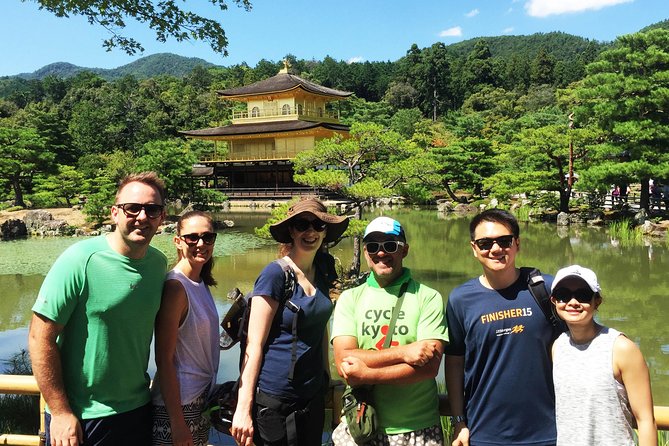
Kinkakuji, the Golden Pavilion, is the headline sight on this northern route. It is one of Japan’s most visited attractions, and the tour includes the entrance fee. You’ll have about 30 minutes to enjoy the grounds, hear commentary, and pause for an ice cream.
This stop is popular for good reason, but it is also the point where the tour is most likely to feel busy. You are not getting a private viewing of the pavilion. The benefit of arriving with a guide is that you gain a clear explanation of the site and do not have to work out the best order for the visit yourself.
The uphill ride toward Kinkakuji is slight, then the route becomes easier afterward. That small climb is worth knowing about if you are not used to cycling. The guide can help manage the pace, and the route includes breaks rather than asking you to ride continuously.
A half-hour is enough to see the main attraction and take photographs. It is not enough for a slow exploration of every corner of the grounds. I see this as a sensible compromise because the tour is designed to show you a broad slice of Kyoto rather than keep you at one temple all afternoon.
Former imperial grounds and the spaces between sights
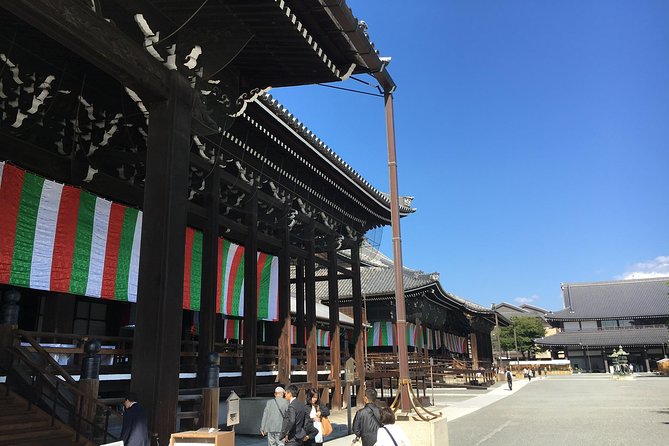
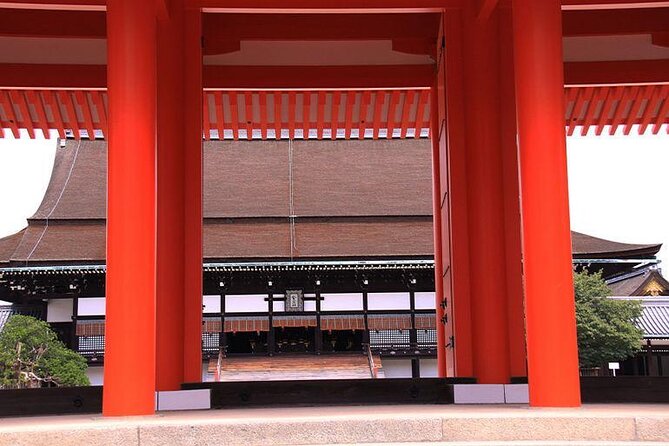
The route also passes through the grounds of the former seat of Japan’s imperial family. This section gives you a break from temple and shrine architecture while adding a political and cultural layer to the day.
The supplied details do not assign a separate stop time, so expect this to be part of the ride and guided commentary rather than a long independent visit. That is part of the appeal of cycling. You can cross a large historic area while moving between major attractions, without spending extra time arranging transport.
The spaces between stops matter here. You are not simply being delivered from one ticket gate to another. Your guide points out streets and corners you could easily miss on a standard sightseeing route, helping you see Kyoto as a working city rather than a collection of postcard sites.
Gion: a short look at Kyoto’s geisha district
The final named stop is Gion, Kyoto’s famous geisha district. The scheduled visit is about 10 minutes, so think of it as an introduction rather than a full walking tour.
Your guide explains the character of this hidden world and may point out details you would miss on your own. You might catch a glimpse of a geisha or maiko, but this is not promised, and respectful behavior is essential. Keep your camera ready, but do not treat the district like a stage set.
Gion works well near the end of the route because it adds a modern cultural question to the day: how do traditional arts fit into present-day Kyoto? A good guide can discuss the role of entertainers and the district’s customs without turning people who live and work there into attractions.
Lunch is more than a quick refueling stop
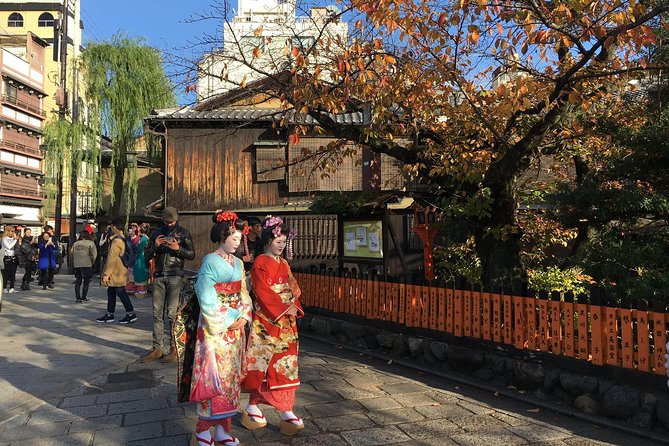
Japanese lunch is included, but the exact venue can vary. The route has used a traditional noodle restaurant, including one described as about 400 years old, as well as sushi venues and a sushi train restaurant. One group was redirected to a sushi bar when the planned noodle house was closed.
That flexibility is useful, but it means you should not book this expecting one guaranteed restaurant or one fixed dish. The important point is that lunch is built into the day, giving you time to sit down and recover before finishing the route.
Vegetarian options have been arranged when requested, and dietary requirements need to be provided in advance. Extra drinks are not included, so budget for anything beyond the supplied bottled water.
What makes the guides worth having
The guide can make or break a city bike tour, and this experience gives that role plenty of room to matter. Guides including Mayko, Julian, Indra, Karl, Quinn, Jay, and Jamie have different personalities, but the consistent strength is their ability to connect places with wider Japanese culture.
Some guides add historical detail from several periods. Others focus on religion, local customs, or practical suggestions for the rest of your Kyoto stay. Quinn has been described as especially attentive to names, hydration, and group comfort. Jay has worked well with families, while Indra has offered detailed explanations of Buddhism, Shinto, and geisha culture.
You should expect a conversational day rather than a silent ride behind a guide. Ask questions. The small group makes that easy, and the route becomes more useful when you tell the guide your interests and fitness level.
Is the $106.12 price good value?
At $106.12 per person, this is not the cheapest way to see Kyoto. You are paying for a full half-day experience rather than simply renting a bicycle. The price includes a quality Cannondale bike, equipment, guide service, bottled water, lunch, and the Kinkakuji admission fee.
That package has practical value. You do not need to plan a route across several districts, navigate unfamiliar streets, arrange a restaurant, or calculate how to reach each temple. You also receive cultural background that is hard to get from signs alone.
The value is strongest if you are visiting Kyoto for the first time, want an active day, and prefer an organized route. It is weaker if you already know the city well, dislike group schedules, or want to spend a long time inside each temple.
The high rating of 4.9 from 1,087 reviews and 99 percent recommendation indicate very strong satisfaction, but the numbers should not replace your own judgment. The tour still requires moderate fitness, good weather, and comfort on a bicycle.
Practical details that can affect your day
The tour returns to the Cycle Kyoto meeting point. It lasts about five to six hours, though the day can run longer if the guide adds time or the group needs extra pauses. One ride extended to about seven hours, so avoid booking a tightly timed afternoon activity.
Rain and poor weather can cancel the experience. If that happens, you can choose another date or receive a full refund. You can also cancel for a full refund up to 24 hours before the local start time. Changes or cancellations inside that 24-hour window are not accepted for a refund.
Bring any dietary information when you book. Also remember that the tour is for riders aged 13 and older, and the maximum group size is eight people.
Who should book this Kyoto bike tour?
I would choose this tour for a first or second day in Kyoto. It gives you a useful map of the city, introduces several major sights, and helps you decide where to return for a longer visit.
It suits active couples, solo riders, families with teenagers, and anyone who finds bus sightseeing dull. It is also a good fit if you want a guide who can explain religion and culture instead of simply naming buildings.
I would hesitate if you have knee, balance, or stamina problems, since the day includes several hours of riding. I would also skip it if you want a slow temple day with lots of time for quiet reflection. This is a broad Kyoto sampler, not a leisurely single-site visit.
If you can ride comfortably, handle a modest incline, and accept a full schedule, I think the tour is a smart use of one Kyoto morning and afternoon. The combination of back streets, major temples, a proper Japanese lunch, and an eight-person maximum gives you more than a bicycle rental and more freedom than a bus tour.
FAQ
How long does the bike tour last?
The tour lasts approximately five to six hours. Some outings may run longer if the guide adds time or the group takes extra breaks.
What time does the tour start?
The tour starts at 10 a.m. at Cycle Kyoto, 7 Higashikujō Nishisannōchō, Minami Ward, Kyoto.
Where does the tour end?
The activity ends back at the Cycle Kyoto meeting point.
What is included in the price?
The price includes a high-quality Cannondale bike, cycling equipment, guide service, bottled water, lunch, and the Kinkakuji Temple entrance fee.
Is lunch suitable for dietary requirements?
Dietary requirements can be accommodated, but you must provide the information ahead of time. Extra drinks are not included.
What happens if the weather is poor?
The tour requires good weather. If it is canceled because of poor weather, you can choose another date or receive a full refund.
New cycling reviews around Kyoto
- Best of Kyoto: Ginkakuji & Path of Philosophy E-Bike Tour★ 4.9 · 79 reviews
- Kyoto: Tailored E-Bike Tour to Highlights & Hidden Gems★ 4.9 · 32 reviews
- Kyoto: Full-Day City Highlights Bike Tour with Light Lunch★ 5.0 · 52 reviews
- Kyoto: Half-day Guided Bike Tour with Fushimi Inari★ 4.9 · 21 reviews
- Kyoto: Full Day Bike Tour★ 4.9 · 39 reviews
- Kyoto: Early Bird E-Bike Tour with Lunch★ 5.0 · 14 reviews
- Cycle Kyoto’s Hidden Gems & Gion Stroll★ 5.0 · 29 reviews
- Kyoto: Arashiyama Bamboo Forest Morning Tour by Bike★ 5.0 · 115 reviews
Kyoto Cycling Tours, compared.
Arashiyama Bamboo Forest & Hidden Gems Bike Tour (Early Bird)
Read our review →
5 Top Highlights of Kyoto Full Day Bike Tour (E-bike option)
Read our review →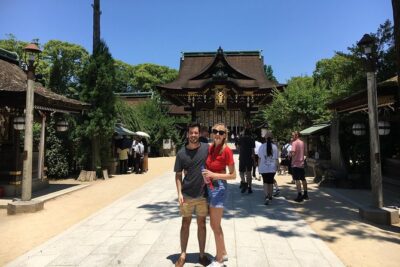
Full Day Biking Tour Exploring the Best of Kyoto
Read our review →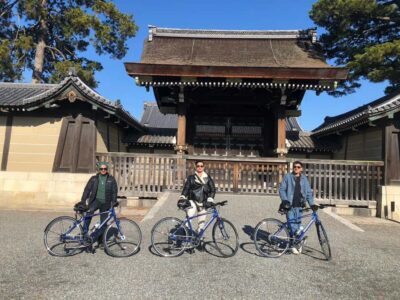
Kyoto: Hidden Gems E-Bike Tour with Local Japanese Guide
Read our review →Browse the lists this ride appears in