
Review · KYOTO
Full Day Biking Tour Exploring the Best of Kyoto
Kyoto is far too spread out for one easy walking tour, and its buses can leave you staring at traffic instead of temples. This full-day bike tour solves that problem with a long, mostly flat ride linking famous sights, smaller streets, river views, and traditional neighborhoods. You cover roughly 18 to 20 miles, so this is sightseeing with real exercise built in.
I like the small group of no more than eight people and the local feel of the route. Guides such as Karl, Jay, Juan, Paul, Indra, and Jamie have led groups through back streets, family-run restaurants, and busy shrine areas with plenty of historical context. I also like that lunch, bottled water, a Cannondale bike, and a helmet are included.
The catch is simple: this is a big day. Some people have ridden 20 miles and walked more than 14,000 steps by the finish. The route is generally gentle, but you should be comfortable on a bike, ready for several hours in the saddle, and prepared to ride in warm weather.
Key things to know before you book
- You cover Kyoto’s major sights in one day: Kinkaku-ji, Gion, Fushimi Inari, Tofuku-ji, Nishi Honganji, Kitano Tenmangu, and the former imperial grounds.
- The route uses quieter streets where possible: This makes a large city feel more manageable by bicycle and gives you a look at ordinary Kyoto neighborhoods.
- Lunch is part of the experience: A traditional noodle house or family restaurant may be used, with dietary needs requested in advance.
- The ride is active but not described as hilly: The route is generally flat, though distance and time make it tiring.
- The guide makes a major difference: The tour has included guides such as Karl, Jay, Juan, Paul, Indra, Jamie, Jaimie, Quinn, and Carl.
- You return to the starting point: The shop is at 7 Higashikujō Nishisannōchō, about one block south of Kyoto Station.
Why a bicycle works so well in Kyoto
Kyoto’s famous sights are scattered across a broad city. Kinkaku-ji sits northwest of the center, Gion lies east of the Kamo River, and Fushimi Inari is well south of Kyoto Station. Walking between them would consume most of your day. Public transport helps, but you still spend time reaching stations, waiting, and changing lines.
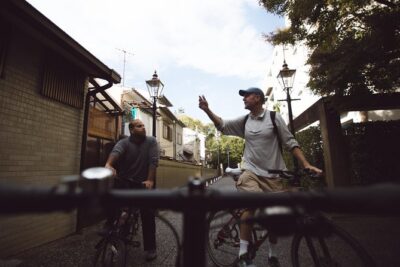
A bicycle gives you a useful middle ground. You travel farther than on foot, yet you can turn down a small street, stop at a temple gate, or pause beside the river. The route is designed to use smaller roads when possible, which matters in a city that can feel crowded and vehicle-heavy around the main sights.
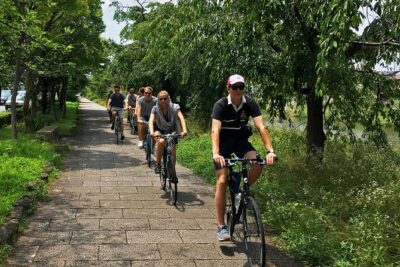
You should not think of this as a casual spin around town. The full ride has been described as about 18 to 20 miles, with walking at temples and shrines on top of that. Still, the route is generally flat, and several people found the cycling easy in itself. The hard part is the length of the day, not a series of steep climbs.
The tour begins at the Cycle Kyoto shop, where you meet the guide and group, receive a bike and helmet, and get fitted for the ride. The maximum group size is eight, though the main description also presents it as a small group of up to nine. Either way, this is much more personal than a large coach outing.
More Full-Day Rides in Kyoto:
- 5 Top Highlights of Kyoto Full Day Bike Tour (E-bike option)
★ 5.0 · 511 reviews - Kyoto: Full-Day City Highlights Bike Tour with Light Lunch
★ 5.0 · 52 reviews - Kyoto: Full Day Bike Tour
★ 4.9 · 39 reviews
Nishi Honganji and Kyoto’s quieter beginning
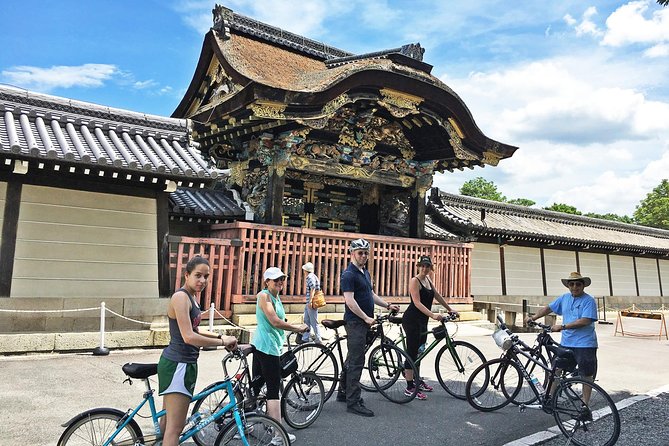
Nishi Honganji is an excellent opening stop because it gives you a grand religious site without the crowds found at Kyoto’s headline attractions. The temple includes one of the largest wooden buildings in the world, yet it is often overlooked by people rushing toward the Golden Pavilion or Fushimi Inari.
You have about 15 minutes here. That is enough for an introduction and a look at the scale of the wooden architecture, but not enough for a long, slow temple visit. I like the choice because it sets the tone for the day: you get major cultural sights, but you also see places that many first-time visitors miss.
The guide’s explanation is especially useful here. A good guide can help you understand how Buddhist temples function, what to look for in the buildings, and why this site matters without turning the stop into a lecture. Guides who have led this tour, including Indra and Karl, are praised for connecting architecture with Japanese culture and daily life.
Kitano Tenmangu, a working shrine rather than a quick photo stop
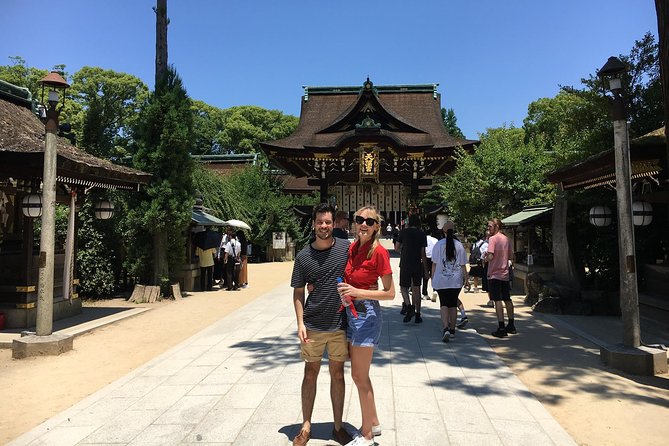
The next stop is Kitano Tenmangu Shrine, where you can see local shrine-goers alongside the tour group. The planned visit lasts around 20 minutes, giving you time to absorb the setting and learn about the shrine’s past.
This is one of the stops that helps balance the better-known attractions. Kinkaku-ji and Fushimi Inari are essential Kyoto sights, but Kitano Tenmangu feels more connected to local religious practice. You get a chance to watch how people use a shrine, not just photograph its entrance.
The stop is also a good reminder that the day is not only about checking off famous buildings. Guides may point out customs, symbols, and details you could easily miss on your own. The amount of information depends on the guide, and that is worth keeping in mind when you book. The strongest guide reports describe clear explanations, humor, and useful stories at each location. One less positive account found the explanations unclear, so the quality of the day can vary with the individual leading your group.
Kinkaku-ji, Kyoto’s Golden Pavilion
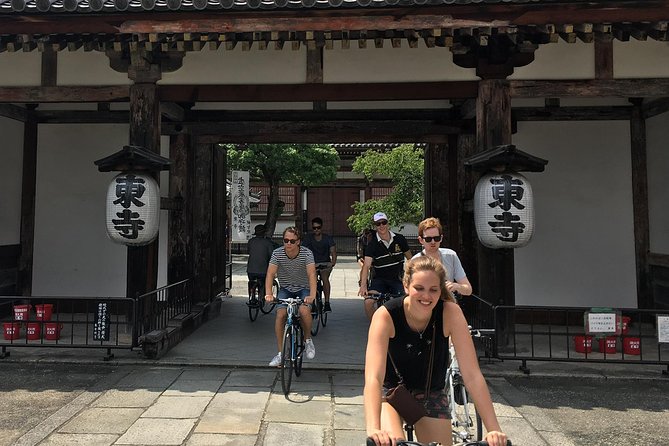
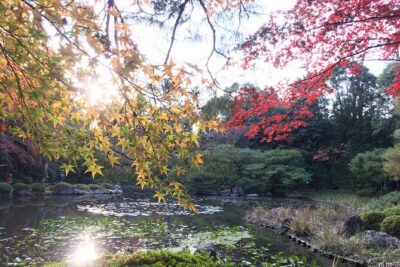
Kinkaku-ji is the visual centerpiece of the morning. The Golden Pavilion is one of Japan’s most photographed attractions, and the setting gives you a polished, picture-perfect version of Kyoto: gold architecture, carefully arranged gardens, and water reflecting the building.
You have about 30 minutes here, including commentary and time to look around. That is enough for a focused visit, though it will not feel like an unhurried half-day at the temple. The grounds can be busy, so a guide helps you move through the visit without wasting time deciding where to go next.
You may also have time for an ice cream stop. That small break matters on a long ride. It gives you a chance to cool down, stretch your legs, and enjoy the place without treating every minute as a history lesson.
The tour does not include every possible temple in Kyoto, and you should not expect long independent visits at each stop. Its strength is the range of places you reach in one day. If Kinkaku-ji is your main priority, you may want a separate visit with more time. If you want to connect it with several other districts, the bike route makes good use of your day.
More Cycling Trips in Kyoto:
- Hidden Kyoto E-Biking tour
★ 5.0 · 1,843 reviews - Bike Tour Exploring North Kyoto plus Lunch
★ 5.0 · 1,087 reviews - Arashiyama Bamboo Forest & Hidden Gems Bike Tour (Early Bird)
★ 5.0 · 613 reviews - Kyoto: Memory Kyoto E-Bike Tour
★ 4.8 · 297 reviews
The former imperial grounds and the ride between sights
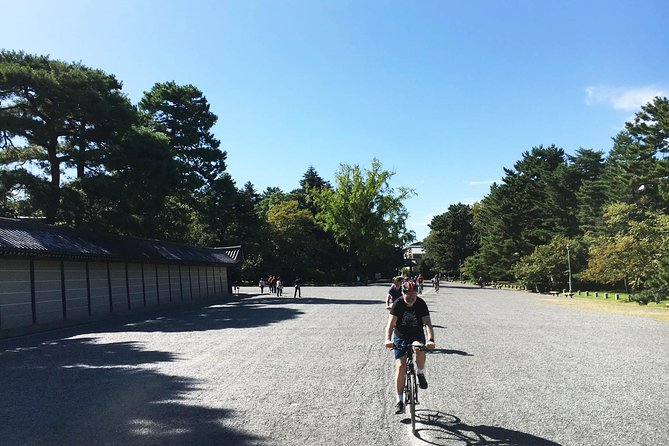
The route also passes through the grounds of the former seat of Japan’s imperial family. The supplied timing does not specify a separate stop length, but the ride gives you a look at this important part of Kyoto’s political past.
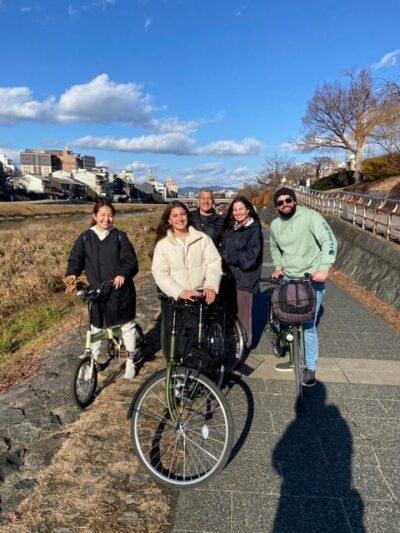
This stretch shows why the bicycle is useful. You are not simply being delivered from one attraction to another. You pass through changing parts of the city, with quiet streets and traditional homes appearing between major sites. Several people especially valued the chance to see ordinary neighborhoods and small roads that are easy to miss from a bus.
You should keep your expectations practical. The bike has a small front pouch for a phone and wallet, not a large storage compartment. If you bring a backpack, you will carry it throughout the ride. Pack lightly, and keep anything you need during the day easy to reach.
Lunch is more than a pause
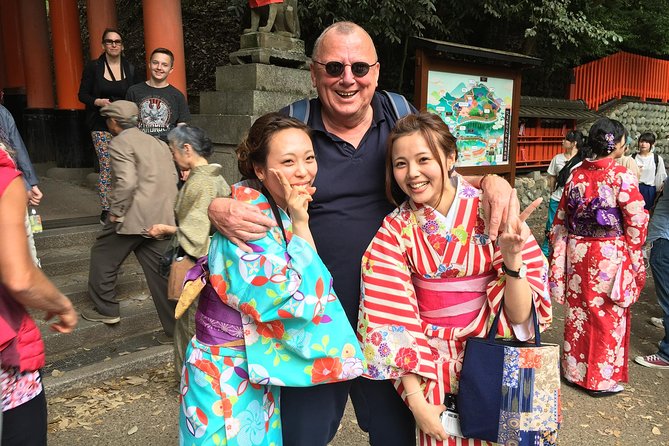
Lunch is included, and it has become one of the tour’s strongest practical features. The meal may be served at a traditional noodle house or a small family restaurant, sometimes away from the main tourist flow. You get a proper break, local food, and a chance to sit down before the afternoon route.
Dietary needs must be shared ahead of time. That is important because the lunch arrangements are part of the planned day, not an open-ended restaurant search. Bottled water is also included, though you should still consider how much water you personally need for a full day of cycling, especially in warm weather.
I value the lunch because it adds more than convenience. A meal in a local-style restaurant gives you a more ordinary view of Kyoto than eating only near the biggest attractions. It also helps make the $119.38 price easier to justify. You are paying for a bike, helmet, guide, route planning, water, lunch, and a full day of access to sights that would take more effort to link independently.
Gion, where the city’s old entertainment world still shows
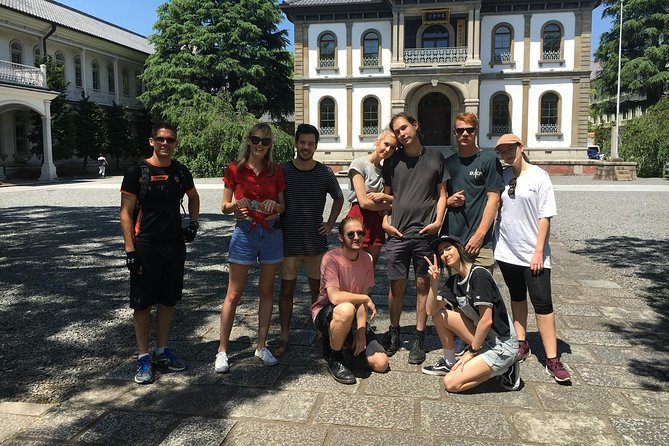
Gion is the tour’s best-known neighborhood stop. You have about 15 minutes to walk or cycle through the district, learn about its geisha culture, and perhaps catch a glimpse of an entertainer moving between appointments.
Keep your expectations sensible. A guaranteed geisha sighting is not part of the experience, and the stop is short. The value lies in the guide’s explanation of the district and in seeing how its lanes fit into the wider city.
The guide can also help you behave respectfully. Gion is not a stage set. People live and work there, and a good explanation of the area’s customs is more useful than a hurried attempt to take photographs. Several guides have taken groups to a small local restaurant in or near Gion for lunch, which can make this part of the day feel more connected to the neighborhood.
Tofuku-ji and the southern route
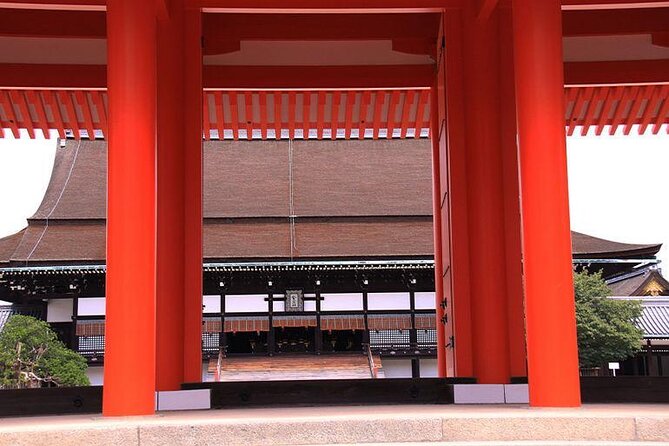
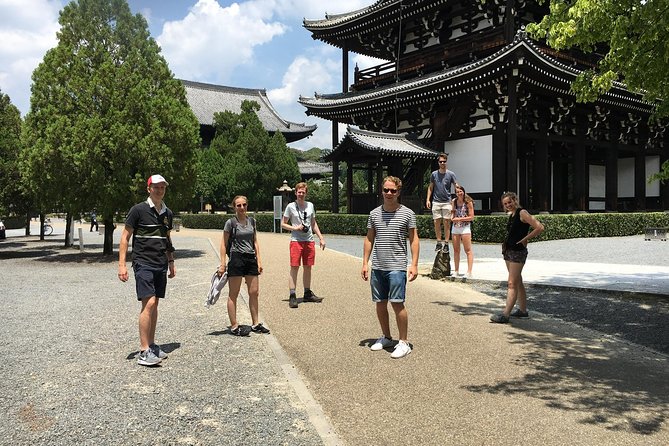
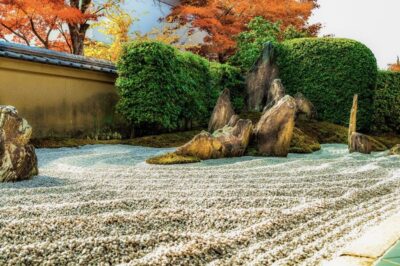
Tofuku-ji is a large Zen temple in southern Kyoto, known for spacious grounds and a striking bridge view. The listed stop is brief, around five minutes, so treat it as a scenic pause rather than a full temple visit.
That short timing is one of the compromises of the tour. You see a lot, but you cannot explore every site at length. The bridge and surrounding grounds make Tofuku-ji a useful visual break, especially after the more crowded Golden Pavilion and Gion.
The southern location also sets up the final major stop, Fushimi Inari. Rather than retracing your route by train or bus, you continue by bicycle and arrive with a guide who knows how to approach the shrine area.
Fushimi Inari and its thousands of red gates
Fushimi Inari-taisha is the grand finish. The shrine is famous for its long passages of red torii gates climbing the wooded slopes behind the main buildings. The tour allows about 20 minutes, with the guide choosing a route through the busy area.
You should not expect to walk the entire torii path in that time. Fushimi Inari can occupy several hours if you climb far up the mountain. On this tour, the goal is to understand the shrine, see its defining features, and avoid losing time in the crowds.
A guide can add useful context here. The torii gates are donated, and their presence reflects the relationship between worship, business, and good fortune. Indra has been praised for explaining the story and economics behind the roughly 13,000 gates, which gives the site more meaning than a quick photo stop.
By this point, you may be tired. That is not a flaw, but it is part of the bargain. The route gives you a broad view of Kyoto in one day, but your legs will know you have crossed the city.
The bikes, pace, and physical demands
The tour includes a high-quality Cannondale bicycle and helmet. Riders must be at least 13 years old and comfortable riding a bike. You also need a moderate level of physical fitness.
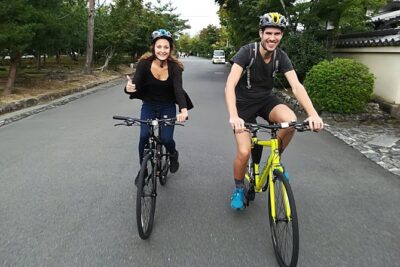
Past groups have described the pace as safe, easy to follow, and comfortable for families with teenagers. The route is generally flat, and the guides use smaller streets where possible. Even so, cycling on city roads requires attention, and you should be ready to ride for much of the day.
A few practical choices will improve your experience:
- Wear comfortable clothing suited to the weather.
- Bring a small backpack only if you are willing to carry it all day.
- Keep your phone and wallet where you can reach them, since the bike storage is limited.
- Expect sweat in warm weather.
- Leave room in your schedule after the tour if you know a long ride wears you out.
The ride may be especially good for families with active teenagers, couples who dislike large bus groups, and visitors who want a city overview early in their stay. It is less suitable if you want slow temple study, have difficulty cycling for several hours, or prefer a vehicle-based tour.
Guide quality and the value of personal attention
The guide is the most important variable. The tour has been led by Karl, Jay, Juan, Paul, Indra, Jamie, Jaimie, Quinn, and Carl. Their styles differ, but the strongest guiding combines historical facts, cultural explanation, humor, navigation, and steady attention to the group.
A good guide does more than point at a temple. The best moments come when the guide explains why a shrine is still used, how Gion’s entertainment world works, or what makes a side street different from a tourist corridor. Guides have also adjusted routes for ceremonies and stopped to take group photographs, details that make a long day feel personal.
The small group helps. With eight or fewer people, it is easier to hear the explanation, ask a question, stay together, and handle a road crossing. It also keeps the day from feeling like a procession.
The 99 percent recommendation figure and 4.9 rating indicate strong satisfaction, but you should not treat that as a guarantee. One less favorable assessment found the cycling better than the instruction. That is a fair warning: the route and equipment are consistent, while the guide’s communication style can shape your experience.
Is $119.38 a fair price?
At $119.38 per person, this is not the cheapest way to see Kyoto. You could rent a bicycle and visit fewer sights on your own for less. You would also need to plan the route, manage navigation, find lunch, handle temple timing, and work out the safest way between distant areas.
The price makes better sense if you value time and route design. In seven to eight hours, you reach several major sights and also see quiet streets that are difficult to connect efficiently by yourself. Lunch, water, bike use, and a helmet are included, which removes several small costs and decisions.
The tour is strongest as an orientation day. It helps you learn Kyoto’s layout and identify places you may want to revisit at a slower pace. It is not the best value for someone who has already planned a detailed temple itinerary and wants long visits at each site.
Free cancellation is available up to 24 hours before the start time. The activity depends on good weather and a minimum number of participants. If poor weather or low enrollment cancels the tour, you are offered another date or a full refund.
Should you book this Kyoto bike tour?
Book it if you are comfortable cycling, want to see a broad slice of Kyoto in one day, and like the idea of combining major sights with side streets and local lunch. It is especially useful near the start of a Kyoto stay, when a guide can give you a sense of the city’s shape and help you choose where to return.
Skip it if you want a slow, meditative temple day, dislike long rides, or need complete control over how long you stay at each site. The route is busy with stops, and the 18 to 20 mile distance is real.
For active visitors, this is a smart way to turn Kyoto’s size into an advantage. You work for the views, but you reach far more than you would on foot, and you see the city at street level instead of through a bus window.
FAQ
How long does the Kyoto bike tour last?
The experience lasts approximately 7 to 8 hours. Some groups have stayed out from about 9:00 a.m. until 6:00 p.m., depending on the day and group pace.
How far do you cycle?
The ride is roughly 18 to 20 miles, based on the route and group accounts. You also walk at temples, shrines, and other stops.
What sights are included?
The route includes Nishi Honganji, Kitano Tenmangu Shrine, Kinkaku-ji, the former imperial grounds, Gion, Tofuku-ji, and Fushimi Inari-taisha Shrine.
Is lunch included?
Yes. Lunch and bottled water are included in the tour price. Dietary requirements should be provided ahead of time.
Are the bicycle and helmet included?
Yes. The tour includes use of a Cannondale bicycle and a helmet.
How many people are in the group?
The activity has a maximum of eight participants. It is designed as a small-group tour.
What fitness level do I need?
You should have a moderate level of physical fitness and feel comfortable riding a bicycle for several hours. The route is generally flat, but the distance can be tiring.
What is the minimum age?
Riders must be at least 13 years old and comfortable riding a bike.
Where does the tour begin and end?
It begins and ends at Cycle Kyoto, 7 Higashikujō Nishisannōchō, Minami Ward, Kyoto, 601-8003, Japan. The shop is near public transportation and about one block south of Kyoto Station.
Can I cancel for a full refund?
Yes, if you cancel at least 24 hours before the experience start time. Cancellations or changes made less than 24 hours ahead are not accepted for a refund. Poor weather or failure to meet the minimum group size may result in a different date or a full refund.
New cycling reviews around Kyoto
- Best of Kyoto: Ginkakuji & Path of Philosophy E-Bike Tour★ 4.9 · 79 reviews
- Kyoto: Tailored E-Bike Tour to Highlights & Hidden Gems★ 4.9 · 32 reviews
- Kyoto: Full-Day City Highlights Bike Tour with Light Lunch★ 5.0 · 52 reviews
- Kyoto: Half-day Guided Bike Tour with Fushimi Inari★ 4.9 · 21 reviews
- Kyoto: Full Day Bike Tour★ 4.9 · 39 reviews
- Kyoto: Early Bird E-Bike Tour with Lunch★ 5.0 · 14 reviews
- Cycle Kyoto’s Hidden Gems & Gion Stroll★ 5.0 · 29 reviews
- Kyoto: Arashiyama Bamboo Forest Morning Tour by Bike★ 5.0 · 115 reviews
Kyoto Cycling Tours, compared.
Arashiyama Bamboo Forest & Hidden Gems Bike Tour (Early Bird)
Read our review →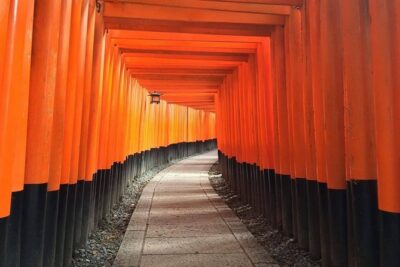
5 Top Highlights of Kyoto Full Day Bike Tour (E-bike option)
Read our review →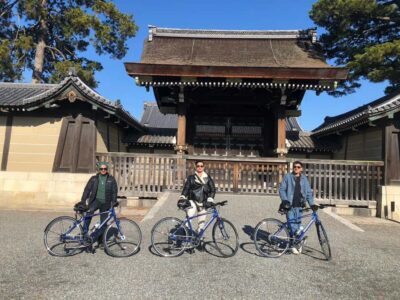
Kyoto: Hidden Gems E-Bike Tour with Local Japanese Guide
Read our review →Browse the lists this ride appears in