
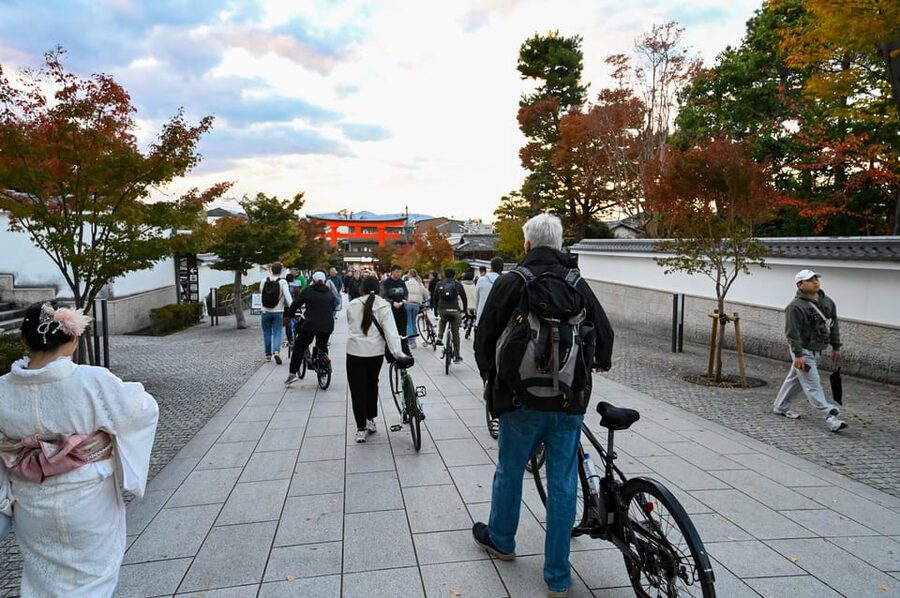
Review · KYOTO
Kyoto: Half-day Guided Bike Tour with Fushimi Inari
The best part of this South Kyoto bike tour is how much ground you cover without spending the day underground on trains or shuffling between crowded streets. In three and a half hours, you move from Toji Temple and Higashi-Honganji to Gion, Tofukuji, and the orange gates of Fushimi Inari.
I like the mix of major sights and quieter connections, especially the Takase Canal, Kamo River, and Gion backstreets. I also like the small group limit of eight, which gives guides such as Jay, Julian, Indra, Sean, and Mayco room to answer questions and adjust the pace. The main consideration is physical: you need to ride confidently, and one participant reported covering more than 15 kilometers.
Key points
- Seven major stops in 210 minutes: Toji, Higashi-Honganji, the Takase Canal, Kamo River, Gion, Tofukuji, and Fushimi Inari.
- Gion from a bicycle: You see quieter lanes around the geisha district rather than only its main tourist streets.
- Fushimi Inari without a full mountain hike: The tour includes time to walk around the famous orange torii gates.
- Small English-speaking group: The maximum is eight people, with guides including Jay, Julian, Indra, Sean, Juan, and Mayco.
- Good bike equipment: Standard bicycles, helmets, water, different bike sizes, and a small pouch for personal items are provided.
- E-bike option: You can request an e-bike for an additional ¥3,000.
Why This South Kyoto Bike Route Works
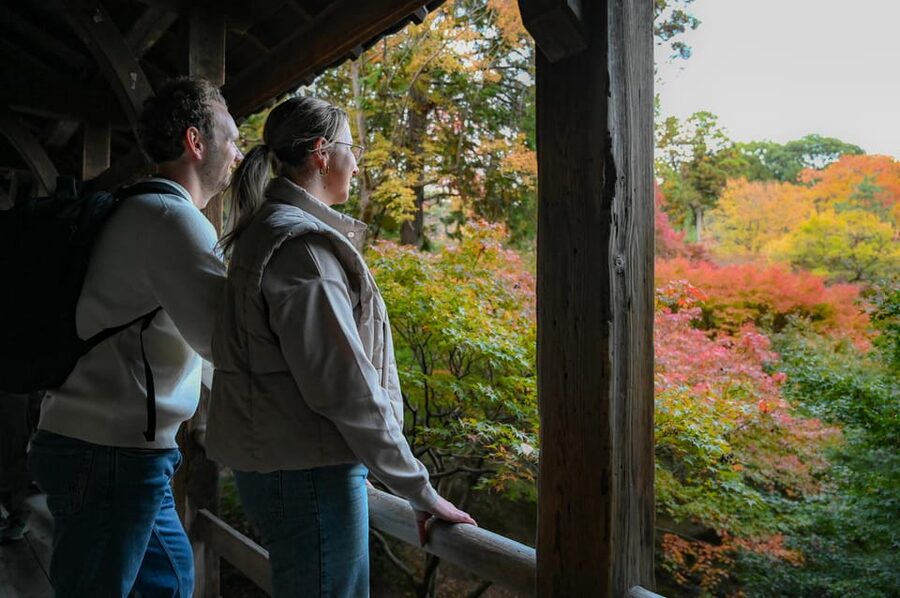
Kyoto can be awkward to tour. Its sights are spread across a wide area, buses get crowded, and walking between temples takes time. This route solves part of that problem by linking several southern sights with canals, river paths, residential streets, and temple grounds.
At $77 per person, the price is not the cheapest way to see Kyoto. You are paying for the bicycle, helmet, guide, water, route planning, and the convenience of moving between places that are not all close together. For a first visit, I think the value is strongest if you want historical context and a clear introduction to South Kyoto rather than a simple bicycle rental.
The group limit matters. Eight riders is small enough for a guide to keep an eye on the group and explain what you are seeing. The experience is also less rigid than a large bus tour. Guides have included Jay, Julian, Indra, Juan, Sean, and Mayco, and the descriptions of their guiding style point to easy conversation, cultural detail, and patience with questions.
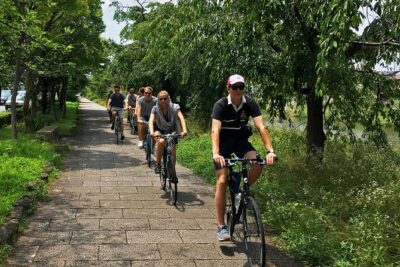
You should still arrive ready to ride. The route is described as relaxed, but it is not a short spin around one neighborhood. One rider reported cycling more than 15 kilometers. That makes comfortable clothing, proper shoes, sunscreen, and weather-appropriate layers sensible choices.
More Half-Day Rides in Kyoto:
- Red Rock Canyon eBike Half-Day Tour
★ 5.0 · 1,870 reviews - Lisbon: 7 Hills Half-Day Electric Bike Tour
★ 4.9 · 1,592 reviews - Ubud: Rice Terraces & Villages Half-Day Fat Tire E-Bike Tour
★ 4.9 · 602 reviews
From Cycle Kyoto to Toji Temple
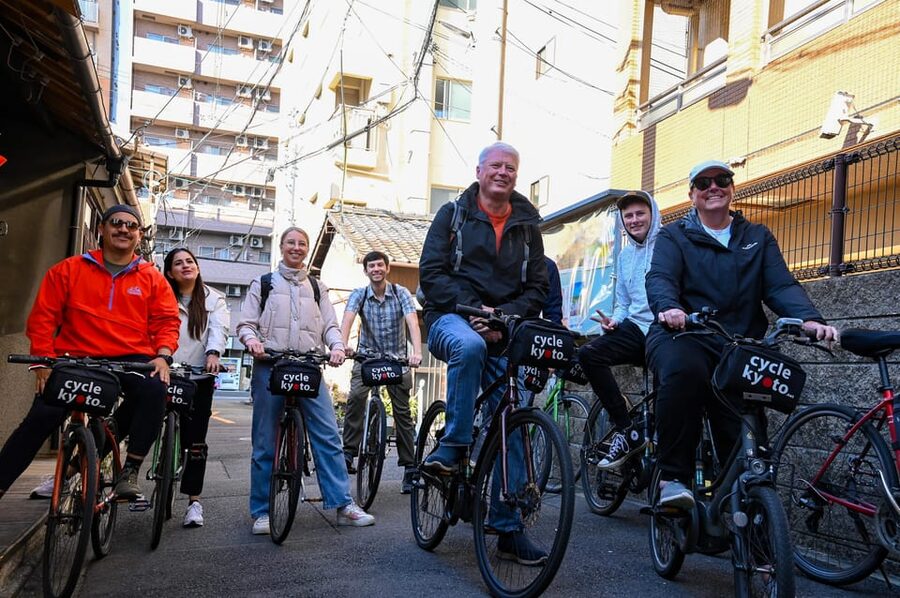
The meeting point is at Cycle Kyoto, near Kyoto JR Station. From the station, go past Avanti, cross one set of traffic lights, pass the Daily Yamazaki convenience store, and take the next left. It is worth allowing a little extra time to find the shop, especially if you are unfamiliar with the station area.
The tour begins with a 15-minute safety briefing. This is useful, not filler. You will get settled on the bicycle, learn how the ride will work, and make sure your helmet and bike fit properly. Different bike sizes are available, and a small pouch on the bicycle holds personal items.
The first proper stop is Toji, described as Kyoto’s oldest temple and recognized as a UNESCO heritage site. The 35-minute guided visit gives you time to look around while your guide explains the place and its role in the city.
Toji is a strong opening stop because it immediately gives the ride a sense of scale. You are not simply pedaling from one attraction to the next. You begin with one of Kyoto’s major Buddhist sites, then continue through the city in a way that connects its religious buildings with ordinary streets.
Higashi-Honganji and Kyoto’s Temple District
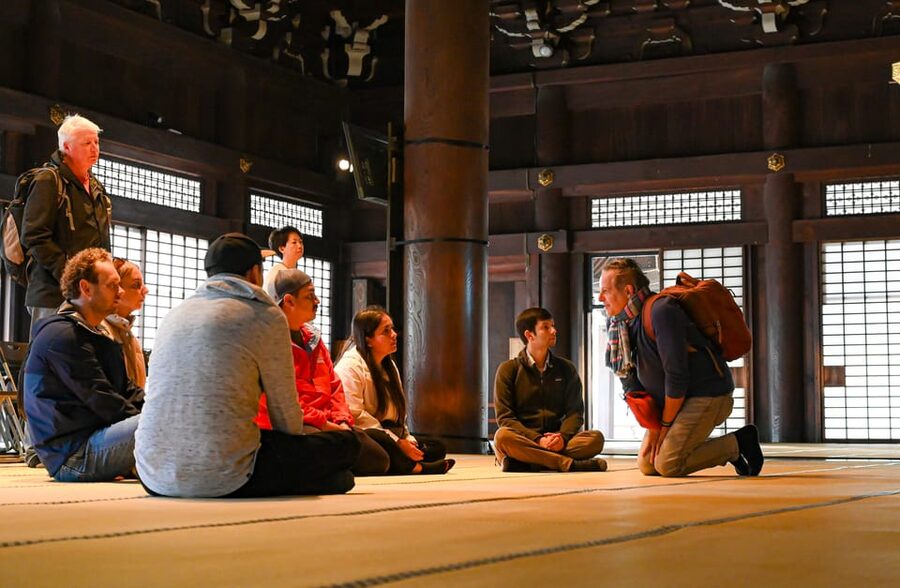
Next comes Higashi-Honganji, one of Japan’s largest temples. The scheduled visit lasts 35 minutes, enough for a guided look without letting the first half of the tour swallow the whole morning or afternoon.
This stop works well after Toji because it shows another side of Kyoto’s temple culture. The focus is not only on picturesque gardens or small lanes. Large working temple complexes are part of the city too, and a guide can explain details that are easy to miss when you walk through on your own.
I would pay attention to the guide’s explanations here rather than rushing for photographs. The tour is designed around short visits at several locations, so you will not have unlimited time at each temple. If you prefer a long, quiet visit at one site, a bicycle tour may feel too brisk.
Following the Takase Canal and Kamo River
The route then leaves the temple district and follows the Takase Canal for about 10 minutes before reaching the Kamo River, where the scheduled visit lasts 15 minutes. These short stops are valuable because they break up the temple visits and show how Kyoto’s waterways shape the city.
Cycling beside water also gives you a change of pace. You get a chance to ride rather than listen, and the route can feel more local than a straight line between famous gates and temple entrances. The guide may point out details along the way, but the supplied schedule treats these as brief visits, not long walking tours.
The Kamo River portion is also a reminder that this is a city tour, not only a shrine tour. You see Kyoto through its public spaces, waterways, neighborhoods, and transportation routes. That broader view is one of the better reasons to choose a bicycle instead of simply booking separate entries to temples.
More Guided Rides in Kyoto:
- Kyoto: Hidden Gems E-Bike Tour with Local Japanese Guide
★ 4.9 · 189 reviews - 3-Hour Porto Highlights on a Electric Bike Guided Tour
★ 5.0 · 4,392 reviews - Small Group Guided Bike Tour of Amsterdam’s Hidden Gems
★ 5.0 · 3,936 reviews - Porto: City Highlights 3-Hour Guided Electric Bike Tour
★ 4.8 · 3,092 reviews
Gion by Back Street
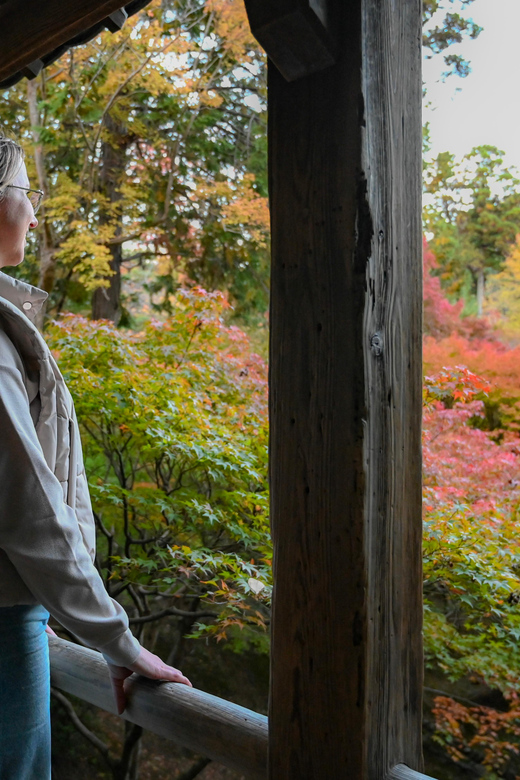
The ride continues into Gion, Kyoto’s famous geisha and teahouse district. The guided portion lasts about 30 minutes, and the route emphasizes backstreets rather than only the best-known main roads.
Gion is a place where a guide helps. The district has a delicate atmosphere, and cycling through its quieter lanes requires attention to pedestrians, buildings, and local activity. You should follow the guide’s lead and avoid treating the area like a film set. The appeal is in seeing the traditional streetscape respectfully, not in chasing a staged encounter.
This is one of the tour’s strongest contrasts. You begin with major temples, then move through river corridors and into an older neighborhood. The bicycle makes that transition feel natural, while a large vehicle would have less access to the narrow streets.
The small group is especially useful here. Eight riders is still a group, so you must stay aware of others, but it is far more manageable than a large procession of bicycles. The route is not presented as a private tour, and the exact group size can vary below the eight-person limit.
Tofukuji Temple and a Photo Break
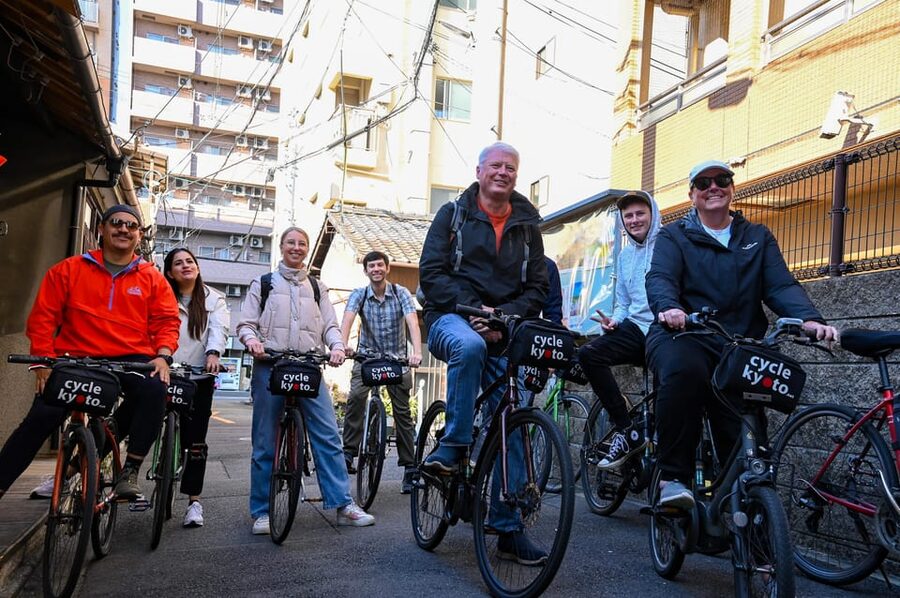
Tofukuji comes next, with roughly 30 minutes set aside for a photo stop. This is not framed as a full guided temple visit, so adjust your expectations. You will have time to take pictures and appreciate the setting, but the tour keeps moving toward Fushimi Inari.
Tofukuji is well placed on this route. It gives you another temple atmosphere after the urban streets of Gion, but it does not require a long detour. The photo stop also gives your legs a break before the final ride.
This portion may feel short if you are especially interested in temple architecture or photography. You will need to be selective. Take the pictures you want, listen for the guide’s useful context, and avoid assuming you can explore every corner.
Fushimi Inari and the Orange Torii Gates
The final major stop is Fushimi Inari Taisha, with about 45 minutes for a guided visit. This is the longest scheduled stop and the natural climax of the route.
Fushimi Inari is known for its long corridors of orange torii gates. The tour includes a stroll around the gates rather than simply cycling up, which is important because bicycles do not replace the walking portion here. You get a taste of the shrine’s atmosphere while still keeping the day within a half-day format.
The advantage of visiting Fushimi Inari by bike is practical. You do not need to arrange a separate trip from central Kyoto, and the shrine arrives as part of a connected South Kyoto route. The limitation is just as clear: 45 minutes is not enough to walk the entire mountain trail. If your main goal is to climb deep into the forest and spend hours on the shrine paths, you should plan a separate visit.
Still, as the final stop, Fushimi Inari works very well. After temples, canals, river paths, Gion lanes, and local streets, the torii gates provide a strong visual finish. From there, you ride back to Cycle Kyoto.
What the Three and a Half Hours Feel Like
The listed duration is 210 minutes, including the safety briefing and stops. The schedule adds up tightly: 15 minutes for safety, 35 at Toji, 35 at Higashi-Honganji, 10 by the Takase River, 15 by the Kamo River, 30 in Gion, 30 at Tofukuji, and 45 at Fushimi Inari.
That structure gives you a good overview, but it also means the tour is not leisurely at every stop. The word relaxed refers more to the riding style than to unlimited time at each attraction. You should expect a steady half-day with regular pauses.
Guides can make a difference. Jay was praised for making the morning memorable and helping everyone feel comfortable. Julian was described as easygoing and able to keep the tour enjoyable in poor weather. Indra was noted for answering questions and sharing local information. Sean adjusted the pace and time at stops for a very small group, while Juan was patient and full of useful detail. Mayco was also praised for guiding and explaining the sights.
Those names do not guarantee who will lead your departure, but they show the kind of guide-led experience the company aims to provide. The guide is the main reason to choose this tour over renting a bicycle alone.
Bikes, E-Bikes, and Physical Demands
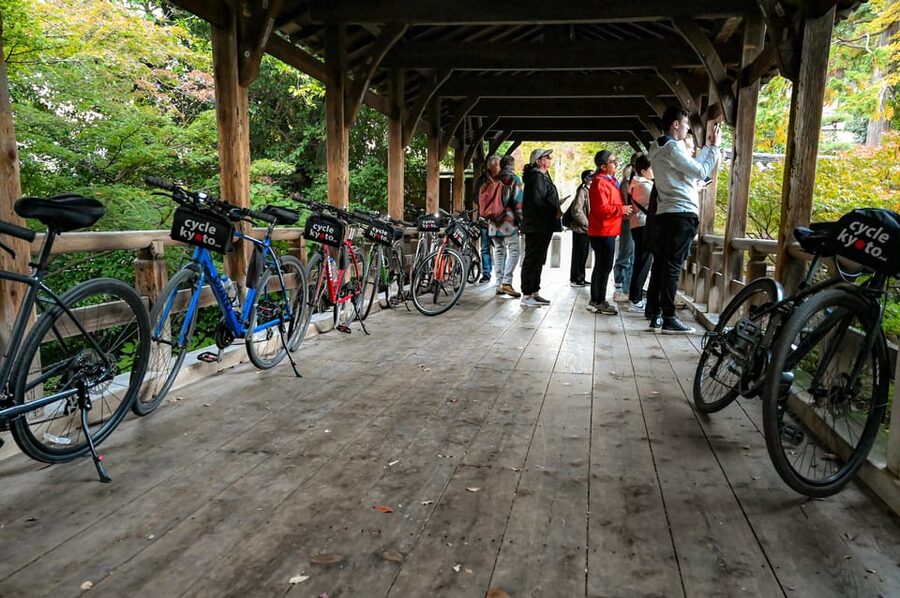
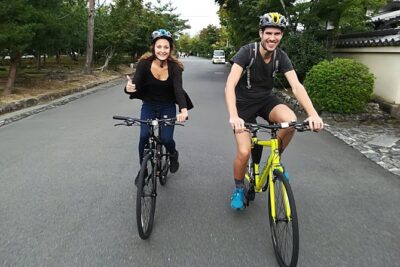
The rental includes a bicycle, helmet, water, and a small storage pouch. Different sizes and helmets are available, and the bikes have been described as being in good condition. That removes several small hassles you would face with an independent rental.
You must be able to ride a bicycle and handle city streets. The tour is not suitable for children under 13, people with back problems, or anyone who cannot ride. The minimum age for a public tour is 13.
An e-bike is available on request for an extra ¥3,000. This can make sense if you are concerned about distance, hills, heat, or keeping up with the group. It is best treated as an upgrade to request before the tour rather than something to assume will be available at the last moment.
Wear clothes that allow easy movement. Comfortable shoes matter because the tour includes walking at temples and Fushimi Inari. Check the weather before leaving, bring sunscreen, and add warm layers in cooler weather. The tour runs in poor weather when conditions allow, but heavy rain or other bad conditions can change how enjoyable the ride feels.
Who Gets the Best Value
I would recommend this ride to a first-time Kyoto visitor who wants an organized introduction to the southern part of the city. It suits you if you enjoy moving at a moderate pace, want a guide to explain cultural details, and prefer seeing several areas in one outing.
It is also a good choice if you like the idea of cycling through ordinary streets rather than visiting only the biggest gates and halls. The Takase Canal, Kamo River, Gion backstreets, and local neighborhoods give the day a wider feel.
You may want another plan if you dislike group timing, have mobility or back concerns, or want long visits at each temple. Fushimi Inari alone can fill much of a day if you plan to walk far up the mountain, while this tour gives you a shorter introduction alongside six other stops.
The tour is conducted in English, and the small group format makes it a practical choice for people who want conversation with a guide without booking a private outing. Meals are not included, so plan to eat before or after the ride.
Should You Book This Kyoto Bike Tour?
Book it if you want a well-planned half-day route through South Kyoto, especially if Toji, Gion, Tofukuji, and Fushimi Inari are all on your list. The $77 price is fair for the bicycle, equipment, guide, water, and efficient route, provided you value context and convenience.
Skip it if you want a slow temple day, a full Fushimi Inari hike, or a completely private schedule. For confident cyclists who want to see Kyoto from street level, this is one of the better ways to connect famous sights with the quieter spaces between them.
FAQ
How long does the Kyoto bike tour last?
The tour lasts 210 minutes, or three and a half hours. This includes a 15-minute safety briefing, guided visits, riding time, and the return to Cycle Kyoto.
What places does the tour visit?
The route includes Toji, Higashi-Honganji Temple, the Takase River, the Kamo River, Gion, Tofukuji Temple, and Fushimi Inari Taisha.
Is the tour conducted in English?
Yes. The tour has a live English-speaking guide.
What is included in the price?
The tour includes bicycle rental, a helmet, a guide, and water. Meals are not included.
Can I use an e-bike?
Yes. E-bikes are available upon request for an additional fee of ¥3,000.
What is the minimum age for the public tour?
The minimum age is 13. The tour is not suitable for children under 13, people with back problems, or people who cannot ride a bicycle.
New cycling reviews around Kyoto
- Best of Kyoto: Ginkakuji & Path of Philosophy E-Bike Tour★ 4.9 · 79 reviews
- Kyoto: Tailored E-Bike Tour to Highlights & Hidden Gems★ 4.9 · 32 reviews
- Kyoto: Full-Day City Highlights Bike Tour with Light Lunch★ 5.0 · 52 reviews
- Kyoto: Full Day Bike Tour★ 4.9 · 39 reviews
- Kyoto: Early Bird E-Bike Tour with Lunch★ 5.0 · 14 reviews
- Cycle Kyoto’s Hidden Gems & Gion Stroll★ 5.0 · 29 reviews
- Kyoto: Arashiyama Bamboo Forest Morning Tour by Bike★ 5.0 · 115 reviews
- Kyoto: Afternoon Bamboo Forest and Monkey Park Bike Tour★ 4.9 · 83 reviews
Kyoto Cycling Tours, compared.
Arashiyama Bamboo Forest & Hidden Gems Bike Tour (Early Bird)
Read our review →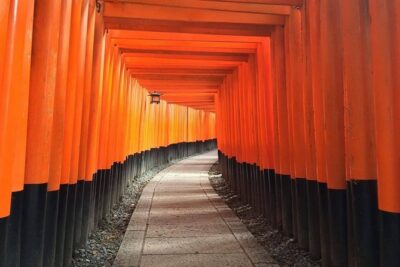
5 Top Highlights of Kyoto Full Day Bike Tour (E-bike option)
Read our review →
Full Day Biking Tour Exploring the Best of Kyoto
Read our review →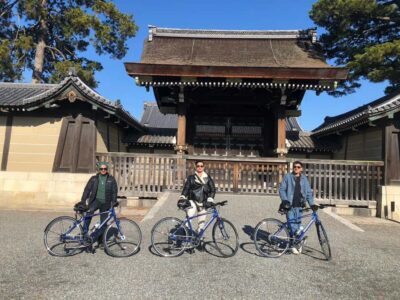
Browse the lists this ride appears in