
Review · KYOTO
Hidden Kyoto E-Biking tour
Kyoto’s best moments are often found between the famous temples. This small-group e-bike tour links Kinkakuji and Kitano Tenmangu with quiet lanes, lesser-known temple grounds, Zen gardens, and a charming tea stop. You cover roughly 7 to 8 kilometers without wearing yourself out on Kyoto’s hills.
I like two things here: the bikes make the route easy for most riders over 13, and the guides bring real personality to the ride. Yuta is especially good at explaining Zen Buddhism, temple etiquette, geisha culture, and Japanese history, while Michael, Sean, Henry, and Shizuka have also led memorable outings. The main consideration is that some guides talk at length, so this suits you best if you enjoy stories as much as sightseeing.
Key points at a glance
- Quiet northern Kyoto route: Ride backstreets and peaceful lanes away from the busiest sightseeing areas.
- Five worthwhile stops: See Kinkakuji, Daitokuji, Kitano Tenmangu, Koto-in, and Zuihoin.
- E-bikes handle the hills: The pedal-assist bikes make slopes and warm weather far more manageable.
- Small groups of up to eight: The format allows guides to watch the group and answer questions.
- Culture beyond photographs: Expect explanations of Shinto, Buddhism, Zen, geisha traditions, and temple manners.
- A memorable tea pause: The route can include sweets and tea at a long-established local spot with a remarkable family story.
Why this is a smart way to see northern Kyoto
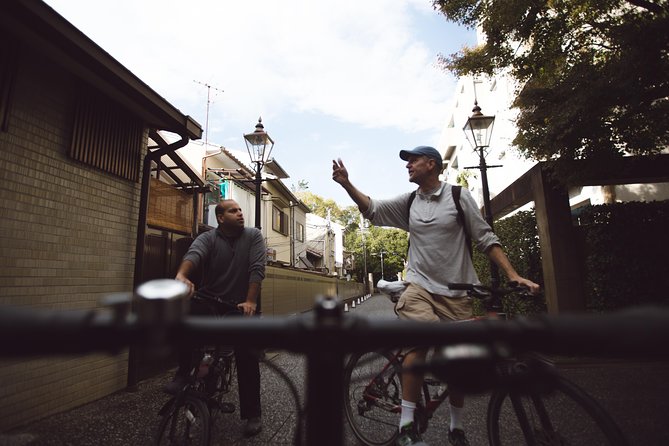
Most first-time visitors see Kyoto on foot, by bus, or by train. That works well for major sights, but it can leave you staring at crowded roads and spending too much time getting from one temple to the next.
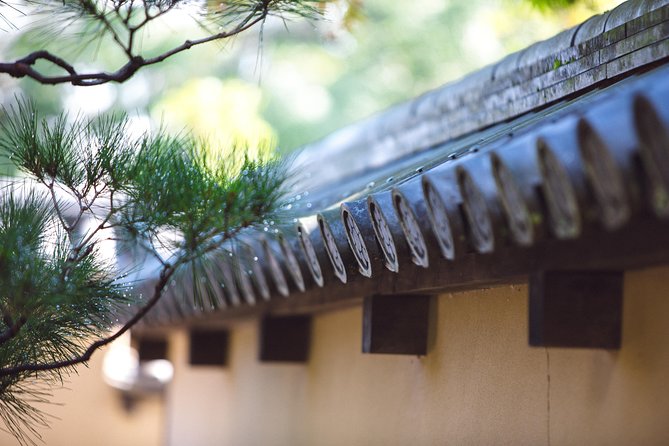
This ride gives you a better sense of how Kyoto fits together. You pedal between major sights through ordinary residential streets, quiet temple neighborhoods, and lanes where the pace feels much slower. The bike itself becomes part of the sightseeing. You see tiled roofs, small gardens, wooden homes, and everyday corners that are easy to miss from a bus window.
The route is short enough to feel manageable, yet long enough to connect several distinct places. The published distance varies slightly, with the ride described as about 7 kilometers in one place and 8 kilometers in another. Either way, expect a half-day outing rather than a serious cycling challenge.
The group is limited to eight people, which matters. A guide can keep an eye on less confident riders, pause for questions, and adjust the pace more easily than a large coach tour. The minimum age is 13, making this a good option for families with older children and teenagers who would rather move than stand in temple queues.
More E-Bike Tours in Japan
- 5 Top Highlights of Kyoto Full Day Bike Tour (E-bike option)
★ 5.0 · 511 reviews - Kyoto: Memory Kyoto E-Bike Tour
★ 4.8 · 297 reviews - E-Bike Tours of the highlights of Kyoto!!!
★ 5.0 · 291 reviews
Starting at NORU and learning the e-bikes
You meet at NORU Kyoto Bike Tours at 429-22 Takigahanachō in Kamigyo Ward. The shop is near public transportation, and you should arrive at least 15 minutes before departure. The listed start times are 8:30 a.m., 9 a.m., 12:30 p.m., and 1 p.m.
The outing begins with bike and helmet fitting. The foldable rental bikes have electric assistance, so you do not need to be a strong cyclist. Several riders who had not been on a bike for years managed the route, and the pedal assist is especially helpful on slopes and on warm, humid days.
Still, do not mistake e-bikes for motor scooters. You need to be comfortable balancing, braking, turning, and riding on city streets. The tour is described as easy and safe, but Kyoto is still a real city. Listen closely during the bike briefing, keep your attention on the road, and tell the guide if you are uncertain.
Water is included. Food and drinks are not, so eat beforehand if you choose an early start. A morning departure is likely the most comfortable choice in hot weather and gives you more time afterward for lunch or another sight.
Kinkakuji: the famous first stop
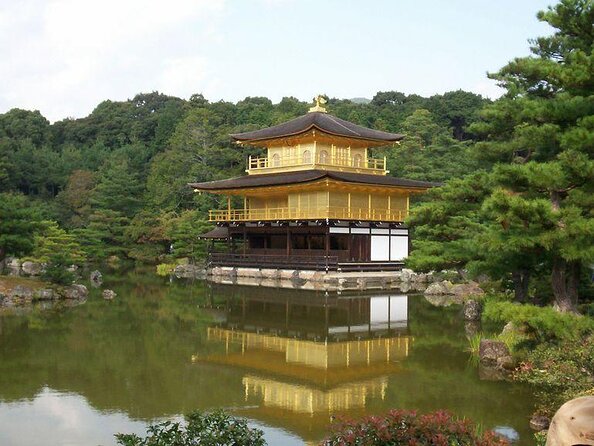
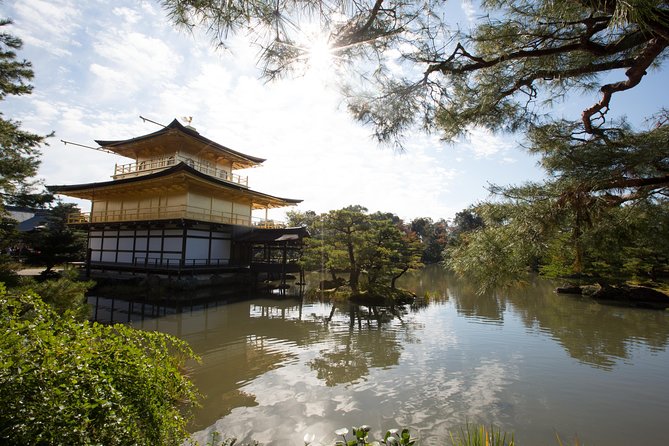
Kinkakuji, the Golden Pavilion, is the route’s most recognizable sight. Its gold-covered upper stories reflect across the pond, making it one of Kyoto’s most photographed temples and one of the few places on this ride where you should expect a stronger tourist presence.
That contrast is useful. You get the classic Kyoto image, then move quickly into quieter territory instead of spending the whole morning among the city’s most crowded attractions. The guide can also give the pavilion more context than a quick photograph allows, explaining the religious setting and the place of the temple within Kyoto’s long Buddhist tradition.
The drawback is simple: Kinkakuji is not a secret. If your ideal tour avoids all major sights, this stop may feel too familiar. I see it as a good opening note, because it gives you one essential Kyoto landmark before the ride turns toward less-visited places.
Daitokuji: a temple complex with room to breathe
Daitokuji is not one single building but a broad temple complex with a number of subtemples. That layout makes it feel different from a standard stop where you enter one gate, view one main hall, and leave.
The area is known for Zen connections, and this is where a guide like Yuta can add real value. He has been praised for explaining Zen teachings in a clear way, along with the difference between Shinto and Buddhism and the proper conduct at religious sites. You get more than architectural labels. You learn how to look at the spaces and how to behave in them.
Not every part of a large temple complex is necessarily open at every moment, and the tour details do not promise entry to every subtemple. Treat Daitokuji as a chance to understand a wider religious district rather than a guarantee of seeing every interior.
More E-Bike Tours in Kyoto
- Kyoto: City Secrets eBike Tour
★ 4.9 · 196 reviews - Kyoto: Hidden Gems E-Bike Tour with Local Japanese Guide
★ 4.9 · 189 reviews - Historical Kyoto E-Bike Tour
★ 5.0 · 181 reviews - Best of Kyoto: Ginkakuji & Path of Philosophy E-Bike Tour
★ 4.9 · 79 reviews
Kitano Tenmangu and the everyday side of Kyoto
Kitano Tenmangu is a major Shinto shrine dedicated to Sugawara no Michizane, a scholar and political figure associated with learning. The shrine gives you a change of mood after the Buddhist sites, with Shinto architecture, gates, grounds, and rituals presented in a different setting.
This is one of the stops where cultural explanation matters. Guides have covered Shinto customs, temple and shrine etiquette, and the differences between the two traditions. Those details help you recognize why people bow, where to wash, and how a shrine visit differs from a temple visit.
The area around Kitano Tenmangu also helps the route feel local. You are not simply collecting famous names. You are moving through a northern Kyoto neighborhood and seeing how religious sites sit alongside regular streets and homes.
Koto-in and Zuihoin: quieter Zen spaces
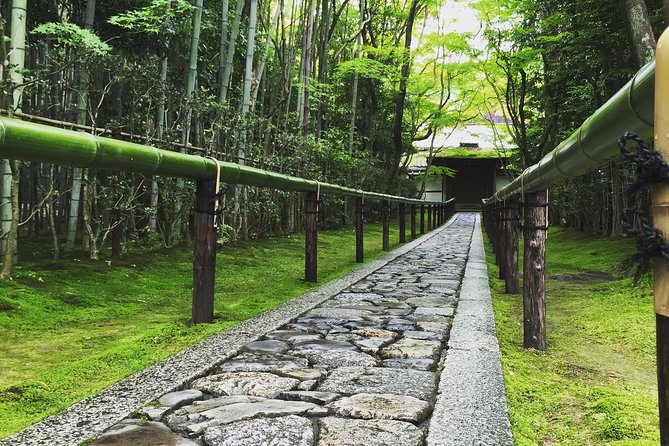
Koto-in is one of the tour’s more intimate stops. Its appeal lies in its calm setting and restrained design rather than in one enormous landmark. This is the sort of place that can disappear from a rushed Kyoto schedule, yet it may become one of the morning’s most memorable pauses.
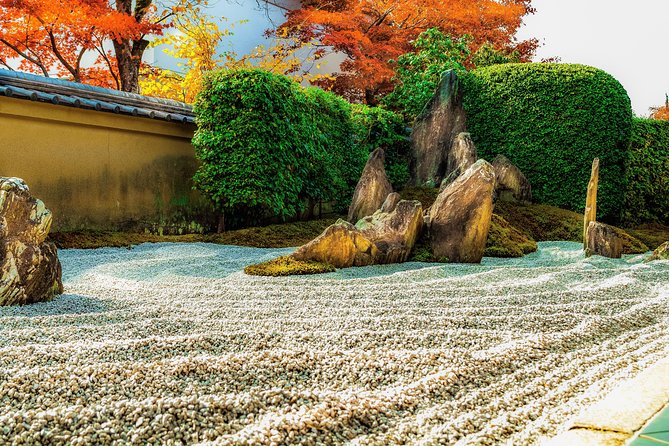
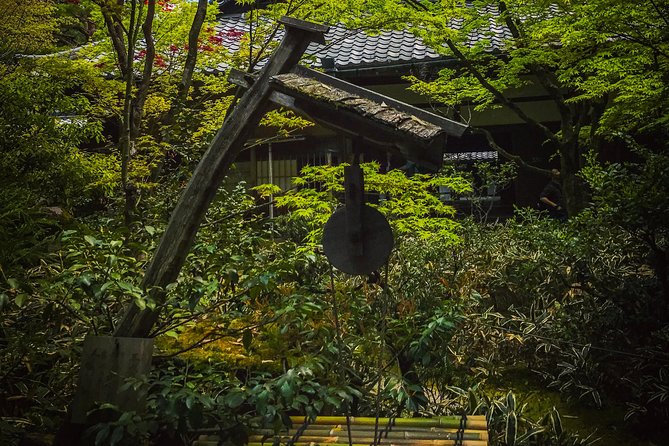
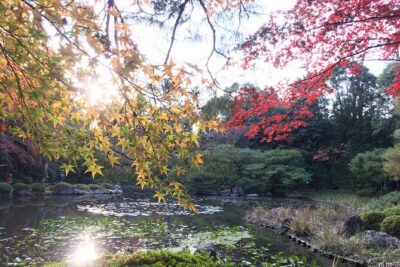
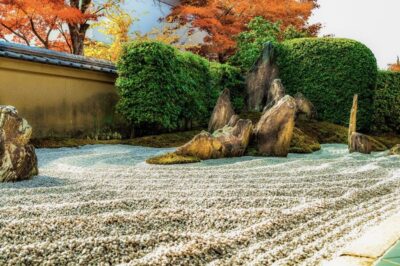
Zuihoin offers another look at Zen temple design. The tour gives you time to slow down and consider gardens, lines, rocks, and empty space. You do not need to be a Zen scholar to appreciate the quiet. A guide can point out how these spaces are meant to be viewed and why simplicity is not the same as lack of detail.
Access and opening conditions can vary at religious sites, so the precise time spent at each stop may change. The broader promise is a mixture of famous and lesser-known Kyoto, with the quieter Zen locations providing a welcome break from Kinkakuji’s crowds.
Backstreets, slopes, and the pleasure of moving slowly
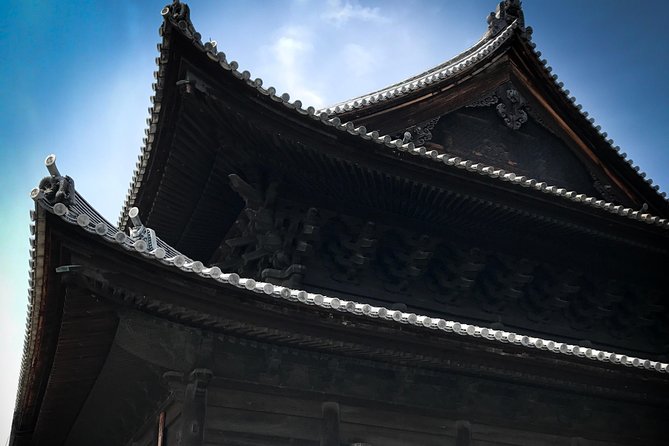
The ride between stops is not filler. It is one of the strongest parts of the experience. You pass through side streets and less hectic parts of Kyoto, with the guide leading the group through a route that avoids the main tourist flow where possible.
The e-bikes matter most here. Northern Kyoto has slopes, and some riders specifically appreciated the assistance on steep hills. You still pedal, but the motor reduces the effort and lets you pay attention to the surroundings instead of counting down the minutes until the next stop.
There are also descents. One rider in her 60s found the route very manageable but noted some fairly steep downhill sections. If you are nervous on a bicycle, say so at the start. The guides have been described as patient and attentive, with some staying close to less confident riders.
Rain is another practical issue. The tour can run in drizzle, and guides may have rain equipment available, but you should bring your own raincoat or poncho and weatherproof gloves if rain is expected. Wet streets, slippery surfaces, and reduced visibility can make cycling less pleasant even when the outing continues.
The tea stop and the human stories
A tea and sweets stop gives the route a more personal feel. One especially memorable stop has been described as a place with more than 1,000 years of history and 28 generations of family stewardship. That kind of detail turns a refreshment break into a lesson about continuity and local craft.
The tea stop is not listed as a separate included meal, so you should not plan on it replacing lunch. Food and drinks are generally not included unless specified. Think of it as a small cultural pause rather than a full dining experience.
This is also where the guide’s style can shape the tour. Yuta has been praised for connecting tea, Zen, manners, and daily life. Sean has been good at offering food recommendations after the ride, including Kyoto-style ramen, udon, and other local choices. Ask for suggestions at the end if you are deciding where to eat next.
The guides make the difference
The experience is not built around a single named guide every day. Yuta, Michael, Sean, Henry, and Shizuka have all led tours, and their styles differ.
Yuta is a strong choice if you want cultural context. His talks have covered Zen Buddhism, Shinto, geisha and maiko traditions, samurai history, temple etiquette, and everyday customs. His English has been described as clear, and he appears to enjoy answering questions rather than simply reciting facts.
Michael brings an engaging storytelling style, with a background in Japanese history teaching. Sean is noted for being clear, kind, funny, and well prepared for rain and cooler weather. Henry has spent 15 years in Japan and is especially good at explaining local culture. Shizuka has led small groups through temples, gardens, backstreets, and hillier sections of the ride.
There is one fair criticism to keep in mind. One outing included more history talk than a participant wanted, with too much time standing or sitting and not enough time exploring. If you prefer quick explanations and constant motion, tell the guide early. If you enjoy a thoughtful conversation at each stop, the longer storytelling may be exactly what you want.
What the $116 price really buys you
At $116 per person, this is not the cheapest way to see Kyoto. You can visit many temples independently for far less, and public transportation remains useful for covering longer distances.
The value comes from the combination. Your fee covers the e-bike, helmet, water, English-speaking route coordinator, route planning, and a small group. You also avoid spending time figuring out which quiet roads connect the temples. Most important, you receive cultural context that is difficult to get from a sign or guidebook alone.
For me, the strongest value is the time saved and the energy preserved. You see several places in less than four hours, including sights that are not as easy to connect on foot. You also get an orientation to northern Kyoto, which can help you make smarter choices for the rest of your stay.
The price makes less sense if you already know the area, dislike guided explanations, or want to stop for long periods at every temple. It is best for someone who values a planned route, active sightseeing, and a guide who can explain what you are seeing.
Who should book this ride?
I would recommend it to first-time Kyoto visitors who want a broad introduction without spending a day on crowded buses. It is also a fine choice for repeat visitors who have already seen Fushimi Inari, Arashiyama, or the central sights and now want a calmer side of the city.
Families with children aged 13 and older can enjoy it, provided everyone can ride a bicycle. It suits couples, friends, and solo visitors who like small groups and conversation. The ride is not limited to elite cyclists, but you should be honest about your comfort level before booking.
I would hesitate if you cannot ride a bicycle, are uncomfortable with hills, or want a fully passive sightseeing experience. The tour does not refund guests who choose not to participate or cannot ride, so this is not the activity to book as a hopeful experiment.
Cancellation is free up to 24 hours before the start time. Late cancellations, missed departures, and changes inside that 24-hour window are not refunded or accepted. The tour depends on suitable weather and a minimum number of participants, so a cancellation by the operator can lead to another date or a full refund.
Should you book the Hidden Kyoto E-Biking tour?
Book it if you want Kyoto to feel like a real city rather than a string of famous photo stops. The e-bikes make the hills manageable, the small group keeps the ride personal, and the route combines Kinkakuji with quieter temples, shrines, gardens, and neighborhood streets.
Choose a morning departure for cooler conditions and a full afternoon afterward. Arrive early, bring weather gear, and expect both riding and listening. If your idea of a good tour includes a patient guide, thoughtful cultural stories, and a few peaceful places away from the crowds, this is a strong use of half a day in Kyoto.
FAQ
How long does the Hidden Kyoto E-Biking tour last?
The tour lasts approximately 3 hours and 45 minutes.
How far do you ride?
The route covers approximately 7 to 8 kilometers, or about 4.3 to 4.9 miles, depending on how the distance is described.
What sights are included?
The route includes Kinkakuji Temple, Daitokuji Temple Complex, Kitano Tenmangu Shrine, Koto-in, and Zuihoin.
Is the bike included?
Yes. A rental bike and helmet are included, along with water.
What age do you need to be?
The minimum age is 13.
How many people can join the tour?
The maximum group size is eight participants.
Where does the tour start and finish?
It starts and ends at NORU Kyoto Bike Tours, 429-22 Takigahanachō, Kamigyo Ward, Kyoto.
What departure times are available?
Listed departure times are 8:30 a.m., 9 a.m., 12:30 p.m., and 1 p.m. You must arrive 15 minutes before departure.
What happens if the weather is poor?
The experience requires good weather. If it is canceled because of poor weather, you can choose another date or receive a full refund.
New cycling reviews around Kyoto
- Best of Kyoto: Ginkakuji & Path of Philosophy E-Bike Tour★ 4.9 · 79 reviews
- Kyoto: Tailored E-Bike Tour to Highlights & Hidden Gems★ 4.9 · 32 reviews
- Kyoto: Half-day Guided Bike Tour with Fushimi Inari★ 4.9 · 21 reviews
- Kyoto: Full-Day City Highlights Bike Tour with Light Lunch★ 5.0 · 52 reviews
- Kyoto: Full Day Bike Tour★ 4.9 · 39 reviews
- Kyoto: Early Bird E-Bike Tour with Lunch★ 5.0 · 14 reviews
- Cycle Kyoto’s Hidden Gems & Gion Stroll★ 5.0 · 29 reviews
- Kyoto: Arashiyama Bamboo Forest Morning Tour by Bike★ 5.0 · 115 reviews
Kyoto Cycling Tours, compared.
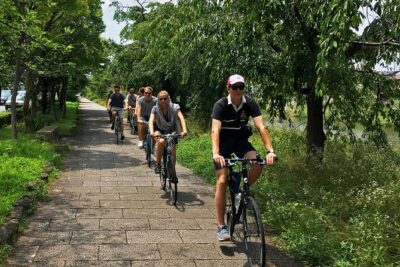
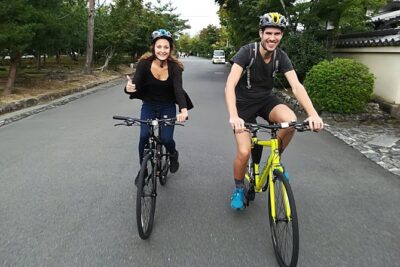
Arashiyama Bamboo Forest & Hidden Gems Bike Tour (Early Bird)
Read our review →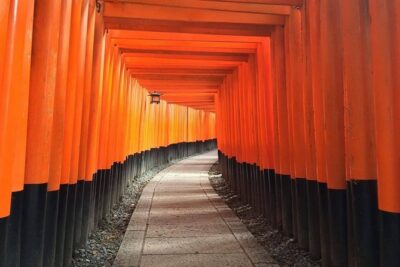
5 Top Highlights of Kyoto Full Day Bike Tour (E-bike option)
Read our review →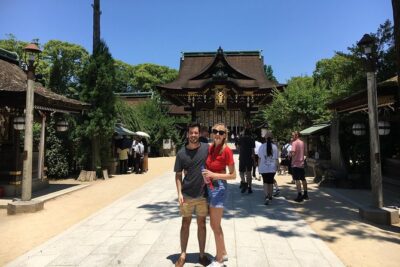
Full Day Biking Tour Exploring the Best of Kyoto
Read our review →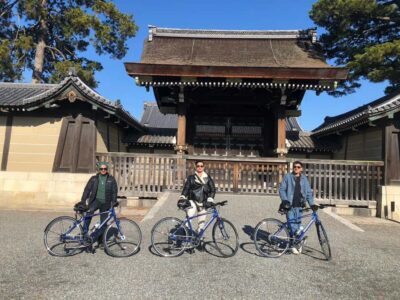
Kyoto: Hidden Gems E-Bike Tour with Local Japanese Guide
Read our review →Browse the lists this ride appears in