
Review · TOKYO
Tokyo: 3-Hour Bike or E-Bike Tour of City’s Hidden Gems
Tokyo reveals itself differently from a bicycle seat. In three hours, you move from the temple grounds around Zojo-ji to the Imperial Palace, Akasaka, Aoyama, and Shibuya. I like the range: old Tokyo and new Tokyo in one ride, with time to stop for photos and short walks. I also like the small-group feel and the chance to hear local stories from guides such as Shin, Casey, Naoki, and Marika.
The main catch is that this is an active sightseeing tour, not a gentle roll around one neighborhood. You cover a fair distance, and one rider called it a workout. Bring water and choose the e-bike if you rarely cycle or are unsure about your stamina. Helmets cost an extra ¥1,000 in cash, so plan for that before you set off.
Key points at a glance
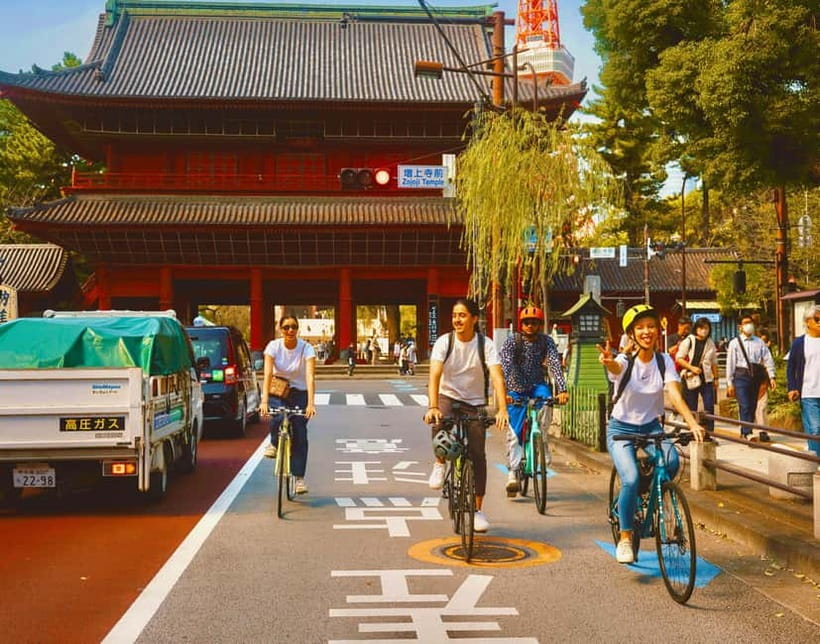
- A three-hour cross-town route: Ride from the Shiba area through central Tokyo to Shibuya, covering far more ground than you could on foot.
- Quality Bianchi and Fuji bicycles: The cross bikes and road bikes are suited to city riding, with an e-bike option for riders who want assistance.
- A strong mix of landmarks: Zojo-ji, the Imperial Palace, Ote-mon Gate, Akasaka Palace, the National Stadium, and Shibuya Crossing all appear on the route.
- Short stops keep the ride moving: Most sightseeing pauses last between three and 15 minutes, so expect snapshots and explanations rather than long visits inside sites.
- English-speaking local guides: Guides including Shin, Casey, Naoki, Marika, Miguel, and KG have been praised for explaining history, taking photos, and watching the group in traffic.
- Useful planning detail: Meet near the Statue of Commodore Perry, three minutes from Daimon Station’s A6 exit, and carry ¥1,000 cash if you want a helmet.
Why a bicycle is a smart way to see Tokyo
Tokyo is too large for a satisfying first look on foot, yet the train can make the city feel like a series of disconnected stations. This ride links those pieces. You get the speed of a train, but you can stop beside a gate, temple, park, or street corner when something catches your eye.
The route also gives you a useful contrast. Zojo-ji and the Imperial Palace area show formal, historic Tokyo. Aoyama, Cat Street, Miyashita Park, and Shibuya bring you into the city’s modern side. You are not simply ticking off famous sights. You are watching Tokyo change block by block.
I especially like the format for a first or second day in the city. The guide gives you a working map of central Tokyo, and you can return later to the places that deserve more time. The stops are brief, so you should not book this expecting a full temple visit or a long wander through every neighborhood.
More E-Bike Tours in Japan
- Hidden Kyoto E-Biking tour
★ 5.0 · 1,843 reviews - Tokyo Top Highlights 3h Guided E-bike Tour
★ 5.0 · 714 reviews - 3h Tokyo E-Bike Tour: Hidden Gems, and Local Life with guide
★ 5.0 · 670 reviews
Starting near Commodore Perry’s statue
The meeting point is around the Statue of Commodore Perry, a short walk from Daimon Station’s A6 exit. This is an important practical detail because one person found the meeting place difficult to locate. Give yourself extra time, and look around the statue area for the guide rather than assuming the bicycle shop itself will be obvious.
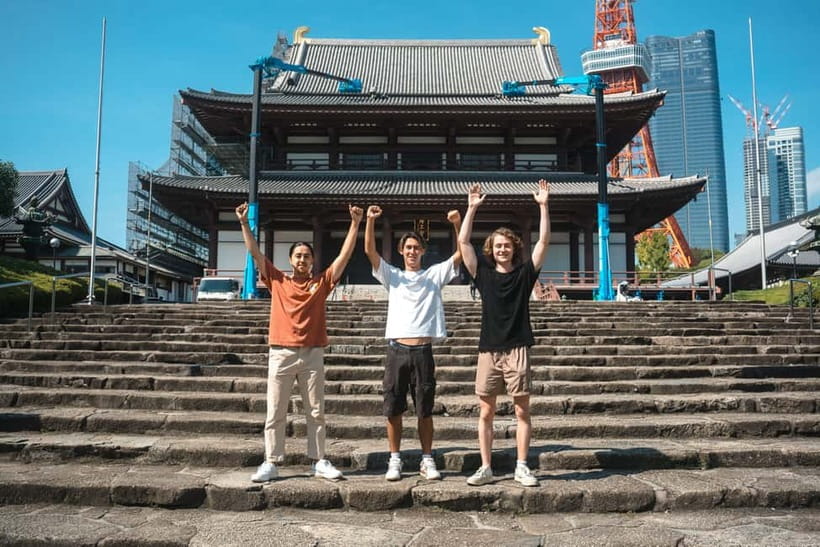
The location puts you close to Tokyo Tower and Zojo-ji, which gives the opening section a strong sense of place. After introductions and bike setup, you begin in the Shiba area, where the city’s modern office blocks sit beside major religious and historic sites.
The bikes are a real part of the appeal. You can ride a Bianchi or Fuji road or cross bike, with an e-bike available for riders who do not cycle often. A good bicycle matters in Tokyo because the route includes extended riding between stops, not just a few minutes of pedaling for show.
Zojo-ji: Tokyo’s calm opening scene
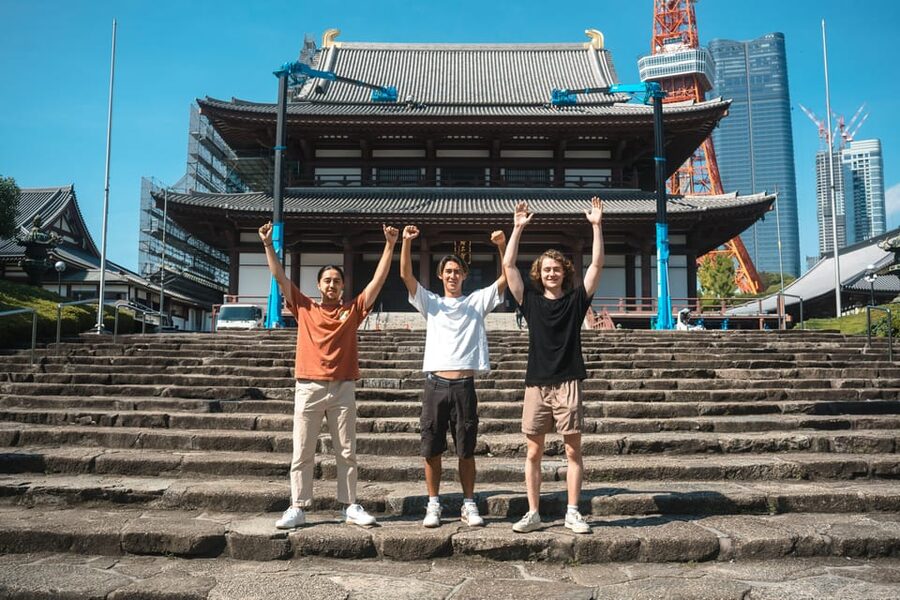
Zojo-ji is one of the most rewarding early stops. The temple has a broad, formal approach and a strong connection with the Tokugawa shoguns. You receive about 15 minutes for a guided look and photos.
That is enough time to get the setting and hear the basic story, but not enough for a slow visit through every corner. If you want a detailed temple experience, return on your own later. On the bike tour, the value comes from seeing Zojo-ji as part of a larger picture, with Tokyo Tower and the surrounding city close at hand.
This is also where the ride makes its best early point: Tokyo is not divided neatly into old and new. Historic religious buildings can sit beside glass towers, and the bicycle lets you appreciate that contrast at street level.
Imperial Palace and Ote-mon Gate
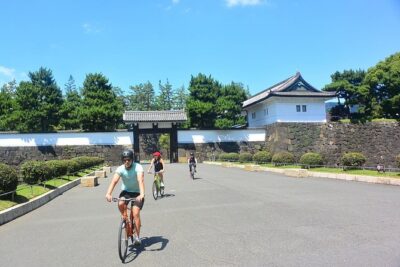
The route continues toward the Tokyo Imperial Palace, with about 10 minutes for a guided stop. You should think of this as an introduction to the palace grounds and their setting, not an entrance tour. The itinerary includes a separate five-minute photo stop at Ote-mon Gate.
Ote-mon is one of the palace’s major gates, and its stonework and scale give you a clearer sense of the defensive character of the old castle site. The short pause works well for photographs and orientation. It does not leave time for a long walk through the gardens.
This section is useful if you want some imperial and feudal context without spending half a day at palace-related sites. The guide can connect the gate, the palace district, and the wider story of Tokyo’s development. Then you are back on the bicycle, rather than waiting for the next train.
More E-Bike Tours in Tokyo
- Tokyo: 3-Hour Bike or E-Bike City Highlights Tour
★ 4.8 · 435 reviews - Tokyo: 3-hour Guided E-Bike Tour of the City’s Hidden Gems
★ 4.8 · 251 reviews - 3-Hour Tokyo Private E-Bike Tour Starting from Your Hotel
★ 5.0 · 117 reviews
Akasaka Palace and the National Stadium
The State Guest House Akasaka Palace receives a 10-minute photo stop. Its grand European-style exterior makes a sharp contrast with Zojo-ji’s Buddhist architecture and the palace gate. You should expect to see the building from the outside rather than take a full interior tour.
Next comes the New National Stadium, with another 10-minute stop. This puts modern Japanese design and the city’s sporting identity into the day. The sequence is well judged: you move from temple, to imperial site, to formal state architecture, then to a major contemporary building.
At these stops, the guide’s explanation matters more than the time on the ground. A short visit can feel thin if you only take a photograph. Guides such as Casey have been praised for giving the right amount of information, while others have adjusted the route and explanations to match the group’s interests.
A lesser-known stop, Aoyama, and Cat Street
The itinerary includes a 15-minute visit to a lesser-known stop, followed by a brief pause in Minamiaoyama. The exact character of the first stop is not specified, so you should treat it as a flexible local discovery rather than a guaranteed marquee attraction.
Minamiaoyama gives you a taste of one of central Tokyo’s polished residential and shopping districts. The stop lasts only about five minutes, so it is more about getting a feel for the area than browsing shops or sitting down.
Cat Street follows with another five-minute visit. This area is associated with the youthful, fashion-minded side of Tokyo, and it helps explain why cycling works here. You can cover the distance between major districts while still noticing smaller streets and changes in atmosphere.
Do not expect a long café break or shopping session. The route is designed to show you several areas in one sweep. If Cat Street or Aoyama appeals to you, mark it for a separate walk after the ride.
Miyashita Park and Shibuya Crossing
Miyashita Park receives only about three minutes, making it the quickest stop of the day. That may sound slight, but the park serves as a compact look at Tokyo’s newer public spaces and the way recreation, retail, and city streets can be combined.
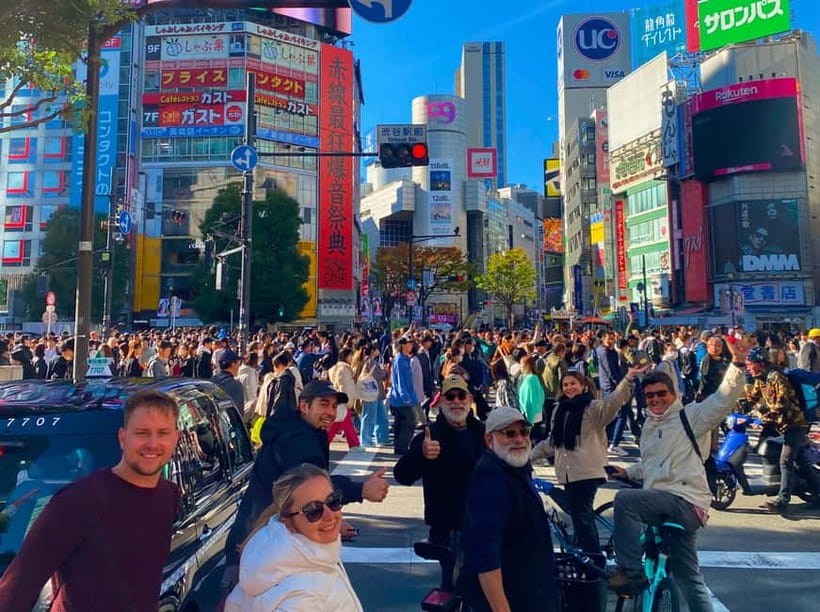
The final major stop is Shibuya Crossing, with about five minutes for photos and a short visit. This is a fitting finish because the route has moved steadily from historic Tokyo into its most recognizable modern district.
Five minutes will not let you explore Shibuya properly. It does let you see the crossing, take photographs, and get your bearings for a later visit. The tour finishes at the Bell of Peace, so check the end point before making a tight reservation or train connection afterward.
What the three hours feel like
The schedule uses many short stops, with the longest listed visits lasting 15 minutes. That keeps the ride lively and lets you cover a large part of central Tokyo, but it also means you will spend much of the tour on the road.
One rider described the cycling as extended for this kind of city tour, and another advised preparing for a workout. That is the most important expectation to set. You do not need to be a racing cyclist, but you should be comfortable riding for a substantial portion of three hours.
Tokyo’s streets can feel demanding even when the pace is sensible. You need to follow the guide, pay attention to traffic, and be ready to start and stop. The guides have been praised for keeping watch over the group and helping riders move safely through busy areas.
The e-bike option changes the experience for anyone with limited stamina. It is also the sensible choice if you do not cycle often. Select it when booking rather than assuming you can change on the day.
Bikes, helmets, and what to bring
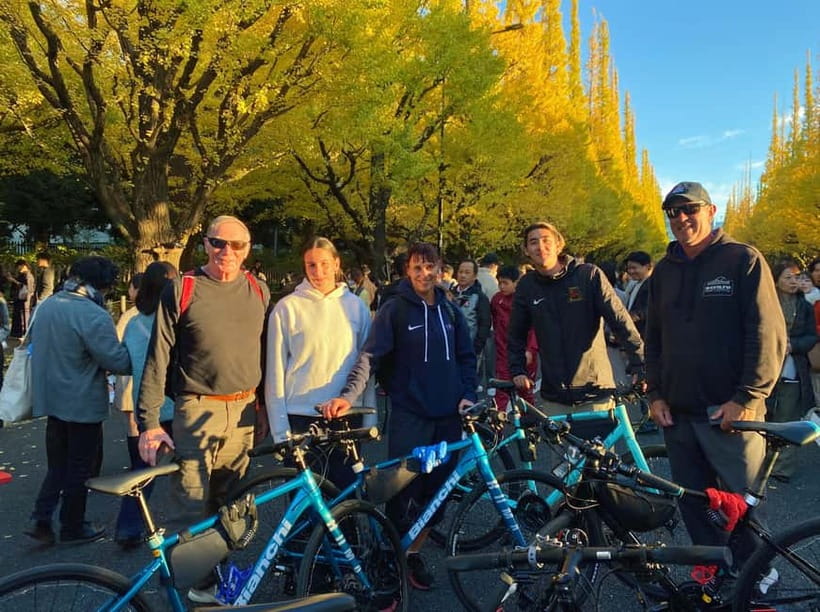
The tour supplies Bianchi and Fuji bicycles, including cross bikes and road bikes, plus an e-bike option. Several riders singled out the quality of the bicycles, and that praise makes sense: a comfortable, well-maintained bike can make a long city route much more pleasant.
A small pouch on the bike gives you a place for your phone, wallet, and keys. Bike insurance is included. Helmets are not included in the listed price, but they are available for ¥1,000 each, payable in cash on site.
Wear comfortable shoes and clothes. Bring water, especially in warm weather. One group managed the ride during a record-breaking Tokyo summer, but heat will make the cycling harder, so do not underestimate the weather.
Children under 12 cannot join. The experience is also not suitable for pregnant women, people with back problems, or anyone who cannot ride a bicycle. A child seat is available for ¥3,000, but the age restriction still matters, so confirm suitability before booking.
The guides make the route more than a ride
The strongest part of this experience is the human side. English and Japanese are offered, and the English-speaking guides do more than point toward buildings. They explain history, traditions, and modern Japanese life while keeping the ride organized.
Shin has been described as flexible and personable, with the ability to adjust the route to suit the group. Casey has been praised for clear explanations, careful attention in traffic, and taking photographs. Naoki and Marika, Nouchi and Georgie, and Miguel and KG have also been named as friendly, effective guides.
Guide quality can vary on any scheduled activity, but the repeated pattern here is encouraging. You are likely to get a guide who combines site information with practical help. In one case, a guide stopped for refreshments during extreme heat. That sort of judgment matters more than a memorized speech.
Private and small-group options are available. A small group makes it easier to move through the city and easier to ask questions. If you care about conversation and flexibility, choose the smallest group offered.
Is $60 good value?
At $60 per person, the tour offers a useful amount of coverage for three hours. You are paying for the bicycle, insurance, guide, route planning, and the ability to connect several distant districts without working out the route yourself.
The value is strongest if you have limited time in Tokyo. Seeing Zojo-ji, the Imperial Palace area, Akasaka Palace, the National Stadium, Aoyama, Cat Street, Miyashita Park, and Shibuya in one outing would be difficult by foot. Public transport can move you between them, but it will not give you the same street-level view.
The price is less compelling if you want long visits inside temples, palaces, or museums. This is a broad introduction, not a series of in-depth admissions. Add ¥1,000 for a helmet if you want one, and remember that the e-bike option may have a different price at booking.
Free cancellation up to 24 hours before the start gives you some protection, and you can reserve now and pay later. Those terms help if your Tokyo schedule is still shifting.
Who should book this Tokyo bike tour?
I would choose this for a reasonably active first-time visitor who wants an overview of central Tokyo and likes learning while moving. It suits couples, friends, and small groups who would rather ride between districts than spend the whole day underground.
It is also a good fit if you have already seen the obvious sights and want a route that links traditional places with Aoyama, Cat Street, and Shibuya. The guide’s local explanations add context that you may miss when exploring alone.
I would not choose it for a slow temple day, a shopping-focused outing, or anyone with back trouble or little cycling experience unless the e-bike makes the ride comfortable. The short stops may also frustrate you if you want to linger at each place.
Should you book it?
Book this tour if you want a fast, active introduction to Tokyo and value a good bicycle, a local guide, and a route that crosses several distinct districts. Choose the e-bike if stamina is even a small concern, and carry cash for the helmet.
Skip it if you want long, quiet visits or do not enjoy riding in a large city. For the right rider, $60 buys a practical overview, useful local context, and a much better sense of how Tokyo’s old and new sides fit together.
FAQ
How long is the Tokyo bike tour?
The tour lasts three hours.
Where does the tour begin?
Meet near the Statue of Commodore Perry, about a three-minute walk from Daimon Station’s A6 exit.
Where does the tour finish?
The tour finishes at the Bell of Peace.
Which sights are included?
The route includes Zojo-ji Temple, the Tokyo Imperial Palace area, Ote-mon Gate, State Guest House Akasaka Palace, the New National Stadium, Minamiaoyama, Cat Street, Miyashita Park, and Shibuya Crossing. It also includes a lesser-known stop.
Are e-bikes available?
Yes. An e-bike option is available, and it is recommended if you do not cycle often or are concerned about stamina.
Are helmets included?
No. Helmets are available on site for ¥1,000 per unit in cash.
What should I bring?
Bring comfortable shoes, water, and comfortable clothing.
Can children join the tour?
Children under 12 are not permitted to join. A child seat is available for ¥3,000 per unit, subject to the tour’s age requirements.
Can I cancel the booking?
You can cancel up to 24 hours in advance for a full refund. Reserve now and pay later is also available.
More Three-Hour Experiences in Japan
- 3-Hour Porto Highlights on a Electric Bike Guided Tour
★ 5.0 · 4,392 reviews - 3-hour Complete Prague Bike Tour
★ 5.0 · 3,674 reviews - Porto: City Highlights 3-Hour Guided Electric Bike Tour
★ 4.8 · 3,092 reviews - Copenhagen: Highlights 3 Hour Bike Tour with a Local Guide
★ 4.8 · 2,312 reviews
More Hidden Gems Bike Tours in Japan
- Arashiyama Bamboo Forest & Hidden Gems Bike Tour (Early Bird)
★ 5.0 · 613 reviews - Kyoto: City Secrets eBike Tour
★ 4.9 · 196 reviews - Kyoto: Hidden Gems E-Bike Tour with Local Japanese Guide
★ 4.9 · 189 reviews - 5-Hour Tokyo & Edo Hidden Gem Bike Tour with Lunch
★ 5.0 · 113 reviews
New cycling reviews around Japan
- Osaka E-Bike Tour With A Local Guide★ 4.7 · 75 reviews
- Osaka: City Highlights Bike Tour★ 4.7 · 20 reviews
- Okinawa: Afternoon Cycling Tour with Local Guide★ 4.8 · 39 reviews
- Nara: City Highlights Shared Group or Private Bike Tour★ 4.9 · 34 reviews
- Nara: Bike Tour in Ancient Capital UNESCO World Heritage★ 5.0 · 43 reviews
- Naha: Guided E-Bike Tour of the 12 Zodiac Temples★ 4.9 · 50 reviews
- Best of Kyoto: Ginkakuji & Path of Philosophy E-Bike Tour★ 4.9 · 79 reviews
- Kyoto: Tailored E-Bike Tour to Highlights & Hidden Gems★ 4.9 · 32 reviews
Tokyo Cycling Tours, compared.
3h Tokyo E-Bike Tour: Hidden Gems, and Local Life with guide
Read our review →
Tokyo: 3-Hour Bike or E-Bike City Highlights Tour
Read our review →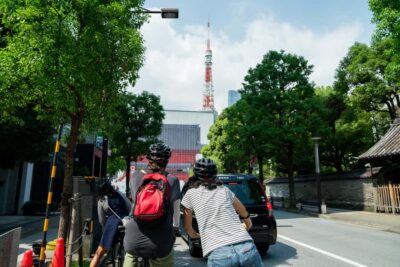
Tokyo: 3-hour Guided E-Bike Tour of the City’s Hidden Gems
Read our review →
3-Hour Tokyo Private E-Bike Tour Starting from Your Hotel
Read our review →
5-Hour Tokyo & Edo Hidden Gem Bike Tour with Lunch
Read our review →Browse the lists this ride appears in