
Review · OSAKA
5-Hour Osaka Highlights Bike Tour with Lunch
The clever idea here is using a bicycle to connect Osaka’s old quarters, river paths, and castle park in one half-day. Instead of spending the morning waiting at crossings or walking across Osaka Castle Park, you ride from Tenmabashi to Osaka Tenmangu Shrine, a living-history museum, a local lunch, and the castle grounds.
I like the small groups of up to six and the mix of sights that most first-time visitors might otherwise split across separate outings. I also like the finish: matcha and a traditional snack in a small café, a quieter pleasure after the city streets. The main consideration is the weather. The tour may be canceled when the rain probability reaches 40 percent, and there is no vegan or gluten-free meal option.
Key points at a glance
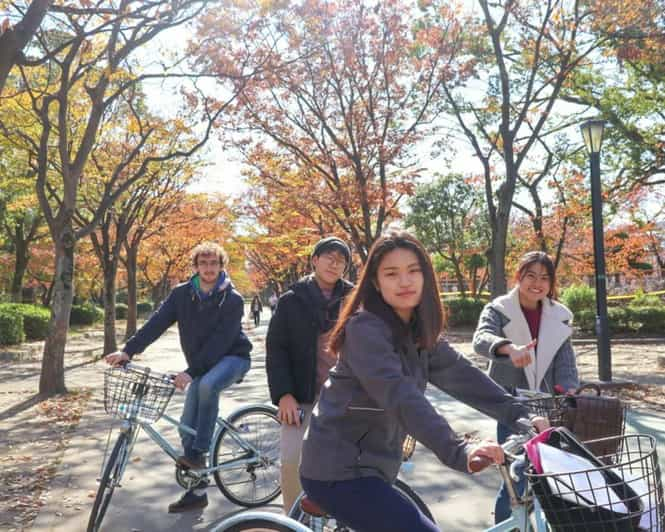
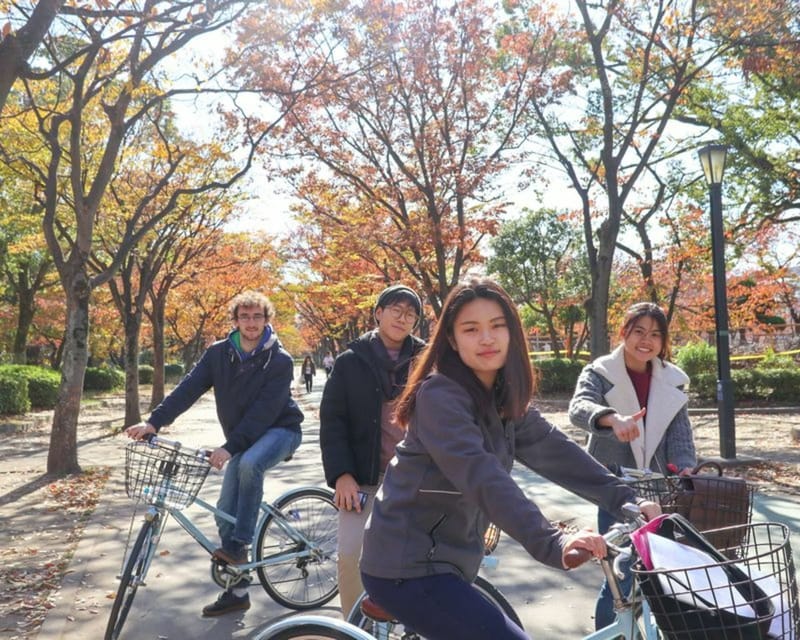
- A useful five-hour route: Shrine, museum, lunch, Osaka Castle Park, and tea without wasting energy on long walks.
- A local view of Osaka: River cycling paths and neighborhood streets show more than the standard castle visit.
- Lunch is included: Vegetarian meals are available, but the food may contain dashi made from fish.
- Guides make the difference: Ayaka, Megumi, Masumi, Mike, Yusuke, Hide, Yoto, and others have led tours, with clear English and a relaxed pace often praised.
- Good for cautious cyclists: Guides have helped people who rarely ride, though you should still feel comfortable cycling in city streets.
- Bring light luggage only: Large bags are not accepted, and nearby station lockers are not guaranteed to be available.
Why a bicycle works so well in northern Osaka
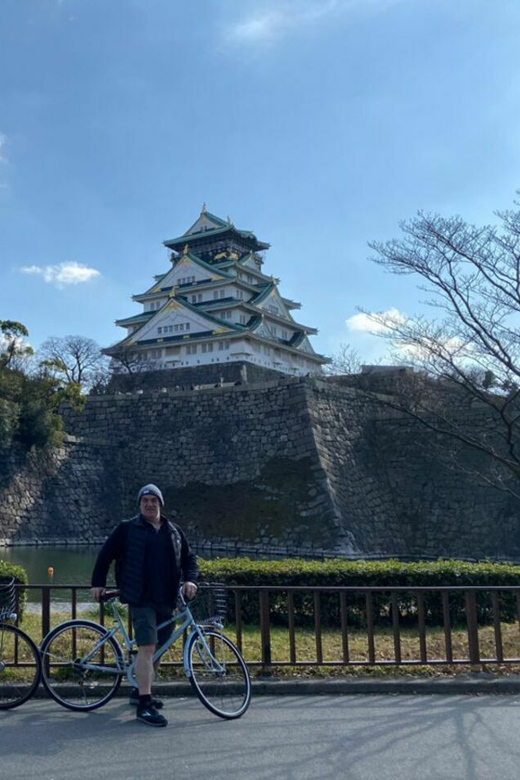
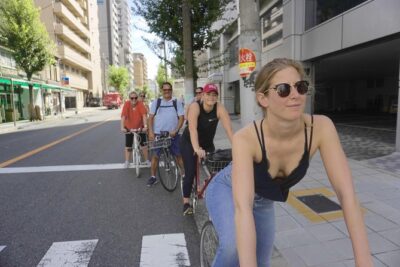
Osaka Castle is easy to reach by train, but the castle itself sits inside Osaka Castle Park, a very large area of about 105 hectares. Walking between the station, park paths, viewpoints, and nearby sights can eat up a surprising amount of your day. A bicycle gives you a better way to cover ground while still feeling the breeze and seeing the city at street level.
The route begins at FamilyMart Tenmabashi, about a two-minute walk from Exit 2 of Tenmabashi Station on the Osaka Metro Tanimachi Line. This is a practical meeting point, and you do not need to hunt through an obscure back street for a rental shop. You meet the guide, collect a cross bike, and set off.
The bikes have been described as comfortable and well maintained. Helmets are not included, so bring your own if that matters to you. The ride is designed as an easy city outing rather than a demanding athletic trip, but you still need to control a bicycle around pedestrians and ordinary urban traffic.
Several guides have earned praise for making beginners feel at ease. Masumi helped non-riders build confidence, while another guide, Yoto, adjusted the route when rain arrived and kept the group under cover where possible. That sort of attention is important on a bike tour. You are not simply following a flag through town. You need someone who watches the group, chooses safe places to stop, and knows when to slow down.
More City Highlights Bike Tours in Japan
- Tokyo Top Highlights 3h Guided E-bike Tour
★ 5.0 · 714 reviews - 5 Top Highlights of Kyoto Full Day Bike Tour (E-bike option)
★ 5.0 · 511 reviews - Tokyo: 3-Hour Bike or E-Bike City Highlights Tour
★ 4.8 · 435 reviews
Osaka Tenmangu Shrine and the first taste of local life
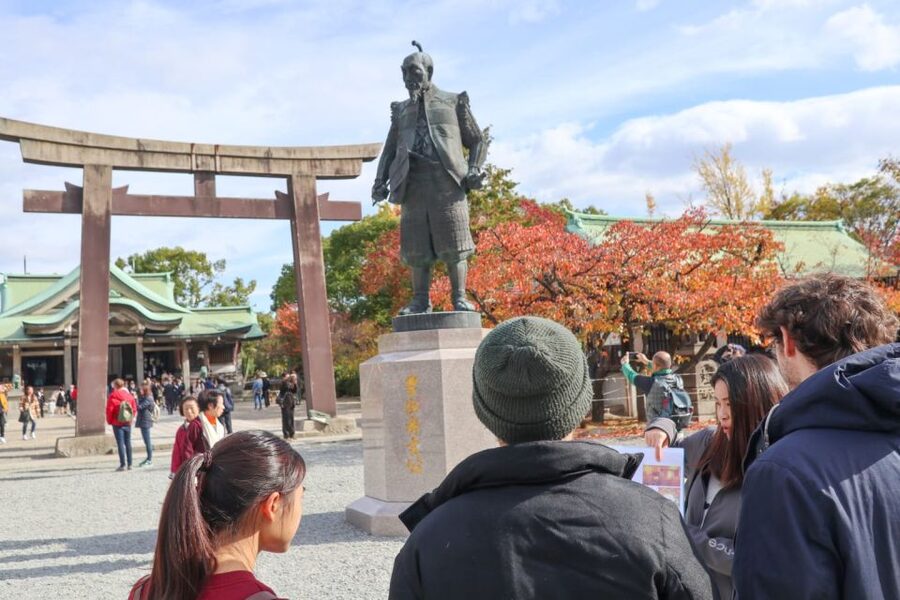
The first major stop is Osaka Tenmangu Shrine, reached by bicycle from Tenmabashi. You get a guided visit of about 30 minutes, with time to look at the grounds and hear about the shrine’s role in Osaka.
This is a good early stop because it gives you cultural context before the larger attractions. A castle can look impressive on its own, but a shrine shows another side of Japanese daily life, with traditions that remain part of the city rather than only a preserved display.
The guides bring their own connection to places like this. Megumi, for example, grew up in a home connected with the shrine, and her personal stories added a local angle to the explanation. That is the sort of detail you should value on this tour. You are not only receiving dates and names. You are getting a sense of how a place fits into ordinary Osaka life.
The shrine visit is also a welcome change of pace after the initial bike setup. You ride, stop, listen, and take photographs rather than racing from one attraction to the next. The itinerary may change order because of traffic and weather, so treat the sequence as flexible.
Osaka Museum of Housing and Living: history you can picture
From the shrine, the tour continues to the Osaka Museum of Housing and Living. The visit lasts roughly 40 minutes, including guided sightseeing and cycling time.
This museum focuses on how people lived in Osaka in earlier periods, especially the Edo era, and how the city changed over time. Its value is visual. Instead of hearing only about urban development, you can see reconstructed streets and domestic spaces that help turn abstract history into something easier to grasp.
The museum also gives the bike ride a useful purpose. You first see a version of old Osaka indoors, then cycle through the modern city outside. That contrast is one of the strongest ideas in the tour. The experience is not simply a list of unrelated stops. It connects the old city, the present-day neighborhoods, and the way Osaka’s streets have changed.
Your time here is limited, so do not expect a full museum visit. Forty minutes is enough for an introduction and the main displays, but anyone who wants to read every panel will need a separate visit. The guided format works best if you want the broad picture and an explanation of what you are seeing.
Lunch before the castle
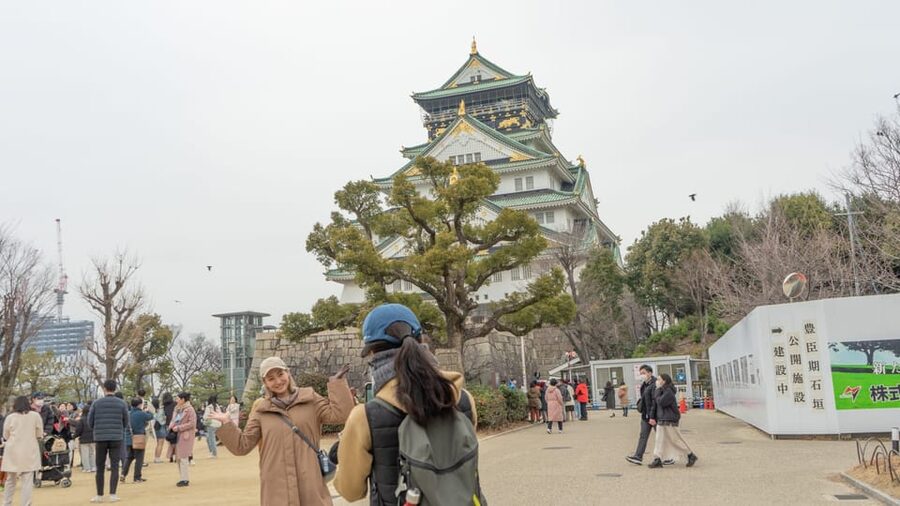
Lunch comes before Osaka Castle, and that is a sensible choice. You have time to sit down, eat, and rest before riding through the castle park.
The meal is one of Osaka’s familiar soul-food experiences. Several tours have included okonomiyaki, the savory cabbage pancake cooked with toppings and sauce, though the exact meal can vary. Other descriptions mention local food served in a traditional Japanese house or a quiet local restaurant. The point is not a formal tasting menu. It is a chance to try a dish that might be unfamiliar without having to work out the ordering process alone.
The included lunch adds real value to the $85 price. You are paying for the bike, guide, meal, matcha, snack, and photos, not just transportation between attractions. A similar day built from separate admissions, meals, and taxis could cost more, while also losing the connection between the stops.
Food is also the part of the tour that requires the most care. A vegetarian menu is available, but it includes dashi, or fish broth. There is no vegan or gluten-free option stated for this experience. If you have strict dietary needs, ask before booking rather than assuming the vegetarian choice will suit you.
Lunch can be a social part of the day, especially in a group limited to six. It also gives you a better look at how a guide handles different needs. Alice once arranged an Indian restaurant for a guest with special dietary requirements, but that should not be treated as a standard promise. Confirm your needs in advance.
Same roads, a different ride:
- Hidden Kyoto E-Biking tour
★ 5.0 · 1,843 reviews - Tokyo Guided Small-Group Biking Tour
★ 5.0 · 1,250 reviews - Bike Tour Exploring North Kyoto plus Lunch
★ 5.0 · 1,087 reviews - Tokyo Great Cycling Tour
★ 5.0 · 811 reviews
Osaka Castle Park by bicycle
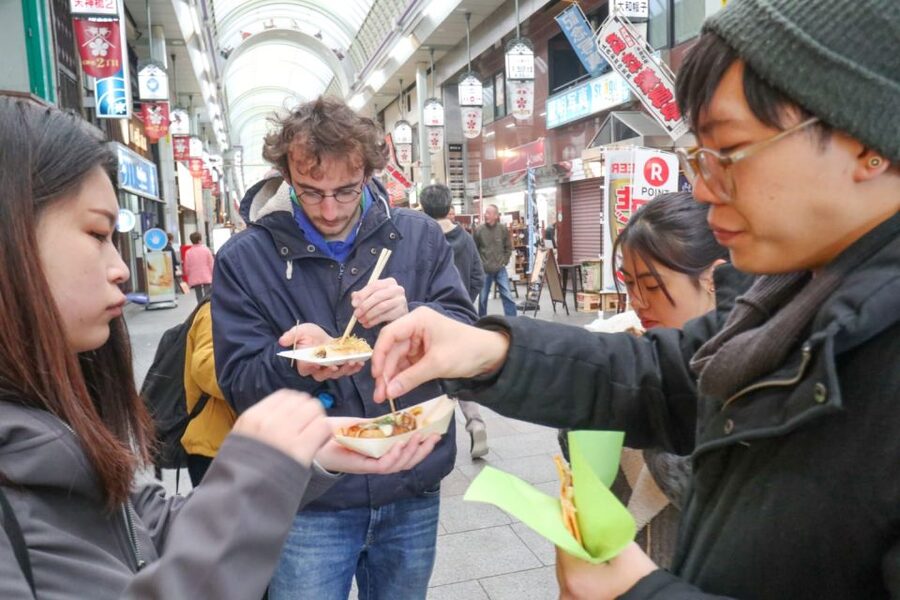
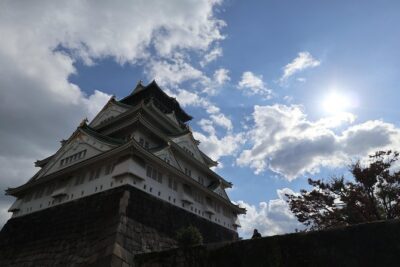
After lunch, you ride toward Osaka Castle and around its grounds. The castle stop is listed at about 40 minutes, including guided sightseeing and cycling, with the castle itself passed by rather than treated as a full interior visit.
That distinction matters. The tour includes seeing Osaka Castle from the outside and taking photographs, but the entry fee to the castle is not included. If you want to tour the interior museum, you will need to pay separately, and the schedule may not allow enough time for a full visit.
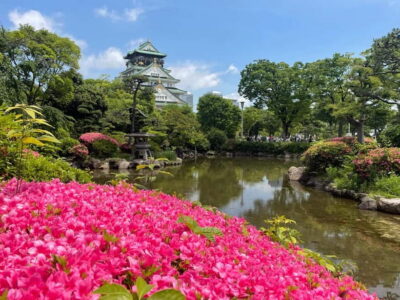
The bicycle makes this section more enjoyable than a long walk. You can cover parts of the huge park without arriving at the castle already tired. The route may take you along paths beside the river and through park areas, depending on conditions. Several guides have also used the river ride as one of the day’s calmer stretches, with trees, open views, and a cooler breeze in good weather.
Cherry blossom season can make the park especially appealing. A spring tour led by Yusuke included stops at good blossom-viewing places, while another April outing was praised for its timing during peak bloom. Of course, flowers and weather are seasonal, so do not book this solely for blossoms.
The castle area can also be busy. A bicycle does not remove crowds at the main photo points, and you must watch for pedestrians. The guide should help with route choices and group movement, but you remain responsible for riding carefully. If you want a slow, quiet castle visit with lots of interior time, a separate castle tour will suit you better.
Matcha, Japanese sweets, and a calm finish
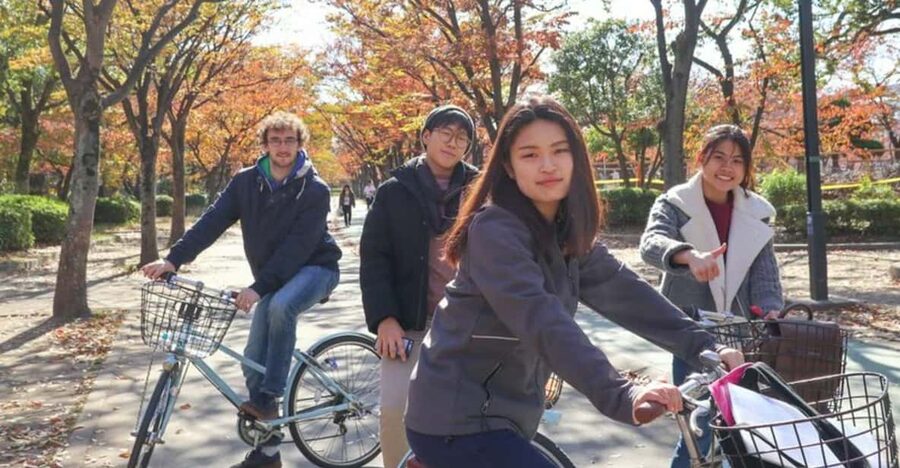
The final stop is a small café or tea setting where you receive matcha and a snack. The treat may be chimaki, a steamed bun, mochi, or another local sweet, depending on the arrangement. Some tours have included grilled rice cakes with soy and red bean toppings.
This ending gives the day a pleasing change of rhythm. You begin outdoors on a bicycle, move through a shrine and museum, sit down for lunch, and then finish with a carefully prepared drink. The tea stop has been a highlight for many people, especially those who want a small cultural experience rather than another major monument.
Do not expect a full formal tea ceremony unless your guide specifically describes one. The supplied details promise matcha and a snack, with some tours taking place in a minimalist tea house or café. That is enough to make the stop worthwhile, but it is best understood as a tasting and cultural pause.
The guide is part of the appeal here. Guests have singled out the care taken in preparing the matcha and explaining the snacks. For someone trying Japanese sweets for the first time, having an English-speaking guide explain what you are eating makes the experience less intimidating.
After tea, you cycle back to FamilyMart Tenmabashi. The five-hour schedule is long enough to feel substantial but short enough to leave your evening open for Dotonbori, Umeda, or another Osaka meal.
What the $85 price really includes
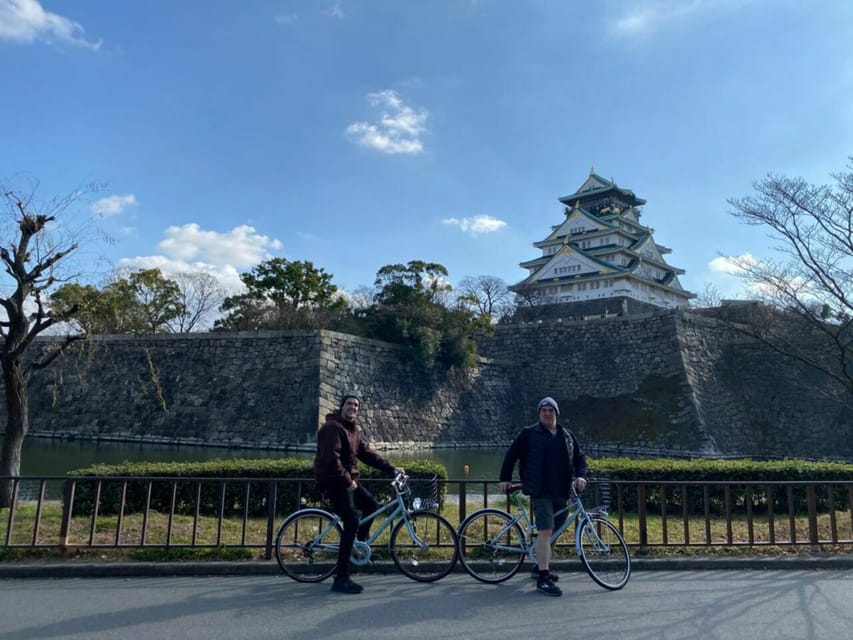
At $85 per person, this is not the cheapest way to see Osaka. It is a guided experience with several useful inclusions:
- Cross bike rental
- English-speaking local guide
- Lunch
- Matcha green tea
- Snack
- Photos taken during the tour
You do not pay an entry fee for Osaka Castle as part of the tour, and helmets are not provided. Additional food is also your responsibility.
I see the value in the combination. The tour links several places that are spread across the city, provides local food, and removes much of the planning work. You also get a small group rather than a large bus. With no more than six participants, it is easier to ask questions, hear the guide, and adjust the pace.
The value is lower if you already know Osaka well, have your own bicycle, or mainly want to spend hours inside Osaka Castle. In that case, you might prefer independent sightseeing and put the $85 toward meals and admissions.
The price makes the most sense for a first visit, a short stay, or anyone who wants an introduction to Osaka beyond the usual shopping districts. It also works well early in your trip because guides such as Ayaka, Mike, Masumi, and Yusuke often share ideas for places to visit later.
Who should book this bike tour
This tour suits you if you:
- Want to see several sides of Osaka in one morning or afternoon
- Enjoy light cycling and do not want to walk across a huge castle park
- Prefer a small group and an English-speaking guide
- Like local food but want help ordering and understanding it
- Are curious about everyday life, shrines, and older neighborhoods
- Have limited time in Osaka and want a broad first look
It is also suitable for some nervous cyclists. Guides have helped people who rarely ride, and the relaxed pace includes stops. Still, you should not book it if you are unable to ride a bicycle or feel unsafe cycling around pedestrians and city streets.
The minimum age is 15. The tour does not accept large luggage. Coin-operated lockers near the station may be available for 500 yen, but availability is not guaranteed, so arrive with only what you can carry comfortably.
Weather is the biggest practical risk. The operator may cancel if rain probability reaches 40 percent or more, and the order of stops can change because of weather or traffic. That is sensible for a bicycle tour, but keep your plans flexible. Free cancellation is available up to 24 hours before the start, and you can reserve now and pay later.
Should you book it?
Book this if you want Osaka to feel like a real city rather than a string of famous gates. The combination of river paths, Osaka Tenmangu Shrine, the housing museum, local lunch, Osaka Castle Park, and matcha gives you a useful introduction in five hours.
I would choose it for a first or second day in Osaka, especially if you enjoy food, neighborhood life, and gentle outdoor activity. I would skip it if you need a vegan or gluten-free meal, dislike cycling in town, or want a detailed interior visit to Osaka Castle.
For most suitable participants, the strongest reasons to book are the small group, the attentive guides, and the way the route balances sightseeing with time to eat and rest. It is a practical, human-scale way to get your bearings in Osaka without spending the day underground or marching from one crowded attraction to another.
FAQ
Where does the Osaka bike tour meet?
Meet the guide in front of the FamilyMart at Tenmabashi Station on the Osaka Metro Tanimachi Line. The meeting point is about a two-minute walk from Exit 2.
How long does the tour last?
The tour lasts five hours, including cycling, guided visits, lunch, tea, and the return ride to Tenmabashi.
What sights are included?
The route includes Osaka Tenmangu Shrine, Osaka Museum of Housing and Living, Osaka Castle Park, and Osaka Castle from the outside. The itinerary may change because of weather and traffic.
Is Osaka Castle admission included?
No. The tour includes sightseeing and photographs around Osaka Castle, but entry to the castle itself is not included.
Is lunch included?
Yes. Lunch is included, and a vegetarian menu is available. The vegetarian meal contains dashi made from fish, and no vegan or gluten-free option is available.
Are bicycles and helmets provided?
A bicycle is included. A helmet is not included.
Who can join the tour?
Participants must be at least 15 years old. The tour is limited to six people and is conducted in English.
What happens if it rains?
The tour may be canceled when the rain probability is 40 percent or higher. Weather and traffic can also change the order of the stops.
More Rides with Lunch in Japan
- 4.5-Hour Kyoto Bike Tour with Lunch and UNESCO Zen Temples
★ 5.0 · 122 reviews - 5-Hour Tokyo & Edo Hidden Gem Bike Tour with Lunch
★ 5.0 · 113 reviews - Kyoto: Full-Day City Highlights Bike Tour with Light Lunch
★ 5.0 · 52 reviews - Kyoto: Early Bird E-Bike Tour with Lunch
★ 5.0 · 14 reviews
New cycling reviews around Japan
- Osaka E-Bike Tour With A Local Guide★ 4.7 · 75 reviews
- Osaka: City Highlights Bike Tour★ 4.7 · 20 reviews
- Okinawa: Afternoon Cycling Tour with Local Guide★ 4.8 · 39 reviews
- Nara: City Highlights Shared Group or Private Bike Tour★ 4.9 · 34 reviews
- Nara: Bike Tour in Ancient Capital UNESCO World Heritage★ 5.0 · 43 reviews
- Naha: Guided E-Bike Tour of the 12 Zodiac Temples★ 4.9 · 50 reviews
- Best of Kyoto: Ginkakuji & Path of Philosophy E-Bike Tour★ 4.9 · 79 reviews
- Kyoto: Tailored E-Bike Tour to Highlights & Hidden Gems★ 4.9 · 32 reviews
Osaka Cycling Tours, compared.
5-Hour Osaka Bike Tour to the Neighborhood of Osaka Castle
Read our review →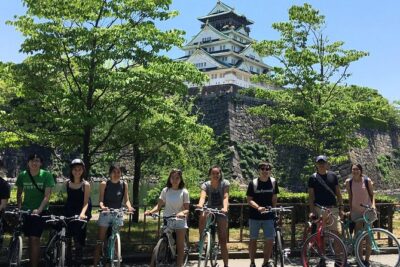
Browse the lists this ride appears in