
Review · JAPAN
Okinawa: Afternoon Cycling Tour with Local Guide
Naha’s best moments are often found away from Kokusai Street, and this tour gets you there on two wheels. You ride through old pottery lanes, quiet residential roads, and the former capital at Shuri, with a local guide explaining what you are seeing as you go.
I like the electric-assist bicycles, which take the sting out of Shuri’s hills, and the tiny groups, limited to five people. The main consideration is simple: you need to be comfortable riding on city streets, and the afternoon schedule can run three to three and a half hours.
Key points at a glance
- Tsuboya pottery lanes: Ride through Naha’s historic ceramics quarter and its narrow, old-fashioned streets.
- Electric help on Shuri’s hills: The assisted bicycles make the climb to the castle town much more manageable.
- Small-group guiding: With no more than five participants, it is easy to hear instructions and ask questions.
- Local life beyond the main shopping street: Pass traditional houses, neighborhood roads, markets, and the Asato shopping area.
- Hilltop views over Naha: Pause at a scenic viewpoint for photographs and an afternoon or sunset view.
- English and Japanese guidance: Guides including Jojo, Aki, Tony, Reiji, and Yuri have led tours in English.
Why this is a good way to see Naha
Naha is compact enough to explore by bicycle, but its steep sections and busy roads can make ordinary cycling tiring. This tour solves much of that problem with electric-assist bikes. You still pedal, but the motor helps when the route rises toward Shuri.
The bigger benefit is access. A bus or taxi can take you to the major sights, but it will not give you the same feel for the small lanes between them. On this ride, you pass through parts of Naha where traditional houses remain, roll through quiet streets, and get a look at the city as a lived-in place rather than only a sightseeing stop.
The group size matters, too. Five people is small enough for the guide to watch how everyone is riding and explain road rules clearly. Aki has been praised for patient instructions, especially with families and people new to city cycling. That kind of attention is useful here because you are not riding on a closed path.
At $87 per person, this is not the cheapest way to get around Naha. But you are paying for a bicycle, helmet, guide, communication system, and a carefully linked route that would be difficult to plan on your own. For a half-day activity that combines transport, sightseeing, and local context, the price is reasonable if you want more than a standard city tour.
More Guided Rides in Japan:
- Tokyo Guided Small-Group Biking Tour
★ 5.0 · 1,250 reviews - Tokyo Top Highlights 3h Guided E-bike Tour
★ 5.0 · 714 reviews - 3h Tokyo E-Bike Tour: Hidden Gems, and Local Life with guide
★ 5.0 · 670 reviews
Meeting near Makishi Station
You meet at the Echarity Naha Kokusai Street main shop, next to Makishi Post Office. From Makishi Monorail Station, it is about a one-minute walk, which makes the start easy to reach even if you are staying elsewhere in central Naha.
The staff fit you with an electric bicycle and helmet, then give a short safety briefing. An intercom system lets you hear the guide while riding, a useful feature when traffic or street noise makes normal conversation difficult.
Bring comfortable sports shoes. The ride is assisted, not fully motorized, so you will still pedal and spend several hours on the bike. Bring a warm layer as well, especially if the ride runs into the evening. The operator recommends warm clothing in case the temperature drops later in the day.
You can request a child seat for children from one to five years old, attached to a parent’s bicycle. Contact the staff about this before booking so they can confirm the arrangement. The tour is not suitable for wheelchair users or anyone who cannot ride a bicycle.
Tsuboya, Naha’s pottery quarter
The first major area is Tsuboya, the historic pottery district. In Okinawan, yachimun means pottery. Around 300 years ago, the Ryukyu Kingdom gathered pottery kilns from different parts of the islands and brought them together here. That decision shaped Tsuboya into the ceramics center it remains today.
You do not simply stop at a single workshop and leave. The route passes along streets associated with the pottery trade, including smaller lanes that are much easier to enter by bicycle than by car. The setting has an old-fashioned feel, with low buildings and a slower pace than the main shopping areas.
This is one of the strongest parts of the tour for anyone interested in Okinawan design and daily life. The guide can give the district context while you see the setting in person. You may want to save pottery shopping for another time, though, since carrying fragile purchases on a bicycle is not ideal.
The narrow roads are also a reminder to ride carefully. You need to watch for pedestrians, parked vehicles, and corners where visibility is limited. The guide’s briefing and intercom help, but this is not a carefree bike path.
Old houses and everyday Naha

From Tsuboya, the route moves through local parts of Naha. A few traditional houses remain among newer buildings, and you pass along roads that show the city’s ordinary rhythm.
This section is valuable because it puts the major sights into context. Naha is not only a former royal capital or a shopping destination. It is also a working city, and cycling gives you time to notice how older homes and local streets sit alongside modern life.
The route uses small roads where possible, but you are still riding through an urban area. If you have never cycled in a city, tell the guide at the beginning. Aki has been described as particularly clear and patient with families, including children around age ten, and the limited group size gives the guide room to adjust the pace.
The ride can also be a modest workout. The electric motor helps on inclines, but you will be in the saddle for roughly three and a half hours. Comfortable clothing and shoes will make a real difference.
More Cycling Trips in Japan:
- Hidden Kyoto E-Biking tour
★ 5.0 · 1,843 reviews - Bike Tour Exploring North Kyoto plus Lunch
★ 5.0 · 1,087 reviews - Tokyo Great Cycling Tour
★ 5.0 · 811 reviews - Arashiyama Bamboo Forest & Hidden Gems Bike Tour (Early Bird)
★ 5.0 · 613 reviews
Climbing toward Shuri Castle town

The ride then heads toward Shuri, the former capital of the Ryukyu Kingdom. Shuri is not just a single castle building. Its streets, stonework, temples, and sacred sites reflect the political and religious life of the old kingdom.
Here the electric bicycles earn their keep. The road rises, but the assistance makes the climb manageable for people who might find a regular bicycle unpleasant. You still need to control the bike and pay attention to traffic, but the motor reduces the effort.
The approach through Shuri’s streets is more revealing than arriving by taxi. You see the transition from modern Naha to the older castle town, with cobblestone sections and signs of Okinawa’s spiritual traditions. The guide may use printed pictures and explanations to make the past easier to picture. Tony has been praised for explaining the history of the area clearly, while Yuri is known for making the cultural background easy to follow in English.
The route does not replace a full visit to every Shuri attraction. Think of it as a guided introduction, with enough time to see key sights and understand their setting. If Shuri Castle is a top priority for you, plan separate time to explore the grounds and exhibitions at your own pace.
A hilltop pause above Naha
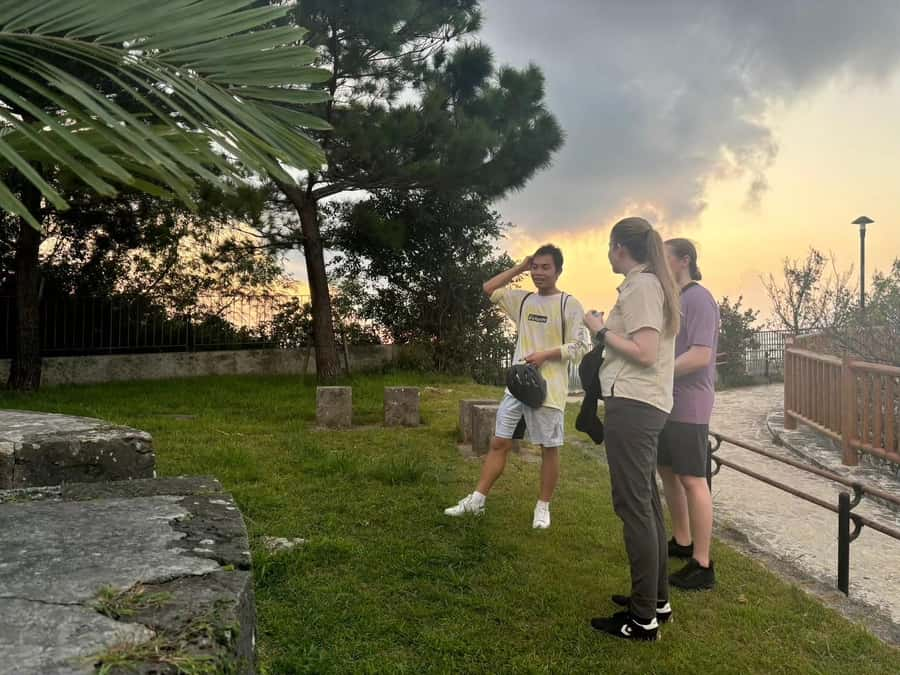
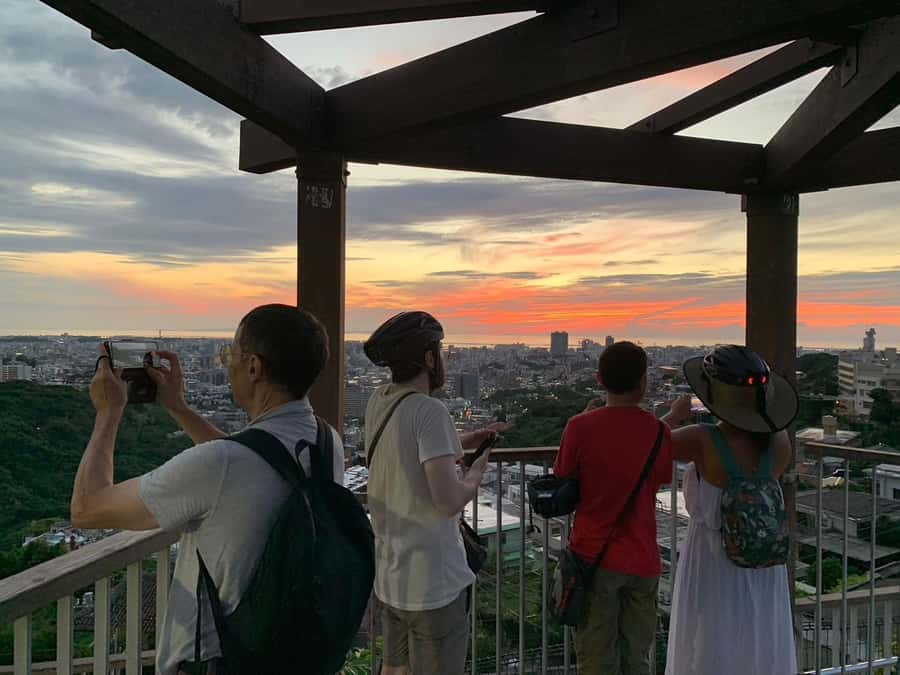
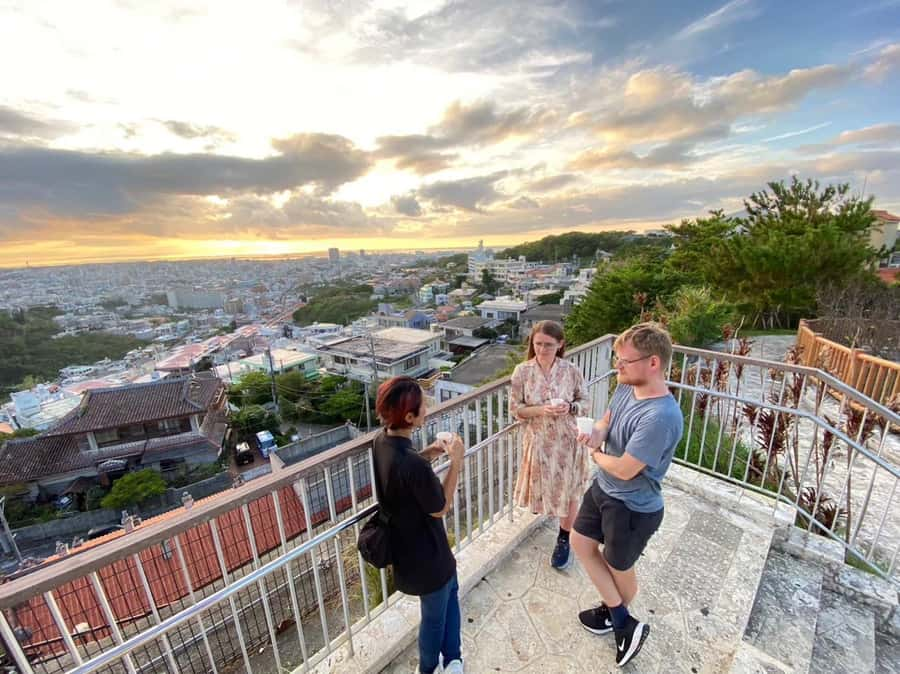
One of the tour’s best pauses comes at a viewpoint above the city. You stop for photographs and a break while looking across Naha from higher ground.
The timing is a nice feature. An afternoon departure gives you changing light as the ride progresses, and the itinerary allows for a sunset view if the timing and conditions work out. Do not treat this as a guaranteed sunset excursion, since weather and the pace of the group can affect the schedule.
The viewpoint also gives the ride a clear reward after the uphill sections. The electric bicycle gets you there without turning the climb into the main event, and the stop gives you time to catch your breath.
Bring your own phone or camera if you want photographs. Camera mounts and mobile phone holders are not included, so you should not expect to attach your device to the handlebars. A small bag is more practical than loose pockets, but the supplied information does not specify storage space, so pack lightly.
Shurijo Castle Park and Shureimon Gate
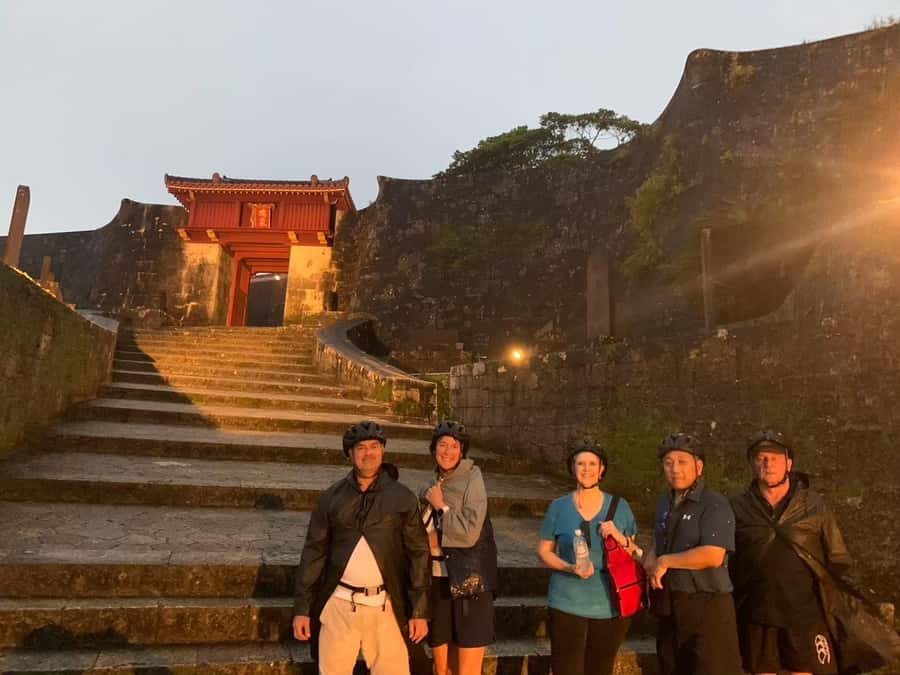
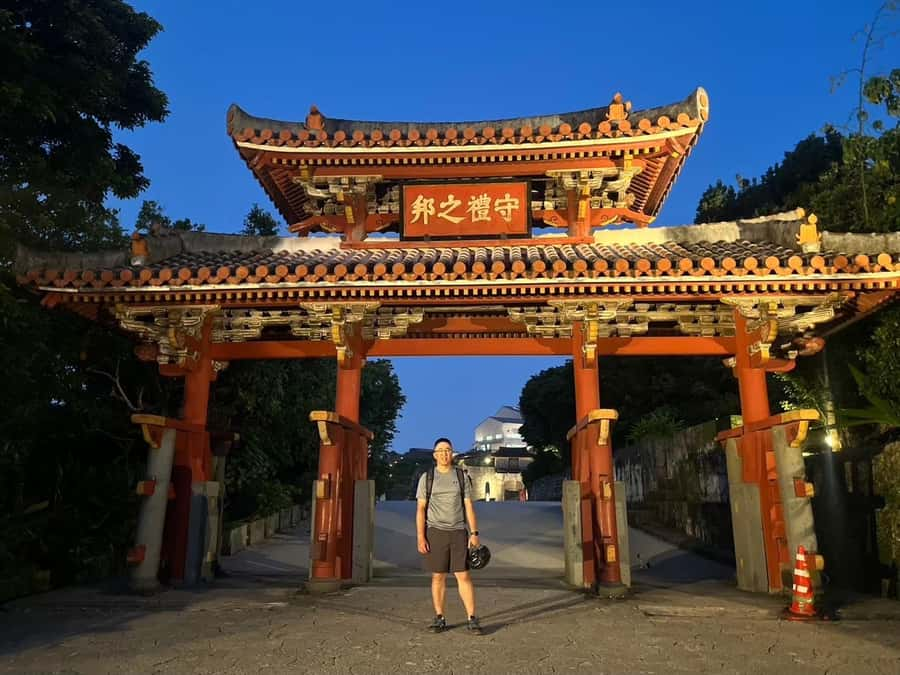
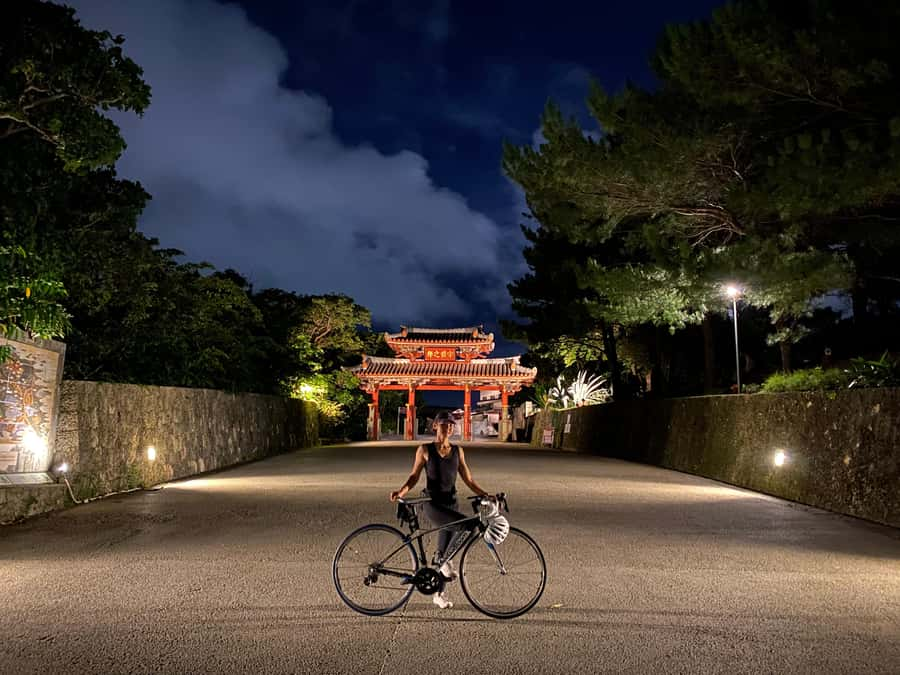
The route passes through the calm grounds around Shurijo Castle Park. Seasonal plants add color and texture, while the stone walls and Shureimon Gate provide some of the most photogenic views of the ride.
Shureimon is especially striking when lit later in the day. The warm light on the stone walls gives this section a different mood from the busy city streets below. It is a good place to listen to the guide rather than rushing from one photograph to the next.
You should understand the format here. This is a cycling tour with photo stops, not a long indoor castle visit. The guide helps you see the relationship between the park, the castle town, and the former kingdom, but you may want to return separately if you want a detailed look at the castle complex.
The stop works well for first-time visitors because it gives you a sense of Shuri’s importance without asking you to spend an entire day there. It also breaks up the ride at a useful point.
Asato after the ride
On the way back, you pass near Asato Shotengai. The area was once associated with Naha’s red-light district. Today, it becomes lively in the evening with izakayas and other places to eat and drink.
This is a practical final stop because it can help you choose where to spend the rest of your night. After returning the bicycles, you can come back to Asato for dinner or drinks, or continue exploring Naha on foot.
The tour itself ends back at the shop near Makishi Station. That central location makes it easy to continue toward Kokusai Street, the market areas, or Asato. You are not left at a distant attraction with a long transfer ahead.
The guides and the small-group advantage
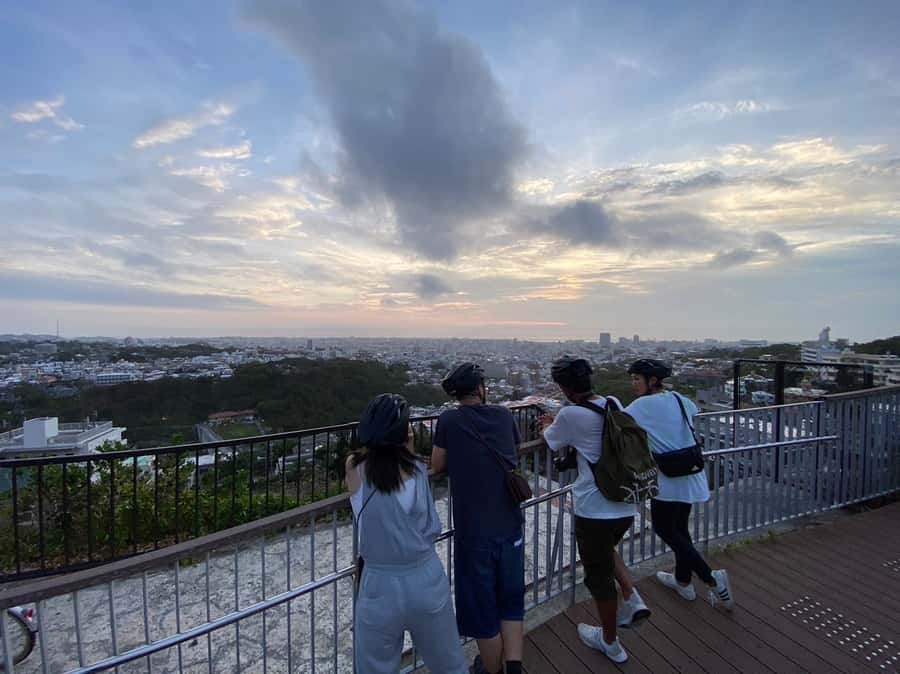
The guide is a major part of the experience. English and Japanese are available, and several guides have been praised for clear explanations, patience, and energy.
Jojo has led tours with an upbeat style and strong knowledge of Okinawan places and culture. Aki is a good fit for families or less confident riders because clear road instructions and patience are important on this route. Tony focuses strongly on local history, while Reiji has helped nervous or inexperienced riders feel looked after. Yuri brings a history-focused approach and leads in English.
You cannot choose a particular guide unless the operator confirms it, so treat these names as examples of the guiding style rather than a guarantee. What you can count on is a small group capped at five people, which is a real advantage over a large bus tour.
The intercom system is another practical touch. You can keep moving while hearing the guide’s comments, rather than gathering around every stop and trying to catch a distant voice.
Timing, weather, and practical value
The advertised duration is 210 minutes, while the actual schedule can run from three to three and a half hours. Allow some flexibility afterward, especially if you want to stop for dinner around Asato.
Rain can change the plan. If the precipitation probability is above 70 percent or severe weather is expected, the operator may adjust the itinerary and contact you the day before. This is worth keeping in mind during Okinawa’s unsettled weather periods.
Cancellation is flexible up to 24 hours before departure for a full refund. You can also reserve and pay later, which helps if your Okinawa plans are still shifting.
At $87, I would compare this with the cost of renting an ordinary bicycle, arranging your own route, and paying for separate transport to Shuri. The guided option offers more structure and less route planning. You also get the electric assistance, helmet, and intercom. The value is strongest for visitors who want history and local streets together, not just exercise.
Who should book this ride?
I would choose this tour if you want to see Naha from several angles in one afternoon: pottery, old neighborhoods, the former royal capital, a city view, and evening food districts.
It suits active families, couples, solo visitors, and anyone who prefers a personal guide to a large group. Families with older children can benefit from the electric assistance and patient instruction, though every rider must be comfortable on urban roads.
I would skip it if you cannot ride a bicycle, need step-free access, or want a slow, indoor history tour. It is also not the best match if you dislike traffic, hills, or being outdoors for several hours.
FAQ
Where does the cycling tour begin?
It begins at the Echarity Naha Kokusai Street main shop near Makishi Monorail Station. The shop is next to Makishi Post Office and about a one-minute walk from the station.
How long does the tour last?
The listed duration is 210 minutes. The schedule may run from three hours to three and a half hours.
What languages are available?
The tour is offered with live guidance in English and Japanese.
Are electric bicycles included?
Yes. The tour includes use of an electric-assisted bicycle, along with a helmet, guide, and intercom system.
Can young children join?
Children aged one to five may have a child seat attached to a parent’s bicycle. You should consult the staff for details before booking.
What happens if the weather is bad?
If the precipitation probability is above 70 percent or severe weather is expected, the operator may change the plan and contact you the day before.
Should you book it?
Book this tour if you want a small, active introduction to Naha with real local streets between the major sights. The pottery quarter, Shuri climb, hilltop view, and evening food district make a varied route, and the electric bicycles keep the hills from taking over the day.
The main question is your comfort on city roads. If you can ride confidently and want more than Kokusai Street and the usual sightseeing loop, this is a smart use of an afternoon. You will finish with a better feel for how Naha’s old royal center, working neighborhoods, and modern city fit together.
New cycling reviews around Japan
- Osaka E-Bike Tour With A Local Guide★ 4.7 · 75 reviews
- Osaka: City Highlights Bike Tour★ 4.7 · 20 reviews
- Nara: City Highlights Shared Group or Private Bike Tour★ 4.9 · 34 reviews
- Nara: Bike Tour in Ancient Capital UNESCO World Heritage★ 5.0 · 43 reviews
- Naha: Guided E-Bike Tour of the 12 Zodiac Temples★ 4.9 · 50 reviews
- Best of Kyoto: Ginkakuji & Path of Philosophy E-Bike Tour★ 4.9 · 79 reviews
- Kyoto: Tailored E-Bike Tour to Highlights & Hidden Gems★ 4.9 · 32 reviews
- Kyoto: Full-Day City Highlights Bike Tour with Light Lunch★ 5.0 · 52 reviews
Japan Cycling Tours, compared.
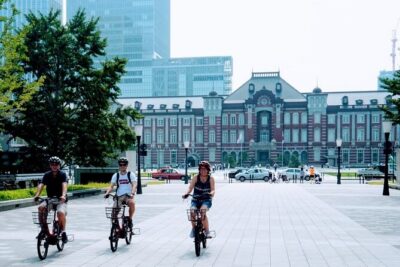
3h Tokyo E-Bike Tour: Hidden Gems, and Local Life with guide
Read our review →
Arashiyama Bamboo Forest & Hidden Gems Bike Tour (Early Bird)
Read our review →
Hiroshima in a Nutshell: Morning Bike Adventure
Read our review →Browse the lists this ride appears in