
Review · TOKYO
Tokyo: 3-Hour Bike or E-Bike City Highlights Tour
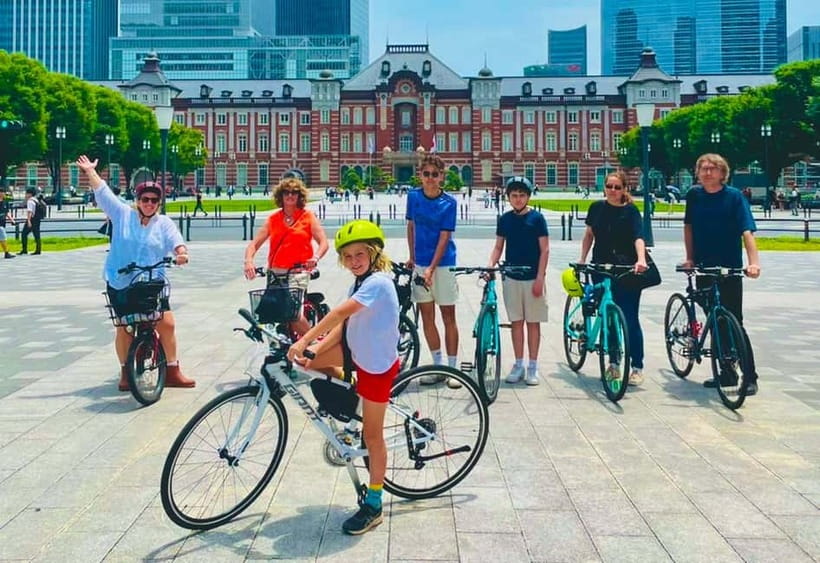
Tokyo reveals its scale best from a bicycle. In three hours, you ride from the temple grounds of Zojo-ji to the neon streets around Shibuya, passing imperial gardens, grand avenues, quiet side streets, and several landmarks that are hard to connect on foot. It is a brisk introduction to the city, not a slow sightseeing stroll.
I like the wide mix of stops and the way the guides turn a long route into a manageable morning. I also like the choice between good cross bikes and e-bikes, especially after several hours of walking or a late night in Tokyo. The main caution is simple: you need to be comfortable riding near traffic, since the route moves between roads and sidewalks and can cover roughly 15 to 20 kilometers.
Key points before you book
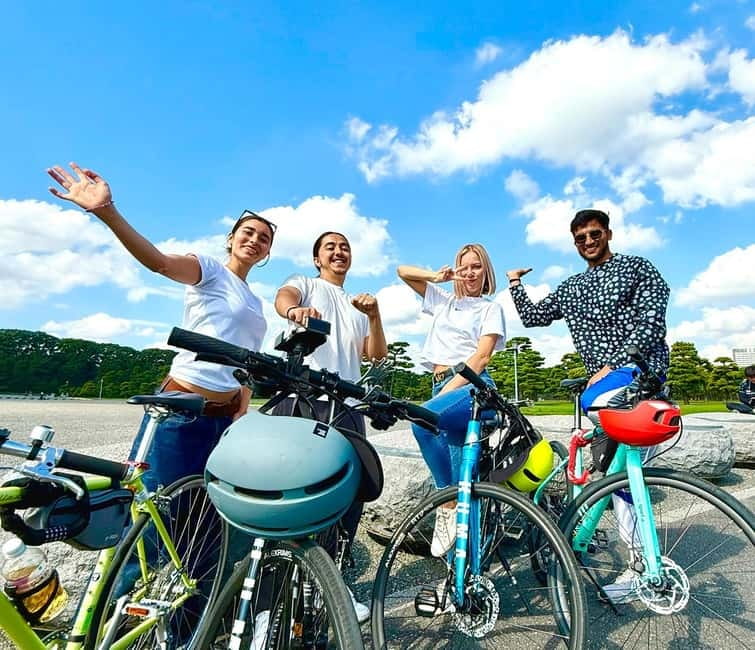
- A city-spanning route: Ride from Commodore Perry’s statue near Daimon to the Imperial Palace, Akasaka, Aoyama, and Shibuya.
- E-bikes are worth considering: Choose one if you do not cycle often, have limited stamina, or want help with Tokyo’s occasional hills.
- Small groups help: Groups may be private or small, and larger parties can be divided for easier movement through the city.
- The guides shape the experience: Naoki, Atsu, Kosei, Keiji, Rinto, and others are praised for clear explanations, safety checks, and friendly conversation.
- Budget for a helmet: Helmets are not included and cost ¥1,000 each, payable in cash.
- Best early in your stay: The route gives you a useful map of central Tokyo and ideas for places to return to later.
Why cycling works so well in central Tokyo
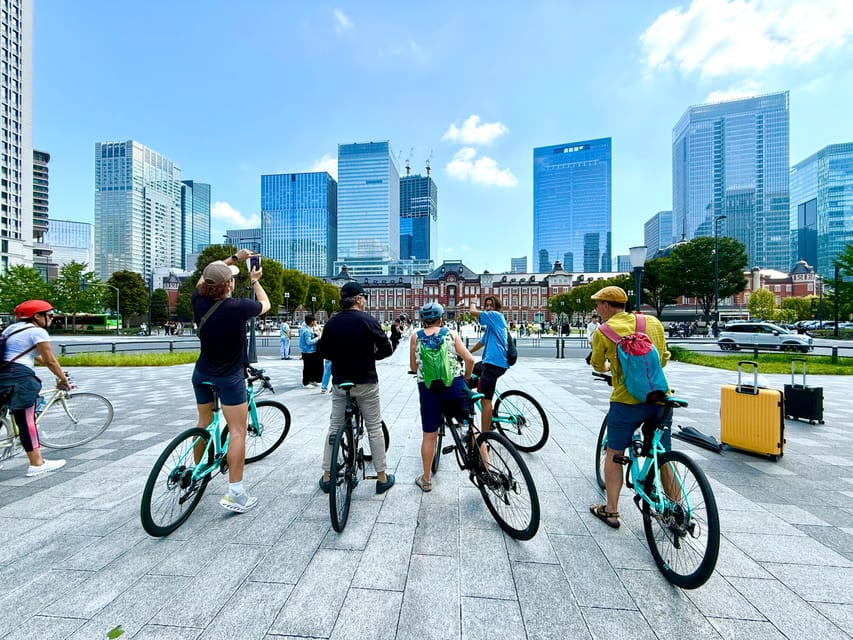
Tokyo is huge, and its sights are spread across several districts. By train, you can move quickly between them, but you often miss the small shifts between one area and the next. On a bicycle, you see the changing rhythm of the city: temple walls, office districts, formal gardens, stadiums, residential streets, boutiques, and giant screens.
This is not a technical cycling outing. It is a sightseeing tour with a substantial ride between stops. You will stop for photographs and short explanations, then get back on the bike. That format lets you cover far more ground than a walking tour without spending the whole time underground on trains.
The route is also useful for orientation. You get a first look at central Tokyo, then reach places such as Cat Street and Shibuya that you may want to explore on foot later. I would schedule it near the start of a Tokyo stay, as several guides also offer useful suggestions for the rest of your visit.
More City Highlights Bike Tours in Japan
- Tokyo Top Highlights 3h Guided E-bike Tour
★ 5.0 · 714 reviews - 5 Top Highlights of Kyoto Full Day Bike Tour (E-bike option)
★ 5.0 · 511 reviews - E-Bike Tours of the highlights of Kyoto!!!
★ 5.0 · 291 reviews
Starting near Commodore Perry’s statue
The meeting point is around the Statue of Commodore Perry, about a three-minute walk from Daimon Station’s A6 exit. A guide waits in the area, and the ride begins after you are matched with your bicycle.
The starting point has historical weight. Commodore Matthew Perry’s arrival in Japan helped push the country toward opening to foreign trade in the nineteenth century. You do not need a long lecture here, but the location gives the tour an appropriate starting idea: Tokyo is a city shaped by contact between old traditions and outside change.
The practical part matters more. Wear comfortable clothes and shoes, bring water, and arrive ready to ride. A small pouch on the bicycle holds a phone, wallet, and key, which keeps your pockets free. Bike insurance is included.
Helmets are available on site for ¥1,000 per unit in cash, but they are not included in the tour price. I would plan to use one, particularly because you will ride on roads at points and not only on quiet paths.
Zojo-ji Temple and Shiba Park
The first major stop is Zojo-ji Temple, beside the green open space of Shiba Park. You have about 15 minutes for a guided visit and photographs.
Zojo-ji offers one of Tokyo’s clearest contrasts. Its traditional temple buildings and gates sit close to modern towers, with Tokyo Tower nearby in the wider Shiba area. The stop is short, but it gives you a strong first taste of the city’s old and new sides.
Do not expect a long temple visit. The tour has many stops, so the guide gives context and points out details before the group moves on. If you want quiet time for prayer, close inspection, or extensive photography, you will need to return independently.
Hibiya Park and the Imperial Palace
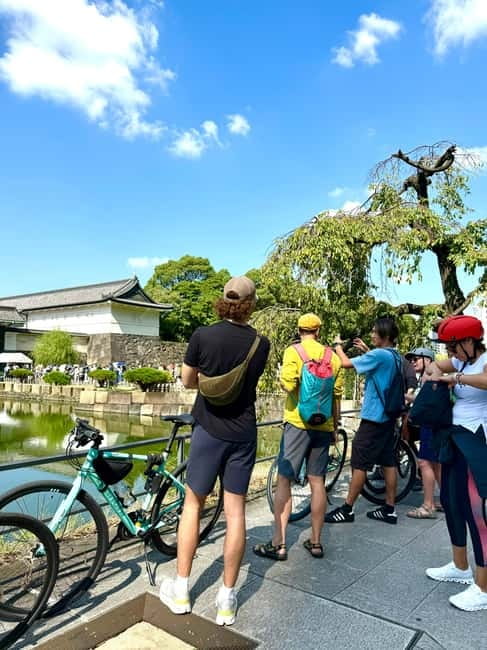
The ride continues through Hibiya Park, where the stop is brief, then toward the Imperial Palace. Hibiya Park gives you a change of pace after the temple. It is a formal urban park surrounded by offices and major roads, showing how Tokyo builds calm public spaces into its busiest districts.
At the Imperial Palace, you have roughly 15 minutes for a guided visit and photographs. The palace grounds are connected with the history of Japan’s imperial family, but the tour does not attempt to cover every section of the enormous site. Instead, you get a short introduction and a chance to see the grand setting.
This is one of the places where the bicycle saves time. Walking from nearby stations, through the surrounding streets, and on to the next stop would take much longer. The tradeoff is that your palace visit remains an overview rather than a detailed tour.
More E-Bike Tours in Japan
- Hidden Kyoto E-Biking tour
★ 5.0 · 1,843 reviews - 3h Tokyo E-Bike Tour: Hidden Gems, and Local Life with guide
★ 5.0 · 670 reviews - Kyoto: Memory Kyoto E-Bike Tour
★ 4.8 · 297 reviews - Tokyo: 3-hour Guided E-Bike Tour of the City’s Hidden Gems
★ 4.8 · 251 reviews
Tokyo Station and Ote-mon Gate
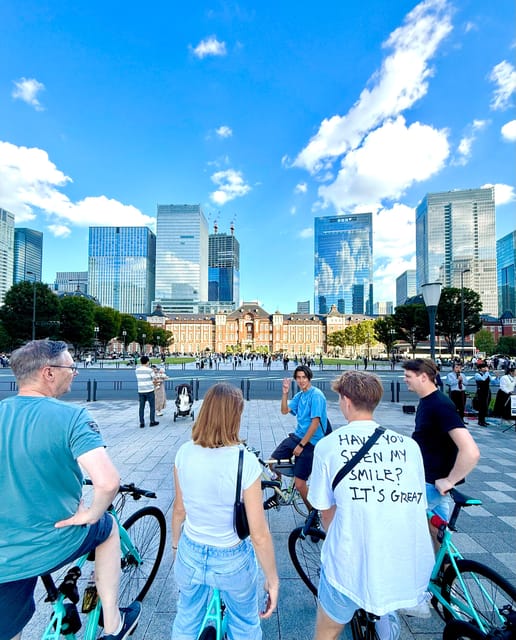
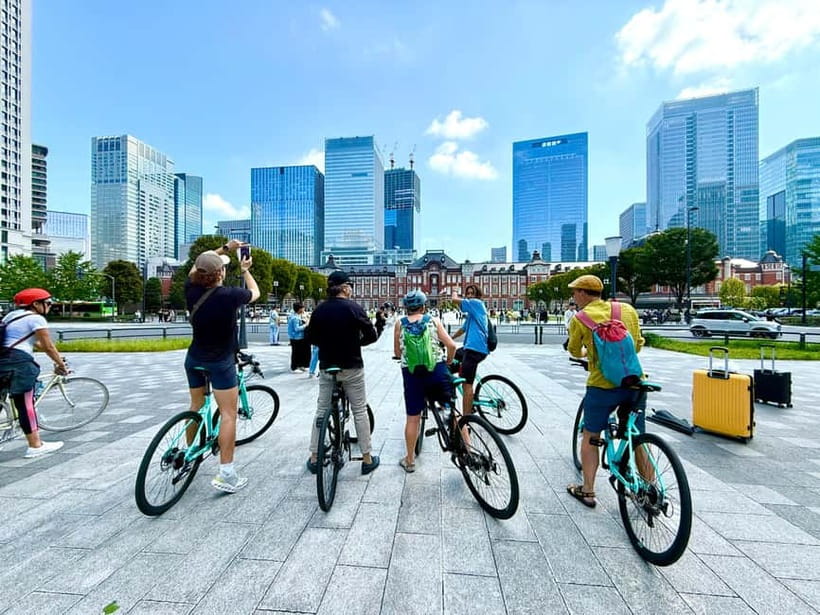
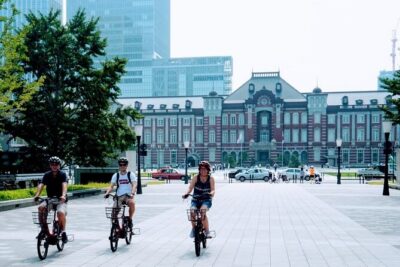
Tokyo Station is next, with about 10 minutes for photographs and sightseeing. Its red-brick exterior provides a striking contrast to the glass towers and dense office buildings around it. You can take in the building from the outside, then see how quickly the city changes as the group rides onward.
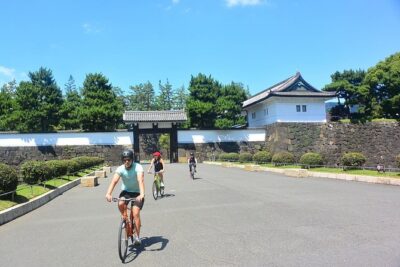
The route then reaches Ote-mon Gate, one of the notable entrances associated with the Imperial Palace area. The stop is short, around five minutes, but the gate helps you understand the defensive layout and formal approach to the palace grounds.
These stops work well together. Tokyo Station shows the city as a transport and business center, while Ote-mon Gate brings you back to the older political heart of the capital. The guide’s explanations are important here, since the short visits are more meaningful when you understand what you are looking at.
Chidorigafuchi and Akasaka Palace
At Chidorigafuchi, the group pauses for about five minutes. The area is known for its water, greenery, and views around the outer palace grounds. Depending on the season and weather, it can offer a welcome break from paved streets and traffic.
The route then moves toward the State Guest House Akasaka Palace. You have about 10 minutes for photographs. The palace is an imposing Western-style building used for official state functions, and it adds another architectural contrast to the ride.
This middle section is one reason the tour feels varied. You are not simply moving between famous shopping districts. The route includes formal government spaces, water, parks, and grand buildings that you might otherwise see only from a train or taxi window.
The National Stadium and a lesser-known stop
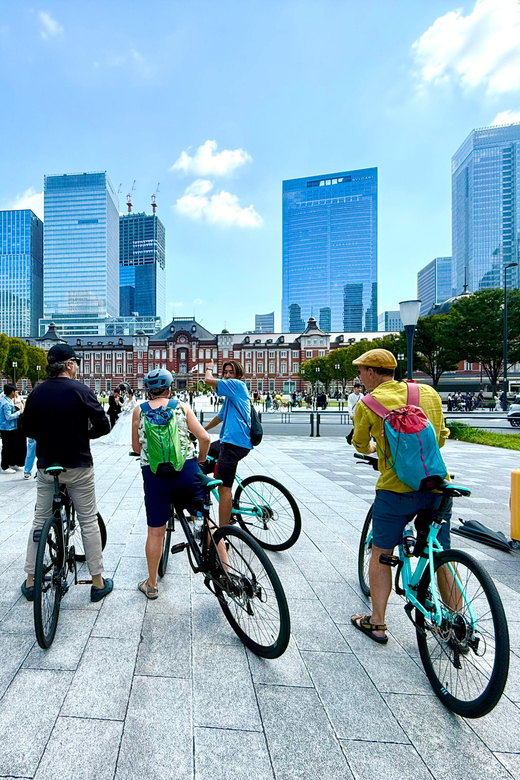
The New National Stadium is another 10-minute stop. It is tied to Tokyo’s major sporting events and gives you a modern landmark after the older palace and temple sites.
The itinerary also includes a lesser-known place with about 15 minutes for a guided visit. The exact stop can vary, so you should treat this as a flexible part of the route rather than a guaranteed named attraction. That flexibility can be useful. It lets the guide respond to conditions and introduce a corner of Tokyo that is not always on a standard sightseeing list.
The route has also included a quick convenience-store stop on some outings. If your group pauses at a 7-Eleven, you can grab water or a snack and ask the guide about local favorites. It is a small detail, but it adds an everyday Tokyo moment to a route otherwise filled with major landmarks.
Aoyama, Cat Street, and Shibuya
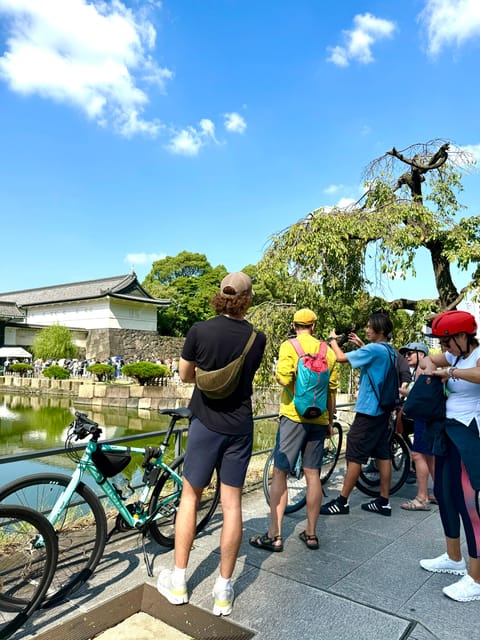
Aoyama St. Grace Cathedral is a short photo stop. After the palace districts and stadium, the cathedral adds another change in style and neighborhood character.
Cat Street follows with about five minutes of sightseeing. The area is known for independent shops, fashion, and a more relaxed urban feel than the huge avenues nearby. You will not have time for a shopping session, but the ride gives you a useful first look at the district. Return later if you want to browse properly.
The grand finish is Shibuya Crossing, where the group stops for photographs and a guided explanation. This is one of Tokyo’s most recognizable public spaces, and arriving by bicycle gives you a different view from simply exiting Shibuya Station into the crowd.
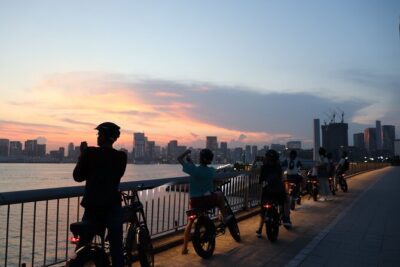
You then pass Tower Records Shibuya for another short photo stop before finishing at the Bell of Peace. Some departures have taken place in the evening, and the final stretch through Shibuya can be especially striking when the signs are lit. For a daytime tour, you will get a clearer sense of the streets and buildings, but not the same neon effect.
The ride itself: easygoing, but not effortless
The tour is suitable for casual riders, but that does not mean it is effortless. The route can be long, and some riders have described covering around 15 kilometers, while another account put the distance closer to 20 kilometers. The actual distance and pace may vary with the group and route.
You will ride on a mixture of streets and sidewalks. One family found that the move from sidewalk to road was important to understand before booking, and another rider appreciated the safety care but found road riding more stressful than expected. That is the most important practical point in this entire review.
Tokyo has a reputation for orderly traffic, and the route is designed with safety in mind. Guides such as Naoki, KJ, Keiji, Rinto, Rikuu, and Kosei have been praised for checking on the group, controlling the pace, and helping riders feel secure. Larger groups may be split into smaller units, which makes movement easier.
Still, a guide cannot remove every challenge. If you do not regularly ride a bicycle, practice before booking or choose the e-bike option. You need to steer, brake, watch the road, and follow the guide while taking in the sights.
Standard bike or e-bike?
The standard option uses high-quality cross bikes, including Bianchi and Fuji models. They are a good choice if you cycle regularly and want some exercise while sightseeing.
The e-bike option is the safer choice for many holidaymakers. It is recommended for people who do not cycle often or are unsure about their stamina. The assistance helps on hills and takes the sting out of a long route, especially in hot weather or after a late night.
An e-bike does not turn the outing into a motorized sightseeing ride. You still pedal and need to manage the bicycle. It simply makes the distance more comfortable. One rider specifically found the e-bike helpful on hills, while another described the ride as manageable despite rain.
Tokyo weather deserves attention. Summer can be hot, and rain can make road riding less pleasant. Bring water, dress for movement, and check the forecast. If rain is likely, buying a poncho at a FamilyMart before the ride is a sensible low-cost fix.
Guide quality and group atmosphere
The guides are a major part of the experience. Naoki is frequently singled out for being friendly, fun, and willing to answer questions. Atsu, Kosei, Keiji, Rinto, Rikuu, Tyler, Miguel, and others have also led rides praised for clear explanations and careful handling of the group.
The tone is conversational rather than academic. You receive stories about the places you pass, explanations of traditions, and practical suggestions for the rest of your time in Tokyo. One rider described the tour as more sightseeing than an extended talk, which is fair. You should expect short explanations at many stops, not a long lecture at each one.
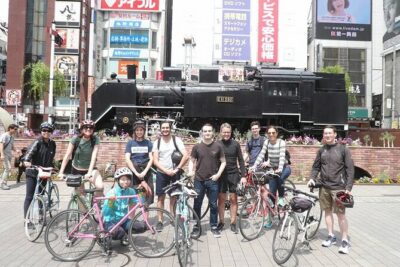
Small groups make a difference. A group of five or six is easy to manage, while an eight-person family group can still work well when two guides are present. Private groups are available if you want a more personal pace or have a family group with different needs.
Is $45 good value?
At $45 per person, the price is reasonable for a three-hour guided ride that includes the bicycle, guide, local stories, insurance, and the small bike pouch. You are paying for access to a route that links several distant parts of central Tokyo in one morning or afternoon.
The value is strongest if this is your first visit or your first full day in the city. You can see where the palace, Akasaka, Aoyama, and Shibuya sit in relation to one another, then use trains and walking to return to the areas that interest you most.
The price is less attractive if you already know Tokyo well, dislike cycling beside traffic, or want deep time inside individual attractions. You will not receive a long palace tour, an extended temple visit, or much time to shop along Cat Street.
Cancellation is free up to 24 hours before the start, and you can reserve now and pay later. That helps if your plans are still shifting, though you should still check the available start times before booking.
Who should book this Tokyo bike tour?
I would book this tour if you want a fast orientation, enjoy seeing a city at street level, and can comfortably ride for several hours. It suits couples, families with children aged 12 or older, solo visitors, and small groups who want an active introduction without arranging their own route.
The e-bike is the sensible pick for many people. Choose it if you are unsure about distance, do not cycle often, or expect to be tired from jet lag. Pregnant people, anyone with back problems, people who cannot ride, and children under 12 should not book this activity.
My verdict
Book it early in your Tokyo stay if you want to connect the city’s major districts quickly and learn which places deserve a second visit. The combination of Zojo-ji, the Imperial Palace, Akasaka, Aoyama, and Shibuya gives you much more range than a walking tour.
Skip it if riding in traffic makes you anxious or if you want a quiet, detailed visit at each attraction. For everyone else, the e-bike option, a helmet, comfortable clothes, and a willingness to keep moving make this a strong-value way to get your bearings in Tokyo.
FAQ
Where does the Tokyo bike tour start?
The tour starts near the Statue of Commodore Perry, about a three-minute walk from Daimon Station’s A6 exit.
Where does the tour finish?
The tour finishes at the Bell of Peace after the stops around Shibuya and Tower Records Shibuya.
How long is the tour?
The experience lasts three hours.
What languages are available?
Guides operate in English and Japanese.
Are bicycles included?
Yes. The tour includes a high-quality Bianchi or Fuji cross bike, or an e-bike depending on the option you choose.
Are helmets included?
No. Helmets are available on site for ¥1,000 per unit, payable in cash.
Can I bring a child seat?
A child seat is available for an additional ¥3,000 per unit.
How far do you ride?
The distance can vary, but rides have been described as covering approximately 15 to 20 kilometers.
Is the tour suitable for children?
Children under 12 are not permitted. Riders aged 12 and older need to be comfortable riding a bicycle, including on roads.
What should I bring?
Bring comfortable shoes, water, and comfortable clothing. A small pouch on the bike is provided for a phone, wallet, and key.
Can I cancel the booking?
You can cancel up to 24 hours in advance for a full refund.
Can I reserve without paying immediately?
Yes. The reserve-now, pay-later option lets you hold a place without paying at the time of booking.
More Three-Hour Experiences in Japan
- 3-Hour Porto Highlights on a Electric Bike Guided Tour
★ 5.0 · 4,392 reviews - 3-hour Complete Prague Bike Tour
★ 5.0 · 3,674 reviews - Porto: City Highlights 3-Hour Guided Electric Bike Tour
★ 4.8 · 3,092 reviews - Copenhagen: Highlights 3 Hour Bike Tour with a Local Guide
★ 4.8 · 2,312 reviews
More E-Bike Tours in Tokyo
- 3-Hour Tokyo Private E-Bike Tour Starting from Your Hotel
★ 5.0 · 117 reviews - Tokyo: 3-Hour Bike or E-Bike Tour of City’s Hidden Gems
★ 4.7 · 81 reviews
New cycling reviews around Japan
- Osaka E-Bike Tour With A Local Guide★ 4.7 · 75 reviews
- Osaka: City Highlights Bike Tour★ 4.7 · 20 reviews
- Okinawa: Afternoon Cycling Tour with Local Guide★ 4.8 · 39 reviews
- Nara: City Highlights Shared Group or Private Bike Tour★ 4.9 · 34 reviews
- Nara: Bike Tour in Ancient Capital UNESCO World Heritage★ 5.0 · 43 reviews
- Naha: Guided E-Bike Tour of the 12 Zodiac Temples★ 4.9 · 50 reviews
- Best of Kyoto: Ginkakuji & Path of Philosophy E-Bike Tour★ 4.9 · 79 reviews
- Kyoto: Tailored E-Bike Tour to Highlights & Hidden Gems★ 4.9 · 32 reviews
Tokyo Cycling Tours, compared.
3h Tokyo E-Bike Tour: Hidden Gems, and Local Life with guide
Read our review →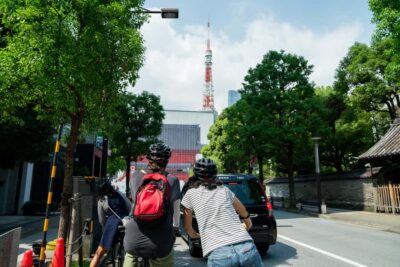
Tokyo: 3-hour Guided E-Bike Tour of the City’s Hidden Gems
Read our review →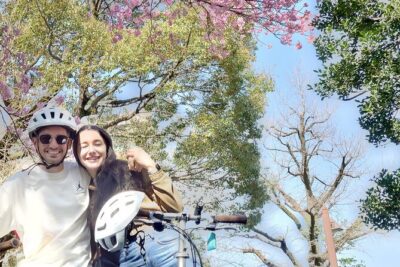
3-Hour Tokyo Private E-Bike Tour Starting from Your Hotel
Read our review →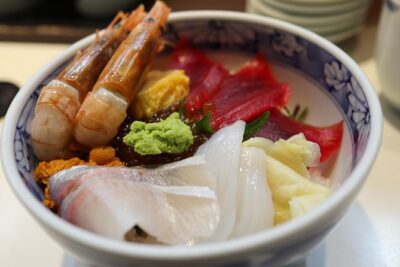
5-Hour Tokyo & Edo Hidden Gem Bike Tour with Lunch
Read our review →Browse the lists this ride appears in