
Review · KYOTO
Cycle Kyoto’s Hidden Gems & Gion Stroll
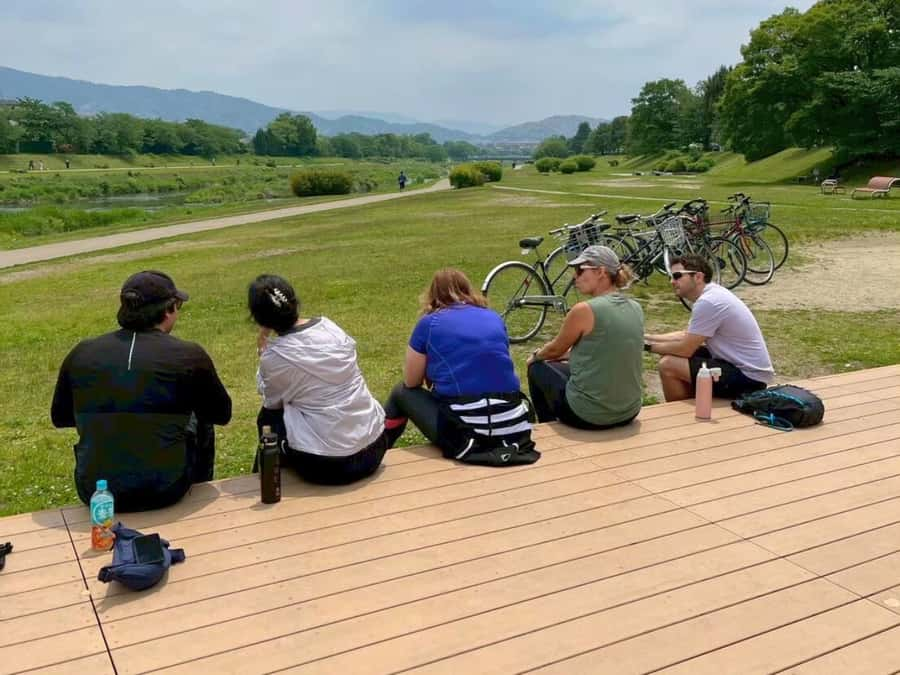
Kyoto is at its most enjoyable when you can leave the packed main streets behind, and this tour does that on two wheels. You pedal beside the river, stop for spring water, visit the Imperial Palace and Shimo-gamo Shrine, then finish with a short walk through Gion or Pontocho. I especially like the quiet riverside riding and the chance to see Kyoto’s famous sights alongside smaller local places. The main drawback is simple: you need to ride confidently for several hours, and children under nine cannot join.
I also like the human touch. Guides including Benjamin, Ko, Claire, and Mr. Go have taken guests to calm shrines, traditional snack shops, and good local restaurants. The route changes with the weather and local conditions, so you should expect a well-planned sample of Kyoto rather than a fixed checklist.
Key points at a glance
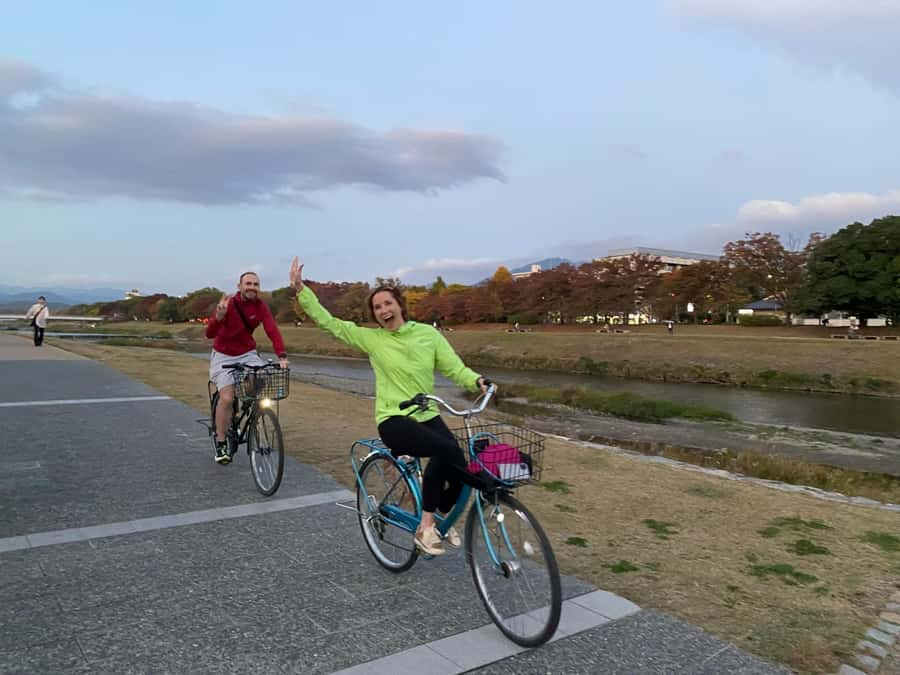
- Ride beside Kyoto’s rivers: Start on a peaceful riverside road, where the breeze and open sky make hot or humid weather easier to handle.
- See major sights without staying on the main tourist track: The route includes the Imperial Palace, a Zen temple, and Shimo-gamo Shrine.
- Stop for tea and a Japanese sweet: A traditional snack shop adds a small but memorable cultural pause to the ride.
- Explore Shimo-gamo’s forest: This UNESCO World Heritage site offers old trees, quiet paths, and striking shrine buildings.
- Finish in Gion or Pontocho: The walking portion explains Kyoto’s Flower Towns and geisha culture.
- Pay 1,000 yen extra for an electric bike: This can be useful if you are unsure about the distance or Kyoto’s summer heat.
Why cycling works so well in Kyoto
Kyoto is not a huge city by modern standards, but its major sights are spread across different neighborhoods. Walking between them can take much of your day, while buses are often slow on busy streets. A bicycle gives you a practical middle ground: you cover more ground than on foot, but you still notice side streets, riverside paths, temples, and quiet residential areas.
This tour lasts about three and a half hours on the bike, followed by a 30-minute walk. That is long enough to give you a real sense of the city without using up an entire day. You will not spend the whole time stopping for formal sightseeing. Some of the pleasure comes from simply riding through Kyoto with the air moving around you.
The route also works well for families with older children. Two children aged nine and ten joined one outing, and Mr. Go was especially patient with them. Still, this is not a ride for someone who is learning to balance on a bicycle. You need to be comfortable riding in a city setting and able to keep going for several hours.
More Hidden Gems Bike Tours in Japan
- Arashiyama Bamboo Forest & Hidden Gems Bike Tour (Early Bird)
★ 5.0 · 613 reviews - Kyoto: City Secrets eBike Tour
★ 4.9 · 196 reviews - Kyoto: Hidden Gems E-Bike Tour with Local Japanese Guide
★ 4.9 · 189 reviews
Starting at Sanjo Ohashi
The meeting point is at the kneeling man statue on the southeast corner of the Sanjo Ohashi intersection. From the east end of Sanjo Ohashi Bridge, cross the street and look for the statue. If you arrive by subway, the practical tip is to come up to street level first, then find the statue rather than trying to navigate from underground.
The activity ends at the same point. That makes planning dinner or an evening walk easier, especially if you want to continue around central Kyoto after the tour.
Wear comfortable shoes and clothing suited to the weather. Bring water and a camera, but leave large bags and luggage behind. Smoking and pets are not allowed. Kyoto can be hot and humid, and the open-air riding is refreshing, but you will still want light clothing and sun protection suited to the day.
Riverside roads and the spring-water stop
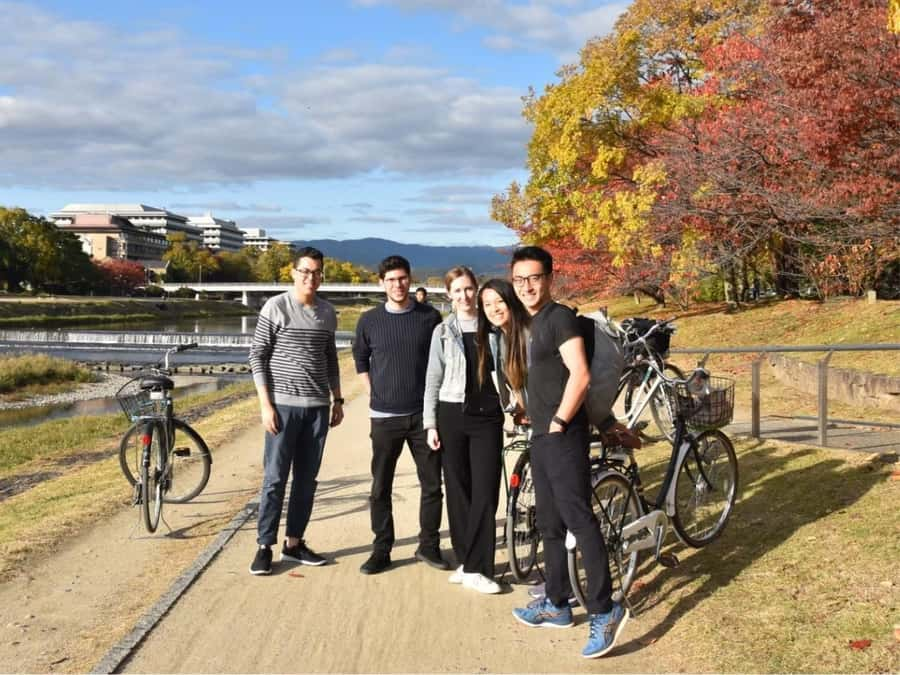
The ride begins on a peaceful road beside the river. This is a smart opening because it gets you moving before the more formal sightseeing stops. You begin with a sense of Kyoto as a lived-in city, not just a collection of famous monuments.
One early stop is a less obvious shrine where you can try pure natural spring water. It is a small detail, but it gives the ride a local rhythm. You are not rushing from one major attraction to another. You pause, drink, look around, and learn how the guide connects the place to daily life.
The riverside section is also one of the best reasons to choose this activity during warm weather. You still need to pedal, but the open air and water make the ride feel less confined than a bus or narrow city street. The exact route can change, so treat this as an example rather than a promise of every turn.
The Imperial Palace and a Zen temple
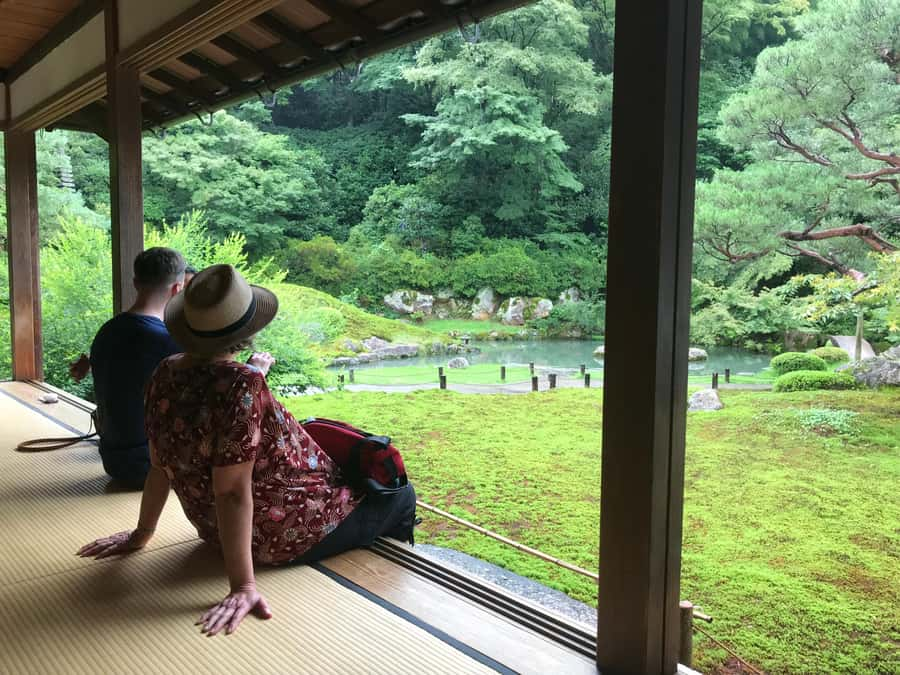
The Imperial Palace gives the ride a grand change of scale. After the smaller shrine and riverside roads, you reach a large historic site with broad grounds and a more formal setting. The stop adds context to Kyoto’s role as Japan’s imperial capital and gives you a chance to slow down before continuing.
A famous Zen temple is also included. The available information does not specify which temple, and the destinations may change, especially in bad weather. That flexibility is worth keeping in mind when you book. You are paying for a guided look at Kyoto’s cultural places, not a guaranteed list of every named stop.
The route then passes university campuses and quiet residential areas. I like this part because it fills in the spaces between monuments. You see where students live and where ordinary Kyoto life carries on, rather than spending all your time in places built for sightseeing.
More Hidden Gems Bike Tours in Kyoto
- Kyoto: Hidden Gems E-Bike Tour Through Backstreets & Temples
★ 4.9 · 54 reviews - Kyoto: Tailored E-Bike Tour to Highlights & Hidden Gems
★ 4.9 · 32 reviews
Shimo-gamo Shrine and its old forest
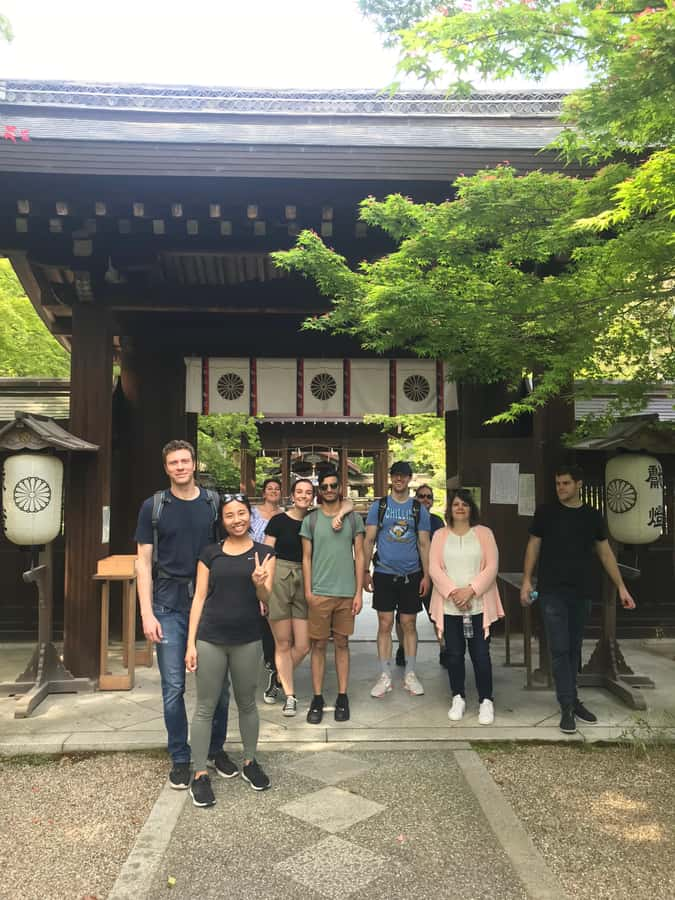
Shimo-gamo Shrine is one of the major stops and one of the strongest reasons to book this ride. It is a UNESCO World Heritage site, but the setting does not feel like a quick photo stop. The shrine sits within a primitive forest, giving the visit a calm, shaded quality that contrasts with Kyoto’s busier central streets.
You can expect beautiful shrine buildings and time to take in the trees and atmosphere. The guide helps make the stop more useful than simply arriving, taking a picture, and leaving. The route also lets you reach a place that can be awkward to combine with several other sights on foot in a single morning.
Several people who joined the ride valued visits to local shrines and temples that they felt would have been hard to find alone. That is the tour’s real strength: not secret access, but good routing and local judgment. You still see major Kyoto sights, yet the day feels less like a standard monument loop.
The river junction and the ride back
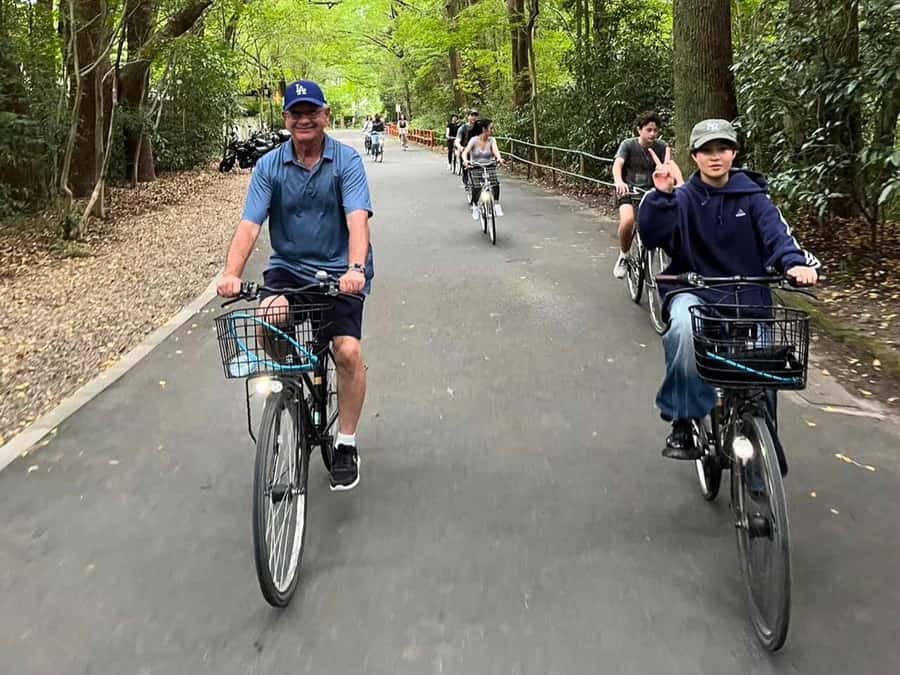
After Shimo-gamo Shrine, the route heads toward a distinctive river junction. The exact name is not supplied, but the point is described as unusual and scenic. From there, you follow a refreshing riverside route back toward the starting area.
This closing stretch lets the ride breathe. You have already seen formal sites, forest, campuses, and residential streets, so the return journey becomes a final chance to enjoy Kyoto at bicycle speed. The route includes a lighted-up riverside section, adding a pleasant visual change if the timing suits it.
The tour is described as rain or shine. That is useful, but it also means you should take the weather seriously. Rain may alter the destinations and bring an alternative plan involving a temple or shrine with entrance fees included. A wet ride will feel very different from a sunny one, so pack clothing that can handle the forecast.
Tea, sweets, and the traditional snack shop
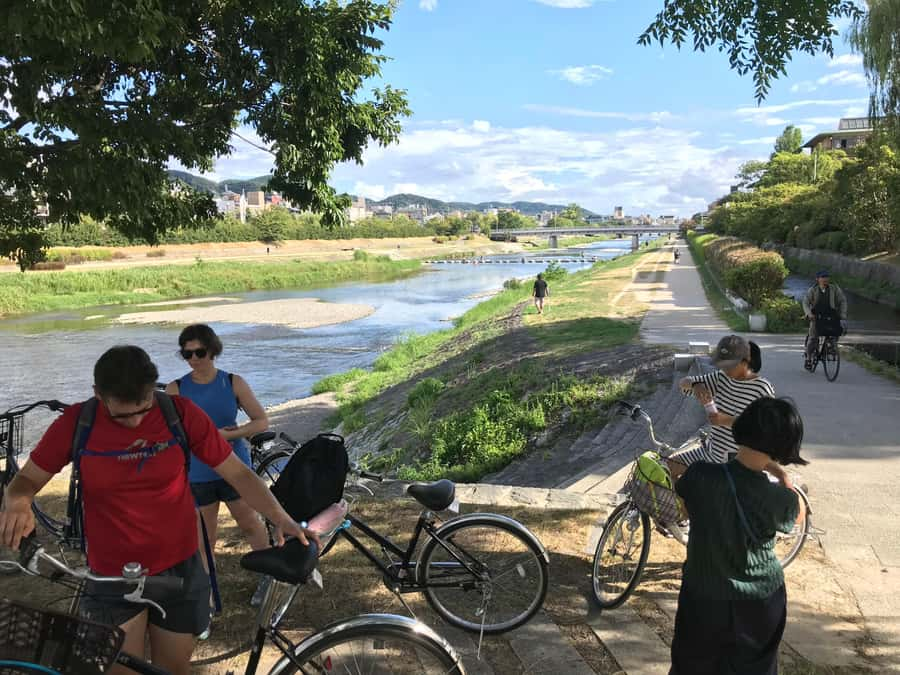
A Japanese sweet and tea at a traditional snack shop are included. This is not a full meal, but it provides a welcome pause and gives you a small taste of Kyoto’s food culture without adding another restaurant reservation to your day.
Ko has led outings that included tea and a sweet in a typical teahouse, and that stop appears to be one of the details people remember. You can use the break to ask questions, rest your legs, and talk with the guide about places to eat later.
The guides can also suggest restaurants and bars based on your requests during the walking portion. This is particularly handy if you want help choosing between a casual meal, a drink, or something connected to the neighborhood you are exploring. Do not expect the restaurant cost to be included. You are receiving recommendations, not a meal package.
Gion, Pontocho, and the Flower Towns
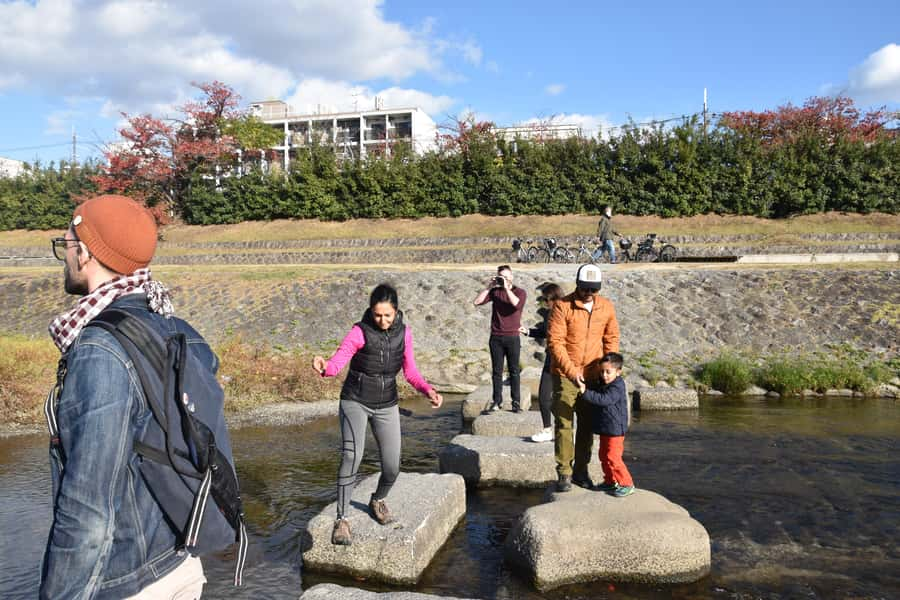
Once the bikes are returned, the group takes a 30-minute walk through either Gion or Pontocho. These areas are among Kyoto’s most photogenic, with narrow streets, traditional buildings, and an evening entertainment culture that feels very different from the daytime bicycle route.
The guide explains the Flower Towns, the traditional districts associated with geisha. You will learn about the culture and system behind these neighborhoods rather than simply walking through and taking pictures. If luck is on your side, you might see a geisha, but that is never something to count on or treat as part of the guaranteed program.
This short walk is a good finish because cycling and walking reveal different sides of Kyoto. On the bike, you cover distance and reach quieter places. In Gion or Pontocho, you slow down and pay attention to doorways, streets, restaurants, and the atmosphere of an old entertainment district.
Remember that these are working neighborhoods, not theme parks. Keep your camera respectful, follow the guide’s advice, and avoid blocking narrow lanes. The walk is brief, so it adds local context without taking over the whole experience.
How good is the 73 dollar value?
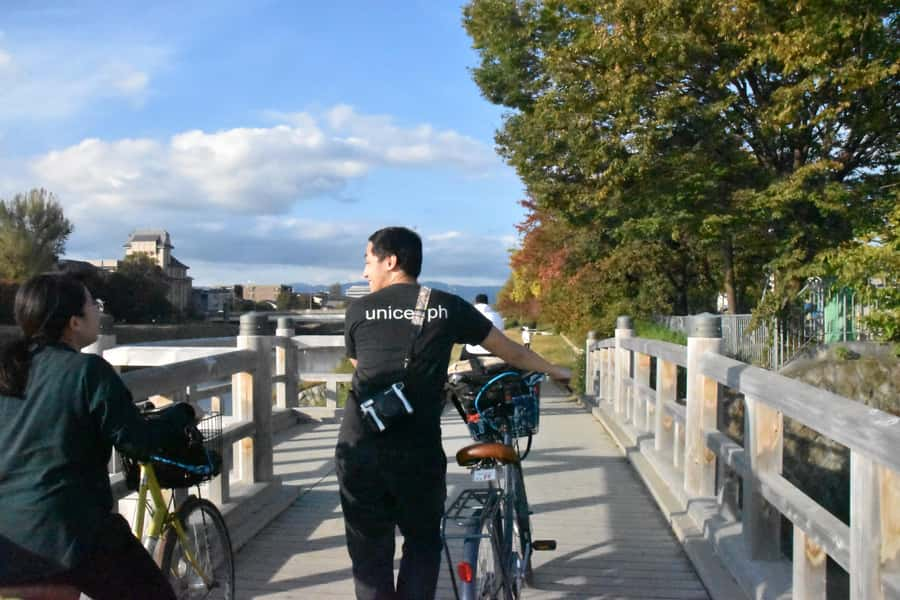
At $73 per person, the tour is not the cheapest way to rent a bike in Kyoto. The value comes from the route, the guide, the included bicycle, the tea and sweet, and the amount of ground covered in a half day.
If you rented a bicycle alone, you would save the guiding fee, but you would need to plan the route, find the quieter roads, locate the shrines, and decide how to connect the Imperial Palace, Zen temple, Shimo-gamo Shrine, and Gion. The tour removes that planning work and gives you cultural explanation along the way.
The value is strongest for a first visit, a family with children old enough to ride, or anyone who wants a broad introduction before exploring Kyoto independently. It is less compelling if you already know the city well, dislike group activities, or prefer spending a long time inside each temple and shrine.
An electric bike costs an additional 1,000 yen, paid on the spot. I would consider that a sensible upgrade if you are worried about heat, stamina, or keeping up. It is not needed for every rider, but the option makes the activity more accessible to people who can ride yet do not want a strenuous outing.
Guides, pace, and the family question
The guide quality matters here because the ride includes ordinary streets and small stops that could otherwise pass without meaning. Benjamin has been described as kind, helpful, and good at offering restaurant suggestions. Claire kept the stops at a comfortable frequency and mixed major sights with quieter places. Ko added useful explanations and the traditional tea break, while Mr. Go handled children with patience.
The comments about the guides are consistent in one important way: the human pace seems to be a major part of the experience. You are not simply following a route behind a flag. You can ask questions, request food suggestions, and get help with the practical parts of the day.
For families, the minimum age is nine. That is a firm planning point. Children must also be able to ride a bicycle confidently, and parents should consider heat, traffic, and the three-and-a-half-hour duration. A child who enjoys cycling will likely find this a fun way to see Kyoto, while a child who tires quickly may struggle.
Who should book this Kyoto ride?
You should consider it if you want to:
- Cover several Kyoto districts in one half day.
- Combine famous sights with quieter shrines and residential areas.
- Ride beside the river instead of spending the whole morning on buses.
- Learn about Gion and geisha culture from a guide.
- Get restaurant and bar suggestions suited to your plans.
- Give older children an active introduction to the city.
You may want another activity if you cannot ride a bicycle, want a slow temple-focused visit, or have large bags with you. The tour does not allow pets, smoking, luggage, or large bags, and it is not designed for children under nine.
Bookings can be cancelled up to 24 hours in advance for a full refund, and you can reserve now and pay later. That gives you some flexibility if your Kyoto schedule is still changing.
Should you book Cycle Kyoto’s Hidden Gems and Gion Stroll?
I would book this if you want a friendly, active overview of Kyoto that reaches beyond the standard central streets. The strongest features are the riverside riding, Shimo-gamo Shrine, the mix of major and local sights, and the chance to finish with a short Gion or Pontocho walk.
Choose the electric bike if you are unsure about your stamina, and check the weather before setting out. If you are comfortable on a bicycle and want a half day that feels varied rather than scripted, the $73 price is reasonable for the route and personal guidance.
FAQ
How long does the activity last?
The bicycle portion lasts about three and a half hours, followed by a 30-minute walk in Gion or Pontocho.
Where does the tour meet?
Meet at the kneeling man statue at the southeast corner of the Sanjo Ohashi intersection. From the east end of Sanjo Ohashi Bridge, cross the street to find it.
Where does the activity finish?
The activity ends back at the meeting point.
What sights are included?
The route may include the Imperial Palace, a famous Zen temple, Shimo-gamo Shrine, local shrines, university campuses, residential areas, a river junction, and riverside roads. Destinations are examples and may change.
Is Shimo-gamo Shrine included?
Shimo-gamo Shrine is one of the main planned stops. It is a UNESCO World Heritage site with a primitive forest and traditional shrine buildings.
Are bicycles included?
Yes. Rental bikes are included in the activity price.
Can I use an electric bike?
Yes. An electric bike costs an additional 1,000 yen, payable on the spot.
Is the tour suitable for children?
Children under nine cannot join. Children who are nine or older may join if they can ride a bicycle comfortably.
What is included during the refreshment stop?
A Japanese sweet and Japanese tea at a traditional snack shop are included.
What happens if it rains?
The experience operates in rain or shine, but destinations may change. An alternative plan may include a temple or shrine, with entrance fees included.
New cycling reviews around Kyoto
- Best of Kyoto: Ginkakuji & Path of Philosophy E-Bike Tour★ 4.9 · 79 reviews
- Kyoto: Tailored E-Bike Tour to Highlights & Hidden Gems★ 4.9 · 32 reviews
- Kyoto: Half-day Guided Bike Tour with Fushimi Inari★ 4.9 · 21 reviews
- Kyoto: Full-Day City Highlights Bike Tour with Light Lunch★ 5.0 · 52 reviews
- Kyoto: Full Day Bike Tour★ 4.9 · 39 reviews
- Kyoto: Early Bird E-Bike Tour with Lunch★ 5.0 · 14 reviews
- Kyoto: Arashiyama Bamboo Forest Morning Tour by Bike★ 5.0 · 115 reviews
- Kyoto: Afternoon Bamboo Forest and Monkey Park Bike Tour★ 4.9 · 83 reviews
Kyoto Cycling Tours, compared.
Arashiyama Bamboo Forest & Hidden Gems Bike Tour (Early Bird)
Read our review →
5 Top Highlights of Kyoto Full Day Bike Tour (E-bike option)
Read our review →
Full Day Biking Tour Exploring the Best of Kyoto
Read our review →
Browse the lists this ride appears in