
Review · HIROSHIMA
Hiroshima: Best of Hiroshima Guided Bike Tour
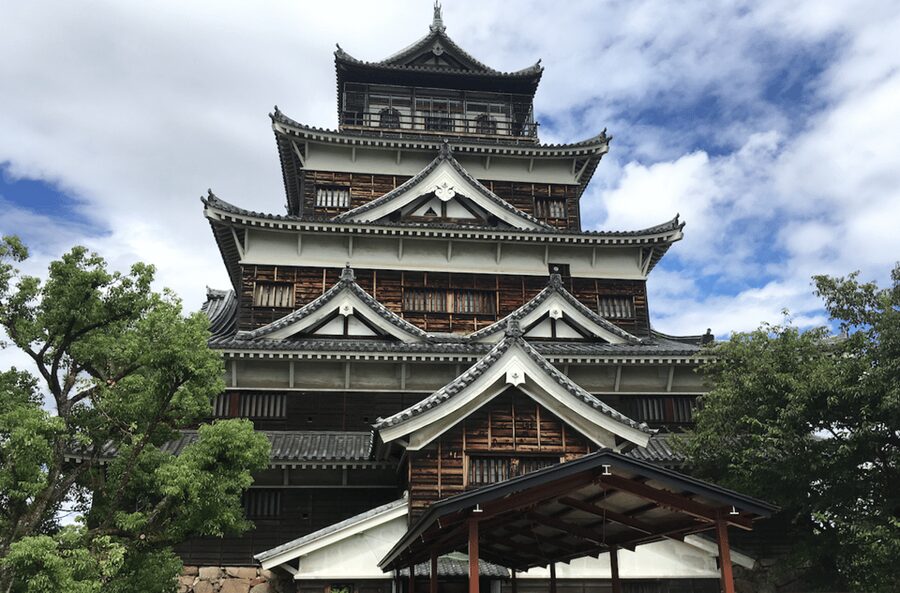
Hiroshima’s major sights fit together unusually well on two wheels. This 3.5-hour bike tour links the Atomic Bomb Dome and Peace Memorial Park with Gokoku Jinja, Hiroshima Castle, and Shukkei-en Garden, giving you a wider view than a visit focused only on the memorials.
I like the flat route, which keeps the cycling gentle, and the small group of no more than eight, which gives guides time to answer questions and stop for photos. I also like that you use quality bikes, helmets, and bottled water rather than treating the ride as an afterthought.
The main consideration is the subject matter. The tour deals directly with the atomic bombing and its human cost, so it is not simply a sightseeing spin. Hot weather, rain, or a lack of cycling confidence can also affect your enjoyment, though the route is designed to be easy.
Key points at a glance
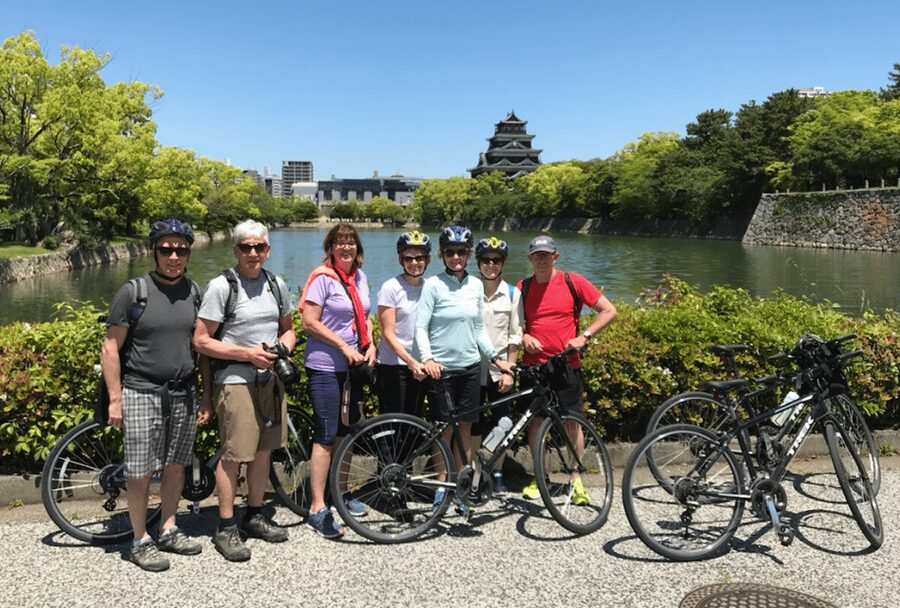
- A 10-kilometer city ride: The route covers a lot of ground without demanding steep climbs.
- Four very different stops: You move from the Atomic Bomb Dome and Peace Memorial Park to a Shinto shrine, a samurai-era castle, and an Edo-period garden.
- Guides who add personal detail: Awais, Aimee, Miyu, James, Ehsan, and other English-speaking guides have been praised for clear explanations and family stories.
- Small groups of up to eight: This makes it easier to hear the guide, ask questions, and ride at a comfortable pace.
- Flexible bike choices: Trek bikes, step-through models, e-bikes, and child-sized bikes are available, with a minimum height of 140 centimeters.
- A useful half-day format: At $70 per person, the tour works well when you want a fast introduction before exploring museums or restaurants on your own.
Why cycling works so well in Hiroshima
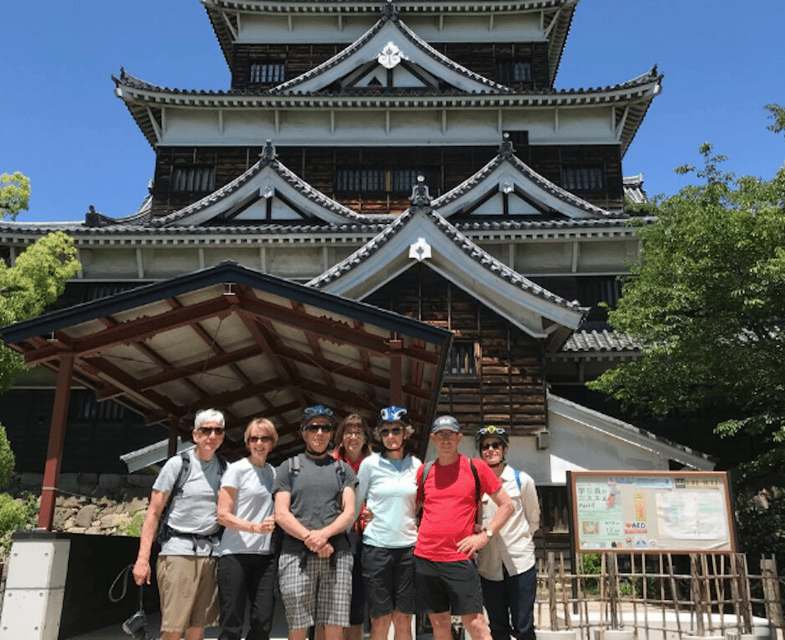
Hiroshima is easy to explore on foot in sections, but the main sights are spread far enough apart that walking can use much of your day. A bicycle gives you the bridge between a long walk and a bus ride. You cover more ground, feel the city changing around you, and avoid spending each transfer waiting for transport.
The route is flat, and the pace is described as leisurely. That matters because the tour is built around stopping and listening, not racing from monument to monument. The ride itself is usually around 10 kilometers, with regular pauses for history, photographs, and questions.
I would not book this as a sports outing. You need to be able to ride a bicycle, but you do not need serious fitness. The tour is intended for people who can cycle comfortably, not for anyone looking for speed or technical riding.
The group limit of eight is another real advantage. Hiroshima’s memorial sites call for quiet attention, and a large group can make that difficult. With fewer people, your guide can adjust explanations, keep the pace together, and take time with questions. Several guides, including Aimee, Awais, Miyu, and Ehsan, have been singled out for making the tour friendly as well as informative.
More Guided Rides in Japan:
- Tokyo Guided Small-Group Biking Tour
★ 5.0 · 1,250 reviews - Tokyo Top Highlights 3h Guided E-bike Tour
★ 5.0 · 714 reviews - 3h Tokyo E-Bike Tour: Hidden Gems, and Local Life with guide
★ 5.0 · 670 reviews
From Cycle Hiroshima HQ to the Peace Memorial Park
You meet at Cycle Hiroshima HQ, marked by a large Cycle Hiroshima sign. The session begins with a short orientation and bike fitting. Arriving a little early is sensible, especially if you need a particular frame size or want time to adjust the saddle.
You receive a helmet and a high-quality bike, with Trek bikes in several sizes. Step-through bikes are available for easier mounting, and e-bikes and child-sized bikes can be arranged. The stated minimum height is 140 centimeters, and children under 12 are not suitable for this activity, so families should check those limits carefully before booking.
After the fitting, the group heads out on a relaxed riverside route toward Peace Memorial Park. The ride helps you get used to the bike before the most serious part of the tour begins. Comfortable clothing and shoes are the only items specifically requested, but I would also prepare for sun or rain because the tour depends on good weather.
Peace Memorial Park and the Atomic Bomb Dome
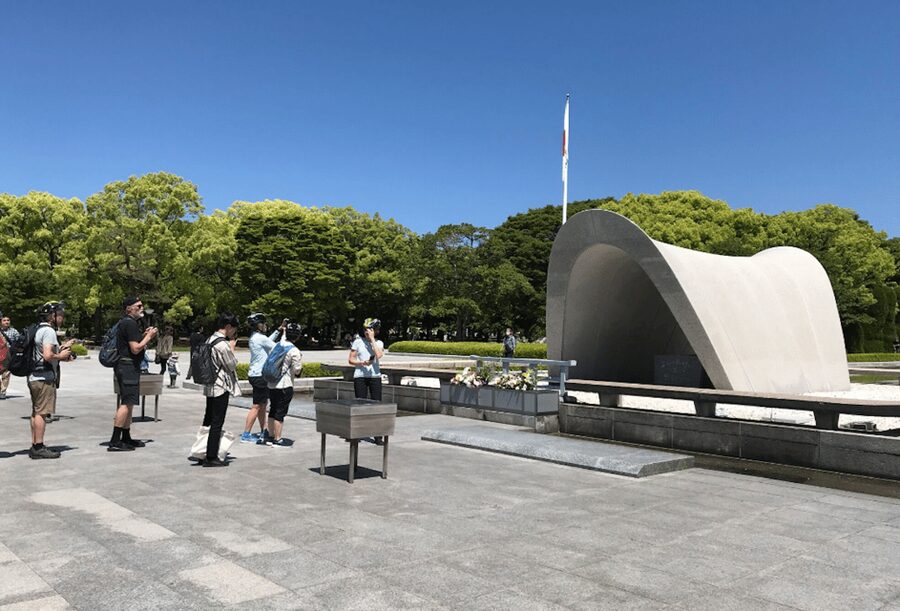
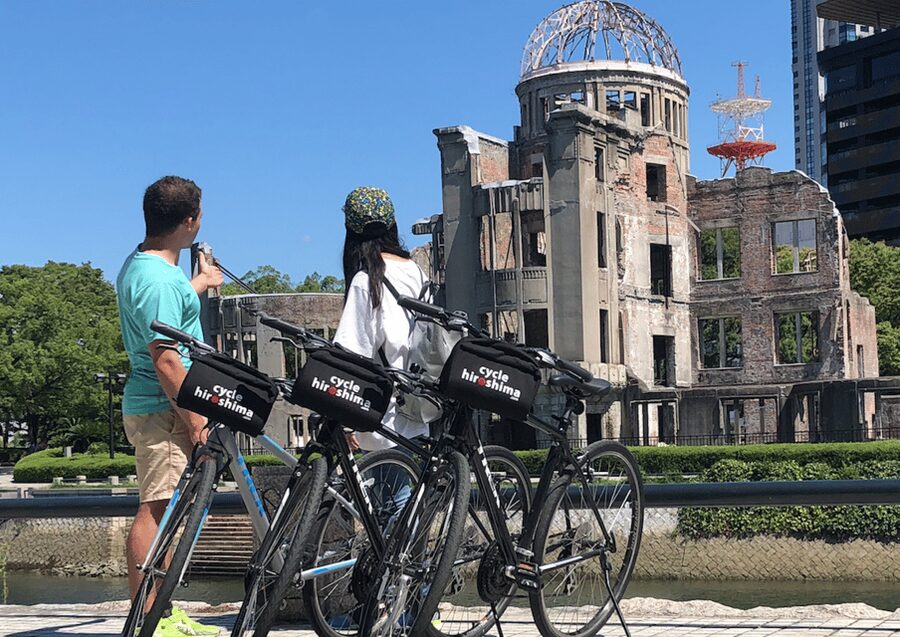
The first major stop is the emotional center of Hiroshima. Peace Memorial Park contains several monuments connected with the atomic bombing of August 6, 1945, and the guide helps place them in context rather than leaving you to read isolated plaques.
The Atomic Bomb Dome is the best-known sight here. Its preserved structure is a UNESCO World Heritage Site, and seeing it in person gives the history a physical scale that photographs cannot provide. The building is not presented as a simple photo stop. You have time to look, listen, and ask questions about the bombing, the city’s destruction, and Hiroshima’s later identity as the City of Peace.
This is where the quality of the guide matters most. Awais has been praised for explaining the bombing and recovery in a clear way, while Miyu has shared family stories that connect the events of 1945 with local life. Aimee and other guides have also been noted for handling the subject with care and respect.
You should expect a serious conversation, not a light tour-bus commentary. The guide may discuss loss, survivors, destruction, and the rebuilding of Hiroshima. That can be difficult, but it is also the reason this experience has more weight than a simple city ride.
The bicycle helps here in a practical way. You do not spend the entire morning walking between distant memorials, so you have more energy for the places themselves. It also lets you see how the memorial zone connects with the wider city, rather than treating it as an isolated historical site.
Gokoku Jinja and Hiroshima Castle
After Peace Memorial Park, the route continues north to Gokoku Jinja. This is described as Hiroshima’s most popular Shinto shrine, and it provides a useful change of mood after the memorial sites.
The shrine introduces a different side of the city. You move from modern remembrance and the physical remains of the bombing to an active religious setting tied to Japanese customs. Your guide can help explain what you are seeing and answer questions that might not be obvious from a quick walk through the grounds.
The next stop is Hiroshima Castle. The castle grounds offer a glimpse into the city before the twentieth century, when samurai culture shaped local power and daily life. This contrast is one of the tour’s strengths. Hiroshima is not only a place defined by 1945, and the itinerary makes that clear without minimizing the importance of the Peace Park.
The castle visit is also a reason to choose this ride over a memorial-only tour. You gain a broader sense of Hiroshima’s past, moving from the feudal period to wartime destruction and then to modern recovery. The route does not ask you to spend hours inside every attraction, so if you want a detailed museum visit at the castle or Peace Memorial Museum, plan separate time afterward.
More Cycling Trips in Japan:
- Hidden Kyoto E-Biking tour
★ 5.0 · 1,843 reviews - Bike Tour Exploring North Kyoto plus Lunch
★ 5.0 · 1,087 reviews - Tokyo Great Cycling Tour
★ 5.0 · 811 reviews - Arashiyama Bamboo Forest & Hidden Gems Bike Tour (Early Bird)
★ 5.0 · 613 reviews
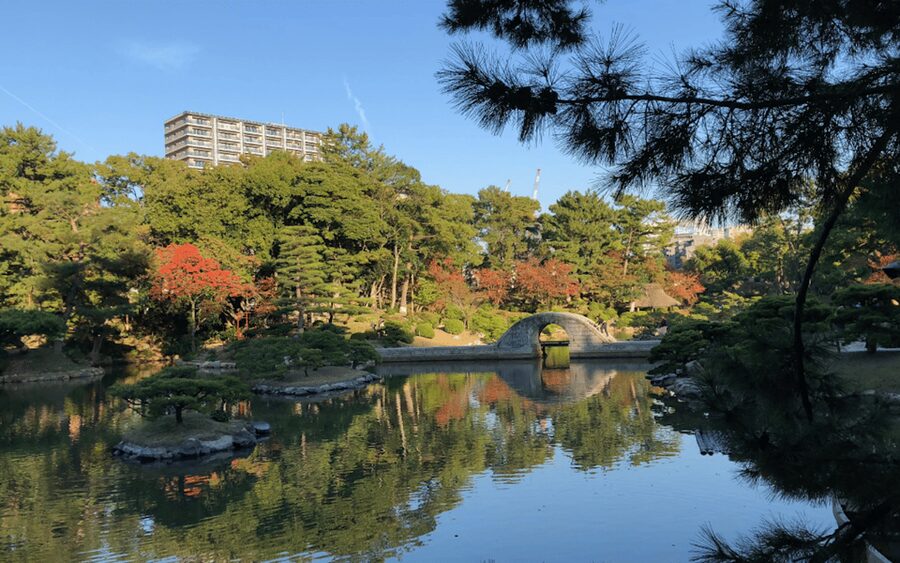
Shukkei-en Garden finishes the ride gently
The final major stop is Shukkei-en Garden, built during the Edo Period and regarded as one of the finest traditional gardens in western Japan. Entry is included in the tour price, which is useful because the garden is not merely a quick exterior photo stop.
Ending here is a smart piece of pacing. The Atomic Bomb Dome and Peace Memorial Park require attention and emotional energy. Shukkei-en offers a quieter finish, with traditional garden design and a slower atmosphere. It gives you room to process the earlier stops while seeing a beautiful part of Hiroshima that has a very different character.
Several accounts of the experience specifically praise the garden as a fitting end. I agree with the logic of the route: the tour begins with the city’s most painful chapter, broadens into older cultural history, and closes in a place built for calm observation.
Do not expect a long, private garden visit. The tour has a fixed duration of 210 minutes, and the guide must keep the group moving. If Shukkei-en interests you most, you might want to return independently with more time.
The guides shape the experience
The provider uses a rotating team of English-speaking guides, so the person leading your tour depends on the date. Awais appears frequently in the feedback and is praised for clear explanations, patient bike setup, and a strong grasp of Hiroshima’s past. Aimee is noted for warmth, humor, regular breaks, and thoughtful answers.
Miyu has been appreciated for combining historical information with family stories. James has been praised for careful detail and for sometimes extending the route to include extra sights when time allowed. Ehsan has been described as an engaging storyteller who presents more than one perspective.
Those details point to what you should look for in this tour: not just a guide who names monuments, but someone who can explain why they matter. The strongest experiences seem to come when the guide allows questions and connects the city’s public history with personal or local experience.
The guide also controls the pace. On hot days, regular stops make a major difference. One ride took place in very high heat and included extra breaks and a quick local food stop. That was not presented as a guaranteed part of every departure, so treat it as a possible courtesy rather than part of the fixed itinerary.
Bikes, weather, and practical comfort
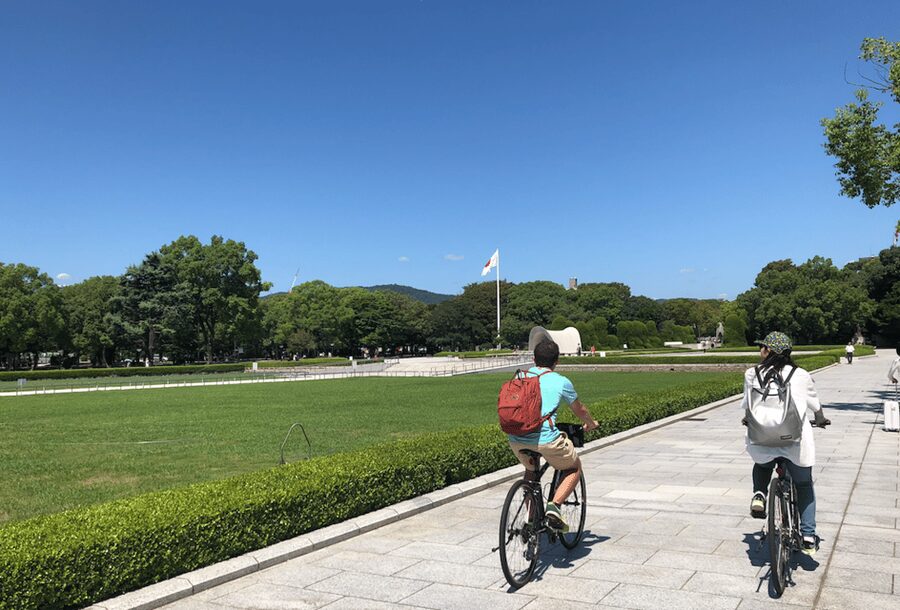
The bicycles are one of the tour’s better features. They are described as comfortable and well maintained, and the range of sizes helps avoid the common problem of being handed a generic bike that does not fit.
An e-bike is available if you prefer extra assistance, but the flat route means it may not be necessary for most riders. A step-through bike can be more useful than an e-bike if you value easy mounting and dismounting.
The tour runs in small groups, but you still ride as part of a shared pace. If you are an experienced cyclist who wants to go fast, this may feel slow. If you have not ridden for years, the gentle speed and frequent stops should feel more reassuring, although you still need to be comfortable balancing and steering in a city setting.
Weather is the main practical weakness. The tour requires good conditions and may be canceled in poor weather, with a different date or full refund offered. Rain has not always ruined the experience, but you should not assume the tour will operate in unsafe conditions.
Summer heat is also worth taking seriously. Bottled water is included, and guides have made extra stops on hot days, but wear light clothing and bring sun protection. In cooler months, the ride may feel brisk, especially during riverside sections.
Is $70 a fair price?
At $70 per person, this is not the cheapest way to see Hiroshima. You can walk through Peace Memorial Park without paying for a guide, and public transport can take you to many of the same areas.
The value comes from what is bundled together. You receive a quality bike, helmet, bottled water, an English-speaking guide, and entry to Shukkei-en Garden. More important, you receive a carefully planned route and explanations at the places where context matters most.
I think the price is fair if you have only one day in Hiroshima or want a strong orientation at the beginning of your stay. The ride covers the main memorial area, the shrine, castle grounds, and garden in 210 minutes. Doing that independently would be possible, but you would need to plan the route, arrange bikes, judge the distances, and research the historical background yourself.
The value is weaker if you dislike group tours, want extended time inside museums, or already know Hiroshima well. You may prefer to walk at your own pace and spend longer at the Peace Memorial Museum or Shukkei-en.
Free cancellation up to 24 hours before departure and the option to reserve now and pay later make the booking less rigid. Still, check the starting time and weather before committing your day.
Who should book this Hiroshima ride?
I would recommend it to first-time visitors who want a clear introduction to the city. It suits couples, solo visitors, and small groups who want history, scenery, and light exercise in one outing.
It is especially useful if you want to save your feet. Several people appreciated riding between sites instead of walking, and that is a genuine benefit in a city where the most important stops can easily fill a morning.
Families need to check the rules carefully. Children under 12 are not suitable according to the activity conditions, even though one larger party reportedly included a 10-year-old. The stated policy should guide your booking decision. The minimum height is 140 centimeters.
You should not book if you are pregnant, have back or heart problems, have a pre-existing medical condition that makes cycling unsafe, or simply do not feel comfortable on a bike. The flat route reduces physical strain, but it does not remove the basic demands of cycling.
Should you book the Best of Hiroshima Guided Bike Tour?
Book it if you want a thoughtful, efficient introduction to Hiroshima and like the idea of moving between major sights by bicycle. The combination of Peace Memorial Park, the Atomic Bomb Dome, Gokoku Jinja, Hiroshima Castle, and Shukkei-en is well chosen, and the small group format gives the historical stops room to breathe.
I would schedule it early in your Hiroshima stay. That leaves time afterward to return to the places that affect you most, especially the Peace Memorial Museum or Shukkei-en Garden.
Skip it if you want a private tour, a fast cycling workout, or long unhurried visits inside each attraction. For most first-time visitors who can ride a bike, though, the $70 price buys a useful route, solid equipment, and the kind of local explanation that is difficult to assemble on your own.
FAQ
How long does the Hiroshima bike tour last?
The tour lasts 210 minutes, or about three and a half hours.
How much does the tour cost?
The price is $70 per person.
Where does the tour begin?
You meet at Cycle Hiroshima HQ. The shop has a large Cycle Hiroshima sign at the front.
What sights are included?
The route includes Peace Memorial Park, the Atomic Bomb Dome, Gokoku Jinja, Hiroshima Castle, and Shukkei-en Garden.
Is the cycling route difficult?
The route is completely flat and follows a relaxed pace. You need to be able to ride a bicycle, but the tour is not designed as strenuous cycling.
What type of bicycle can I use?
The operator provides Trek bikes in a range of sizes, plus step-through bikes, e-bikes, and child-sized bikes. The minimum height is 140 centimeters.
Is Shukkei-en Garden included in the price?
Yes. Entry to Shukkei-en Garden, a high-quality bike, helmet, bottled water, and an English-speaking guide are included.
What happens if the weather is poor?
The tour requires good weather. If it is canceled because of poor conditions, you can choose another date or receive a full refund.
New cycling reviews around Japan
- Osaka E-Bike Tour With A Local Guide★ 4.7 · 75 reviews
- Osaka: City Highlights Bike Tour★ 4.7 · 20 reviews
- Okinawa: Afternoon Cycling Tour with Local Guide★ 4.8 · 39 reviews
- Nara: City Highlights Shared Group or Private Bike Tour★ 4.9 · 34 reviews
- Nara: Bike Tour in Ancient Capital UNESCO World Heritage★ 5.0 · 43 reviews
- Naha: Guided E-Bike Tour of the 12 Zodiac Temples★ 4.9 · 50 reviews
- Best of Kyoto: Ginkakuji & Path of Philosophy E-Bike Tour★ 4.9 · 79 reviews
- Kyoto: Tailored E-Bike Tour to Highlights & Hidden Gems★ 4.9 · 32 reviews
Hiroshima Cycling Tours, compared.
Hiroshima in a Nutshell: Morning Bike Adventure
Read our review →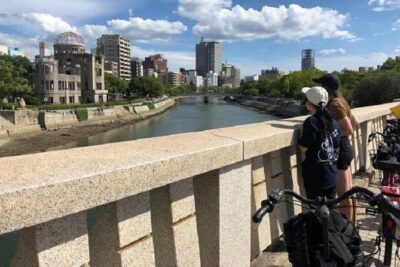
Hiroshima 2hr Peace Cycling Tour with Local Guide
Read our review →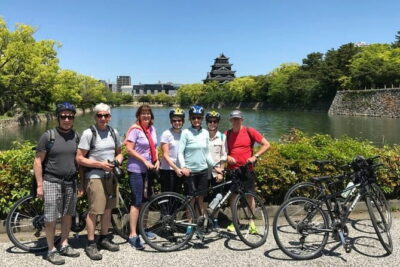
Browse the lists this ride appears in