Review · KYOTO
Kyoto: Fushimi Inari Shrine and Tofukuji Temple E-Bike Tour
Kyoto’s famous sights are easier to understand when you reach them by bicycle. This tour takes you from the lanes of Gion to Fushimi Inari Shrine and Tofukuji Temple, while using quieter streets and river paths to show you parts of the city most visitors miss. Maki, the guide, brings history, customs, religion, and plenty of humor into the ride.
I like the small group of eight because it makes road directions and questions manageable. I also like the comfortable e-bikes, which help on slopes and keep the four-hour route within reach for ordinary riders. The main drawback is time: with cycling, stops, and a range of riding speeds, you may want longer at Fushimi Inari than this half-day format allows.
Key points at a glance
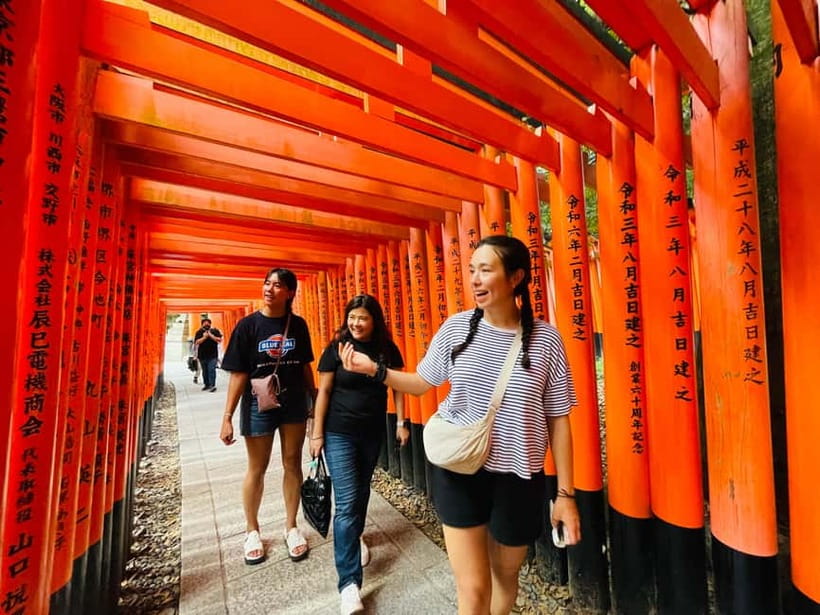
- A useful Kyoto orientation: Ride through Gion, residential lanes, city streets, and riverside paths before exploring the major shrines.
- Maki’s personal touch: Expect clear English, local stories, jokes, cultural explanations, and help with family photos.
- Two religions in one outing: Learn how Shinto shrines differ from Buddhist temples at Fushimi Inari and Tofukuji.
- Electric help where it counts: The bikes make slopes and the later part of the ride easier without turning the outing into a hard workout.
- A balanced route: You get major sights, quieter temples and shrines, local streets, and time to sit quietly in a Zen garden.
- Good practical value: The $83 price includes the guide, e-bike, helmet, insurance, snack, water, and admission for two places.
Why an e-bike is a smart way to see Kyoto
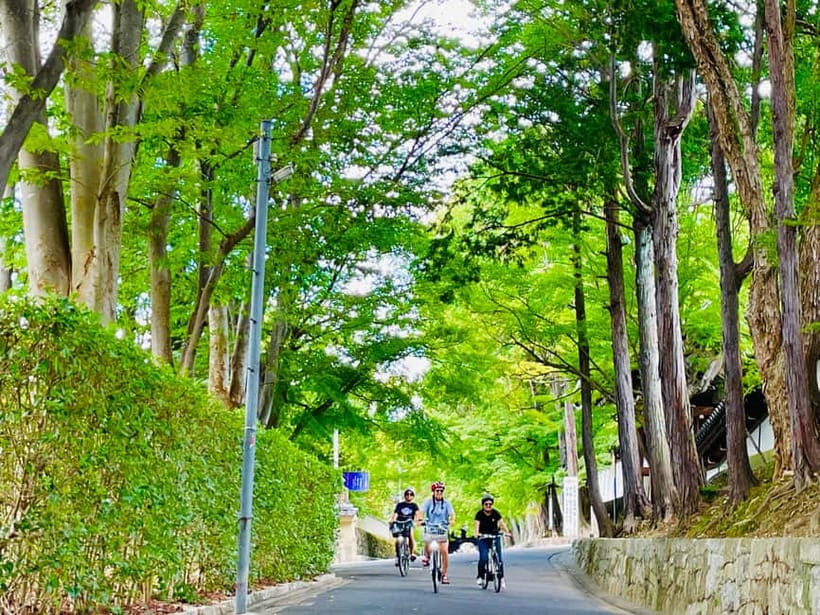
Kyoto is easy to admire and surprisingly tiring to cross. The sights are spread across a broad city, and a day built around temples can leave you walking the same crowded corridors between one stop and the next. A bicycle gives you a better sense of how the neighborhoods connect.
The electric assistance matters most on slopes and near the end of the route. You still pedal, but the bike takes the strain out of the ride. People who do not normally cycle long distances can keep up more comfortably, while regular cyclists can enjoy the scenery rather than treating the route as exercise.
The tour mixes cycling with walking and standing at religious sites. You should be comfortable on a bike, able to manage city riding, and ready for some time on your feet. It is not suitable for children under 12, pregnant women, or people with mobility impairments.
A short orientation at the start covers how to use the electric bike and how to ride in Japan. This is important because you may use quiet lanes and riverside paths, but you also pass through busier areas. The guide leads from the front and gives directions, and the small group helps keep the ride together.
More E-Bike Tours in Japan
- Hidden Kyoto E-Biking tour
★ 5.0 · 1,843 reviews - 5 Top Highlights of Kyoto Full Day Bike Tour (E-bike option)
★ 5.0 · 511 reviews - Kyoto: Memory Kyoto E-Bike Tour
★ 4.8 · 297 reviews
Starting near Higashiyama-Sanjyo
The meeting point is Pedal Adventure Kyoto, near Higashiyama-Sanjyo. There is no hotel pickup, so you need to make your own way there and arrive ready to begin. Wear comfortable clothes and shoes, apply sunscreen on sunny days, and bring a water bottle even though water is included.
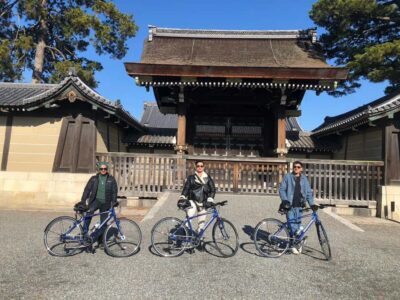
The first few minutes are practical rather than scenic. You get fitted with an e-bike and helmet, learn the controls, and receive a basic briefing on riding in Japan. This early explanation is especially useful if you are nervous about city streets or have not used an electric bicycle before.
Maki’s role is a major part of the experience. She explains the route clearly, keeps an eye on the group, and gives cultural context at each stop. Her English is described as very strong, and her style combines personal stories with visual aids, including a binder with pictures.
Gion, geisha culture, and everyday Kyoto
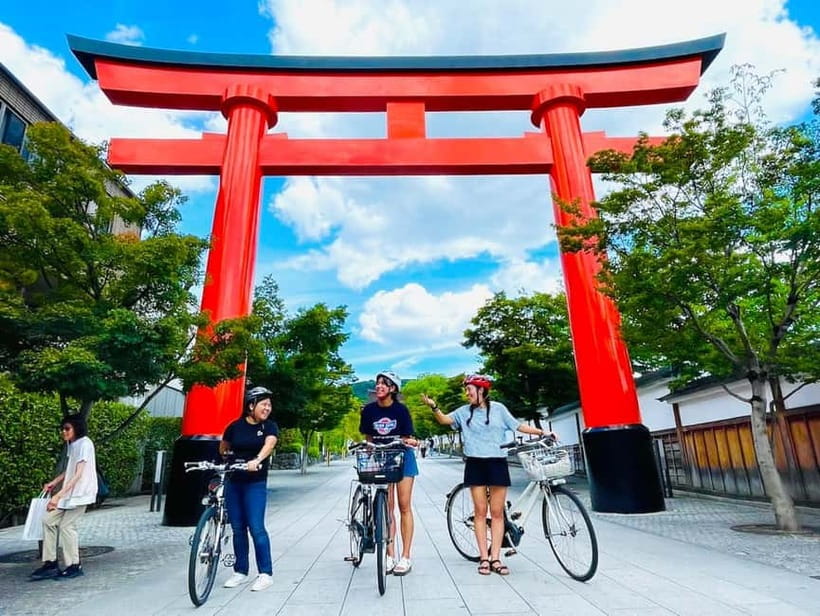
The ride heads through Gion, Kyoto’s best-known traditional district. This is a good place to discuss geisha culture and the customs that shape public behavior in Kyoto, rather than simply stopping for a quick photograph.
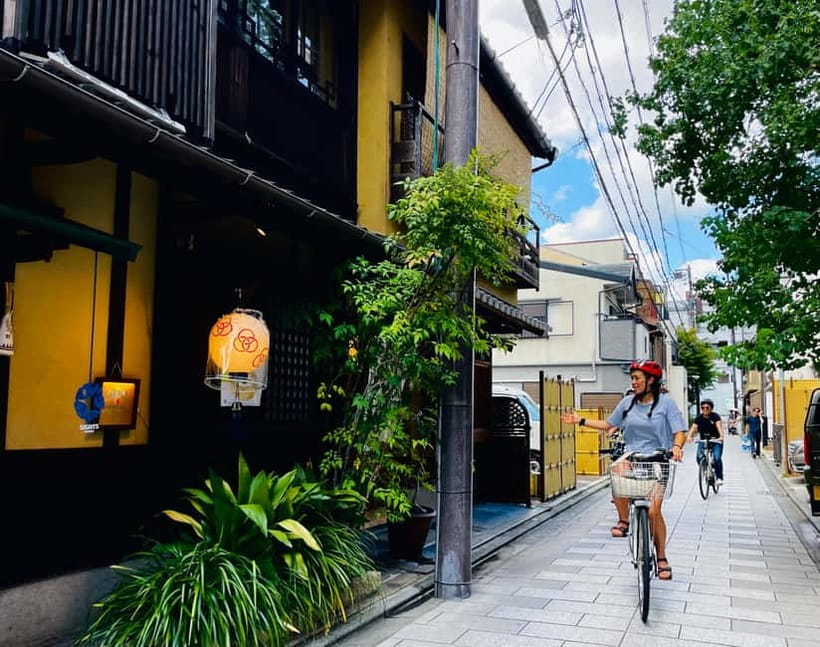
Gion can be busy, so you should expect a working neighborhood as well as a sightseeing area. The value of seeing it by bike is that you move beyond the main photo spots and begin to notice side streets, homes, small businesses, and the careful design of older parts of the city.
The route also passes through less touristy neighborhoods. Here, the focus shifts from famous architecture to ordinary life: how people move through the city, how residential streets are arranged, and how temple and shrine spaces fit into daily routines.
I especially like this part of the route because it gives the tour a sense of place. Fushimi Inari is an essential Kyoto sight, but it cannot tell you everything about the city. The quieter stretches help you understand Kyoto as a living place rather than a string of ticketed attractions.
You may also stop at smaller shrines and temples along the way. The exact balance can depend on the group’s pace, traffic, and time spent at earlier stops. That flexibility is useful, although it means you should not expect every stop to receive the same amount of attention.
Fushimi Inari Shrine and the meaning of Shinto
Fushimi Inari Shrine is the tour’s biggest draw. Its long rows of orange torii gates make it one of Japan’s most recognizable religious sites, and arriving by e-bike gives you a welcome change from spending the whole day on public transport or in a taxi.
The important part is not just seeing the gates. Maki explains the shrine’s history and the basic ideas of Shinto, giving you a framework for understanding what you are looking at. You learn to see the shrine as a place of worship and tradition, not just a dramatic corridor for photographs.
This is also where timing matters. Fushimi Inari is a major attraction, and the tour has to share the stop with the rest of the route. One practical criticism is that some people may want more time here, particularly if they hope to walk farther through the torii gates or take photographs at a slow pace.
The tour format does have an advantage. You do not need to work out the route, interpret shrine customs alone, or guess which details matter. Your guide can explain the proper approach and answer questions about Shinto practices, local traditions, and the differences between a shrine and a temple.
Expect some walking once you leave the bikes. Comfortable shoes are more important than stylish ones, and a camera is worth carrying. Keep in mind that this is an active religious site, so respectful behavior and attention to the guide’s instructions matter.
More E-Bike Tours in Kyoto
- E-Bike Tours of the highlights of Kyoto!!!
★ 5.0 · 291 reviews - Kyoto: City Secrets eBike Tour
★ 4.9 · 196 reviews - Kyoto: Hidden Gems E-Bike Tour with Local Japanese Guide
★ 4.9 · 189 reviews - Historical Kyoto E-Bike Tour
★ 5.0 · 181 reviews
Tofukuji Temple and a quiet Zen pause
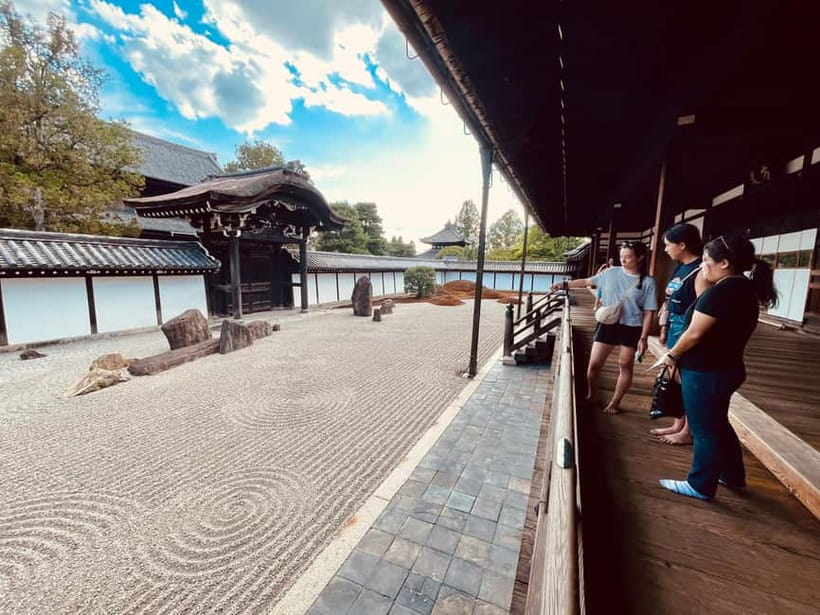
Tofukuji Temple provides a useful contrast to Fushimi Inari. After a Shinto shrine, you visit a Buddhist temple and spend time in a Zen garden. The change in mood is part of the design of the route.
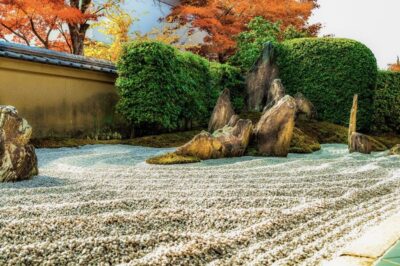
At Tofukuji, Maki explains Buddhist ideas and helps you understand how the temple differs from the shrine. The garden offers a chance to stop, sit, and take in the setting without rushing from one viewing point to the next.
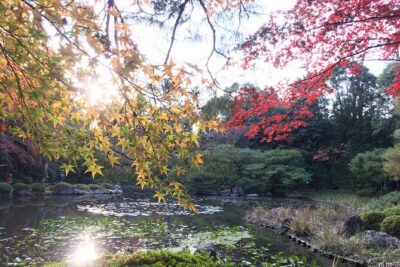
That quiet pause is one of the strongest parts of the outing. Kyoto sightseeing can become a race to collect famous buildings, but a few calm minutes in a Zen garden give the experience a better rhythm. You have space to absorb what you have seen and ask questions before getting back on the bike.
The included entrance fees cover admission for two places, which applies to the two principal paid stops in the advertised route. Smaller shrines and outdoor areas may be experienced as part of the ride without requiring the same kind of admission.
The return ride along Kyoto’s rivers
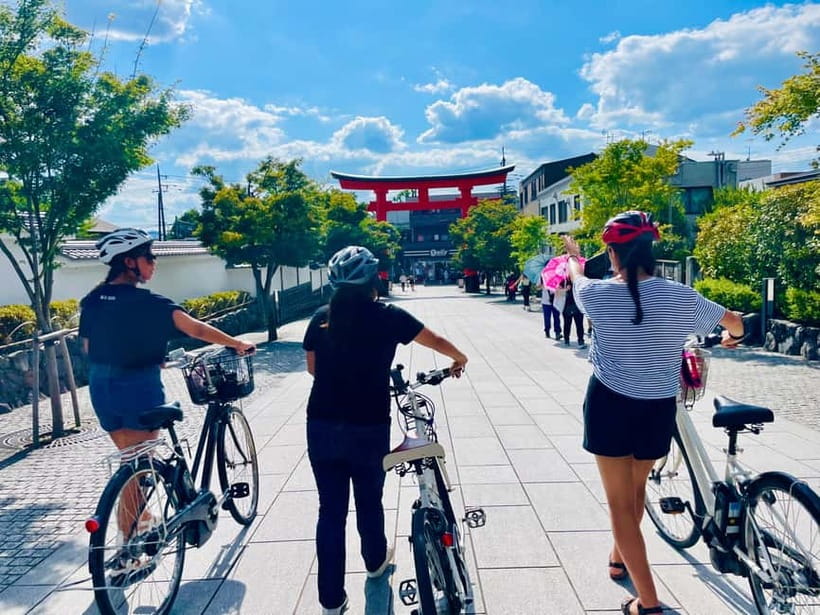
The route back is not just a trip to the shop. The ride follows a river for part of the return, giving you a calmer finish after the city streets and shrine crowds. This is where the e-bike earns its keep again, especially if your legs are beginning to feel the distance.
Cycling beside water also gives the tour a different visual pace. You are no longer moving from one cultural explanation to another. Instead, you get a chance to enjoy Kyoto’s open spaces and watch the city pass at bicycle speed.
The guide makes frequent stops during the tour, and cold drink breaks have been appreciated by families and groups riding in warm weather. Even with these pauses, the four-hour duration goes by quickly, so do not expect a full-day temple tour.
The guide makes the difference
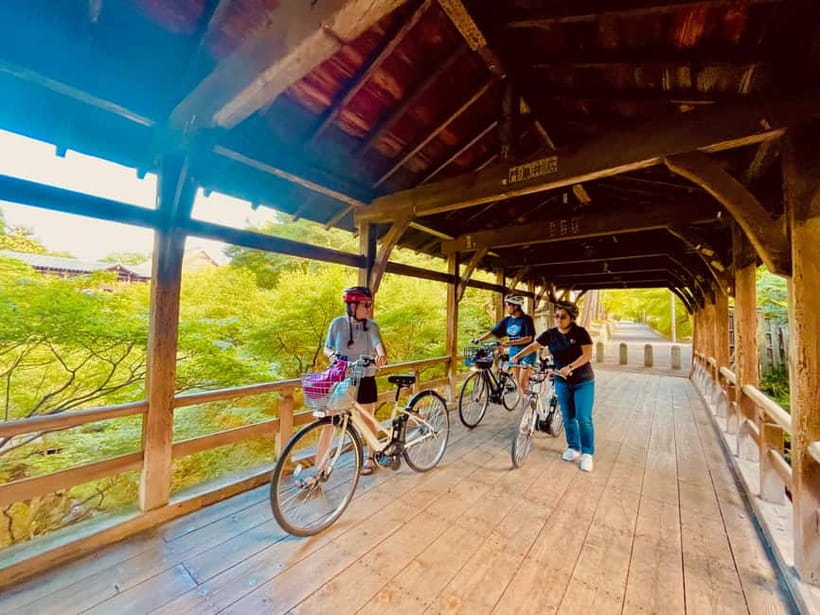
The route is well chosen, but the guide is the part most likely to shape your day. Maki combines facts about Japanese history, samurai conflicts, religion, infrastructure, geisha culture, and everyday customs with personal stories and jokes.
That mix works better than a long lecture. You receive information at the place where it matters, then have room to ask questions. Families with teenagers have found the format engaging because the history is explained through stories rather than delivered as a list of dates.
Maki also takes photographs for the group when asked. That is a useful extra for couples and families who want pictures of everyone together without handing a camera to a stranger. Her follow-up local suggestions have also helped some people plan the rest of their time in Japan.
One small practical point is that the guide usually speaks after the group stops. Because riders are spread out along the road, you may need to gather close once you park the bikes. One person suggested that a microphone and earpiece could make explanations easier to hear, so stay alert when the group pulls over.
Safety, fitness, and group size
The cycling is generally described as easy and safe, but you are still riding in a city. You should be comfortable steering, braking, starting, and stopping on command. Busy streets are part of the experience, even though the guide uses quieter roads where possible.
The group size is limited to eight participants. That keeps the outing more personal than a large bus tour and makes it easier for Maki to watch the riders. It also means the pace must suit different abilities, so a very strong cyclist should not expect a fast ride.
Frequent stops help, and the electric assistance reduces the physical demand. Still, this is not a passive sightseeing trip. You will cycle, walk, stand, and possibly ride in warm sun. Sunscreen, breathable clothes, and comfortable footwear are practical choices.
Smoking and alcoholic drinks are not allowed in the vehicle. In this case, the relevant vehicle is the bicycle and tour setup, so follow the guide’s instructions and keep the outing suitable for a shared small group.
Is $83 a fair price?
At $83 per person, the tour is not the cheapest way to reach Fushimi Inari. You could visit the shrine and Tofukuji on your own using public transport, but you would need to plan the route, rent or arrange bicycles separately, manage city riding, and supply your own cultural background.
Here, the price includes four hours with a live English-speaking guide, an electric bicycle, helmet, insurance, water, a snack, and admission for two places. The value improves if you want one organized activity that combines transportation, sightseeing, and cultural interpretation.
The best comparison is not with a train ticket. Compare it with a private guide, a standard walking tour, or a full-day sightseeing day that leaves you tired before dinner. This is a compact half-day option, and the route covers more ground than walking while remaining more personal than a coach tour.
I would choose it early in a Kyoto visit. The guide helps you understand shrine and temple customs, and the ride gives you a useful sense of the city’s layout. You can then return to places that caught your attention with a better idea of what you are seeing.
Who should book this Kyoto e-bike tour?
This is a strong fit for couples, families with teenagers, and adults who want more movement than a walking tour but less exertion than a long cycling day. It also suits first-time visitors who want major sights mixed with ordinary streets and quieter religious spaces.
It is especially useful if you enjoy asking questions. Maki’s explanations cover more than architecture, and the personal stories help connect formal customs with daily life. If you prefer to explore entirely alone or spend a long time at one shrine, a self-guided visit may suit you better.
Families should check the age rule carefully. Children under 12 cannot join, and all participants should be comfortable with the mix of road cycling and walking. People with mobility impairments and pregnant women should choose another way to see these sights.
Booking earlier in your trip makes sense if you want an orientation to Kyoto. The activity offers free cancellation up to 24 hours ahead and allows you to reserve now and pay later, which gives you some flexibility while planning.
Should you book it?
Book this tour if you want Kyoto explained while you move through it. The combination of Gion, residential lanes, Fushimi Inari, Tofukuji, a Zen garden, and a riverside return gives you a broader picture than a single shrine visit.
The strongest reason to choose it is Maki’s guiding. She adds humor, local experience, clear cultural explanations, and careful attention to the group. The main tradeoff is limited time at the major sights, especially Fushimi Inari, plus the need to feel comfortable cycling in city traffic.
For $83, the inclusion of the e-bike, guide, admissions, water, snack, helmet, and insurance makes the price reasonable for a well-paced four-hour outing. If you want an active, friendly introduction to Kyoto that reaches beyond the standard postcard views, I would book it.
FAQ
How long is the Kyoto e-bike tour?
The tour lasts four hours. It includes cycling, walking, stops at cultural sites, breaks, and a return ride to the meeting area.
What places does the tour visit?
The route includes the Gion district, Fushimi Inari Shrine, and Tofukuji Temple. You also pass through Kyoto neighborhoods, smaller religious sites, and riverside areas.
Is the tour conducted in English?
Yes. The tour has a live English-speaking guide.
What does the $83 price include?
The price includes a live local guide, electric bicycle rental, helmet, insurance, a snack, a water bottle, and entrance fees for two places. Lunch and hotel pickup and drop-off are not included.
Is the tour suitable for children?
Children under 12 cannot join. Teenagers 13 and older have enjoyed the cycling and cultural explanations, but every participant should be comfortable riding a bicycle and walking.
What should I bring?
Wear comfortable clothes and shoes suitable for cycling and walking. Bring or use sunscreen, carry a water bottle for hydration, and consider bringing a camera.
More Heritage and Temple Bike Tours in Kyoto
- Bangkok: Temples, Canals & Local Life Bike Tour
★ 4.9 · 3,511 reviews - Historical Singapore Bike Tour on Full-Sized Bicycles
★ 5.0 · 1,421 reviews - Barcelona: 2.5-Hour Bike or E-Bike Historical Tour
★ 4.5 · 1,262 reviews - Bangkok: Night Bike Tour with Temples & Flower Market Visit
★ 4.8 · 751 reviews
More Heritage and Temple Bike Tours in Japan
- 4.5-Hour Kyoto Bike Tour with Lunch and UNESCO Zen Temples
★ 5.0 · 122 reviews - Kyoto: Hidden Gems E-Bike Tour Through Backstreets & Temples
★ 4.9 · 54 reviews - 4.5-hr Kyoto Historical Highlights Bike Tour with UNESCO
★ 4.7 · 13 reviews - E-Bike Nara Highlights – Todaiji, Knives, Deer, Shrine
★ 4.8 · 186 reviews
New cycling reviews around Kyoto
- Best of Kyoto: Ginkakuji & Path of Philosophy E-Bike Tour★ 4.9 · 79 reviews
- Kyoto: Tailored E-Bike Tour to Highlights & Hidden Gems★ 4.9 · 32 reviews
- Kyoto: Full-Day City Highlights Bike Tour with Light Lunch★ 5.0 · 52 reviews
- Kyoto: Half-day Guided Bike Tour with Fushimi Inari★ 4.9 · 21 reviews
- Kyoto: Full Day Bike Tour★ 4.9 · 39 reviews
- Kyoto: Early Bird E-Bike Tour with Lunch★ 5.0 · 14 reviews
- Cycle Kyoto’s Hidden Gems & Gion Stroll★ 5.0 · 29 reviews
- Kyoto: Arashiyama Bamboo Forest Morning Tour by Bike★ 5.0 · 115 reviews
Kyoto Cycling Tours, compared.


Arashiyama Bamboo Forest & Hidden Gems Bike Tour (Early Bird)
Read our review →
5 Top Highlights of Kyoto Full Day Bike Tour (E-bike option)
Read our review →
Full Day Biking Tour Exploring the Best of Kyoto
Read our review →