
Review · HIROSHIMA
Hiroshima: Peace Cycling Tour with Local Guide
Hiroshima’s story reaches far beyond the Atomic Bomb Dome. This small-group electric-bike tour follows the bombing’s physical and human traces from Peace Memorial Park into ordinary neighborhoods, where surviving streetcars, trees, bridges, and hospital buildings tell a wider story of destruction and recovery. Guides such as Shin and Kana add family memories passed down through generations.
I like two things here: the bikes extend your reach without demanding much effort, and the guides make room for personal stories rather than reciting dates alone. The main consideration is emotional weight. You will hear about the bombing, its victims, and its lasting effects, so this is not a light sightseeing ride, even though the cycling itself is easy.
Key points at a glance
- A-bomb heritage beyond the park: Visit sites in the suburbs that many visitors would pass without recognizing.
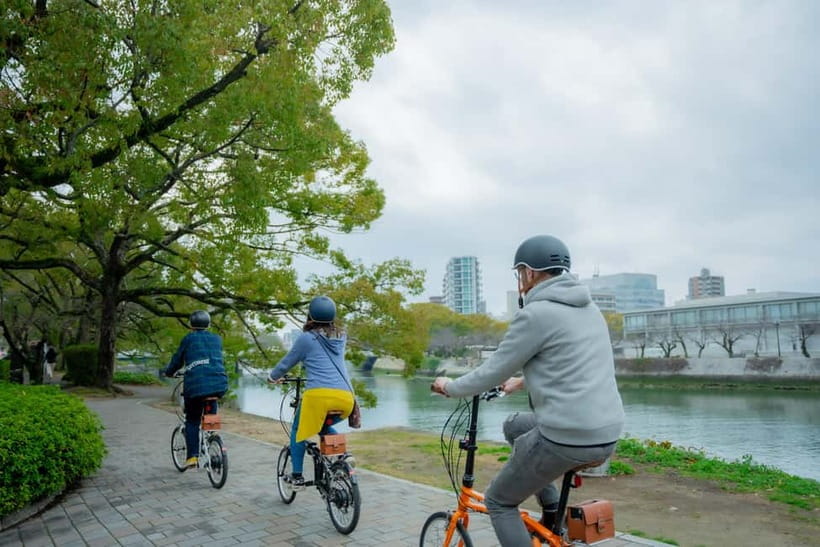
- Electric bicycles included: The route is manageable for casual cyclists, with a comfortable pace adjusted for the group.
- Local family stories: Guides including Shin, Kana, Moe, and Mai connect Hiroshima’s past with memories handed down at home.
- Two route lengths: Choose a two-hour route focused on the park and nearby neighborhoods, or a three-hour route with a longer chain of historic stops.
- Small group of up to 10: The format allows questions and a more personal conversation than a large bus tour.
- A positive message without avoiding the facts: The tour deals plainly with destruction while also showing Hiroshima’s recovery and its continuing hope for peace.
Why cycling gives Hiroshima a wider story
Peace Memorial Park is essential, but it can also make Hiroshima feel like a single concentrated memorial zone. This tour helps you connect the park to the city around it. You ride through streets where daily life continues, then stop at places tied directly to August 6, 1945.
That change of setting matters. At a monument, you may absorb one carefully framed part of the story. On a bicycle, you can see how the city’s memorials, transport network, hospitals, rivers, parks, and residential streets fit together. The tour explains that an area within roughly 2.5 kilometers of the hypocenter suffered severe damage, then shows how the rebuilt city now includes broad roads, green spaces, and working neighborhoods.
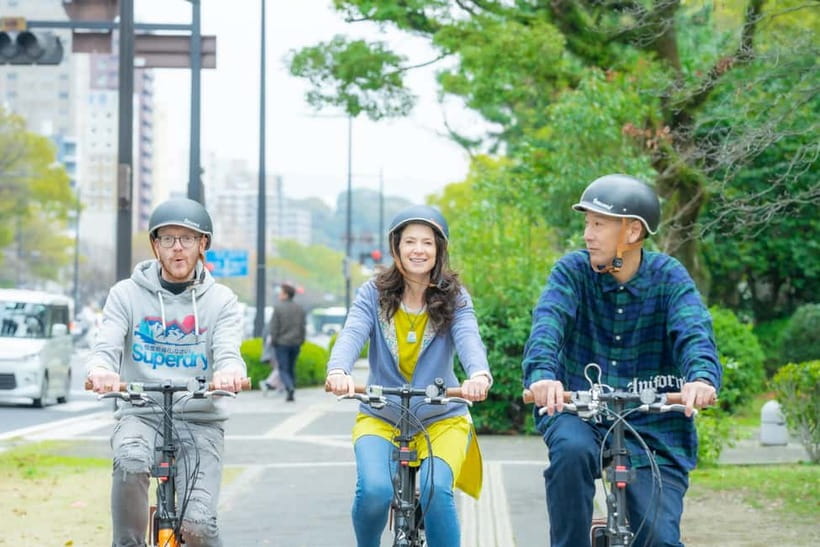
The electric bicycles are a practical advantage. You do not need to be a strong cyclist, and the short distances make the ride approachable for families and casual riders. Guides adjust the pace if children or less confident cyclists are in the group. You still need to ride a bike safely, but you do not need racing fitness.
The ride is also a useful choice if you have only one day in Hiroshima. It covers the historic center quickly, then reaches places outside the most visited area without asking you to spend hours walking between them.
More Guided Rides in Japan:
- Tokyo Guided Small-Group Biking Tour
★ 5.0 · 1,250 reviews - Tokyo Top Highlights 3h Guided E-bike Tour
★ 5.0 · 714 reviews - 3h Tokyo E-Bike Tour: Hidden Gems, and Local Life with guide
★ 5.0 · 670 reviews
The two-hour route: Peace Park, streetcars, and the city beyond
The shorter route meets at 11:00 or 15:00 and begins at the Rest House in Hiroshima Peace Memorial Park. That is a convenient starting point, just a short walk from the Atomic Bomb Dome tram stop. From Hiroshima Station, take the Hiroshima Electric Railway to Atomic Bomb Dome Station, a journey of about 20 minutes, then walk roughly five minutes to the meeting point.
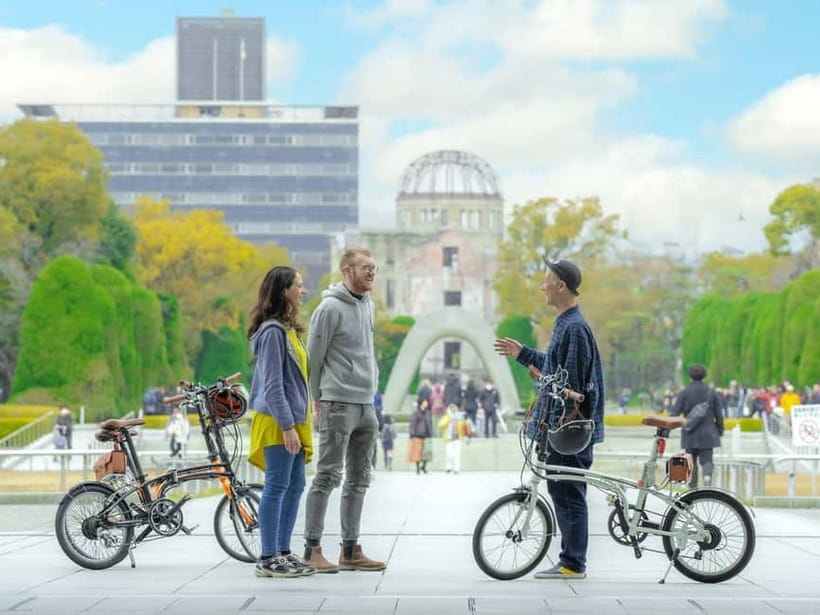
The opening stop explains what Peace Memorial Park is meant to do. You will hear about the memories attached to its monuments, the Atomic Bomb Dome, and the events of 70 years earlier, although the experience is now nearly 80 years after the bombing. The guides place the landmarks in context rather than treating them as isolated photo stops.
The Atomic Bomb Dome is the visual anchor, but the guide’s explanation is what gives the stop its purpose. You will learn how the park’s monuments relate to remembrance and peace, and how the bombing changed the city. This part can feel familiar if you have already visited the park, but a local guide can help you notice connections you may have missed.
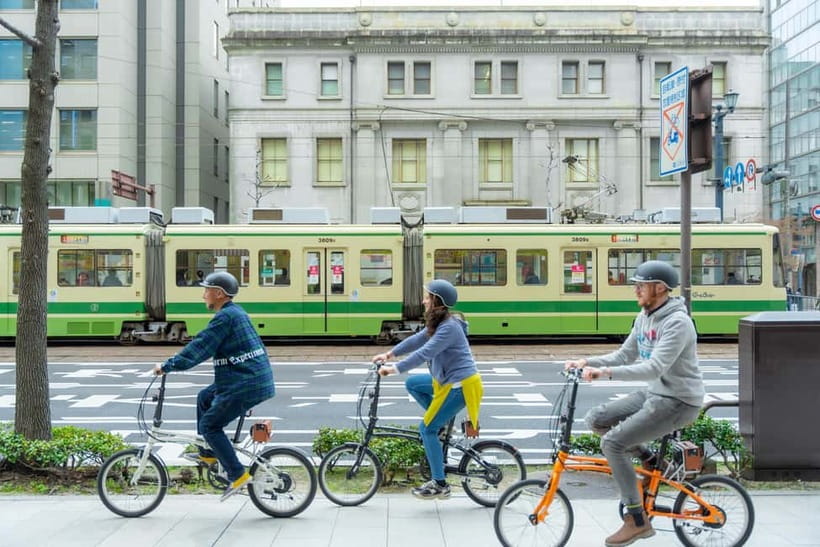
Around noon, the route leaves the most touristic part of Hiroshima. One special feature is the A-bombed streetcar, a tram that survived the blast and still runs today. Seeing a working piece of Hiroshima’s transport history makes the subject more immediate than a display case alone. It also links the past to the ordinary rhythm of the modern city.
The route then moves through local streets and stops at additional A-bomb heritage sites. These places may not have the visual force of the Dome, but they help you understand the scale of the damage. You see a city that was devastated and later rebuilt, not just a memorial district preserved in time.
The two-hour option finishes at the original meeting point around 13:00 or 17:00. I would choose it if you want a focused introduction, need to fit in the Peace Memorial Museum, or prefer to keep the emotional and physical demands of the tour moderate.
The three-hour route: a connected chain of memorial sites
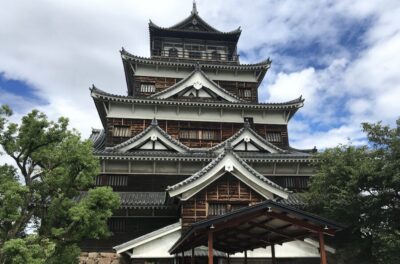
The longer route starts at 10:00 or 14:00 and adds a broader circuit. It begins at Hiroshima Castle, then moves to Hiroshima Gokoku Shrine and its shrine gate. These opening stops place the bombing story within the city’s older civic and religious setting.
From there, you ride through Hiroshima Central Park to Aioi Bridge. The bridge is especially important because it was the intended aiming point for the atomic bomb, whose target area was identified by the distinctive shape of the crossing. The tour then continues to the Atomic Bomb Dome, giving you a chance to see the city’s most recognizable memorial after learning about the broader setting around it.
The route follows the Motoyasu River and Peace Bridge before reaching Higashisenda Park. Rivers and bridges are not just scenery here. They help explain how people moved through Hiroshima and how the blast affected a city organized around waterways.
At about noon or 4:00 p.m., the route reaches Hiroshima Red Cross Hospital. The hospital is tied to the medical response after the bombing and helps shift the story from buildings and monuments to the people who needed urgent care. This stop can be difficult, but it adds a practical human scale to the history.
The next stop is Hiroshima Railway, followed by Miyuki Bridge and the Kobayashi River. The exact timetable can change on the day, but the pattern is consistent: you move between well-known memorial sites and less obvious places that reveal how far the destruction reached.
A surviving weeping willow tree provides another memorable stop. A single tree cannot explain the whole bombing, but it offers a physical reminder of survival amid widespread ruin. The final stretch follows Peace Boulevard before returning to the meeting point around 1:00 or 5:00 p.m.
The three-hour route is the better choice if you want the fuller historical circuit and do not mind giving the subject more time. It is still not a strenuous ride, but the additional stops mean more standing, listening, and emotional attention.
Guides who connect history with family memory
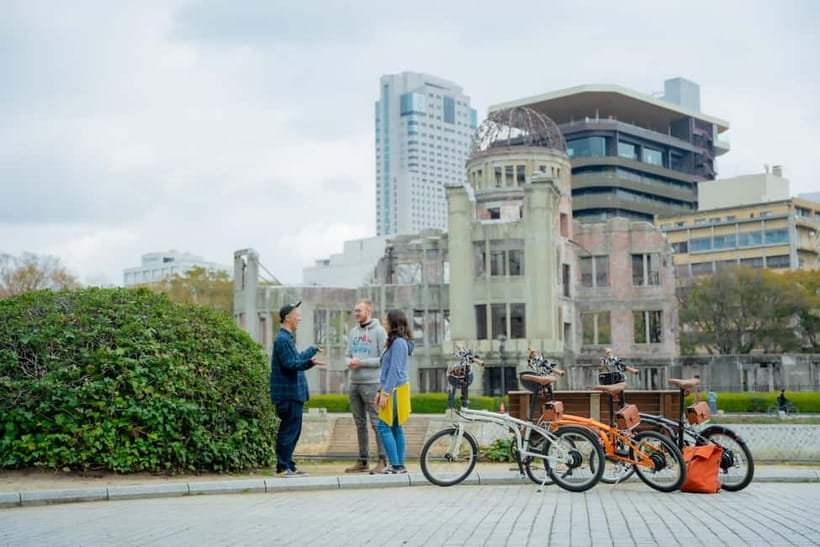
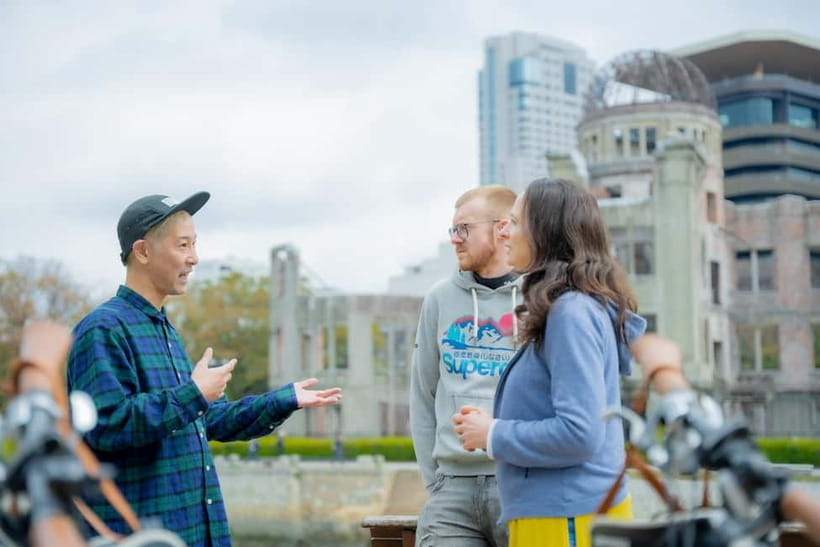
The strongest part of this experience is the guide’s voice. The local team grew up in Hiroshima, and several guides bring family connections or stories passed down from parents and grandparents. Shin is frequently singled out for his enthusiasm, clear English, humor, and direct connection to Hiroshima’s wartime memory. Kana is known for combining careful explanations with personal family experiences, while Moe and Mai have also led thoughtful, well-organized tours.
You should not assume that one specific guide will lead your departure. Names that have appeared on different tours include Shin, Kana, Moe, Mai, Bella-Kana, Hugo, and others. The useful point is that the experience depends on a local guide who can explain how Hiroshima remembers the bombing today, not simply point out a list of monuments.
The tone is serious but not hopeless. Guides speak about destruction and suffering, then return to healing, rebuilding, and the city’s continuing peace message. That balance matters. Hiroshima is not presented as a frozen tragedy, and the modern city is not used to soften or hide what happened.
You will have opportunities to ask questions. A small group of up to 10 keeps the conversation manageable, although the pace may slow if someone in the group is new to cycling, particularly a child. That is a sensible tradeoff for a shared tour.
More Cycling Trips in Japan:
- Hidden Kyoto E-Biking tour
★ 5.0 · 1,843 reviews - Bike Tour Exploring North Kyoto plus Lunch
★ 5.0 · 1,087 reviews - Tokyo Great Cycling Tour
★ 5.0 · 811 reviews - Arashiyama Bamboo Forest & Hidden Gems Bike Tour (Early Bird)
★ 5.0 · 613 reviews
What the electric-bike ride is really like
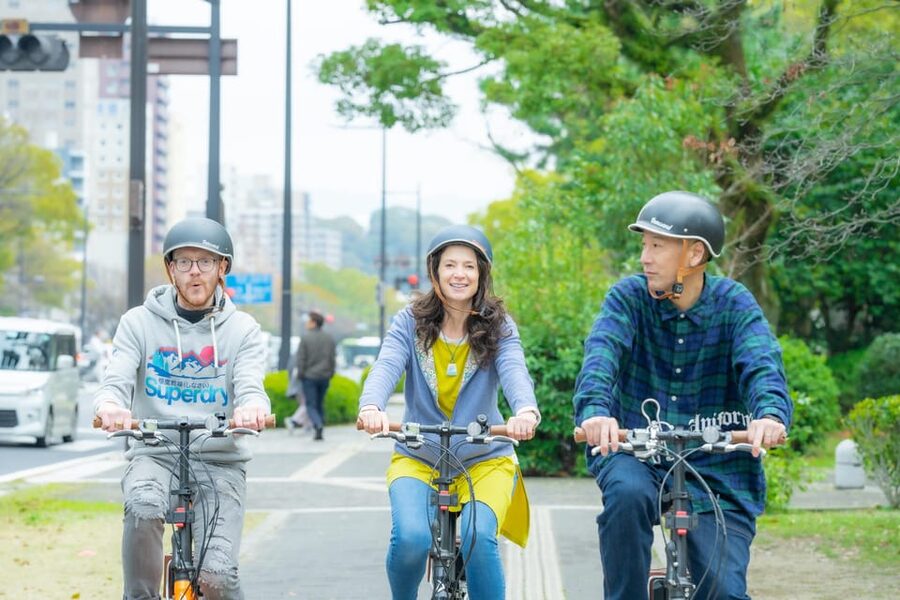
The bicycles are included, and the route is designed around relatively short distances. The electric assist makes hills and steady riding easier, but you still need basic bike control and awareness in city traffic. Participants describe the bikes as comfortable and easy to use, with the ride paced at a relaxed level.
Tall riders should take note. One participant who was 6 feet 1 inch found the bike frame small, so you may want to ask about fit before booking if you are tall. The provided information does not promise a range of frame sizes.
The tour operates in changing weather, and Hiroshima can be very hot in summer. Guides have helped guests with cold towels, salt candies, wet wipes, ice packs, shade breaks, and stops at convenience stores when conditions became uncomfortable. Those details are not guaranteed on every departure, but they show why you should bring water, a towel, comfortable clothing, and shoes.
High heels are not allowed. The tour is not suitable for people under 145 centimeters on an adult electric bicycle. Children from 110 to 145 centimeters may use one of the limited children’s cross bikes, and children under 15 can receive the child rate on an adult or children’s bicycle. Electric child seats are available for children under 22 kilograms and under 115 centimeters, but these seats and children’s bikes are limited, so contact the operator before reserving.
Price, timing, and what you receive
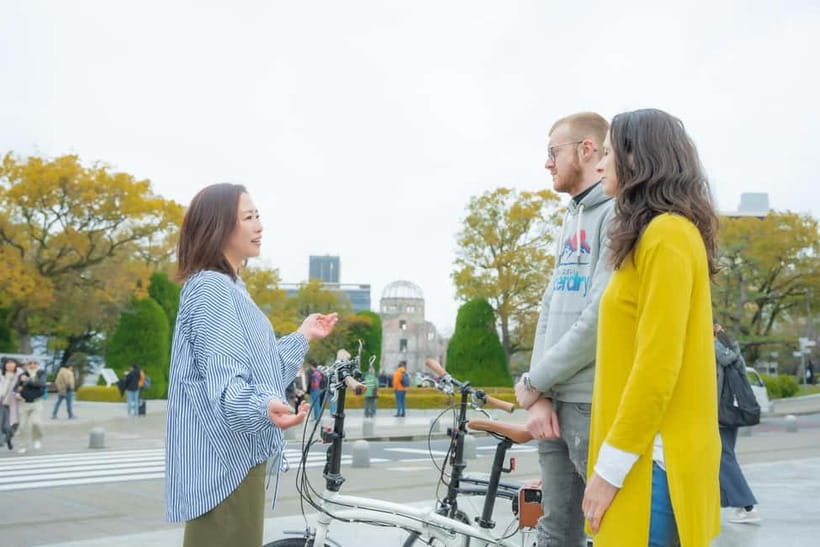
At $52 per person, the tour is fairly priced for a two or three-hour experience that includes the bicycle, English-speaking guide, and bicycle accident insurance. You are paying for more than transport. The value comes from covering a wider area than you could comfortably walk in the same time and having someone explain why each stop matters.
Food and drinks are not included. That is easy to manage, since the tour lasts only two or three hours, but carry water, especially between June and September. The start times are set around 10:00, 11:00, 14:00, and 15:00 depending on the route, so you can fit the tour around a museum visit or train schedule.
You also receive data from photos taken during the day. That is a small but useful extra, especially because the guide can take pictures of your group rather than leaving you to manage selfies at every stop.
Cancellation is free up to 24 hours before departure, and you can reserve now and pay later. Arrive early. If you are late without notice, the tour can be canceled with a full same-day charge.
Who should book this Hiroshima bike tour?
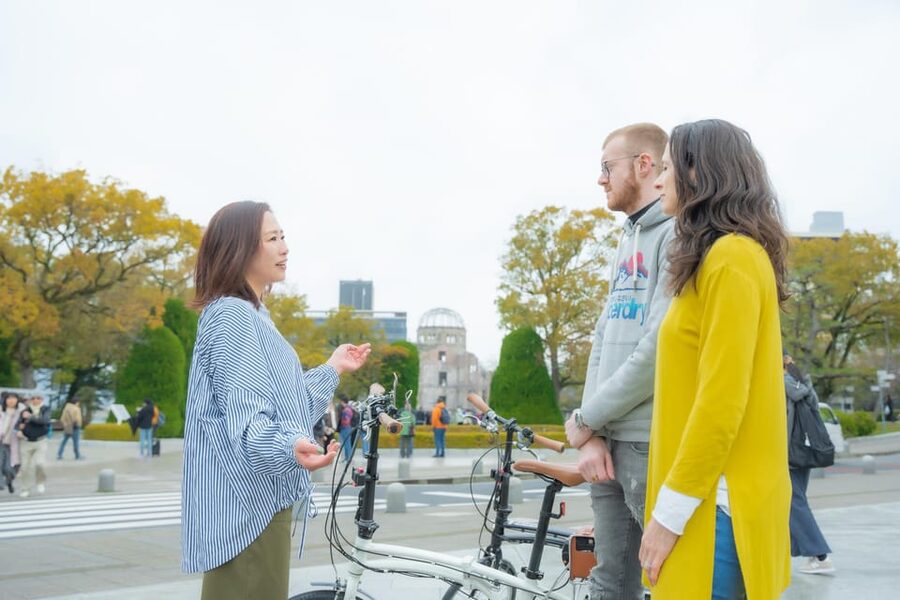
I would recommend it to first-time visitors who want context before or after visiting the Peace Memorial Museum. It works especially well for families with older children and teenagers, since the bike ride breaks up a serious subject without turning it into a rushed sightseeing game.
It also suits solo visitors. The small group creates an easy setting for conversation, while the cycling gives you something active to do between quieter memorial stops. If you are interested in how a city rebuilt itself, the three-hour route offers more than a quick visit to the Dome.
You may want another option if you dislike cycling, cannot ride safely in a group, or are uncomfortable with a tour built around wartime destruction. The electric assist does not remove the need to balance and steer. You should also allow extra time if you plan to visit the Peace Memorial Museum, since neither food nor museum admission is part of the tour.
Should you book it?
Book this tour if you want Hiroshima explained through both its memorials and its living streets. The two-hour route is a smart, focused choice for a busy day. Choose three hours if you want Hiroshima Castle, Aioi Bridge, the hospital, surviving trees, rivers, bridges, and railway history in one connected ride.
The best reason to go is the local perspective. Guides such as Shin and Kana bring family memories and a clear message of peace, while the bicycle route shows how a destroyed city became the green, functioning Hiroshima you see today. Just bring water, wear practical shoes, and be ready for a serious subject handled with care.
FAQ
Where does the Hiroshima cycling tour meet?
The meeting point is the Rest House in Hiroshima Peace Memorial Park. From Hiroshima Station, take the Hiroshima Electric Railway to Atomic Bomb Dome Station, which takes about 20 minutes, then walk about five minutes.
Is the tour offered in English?
Yes. The tour has a live English-speaking guide.
How long is the cycling tour?
You can choose a route lasting about two or three hours. The two-hour route starts at 11:00 or 15:00. The three-hour route starts at 10:00 or 14:00, subject to availability.
Are electric bicycles included?
Yes. Rental bicycles are included in the price. Adult electric bicycles are for people at least 145 centimeters tall, with limited children’s bicycles and child-seat options available by arrangement.
What should I bring?
Bring comfortable shoes, comfortable clothing, a towel, and drinks. High-heeled shoes are not allowed.
What happens if I need to cancel?
You can cancel up to 24 hours before the tour for a full refund. If you arrive late without prior notice, the tour may be canceled and the full same-day charge can apply.
New cycling reviews around Japan
- Osaka E-Bike Tour With A Local Guide★ 4.7 · 75 reviews
- Osaka: City Highlights Bike Tour★ 4.7 · 20 reviews
- Okinawa: Afternoon Cycling Tour with Local Guide★ 4.8 · 39 reviews
- Nara: City Highlights Shared Group or Private Bike Tour★ 4.9 · 34 reviews
- Nara: Bike Tour in Ancient Capital UNESCO World Heritage★ 5.0 · 43 reviews
- Naha: Guided E-Bike Tour of the 12 Zodiac Temples★ 4.9 · 50 reviews
- Best of Kyoto: Ginkakuji & Path of Philosophy E-Bike Tour★ 4.9 · 79 reviews
- Kyoto: Tailored E-Bike Tour to Highlights & Hidden Gems★ 4.9 · 32 reviews
Hiroshima Cycling Tours, compared.
Hiroshima in a Nutshell: Morning Bike Adventure
Read our review →
Hiroshima 2hr Peace Cycling Tour with Local Guide
Read our review →
Browse the lists this ride appears in