
Review · HIROSHIMA
Hiroshima 2hr Peace Cycling Tour with Local Guide
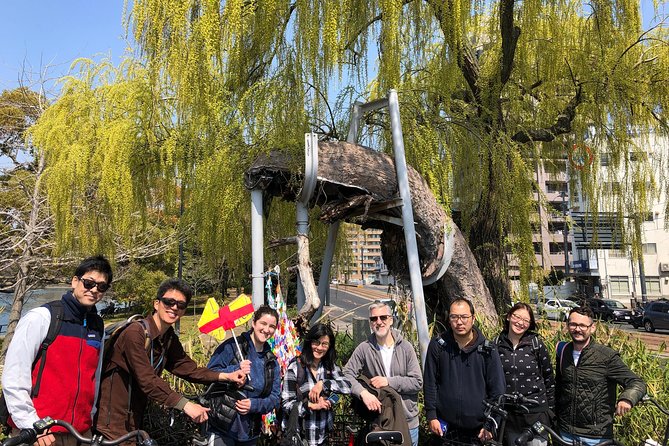
Hiroshima’s Peace Park is moving on foot, but a bicycle lets you connect the memorials with the living city around them. This two-hour ride uses easy electric bikes and a guide raised in Hiroshima, such as Shin or Kana, to explain the bombing, the city’s recovery, and the personal stories that formal displays cannot always convey. I love the local point of view and the chance to see more than the usual park circuit. I also like that the group is capped at 10 people.
The main tradeoff is time. Two hours goes quickly, especially when you stop to listen at several memorials and then ride into the suburbs. The pace may also slow if children or less confident cyclists are in the group, and rain can turn the outing into a walking tour.
Key points at a glance
- Family stories add a personal layer: Guides including Shin have shared accounts connected to relatives who survived the bombing.
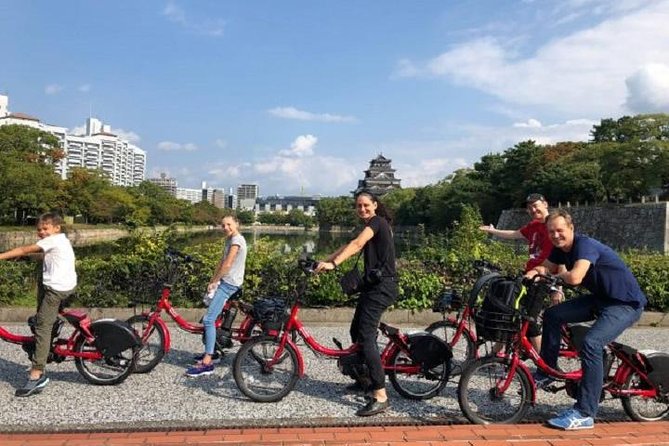
- Electric bikes make the route gentle: Hiroshima is flat, and riders report that the bicycles are easy to operate.
- You see more than the A-Bomb Dome: The route includes the Cenotaph, Children’s Peace Monument, Peace Bell, surrounding streets, and surviving streetcars.
- Small groups keep the tour focused: No more than 10 people join the mixed-language group.
- Rain does not always cancel the experience: You may switch to a Peace Route walking tour, or choose a refund if the cycling plan cannot run.
- The meeting point is central: Start and finish at the Rest House in Hiroshima Peace Memorial Park.
Why a bicycle works so well in Hiroshima
The central memorial area is compact enough to walk, but Hiroshima’s story extends beyond the polished paths of Peace Memorial Park. A bicycle gives you a practical link between the monuments and the ordinary streets where the city was rebuilt.
That contrast matters. You begin among memorials, names, bells, and stone markers. Then you ride through neighborhoods and past the city’s present-day transport system. The result is not just a tour of destruction. You see Hiroshima as a functioning city that carries its past in public places and daily routines.
The route uses electric bicycles, so you do not need to be a serious cyclist. The city is flat, and the ride is described as leisurely. One rider in their sixties found the cycling manageable, while other visitors appreciated that the bikes handled the effort with little strain.
You still need basic balance and comfort around streets. If you are nervous on a bicycle, tell the guide early. The group adjusts its speed to the least confident rider, particularly when children are present. That makes the tour more inclusive, though it can reduce the distance covered.
More Guided Rides in Japan:
- Tokyo Guided Small-Group Biking Tour
★ 5.0 · 1,250 reviews - Tokyo Top Highlights 3h Guided E-bike Tour
★ 5.0 · 714 reviews - 3h Tokyo E-Bike Tour: Hidden Gems, and Local Life with guide
★ 5.0 · 670 reviews
Starting at the Peace Park Rest House
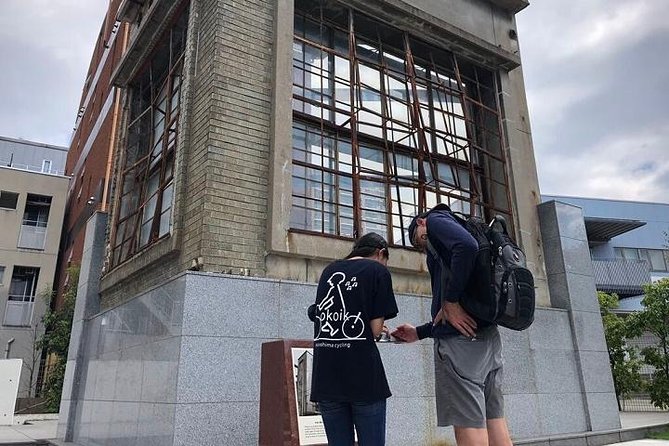
The tour begins at the Hiroshima Peace Memorial Park Rest House at either 11:00 in the morning or 3:00 in the afternoon. This is also where you finish, which keeps the logistics simple.
Arrive early. The operator has a strict late-arrival rule, and missing the start without advance notice can mean cancellation with no refund. Even advance notice does not guarantee that a late arrival can be accommodated, since this is a shared activity.
There is no luggage storage at the Rest House. If you arrive with larger bags, use the coin lockers at the Hiroshima International Conference Center or Hiroshima Peace Memorial Museum, both about a six-minute walk away. This is an easy detail to overlook, so plan it before meeting the guide.
The bicycles and safety briefing take only a short part of the opening. The more useful benefit of meeting here is that you start right in the middle of Hiroshima’s main memorial zone, rather than spending your limited time getting across town.
The memorials inside Peace Memorial Park
The first major section lasts about 55 minutes. Your guide explains what the park represents, how the atomic bombing affected Hiroshima’s residents, and why each memorial matters.
You should expect stops at several major sites:
- The Atomic Bomb Dome
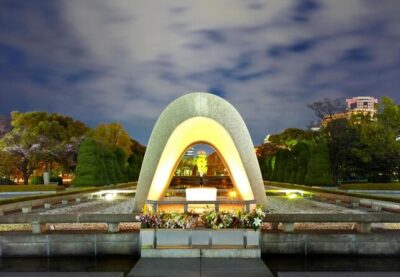
- The Cenotaph for the A-Bomb Victims
- The Children’s Peace Monument
- The Peace Bell
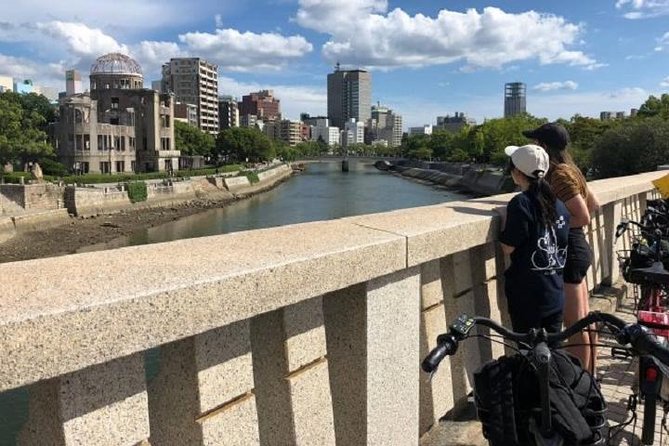
The Atomic Bomb Dome is the best-known image in Hiroshima, but seeing it from different city viewpoints gives the visit more shape. From the river and nearby streets, you can understand its position within the city rather than treating it as an isolated monument.
The Cenotaph and Children’s Peace Monument bring the focus back to individual lives. The Peace Bell adds another kind of reflection, with its message of peace forming part of the park’s daily atmosphere. Your guide supplies context as you move between the sites, so the ride is not simply a checklist of monuments.
This portion is serious and sometimes painful. Guides such as Shin have connected the subject to family memories, including relatives who lived through the bombing or were affected by it. Kana and other guides are praised for presenting stories of suffering, survival, and Hiroshima’s continuing focus on peace without turning the tour into a lecture.
The exact balance depends on your guide. One guide may rely more on family testimony, while another may focus on the city’s public memorials and reconstruction. That is a normal feature of a small, locally led tour, not a fixed audio program.
The Peace Memorial Museum is not listed as a stop on this two-hour cycling route. If you plan to visit it, allow separate time. The museum can also serve as a useful follow-up because the bike tour gives you the city context first.
Riding beyond the memorial grounds
At about noon on the morning departure, or 4:00 in the afternoon, the tour moves beyond the park for roughly an hour. This is where the experience earns its place beside a museum visit.
The guide points out Hiroshima’s rebuilt streets and suburbs, showing how the city changed after the bombing. You may also see the A-Bombed Streetcars, trains that survived the atomic blast and continue to run today. That detail links wartime history to the modern city in a direct, visible way.
The route is not only about what was destroyed. It also deals with postwar recovery and the way Hiroshima functions now. You ride through a city that has schools, shops, traffic, rail lines, and ordinary neighborhoods, while the memory of 1945 remains present in its public spaces.
This section also gives you a break from the emotional weight of the park. Cycling through the city adds movement and air to a subject that can otherwise feel enclosed within museum rooms and memorial grounds.
The route is described as off the beaten track, though you should keep your expectations realistic. This is still a two-hour introduction, not a complete tour of Hiroshima. You will see selected streets and viewpoints rather than every major historical district.
More Cycling Trips in Japan:
- Hidden Kyoto E-Biking tour
★ 5.0 · 1,843 reviews - Bike Tour Exploring North Kyoto plus Lunch
★ 5.0 · 1,087 reviews - Tokyo Great Cycling Tour
★ 5.0 · 811 reviews - Arashiyama Bamboo Forest & Hidden Gems Bike Tour (Early Bird)
★ 5.0 · 613 reviews
Guides who bring the subject close
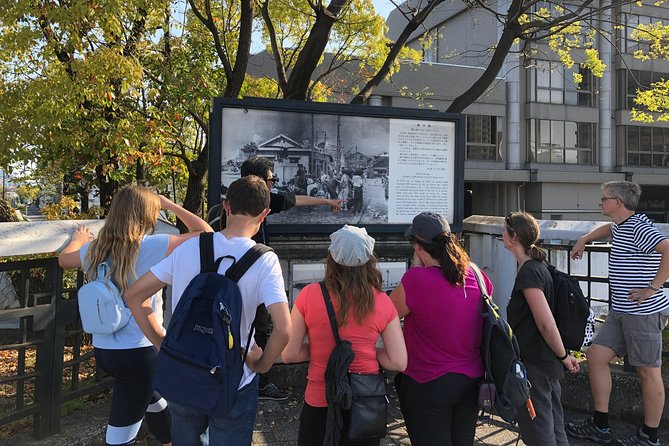
The guide can make or break a short history tour, and this experience puts unusual weight on that role. Shin is especially associated with family accounts linked to survivors. His mother was in utero when the bomb fell, and his grandparents also had direct connections to the event.
That kind of story can change the tone of a stop. Instead of hearing only dates and official explanations, you get a sense of how the bombing remains part of family memory across generations. Several guides also share personal recommendations for food or later stops in Japan, which can be a pleasant bonus at the end of a compact tour.
Kana receives praise for clear English, warmth, and a good sense of timing. She has led both cycling and rainy-day walking routes. Other named guides include Bella, Tomas, Mimi, and Moet, whose approach may differ but whose role is the same: help you understand Hiroshima through places, stories, and present-day life.
The experience is offered in English based on the supplied tour details and feedback. Still, guide style varies. If you want a heavily academic presentation, you may prefer a museum specialist or a longer history tour. If you want a human explanation tied to the streets around you, this format is a strong fit.
How difficult is the cycling?
The electric bikes are the key practical feature. Riders describe them as easy to operate, and the flat city makes the route accessible to people who do not cycle often.
Adult electric bicycles are available for people at least 145 centimeters tall. Children from 110 to 145 centimeters can use one of two available children’s cross bikes per booking, and children under 15 may use children’s or adult bicycles at the child rate. Electric bicycles with child seats are available for children under 22 kilograms and under 115 centimeters.
The tour provides bicycle accident insurance as part of the price. That does not remove the need to ride carefully, but it is useful reassurance for a short urban ride.
The group can include up to 10 people. This is small enough for the guide to answer questions, but it is not a private tour. If another rider is slow or unfamiliar with cycling, the group adjusts its speed. You may cover less ground than a confident cyclist would alone.
Cold weather has not prevented some departures, but winter wind can make the ride unpleasant. Rain is the bigger concern. The operator may cancel for safety, or change the activity to a walking route.
The rainy-day Peace Route
When cycling is not safe, the tour may switch to a walking route lasting about two hours. The listed route includes Peace Memorial Park, the Atomic Bomb Dome, the hypocenter, the Former Bank of Japan, Fukuromachi Elementary School, and a main street.
This route focuses more tightly on the bombing itself. You visit the hypocenter, the place reduced to scorched ground in an instant, and walk through an area within roughly 0.5 to 1 kilometer of it. That can be an intense experience, but it gives the tour a clear purpose even when bicycles are not practical.
You can accept the rainy-day walking option or request a refund if you do not want to change from cycling. If poor weather cancels the activity altogether, you can choose another date or receive a full refund.
Is $59.69 a fair price?
At $59.69 per person, this is not the cheapest way to move around Hiroshima. You are paying for the bicycle, electric assistance, a local guide, bicycle accident insurance, a small group, and two hours of interpretation.
The value is strongest if you want a guide to connect the memorials with the city beyond them. A self-guided walk costs less, and you can visit the main park monuments without paying for admission. But you would need to supply your own route, explanations, and answers to questions.
The tour also gives you a way to cover more ground without tiring yourself out. That matters if you have only a day in Hiroshima, or if you want to visit the Peace Memorial Museum and other sights afterward.
The price feels less compelling if you only want to see the A-Bomb Dome and the central monuments. You can do that on foot. It is also worth checking the weather forecast before booking, since the main appeal is the bicycle ride and rain may change the format.
Who should book this Hiroshima ride?
I would recommend it to first-time visitors who want an introduction that combines the major memorials with Hiroshima’s rebuilt present. It suits couples, families with cycling-age children, and adults who want to stay active without committing to a strenuous ride.
It is also a good choice if you have already visited the Peace Memorial Museum. The bike route adds street-level context and takes you to places you might otherwise miss.
You may want a different option if you need a long, highly detailed history lesson, a private guide, or a completely flexible schedule. The two-hour format has a clear route and a shared pace.
Book with care if you have a tight connection immediately afterward. The tour is scheduled to finish at 1:00 or 5:00, but the timetable can change with conditions. Give yourself breathing room.
Free cancellation is available up to 24 hours before the start time. Cancellations inside that window are not refunded, and late arrival can also result in a full charge. Those rules are strict, so set the meeting point in your map before the day begins.
My verdict on the Peace Cycling Tour
I like this tour because it avoids treating Hiroshima as only a memorial site. You see the A-Bomb Dome and the park’s essential monuments, then ride into a city that rebuilt itself and still carries those memories.
The electric bikes remove much of the physical barrier, while local guides such as Shin and Kana bring warmth and family connection to a difficult subject. The short duration is both its strength and its limit: it fits neatly into a busy Hiroshima day, but it leaves you wanting more.
Book it if you value personal stories, easy cycling, and a wider view of the city. Skip it if you prefer to move slowly through the museum and memorials on your own. For most visitors, the best plan is to use the ride as an opening chapter, then spend extra time at the museum or return to the park afterward.
FAQ
How long is the Hiroshima Peace Cycling Tour?
The tour lasts approximately two hours. Morning departures are scheduled for 11:00 to 1:00, and afternoon departures for 3:00 to 5:00, though the timetable may change.
Where does the tour start and finish?
You meet at the Hiroshima Peace Memorial Park Rest House in Nakajimacho. The tour ends back at the same meeting point.
What sites are included?
The route includes Peace Memorial Park, the Atomic Bomb Dome, the Cenotaph, the Children’s Peace Monument, and the Peace Bell. It also continues into Hiroshima’s surrounding streets and may include views of surviving A-Bombed Streetcars.
Are the bicycles electric?
Yes. Adult electric bicycles are used for the main cycling route. Children’s cross bikes and electric bicycles with child seats are also available under the stated height and weight limits.
How tall must I be to use an adult bicycle?
The adult bicycle requirement is a height of at least 145 centimeters. Children from 110 to 145 centimeters may use one of the available children’s bicycles.
What happens if it rains?
The cycling tour may be changed to a walking Peace Route. This route includes the Peace Memorial Park, Atomic Bomb Dome, hypocenter, Former Bank of Japan, Fukuromachi Elementary School, and a main street. You can also request a refund if you do not want the walking option.
Is the tour suitable for children?
Most people can participate, and children’s bicycles and child seats are available within the stated limits. The group may adjust its pace when children or less experienced cyclists are taking part.
Can I cancel for a refund?
You can cancel for a full refund up to 24 hours before the experience starts. Cancellations made less than 24 hours before the start time are not refunded. If poor weather causes the operator to cancel, you can choose another date or receive a full refund.
New cycling reviews around Japan
- Osaka E-Bike Tour With A Local Guide★ 4.7 · 75 reviews
- Osaka: City Highlights Bike Tour★ 4.7 · 20 reviews
- Okinawa: Afternoon Cycling Tour with Local Guide★ 4.8 · 39 reviews
- Nara: City Highlights Shared Group or Private Bike Tour★ 4.9 · 34 reviews
- Nara: Bike Tour in Ancient Capital UNESCO World Heritage★ 5.0 · 43 reviews
- Naha: Guided E-Bike Tour of the 12 Zodiac Temples★ 4.9 · 50 reviews
- Best of Kyoto: Ginkakuji & Path of Philosophy E-Bike Tour★ 4.9 · 79 reviews
- Kyoto: Tailored E-Bike Tour to Highlights & Hidden Gems★ 4.9 · 32 reviews
Hiroshima Cycling Tours, compared.
Hiroshima in a Nutshell: Morning Bike Adventure
Read our review →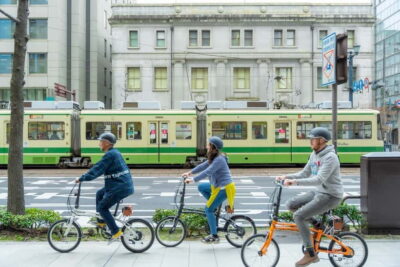
Browse the lists this ride appears in